This site is supported by our readers. We may earn a commission, at no cost to you, if you purchase through links.

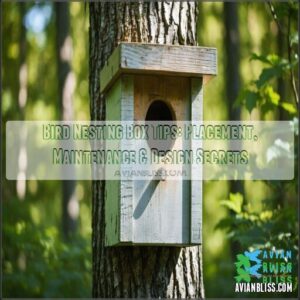
A bird box mounted in the wrong spot won’t stay empty for long—it’ll fill with house sparrows, starlings, or worse, nothing at all. Most failed nest box projects share the same root cause: placement chosen for human convenience rather than species-specific habitat needs.
Bluebirds won’t colonize a box shadowed by dense canopy. Tree swallows need water within sight. A Carolina wren won’t cross 50 feet of open lawn to reach a box that sits in the middle of it.
Knowing where to mount bird boxes makes the difference between a thriving nesting site and a decorative box that weathers unused through season after season.
Table Of Contents
- Key Takeaways
- Match The Box to Habitat
- Place Bluebird Boxes in Open Fields, Lawns, or Orchards
- Use Woodland Edges for Species That Avoid Wide-open Spaces
- Mount Swallow and Duck Boxes Near Ponds, Streams, or Wetlands
- Keep The Surrounding Flight Path Open and Easy to Approach
- Avoid Pesticide- or Herbicide-treated Areas
- Choose a Location That Fits The Target Species’ Natural Nesting Behavior
- Where to Mount Bird Boxes
- Pick a Quiet Area With Low Human and Pet Traffic
- Mount Boxes at Least 50 Feet From Brushy Cover
- Keep Boxes Away From Dense Tree Canopy When Targeting Bluebirds
- Avoid Spots That Attract House Sparrows or House Wrens
- Leave Enough Open Space in Front of The Entrance Hole
- Prefer Backyard Edges, Fence Lines, or Open Garden Zones Over Crowded Corners
- Set The Right Height and Spacing
- Mount Most Small Bird Boxes 5 to 15 Feet High
- Use 3 to 6 Feet for Bluebird Houses
- Use 6 to 15 Feet for Chickadee Boxes
- Use Higher Placements for Owls and Other Larger Cavity Nesters
- Space Bluebird Boxes 250 to 300 Feet Apart
- Pair Swallow Boxes 15 to 25 Feet Apart When Appropriate
- Keep Multiple Boxes Far Enough Apart to Reduce Territorial Conflict
- Face Boxes for Sun and Weather
- Point The Entrance East or Northeast When Possible
- Use Morning Sun to Warm The Box Gently
- Avoid West-facing Entrances That Overheat in Afternoon Sun
- Limit South-facing Placement in Hot Climates
- Angle The Front Slightly Downward to Reduce Rain Entry
- Shield The Box From Prevailing Winds Without Blocking Access
- Use Poles and Predator Protection
- Mount Bird Boxes on Metal or PVC Poles for Better Stability
- Add Baffles or Stovepipe Guards Below The Box
- Avoid Hanging Boxes From Trees When Possible
- Keep Boxes High Enough to Reduce Cat and Snake Access
- Use Rust-resistant Screws and Hardware for Outdoor Durability
- Check That The Mount Stays Secure in Wind and Storms
- Frequently Asked Questions (FAQs)
- Where is the best place to mount a bird box?
- What are the common mistakes when building a birdhouse?
- When is the best time to install bird boxes?
- How often should bird boxes be cleaned and maintained?
- Can two different species share the same bird box?
- What materials work best for building a bird box?
- Are there legal rules about disturbing active bird nests?
- Conclusion
Key Takeaways
- Matching your box to the habitat your target species naturally uses—open fields for bluebirds, woodland edges for wrens, wetlands for swallows—is the single most important placement decision you’ll make.
- Height and spacing aren’t minor details: most small cavity nesters thrive at 5–15 feet, bluebird boxes need 250–300 feet between them, and getting these numbers wrong triggers territorial conflict or predator access that empties boxes fast.
- Face your entrance east or northeast to capture gentle morning warmth without the afternoon heat trap that west- and south-facing orientations create, especially in hotter climates.
- Mount boxes on freestanding metal or PVC poles with stovepipe baffles below—not on trees—because eliminating climbing routes for cats, snakes, and raccoons is what actually keeps a well-placed box occupied season after season.
Match The Box to Habitat

The single biggest mistake most people make is putting up a box in a convenient spot rather than the right one. Birds don’t compromise — they need a location that actually mirrors where they’d nest in the wild.
A good starting point is this bird nesting box placement guide, which breaks down habitat-specific positioning by species so you’re not just guessing.
Birds don’t compromise — place the box where they’d nest naturally, not where it’s convenient for you
To succeed, match your box to the habitat your target species calls home. This ensures the placement aligns with their natural nesting preferences.
Place Bluebird Boxes in Open Fields, Lawns, or Orchards
For bluebirds, habitat isn’t optional — it’s everything. Your bluebird house belongs in an open sunny area with short grass, where foraging is easy and sightlines stay clear. Mount it at least five feet off the ground on a clean pole. Consider a predator guard installation to deter house wrens and other predators.
Top placement priorities:
- Open fields, lawns, or orchard edges — never dense interior
- Away from brushy cover, at least 50 feet minimum
- Clear flight paths with no overhead canopy blocking the entrance
Use Woodland Edges for Species That Avoid Wide-open Spaces
Not every species wants wide-open space. Carolina wrens and certain warblers thrive along woodland edges — where shrub-layer density provides cover and insect-rich margins supply reliable food.
These warbler-friendly edges create natural predator-buffer zones and edge microclimates with warmer morning temperatures.
For forest edge placement, match vegetation surrounding your box to each species’ niche: structured canopy gradation, not exposed field.
Mount Swallow and Duck Boxes Near Ponds, Streams, or Wetlands
Tree swallows and wood ducks are wetland specialists — proximity to water isn’t a preference, it’s a requirement. Mount these boxes within sight of ponds, streams, or wetland margins using metal pole mounting for stability.
Follow these five placement rules:
- Set waterline height 1–2 feet above average flood levels as a flood buffer
- Apply shoreline spacing of 20–30 meters between units
- Face entrances east for ideal nest box orientation and sunlight exposure
- Stay within the height range of 5 to 15 feet
- Practice reed management by clearing dense vegetation blocking sightlines
Avoid areas with heavy boat traffic — sustained disturbance suppresses nesting success greatly.
Keep The Surrounding Flight Path Open and Easy to Approach
Water access sets the stage — but once your box is in the right habitat, birds still need a clear runway to use it. Maintain a wide airspace and unobstructed flight corridor of at least 15–25 feet in front of the entrance.
A gentle approach angle with minimal wind turbulence helps birds land confidently. Visible perch zones nearby and clear flight paths make all the difference.
Avoid Pesticide- or Herbicide-treated Areas
Chemical exposure quietly undermines nest success — even when boxes are placed correctly in every other way. Establish buffer zones of at least 15 meters between your box and areas treated with pesticides or herbicides, including turf, ornamentals, or field edges. Maintain a pesticide logbook to track nearby applications and coordinate installations during low-spray seasons.
To minimize risks:
- Monitor chemical drift using wind direction and application schedules from local contractors
- Choose residue-free plantings and native vegetation within the immediate nesting zone
- Avoid storm drains or runoff channels that funnel chemical residues toward your site
- Inspect surrounding foliage regularly for leaf burn — a reliable indicator of recent exposure
- Cross-reference placement methods and spacing guidelines against known pesticide drift zones before mounting
Choose a Location That Fits The Target Species’ Natural Nesting Behavior
Species-specific nest box placement isn’t guesswork — it’s matching habitat considerations for cavity-nesting birds to the behavioral blueprint each species already follows.
Seasonal timing, predator density, microclimate factors, vegetation structure, and landscape connectivity all shape where birds naturally nest.
| Species | Key Placement Priority |
|---|---|
| Eastern Bluebird | Open fields, low vegetation |
| Carolina Wren | Woodland edges, dense shrubs |
| Tree Swallow | Near water, clear flight path |
| Chickadee | Dappled shade, forest margins |
| Wood Duck | Above wetland waterline |
Where to Mount Bird Boxes
Getting the location right makes all the difference between a box that sits empty and one that’s busy by spring. Beyond habitat, the specific spot you choose—how exposed it is, what’s nearby, how much foot traffic it sees—shapes whether birds feel safe enough to move in.
Even small placement decisions—like distance from trees or neighboring boxes—add up fast, and a solid bird nest box placement guide can help you avoid the trial and error most first-timers go through.
What to look for when picking your exact mounting location.
Pick a Quiet Area With Low Human and Pet Traffic
Bird boxes placed near walking trails, play areas, or dog-walking routes fail fast — even well-built ones. Target secluded corners with low footfall, at least 200 meters from busy roads for noise buffering and reducing human disturbance near nest boxes.
Pet exclusion matters too: cats and squirrels spike nest abandonment.
Restricted access zones — fenced, gated, or naturally screened — consistently outperform high human traffic areas.
Mount Boxes at Least 50 Feet From Brushy Cover
Keep your box at least 50 feet away from brushy or wooded areas — that buffer isn’t arbitrary. It delivers real predator buffer protection, as snakes and cats lose their ambush cover in open ground.
You’ll also notice microclimate benefits: better morning sun exposure, faster post-rain drying, and cleaner maintenance access year-round.
Flight path clarity improves too, letting birds approach without hesitation.
Keep Boxes Away From Dense Tree Canopy When Targeting Bluebirds
Dense canopy is bluebird kryptonite.
Positioning boxes at least 100 meters from heavy tree cover delivers critical Heat Stress Reduction, keeps Predator Sightlines clear, and bolsters Airflow Optimization around the nest cavity. Open placement also reinforces Nest Site Fidelity season after season.
- Clear overhead space reduces afternoon overheating
- Open ground with short grass limits predator concealment
- Unobstructed sightlines strengthen territorial awareness
- Better airflow prevents moisture buildup inside the box
- Distance from canopy creates a natural Human Activity Buffer
Avoid Spots That Attract House Sparrows or House Wrens
House sparrows and wrens will hijack a well-placed box if you give them an opening — literally. Use a reduced entrance size of no larger than 1⅛ inches and skip any external perches.
Clear surrounding debris, seal side gaps, and remove old nests before the season begins.
Open placement away from dense shrubs helps greatly when avoiding competition with house wrens.
Leave Enough Open Space in Front of The Entrance Hole
Open-fronted nest boxes only work when the approach is clean. Clearance distance matters—maintain a clearance distance of at least 1.5 times the box height in open ground directly in front of the entrance. Think of it as a landing strip.
- Cut tall grass within 6 feet to improve ground visibility
- Remove leaf litter that conceals predators and slows fledgling exits
- Maintain a clear approach slope for accurate landings
- Keep the zone free of clutter that blocks predator detection
Prefer Backyard Edges, Fence Lines, or Open Garden Zones Over Crowded Corners
Corners trap debris, block sightlines, and create heat pockets — none of which serves nesting birds. Fence lines and backyard edges, however, offer consistent edge sun exposure, natural wind buffering, and zonal visual continuity that crowded corners cannot match.
| Zone Type | Key Benefit | Watch Out For |
|---|---|---|
| Fence line corridors | 8–10 hrs daily sun | Climbing predators |
| Open garden zone | Clear approach path | Foot traffic interference |
| Backyard edge bed | Microclimate stability | Overhanging branches |
| Corner placement | Compact footprint | Debris accumulation |
| Mid-yard pole | Maximum visibility | Mowing disruption |
Set The Right Height and Spacing
Height and spacing aren’t afterthoughts — they’re what separate a box that sits empty all season from one that birds actually use.
Get these two things right, and you’ve already done most of the hard work.
Here’s what to know for each species.
Mount Most Small Bird Boxes 5 to 15 Feet High

For most small cavity nesters, a height range of 5 to 15 feet strikes the right balance between predator deterrence and practical inspection frequency. Staying within this range bolsters wind resistance during storms while keeping ladder safety manageable for annual checks.
Material durability matters here too — mounting hardware must handle seasonal exposure at that height year-round when choosing the ideal height for bird nest boxes.
Use 3 to 6 Feet for Bluebird Houses
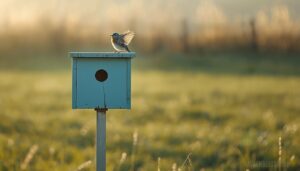
Bluebird houses perform best mounted 3 to 6 feet off the ground — lower than most cavity nesters require. This range optimizes Ladder Reachability, Temperature Moderation, and Nest Visibility without sacrificing safety.
Guidelines for placing bluebird houses at this height include:
- Mount five feet off the ground as your baseline for predator deterrence
- Prioritize Observation Ease during weekly nesting checks
- Maintain ventilation positioning to stay unobstructed by tall grass below
- Use poles over trees — Mounting bluebird houses on poles vs trees consistently favors poles for stability
- Factor in orientation and sun exposure for bluebird houses when finalizing placement
Use 6 to 15 Feet for Chickadee Boxes
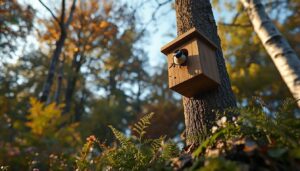
Chickadee boxes thrive in the 6–15 feet range — a height window that balances predation mitigation, inspection accessibility, and occupancy boost simultaneously. Lower placements around 6–8 feet keep boxes reachable during seasonal checks, while taller installations up to 15 feet reduce ground-level disturbance from yard activity.
| Height | Primary Benefit | Best Setting |
|---|---|---|
| 6–8 ft | Inspection Accessibility | Suburban yards |
| 8–12 ft | Predation Mitigation | Mixed woodland edges |
| 12–15 ft | Ideal Elevation | Low-traffic rural sites |
Match your seasonal height strategy to surrounding habitat density.
Use Higher Placements for Owls and Other Larger Cavity Nesters

Owls demand a different approach entirely. Barn owls and barred owls both benefit from nest box height between 10 and 20 feet — tall enough for height-related predator avoidance, improved wind ventilation, and a cooler nest microclimate during summer heat. That elevation also delivers an elevated hunting vantage and broader foraging range.
For cavity-nesting species this size, following height guidelines for different bird species isn’t optional — it’s essential.
Space Bluebird Boxes 250 to 300 Feet Apart
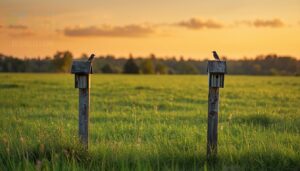
Every bluebird pair you attract defends its own slice of territory — and that’s exactly why spacing 250–300 feet between boxes isn’t arbitrary.
Compress that distance, and you’ll trigger territory overlap, spike stress from population density, and ultimately drive pairs away.
Consistent spacing promotes landscape connectivity across your trail, encourages genetic diversity within local populations, and makes monitoring movements between sites far more reliable from season to season.
Pair Swallow Boxes 15 to 25 Feet Apart When Appropriate
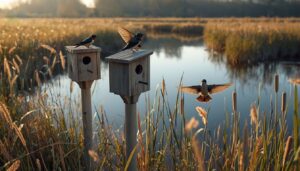
Tree swallows are a rare exception to the ‘give them space’ rule — they actually tolerate, even benefit from close neighbors. Pairing your boxes 15 to 25 feet apart mirrors natural colony density and facilitates breeding synchrony across your site.
Three things to get right:
- Situate pairs near open water to enhance insect abundance
- Use wind buffering features like hedges to stabilize territorial dynamics
- Mount on sturdy poles within the height range 5 to 15 feet
Keep Multiple Boxes Far Enough Apart to Reduce Territorial Conflict

Territorial competition is one of the most common reasons nest boxes fail. Bluebirds require minimum spacing of 250–300 feet between boxes; if packed tighter, constant chase events will occur.
To mitigate this, employ strategies like alternating locations along fence lines, creating visual barriers with low hedges, and maintaining clear 6-meter flight corridors. Additionally, implement staggered provisioning and establish buffer zones between boxes to prevent dominant birds from monopolizing the entire setup.
Face Boxes for Sun and Weather
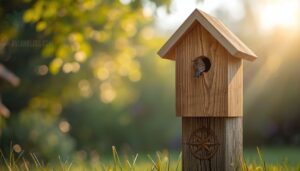
Which direction your bird box faces matters more than most people realize. Getting the orientation right means the difference between a box that stays cool and dry and one that becomes a heat trap after noon.
Here’s what to keep in mind when positioning yours.
Point The Entrance East or Northeast When Possible
Face your box entrance east or northeast — this single choice touches everything from Morning Light Benefits and Moisture Control to Predator Deterrence and Fledgling Visibility. Ideal nest box orientation and sunlight exposure matters more than most birders realize.
An east-facing orientation captures gentle sun exposure without afternoon overheating, making temperature regulation far easier inside the cavity and giving approaching fledglings clear, glare-free sightlines at dawn.
Use Morning Sun to Warm The Box Gently
That east-facing orientation does more than reduce glare — it puts morning sunlight to work. A sunlit microclimate builds gradually inside the cavity, supporting thermal regulation in nest boxes without the sharp spikes that stress chicks.
- Heat-absorbing interiors convert early rays into steady warmth
- Solar vent design preserves airflow without losing accumulated heat
- Thermal insulation in ¾-inch walls smooths overnight temperature drops
Ideal nest box orientation and sunlight exposure work together here.
Avoid West-facing Entrances That Overheat in Afternoon Sun
West-facing entrances trap afternoon heat with nowhere for it to go. Without ventilation baffles or external shading devices, interior temperatures can spike sharply — stressing nestlings before evening. Reflective surfaces nearby exacerbate the problem.
Microclimate management starts with orientation for sun exposure: keep the entrance away from late-day glare. Ideal nest box orientation and sunlight exposure means balancing sunlight and shade, not chasing maximum warmth.
Limit South-facing Placement in Hot Climates
South-facing placement isn’t wrong everywhere — but in hot climates, it’s a gamble you’ll lose. Interior temperatures can run 10°C above ambient, pushing nestlings into thermal stress before midday.
To mitigate risks:
- Conduct a microclimate assessment before committing to south-facing placement
- Use shade structures like overhangs (30–45 cm) to cut peak heat gain
- Apply reflective paint to box exteriors to reduce solar absorption
- Add thermal insulation of 10–20 mm to box walls
- Establish temperature monitoring with weekly interior checks during nesting season
Angle The Front Slightly Downward to Reduce Rain Entry
A slight downward tilt on the front panel — just 3 to 8 degrees — is one of the simplest ways to keep rain from entering the nest box. This Rain-Shedding Angle works with the box’s natural overhang to direct runoff away from the entrance hole.
| Tilt Degree Guidelines | Effect | Best Use Case |
|---|---|---|
| 3–5° | Gentle rain deflection | Sheltered or low-rain sites |
| 5–8° | Strong rainwater drainage design | Exposed or high-rainfall areas |
| >8° | Restricts bird access | Avoid — not recommended |
Pair the tilt with a Front Surface Coating and Water-Resistant Seals along panel joints to prevent seepage. Drainage Overhang Design — even a modest lip above the entrance — compounds the effect. Together, these details shelter your box from the weather while supporting ideal nest box orientation and sunlight exposure season after season.
Shield The Box From Prevailing Winds Without Blocking Access
A porous shield — constructed from louvered panels set perpendicular to prevailing winds — cuts gust intensity by 40 to 60 percent while maintaining an open entrance. Pair it with a perimeter windbreak and an adjustable hinge for easy monitoring, ensuring both functionality and accessibility.
UV-resistant materials enhance durability, preserving ideal nest box orientation and sunlight exposure without compromising weather resistance. This design safeguards structural integrity and environmental suitability over time.
Use Poles and Predator Protection
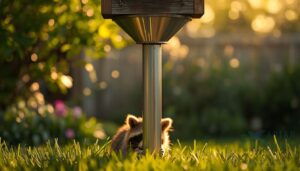
How you mount a bird box matters just as much as where you put it. Predators like raccoons, snakes, and cats are persistent, and the wrong setup hands them an easy meal.
Here’s what to focus on to give nesting birds a real fighting chance.
Mount Bird Boxes on Metal or PVC Poles for Better Stability
Your pole choice shapes every season ahead. Metal poles with corrosion-resistant coatings outlast wood posts by decades, especially in humid climates. PVC pipes offer lighter flexural load capacity but demand thicker walls for heavier boxes.
Prioritize these four mounting essentials:
- Use reinforced base anchors to limit storm sway
- Apply guy-wire stabilization on tall installations
- Mount freestanding poles at ideal box height for your target species
- Follow a seasonal inspection protocol each spring to confirm plumb alignment and hardware integrity
Add Baffles or Stovepipe Guards Below The Box
Even the best pole placement fails if a raccoon can simply climb up and raid the nest. That’s where stovepipe-style baffle and predator guards become non-negotiable.
Guard Material Choices include galvanized steel, aluminum, and stainless steel — each offering solid Heat Deflection Design and weather resistance.
Follow a consistent maintenance schedule, verify Code Compliance locally, and maintain proper Installation Clearance to keep every mounting option performing season after season.
Avoid Hanging Boxes From Trees When Possible
Trees might seem like the obvious choice, but they’re actually working against you. Mounting on freestanding poles protects both your box and the tree — bark injury prevention matters more than most people realize, since trunk wounds invite pathogens and compromise tree health preservation over time.
- Poles eliminate structural load concerns that weaken branch unions.
- Reduced pathogen spread keeps surrounding habitat healthier long-term.
- Ease of relocation lets you adapt quickly if habitat conditions shift.
- Metal poles and baffles to prevent predator access outperform tree-hung options considerably.
- Stable poles support ideal nest box orientation and sunlight exposure without canopy interference.
Keep Boxes High Enough to Reduce Cat and Snake Access
Height is your first line of defense. Mounting boxes at 5–6 feet meets the basic ground predator buffer, but reaching 8–10 feet considerably raises the predator height threshold — keeping cats, snakes, and raccoons well below the entrance.
Combine metal pole preference with anti-climb collars and elevation guidelines that exceed 3 meters, and you’ve built predator protection for nest boxes that actually holds.
Use Rust-resistant Screws and Hardware for Outdoor Durability
Your hardware choices outlast the wood itself — don’t let rust undermine a well-placed box. Galvanized or stainless steel screws resist seasonal wet-dry cycles, while 316 stainless steel screws handle coastal salt spray for 25+ years. For premium builds near water, silicon bronze fasteners won’t stain fine wood grain.
- Stainless steel screws: rust-proof across most outdoor climates
- Galvanized hardware: cost-effective for inland, non-coastal installations
- Silicon bronze fasteners: ideal near docks, ponds, or high-humidity sites
- Ceramic coated screws: solid fastener corrosion prevention with treated lumber
- Avoid standard zinc screws — they degrade within a few seasons outdoors
Check That The Mount Stays Secure in Wind and Storms
Solid hardware means nothing if the mount itself gives way. After installing, test mount anchor strength by applying firm pull pressure — if it wobbles, tighten immediately.
Wind load testing matters most on exposed sites: check for loose anchors after every major storm. Metal poles with stormproof fasteners and corrosion-resistant hardware hold far better than wood under sustained high winds.
Inspect regularly; don’t wait for damage.
Frequently Asked Questions (FAQs)
Where is the best place to mount a bird box?
The best place to mount a nest box ensures habitat, height, and predator protection methods align with your target species’ needs.
For bluebirds, choose open fields.
Woodland edges are ideal for wrens.
In wetlands, swallows thrive.
What are the common mistakes when building a birdhouse?
The most common mistakes include using toxic materials, incorrect hole size, inadequate ventilation, poor drainage, and an overly large interior.
Each of these issues can quietly discourage occupancy before a single bird scouts your box.
When is the best time to install bird boxes?
Install boxes by early February in southern regions and by late March in northern ones. Timing for nest box installation matters — late placement cuts occupancy rates by at least 20%.
How often should bird boxes be cleaned and maintained?
Clean your bird boxes once a year — that’s your annual maintenance baseline. A quick winter condition check plus post-breeding sanitation keeps disease low and occupancy high next season.
Can two different species share the same bird box?
Rarely, and usually not well. Two species may briefly share a box through temporal overlap, but territorial competition often leads to desertion.
Species-specific requirements, disease transmission risks, and stress make single-occupancy the healthier choice.
What materials work best for building a bird box?
Cedar wins every time — rot-resistant, non-toxic, and naturally insulating. Use ¾-inch-thick walls, galvanized screws, ventilation openings near the roof, and nontoxic exterior finishes only. Skip pressure-treated lumber entirely.
Are there legal rules about disturbing active bird nests?
Yes — under the Migratory Bird Treaty Act, disturbing active nests is illegal. The UK Wildlife Act carries similar protections. Permits exist for exceptions, but violations can mean serious fines.
Conclusion
The smallest decisions carry the heaviest consequences—a box mounted two feet too low or ten degrees off-axis can mean an entire breeding season lost.
Knowing where to mount bird boxes isn’t really about the box at all; it’s about reading the land, understanding the species, and aligning your setup with how nature already works.
Get those details right, and the birds will find you. Get them wrong, and you’ll spend spring watching an empty hole.
- http://www.nabluebirdsociety.org/PDF/NABSFactsheetGettingStarted.pdf
- http://static.birds.cornell.edu/Publications/Birdscope/Spring2001/preference.html
- https://michiganbluebirds.org/nest-boxes/nestbox-basics
- https://www.vinehousefarm.co.uk/partner/bto
- https://birdsinthetree.com/is-it-illegal-to-disturb-a-birds-nest/