This site is supported by our readers. We may earn a commission, at no cost to you, if you purchase through links.
Most bird owners assume a bowl of seeds counts as a meal. It doesn’t.
Seeds are to birds what chips are to people—edible, yes, but nutritionally incomplete in ways that quietly cause damage over months and years. Fatty liver disease, brittle bones, feather deformities—these aren’t random bad luck.
They’re predictable outcomes of predictable gaps. Birds can absolutely get nutrients from diet alone, but only when diet reflects what their biology actually demands, not what’s cheapest or easiest to pour from a bag.
Table Of Contents
- Key Takeaways
- Can Birds Get Nutrients From Diet Alone?
- Why Seed-Only Diets Fall Short
- What a Complete Bird Diet Needs
- Which Birds Need Extra Nutrients
- How to Transition to Healthier Foods
- Signs of Nutritional Imbalance
- Frequently Asked Questions (FAQs)
- Why do birds need nutrition?
- Do birds need a balanced diet?
- What are the nutritional requirements for birds?
- Can birds survive one day without food?
- Can wild birds self-regulate their own nutrition?
- How does water quality affect bird nutrient absorption?
- Do organic pellets offer benefits over conventional ones?
- How does stress impact a birds nutritional needs?
- Conclusion
Key Takeaways
- Seeds alone quietly cause fatty liver disease, brittle bones, and feather deformities — not bad luck, but predictable gaps that a balanced diet with pellets, fresh vegetables, and calcium sources can fix.
- A bird’s nutritional needs shift dramatically by species and life stage — a parrot chick needs 25–30% protein, while laying hens spike calcium demand, meaning one-size-fits-all feeding is a slow form of harm.
- Pellets work as the nutritional foundation because every bite delivers consistent protein, fat, vitamins, and minerals — no cherry-picking, no deficiencies hiding behind a full-looking bowl.
- Dull feathers, weight swings, weak bones, and behavior changes are your bird’s way of flagging a diet problem before it becomes a vet emergency — catch the pattern early and the fix is usually straightforward.
Can Birds Get Nutrients From Diet Alone?
The answer isn’t simple — it depends on what your bird eats, how old it is, and what species it belongs to.
A good starting point is checking out trusted online bird food sources by species and life stage to match what your bird actually needs.
A well-planned diet can absolutely cover most nutritional needs, but "most" isn’t always "all." Here’s what actually determines whether food alone is enough.
When a Complete Diet is Enough
Yes — but only when four conditions line up:
- Adequate Intake: Your bird eats enough daily to meet its metabolic needs
- Nutrient Stability: Food stays fresh, properly stored, no vitamin degradation
- Hydration Requirements: Clean water is always available
- Metabolic Consistency: No illness, stress, or life-stage shift disrupting absorption
When all four hold, a balanced diet for pet birds genuinely covers vitamin and mineral requirements in avian nutrition without extra supplementation.
Why Food Quality Matters More Than Quantity
Volume doesn’t save a bird from nutrient deficiencies. A bowl full of low-quality seeds can look generous but deliver poor nutrient bioavailability — meaning your bird’s digestive efficiency can’t extract what it needs.
The seed vs pellet debate often comes down to this: seeds lack calcium phosphorus balance and vitamin synergy that a balanced avian diet provides.
Quality beats quantity every time.
How Species and Life Stage Change Needs
Quality matters — but so does who you’re feeding.
Protein requirements for a growing parrot chick (25–30%) dwarf those of an adult at rest. Calcium demands spike during egg‑laying. Vitamin A variations show up across species with different metabolic rates. Seasonal nutrient shifts are real too. Species‑specific nutrition isn’t optional — it’s the whole game.
Species-specific nutrition isn’t optional — a parrot chick needs triple the protein of a resting adult
During infancy, birds experience an elevated protein requirement to support rapid tissue growth.
Why Seed-Only Diets Fall Short
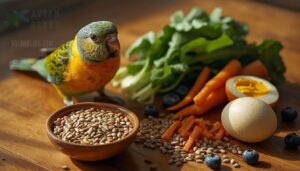
Seeds aren’t bad — they’re just incomplete. The problem is that birds fed nothing else start missing the nutrients their bodies actually depend on.
Here’s where a seed-only diet consistently breaks down.
High Fat and Fatty Liver Risk
Seeds look harmless — but they’re quietly overloading your bird’s liver. A seed-only diet floods the body with fat, triggering Liver Fat Accumulation and setting off a dangerous chain reaction:
- Free Fatty Acids spike in the bloodstream
- Insulin Resistance Impact disrupts normal fat processing
- Inflammatory Liver Markers rise steadily
- Fatty liver disease develops silently
- Fibrosis Progression Risk increases without Conversion Strategies from Seeds to Pellets
Low Vitamin a and Calcium
Vitamin A deficiency and low calcium don’t announce themselves — they creep in quietly through seed bowls. Your bird’s Eye Disorders, compromised Skin Integrity, and Immune Suppression are often the first red flags of a diet missing these essentials. Skeletal Development and Reproductive Success suffer too.
| Nutrient | Seed-Only Risk | Fix |
|---|---|---|
| Vitamin A | Eye Disorders, poor Skin Integrity | Carrots, sweet potatoes |
| Calcium | Brittle bones, failed Reproductive Success | Cuttlebone calcium source |
| Immune Support | Immune Suppression | Balanced avian diet with pellets |
cuttlebone calcium source and beta-carotene-rich vegetables are non-negotiable for real bone health.
Together, these nutrients form the backbone of a healthy diet—explore common bird health issues and how diet helps prevent them to see just how much food choices matter.
Weak Protein Balance and Poor Feather Health
Feathers don’t lie. When your bird’s plumage looks dull, frayed, or patchy, Amino Acid Deficiency is often the culprit — not a grooming problem.
Seeds lack the protein ratios needed for proper Keratin Synthesis, and without balanced amino acids like methionine and cysteine, Feather Structural Integrity collapses.
Poor Gut Digestibility makes it worse.
A balanced avian diet fixes this where seeds simply can’t.
Missing Micronutrients in Seed Mixes
Beyond the obvious gaps, seed mixes quietly fail your bird in subtler ways.
Iodine Deficiency slows metabolism. A Copper Shortfall disrupts red blood cell production. A Selenium Gap weakens cellular defenses. Vitamin D3 Shortage blocks calcium absorption — making even a Calcium supplement less effective. Trace Mineral Imbalances compound fast.
Addressing Nutrient deficiencies means understanding the full Vitamin and Mineral Requirements in Avian Nutrition, not just the obvious ones.
What a Complete Bird Diet Needs
Once you move past seeds, building a real diet takes more intention. It’s not about adding a little of everything—it’s about getting the right pieces in the right proportions.
Here’s what actually belongs in a complete bird diet.
Pellets as The Nutritional Foundation
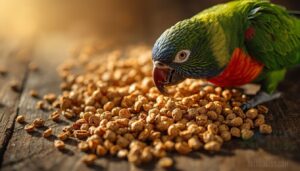
Think of pellets as a bird’s nutritional insurance policy. The pellet manufacturing process compresses proteins, fats, carbohydrates, vitamins, and minerals into one bite — guaranteeing nutrient uniformity from the first piece to the last.
No cherry-picking seeds. Shelf-life stability keeps nutrients intact when stored properly.
Choose high-quality bird pellet products listing whole grains first. Digestibility enhancement through heat processing means your bird actually absorbs what it eats.
Safe Fruits and Vegetables for Birds
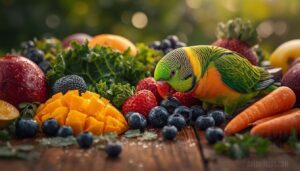
Fresh produce fills the gaps pellets can’t always cover. Safe fruits and vegetables for bird diets deliver live enzymes, hydration, and natural Vitamin A sources that support epithelial health and help prevent Vitamin A deficiency.
Follow these Preparation Safety Tips and Portion Size Guidelines:
- Wash thoroughly — remove pesticide residue first
- Cut bite-sized pieces; remove all pits and seeds
- Rotate Seasonal Produce Selection: carrots, kale, blueberries, mango
- Feed spinach sparingly — Oxalate Management matters for long-term health
Healthy Proteins, Fats, and Carbohydrates
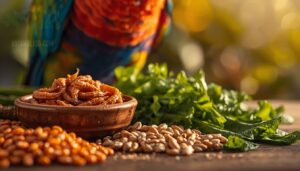
Macronutrients aren’t interchangeable — each one does a different job. Protein quality determines whether your bird can complete a molt cleanly or build muscle after illness.
Amino acid balance matters most here; a single food source rarely covers everything. Pair pellets with mealworms or cooked lentils for broader coverage.
Essential fatty acids support energy and temperature regulation, while complex carbohydrates with fiber digestion in mind keep the gut moving steadily.
Calcium Sources and Bone Support
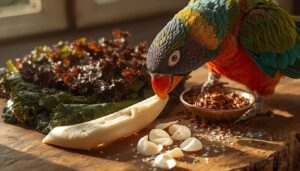
Calcium is where macronutrients hand off to minerals. Seeds fail here — they simply can’t deliver enough.
Cuttlebone benefits your bird by letting it self-regulate intake, which matters most during breeding calcium boost periods.
Calcium-Rich Greens like kale add daily support.
Indoor vitamin D insufficiency quietly breaks the chain — without it, bone density monitoring will reveal brittle bones despite good calcium sources.
Foods Birds Should Never Eat
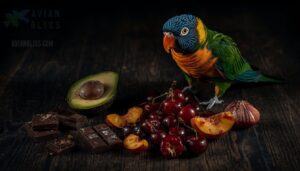
Some foods don’t just lack nutrition — they kill. Avocado persin causes collapse and sudden death. Chocolate toxicity triggers seizures and heart arrhythmias.
Cyanide pits from cherries, peaches, and apricots act fast. Alcohol poisoning can happen from a single sip. Moldy peanuts carry dangerous fungal toxins. Onions cause red blood cell damage.
Keep avocado, chocolate, onions, and fruit pits completely off the menu.
Which Birds Need Extra Nutrients
Not every bird has the same nutritional playbook. Life stage, species, and what’s happening inside their bodies right now all shift the equation.
Here’s a closer look at which birds tend to need a little more from their diet.
Juveniles and Growing Chicks
Growing chicks have almost no margin for error. Their bodies are building bone, feather, and muscle all at once — and they can’t afford nutritional gaps.
A proper starter feed formulation covers Growth Phase Protein (25–30%), Vitamin D Activation for calcium absorption, and feather development support from day one.
Watch for these warning signs in juveniles:
- Slow or patchy feather growth
- Weak legs or poor posture
- Dull, brittle early plumage
- Lower energy than littermates
- Soft or deformed bones
Molting and Breeding Birds
Juveniles aren’t the only birds running on a tight nutritional budget. Molting and breeding birds face their own demands.
Hormonal triggers driven by seasonal daylength shift your bird’s body into overdrive — feathers, eggs, and chick-rearing all at once. Energy allocation spikes hard. Protein requirements climb, molting feather support becomes non-negotiable, and vitamin A deficiency or calcium shortfalls hit fast.
Watch the timing closely.
Parrots and Other Psittacines
Psittacines are built differently. Beak morphology — that hooked, powerful structure — and zygodactyl grip make parrots natural foragers, but captivity removes that complexity.
Without social foraging or vocal learning stimulation, nutritional gaps widen fast.
A parrot food pyramid puts pellets at 60–70%, with fresh vegetables filling most of the rest. Seed vs pellet comparison isn’t close — seeds lose every time.
Watch for:
- nutrient deficiencies showing up as dull, brittle feathers
- calcium supplement needs, especially for breeding pair dynamics
- pellet diet benefits: stable vitamins, controlled fat, complete protein
- seed-heavy diets quietly driving fatty liver and weak bones
Finches, Canaries, and Small Songbirds
Don’t let their size fool you — finches and canaries have surprisingly complex nutritional requirements that birds’ size often mask. A seed-only diet keeps them alive, not thriving. Nutrient deficiencies sneak up slowly: dull feathers, poor molt, weak eggshells.
| Nutrient Need | Seed-Only Diet | Better Alternative |
|---|---|---|
| Vitamin A | Deficient | Carrots, leafy greens |
| Calcium | Inconsistent | Cuttlebone, soluble grit |
| Protein | Low quality | Egg food, pellet-based diets |
Grit selection matters too — insoluble granite grit aids digestion. Seasonal food variations, social feeding dynamics, and environmental enrichment all influence how well essential macronutrients for birds actually get absorbed. Fresh vegetables round out what seeds can’t deliver.
Hummingbirds, Lorikeets, and Insectivores
These birds run on different fuel. Hummingbirds and lorikeets depend on precise nectar sugar ratios — a 1:4 sugar-to-water mix — to support their extreme metabolic rate adaptations.
Seasonal flower availability disrupts this balance fast.
Lorikeets also rely on pollen digestive enzymes for nutrient absorption.
Insectivores need live insects for insect iron content and protein-rich foods.
Vitamin supplementation fills gaps when natural forage runs short.
How to Transition to Healthier Foods
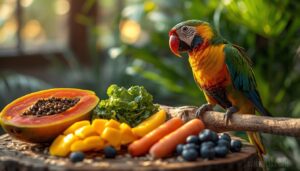
Changing your bird’s diet isn’t something you do overnight — it takes patience and a clear plan. most birds will come around with the right approach.
Here’s what actually works.
Switching From Seeds to Pellets
Cold turkey rarely works. Most birds won’t switch overnight, so mix 75% seeds with 25% pellets first, then slowly shift the ratio over two to four weeks.
Choose high-quality pellets listing whole grains first. pellet-based diets include lower fat intake and better micronutrient coverage — directly addressing the risks of seed-only feeding. Less waste, more nutrition. Worth every effort.
Introducing Fresh Foods Gradually
Fresh foods aren’t a switch — they’re a slow invitation. Start with One Food Daily, offered at room temperature (Room‑Temp Servings ease digestion).
Think Bite‑Size Introduction: chop kale or carrots small enough to handle. Use a gradual ratio shift, mixing tiny portions into familiar meals.
Monitoring Tolerance means watching droppings and appetite. A Texture Shift from soft steamed vegetables to crunchy raw keeps acceptance building steadily.
Using Chop and Foraging Enrichment
Chop transforms meals into a hunt. Bird chop works best when Chop Size Optimization matches your bird’s beak — smaller cuts reduce effort and encourage natural feeding motions.
Scatter Foraging Benefits kick in when you spread pieces across a surface, hiding some under paper for texture-based searching.
Puzzle Feeder Design slows intake and boosts manipulation.
Media Retention Strategies using untreated cardboard keep food accessible without spoilage.
Follow Safety Handling Protocols — remove leftovers promptly.
Tracking Acceptance and Portion Sizes
Once foraging is routine, tracking becomes feedback loop. Use a kitchen scale — not guesswork — to log grams offered and grams left. That’s Intake Drift Monitoring in practice.
Keep Food Form Consistency tight:
- Same chop size daily
- Same bowl placement
- Same Acceptance Timing window
Sudden leftovers signal trouble before weight loss does.
Signs of Nutritional Imbalance
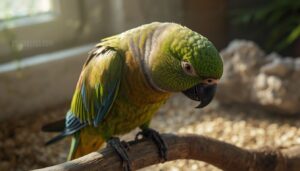
Your bird’s body keeps score, even when you’re not watching closely. Nutritional gaps show up in ways that are easy to miss at first — until they’re impossible to ignore.
Here’s what to look for.
Dull Feathers and Poor Molt
Feathers don’t lie. When molt produces dull, brittle, or patchy results, diet is usually the first suspect.
Feathers are pure keratin — and keratin needs sulfur-containing amino acids to form properly. A methionine shortage or cysteine deficit during molting nutrition cycles leads directly to feather regrowth anomalies: thin shafts, stress bars, and pin feather deformation.
| Warning Sign | Likely Nutritional Cause |
|---|---|
| Dull, lackluster plumage | Protein or amino acid deficiency |
| Pin feather deformation | Methionine/cysteine shortage |
| Molting skin inflammation | Poor nutrient absorption, low vitamin A |
| Feathers falling in clumps | Inadequate supplement use during molting and breeding |
A diet shift to higher-protein pellets during molt can reverse most of these signs within one feather cycle.
Weight Loss or Obesity
Weight changes are just as telling. Obesity in birds often comes from high-fat seed diets paired with low activity — a classic behavioral environment mismatch.
Metabolic adaptation means the body defends excess weight over time, making correction harder the longer it’s ignored.
Track monitoring metrics like weight and body condition monthly. Adjust energy density before set point defense takes hold.
Weak Bones or Egg Problems
Bone problems tell a similar story.
Brittle bones and thin eggshells often trace back to calcium metabolism disruptions — usually a combination of low calcium intake, Vitamin D deficiency, and phosphorus imbalance.
Eggshell quality drops fast when calcium supplement timing is off.
Monitor bone density in laying birds and review calcium sources and bone health in avian species to catch problems before Vitamin D synthesis can’t compensate.
Low Energy and Behavior Changes
When energy balance slips, behavior often speaks first. Sluggish posture, perching preference over movement, and reduced vocalization are early red flags.
Your bird may show social withdrawal, decreased foraging interest, or slower reactions — all signs that metabolic health is struggling. Identifying signs of nutritional imbalance in pet birds early, including behavior changes, helps you course-correct before damage compounds.
When to Contact an Avian Vet
Don’t wait until your bird crashes. Sudden breathing issues, open-mouth panting, or tail-bobbing at rest demand same-day care.
Eye beak discharge, feather plucking, and unexplained weight loss are equally urgent.
Persistent diarrhea signals gut trouble fast.
Identifying signs of nutritional imbalance in pet birds early — and getting veterinary input — is how you stop vitamin deficiencies and immune suppression before they turn serious.
Frequently Asked Questions (FAQs)
Why do birds need nutrition?
Birds burn through nutrients fast.
Flight energy demands, metabolic heat production, bone development, reproductive success, immune system support — nutrition drives all of it.
Poor feather quality and failed molts?
Almost always diet.
Do birds need a balanced diet?
Yes — absolutely. A balanced diet isn’t optional; it’s the foundation of everything.
Nutrient balance drives Vitamin D Synthesis, Gut Microbiome Health, Hydration Importance, and Metabolic Rate Differences. Every life stage shifts nutrient requirements.
Seasonal Food Variation matters too.
What are the nutritional requirements for birds?
Get this wrong, and your bird pays the price.
The nutritional requirements of birds span protein percentages, vitamin A sources, mineral balance, energy density, and daily water intake — every essential nutrient working together.
Can birds survive one day without food?
Most can survive roughly one day — but cold weather, low body fat reserves, and high metabolic rate limits shrink that window fast. Small birds especially. Don’t test it.
Can wild birds self-regulate their own nutrition?
Like a built-in nutritionist, wild birds use metabolic feedback loops and nutrient sensing to self-regulate — adjusting behavioral food choice, digestive enzyme adaptation, and seasonal diet shifts to meet changing nutrient requirements across bird life stages.
How does water quality affect bird nutrient absorption?
Water quality quietly shapes how well your bird absorbs nutrients.
Poor pH, mineral uptake, high TDS osmotic balance disruption, heavy metal interference, and microbial water load all compromise digestion — even when the diet is perfect.
Do organic pellets offer benefits over conventional ones?
Better doesn’t always mean fancier. Organic pellets reduce pesticide residues and offer ingredient traceability, but nutrient density depends on formulation — not the label.
well-made conventional pellet often matches organic quality.
How does stress impact a birds nutritional needs?
Stress triggers a hormonal nutrient shift — corticosterone redirects energy away from growth and immunity. Appetite reduction follows, widening nutrient gaps.
Feather quality drops, immune micronutrients deplete faster, and energy metabolism spikes.
Stressed birds simply need more.
Conclusion
thousand seed bowls won’t replace what one balanced diet delivers. birds get nutrients from diet alone?
Absolutely—but only when that diet mirrors what their biology was built for, not what’s cheapest on the shelf. Pellets, fresh vegetables, appropriate proteins, calcium sources—each piece matters.
Ignore one, and the cracks show slowly: dull feathers, brittle bones, a bird dimming quietly over years. Feed with intention, and you change that entire trajectory.