This site is supported by our readers. We may earn a commission, at no cost to you, if you purchase through links.

Pick up a field guide and flip through it—within seconds, you’re holding something closer to a field scientist’s dossier than a simple picture book.
The best guides pack taxonomic structure, diagnostic field marks, range maps, molt charts, and acoustic cues into a format small enough for a jacket pocket.
Serious birders treat these books like instruments, not references.
The information in a bird field guide shapes every identification decision you’ll make outdoors, from a distant silhouette on a wire to a warbler darting through autumn foliage.
Table Of Contents
- Key Takeaways
- What Bird Field Guides Include
- Species Accounts and Taxonomy
- Maps, Habitat, and Behavior
- Breeding, Wintering, and Year-round Range Maps
- Seasonal Migration and Distribution Information
- Habitat Notes for Forests, Wetlands, Grasslands, and Cities
- Nesting Locations and Preferred Environments
- Feeding Behavior and Movement Patterns
- Flight Style, Flocking Habits, and Posture Clues
- How Habitat Helps Confirm Bird Identification
- Images, Sounds, and Field Marks
- Illustrations for Highlighting Diagnostic Features
- Photographs for Realistic Plumage Comparison
- Annotated Arrows Pointing to Important Field Marks
- Male, Female, Juvenile, and Non-breeding Plumages
- Bird Songs and Calls as Identification Aids
- Using Apps Alongside Printed Field Guides
- Avoiding Misidentification With Multiple Clues
- Top 8 Bird Field Guides
- 1. Sibley Birds Guide Second Edition
- 2. National Audubon Society Birds of North America
- 3. Stokes Birds of North America Guide
- 4. Sibley West Bird Field Guide
- 5. Sibley Field Guide Birds Eastern North America
- 6. Peterson Field Guide Birds Western North America
- 7. Peterson Field Guide Birds Eastern Central North America
- 8. Field Guide to Dumb Birds Worldwide
- Frequently Asked Questions (FAQs)
- What is a bird field guide?
- What are the 4 keys to bird identification?
- What is the best out in the field bird guide?
- How do I choose the right field guide?
- Are field guides suitable for beginning birders?
- Can field guides help identify birds by sound?
- How often are field guides revised or updated?
- Do field guides cover behavior beyond identification?
- Conclusion
Key Takeaways
- A bird field guide is far more than a picture book—it’s a layered identification system built from taxonomic order, annotated field marks, range maps, molt charts, and vocalization cues that work together the moment you open the cover.
- Taxonomic organization isn’t just academic scaffolding; it’s a built-in shortcut that clusters related species side by side, so shared traits and plumage patterns become predictable before you even raise your binoculars.
- Confident identification relies on stacking multiple clues—silhouette, habitat, behavior, seasonal plumage, and sound—rather than locking onto any single feature, which is exactly how the best guides train your eye and ear simultaneously.
- Choosing the right guide means matching it to your region and skill level, whether that’s the illustration-dense Sibley for North America-wide coverage or a regional Peterson for faster, lighter field use.
What Bird Field Guides Include

A good field guide packs more into its pages than most people expect. Before you ever raise your binoculars, it’s already working for you—organizing everything you need to make a confident call in the field.
Pair your guide with bird-watching tips for minimizing disturbance so your preparation in the field is as thoughtful as your identification skills.
Here’s what you’ll usually find inside.
Common Bird Names and Scientific Names
Every species account pairs a Latin Greek Roots-based scientific name—so "Red-winged Blackbird" and Agelaius phoeniceus coexist on the same line.
Regional Synonyms can create confusion when the same bird carries different names across states, but the bird identification guide resolves this through consistent taxonomic organization tied to an authoritative bird species checklist.
Etymology Origins and Honorific Naming reveal the story behind every name.
Understanding the taxonomic hierarchy of birds helps readers navigate classifications.
Species Descriptions and Identification Summaries
Beyond names, species accounts give you the full picture—body length, wingspan, color patterns across age and sex, and behavioral cues that photos alone can’t capture.
Diagnostic Trait Tables, Measurement Guides, and Seasonal Molt Charts stack the specifics systematically, so you’re never guessing.
Observer Tips Sections flag common pitfalls. Think of each account as a compact dossier built around observable, present‑tense features you can verify in the field.
Key Field Marks for Quick Recognition
Field marks are your shortcut to confident identification—small, high-contrast features like Wing Bar Patterns, Eye Ring Contrast, Tail Notch Shape, and Bill Color Cues that separate similar species instantly.
- Seasonal Molt Indicators reveal age and breeding status
- Visual field marks appear most sharply on the face, wings, and tail
- Quick reference sections group key features by color or body type
- Reliable IDs combine multiple clues, never just one
Size, Shape, Posture, and Silhouette Clues
Once you’ve locked onto field marks, size and shape become your next layer of certainty. Silhouette Contrast alone—Wing Tip Geometry, Tail Shape Variations, Body Proportion Ratios, Leg Visibility Effects—narrows your options fast.
| Visual Marker | What It Tells You |
|---|---|
| Wing tip shape | Pointed vs. rounded flight style |
| Tail silhouette | Forked, square, or rounded species |
| Body depth | Bulky vs. slim body proportion ratios |
| Leg visibility | Perched height and posture clues |
| Head-neck profile | Bill shape and neck length ratio |
These visual field marks make bird identification sharper at any distance.
Plumage Details by Age, Sex, and Season
Plumage variation is where identification gets genuinely interesting. A first-winter bird’s brownish tones with pale-fringed coverts look nothing like its breeding-season self — and that’s before factoring in Sexual Dimorphism Patterns or Regional Color Variation across subspecies.
- Molt Timing shifts males into Seasonal Brightness Shifts by late winter
- Feather Wear Indicators reveal age through pattern fading
- Seasonal Plumage guides show female, juvenile, and non-breeding visual markers side by side
Similar Species Comparisons
When two species look nearly identical, similar species comparisons become your sharpest tool. Cross-referencing similar species to confirm ID means examining Bill Size Metrics, Morphological Silhouette, and Behavioral Foraging Cues side by side—then layering in Vocal Call Contrasts and Seasonal Range Overlap to break the tie.
Understanding field marks and visual cues this way transforms a frustrating "mystery bird" into a confident, defensible identification.
Notes on Rare, Migrant, and Regional Birds
Rare, migrant, and regional birds deserve their own spotlight.
Field guides annotate vagrant occurrence patterns, climate-driven range shifts, and regional rarity trends directly within species accounts—giving you three critical layers:
- Migration stopover habitats tied to seasonal windows
- Validation protocols for documenting unusual sightings
- Conservation status flagged alongside vagrancy notes
Range maps reveal regional bird distribution shifts, while bird migration routes show exactly when and where to look.
Species Accounts and Taxonomy

Understanding how a field guide organizes its species accounts makes a real difference when you’re standing in a field trying to make a quick ID. Taxonomy isn’t just academic structure — it’s the logic that holds the whole guide together.
Here’s what you need to know about how birds are classified and where to find them.
How Birds Are Organized by Family or Group
Bird field guides rely on phylogenetic grouping and morphological clusters to arrange species—meaning you’ll find hawks near falcons and warblers near sparrows because shared ancestry shapes shared traits. Standardized classification systems for birds, trees, plants, and fungi reveal how foot morphology, beak structure, and convergent families reflect feeding niches.
This bird guide organization isn’t arbitrary; it’s a field identification shortcut built directly into the layout.
Why Taxonomic Order Matters in Field Guides
Taxonomic order isn’t just an organizational preference—it’s a built-in identification engine. When a bird field guide follows a phylogenetic framework rooted in evolutionary relationships, you’re not flipping pages randomly; you’re exploring avian taxonomy the way scientists do. That field guide layout accelerates your identification efficiency by clustering relatives that share diagnostic traits.
A field guide’s taxonomic order is an identification engine, clustering related birds so evolution itself guides your search
Here’s why it matters:
- Related species appear side-by-side, enabling instant visual comparison within families.
- Shared behavioral and plumage patterns become predictable across a taxonomic group.
- Standardized classification systems for birds, trees, plants, and fungi create universal reference points.
- Conservation priorities attach logically to related clusters, reinforcing ecological awareness.
- A consistent learning hierarchy builds your identification instincts over time.
Differences Between Passerines and Non-passerines
Split the world’s roughly 10,000 bird species into passerines and nonpasserines, and you’ve unlocked one of the most powerful bird identification techniques available.
Passerine birds display anisodactyl Foot Morphology, high Wing Aspect Ratio, and rich Vocal Complexity—traits that sharpen field marks across bird families.
Nonpasserines counter with extreme Beak Specializations, diverse Nesting Strategies, and foot forms built for swimming, climbing, or wading.
How Updated Bird Classifications Affect Guide Layout
When ornithological science reshuffles species into new families, your field guide reshuffles with it. Updated avian taxonomy and identification standards trigger Family Header Redesign at chapter openings, introduce Color‑C Families for faster visual scanning, and reorganize Cross‑Reference Panels so formerly grouped birds land in their correct evolutionary neighborhoods.
Adaptive Taxonomy Tabs and Page Header Hierarchy, then keep you oriented as standardized classification systems for birds quietly reorder everything you thought you knew.
Where to Find Common and Scientific Names
Every species account places the common name front and center, with the scientific name directly beneath or beside it in italics—so you won’t waste field time hunting. Your field guide layout reinforces this pairing throughout: the quick reference section, glossary, and even State Bird Lists echo the same format.
Regional Language Guides and Birding Society Websites offer Scientific Name Crosswalks when regional terminology creates confusion.
How Indexes Help Locate Species Quickly
The visual index and thumb tabs in your field guide layout do the heavy lifting once you know what to look for.
Tabbed Page Indexes let you flip directly to a family group, while Synonym Cross-Reference entries catch regional name variations.
Digital Keyword Search, Habitat Tag Indexing, and Seasonal Status Codes narrow results fast—so your quick reference section delivers the right species account before the bird disappears.
Maps, Habitat, and Behavior

Knowing what a bird looks like is only half the story—you also need to know where it lives, when it shows up, and how it acts. That’s where maps, habitat notes, and behavior details earn their place in a good field guide.
Here’s what this section covers.
Breeding, Wintering, and Year-round Range Maps
Range maps are where the science gets personal. Each map in a quality field guide splits species distribution into three coded zones—breeding range, wintering footprint, and year‑round territory—drawn from citizen science data and temporal range updates that reflect real climate shifts.
- Breeding range: nesting grounds, spring through summer
- Wintering range: southern refuges, fall through winter
- Year‑round range: resident strongholds, all seasons
- Overlap zone analysis: transitional corridors between seasons
- Uncertainty shading: boundary edges where confidence thins
Check the map before you ID anything.
Seasonal Migration and Distribution Information
Migration isn’t random—it’s a precisely timed system of Flyway Shifts, Stopover Habitat networks, and Phenology Timing cues that quality field guides translate into readable species distribution data.
Your guide’s range maps capture Climate-driven Range expansions, Elevational Migration corridors, and seasonal variations across the full migration range, letting you cross-reference bird migration patterns against real-time sightings and confidently place each species where it actually belongs.
Habitat Notes for Forests, Wetlands, Grasslands, and Cities
Habitat notes in your field guide go far beyond simple labels—they decode Edge Effects where forests meet clearings, flag Microclimate Variation across wetland margins, and map Habitat Connectivity through urban green corridors.
Seasonal Water Levels shift bird presence dramatically, while Human Disturbance reshapes grassland use.
These habitat and behavior cues, embedded in habitat range maps, make real habitat assessment possible and support meaningful habitat conservation.
Nesting Locations and Preferred Environments
Nesting locations reveal as much about a species as its plumage—your field guide maps these precisely across habitat zones. Most birds nest within 50–200 meters of water, exploiting water proximity for food and cooling.
- Cliff ledges — 10–60 meters high, predator-resistant
- Rock crevice microclimate — thermal refuge, narrow predator entry
- Hedgerow density — concealment for small passerines
- Urban nest boxes — cavity nesters thrive at 2–6 meters
Feeding Behavior and Movement Patterns
Your field guide doesn’t just tell you where a bird lives—it shows you how it eats and moves through its world.
Foraging Bout Duration averages 2–5 minutes, with Energy Budget Strategies shifting across Seasonal Diet Shifts from insects to fruit or seeds.
Territory Core Areas usually span 1–3 square kilometers, while Social Foraging Dynamics and behavioral descriptions align directly with range maps and habitat zones.
Flight Style, Flocking Habits, and Posture Clues
Watch how a bird moves—it tells you almost as much as color ever could.
Your field guide’s behavioral descriptions capture Wingbeat Frequency, Bounding Flight bursts, Hovering Strategies, and Thermal Soaring patterns alongside V Formation Dynamics in migratory species.
These flight patterns, paired with posture and silhouette field marks, sharpen bird identification before you ever check plumage—habitat and behavior cues confirming what your eyes catch first.
How Habitat Helps Confirm Bird Identification
Think of habitat as your first filter, not your last resort. Microhabitat foraging cues—a bittern hugging reed beds, a nuthatch spiraling bark—narrow your candidates before plumage even registers.
Seasonal habitat shifts reshape species distribution mapping across range maps, so habitat-based range clues confirm what you’re seeing in real time. Combining habitat and behavior cues together, including habitat-specific perching posture and habitat-driven behavior patterns, makes identification click faster across all bird habitats.
Images, Sounds, and Field Marks
Knowing what to look for is only half the battle—you also need the right tools to confirm what you’re seeing. A good field guide arms you with illustrations, photos, annotated field marks, and sound references that work together to lock in an identification.
Here’s what this section covers.
Illustrations for Highlighting Diagnostic Features

Where a photograph shows you what a bird looks like, an illustrated field guide shows you what to look for.
Annotated art uses arrow color coding, silhouette outlines, magnified insets, and die‑cut overlays with overlay transparency to isolate field marks and key features instantly—so your eye lands on the right detail before the bird disappears into the canopy.
Photographs for Realistic Plumage Comparison

Illustrations sharpen your focus—but full-color photographs ground your identification in reality.
Up to five photos per species capture neutral lighting conditions, consistent angles, and precise color calibration targets, so breeding, non-breeding, female, and juvenile plumages appear true-to-life.
Macro scale bars reveal feather bar patterns at actual size, making seasonal plumage change unmistakable and visual identification through extensive photography genuinely reliable.
Annotated Arrows Pointing to Important Field Marks

Those photographs bring plumage to life—but annotated art takes your identification a step further.
Arrows in a bird identification and field marks guide, following strict styling guidelines: arrow color coding (white or black with a light halo) ensures contrast without obscuring adjacent plumage, while label placement names each feature precisely—supercilium, malar stripe, wing bar.
The result is faster, more confident visual identification through extensive photography and illustration combined.
Male, Female, Juvenile, and Non-breeding Plumages

Beyond annotated arrows, plumage variations by age and sex are where visual identification through extensive photography earns its keep. Sexual dichromatism means the male Cardinal and the female barely look related—your guide covers both.
Juvenile wing covert patterns, winter camouflage, molting schedules, regional plumage variation, and non-breeding seasonal variations in color and markings are mapped across multiple photographs per species, eliminating costly misidentification.
Bird Songs and Calls as Identification Aids

Even when dense cover hides the bird entirely, acoustic identification becomes your most reliable tool—bird songs and calls cut through the foliage where your binoculars can’t follow.
Songs signal territory and breeding intent; calls handle quick contact and alarm.
Sonogram patterns, call pitch cues, dialect variation across regional populations, seasonal song timing, and acoustic habitat matching all sharpen bird call recognition markedly.
Using Apps Alongside Printed Field Guides

Think of your printed guide and your phone as partners, not competitors.
Mobile apps like Merlin Bird ID app layer eBird technology over your fieldwork—Custom Filter Sets, Augmented Reality Overlays, and Push Notification Updates sharpen every sighting in real time.
Integrated Checklist Sync and Cross-Platform Data Backup keep digital guides synchronized with your notes, making integrating digital records with paper field guides genuinely smooth.
Avoiding Misidentification With Multiple Clues

Misidentification happens fast when you rely on a single clue. Cross-Reference Clues—pairing field marks like crown color and wing bar shape with range maps—dramatically tightens your accuracy.
Add Temporal Habitat Matching by confirming seasonal suitability, then layer in Behavioral Context Cues and Vocalization Timing to lock the ID. Multi-Modal Confirmation, cross-checking key features against habitat and behavior cues alongside bird calls, makes misidentification genuinely rare.
Top 8 Bird Field Guides
Knowing what’s inside a field guide is one thing — knowing which guide to actually carry is another. Some excel at illustrations, others at coverage or portability, and the right pick depends on where you bird and how you learn.
Here are eight guides worth knowing about.
1. Sibley Birds Guide Second Edition

The Sibley Guide to Birds, Second Edition is the closest thing birders have to a complete visual encyclopedia of North American species.
Published by Knopf in 2014, it packs 624 pages with over 7,000 digitally remastered paintings—illustrations running 15–20% larger than the original edition—covering male, female, juvenile, and seasonal plumages throughout.
You’ll also find 700+ updated range maps and expanded habitat and vocalization notes, making it a powerhouse reference whether you’re in the field or studying at home.
| Best For | Birders of all skill levels—from weekend hobbyists to serious researchers and wildlife photographers—who want the most complete visual reference for North American birds. |
|---|---|
| Price | $27.18 |
| Page Count | 624 |
| Publisher | Knopf |
| Language | English |
| Range Maps | 700+ updated maps |
| Geographic Scope | All North America |
| Additional Features |
|
- Over 7,000 remastered paintings with 15–20% larger illustrations make spotting field details genuinely easier
- 700 updated range maps plus habitat and vocalization notes mean you’re not just identifying birds—you’re understanding them
- Covers everything from common backyard species to rare vagrants, so it grows with you as your birding skills improve
- At roughly 3 lbs and nearly 10 inches tall, it’s more of a car or home reference than something you’ll stuff in a jacket pocket
- Small, narrow text can be tough to read quickly in the field, especially in low light
- Some copies have reported minor color inconsistencies and occasional labeling errors depending on the print run
2. National Audubon Society Birds of North America
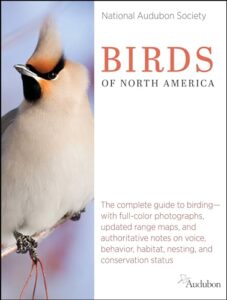
The National Audubon Society Birds of North America earns its place as a permanent shelf staple for birders. It comprehensively covers over 800 species across the continent, offering a serious reference for those seeking accuracy.
The guide is visually robust, featuring nearly 5,000 full-color photographs that depict birds in true habitat conditions. Its range maps dynamically reflect climate-driven distribution shifts, ensuring relevance in a changing environment.
Each species account delivers concise yet detailed insights, including voice, nesting habits, behavior, and conservation status. This tight package of information eliminates guesswork for dedicated birders.
At 912 pages, the book is organized by taxonomic order, reinforcing its role as an indispensable tool for both novice and experienced enthusiasts alike.
| Best For | Backyard birders, students, and serious enthusiasts who want a thorough, beautifully illustrated reference they can return to again and again. |
|---|---|
| Price | $28.19 |
| Page Count | 912 |
| Publisher | Knopf |
| Language | English |
| Range Maps | Climate-shift maps |
| Geographic Scope | All North America |
| Additional Features |
|
- Over 3,500 full-color photos make identification straightforward, even for tricky look-alike species.
- Range maps are updated to reflect real climate-driven shifts — not just old migration patterns.
- Covers 800 species with voice, nesting, habitat, and conservation info all in one place.
- At 4 lbs and 912 pages, it’s more bookshelf than backpack — not the one you want to carry on a trail.
- Data stops at 2021, so newer taxonomic changes or range updates won’t be reflected.
- The price and size may be overkill if you’re just starting out or only birding casually.
3. Stokes Birds of North America Guide

The Stokes Birds of North America Guide earns serious respect through sheer visual firepower—over 3,400 color photographs covering adult, juvenile, breeding, and non‑breeding plumages across 853 species. Range maps appear on the same page as each species account, so you’re never flipping back and forth mid‑sighting.
Vocalization notes paired with an audio library sharpen your ear for calls you’d otherwise miss. Organized in phylogenetic order with subspecies distinctions included, it’s a guide built for birders who want depth, not shortcuts.
| Best For | Dedicated birders who want a thorough visual and audio reference for studying North American species at home or from the car. |
|---|---|
| Price | $17.90 |
| Page Count | 816 |
| Publisher | Little, Brown and Company |
| Language | English |
| Range Maps | Same-page maps |
| Geographic Scope | All North America |
| Additional Features |
|
- Over 3,400 photos covering multiple plumages, ages, and sexes makes identifying tricky birds way easier
- Range maps sit right next to each species account—no more flipping pages mid-sighting
- The audio CD with 600 recordings is great for training your ear on calls and songs
- At 3 lbs and 816 pages, it’s too bulky to haul on a long hike
- Published in 2010, so newer taxonomic updates and range shifts aren’t included
- The CD is awkward for anyone without a disc drive—most people just want an app
4. Sibley West Bird Field Guide

If your birding territory sits west of the Rockies, the Sibley West Field Guide is built precisely for you.
It covers 715 species with more than 5,046 full-color illustrations—multiple angles per bird, including flight poses and plumage variations—so you’re comparing what you actually see, not an idealized portrait.
The 652 revised range maps track winter, summer, and migration patterns with real precision.
Species accounts run side-by-side for genus-level comparison, making tricky look-alikes far easier to sort out in the field.
| Best For | Western birders of all levels—from weekend hobbyists to field researchers—who want a reliable, illustration-rich guide they can trust without a Wi-Fi signal. |
|---|---|
| Price | $19.74 |
| Page Count | 504 |
| Publisher | Knopf |
| Language | English |
| Range Maps | 652 revised maps |
| Geographic Scope | Western North America |
| Additional Features |
|
- Over 5,000 illustrations with multiple views per bird make it genuinely useful for tricky IDs in real conditions.
- Side-by-side genus comparisons help you quickly sort out similar-looking species without flipping back and forth.
- 652 updated range maps cover seasonal and migration patterns with solid regional accuracy.
- At 1.45 lb, it’s heavier than true pocket guides and can feel like a burden on longer hikes.
- Smaller print size means some illustrations and text can be hard to read without good lighting.
- A handful of species near the Western/Eastern boundary are left out, so edge-case rarities may go unidentified.
5. Sibley Field Guide Birds Eastern North America

Shift your compass east, and you’ll want the Sibley Field Guide to Birds of Eastern North America in your pack.
It covers 650 species found east of the Rockies, backed by more than 4,600 illustrations depicting males, females, juveniles, and seasonal plumages—so nothing catches you off guard.
Over 600 range maps, revised by 110 regional experts, show winter, summer, migration, and rare occurrences.
The side-by-side column layout makes comparing look-alikes genuinely practical, not just theoretical.
| Best For | Birders of all skill levels who spend time outdoors east of the Rockies and want a reliable, detailed field guide they can actually carry with them. |
|---|---|
| Price | $13.29 |
| Page Count | 464 |
| Publisher | Knopf |
| Language | English |
| Range Maps | 600+ expert maps |
| Geographic Scope | Eastern North America |
| Additional Features |
|
- 4,600 illustrations cover males, females, juveniles, and seasonal plumages so you can ID birds in any condition
- 600 range maps updated by 110 regional experts give you real, trustworthy data on where and when to look
- Compact and lightweight enough to toss in a daypack without thinking twice
- Small text can be a strain, especially in low light or for users with vision difficulties
- Published in 2016, so recent taxonomic updates or range shifts won’t be reflected
- No waterproofing — a rainy trail day could do some damage
6. Peterson Field Guide Birds Western North America

Head west of the 100th meridian, and the Peterson Field Guide to Birds of Western North America becomes your most reliable companion.
It covers species from the Rockies to the Pacific coast—including Hawaii—organized by family, so you’re learning groups, not just checklists.
Around 500 color plates annotate field marks by sex, age, and season, with consolidated range maps built right into each species account.
At roughly 1.5 lb and 480 pages, it’s substantive without being unwieldy on the trail.
| Best For | Birders of all skill levels who spend time west of the Rockies—whether you’re hiking the Cascades, exploring the Southwest, or island-hopping in Hawaii. |
|---|---|
| Price | $11.99 |
| Page Count | 480 |
| Publisher | Mariner Books |
| Language | English |
| Range Maps | Integrated maps |
| Geographic Scope | Western + Hawaii |
| Additional Features |
|
- 25 new Hawaii plates plus consolidated range maps built right into each species account make identification fast and accurate
- Multiple plumage views (summer, winter, juvenile, adult) with arrows pointing to key field marks take the guesswork out of tricky IDs
- Color-coded category bars let you flip to the right bird group in seconds, even mid-hike
- At 5 × 8 in and ~1.5 lb, it’s too big for a shirt pocket and adds real weight on longer trips
- Range maps can run small and hard to read when light is poor or you’re in a hurry
- No weather-proofing—one rainstorm without a protective cover and the pages pay the price
7. Peterson Field Guide Birds Eastern Central North America
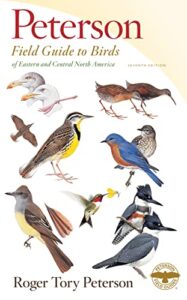
If your birding takes you east of the Rockies, the Peterson Field Guide to Birds of Eastern and Central North America is built for exactly where you’re standing.
At 392 pages and $17.46, it’s accessible without cutting corners—featuring the classic Peterson arrow system that points directly to the field marks that matter.
Range maps reflect current breeding and wintering distributions, and species log pages let you track your own sightings.
It’s a self-contained reference that doesn’t need Wi-Fi to work.
| Best For | Birders of all skill levels exploring Eastern and Central North America who want a reliable, no-fuss field reference they can carry anywhere without needing cell service. |
|---|---|
| Price | $17.46 |
| Page Count | 392 |
| Publisher | Mariner Books |
| Language | English |
| Range Maps | Updated distribution maps |
| Geographic Scope | Eastern + Central NA |
| Additional Features |
|
- The Peterson arrow system makes identifying birds fast and straightforward—no digging through dense text to find what matters.
- Range maps are current, so you’re working with real distribution data instead of outdated info.
- At $17.46 for 392 pages, it’s genuinely good value for what you get.
- It’s a little big for a jacket pocket, which can get awkward on longer hikes.
- Painted illustrations don’t always capture every plumage variation, so edge cases can still trip you up.
- No digital version means no search function, and staying current requires buying a new edition down the road.
8. Field Guide to Dumb Birds Worldwide

Not every field guide takes itself seriously—and honestly, that’s revitalizing.
The Field Guide to Dumb Birds Worldwide from Chronicle Books leans hard into humor, pairing hand-drawn illustrations with profanity-laden, NSFW descriptions across 192 pages of global species coverage.
At just $11.15, it’s the kind of book you keep on the coffee table or toss in a backpack for laughs.
Don’t mistake the comedy for empty fluff, though—it still slips in genuine identification tips and bird facts worth remembering.
| Best For | Bird lovers, gift-givers, and anyone who enjoys irreverent humor and wants a laugh without taking nature too seriously. |
|---|---|
| Price | $11.15 |
| Page Count | 192 |
| Publisher | Chronicle Books |
| Language | English |
| Range Maps | Not included |
| Geographic Scope | Global |
| Additional Features |
|
- At $11.15, it’s an easy, affordable gift that almost anyone will get a kick out of
- The hand-drawn illustrations are charming and detailed—funny without being lazy
- Sneaks in real bird facts, so you actually learn something between the laughs
- Heavy on profanity, so it’s not one to leave out at family-friendly gatherings
- Don’t expect deep ornithology—this is comedy first, field guide second
- English only, which limits who can actually enjoy it
Frequently Asked Questions (FAQs)
What is a bird field guide?
A good tool is half the work.
A bird field guide is a portable reference that helps you identify wild birds using organized images, range maps, species descriptions, and key field marks in the field.
What are the 4 keys to bird identification?
The four keys to bird identification are size and shape, color pattern, behavior and posture, and habitat and range—each one narrows your options until only one species fits.
What is the best out in the field bird guide?
The Sibley Guide to Birds stands out as the top field choice — its lifelike illustrations, precise range maps, and extensive species coverage make it the most trusted companion that serious birders reach for first.
How do I choose the right field guide?
Match your guide to your region, skill level, and main birding goals.
A beginner benefits from simplified visuals; an experienced birder needs taxonomic depth, dense range data, and thorough species coverage.
Are field guides suitable for beginning birders?
Ironically, the very tool designed for experts might be a beginner’s best friend.
Yes, field guides are absolutely suitable for new birders—clear descriptions, visual field marks, and range maps make identification approachable from day one.
Can field guides help identify birds by sound?
Yes, field guides do help with sound identification — most include vocal descriptions, rhythm cues, and links to audio recordings, so you can match what you’re hearing to a likely species before confirming visually.
How often are field guides revised or updated?
Print field guides are generally revised every 5 to 15 years, while digital guides update annually. Major taxonomic splits or rapid climate-driven range shifts can accelerate a new edition within 2 to 5 years.
Do field guides cover behavior beyond identification?
Field guides go well beyond labeling what a bird is — they show you how it lives.
You’ll find notes on foraging methods, nesting behavior, flight patterns, and vocalization contexts woven throughout each species account.
Conclusion
Like a compass calibrated for every terrain, a great field guide doesn’t just point you toward an answer—it sharpens the question you’re asking. Understanding what information is in a bird field guide transforms how you see every species account, range map, and plumage plate working together as a unified identification system.
The more fluent you become in reading these layers, the more the field stops feeling unpredictable and starts feeling like a language you finally speak.
- https://news.cornell.edu/stories/2022/04/new-regional-bird-guides-simplify-identification
- https://sites.prh.com/complete-audubon-guides?utm_source=Audubon&utm_medium=website&utm_campaign=audubon-complete-guides-2023
- https://birdingtools.podbean.com/e/3-anatomy-of-a-field-guide
- https://birdingtools.ck.page/f03a46178c
- https://merlin.allaboutbirds.org/