This site is supported by our readers. We may earn a commission, at no cost to you, if you purchase through links.
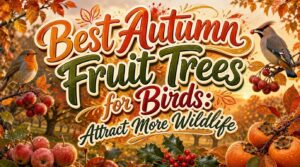
single persimmon tree can feed dozens of birds in one afternoon. Waxwings arrive first, then robins, then the stragglers—each wave stripping fruit until bare branches rattle in the November wind.
bird feeding means a plastic feeder and a bag of sunflower seeds.
right autumn fruit trees do something a feeder never can: they extend the food supply from late summer clear through winter, attract species you’d never see otherwise, and shelter birds overnight in thorny thickets.
Knowing which trees to plant—and when they ripen—turns your yard into something birds actually depend on.
Table Of Contents
Key Takeaways
- A single persimmon or serviceberry does more than any feeder — native fruit trees feed more species, last longer into winter, and give birds real shelter overnight.
- Stagger your plantings so something’s always ripening: American plum peaks in fall, dogwood carries through October, and mountain ash holds fruit clear into the cold.
- Native trees outperform ornamentals because birds and these plants evolved together — the fruit is richer, the insects are there, and the whole system just clicks.
- Skip invasives like Italian buckthorn and lean into the good stuff: winterberry, Eastern red cedar, and American holly keep your yard on the migration map all season.
Top Autumn Fruit Trees for Birds
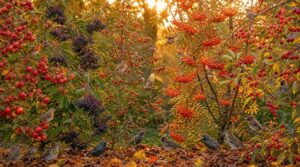
Some trees do double duty—they look great in the yard and keep birds coming back all season long. The trick is knowing which ones actually deliver when fall rolls around.
Native serviceberries and dogwoods are a great starting point—check out this guide to the best plants for attracting birds to your garden to build a yard birds actually stick around in.
Here are five worth planting.
American Plum for Fall Songbirds
American plum is a quiet workhorse for fall songbirds. Its small, high sugar fruit ripens late summer into fall — perfect timing for migrants loading up on energy.
Suckering growth builds dense thicket protection that thrushes and waxwings love. Early bloom benefits pollinators too, keeping your whole yard humming.
It also acts as a larval host for butterflies, supporting lepidoptera diversity.
- Plums drop to the ground, inviting fruit drop feeding by thrushes
- Thorny thickets shelter roosting songbirds overnight
- Fast suckering growth creates natural hedges quickly
- Fall foliage turns warm gold alongside ripening fruit
- One of the best fruit bearing trees for zones 3–8
Persimmon for Late-season Wildlife Feeding
Where American plum leaves off, persimmon takes over. American Persimmon ripens in staggered waves — fruit drop timing stretches weeks, not days. That slow release keeps robins, waxwings, and catbirds coming back. Its nutrient density fuels birds through lean weeks. Cold hardiness means fruit persists after frost, making it gold for winter bird feeding.
| Feature | Detail | Bird Benefit |
|---|---|---|
| Fruit Drop Timing | Late fall, gradual | Extended feeding window |
| Nutrient Density | High sugar content | Energy for migration |
| Cold Hardiness | Frost-tolerant fruit | Winter bird feeding |
Plant it as part of bird-friendly landscaping alongside fall foliage trees that support birds, and you’ve built a reliable late-season table.
Flowering Dogwood Berries for Backyard Birds
Flowering dogwood is a quiet overachiever in bird-friendly landscaping with colorful trees. Those summer flowers become clusters of red drupes by fall — a direct dogwood flower-berry link worth planting for.
Fruit ripening stages stretch across weeks, drawing bird feeding flocks of robins, waxwings, and cardinals in waves. Seasonal color appeal plus berry-producing value for wildlife make this one easy pick.
Serviceberry for Bluebirds and Grosbeaks
Serviceberry picks up right where dogwood leaves off. Its seasonal ripening window lands in summer and stretches into early fall — prime time for attracting mixed flocks of bluebirds and grosbeaks.
- High berry nutrient content fuels migration energy
- Soft fruit means less effort for small birds
- Seasonal fruit availability for birds spans 3–6 weeks
- Follow plant spacing guidelines: 12–20 feet apart
- Skip pesticides — smart pest management strategies protect insect food for nestlings
Bird-friendly landscaping with colorful trees doesn’t get easier than this.
Mountain Ash for Winter Holdover Fruit
Mountain ash is your secret weapon for winter bird food sources. Its bright red clusters stay visible against bare branches — fruit color signals ripeness even through frost.
Bark roughness benefits birds by sheltering insects for extra forage. Elevated perching access lets waxwings and robins feed comfortably.
late-season energy from persistent berries keeps winter visitors coming back long after other berry-producing plants for wildlife have gone quiet.
Native Trees Vs. Ornamentals
Not every fruit tree pulls its weight regarding feeding birds. Native species tend to do more of the heavy lifting, but a few ornamentals earn their spot too.
Native oaks and elderberries tend to be the real workhorses — explore bird-friendly trees and shrubs for forest habitats to see which species consistently draw the most species.
Here’s what to think about before you plant.
Why Native Fruit Trees Feed More Birds
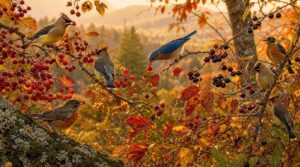
Native trees just work better — and birds know it. They’ve evolved together for thousands of years.
| What Natives Offer | Why It Matters |
|---|---|
| Higher Fat Content fruit | Fuels migration and winter survival |
| Local Insect Support on bark and leaves | Feeds chicks protein they need |
Native tree species deliver Extended Ripening across weeks, not days. Their Mycorrhizal Benefits mean consistent fruit bearing trees, season after season. Less stress equals Reduced Pesticide Use — keeping seed food for birds safe. That’s why winter fruit importance for wildlife starts with bird‑friendly landscaping rooted in natives.
When Ornamental Trees Add Value
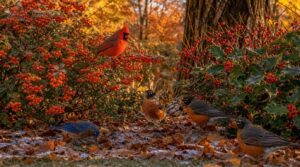
Ornamentals aren’t the enemy — they just need the right job. Firethorn and winterberry punch above their weight, delivering winter fruit importance for wildlife while offering a serious seasonal aesthetic. Think of them as the reliable backup singers.
| Tree | Bird Benefit | Landscape Bonus |
|---|---|---|
| Firethorn | Cardinals, robins | Seasonal color and food sources for birds |
| Winterberry | Songbirds, waterfowl | bird-friendly landscaping with colorful trees |
| American Holly | Bluebirds, catbirds | Year-round evergreen structure |
These ornamental native trees extend your feeding window beautifully.
Choosing Species for Your Region
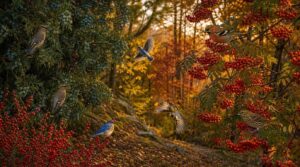
Your region is the starting point — not a footnote.
Match trees to your USDA Zone Matching and Soil pH Compatibility first, then layer in Local Climate Adaptation and Regional Ecotype Selection for real results.
| Tree | Zone | Bird Benefit |
|---|---|---|
| Eastern Red Cedar | 2–9 | Cedar waxwings |
| Winterberry | 3–9 | Songbirds, waterfowl |
| Mountain Ash | 2–6 | Grosbeaks, bluebirds |
Native Species Preference wins every time.
Avoiding Low-value or Invasive Plantings
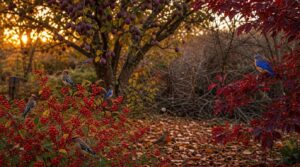
Some plants look great but deliver almost nothing for birds — or worse, crowd out the trees that do.
Invasive species screening matters before you buy.
Skip Italian buckthorn and ornamental invasives that spread fast and starve out native fruit focus.
Low-yield fruit avoidance keeps your yard productive year‑round.
| Plant | Problem | Better Choice |
|---|---|---|
| Italian Buckthorn | Invasive species | Winterberry |
| Ornamental Crabapple | Low-yield fruit | Flowering Dogwood |
| Japanese Knotweed | Smothers natives | American Plum |
Monitor fruit quality seasonally to maintain reliable, seasonal food availability for birds.
Balancing Bird Food With Landscape Beauty
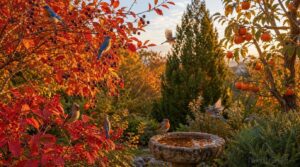
You don’t have to choose between a gorgeous yard and a bird‑friendly one — the best gardens do both.
| Design Goal | Bird‑Friendly Solution |
|---|---|
| Seasonal Color Contrast | Native serviceberry autumn foliage |
| Textured Branch Architecture | Flowering dogwood winter silhouette |
| Evergreen Accent Plantings | Eastern red cedar backdrop |
| Ornamental Fruit Displays | Persimmon and mountain ash berries |
| Wildlife‑friendly Hardscapes | Shallow birdbath near fruit trees |
Weave fruit‑bearing trees into your layout for seasonal color and food sources for birds simultaneously.
Birds Attracted to Fall Fruit
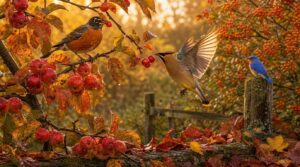
The right trees don’t just feed birds — they pull in specific species you might not expect to see in your yard. Fall fruit acts like a magnet, and knowing which birds show up helps you plant smarter.
Here’s who’s coming to the table.
Cedar Waxwings and Red Cedar Fruit
Few birds signal autumn quite like the cedar waxwing. Watch a flock descend on an Eastern Red Cedar — they strip berries fast, sometimes dozens per minute.
Cedar Fruit Persistence into winter makes it a bird-friendly landscaping must.
Waxwing Digestion is quick, so Seed Dispersal Benefits your whole yard.
Those red Wing Tip Signals? They coordinate Flock Foraging Peaks beautifully.
Robins, Cardinals, and Catbirds
Waxwings aren’t the only regulars at your fall fruit buffet. Robins, cardinals, and catbirds show up too — each with their own foraging strategies and nesting preferences.
Robins hit serviceberry and American persimmon hard before migrating. Cardinals, with their territorial displays and bold vocal repertoire, stay year-round, relying on winter roosting spots near dense shrubs. Catbirds quietly clean up what’s left.
Bluebirds, Thrushes, and Grosbeaks
Three more backyard regulars worth knowing: bluebirds, thrushes, and grosbeaks.
Bluebirds rely on cavity nesting sites near berry-producing plants for wildlife — dogwood and serviceberry are favorites.
Thrushes shift from insect foraging to seasonal food availability as autumn color and wildlife value in eastern forests peak.
Grosbeaks bring their impressive bill morphology to crush hard fruit, while territorial songs signal their presence long before you spot them.
Migrating Birds Using Autumn Fruit
Migration is all about timing and fuel. When birds hit your yard during fall stopovers, they’re running on empty and need fast energy.
Here’s what drives them straight to your fruit trees:
- Fruit energy density beats insects’ calorie-for-calorie at dawn and dusk.
- Stopover timing aligns with peak berry ripeness along migration pathways.
- Seasonal fat accumulation accelerates when fruit energy density is high.
Plant native species, and they’ll find you.
Winter Birds That Rely on Berries
Some birds don’t leave — and that takes serious energy. Cedar waxwings, bluebirds, and robins shift their entire berry selection strategy once insects disappear, targeting holly, viburnum, and sumac for winter bird feeding.
Their species’ foraging instincts lock onto thermal shelter near fruiting trees for birds. Plant berry-producing plants for wildlife and native shrubs for bird habitats, and you’ll keep them fed all season.
Planting Trees for Longer Feeding
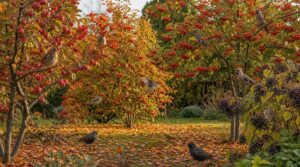
One tree won’t cut it if you want birds visiting all season long. The real trick is thinking beyond a single harvest and planning for a steady stream of food from early fall through winter.
Here’s how to make that happen.
Staggering Ripening Times Across The Season
Think of your yard as a living buffet that never closes. Plant a variety mix of early, mid, and late ripening trees, and the phenology window stretches from July, clear into winter.
Plant early, mid, and late ripening trees and your yard becomes a living buffet that feeds birds from July through winter
Microclimate timing, irrigation control, and harvest scheduling all shift when fruit ripens by days or weeks. That steady seasonal fruit availability for birds means fall berries and winter bird feeding overlap naturally.
Mixing Trees With Berry Shrubs
Trees alone won’t cut it. Pair them with native shrubs — elderberry, black chokeberry — and you’ve built a real seasonal fruit ladder that keeps birds fed across layers.
- Match rootstock compatibility so trees and shrubs share water without competing
- Use shrub canopy integration to fill mid-story gaps
- Maintain soil moisture balance with mulch
- Create pollinator pairings to boost fruit set
- Choose berry-producing plants for wildlife that extend native shrubs for bird habitats into true bird-friendly landscaping
Keeping Fruit Available Into Winter
Winter is when food scarcity in winter really bites — and your yard can be the answer. Choose cold-resistant varieties like winterberry and mountain ash; their fruit retention techniques keep berries clinging through hard freezes. Spread mulch leaf litter beneath trees to slow winter fruit drop and extend that seasonal fruit availability for birds naturally.
| Technique | Benefit |
|---|---|
| Mulch leaf litter | Gradual fruit drop for ground foragers |
| Leave fruit unharvested | Extends winter bird diet into deep cold |
| Plant native shrubs | Berry-producing plants for wildlife all season |
Creating Layered Shelter and Forage
Birds don’t just need food — they need a whole neighborhood. That’s where vertical plant stacking comes in. Layer your yard from the ground up and you’ll create seasonal fruit availability for birds at every level.
- Ground cover mulch holds warmth and feeds foraging species below
- Midstory shrub perches keep fruit within easy reach
- Small fruit trees bridge the middle layer
- Tall canopy trees break wind with windbreak layering
- Predator safe design uses thorny shrubs near feeding zones
Leaving Some Fruit Unharvested
Not every apple needs to go in a basket. Leaving a small share of fruit on healthy trees is quiet garden ethics in action — and birds notice quickly. Fruit retention timing matters here. Let late-season persimmons or dogwood berries linger for microhabitat creation and seed dispersal benefits.
| Tree | Key Bird Visitors | Fruit Retention Timing |
|---|---|---|
| Persimmon | Robins, thrushes | Late fall–early winter |
| Flowering Dogwood | Cardinals, catbirds | October–November |
| Mountain Ash | Grosbeaks, bluebirds | Winter holdover |
Skip disease management on unhealthy trees, though—only leave fruit where the tree is clean and strong.
Caring for Bird-Friendly Fruit Trees
Getting your trees established is only half the job. A little ongoing care goes a long way toward keeping those branches loaded with fruit each fall.
Here’s what your bird-friendly trees actually need to thrive.
Sun, Soil, and Hardiness Zone Needs
Most fruit trees earn their keep in full sun — at least six hours a day. Sun Exposure, Soil Drainage, and Hardiness Zones all shape how well your tree performs.
- Match USDA Hardiness Zones before you buy
- Keep soil pH Range near 6.0–6.8
- Make sure solid soil drainage requirements; soggy roots fail fast
- Use Microclimate Tips like south-facing walls to gain a zone
Pollination Requirements for Berry Set
Not every tree fruits on its own. Some need a partner nearby.
Winterberry and American holly both require a male plant within 40 feet. Eastern red cedar and mountain ash? They go solo just fine.
| Tree | Pollination Type | Notes |
|---|---|---|
| Winterberry | Cross-pollination | Male within 40 ft |
| American Holly | Cross-pollination | Male nearby needed |
| Eastern Red Cedar | Self-sufficient | No partner required |
| Mountain Ash | Self-fertile | Single tree works |
| Firethorn | Self-fertile | Disease-resistant cultivars boost set |
Warm, sunny bloom days boost bee activity — cool or rainy spells hurt your berry count. Supporting Bee Habitat Enhancements like nearby flowering plants keeps pollinators moving through your yard when it matters most.
Minimal Pruning to Preserve Fruit
Less is more regarding pruning your berry-producing plants for wildlife. Stick to two timing windows — right after harvest and mid-dormancy — to protect next season’s fruit wood selection.
- Prune in late winter when branches are bare
- Remove crossing limbs only if they damage fruit quality
- Prioritize canopy openness for better light and berry color
- Sanitize tools between cuts for stress reduction
- Leave fall food sources for migratory birds untouched
Watering Young Trees Through Fall
Pruning sets the stage, but water seals the deal. Young trees need deep soil moisture through fall — aim for root zone penetration down 12 to 18 inches.
Drip irrigation timing matters here; slow and steady beats a quick splash.
Mulch retention benefits are real too — it keeps moisture locked in longer.
Water every 7 to 10 days until the ground freezes.
Protecting Birds While Managing Pests
Pests happen — but how you handle them matters. Lean on Integrated Pest Management first: release beneficial insects like lacewings, use physical barriers like tree guards, and apply non-toxic repellents on trunk bases.
If you must spray, choose bird-safe spraying methods and avoid dawn or dusk when birds feed most. Your wildlife habitat stays intact, and your bird-friendly landscaping keeps working all season.
Frequently Asked Questions (FAQs)
What fruit trees attract birds?
Think of your yard as a pantry. Stock it with berry-producing trees—native tree species like dogwood, serviceberry, and persimmon—and birds will find it.
Fruit tree diversity and a smart ripening schedule do the rest.
What bird is associated with autumn?
The cedar waxwing owns autumn. Flocks descend on berry trees, building fat reserves before migration.
Their peak birdwatching moment? Right when plumage color change signals the season’s turn and song frequency shifts go quiet.
Do fruit trees attract unwanted pests or rodents?
Yes, fruiting trees can draw rodents. Good fruit sanitation — clearing fallen fruit fast — cuts the risk. Physical barriers, trap monitoring, and seasonal pruning help with managing pests without harming birds.
How do fruit trees affect neighboring yards?
Fruit trees can shade nearby lawns, slow lawn growth, and drop fruit weekly.
Roots may push against sidewalks.
Fallen fruit attracts insects, but your neighbors gain seasonal color and visiting birds too.
Can fruit trees grow well in containers?
Absolutely — dwarf variety selection makes all the difference.
Choose the right rootstock, grab an 18-inch pot, nail your container soil mix, and you’re set.
Just don’t forget winter protection strategies and consistent watering frequency.
Which trees fruit fastest after planting?
Peaches and figs don’t keep you waiting long.
With dwarf rootstocks, self-fertile types, and warm climate boost, early-bearing species often fruit by year two — especially with solid nutrient management from the start.
Do birds damage fruit trees over time?
Birds rarely cause serious harm. Light pecking damage and minor fruit loss are normal.
Branch girdling and nesting wounds stay minimal in healthy trees. Smart tree selection keeps stress low and your landscape thriving.
Conclusion
Think of your yard as a stopover on the great migration routes, Audubon once mapped across a continent. Every autumn fruit tree you plant adds one more dot to that living map.
The right mix of autumn fruit trees for birds doesn’t just attract wildlife—it holds them, feeds them through the cold, and brings them back next year.
Plant one tree. Then another. Let your yard earn its place on the map.