This site is supported by our readers. We may earn a commission, at no cost to you, if you purchase through links.
Watching a child’s face light up when a chickadee lands inches away — that moment makes backyard bird feeding worth every bit of effort. But once kids get involved, the seed you choose matters more than most parents expect. Some mixes contain salted seeds, synthetic dyes, or peanut traces that don’t belong anywhere near small hands or sensitive allergies.
The good news is that finding bird seed mixes for families with children doesn’t mean sacrificing variety or the birds’ interest. The right blend keeps feeding time safe, clean, and something the whole family actually looks forward to.
Table Of Contents
- Key Takeaways
- Best Child-Safe Bird Seed Mixes
- Seeds Kids Can Help Serve
- Match Mixes to Family Feeders
- Low-Mess Mixes for Busy Parents
- Family Bird Feeding Safety Tips
- Frequently Asked Questions (FAQs)
- Why put a potato in your bird feeder?
- What is the best combination of bird seeds?
- Which birds visit feeders in winter months?
- How do I attract specific bird species?
- Can bird feeding affect local wildlife populations?
- What feeder height works best for backyard use?
- How much seed does a family need monthly?
- Conclusion
Key Takeaways
- Choosing unsalted, dye-free, and peanut-free seed mixes keeps bird feeding safe for kids who touch — or taste — what they handle.
- Black oil sunflower seeds make the best base for any family blend, attracting the widest variety of birds while remaining easy for little hands to scoop.
- Matching your seed to your feeder type — tube, hopper, platform, or finch — cuts down on mess, waste, and frustrated birds.
- Simple habits like washing hands after filling feeders, storing seed in airtight containers, and cleaning feeders weekly protect your whole family’s health.
Best Child-Safe Bird Seed Mixes
Picking the right bird seed mix matters more when little hands are involved. Some common ingredients can be surprisingly unsafe for curious kids who touch, sniff, or taste what they’re scooping.
A quick look at wild bird seed safety tips for families with kids can help you spot which ingredients to avoid before you buy.
Here’s what to look for in a mix that keeps both birds and children safe.
No Salted Seeds
Skipping salted varieties is one of the simplest wins for your family. Unsalted seeds offer sodium-free nutrition while keeping their natural mineral retention intact — think magnesium, potassium, and phosphorus, all undisturbed. They also preserve heart-healthy fats that support bird feeding nutrition year-round.
For kids who sneak a taste, staying within kids’ sodium limits matters more than you think.
No Dyed Ingredients
Beyond sodium, synthetic dyes in wild bird seed are worth watching for. Some seed mixes use artificial colorants that kids can absorb through curious little hands. Look for Transparent Pack Labels with a clear Dye-Free Label Claims statement.
- No red-dye coatings
- No synthetic color additives
- Natural Color Sources only — like beet or turmeric
- Colorant-Free Production verified by third-party testing
Peanut-free Options
Dyes aren’t the only thing worth checking. If peanut allergies run in your family, seed mixes with peanuts can turn a fun outdoor activity into a stressful one.
Look for blends built around sunflower seeds or millet instead. Sunflower Butter Spread and Pumpkin Seed Butter show that great nutrition doesn’t need peanuts.
Choose products with clear Allergen Certification, Dedicated Storage Zones, and Cross Contact Prevention practices on the label.
Understanding the peanut‑free definition info helps families avoid hidden allergens.
Low-dust Blends
Peanut concerns handled? Good. Now think about what happens when your child pours seed into a feeder — dust clouds aren’t fun for little lungs.
Look for blends with low Dust Emission Standards and Anti-Dust Additives that bind fine particles. A high Coarse Particle Ratio helps minimize mess in feeders and reduce seed waste. Vacuum-Sealed Packaging and Static-Reducing Bags keep things clean during family outdoor activities.
Mold-free Freshness Checks
Fresh seed keeps everyone safe — birds and kids alike. Before filling the feeder, perform a quick check for mold contamination in bird feed using these simple steps:
- Visual Mold Inspection: Look for fuzzy or discolored spots
- Odor Detection: Musty smells mean toss it out.
- Humidity Monitoring: Store below 60% relative humidity
- Desiccant Packaging: Moisture-absorbing packets extend freshness
Temperature control matters too — keep seed at or below 18°C.
Seeds Kids Can Help Serve
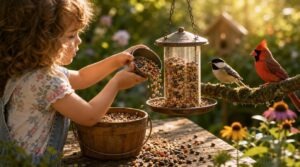
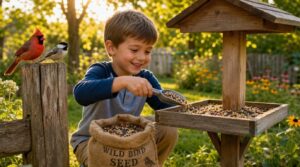
Getting kids involved in filling the feeder is one of the easiest ways to spark a love of nature. Some seeds are especially good for little hands — safe to handle, simple to scoop, and appealing to a wide variety of backyard birds.
Filling the feeder together is one of the easiest ways to spark a child’s love of nature
Here are five seeds kids can help serve.
Black Oil Sunflower
Black Oil Sunflower is the backbone of almost any good seed mix. Its nutrient profile overview is hard to beat — around 50 to 60 percent oil by weight, which keeps birds energized through cold months.
That fat-rich kernel also attracts the widest variety of species, so pairing it with a well-designed best finch feeder for small seeds helps you get the most out of every fill.
For ideal mix percentage, aim for about 75 percent of your blend. Kids love scooping these small, uniform seeds into feeders, making it a natural family outdoor activity.
White Proso Millet
White proso millet is a quiet workhorse in seed blends — small, round, and easy for little hands to scoop. Its gluten-free appeal makes it a safer choice when children are involved.
Growth climate and harvest timing affect freshness, so check for mold before filling up.
The nutrient profile nourishes sparrows and doves beautifully, making this a reliable family outdoor activity seed.
Safflower Seeds
Safflower seeds are a quiet win for family bird feeding. Cardinals and chickadees love them, and squirrels mostly leave them alone — making your feeder a less contested spot.
Their linoleic richness promotes healthy feathers, while their smooth shape and long shelf-life make handling easy for kids.
Try supervised kid-friendly shelling to turn seed mixes into a genuine family tradition.
Hulled Sunflower Chips
Hulled sunflower chips are black oil sunflower seeds with the hard seed hulls removed, providing kids with a mess-free, small-beak-friendly seed they can scoop and serve confidently. With no cracking or seed waste, these quick energy bites are packed with high-fat density and vitamin E-rich goodness.
Here’s why your family will love them:
- Easy handling — smooth chips are simple for little hands to pour
- Clean feeding — no leftover hulls means less cleanup for you
- Bird variety — finches, chickadees, and nuthatches all visit regularly
- Safe storage — moisture-barrier packaging keeps chips fresh and mold-free between uses
Small Cracked Corn Portions
Cracked corn is a surprisingly simple seed that kids can scoop and serve with confidence. Its small particle size (2–4 millimeters) makes it ideal for ground feeders like doves and juncos, while minimizing waste. This quick energy source, rich in starch, fuels birds during cold months.
| Feature | What It Means for Your Family |
|---|---|
| Corn particle size | Easy for small hands to measure and pour |
| Ground feeder compatibility | Doves and juncos feed right at eye level |
| Quick energy source | High-starch fuel birds love in cold months |
| Safe storage practices | Airtight containers prevent mold between uses |
| Seasonal mix adjustments | Add more corn in winter for hungry ground birds |
By combining cracked corn with millet, families can build rituals around feeding time. Maintaining clean feeding stations not only supports bird health but also fosters child development through safe, hands-on nature play. Always prioritize airtight storage to prevent mold and adjust mixes seasonally for optimal bird care.
Match Mixes to Family Feeders
Not every feeder works with every seed, and the wrong pairing can mean wasted mix and frustrated birds. Picking the right blend for your specific feeder makes the whole experience smoother for you and more rewarding for the birds your kids want to see.
Here’s how different feeder types match up with the best seed options.
Tube Feeder Mixes

Tube feeders work best when seed and feeder need to match in size and flow. Small, smooth seeds like Black Oil Sunflower are your best pick — they’re clog-free formulas that keep things moving.
Here’s what makes a great tube feeder mix:
- Seed Size Optimization — small seeds flow through ports without jamming
- Nutrient Balance — sunflower seeds offer high fat and protein for active birds
- Shelf Life Preservation — moisture-resistant, child-handled packaging keeps seeds fresh longer
- Clean Tube Feeders — hull-free bird seed leaves less debris inside the tube
Hopper Feeder Blends
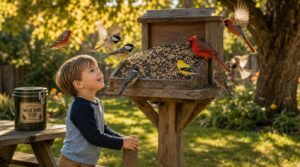
Hopper feeders handle larger, mixed kernels better than tube feeders do, making them great for families. Look for blends built around sunflower and safflower — they balance fat content while keeping dust minimization in check.
Good seed selection for feeders means choosing cost-effective blends with flow optimization and segregation prevention built in.
Moisture management matters too, so always store your mix sealed and dry.
Platform Feeder Seeds
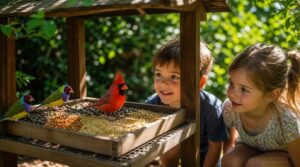
Platform feeders open up a whole new world of nature learning for children. Unlike hopper feeders, these flat, open trays allow kids to observe birds landing and feeding up close.
Good seed selection is key: choose small, uniform seeds—such as birdseed with consistent size—to ensure even flow and prevent clumping.
Look for platforms with:
- Roofed platforms that shield seeds from rain and slow mold growth
- Drainage design features like mesh grates to prevent waterlogging
- Non-skid edges to keep seeds and little hands safe
- Moisture shields that maintain dryness between refills
- Stable mounting to ensure compatibility with your setup
Finch Feeder Nyjer
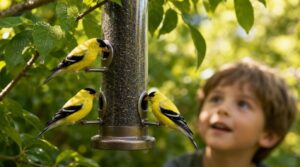
While platform feeders bring birds close, finch feeders take things a step further — attracting delicate goldfinches that kids absolutely love watching. Nyjer seed and finch feeders exemplify why seed and feeder must match: this species-specific seed flows only through small, evenly spaced ports, naturally excluding larger birds.
| Feeder Feature | What It Does | Why It Matters for Families |
|---|---|---|
| Port Spacing | Controls seed flow | Reduces mess children step on |
| Transparent Tubes | Shows seed level clearly | Kids can help with refilling |
| Dome Drainage | Keeps Nyjer dry | Prevents mold near children |
| Antimicrobial Materials | Resists bacteria buildup | Safer for little hands |
| Feeder Capacity | Holds ~1¼ quarts | Less frequent refilling needed |
Spill-reducing Seed Sizes
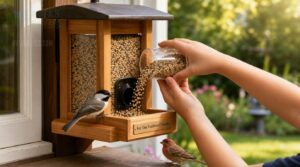
Even one small mismatch between seed size and feeder design can send seeds scattering across your floor. A size-graded blend with compact seed shapes and uniform seed size keeps things tidy and prevents feeder clogs.
- Fine grain mix flows smoothly through ports
- Low-scatter seeds mean less time sweeping
- Matching seed and feeder keeps maintenance simple
Low-Mess Mixes for Busy Parents

Bird feeding with kids should be fun, not a cleanup project. The right seed mix makes a real difference in how much mess lands on your floor or patio.
Here are a few simple things to look for when choosing a low-mess mix your whole family will appreciate.
Shell-free Sunflower Chips
Shell-free sunflower chips make backyard bird feeding genuinely easy for busy families. Processing hygiene starts at the source — mechanical shelling and rapid cooling preserve a strong fatty acid profile while keeping dust low.
Look for Songbird Reserve Shell Free No Mess blends with traceability labels and shelf-life extension packaging.
Paired with Black Oil Sunflower in your seed mix, these chips offer portion accuracy and zero hull mess.
Limited Millet Blends
Too much millet means more mess on the ground — and more cleanup for you. Limited millet blends cap white proso millet and golden millet below 25–40% of the seed mix, making them a smart part of your bird feeding guidelines.
- Protein Boosting Ratios replace millet with safflower or sunflower for better nutrition
- Calorie Reduction Strategies and Alternative Grains like barley keep blends lighter
- Allergy-safe Formulations and Aflatoxin Risk Management mean safer handling for kids
These blends connect children to nature without the worry.
Resealable Seed Storage
Good storage is half the battle with birdseed mixtures. Glass jars with airtight lids and vacuum-sealed bags both lock out moisture and keep seeds fresh for your next family bird-feeding lessons. Adding silica gel desiccants inside containers and placing a digital hygrometer nearby helps monitor humidity levels effectively.
For families, childproof latch caps ensure safer seed selection, enabling little hands to engage with nature securely.
| Storage Option | Best For |
|---|---|
| Glass Jars | Short-term freshness, easy visibility |
| Vacuum Sealed Bags | Long-term storage, waste reduction |
| Childproof Latch Caps | Families connecting children to nature safely |
Pre-measured Serving Portions
Pre-measured portions take the guesswork out of filling feeders. Color-Coded Scoops matched to specific birdseed mixtures mean even small hands can help accurately.
Frequency Scheduling and Portion Waste Minimization matter for family budgets — you use only what birds need.
- Use BPA-Free Pouches sized 250g for hands-on learning
- Follow Calibration Standards: 1–3 tablespoons per feeder fill
- Match scoop color to feeder type
- Schedule fills to stretch high-quality seeds further
- Sealed portions support responsible pet care habits
Easy Cleanup Stations
A cleanup station makes feeder maintenance feel easy rather than overwhelming.
Look for one with a built-in hand sanitizer dispenser and drip tray design to catch spills before they spread.
A lockable storage compartment keeps seed bags safely out of reach.
Wall mounting options free up floor space.
Color-coded labeling helps kids know exactly where to toss seed hulls for easy seed waste management.
Family Bird Feeding Safety Tips

Bird feeding with kids is a lot of fun, but a few simple habits keep everyone safe and healthy. Before you know it, these routines become second nature for the whole family.
Here are the safety tips worth building into your routine.
Wash Hands Afterward
Always remind kids to wash hands right after touching feeders or seed — it’s a simple habit that matters more than you might think. Seed contamination risk, including aflatoxins, is real.
Here’s your quick hand-washing station routine:
- Wet hands with clean running water first
- Lather with soap for a full 20‑second lather
- Focus on thorough rinsing to remove loosened residue
- Use a clean towel as your drying method
Soap selection doesn’t need to be fancy — plain hand soap works perfectly for avian disease prevention.
Keep Seed Dry
Once hands are clean, think about where your seed lives between feedings. Damp seed clumps, clogs feeders, and grows mold quickly.
Store your supply in airtight containers with desiccant packs inside — they absorb hidden moisture and protect seed texture. Cool storage below 10°C slows deterioration.
Moisture barriers and humidity monitoring keep high-quality seeds fresh, so feeder moisture issues simply don’t start.
Clean Feeders Weekly
Dry storage keeps seeds fresh — but what about the feeder itself? Even with high-quality seeds, residue and seed hull disposal are important.
Every week, take feeders apart (most use tool-free disassembly) and scrub them with a bleach solution in a 1:9 ratio.
Sanitize feeder ports thoroughly to prevent clogs and support bird health.
Moisture prevention starts with cleaning schedule tips that your kids can help follow.
Watch for Mold
Even with a clean feeder, the seed inside needs a second look. Mold can quietly take hold, especially when humidity creeps up.
Check your containers regularly for these warning signs:
- Fuzzy white, green, or black patches — visual mold signs on seeds
- A musty odor near your storage area, signaling possible aflatoxins
- Seed clumping, which points to moisture and condensation checks needed
- Discolored specks in your seed mixtures, risking bird health risks
Use a hygrometer for humidity monitoring, and keep storage below 60% humidity.
Container inspection takes seconds but protects both high-quality seeds and your family launching bird feeding lessons together.
Supervise Young Children
Bird feeding with little ones nearby calls for steady, gentle attention. Keep them in sight during every activity shift, and scan the whole yard every 10–15 seconds for sudden moves.
| Supervision Focus | Practical Tip |
|---|---|
| Continuous Visual Supervision | Stay positioned to see all children |
| Staff‑Child Ratio | One adult per four kids works well |
| Hazard Scanning | Check feeders and ground every 10–15 seconds |
Emergency Drill Practice ensures educational backyard projects remain safe for families launching bird feeding lessons together.
Frequently Asked Questions (FAQs)
Why put a potato in your bird feeder?
Potatoes make a surprisingly budget-friendly supplement to your backyard bird feeding routine. They deliver energy carbs and vitamin enrichment, acting as essential winter fuel for birds.
This nutrient-rich addition boosts species attraction when your usual seed mixtures run low, offering a practical solution during colder months.
What is the best combination of bird seeds?
Think of your feeder as a table set for many guests. The best seed mixtures balance Fat Protein Ratio with Nutrient Density Balance.
Black oil sunflower accounts for about 75% for broad, Species-Targeted Mix appeal.
Which birds visit feeders in winter months?
In winter, chickadees, goldfinches, cardinals, blue jays, and nuthatches regularly visit feeders. Each has species-specific seed preferences.
So choosing high-fat seeds like sunflower and nyjer keeps your winter wildlife support reliable and rewarding.
How do I attract specific bird species?
Different birds want different things. Use species-specific seed, match feeder height to each bird’s habits, and rotate seasonally. A simple water feature placement nearby seals the deal.
Can bird feeding affect local wildlife populations?
Yes, it can. Feeding birds influences species composition shift, insect population decline, and even predator attraction nearby.
Nutrient runoff from spilled seed and disease transmission at crowded feeders are real, though manageable, concerns.
What feeder height works best for backyard use?
Most backyard feeders work best at 5 to 6 feet. That height gives you ideal clearance for predator avoidance while welcoming cardinals, finches, and chickadees comfortably.
How much seed does a family need monthly?
Like filling a cookie jar, your monthly seed budget depends on how often you refill. Most families use about 5–10 lbs weekly.
A simple family portion calculator keeps your wild bird seed routine affordable and waste-free.
Conclusion
Funny how something as simple as birdseed can feel complicated once kids are in the picture. But that’s exactly what makes choosing the right bird seed mixes for families with children so rewarding — a little care upfront means more time watching birds and less time worrying.
Clean seeds, safe handling, and the right feeder turn a backyard hobby into something your whole family owns together.
The chickadees will keep showing up. So will the smiles.
- https://www.natgeokids.com/uk/parents/bird-feeding-dos-and-donts
- https://georgiawildlife.com/out-my-backdoor-best-seeds-backyard-bird-feeders
- https://www.paws.org/resources/providing-safe-food-and-water-for-birds
- https://www.funathomewithkids.com/2013/05/birdseed-sensory-play.html?m=1
- https://www.audubon.org/birding/backyard