This site is supported by our readers. We may earn a commission, at no cost to you, if you purchase through links.
Most feeders sit half-empty, not because birds aren’t around, but because the seed inside doesn’t match what they actually eat.
Black-oil sunflower seeds alone can attract over 40 North American species—yet most commercial blends pad their weight with milo and wheat that ground birds ignore, and songbirds avoid entirely.
The difference between a feeder that draws a crowd and one that collects dust usually comes down to three or four specific seeds.
Once you know which bird seed mix attracts the most birds for your region and feeder type, the results show up fast.
Table Of Contents
Key Takeaways
- Black-oil sunflower seeds paired with white proso millet attract more bird species than any other feeder combination, pulling over 25 species at once.
- Commercial seed blends waste your money by padding with milo, red millet, and wheat that songbirds consistently ignore — always check the label for quality seeds listed first.
- Matching your seed to the right feeder type matters just as much as the seed itself: nyjer needs fine mesh ports, millet works best on platform feeders, and sunflower thrives in tube or hopper feeders.
- Seasonal adjustments make a real difference — lean on high-fat seeds like suet and nyjer in winter, refresh seed daily in summer heat, and choose safflower or nyjer to naturally deter squirrels year-round.
Best Bird Seed Mix Formula
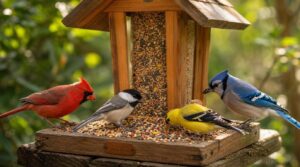
Getting the formula right makes all the difference between a busy feeder and a quiet one. The good news is that attracting the most species comes down to a handful of smart seed choices.
For a deeper look, matching bird seeds to specific species shows exactly which seeds bring in finches, sparrows, and other smaller visitors.
Here’s what your mix should include.
Sunflower and Millet Blend
The sunflower and millet blend is one of the smartest DIY blending choices you can make. Sunflower seeds deliver dense fat — about 40% oil content — while white proso millet adds digestible carbohydrates, creating real nutrient synergy.
This mixed seed blend encourages foraging behavior across multiple species, from chickadees to doves. It’s also a cost-efficient, sustainable sourcing option for year-round wild bird attraction.
Sunflower seeds also offer significantly higher protein content compared to millet.
Highest Species Diversity
A nutrient-balanced mix doesn’t just feed birds — it pulls in a crowd.
Research from the U.S. Fish and Wildlife Service confirms that combining black-oil sunflower with white proso millet delivers the greatest bird species diversity at feeders. Mixed seed blends mimic food source variety found across habitat layers in protected areas and geographic hotspots, boosting abundance metrics by over 25 species simultaneously.
Black-oil sunflower paired with white proso millet attracts more bird species than any other feeder combination
Avoid Filler Seeds
Not every seed in a bag earns its place. Filler seed risks are real — milo, red millet, oats, and wheat look like volume, but most songbirds ignore them.
That’s wasted money and a messy yard. Check labels for high nutrition, nutrient-rich seed ingredients up front.
Waste-free feeding starts with seed blend diversity built on premium seed benefits, not cheap bulk.
Add Nuts for Energy
Once you’ve cleared out the filler, nuts are your next upgrade. Peanuts alone pack 7 grams of protein per ounce — that’s serious high‑energy feed for birds burning calories in the cold.
Smart nut energy sources to add:
- Peanuts – high fat, protein-rich, loved by woodpeckers and jays
- Sunflower kernels – energy dense seeds with ~40% oil content
- Mixed nuts – walnuts and almonds support steady energy release
- Safe nut serving – always offer unsalted, crushed or chopped pieces
- Nut storage tips – keep in airtight containers; discard anything moldy
Seasonal nut use matters too. Bird nut preferences shift with temperature, so lean heavier on high‑fat blends when winter hits.
Use Fresh Seed
Buying fresh seed might be the easiest win in your whole setup. Check for intact kernels, no musty odor, and consistent color — those are your key freshness indicators.
Store seed in airtight packaging or a CO₂-flushed barrier bag to slow spoilage. Rotate stock using first-in, first-out. Good seed storage tips and shelf life extension practices keep every refill working harder for you.
Top 8 Bird Seed Options
Not all bird seeds are created equal, and the right pick can make a real difference in who shows up at your feeder.
Each option below targets specific birds, fits certain feeders, and brings its own strengths to the table.
Here are eight solid choices worth knowing about.
1. Pennington Ultra Songbird Blend Bird Seed
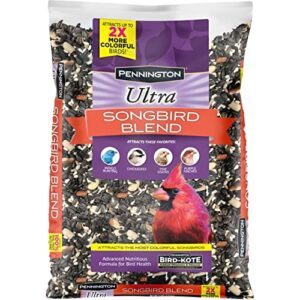
If you want one mix that does a lot of the heavy lifting, the Pennington Ultra Songbird Blend is worth a close look.
It combines black oil sunflower, safflower, peanuts, and dried fruit like raisins and cherries — a lineup that pulls in cardinals, chickadees, goldfinches, nuthatches, and even woodpeckers.
The added vitamins A and D-3 support feather and immune health year‑round.
It works best in a hopper or platform feeder and stays fresh longest in a cool, dry spot.
| Best For | Backyard bird enthusiasts who want a reliable, all-in-one seed mix that attracts a wide variety of songbirds year-round without a lot of fuss. |
|---|---|
| Seed Type | Songbird blend mix |
| Package Weight | 6 lb |
| Bird Attraction | Cardinals, finches, chickadees |
| Made in USA | Yes |
| Squirrel Risk | Moderate |
| Feeder Compatible | Standard feeders |
| Additional Features |
|
- Pulls in a solid mix of popular birds — cardinals, finches, chickadees, and sparrows all tend to show up regularly.
- No grass seed or filler grains, so less mess under your feeder and more of what birds actually eat.
- Long track record with repeat buyers — people stick with it for years, which says a lot.
- Pricier per pound than buying in bulk, so if you go through seed fast, costs add up quickly.
- Some buyers have found red milo in the mix, which contradicts the "no red milo" label claim.
- The 6 lb bag is on the small side — heavy-use feeders will need restocking pretty often.
2. Wagners Black Oil Sunflower Seed
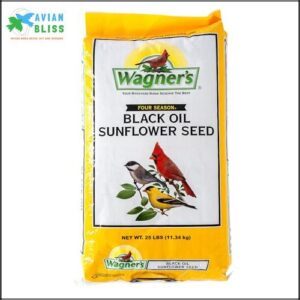
Wagner’s Black Oil Sunflower Seed is about as close to a universal bird magnet as you’ll find. Packed at roughly 40% oil content, each thin-shelled kernel delivers around 4 kcal — real fuel for cardinals, chickadees, finches, nuthatches, and woodpeckers.
The 25-lb bag makes continuous feeding easy, though you’ll want a secondary airtight container since it isn’t resealable.
Use it in a hopper or tray feeder, and replace seed every one to two days to prevent mold.
| Best For | Backyard bird enthusiasts who want to attract a wide variety of songbirds and keep their feeders busy year-round. |
|---|---|
| Seed Type | Black oil sunflower |
| Package Weight | 25 lb |
| Bird Attraction | Cardinals, woodpeckers, finches |
| Made in USA | Yes |
| Squirrel Risk | High |
| Feeder Compatible | Tray, hopper feeders |
| Additional Features |
|
- Thin shells make it easy for small birds like chickadees and finches to crack open, so more birds can enjoy it
- High oil content means real energy — especially helpful during cold months or nesting season
- Works in most common feeder types and attracts a solid range of popular backyard species
- The bag isn’t resealable, so you’ll need a separate airtight container to keep the seed fresh
- Hulls and debris can pile up under the feeder and attract squirrels if you’re not careful
- 25 lbs is a lot to store — not ideal if you’re short on space
3. Coles Sunflower Meats Bird Seed
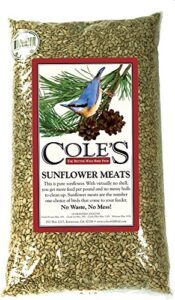
Cole’s Sunflower Meats takes a smart approach: strip the shell before it ever reaches your feeder. What you get is 20 lbs of whole sunflower hearts with no hulls, no fillers, and no wasted seed piling up below the hook.
Chickadees, finches, cardinals, and woodpeckers consume nearly every kernel.
That’s a real advantage on balconies or decks where cleanup is limited. Just transfer the seed to an airtight container after opening — the hulled meats absorb moisture faster than whole seeds.
| Best For | Bird lovers on balconies, decks, or anywhere shell cleanup is a real hassle. |
|---|---|
| Seed Type | Hulled sunflower meats |
| Package Weight | 20 lb |
| Bird Attraction | Chickadees, finches, cardinals |
| Made in USA | No |
| Squirrel Risk | Low to moderate |
| Feeder Compatible | Tube, mesh, bowl feeders |
| Additional Features |
|
- No shells means no mess piling up under your feeder — great for small outdoor spaces
- Attracts a solid variety of songbirds like cardinals, finches, and chickadees
- More edible seed per pound, so you’re refilling less often
- At $61.73 for 20 lbs, it costs more per pound than standard sunflower seed
- The bag isn’t resealable, so you’ll need to move it to airtight storage right away
- Hulled seeds are more prone to moisture and spoilage if not stored properly
4. Wagners Safflower Bird Seed
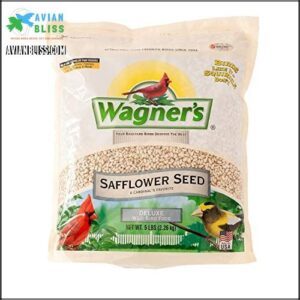
Squirrels raiding your feeder? Wagner’s Safflower Seed (model 57075) is your quiet countermeasure.
Safflower’s naturally bitter taste sends most squirrels elsewhere, while cardinals, chickadees, titmice, and mourning doves show up consistently.
The high oleic fat content keeps birds fueled through cold snaps — real calories, not filler.
At $11.98 for a large resealable bag, it’s easy to store and won’t go stale quickly.
Mix it with black-oil sunflower to broaden your species list without sacrificing that squirrel deterrent edge.
| Best For | Bird lovers who want to attract cardinals and songbirds without constantly fighting off squirrels. |
|---|---|
| Seed Type | Safflower seed |
| Package Weight | Large bag |
| Bird Attraction | Cardinals, chickadees, titmice |
| Made in USA | Yes |
| Squirrel Risk | Low |
| Feeder Compatible | Standard feeders |
| Additional Features |
|
- Naturally deters most squirrels and feeder hogs like grackles — no extra gadgets needed
- Great for a wide range of birds, from backyard cardinals to pet parrots
- Resealable bag keeps seed fresh longer, so you’re not throwing money away
- Squirrels aren’t always deterred — some will eat it anyway
- Pricier than basic sunflower seed, so you may end up mixing it to stretch the bag
- High fat content can go rancid within a year or two if stored poorly
5. Lyric Nyjer Wild Finch Seed
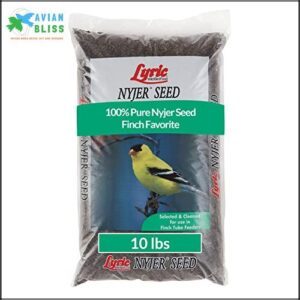
If goldfinches are your target, Lyric Nyjer Wild Finch Seed is hard to beat. These tiny, oil-rich seeds are cleaned, screened, and sterilized before packaging — so you get less dust, less mess, and more finch action.
American Goldfinches, Purple Finches, House Finches, and Pine Siskins all show up reliably when nyjer’s fresh.
One important detail: you’ll need a tube feeder with fine ports or a mesh sock. Standard feeders let these needle-thin seeds spill straight through.
| Best For | Backyard birders who want to draw in finches like goldfinches, house finches, and pine siskins — especially during colder months. |
|---|---|
| Seed Type | Nyjer thistle seed |
| Package Weight | 10 lb |
| Bird Attraction | Goldfinches, purple finches |
| Made in USA | No |
| Squirrel Risk | Low |
| Feeder Compatible | Tube feeders |
| Additional Features |
|
- Cleaned and sterilized so there’s less dust and mess in and around your feeder
- High-oil seeds give finches the calories they need to stay warm through winter
- Reliably pulls in multiple finch species when the seed is fresh
- You need a tube feeder with fine ports or a mesh sock — standard feeders won’t work
- Can feel pricey for a 10 lb bag, especially if you’re feeding a big flock
- Seed loses its appeal over time, so older stock may get ignored by birds
6. Striped Sunflower Bird Seed
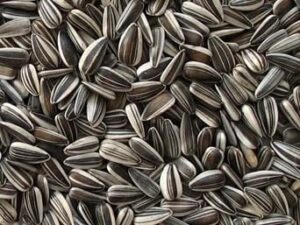
While nyjer reels in the finches, striped sunflower seed casts a wider net. Cardinals, chickadees, nuthatches, and titmice all go for it — and the thicker hull actually makes birds work a little harder, which helps to slow feeding and reduce waste.
With around 40–50% oil content and solid protein levels, it punches above its weight nutritionally.
It fits standard hopper and platform feeders without any special setup, and the 25 lb bag from Home and Country USA runs $38.99.
| Best For | Backyard birders who want to attract a wide variety of songbirds — especially cardinals, chickadees, and nuthatches — without fussing over specialized feeders. |
|---|---|
| Seed Type | Striped sunflower seed |
| Package Weight | 25 lb |
| Bird Attraction | Songbirds, backyard species |
| Made in USA | No |
| Squirrel Risk | Moderate |
| Feeder Compatible | Tube, hopper, platform |
| Additional Features |
|
- High oil and protein content gives birds a solid nutritional boost, especially during migration and breeding season
- Works in tube, hopper, and platform feeders, or just scattered on the ground — no special setup needed
- The thicker hull slows feeding down, which means less waste over time
- Seeds run on the smaller side, so larger bird species may not be as interested
- Shells make a mess, especially with ground scattering — expect some extra cleanup
- Squirrels and other backyard visitors may help themselves if feeders aren’t protected
7. Wagner Cracked Corn Bird Food
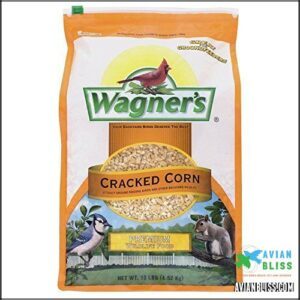
Not every bird eats from a hanging feeder — and that’s exactly where Wagner’s Cracked Corn earns its place. Ground feeders like mourning doves, quail, pheasants, and blue jays thrive on it.
Scatter it on a low tray or bare ground, and you’ll likely see activity within the hour.
At $12.98 for 10 lbs, it’s budget-friendly, but use small daily portions — cracked corn absorbs moisture quickly and can mold quickly if left out too long.
| Best For | Backyard bird lovers who want to attract ground-feeding birds like doves, quail, and blue jays — plus anyone looking to keep squirrels away from their main feeders. |
|---|---|
| Seed Type | Cracked corn |
| Package Weight | 10 lb |
| Bird Attraction | Blue jays, doves, quail |
| Made in USA | Yes |
| Squirrel Risk | High |
| Feeder Compatible | Ground feeders |
| Additional Features |
|
- Pulls in a wide variety of ground feeders and wildlife, so there’s always something to watch
- Works great as a squirrel distraction — toss some on the ground away from your hanging feeders and everyone’s happy
- Easy to mix into other seed blends or use solo in a low tray
- Corn alone doesn’t cover all the nutrients birds need, so it’s better as a supplement than a main feed
- Molds fast if it gets wet, so you’ll need to stay on top of daily portions
- At $12.98 for 10 lbs, it’s a bit pricier than buying corn in bulk
8. Kaytee Ultimate Wild Bird Blend Seed
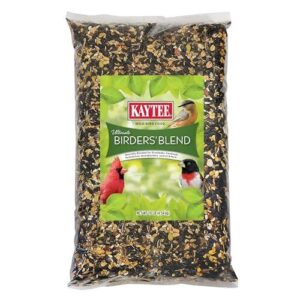
If cracked corn manages the ground crew, the Kaytee Premium Wild Bird Blend Seed tries to cover everyone else.
At $19.99 for 10 lbs, it combines safflower, peanuts, striped sunflower, white millet, and cracked corn — a solid lineup on paper.
Cardinals, woodpeckers, jays, and finches are all on its target list.
One honest caveat: the mix includes milo and artificial flavor, which experts generally flag as low-value fillers.
Use it in a hopper feeder and refresh it every day or two.
| Best For | Backyard bird watchers who want to attract a wide variety of songbirds like cardinals, jays, and finches all at once. |
|---|---|
| Seed Type | Multi-seed blend mix |
| Package Weight | 10 lb |
| Bird Attraction | Cardinals, woodpeckers, blue jays |
| Made in USA | Yes |
| Squirrel Risk | Moderate to high |
| Feeder Compatible | Standard seed feeders |
| Additional Features |
|
- Covers a solid range of species with safflower, peanuts, sunflower, and millet all in one bag
- Made in the USA and works in standard hopper or seed feeders — no special setup needed
- Good source of protein, fat, and fiber to keep birds energized year-round
- Includes milo and artificial flavor, which are generally considered low-value filler ingredients
- Peanuts can pull in squirrels and other unwanted guests
- Lower sunflower content than some buyers expect for the price
Seeds That Attract More Birds
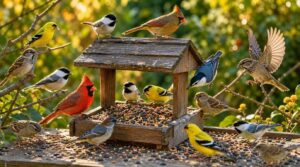
Not every seed pulls equal weight in attracting birds. Some do most of the heavy lifting, drawing in dozens of species, while others are better left off your shopping list.
Here are the seeds worth knowing about.
Black-oil Sunflower Seeds
Black-oil sunflower seeds are the closest thing to a universal currency at your bird feeder. Their shell thinness advantage — hulls just 0.7 to 1.0 mm thick — means even small chickadees crack them easily.
With 38–40% high fat content and broad species appeal covering cardinals, finches, and woodpeckers, their nutritional content is hard to beat.
Ideal storage practices in airtight containers keep them fresh, making cost‑effectiveness analysis simple: more birds, less waste.
White Proso Millet
White proso millet is the go‑to seed for ground bird appeal — mourning doves, dark‑eyed juncos, and native sparrows flock to it. Its small beak accessibility makes it easy for fine‑billed birds to crack open.
Unlike oilseeds, its grain nutrition profile is lower in fat, so pair it with sunflower for balance.
Store it sealed and dry — millet spoils fast when damp.
Safflower Seeds
Safflower is one of those seeds that works like a natural filter. Safflower Nutrition Facts tell the story: it’s high-fat, oil-rich, and energy-dense — exactly what cardinals, grosbeaks, and chickadees need.
As a Cardinal Favorite Seed, it also offers Squirrel-Resistant Feeding since squirrels usually ignore its bitter shell.
The Shell-Free Advantage means less waste. Different bird species pick it cleanly, matching their seed preferences perfectly.
Nyjer for Finches
Tiny but mighty, Nyjer (thistle seeds) is the definitive winter finch feeding magnet. Finch Flocking Dynamics kick in fast — American Goldfinches and Pine Siskins practically stack on tube feeders once they detect fresh seed.
Nyjer Aroma Appeal is real: oil‑rich seed draws species‑specific seed preferences out of the trees.
- Test freshness by squeezing a seed — oil should coat your fingers.
- Seed Freshness Tests monthly; clumping means moisture damage.
- Mesh tube feeders minimize Hull Waste Solutions beneath your feeder.
- Pennington Pride Wild Finch Blend offers a quality pre‑mixed option.
- Replace stale Nyjer every two weeks during peak winter demand.
Cracked Corn Cautions
Cracked corn pulls in doves, bluebirds, and game birds — but it comes with real trade‑offs. Mold Prevention matters here more than with any other seed: in warm or humid conditions, seed spoilage and aflatoxin buildup become genuine Health Hazards for birds.
Storage Essentials include rodent‑proof storage containers and strict Feeding Limits — offer only what birds finish within 24 hours.
One downside: Pest Control at feeders gets harder, since cracked corn draws raccoons and sparrows alongside the birds you want. Squirrel deterrence is nearly impossible with corn on open trays.
Match Mixes to Feeders
The right feeder makes a real difference in which birds show up and how much seed actually gets eaten. Not every mix works well in every feeder — pairing them correctly saves money and attracts more of the species you want.
Here are the five feeder types worth knowing about.
Hopper Feeders for Blends
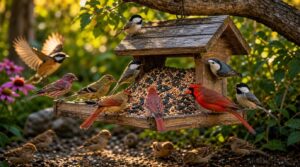
A hopper style feeder is basically the Swiss Army knife of bird feeders — it accommodates premium gourmet mixes with ease. Blend distribution mechanics work through gravity, so black oil sunflower seeds and millet flow steadily to waiting birds.
- Adjust seed flow using the built‑in slider for less waste
- hopper material durability rated for UV and moisture
- Clean blend residues weekly to prevent mold buildup
- squirrel‑proofing designs with weighted perch mechanisms
- high fat mixes to attract more bird species
Tube Feeders for Sunflower
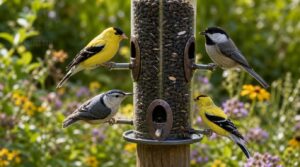
Tube feeders are the workhorses of sunflower feeding. Their transparent cylinders let you monitor seed levels instantly, and standard 1/4-inch ports handle black oil sunflower seeds and hulled sunflower seeds without clogging — that’s seed flow efficiency in action.
| Feature | Benefit | Best Seed |
|---|---|---|
| Metal ports | Squirrel-proof designs | Black oil sunflower |
| UV-resistant tube | Weather-resistant materials | Hulled sunflower seed |
| Adjustable hanging wire | Mounting strategies | Energy dense seeds |
Port optimization and high fat, energy-dense seeds make every visit count.
Mesh Feeders for Nyjer
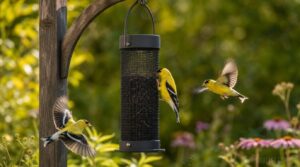
Nyjer calls for its own feeder type. Unlike sunflower, Nyjer seed dispersion depends on fine mesh openings — roughly 1/16 inch — that match the seed’s tiny size while letting goldfinches cling and feed naturally.
That’s seed size compatibility working exactly as designed.
Look for weatherproof materials like powder-coated steel and hang your mesh feeder at five to six feet for ideal hanging height and finch traffic.
Platform Feeders for Millet
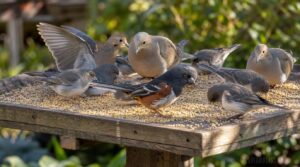
Millet works best on a flat, open surface — that’s where platform feeders shine. Ground‑feeding birds like juncos, towhees, and mourning doves don’t naturally cling to tubes. A platform 8–12 inches wide gives them room to land and feed comfortably.
Key platform feeder tips for wild bird attraction:
- Ideal perch spacing of 2–3 inches suits sparrow-sized birds perfectly
- Weatherproof feeder placement — 3–5 feet up, near shrubs — improves ground bird access
- Millet freshness tips and cleaning best practices: refill every 1–2 days and scrub weekly
Suet Cages for Winter
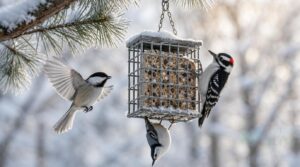
While platform feeders handle millet beautifully, winter calls for a completely different tool: the suet cage.
Offering suet in winter will bring the birds — especially woodpeckers, chickadees, and nuthatches — that need high‑fat calories when temperatures drop hard.
| Suet Cage Feature | Why It Matters |
|---|---|
| Suet Cage Materials (galvanized steel) | Resists rust through freeze‑thaw cycles |
| Squirrel‑Proof Designs (weight‑activated clamps) | Keeps suet mixes reserved for target species |
| Placement Strategies (shaded, 5+ feet up) | Prevents melting and deters predators |
| Winter Cleaning (weekly wash, full dry before refill) | Stops mold from contaminating winter bird food |
Seasonal Bird Seed Mix Tips
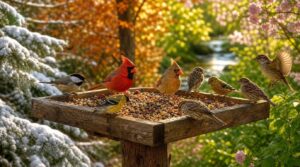
Birds don’t need the same thing in January that they do in July, and your feeder setup should reflect that.
Adjusting your seed mix through the year can mean the difference between a quiet yard and a busy one.
Here’s what to keep in mind across each season.
High-fat Winter Mixes
Winter is when your feeders matter most. Cold nights burn through a bird’s fat reserves fast — so high fat, energy-dense seeds aren’t optional; they’re survival fuel.
Build your winter bird food around these Fat Seed Rankings:
- Black-oil sunflower — roughly 50% fat, the top recommendation
- Suet — highest caloric density of any feeder food
- Nyjer — small but surprisingly rich in Winter Nutrition Needs
Cost-Effective Mixes combining these three cover most species without waste.
Migration-friendly Seed Blends
Migration changes everything at your feeders. As birds pass through in spring and fall, they need Migration Stage Nutrition — fast calories to keep moving.
A high-energy feed combining black-oil sunflower, nyjer, and white proso millet covers most species. These energy-dense seeds and high-fat seeds support migratory bird attraction across stopover days.
Native Seed Sources and Climate-Resilient Mixes with Forb Seed Benefits and Antioxidant Seed Boosts help birds refuel efficiently.
Summer Freshness Checks
Summer heat is seed’s worst enemy. Check your feeders every day — clumping, a musty smell, or dull color are clear spoilage signs.
Humidity control matters too: store your supply in airtight packaging inside rodentproof storage containers, kept in dry storage conditions away from heat.
seed rotation, pulling older stock first. Small, frequent refills beat bulk feeding every time for freshness.
Squirrel-resistant Seed Choices
Squirrels don’t stand a chance when you choose the right seeds. Three options work especially well for squirrel deterrence:
- Safflower — Safflower Resistance is real; its thick shell thwarts most squirrels
- Nyjer Feeder Use — tiny ports make nyjer nearly squirrelproof
- Capsaicin Treatments — birds ignore the heat; squirrels hate it
- Millet Squirrel Deterrent — low fat means low squirrel interest
Pair these with smart Seed Storage Solutions for genuinely squirrelproof birdseed.
Reducing Waste and Mess
A messy feeder yard isn’t just annoying — it’s wasteful. Installing trays under feeders catches spills instantly.
Feeder Placement Tips, like positioning over mulch or compost areas, turn Composting Seed Waste into something useful.
Choose shell‑free sunflower (hulled kernels) and no‑mess mixes — low‑mess seed options that leave almost no debris.
Portion Control Strategies, like refilling small amounts daily, keep seed fresh and waste minimal.
Frequently Asked Questions (FAQs)
Why put a potato in your bird feeder?
Cooked potato is a surprising winter energy source for birds. safe, plain, and cheap.
Crows and larger birds love it.
Skip raw — solanine is toxic. Think of it as a bonus alongside your best birdseed.
How often should bird feeders be cleaned?
Clean your feeders every two weeks — weekly when it’s hot or rainy.
A quick scrub with soapy water and a 10% bleach rinse prevents mold, seed spoilage, and disease in visiting birds.
Do certain seeds attract predators near feeders?
Yes, some seeds do. Corn and peanuts are the biggest mammal attractants — raccoons and skunks follow the scent fast.
Spilled seed pulls rodents within 50 meters, which then draws predators closer to your feeder.
Can bird seed harm native plant ecosystems?
Bird seed can pose real risks to native plant ecosystems. Spillage introduces invasive species that outcompete local flora, causing habitat alteration and biodiversity disruption.
Promptly clearing seed waste helps reduce these threats.
Which seeds are safe for baby birds?
For nestlings, stick to small, soft seeds like millet or hulled sunflower — never hard shells. Soak seeds briefly, pair with protein-rich formula, and always skip moldy or salted options.
Does feeder placement affect how many birds visit?
Absolutely — feeder placement strategies matter as much as seed choice. Positioning backyard feeders 6–8 feet high, near shelter, and away from wind corridors can boost daily visits by up to 20 percent.
Conclusion
Your feeder doesn’t need a complete overhaul—just smarter choices. Swapping out low-performance filler for the right combination simply gives your local birds a better dining experience.
Knowing which bird seed mix attracts the most birds means you’re no longer guessing; you’re working with how birds actually feed. Black-oil sunflower, white millet, and nyjer do the heavy lifting.
Match them to your feeder type, keep the seed fresh, and the birds will handle the rest.
- https://www.kingsyard.com/blog/ultimate-guide-to-choosing-the-perfect-bird-feeder-for-every-seed-type
- https://www.allaboutbirds.org/news/types-of-bird-seed-a-quick-guide
- https://www.flockingaround.com/post/which-birdseed-is-best-for-attracting-birds
- https://littlerock.wbu.com/all-seed-is-not-created-equal