This site is supported by our readers. We may earn a commission, at no cost to you, if you purchase through links.
Something shifts in mid-March that most people miss. The birds moving through your yard aren’t just passing through anymore—they’re scouting. A female chickadee inspecting that old fence post, a bluebird hovering near a hollow limb—these are house hunters, and the decisions they make in the next few weeks will determine where their chicks are born.
Attracting nesting birds this spring isn’t about scattering extra seed and hoping for the best. The right nest box dimensions, a patch of leaf litter, a shallow birdbath—small, specific choices that transform your yard into a place birds actually choose to raise a family.
Table Of Contents
- Key Takeaways
- Prepare Your Yard for Spring Nesting
- Choose Birdhouses That Fit Species
- Place Nest Boxes Safely
- Plant Native Nesting Habitat
- Offer Spring Nesting Foods
- Provide Water and Nesting Materials
- Top 8 Spring Nesting Bird Supplies
- 1. Recycled Poly Lumber Bluebird Bird House
- 2. Modern Poly Lumber Robin Roost
- 3. Woodlink Audubon Wrap Around Squirrel Baffle
- 4. Flowing River Farm- Bird House Wire Entrance Predator Guard
- 5. Birdfy Smart Bamboo Bird Feeder with Camera
- 6. Kaytee Dried Mealworms for Wild Birds
- 7. Black Oil Sunflower Seeds for Wild Birds
- 8. Heath Orange Burst Bird Suet Cakes
- Frequently Asked Questions (FAQs)
- How to attract birds to make nests?
- Why put a potato in the bird feeder?
- What are the common mistakes when building a birdhouse?
- How do I know if a nest is abandoned?
- Can birds reuse the same nest box yearly?
- What attracts birds to a yard in spring?
- How do weather changes affect spring nesting success?
- Should I remove old nests between nesting seasons?
- Conclusion
Key Takeaways
- Birds start scouting nesting spots as early as mid-February, so setting up the right nest box — with exact hole sizes like 1.5 inches for bluebirds and 1⅛ inches for chickadees — before the rush gives them a real reason to choose your yard.
- Leaf litter, brush piles, and native trees like oaks and willows aren’t just yard clutter — they’re the caterpillar factories that feed hungry chicks, and chickadee parents alone need 6,000 to 9,000 caterpillars per brood.
- Where you place a nest box matters just as much as the box itself — mount it 5 to 10 feet high on a smooth metal pole with a baffle, face the entrance away from afternoon sun and prevailing winds, and keep boxes at least 25 feet apart.
- Feeding nesting birds goes beyond seed — live or rehydrated dried mealworms, calcium-enriched suet, and crushed baked eggshells give breeding adults and growing chicks the protein, fat, and calcium they actually need to survive.
Prepare Your Yard for Spring Nesting
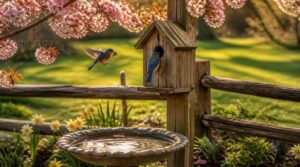
Spring arrives fast, and birds start scouting nesting spots earlier than most people expect. A few simple changes to your yard can make a real difference before the season hits its stride. Here’s what to do first.
Getting started in February gives you the best shot, so check out these sparrow-friendly habitat tips before the rush begins.
Remove Winter Debris Carefully
Start with a gentle rake. After snowmelt, walk your yard and clear fallen leaves, small branches, and hidden debris before nesting season kicks off. You should also prune dead branches that may have been damaged during the winter. Bag debris in breathable containers and move it away from habitat areas.
Use a light touch — ground-nesting birds may already be active nearby. Wear gloves and long sleeves to protect yourself from sharp objects along the way.
Preserve Natural Nesting Cover
Once you’ve cleared the obvious clutter, resist the urge to tidy everything else.
Leaf litter, brush piles, and dead wood aren’t eyesores — they’re exactly what nesting birds need. Dense ground cover hides nests from predators. Native shrubs host the caterpillars that feed hungry chicks. And fallen logs and snags supply insects, cavities, and safe perches all season long.
Limit Early Spring Pruning
The same goes for your pruning schedule. Hold off on heavy cuts until birds have settled in — shrubs and hedges that seem overgrown are often prime nesting spots.
Pruning too early removes dormant wood that stores energy for spring growth. Wait until you’re past your last frost window, then prune lightly with clean, sharp tools.
Keep Pets Away
Your pets mean well, but cats and dogs are serious avian predators during nesting season. A cat doesn’t need to catch a bird to cause harm — even nearby presence stresses nesting adults.
Keep cats indoors. Install a physical fence with a buried apron to stop dogs from digging under. Add motion-activated sprinklers at yard borders and apply citrus repellent near nesting zones.
Watch for Nesting Activity
Once nesting season kicks in, the birds themselves will show you where to look. Watch for repeated trips to the same shrub or tree hollow — that’s a strong sign of nest site fidelity. You’ll also notice alarm calls spiking when anything comes near.
Feeding trips peak in early morning, so that’s your best window to observe quietly.
Choose Birdhouses That Fit Species
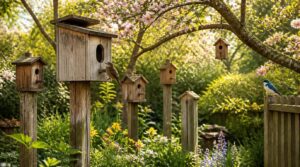
Not every bird will move into just any box you put up. The right fit — regarding hole size, floor space, and depth — makes all the difference between a nest that thrives and one that stays empty. Here’s what to look for when choosing a birdhouse that actually works.
Bluebird Box Dimensions
Bluebirds are picky about real estate. For Eastern bluebirds, aim for a 4 x 5.5-inch floor and a 1.5-inch entrance hole. Interior depth should sit between 8 and 12 inches — too shallow and the hen can’t move freely.
Add small ventilation holes near the top and drainage holes at the bottom to keep nestlings dry and healthy.
Chickadee Entrance Size
Chickadees need a snug fit — not just for comfort, but for safety. The entrance hole diameter must be exactly 1 1/8 inches. That small opening keeps larger predators and aggressive birds out while letting chickadees slip right in.
- Box floor dimensions: 4 x 4 inches
- Predator exclusion design: tight 1 1/8-inch hole limits access
- Mounting height guidelines: 5 to 10 feet off the ground
Proper Interior Depth
Interior depth is one of those details that quietly makes or breaks a nest box.
For chickadees and bluebirds, aim for 6 to 7 cm (about 2.4 to 2.8 inches) from entrance to back wall. That snug depth keeps chicks comfortable, discourages larger competing species, and gives fledglings just enough room to grow before they’re ready to fly.
Ventilation and Drainage
A good nest box isn’t just about size — it also needs to breathe and stay dry.
- Add ventilation gaps near the top to let warm, humid air escape
- Drill drainage holes in the floor corners to shed any moisture that gets in
- Face the entrance away from rain to balance airflow and rain protection
Moisture is a quiet threat to developing chicks.
Avoid Decorative-only Houses
That pretty birdhouse at the garden center might look charming, but decorative-only houses can actually harm the birds you’re trying to help. They often trap heat, lack drainage, and use smooth surfaces cavity-nesting birds can’t grip. Without proper hole dimension standards, predators slip right in. Always choose functional nesting boxes with baffles and predator-proof design over looks.
| Feature | Why It Matters |
|---|---|
| Entrance hole size | Keeps out predators |
| Interior depth | Protects fledglings |
| Ventilation gaps | Prevents heat buildup |
| Drainage holes | Removes moisture |
| Baffle-ready pole | Blocks climbing threats |
Place Nest Boxes Safely
Getting the right box is only half the job — where you put it matters just as much. A poorly placed nest box can go unused all season, no matter how perfect the dimensions are. Here’s what to keep in mind when mounting yours.
Mount Five to Ten Feet
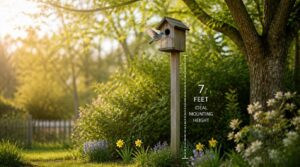
Hang your nesting boxes 5 to 10 feet off the ground — that sweet spot works for most garden bird species. It’s high enough to discourage climbing predators, but easy enough for you to monitor.
Mid-slope areas with moderate shade tend to be ideal. Keeping bird-friendly space at this height gives nesting birds the security they need to settle in confidently.
Face Away From Harsh Weather

Once your box is at the right height, the next step is pointing it in the right direction. Wind orientation matters more than most people expect. Facing your nesting boxes away from prevailing winds, rain, and harsh afternoon sun keeps the interior stable — and that stability is exactly what incubating parents need.
- Face away from storms to block wind-driven rain from entering the entrance hole.
- Avoid afternoon sun to prevent dangerous heat buildup inside.
- Sheltered placement reduces sudden temperature drops during spring storm fronts.
- Use a rain shield orientation — usually facing north or east works well.
- A Portal Guard or Noel Guard adds extra protection when weather turns rough.
Space Houses Apart

Pointing your boxes in the right direction is only half the battle. Territory separation distance matters just as much. Keep at least 25 feet between birdhouses to prevent fights over nesting spots. Birds are territorial — too close, and they’ll harass each other instead of raising chicks.
A microhabitat placement strategy, spreading houses across varied areas, attracts different species naturally.
Use Predator-safe Poles
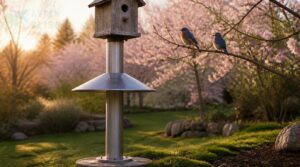
Spacing your houses protects territory, but predator-safe poles protect lives.
- Mount boxes on smooth metal poles — raccoons and squirrels can’t grip them.
- Add a guard flange baffle that extends outward to block climbing reach.
- Use durable aluminum guards sized to your pole diameter.
- Secure poles firmly with concrete for wind stability.
- Check hardware annually — regular maintenance keeps barriers effective.
Skip Entrance Perches
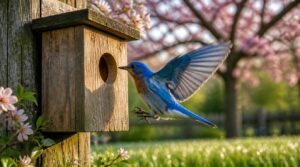
Remove the perch — it’s one of the easiest upgrades you can make. No perch design keeps starlings and sparrows from loitering at the entrance and targeting nesting birds inside. Cavity-nesting birds like bluebirds and chickadees don’t need a perch; they fly straight in.
A textured interior wall gives nestlings the grip they need to climb toward the entrance naturally.
Plant Native Nesting Habitat
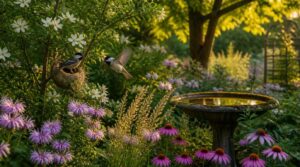
The best habitat you can offer nesting birds starts right in your own backyard. Native plants do more than look good — they fuel the whole food chain that birds depend on during breeding season. Here are five simple ways to build that foundation.
Grow Oak and Willow
Think of oaks and willows as the backbone of your native habitat integration. Oaks alone can support thousands of caterpillars — exactly what spring birds need to feed their chicks. Willows attract early insects and provide quick shade over nesting sites. Plant both, and you’re building a living pantry right in your backyard.
Here’s what helps them thrive:
- Oak planting depth — set the root flare at or just above soil level
- Willow soil moisture — plant in consistently moist spots, like low areas or near rain gardens
- Watering young trees — water deeply twice a week for the first two growing seasons
- Mulching around roots — apply 2–3 inches of mulch to hold moisture and suppress weeds
- Native plants pairing — combine oaks and willows with bird-friendly plants nearby for layered habitat
These two trees do the heavy lifting so nesting birds have food, shelter, and cover all in one place.
Add Serviceberry Shrubs
Adding serviceberry shrubs is one of the smartest moves you can make for nesting birds. These berry-producing shrubs ripen fruit in early summer — right when parent birds need easy calories and chicks need hydration.
| What to Do | Why It Matters |
|---|---|
| Plant in full sun | More sunlight means larger fruit crops |
| Prep well-drained loam | Reduces root rot risk |
| Prune after flowering | Protects next year’s berry wood |
Plant in spring after the last frost, and your birds will thank you.
Keep Leaf Litter
That pile of leaves you raked away last fall? It was actually a five-star bird habitat.
Leaf litter harbors beetles, ants, and moth larvae — exactly the invertebrates nesting birds hunt for chicks. It locks in soil moisture, cycles nutrients back slowly, and suppresses weeds naturally. Leave it in garden beds and corners. Your yard does more for birds when it looks a little untamed.
Leave Deadwood Safely
Dead branches aren’t eyesores — they’re natural shelter for cavity-nesting birds that can’t find spots elsewhere.
- Do Deadwood Inspection each spring for loose limbs
- Practice Rot Prevention by keeping wood dry
- Monitor Moisture Monitoring after heavy rains
- Use deadwood for Erosion Control near nesting spots
- Share Community Education tips with neighbors about wild gardens
Keep untamed areas. Birds will find them.
Support Caterpillar Abundance
Caterpillars are the backbone of nesting season — chickadee parents need 6,000–9,000 of them per clutch. That’s a lot of hunting.
Chickadee parents hunt down 6,000 to 9,000 caterpillars per clutch — nesting season runs on caterpillars
Planting native oaks and willows gives you the best shot at hitting those numbers, since they host far more caterpillar species than ornamental trees do. Keep your leaf litter intact, too — it shelters overwintering larvae right where hungry birds can find them.
Offer Spring Nesting Foods
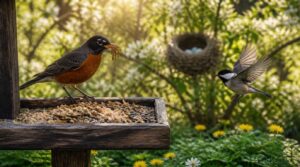
Feeding nesting birds well can make a real difference in how many chicks survive to fledge. Spring is when adults need extra fuel, and growing chicks need even more. Here are the best foods to offer right now.
Live or Dried Mealworms
Choosing between live vs dried mealworms comes down to what your birds need most. Live mealworms carry around 60 percent moisture, making them softer and easier for nestlings to swallow. Dried mealworms pack 46 to 52 percent protein, a serious boost for breeding adults.
- Live mealworms attract birds instantly through movement
- Dried mealworms store easily in airtight containers
- Rehydrate dried mealworms in warm water for chicks
- Fat content in dried runs 25 to 35 percent
- Both types support feather and muscle growth
Suet for Breeding Adults
Mealworms are great, but suet is where breeding adults really refuel. Think of it as their daily power meal. Suet cakes deliver concentrated fat and protein exactly when birds need both — during nest building and chick care.
Choose insect-enriched suet for extra protein, or calcium-enriched suet to support eggshell quality. Always place suet in shade, and swap out any soft or moldy pieces promptly.
Unsalted Chopped Peanuts
Peanuts pull double duty at the feeder. Unsalted chopped peanuts pack about 7 to 8 grams of protein per ounce — real fuel for nesting adults burning energy around the clock.
Scatter them in a tray feeder or mix them into suet. Store in a cool, dry spot, and smell-check often. A sour odor means toss them.
Prepared Crushed Eggshells
Birds need calcium just as much as protein during nesting season. Crushed eggshells give laying females a direct, natural source.
Boil shells five minutes, then bake at 250°F for 10 minutes to kill bacteria. Crush them fine and scatter in a shallow tray near your feeders.
It’s a simple step with a real payoff for nesting success.
Rehydrated Mealworms for Chicks
Watching chicks thrive starts with the right food. Rehydrate dried mealworms in warm, clean water for 10–15 minutes before serving. Softer texture means easier swallowing for tiny beaks.
- Deliver 50–60% protein to support rapid muscle growth
- Aid hydration during warm nesting season days
- Reduce choking risk near nesting boxes
- Serve promptly — discard after a few hours
A small step, big payoff.
Provide Water and Nesting Materials
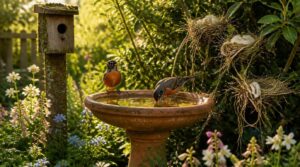
Birds need more than just food and shelter to raise a healthy brood — water and nesting materials matter just as much. Getting these two things right can make the difference between birds choosing your yard or moving on. Here’s what actually works.
Shallow Birdbath Water
Think of your birdbath as a shallow water spa for nesting birds. Keep the water 1 to 2 inches deep — just enough to drink and bathe safely.
Place it in partial shade to keep the water cool and fresh longer. Change the water every one to two days, especially in warm weather, to stop bacteria from building up.
Stones for Safe Landing
Drop a few flat stones into your birdbath to create safe landing perches for birds. Choose granite or limestone — they’re tough, grip well when wet, and won’t crack through freeze-thaw cycles. Each stone should be at least 15 cm wide to support steady footing.
Clean them monthly to remove algae, and replace any cracked ones every few seasons.
Moving Water Features
Still water goes stale fast — and birds notice. A solar-powered bubbler or mister keeps your birdbath fresh and attracts birds with sound and movement.
Choose a submersible pump rated for your bath’s volume, measured in gallons per hour. The gentle ripple also masks urban noise, making your yard feel like a natural retreat birds trust.
Natural Grasses and Twigs
Birds are master builders — and they do their best work with what nature provides.
Dried grass stems and twigs are their go-to materials. Native grasses offer long, flexible fibers perfect for weaving, while small twigs add structure and wind resistance.
Leave fallen stems in your yard and you’ve already built a nesting supply station.
Avoid Dryer Lint
Dryer lint feels soft, but it’s one of the worst things you can offer during nesting season. When wet, those fibers unravel and collapse — trapping chicks instead of warming them. Stick to natural grasses and twigs for your bird-friendly space.
And keep that lint trap clean; regular vent inspection and dryer vent cleaning every 6–12 months actually prevent house fires.
Top 8 Spring Nesting Bird Supplies
The right supplies can make all the difference when birds are looking for a safe place to nest and raise their young. Whether you’re just starting out or adding to what you already have, these eight picks cover the essentials. Here’s what’s worth having on hand this spring.
1. Recycled Poly Lumber Bluebird Bird House
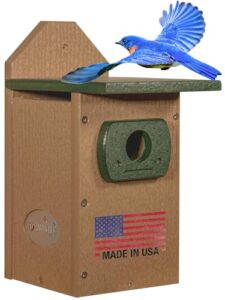
If you’re serious about welcoming bluebirds to your yard, this recycled poly lumber bluebird house is worth a close look. It features a 1.5-inch entrance hole — the exact size bluebirds need — plus a raised mesh floor to reduce blowfly infestations. The hinged side panel makes seasonal cleaning simple.
Built with stainless steel fasteners and weather-resistant poly lumber, it won’t rot, crack, or fade. Mount it 5 to 8 feet high, and you’re set.
| Best For | Backyard birders who want a low-maintenance, durable home specifically designed to attract Eastern or Western Bluebirds. |
|---|---|
| Primary Use | Bluebird nesting habitat |
| Material | Recycled poly lumber and stainless steel |
| Target Species | Eastern and Western Bluebirds |
| Key Benefit | Weather-resistant and rot-proof construction |
| Main Drawback | Lid gaps may allow water or snakes |
| Eco-Friendly | Yes — recycled poly lumber |
| Additional Features |
|
- Built from recycled poly lumber, so it won’t rot, crack, or fade — even in wet or humid climates
- The 1.5-inch entrance hole is spot-on for bluebirds, and the extra material around it helps keep squirrels out
- Side-opening door makes end-of-season cleaning quick and easy
- Gaps between the lid and box could let in rainwater or give small predators like snakes a way in
- Mounting options are limited — no bottom lip means attaching it directly to a post takes some extra work
- No raised mesh floor included, which some bluebird enthusiasts consider a must for reducing blowfly larvae
2. Modern Poly Lumber Robin Roost
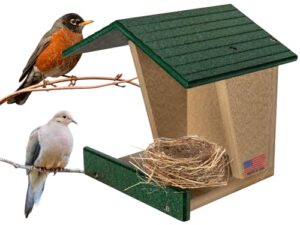
Robins nest on open platforms, not in enclosed boxes — and that’s exactly where this Modern Poly Lumber Robin Roost shines. It measures 9.5" wide by 8" deep, giving robins, phoebes, and swallows plenty of room to settle in. The recycled poly lumber won’t warp, crack, or fade, and it cleans up easily with soap and water.
Pre-drilled mounting holes make installation straightforward. Just attach it 5 to 10 feet high, face the opening away from wind, and you’re ready.
| Best For | Backyard birders who want to attract robins, phoebes, or swallows and prefer a low-maintenance, eco-friendly option that’s built to last. |
|---|---|
| Primary Use | Robin and swallow nesting |
| Material | Recycled poly lumber |
| Target Species | Robins, phoebes, doves, swallows |
| Key Benefit | Durable eco-friendly nesting support |
| Main Drawback | Basic design requires mounting |
| Eco-Friendly | Yes — recycled poly lumber, made in USA |
| Additional Features |
|
- Made from recycled poly lumber, so it won’t warp, crack, or fade — even after years of weather
- Pre-drilled holes make mounting quick and easy, no extra hardware hunting required
- Open platform design is exactly what robins and similar birds actually prefer for nesting
- Needs to be mounted to a surface, so it’s not a freestanding option
- Basic design with no added features like a roof overhang or drainage holes
- Only comes in green, so color options are limited if that matters to you
3. Woodlink Audubon Wrap Around Squirrel Baffle
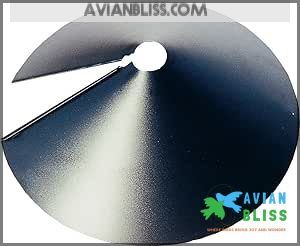
A good nest box only works if pests can’t reach it. That’s where the Woodlink Audubon Wrap Around Squirrel Baffle earns its place.
Its 18-inch diameter creates a wide shield that stops squirrels and raccoons cold. The powder-coated steel resists rust season after season.
Best of all, the wrap-around design lets you install it without removing your existing feeder. Mount it 4 to 5 feet high, and climbing animals simply slide off.
| Best For | Bird lovers who want to protect their feeders from squirrels and raccoons without starting from scratch on their setup. |
|---|---|
| Primary Use | Squirrel and pest deterrent |
| Material | Powder-coated steel |
| Target Species | All feeder bird species |
| Key Benefit | Tilting mechanism slides off climbers |
| Main Drawback | Ineffective near jumpable objects |
| Eco-Friendly | Not specified |
| Additional Features |
|
- Wrap-around design means you can install it without touching your existing feeder or pole
- Wide 18-inch diameter gives climbing pests nowhere to go — they just slide right off
- Powder-coated steel holds up through rain, sun, and everything in between
- Won’t do much if squirrels can jump from a nearby tree or fence within 5 feet
- Has to be mounted at just the right height (4 to 5 feet) to actually work
- The snap-seam assembly needs a specific inward pressure to close properly, which can be a little fiddly
4. Flowing River Farm- Bird House Wire Entrance Predator Guard
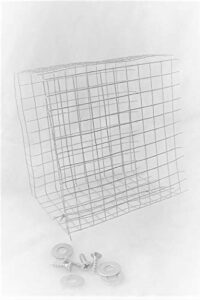
The Woodlink baffle stops climbers at the pole — but what about predators that reach the hole directly? That’s where the Flowing River Farm Wire Entrance Guard steps in.
This all-metal, handmade guard wraps around your bluebird box entrance, keeping raccoon paws and snake heads from ever reaching your eggs or chicks. It installs with just a Phillips screwdriver. Handle it carefully though — those sharp edges are intentional, and they mean business.
| Best For | Bluebird box owners who want a simple, tough barrier against raccoons, cats, and snakes reaching in through the entrance hole. |
|---|---|
| Primary Use | Predator entrance guard |
| Material | Galvanized metal |
| Target Species | Bluebirds and fledglings |
| Key Benefit | Sharp edges deter raccoons and cats |
| Main Drawback | Sharp edges require careful handling |
| Eco-Friendly | Not specified |
| Additional Features |
|
- Built from galvanized metal and made by hand in the US — it’s sturdy and built to last
- Installs fast with just a Phillips screwdriver, no extra tools needed
- Sharp edges do the heavy lifting, discouraging predators without harming the birds inside
- Those sharp edges mean you need to handle it carefully during installation
- Won’t stop snakes from climbing the pole — you’ll need a separate pole guard for full protection
- Some birds may take a little time to get comfortable with the new entrance shape
5. Birdfy Smart Bamboo Bird Feeder with Camera
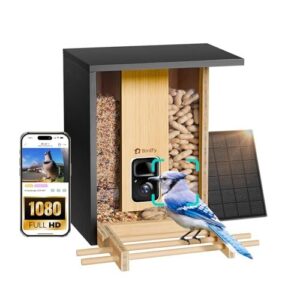
Now you can actually see who’s visiting your yard. The Birdfy Smart Bamboo Bird Feeder pairs a solar-powered camera with AI bird identification — no subscription needed. Its 2K wide-angle lens captures clear footage day and night, while motion alerts ping your phone the moment a bird lands.
The FSC-certified bamboo blends beautifully into any garden setting. Just note: it runs on 2.4GHz WiFi only, and you’ll want a sturdy mount given its 5.85kg weight.
| Best For | Bird lovers and families who want a low-maintenance, tech-forward feeder they can enjoy from their phone without paying monthly fees. |
|---|---|
| Primary Use | Entrance hole protector |
| Material | Copper and wood composite |
| Target Species | Eastern Bluebirds |
| Key Benefit | Prevents predators from enlarging entrance |
| Main Drawback | Thin metal may bend during install |
| Eco-Friendly | Not specified |
| Additional Features |
|
- Solar charging keeps the battery topped up so you’re not constantly swapping batteries
- AI bird ID works right in the app — no subscription, no extra cost
- FSC-certified bamboo looks great in a garden and holds up better than regular wood thanks to the carbonized finish
- Only works on 2.4GHz WiFi, so newer routers set to 5GHz will need a quick settings tweak
- Bamboo can warp or crack over time if it takes a beating from the weather
- At nearly 6kg, it’s heavier than most feeders — you’ll need a solid mount before putting it up
6. Kaytee Dried Mealworms for Wild Birds
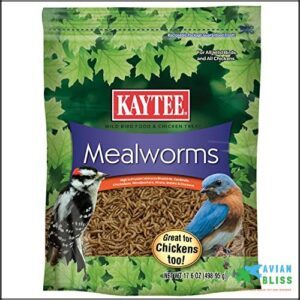
Few foods get nesting birds as excited as mealworms. Kaytee Dried Mealworms are 100% dried, preservative-free, and oven-dried to lock in roughly 47% crude protein — exactly what bluebirds, wrens, and woodpeckers need during breeding season. They’re a genuine lifeline for parent birds pushing through chick-rearing.
The resealable packaging keeps things fresh between uses. Try soaking a handful in warm water first — rehydrated mealworms are easier for nestlings to digest.
| Best For | Bird enthusiasts who want to attract bluebirds, wrens, and woodpeckers — especially during nesting season when parent birds need a reliable high-protein food source. |
|---|---|
| Primary Use | Smart bird feeder |
| Material | FSC-certified carbonized bamboo |
| Target Species | Diverse backyard birds |
| Key Benefit | AI bird ID with no subscription |
| Main Drawback | Bamboo may warp in prolonged weather |
| Eco-Friendly | Yes — FSC bamboo, solar-powered |
| Additional Features |
|
- 100% pure dried mealworms with no preservatives or additives, so you know exactly what you’re feeding your birds
- Resealable packaging keeps them fresh, and you can rehydrate them in warm water for easier feeding to nestlings
- Versatile enough to use solo or mix with seed, and works for chickens and small animals too
- Some bags may include broken or hollow mealworms that reduce overall quality
- Not every bird species will take to them — results can vary depending on what’s visiting your yard
- Pricing can shift between retailers, so the deal you find today might not stick around.
7. Black Oil Sunflower Seeds for Wild Birds
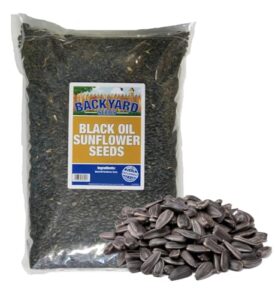
Black oil sunflower seeds are a spring staple that nearly every backyard bird will thank you for. Thin shells and rich kernels make them easy for chickadees, finches, and nuthatches to crack open fast. Each serving packs roughly 50 grams of fat — real fuel for parent birds working overtime to feed nestlings.
They work in tube, hopper, or platform feeders. Store the 25-pound bag in an airtight container in a cool, dry spot to keep seeds fresh.
| Best For | Backyard bird enthusiasts who want to attract a wide variety of species—cardinals, finches, woodpeckers, and more—without dealing with filler seeds. |
|---|---|
| Primary Use | High-protein bird food |
| Material | Oven-dried mealworms |
| Target Species | Bluebirds, wrens, woodpeckers |
| Key Benefit | Essential nutrition for baby birds |
| Main Drawback | Some birds may ignore mealworms |
| Eco-Friendly | Not specified |
| Additional Features |
|
- 100% edible black oil sunflower seeds mean nothing goes to waste—every seed gets eaten
- Thin shells make them easy for small birds like chickadees and nuthatches to crack open
- Works with tube, hopper, and platform feeders, so no special setup needed
- Squirrels love these too, so expect some unwanted visitors at the feeder
- The 25-pound bulk size needs an airtight container to stay fresh long-term
- Must be stored in a cool, dry place, which can be tricky if you’re low on storage space
8. Heath Orange Burst Bird Suet Cakes
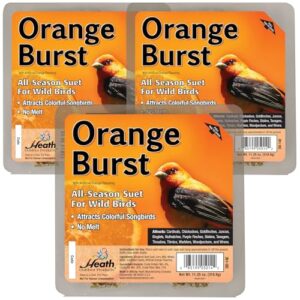
When breeding season hits, high-fat suet becomes one of the best things you can put out. Heath Orange Burst suet cakes blend rendered beef suet, sunflower seeds, cracked corn, and a citrus kick that draws woodpeckers, cardinals, orioles, and more.
Each 11.25-ounce cake fits a standard suet cage. Hang it 5 to 6 feet high, near shrubs for cover. The no-melt formula holds up in warm weather — no soggy mess, just steady energy for nesting adults.
| Best For | Backyard birders who want to attract a wide variety of songbirds and woodpeckers year-round, especially during migration and nesting season. |
|---|---|
| Primary Use | All-purpose bird seed |
| Material | Black oil sunflower seed |
| Target Species | Cardinals, woodpeckers, finches |
| Key Benefit | Filler-free 100% edible content |
| Main Drawback | May attract squirrels to area |
| Eco-Friendly | Yes — sourced and processed in USA |
| Additional Features |
|
- No-melt formula means it holds up in warm weather without turning into a greasy mess
- Citrus flavor pulls in a great mix of birds — woodpeckers, cardinals, and orioles love it
- Made in the USA with a blend of suet, corn, and seeds that gives birds real energy when they need it most
- Works best with the Heath S-1-8 suet cage, so you may need to grab that separately
- Not every bird is a fan of citrus — some species might skip it entirely
- Needs to be stored in a cool, dry place, which can be a bit inconvenient to manage long-term
Frequently Asked Questions (FAQs)
How to attract birds to make nests?
Birds nest where they feel safe and fed. Give them the right boxes, native plants, fresh water, and protein-rich food. That combination turns your yard into a place they’ll return to every year.
Why put a potato in the bird feeder?
Cooked potatoes give birds quick carbohydrate energy. They also add potassium and B Always serve them plain, cooled, and cubed small — never raw or seasoned. Remove leftovers daily to prevent mold.
What are the common mistakes when building a birdhouse?
The biggest mistakes are wrong hole size, no drainage holes, and using treated wood or toxic paint. These small errors can harm chicks or let predators in.
How do I know if a nest is abandoned?
A nest is likely abandoned if no adults return for five to seven days past the expected hatch date, eggs feel cold, or you spot mold and foul odors developing.
Can birds reuse the same nest box yearly?
Yes, many cavity nesters reuse the same box year after year. Bluebirds and chickadees are especially loyal. Keep the box clean, predator-free, and in good shape, and they’ll likely return each spring.
What attracts birds to a yard in spring?
Birds come to your yard when they find food, water, and shelter. Native plants, clean birdbaths, and safe nesting spots are the three things that matter most.
How do weather changes affect spring nesting success?
Weather swings hit nesting birds hard. A late cold snap can stress chicks and drain adult energy fast. Warm spells help — but only if insects peak at the right time.
Should I remove old nests between nesting seasons?
Out with the old, in with the new." Yes, remove old nests between seasons. They harbor mites and blowflies. A quick clean with mild soap gives new birds a fresh, healthy start.
Conclusion
Birds don’t need a perfect yard—they need the right one. A single nest box at the correct height, a patch of leaf litter left undisturbed, a shallow dish of clean water: these small choices matter more than any grand gesture.
Attracting nesting birds this spring isn’t about doing everything. It’s about doing the right things. Make those changes now, and come summer, you won’t just have a yard—you’ll have a home birds chose.
- https://extension.oregonstate.edu/news/build-better-birdhouses-simple-steps-actually-attract-native-birds
- https://www.birds.cornell.edu/k12/educators-guide-to-nest-boxes
- https://www.potomacriver.org/resources/get-involved/water/nest-box
- https://marin.wbu.com/attract-nesting-birds
- https://wdfw.wa.gov/species-habitats/living/habitat-at-home/songbird-habitats