This site is supported by our readers. We may earn a commission, at no cost to you, if you purchase through links.
A flash of color lands on your fence post and vanishes before you can get a good look. You caught the red, maybe a crest, possibly a thick bill—but now it’s gone.
That split second is all most garden birds give you. The good news is that split second contains everything you need.
Birds follow predictable patterns in how they look, move, feed, and call. Once you learn to read those signals, identifying what bird is that in my garden stops feeling like guesswork and starts feeling like reading a familiar face.
This guide walks you through exactly that.
Table Of Contents
Key Takeaways
- A bird’s beak shape, body silhouette, and movement pattern together tell you more in two seconds than a full field guide entry ever could.
- Zeroing in on field marks — wing bars, head stripes, tail length, leg color — in distinct zones beats trying to absorb the whole bird at once.
- Sound ID is your backup when the bird disappears: alarm calls and song patterns are species-specific and often more reliable than a color flash.
- Apps like Merlin and eBird work best as a second opinion, not a first — always confirm their suggestions against what you actually saw.
It is Likely a Common Garden Bird
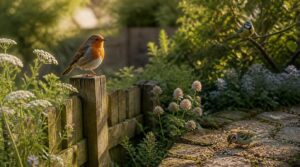
That bird perched on your fence is probably one you’ve seen before — most garden visitors are species that have learned to live alongside us. Before you reach for a field guide, a few quick checks can point you in the right direction. Here’s what to look for.
A good backyard bird identification guide can sharpen your eye for the details that really matter — size, bill shape, and behavior.
Check Size and Shape
Start with the bird’s size. Compare it to something you already know — is it sparrow-sized, blackbird-sized, or closer to a pigeon? That one comparison narrows the list fast.
Next, study its body silhouette. A round, compact shape usually means a ground feeder. A slim, upright posture suggests something else entirely. Check from the side — that angle reveals bill length, tail proportion, and overall stance most clearly.
Note Plumage Colors
Once size and shape give you a starting frame, color fills in the picture. Scan the bird in zones — head, breast, wings, tail — rather than trying to absorb everything at once. A contrasting crown or cheek patch often tells you more than body color alone.
Watch for iridescent effects too. Structural feather colors like blue or green shift with the light. Keep in mind that birds often undergo seasonal plumage cycles that change their appearance.
Watch Feeding Behavior
Color gets you close, but watching how a bird feeds often clinches the ID.
- Ground feeders hop or walk with short pauses between movements.
- Gleaning birds pick insects straight from leaves or bark.
- Feeder clinging signals tube or suet specialists.
- Flock or solo arrivals reveal social feeding patterns.
Early morning visits are busiest — note that too.
Listen for Calls
Feeding style tells you a lot, but sometimes the bird ducks behind a branch before you get a good look. That’s when sound ID takes over.
A bird’s call can be sharper and more reliable than any flash of color. Dawn and dusk vocalizations carry far in a quiet garden — that’s your best listening window.
Consider Your Location
Where you live shapes everything. A bird hopping across a garden in Falkenstein, Saxony, is almost certainly one of four species:
- House sparrow
- Blackbird
- Great tit
- Blue tit
These are central Germany’s everyday birds. Regional checklists narrow your shortlist fast — far better than broad European or global range maps covering North America, Asia, or beyond.
Identify Birds by Field Marks
Field marks are the shortcuts birders rely on — the small, reliable details that help you pin down a species in seconds. Once you know what to look for, a quick glance tells you more than a lengthy description ever could.
A useful bird guide highlights the right field marks so you’re not wading through paragraphs when a split-second ID is all you need.
Here are the key features worth checking every time a new bird lands in your garden.
Beak Shape

The beak is your fastest shortcut to bird identification. Beak shape has evolved over millions of years to match exactly what a bird eats. A hooked beak means a hunter. A cone-shaped beak means a seed cracker. A needle-thin beak means a nectar sipper.
Beak shape evolved over millions of years to reveal exactly what a bird eats
| Beak Shape | Likely Diet |
|---|---|
| Hooked | Flesh, prey |
| Cone-shaped | Seeds, nuts |
| Needle-thin | Nectar, insects |
| Wide, flat | Water-filtered food |
| Spearlike | Fish |
Any good birdwatching app or field guide uses beak shape as a primary filter — and now you can too.
Wing Bars
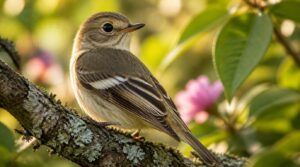
Look closely at a bird’s folded wing and you’ll often spot pale bands crossing the feathers — those are wing bars. They form from the pale tips of the wing coverts. Wing bar color ranges from white to buff to pale yellow.
Good light and a side view make them easiest to see. Your AI bird identifier flags these instantly.
Tail Length
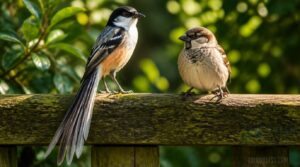
Tail length is one of those clues that quietly tells you a lot. Compare the tail to the bird’s body — a long tail usually signals a species that hops, steers, or balances on thin branches. A short tail often belongs to a stockier, ground-feeding bird.
Combined with tail shape — square, forked, or rounded — you can narrow your options fast.
Head Markings
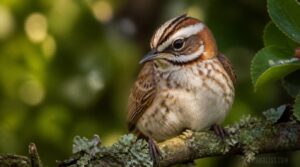
The head is a bird’s ID card.
Start with the eyebrow stripe — that pale or bold line running above the eye. Then check for a crown stripe down the top of the head, an eyering around the eye, and a malar stripe below the cheek. A crest? Note its size.
These marks alone can crack a tough ID fast.
Leg Color
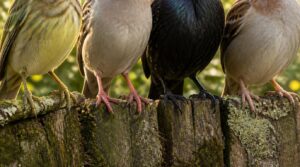
Legs are easy to overlook, but leg color is a surprisingly reliable field mark. Pale yellow, pink, gray, or black tones can separate similar species fast. Juveniles sometimes show duller leg tones than adults.
- Yellow-olive legs often signal warblers or thrushes
- Pink legs are common in doves and pigeons
- Dark gray or black legs appear in starlings and blackbirds
- Pale flesh tones suit many garden sparrows
Match Behavior and Sounds

A bird’s looks only tell half the story. The way it moves, calls, and feeds can seal the ID faster than any field guide. Here’s what to watch and listen for.
Hopping or Walking
Watching how a bird moves across your lawn tells you more than you might expect. Small birds hop; larger ones tend to walk. A chickadee bounces in quick bursts, while a robin strides steadily forward, one foot at a time.
Hoppers often have shorter legs built for push-off power, while walkers carry a more upright, deliberate stance that suits open ground foraging.
Perching Habits
Once you’ve clocked how a bird moves, look up. Where it lands tells you just as much.
Perch selection is rarely random — raptors favor tall, exposed posts to scan for prey, while songbirds settle on fences or mid-level branches. A flycatcher or hawk sits bolt upright; warblers and crows tend toward a flatter, horizontal perch posture.
Feeding Style
Where a bird perches is one clue — how it eats is another.
Feeding behavior reveals diet type instantly. Watch for these three patterns:
- Ground foragers like robins and blackbirds hop and probe soil
- Clinging feeders like chickadees grip bark or hanging feeders
- Seed crackers like cardinals stay still, methodically splitting husks
Each feeding style helps you identify birds faster than any field guide.
Alarm Calls
Feeding style tells you what a bird eats. Its alarm call tells you what it fears.
Alarm calls are sharp, short, and urgent — nothing like a relaxed morning song. When a cat creeps under the hedge or a hawk cuts across the sky, robins and chickadees fire off fast, high-pitched bursts that neighboring birds instantly recognize and act on.
Song Patterns
Each garden bird carries its own acoustic signature. Songs aren’t random — they follow structured phrase sequences, with notes building into syllables, then phrases, then full songs. A robin repeats its cheerful phrases in loose bouts, while a goldfinch strings together rapid, bouncing calls.
- Repetition patterns reveal species identity
- Regional song dialects mean the same bird may sound slightly different by location
- Repertoire size varies — some birds sing one song type, others switch through dozens
Listen for these patterns and your inner bird ID wizard sharpens fast.
Use Photos and Bird Apps

Your phone can do more than you think regarding bird ID. A decent photo and the right app can give you a confident answer in seconds. Here’s how to make the most of both.
Take Clear Side Photos
A side profile is your best shot at a clean identification. Hold the camera with both hands, tuck your elbows in, and let the bird fill the frame naturally. Focus on the eye first — sharpness there makes beak shape and head markings readable. Use burst mode when the bird shifts, so you catch at least one crisp frame.
| Shot Element | Why It Matters |
|---|---|
| Side angle | Shows body outline, tail, and beak clearly |
| Eye focus | Anchors sharpness where field marks count most |
| Burst mode | Captures movement without missing the moment |
Use Natural Lighting
Light makes or breaks a bird photo. Soft diffused light — from overcast skies or open shade — gives you the most even, readable plumage detail. Avoid shooting into the sun; backlighting can darken the body and hide field marks. Side lighting reveals feather texture best.
- Morning light effects are warm and low-angled, great for color accuracy
- Overcast skies act as a natural softbox for photo analysis
- Avoid harsh midday sun — it washes out subtle markings
- Golden hour photography adds warmth but can shift true feather colors
Upload Bird Images
Once you have a clean shot, it’s time to upload a photo to a platform like eBird or Merlin. Both accept JPG and PNG files, and eBird allows uploads up to 10 MB per image. Full-resolution images work best — they preserve the fine detail that AI bird identifier tools and human reviewers both rely on.
| Feature | eBird | Merlin Bird ID |
|---|---|---|
| File Format Support | JPG, PNG, GIF | JPEG, PNG, WebP, HEIC |
| Max File Size | 10 MB | 20 MB |
| Image Resolution | Full resolution preferred | Clear, sharp images |
| Metadata Tags | Age, sex, behavior | Location, date, habitat |
| Cropping Guidelines | Avoid over-cropping | Center bird, reduce clutter |
Before uploading, apply light edits only. Cropping guidelines are simple — trim the frame to reduce distracting backgrounds, but leave enough space around the bird to show body shape. Over-saturation and heavy sharpening reduce scientific value, so keep the bird looking natural. Metadata tags like age, sex, and behavior add context that makes your record genuinely useful. Your photo could even help train image recognition tools used in future Photo ID systems.
Compare AI Suggestions
AI bird identifier apps rarely give you one definitive answer — they return a ranked shortlist. That’s where confidence score comparison becomes useful. A high-confidence top match is a strong lead, but don’t stop there.
Use cross-app verification by checking Merlin alongside BirdNET. If both agree, you’re on solid ground. Always confirm the AI suggestion against visible field marks before accepting it.
Save Garden Sightings
Every sighting you save becomes a piece of your personal bird history. Think of it as a digital scrapbook — one that grows smarter over time.
Log the date, spot in your garden, and a quick photo, and you’ll start spotting seasonal visitor trends you’d otherwise miss. Tools like eBird and a life list turn casual watching into something genuinely rewarding.
Common Garden Birds to Compare
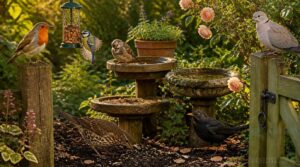
Once you know what to look for, putting a name to a garden visitor gets a lot easier. A handful of birds show up again and again in backyards across the world, and learning them first gives you a solid foundation. Here are the most common ones worth knowing.
Cardinals and Robins
Two birds that often confuse new watchers are the Northern Cardinal and the American Robin.
The cardinal is stocky with a bold crest and a thick seed-cracking bill. The robin stands taller, slimmer, and spends most of its time pulling earthworms from your lawn.
Spot a flash of red in a shrub? That’s almost certainly your cardinal.
Chickadees and Tits
Chickadees and tits belong to family Paridae — small, compact birds with short bills and bold markings. Both species thrive in wooded gardens and suburban parks.
Black-capped Chickadees flash crisp black caps against pale cheeks, while Blue Tits wear greeny-blue feathers with yellow underparts. In winter, watch your feeders — that’s where both species show up most reliably.
Blackbirds and Starlings
At first glance, blackbirds and starlings can fool you — but a few key field marks make them easy to separate.
- Male blackbirds wear all-black plumage with a bright yellow-orange bill and yellow eye-ring
- Starlings show iridescent green and purple sheen in summer, pale speckles in winter
- Blackbirds have longer tails; starlings look stockier with pointed, triangular wings
- Blackbirds forage alone, probing lawns for worms; starlings mob feeders in noisy flocks
- Blackbird song flows rich and melodic; starlings mimic clicks, whistles, and rattles
Goldfinches and Doves
Goldfinches and doves could hardly be more different, once you know what to look for. Bright red face, yellow wing bar — that’s your goldfinch. Doves go pale gray, plump, and plain.
Goldfinches cling to feeders and thistles; doves stick to the ground. Their calls split them too: light tinkling twitter versus soft, steady cooing.
Woodpeckers and Nuthatches
At a glance, woodpeckers and nuthatches can fool you — both work tree bark, both visit winter feeders.
The tell is movement. Headfirst climbing down a trunk? That’s a nuthatch. Moving upright, bracing stiff against bark? Woodpecker. Listen too: drumming patterns belong to woodpeckers alone.
Use a bird ID Wizard app to confirm field marks fast.
Frequently Asked Questions (FAQs)
What is the bird for October?
The October birth bird is traditionally the swan — graceful, long-necked, and built for lakes and rivers. Some guides name the white-throated sparrow instead, a real October garden migrant with bold head stripes and a yellow eye spot.
Can garden birds carry diseases to pets?
Yes — like a hidden hitchhiker, garden birds can carry bird flu, Salmonella, and parasites. Keep pets away from wild birds, clean feeders often, and wash your hands after handling anything outside.
How do I attract rare birds to gardens?
Rare birds follow habitat. Offer native plant layers, clean water, and varied feeders with nyjer and suet. Dense shelter and seasonal timing matter most. Patience — and a good birding app — does the rest.
Why do birds keep returning to one spot?
Birds return to the same spot because it works for them. Food, water, and shelter make a place worth revisiting. Strong territorial memory keeps them coming back reliably.
What plants encourage specific bird species nearby?
Plant a mix of native nectar plants, berry shrubs, and seed-bearing grasses. Cardinals love dense cover. Oaks draw jays and woodpeckers. Match your plants to the birds you want nearby.
Do garden birds change appearance across seasons?
Absolutely — and it can throw you off. Seasonal feather changes mean a bird can look almost unrecognizable month to month, especially during molt. Winter camouflage dulls colors; spring brightens them right back up.
Conclusion
The next time a bird lands nearby, stop and pause. Don’t reach for your phone just yet. Watch it move.
Notice the bill shape, the way it hops, the quick color flash on its wing. That moment of quiet observation is where real identification begins.
When you ask yourself what bird is that in my garden, you already have the tools to answer. Trust what you see. The birds have been telling you all along.