This site is supported by our readers. We may earn a commission, at no cost to you, if you purchase through links.
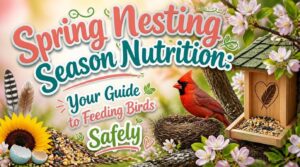
A female cardinal building her nest burns through energy fast—she’ll lay an egg almost daily, each shell pulling calcium straight from her own bones if her diet falls short. That’s the hidden cost of spring: birds aren’t just feeding themselves, they’re manufacturing eggs, growing feathers, and fueling nonstop trips to the nest, all on whatever you put out in the yard.
Get spring nesting season nutrition right, and you become part of that survival equation. Skip it, and even well-meaning feeders can leave birds depleted at the worst possible time.
What follows breaks down exactly which nutrients matter, which foods deliver them, and how to serve everything safely.
Table Of Contents
- Key Takeaways
- Why Spring Nesting Nutrition Matters
- Essential Nutrients for Nesting Birds
- Best Protein Foods for Spring
- Calcium Sources for Laying Birds
- Spring Foods by Bird Type
- Foods to Avoid During Nesting
- Safe Human Foods for Birds
- Feeder Placement Near Nesting Areas
- Feeder Hygiene and Food Freshness
- Supporting Fledglings Through Nutrition
- Frequently Asked Questions (FAQs)
- How to keep birds healthy during nesting season?
- What do birds eat during nesting season?
- Do nesting birds need proper nutrition?
- What is spring bird feeding?
- How long should I keep feeding birds after spring?
- Can I use the same feeder for all bird species?
- What plants attract the most nesting birds naturally?
- How do I know if a nest is active?
- Should I stop feeding birds once nestlings fledge?
- Conclusion
Key Takeaways
- Nesting birds need five key nutrients—protein, calcium, fats, carbohydrates, and antioxidants—to handle egg-laying, chick-rearing, and migration recovery without depleting their own bodies.
- Calcium-rich foods like crushed, sterilized eggshells and oyster shell grit are critical since a hen can lose 10% of her body calcium producing a single egg.
- Common human foods like avocado, chocolate, caffeine, salty snacks, and whole nuts pose serious choking or toxicity risks to nesting birds and should be kept off feeders.
- Feeder placement and hygiene matter as much as food choice—keep feeders at least 30 meters from active nests, clean weekly, and reduce supplemental feeding gradually as fledglings learn to forage on their own.
Why Spring Nesting Nutrition Matters
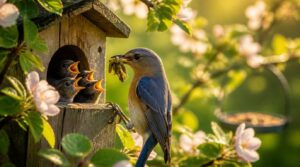
Spring asks a lot of your backyard birds. Between laying eggs, feeding hungry chicks, and recovering from long migrations, their bodies are working overtime. Here’s what’s actually driving that demand.
Protein-rich seasonal insects make up a huge part of their spring diet, giving exhausted parents the fuel they need to keep up with it all.
Egg Production Demands
Laying an egg is a small marvel of biology, and it asks a lot of a hen’s body. Egg production runs on a tight cycle, with shell thickness and embryo development demanding steady energy intake and calcium. As laying cycles continue through the breeding season, hydration needs climb too.
Feeding birds well now keeps avian nutrition on track for healthy eggs. To ensure quality, hens require essential amino acids to maintain their protein levels.
Nestling Growth Needs
Once eggs hatch, the real work begins. Early Mass Gain happens fast, with nestlings growing quickest in their first five days. Hungry chicks need high-protein foods to fuel feather growth and immune system maturation.
Nest temperature matters too. Microclimate energy demands rise during cold snaps, forcing parental provisioning tradeoffs that affect growth rate variability among nesting birds.
Migration Recovery Energy
Spring migration doesn’t end when a bird lands — it ends when the body recovers. Arriving adults often burn through most of their fat reserves, so stopover refueling efficiency directly affects nesting success.
Quick access to high-energy seeds and protein-rich options rebuilds muscle and helps with mitochondrial repair. Thermal regulation costs and wind pattern influence also shape how much energy is left for breeding.
Breeding Season Stress
Once recovered, nesting birds face a new strain: hormonal stress responses. Cortisol and corticosterone rise, dampening reproductive hormones and delaying egg laying by 1–4 days. Habitat disturbance and weather-driven stressors compound this, raising metabolic energy shifts by up to 30%.
Feeding high-protein foods aids hormone recovery and breeding success, helping birds stay resilient when nesting conditions turn challenging.
Essential Nutrients for Nesting Birds
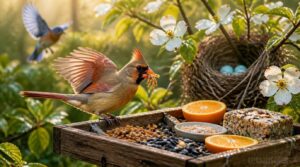
Nesting birds run on a tight nutritional budget, and every bite needs to count. Five nutrients do the heavy lifting during this season, from building strong eggs to fueling exhausted parents. Here’s what your backyard menu should cover.
Protein for Growth
Think of protein as the construction crew for every feather, muscle, and organ a nestling builds in just weeks. Amino acid chains drive this work, with leucine sparking muscle protein synthesis directly.
Essential protein sources matter most during breeding season:
- Mealworms and crickets
- Caterpillars rich in fat
- Sunflower seeds
These high-protein foods fuel tissue repair mechanisms nesting birds depend on, meeting real avian dietary requirements parents can’t skip.
Calcium for Eggshells
A hen can lose 10% of her body calcium making just one egg, which is why calcium ranks among the top avian dietary requirements during nesting season. Shells are roughly 95% calcium carbonate, and thickness depends on steady intake plus Vitamin D3 absorption.
| Calcium Source | Benefit |
|---|---|
| Crushed eggshells | Easy absorption |
| Oyster shell grit | Helps bone health |
Fats for Energy
Pack a punch with fat—it delivers 9 calories per gram, more than double what carbs or protein offer. That caloric density fuels sustained energy metabolism for nesting parents.
Offer black oil sunflower seeds and suet; both supply essential fatty acids and carry fat-soluble vitamins A, D, E, and K, boosting nutrient absorption efficiency when nutritional needs spike during avian nutrition’s most demanding season.
Carbohydrates for Activity
Carbs are quick-burn fuel—glucose for nonstop foraging trips. They replenish glycogen fast, delaying fatigue during peak avian breeding season.
Offer berries, high-energy seeds, and soft fruit. Nestlings grow fast and need steady energy; parents need it too, sustaining dozens of feeding flights daily without crashing mid-effort.
Antioxidants for Resilience
Breeding season is hard on a bird’s body — all that energy output creates cellular damage from the inside out. Oxidative stress defense matters as much as protein or calcium.
Offer:
- Berries and citrus (vitamin C)
- Bell peppers
- Leafy greens
- Seeds with natural fats (vitamin E)
These support reactive oxygen neutralization and vitamin teamwork, helping parents and nestlings handle nesting’s physical toll.
Best Protein Foods for Spring
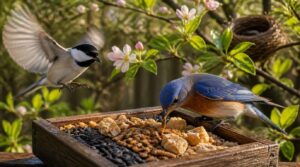
Now that you know why protein matters so much, let’s get specific about where to find it. Some sources work better than others, depending on the bird and the season. Here are the best options to stock in your yard this spring.
Mealworms and Crickets
Two tiny bugs, two big nutritional payoffs. Mealworms pack higher fat content, great for cold snaps, while crickets edge ahead on protein and fiber.
| Insect | Strength |
|---|---|
| Mealworms | 40-50% fat, magnesium-rich |
| Crickets | 50-65% protein, more fiber |
| Mealworms | Strong amino acid scores |
| Crickets | Higher digestibility |
| Both | Sustainable, low-water rearing |
Offer both — insect-loving birds thrive on variety.
Caterpillars and Insects
Caterpillars are the real nesting-season superfood. As Lepidoptera larvae, they’re soft, fat-rich, and easy for nestlings to swallow whole.
A chickadee parent delivers 350-570 caterpillars daily, and one brood can eat 9,000 before fledging. Their carotenoids support healthy growth too.
A single chickadee brood can devour 9,000 caterpillars before ever leaving the nest
- Soft bodies, easy digestion
- High fat and protein
- Found on native leaves
- Safer than dried mealworms alone
Plant native trees — caterpillars follow.
Sunflower Seeds
Not every nesting bird hunts insects all day. Backyard birds also lean on black oil sunflower seeds for steady fuel — one ounce packs 165 calories and 5.5 grams protein.
| Seed Form | Best Use |
|---|---|
| Black oil | High-energy feeders |
| Striped | Larger-beaked birds |
| Hulled | Mess-free feeding |
Their fat profile favors unsaturated fats, supporting nutritional density without spoilage if stored dry and cool.
Peanuts in Safe Forms
Peanuts pack serious protein, but whole nuts are a choking hazard for nestlings. Stick to crushed, unsalted varieties for safe, accessible feeding.
- Choose unsalted, additive-free peanuts
- Crush or chop before serving
- Buy from sources with aflatoxin testing
- Store in cool, dry, airtight containers
Proper storage curbs mold growth, keeping your feeder safe for backyard birders all season.
Suet for Adults
Crushed peanuts give parent birds protein, but suet rounds out their diet with pure energy density. The fat content fuels constant flying and territory defense when bugs are scarce.
Look for suet feeders with insect additive mix-ins for extra protein. Watch texture, too: suet softens above 50°F, so switch to no-melt varieties and refresh often to stop spoilage.
Calcium Sources for Laying Birds
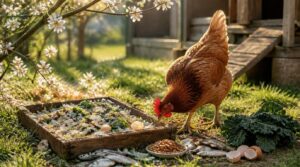
A laying hen burns through calcium fast, and her body can’t always keep up on its own. That’s where you come in, offering the right foods at the right time. Here are five reliable calcium sources worth adding to your feeding routine this spring.
Crushed Eggshells
Your kitchen scraps could become a nesting bird’s best friend. Save eggshells, bake them at 200–250°C for 10–15 minutes to sterilize, then crush finely.
This homemade grit delivers nearly 95% calcium carbonate, perfect for laying hens or backyard nests. Scatter extras in garden soil—shells boost pH, deter pests, and enrich compost over time. Always avoid shells with leftover residue to prevent bacteria.
Oyster Shell Grit
Skip the oven entirely and reach for oyster shell grit instead—it’s nearly pure calcium carbonate, with bonus magnesium, iron, and strontium.
Beyond shells, the gritty texture aids gizzard digestion, grinding food mechanically as birds forage. Choose fine, medium, or coarse particle sizes based on species.
It releases calcium slowly overnight, steadying eggshell strength even when daily intake fluctuates.
Snail Shells
Garden snail shells make a surprisingly smart calcium-rich food for nesting birds, and nutrient density is the reason why. Their calcium carbonate structure forms through mantle secretion in spiral coiling patterns, layering minerals the same way eggshells do.
When ground or crushed, leftover shells from your garden double as a free, accessible source supporting avian dietary needs and overall avian health.
Mineral-rich Foods
Calcium isn’t the only mineral fueling a healthy clutch. Magnesium-rich grains like oats and barley support muscle and nerve function, while sunflower seeds deliver potassium and magnesium together.
Salmon offers iron for oxygen transport, and oysters provide impressive zinc density. Round out your offerings with leafy greens for extra calcium—variety builds the nutrient density nesting birds genuinely need.
Clean Serving Practices
Hygiene matters as much as nutrition when feeding nesting birds. Dirty feeders spread disease fast, especially during breeding season stress.
- Sanitize scoops and trays weekly to prevent cross-contact
- Wipe surfaces dry to avoid bacterial growth
- Store calcium offerings in covered containers
- Wash hands before refilling feeders
These habits support real avian disease prevention, protecting the wild bird care you’re already working hard to provide.
Spring Foods by Bird Type
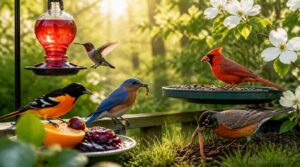
Not every backyard bird eats the same way, so a one-size-fits-all approach won’t cut it during nesting season. Each species comes with its own preferences, from sugar water to soft fruit to live insects. Here’s what to offer your most common spring visitors.
Hummingbirds and Nectar
Few birds burn fuel like a hummingbird. Their metabolic rates demand near-constant feeding, so offer nectar feeders with a 4:1 sugar-to-water ratio—mimicking natural nectar sugar ratios. Use red feeders to catch their eye.
Their long bills evolved for deep floral tubes, sipping efficiently to meet steep foraging energy budgets. Skip honey or dyes—plain sugar water keeps these tiny pollinators thriving.
Orioles and Fruit
Sugar water works for hummingbirds, but orioles want something juicier. Offer bright orange fruit halves—oranges, tangerines—plus mulberries and raspberries for berry vitamin benefits. Grape jelly in shallow dishes adds backup attraction when fruit’s scarce.
Practice citrus peel management: pull rinds after feeding to stop mold. Fresh fruit also meets fruit hydration needs during warm spring foraging.
Bluebirds and Mealworms
Bluebirds skip the fruit bowl entirely—they’re insect-loving birds through and through, and mealworms are their reward. These larval beetles offer dense protein for brooding females and growing nestlings alike.
Offer live mealworms twice daily, mimicking natural foraging rhythm. Source from clean, reputable suppliers to avoid contaminants. Use ground-level trays, and watch nestling growth benefits unfold—stronger feathers, better fledge weights.
Finches and Nyjer
Goldfinches and their seed-eating cousins switch from bugs to Nyjer seed once nesting settles in. Their compact conical beaks crack tiny shells fast — handy since Nyjer isn’t real thistle, just a processed look-alike.
- Use mesh tube feeders with small ports
- Store seed airtight to keep it dry
- Replace weekly to prevent mold
- Place near shrubs for cover
- Expect winter feeding peaks
Woodpeckers and Suet
Woodpeckers work differently than finches at the feeder. Their tail-prop feeding style and vertical foraging habits mean suet cages need sturdy mounting on tree trunks or poles.
| Suet Trait | Why It Matters |
|---|---|
| High fat | Fuels drumming energy |
| Insect-added | Boosts protein for nestlings |
| Nomelt suet | Stays firm above 50°F |
| Cage openings | Blocks larger birds |
| Freshness | Prevents rancidity |
Foods to Avoid During Nesting
Feeding birds during nesting season comes with real risks if you’re not careful. Some everyday foods that seem harmless can actually hurt adult birds or their young. Here’s what you need to keep off your feeders this spring.
Avocado and Chocolate
That avocado chocolate mousse on your kitchen counter? Keep it far from the feeder. Both ingredients are toxic to birds.
- Avocado: causes heart and respiratory failure
- Chocolate: contains theobromine, a cardiac toxin
- Even small bites can be fatal
- Healthy fat pairings work for humans, not birds
- Dairy free desserts are still off-limits
Stick to nutrient dense treats matching birds’ natural diet instead.
Caffeine and Alcohol
Ever splash leftover coffee or beer into the yard, thinking it’s harmless? Don’t. Caffeine doesn’t sober anything up — that’s a metabolism myth — and mixed with alcohol it raises impairment risks, cardiovascular stress, and dehydration.
| Substance | Effect on Birds |
|---|---|
| Caffeine | Heart palpitations, stress |
| Alcohol | Coordination loss, organ damage |
Stick to a bird’s natural diet — water, seeds, suet.
Moldy or Rotten Foods
When mold takes hold on suet or seed, you won’t always see it coming — spores spread through air and surfaces, contaminating nearby food fast.
Toss anything fuzzy, discolored, or sour-smelling. Moldy nuts pose special danger: mycotoxins can sicken nestlings, and cooking won’t destroy them.
Check feeders during seasonal feeding rounds, control humidity, and bin spoiled food in sealed bags to keep your bird feeders truly safe.
Salty Human Snacks
That bag of chips on your porch table? Tempting to share, but a hard pass for nesting birds.
Salt triggers appetite and intensifies crunch through flavor chemistry, yet birds lack the kidneys to process excess sodium. High intake disrupts electrolyte balance, straining nerve and muscle function nestlings need most. Skip pretzels, fries, and salted nuts entirely — stick to species-appropriate, high-protein foods that actually support healthy growth and survival.
Large Hard Foods
A whole peanut can lodge in a nestling’s throat fast — fledglings haven’t mastered mastication or jaw strength for tough textures yet.
Choking hazard prevention matters more than nutrient density here.
- Crush peanuts before offering them
- Skip whole nuts in shells
- Offer chopped sunflower seeds instead
- Use mesh feeders for safe texture sensing
- Choose suet for adult birds
Stick with black oil sunflower seeds, prepared properly, for safer feeders.
Safe Human Foods for Birds
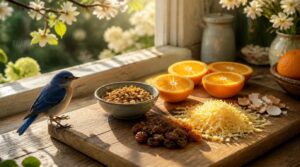
Not every safe food for birds has to come from a specialty store. Your kitchen likely already holds a few items nesting birds can use. Here are five options worth keeping on hand this spring.
Fresh Fruit Pieces
A bite of orange or grape offers fruit-eating birds quick energy during nesting season. Cut fruit into small cubes, treat with lemon juice to prevent browning, and refrigerate between 0-4°C. Proper fruit storage temperatures preserve nutrients and crispness.
| Fruit | Prep | Storage |
|---|---|---|
| Apple | Diced, lemon-treated | 3-5 days |
| Orange | Sliced | 2-3 days |
| Berries | Whole | 2-4 days |
Unsalted Nuts
Past the fruit bowl, your pantry holds another nesting-season helper: unsalted nuts. They pack plant based protein and heart healthy fats nesting birds crave for caloric intake.
- Chop finely to prevent choking
- Skip salted, seasoned varieties
- Watch for rancid, stale smells
- Pair with berries on platforms
Store nuts cool and dry; check often for spoilage before serving.
Cooked Plain Rice
Got a leftover scoop of plain rice? Birds will take it. Skip seasoning or butter, and serve it plain and cooled, never hot.
| Prep Step | Why It Matters | Bird Benefit |
|---|---|---|
| Rinse first | Removes surface starch | Less sticky mess |
| Cook fully | Softens starch granules | Easier to eat |
| Cool before serving | Prevents burns | Safe feeding |
| Small portions | Avoids spoilage | Fresh nutrition |
| No salt/butter | Protects organs | Healthier birds |
Plain Oats
Rice fills bellies, but oats bring more to the table. Rolled oats cook soft in minutes, perfect for backyard birds. Beta glucan fiber is great for heart health, while manganese and magnesium round out the mineral profile.
Skip flavored packets entirely. Plain, dry oats or cooked-and-cooled work best. Store in an airtight container, cool and dry, to keep pests out and freshness locked in.
Seed-safe Kitchen Scraps
Your kitchen scraps can supplement a backyard wildlife diet, but proper scrap sizing matters most. Cut pieces small to prevent choking. Safe fruit rinds work after rinsing off pesticides—watch sugar overload with apple cores. Skip citrus peels entirely.
Vegetable scrap prep means chopping carrot tops and greens finely. For nut scraps safety, offer only plain, unsalted morsels—never roasted or flavored varieties.
Feeder Placement Near Nesting Areas
Where you put your feeders matters just as much as what’s in them. A poorly placed feeder can stress nesting birds or put them in danger, even with the best food on offer. Here’s what to keep in mind when choosing the right spot.
Distance From Active Nests

Where you place feeders during nesting season matters as much as what you put in them. A good rule of thumb: keep stations at least 30 meters (about 98 feet) from active nests for most songbirds, since closer visits risk nest abandonment.
Raptor buffer zones run far larger—often 300 meters—so check local guidelines. Ignoring these distances can mean fines or regulatory penalties, especially near protected habitat.
Shelter and Escape Cover
Once a feeder sits near cover, nesting birds gain real Natural Escape Routes when a hawk passes overhead.
- Dense shrubs or brush piles within easy reach
- 60-80% canopy cover density nearby
- Leaf litter for ground camouflage techniques
Riparian buffer zones work well too. Good predator shielding strategies turn backyard habitat into a safer haven, supporting wildlife conservation goals during nesting season.
Window Collision Safety
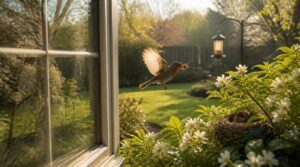
Why do so many backyard collisions happen during nesting season? Busy parent birds, distracted by feeding duties, often misjudge reflective glass.
Window strikes kill millions of nesting birds yearly. Reduce risk with these fixes:
| Solution | How It Helps | Cost |
|---|---|---|
| Window decals | Breaks up reflection | Low |
| Screens | Cushions impact | Moderate |
| Feeder distance | Reduces collision speed | Free |
Place feeders either within 3 feet or beyond 10 feet of windows.
Predator-aware Placement
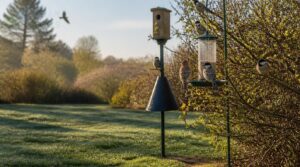
A hungry hawk overhead can undo weeks of careful feeding in seconds. Predator-aware placement means thinking like both prey and predator when setting up bird habitat.
Position feeding stations near natural cover for quick escape, but keep brush back from ground feeders to block ambush spots. Add thorny shrubs near nest boxes, and use strategic feeder spacing to avoid clustering that draws unwanted attention.
Separate Feeding Stations
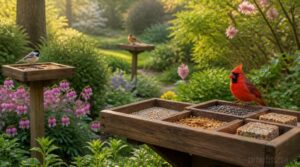
Two cardinals at one feeder rarely ends well. Reducing food competition means giving every bird its own space to eat in peace.
- Strategic station spacing: 10–15 meters apart
- Multi-bowl station design: two-plus food types each
- Shelter-adjacent feeding near cover
- Daily cleaning to prevent mold
This setup curbs minimizing bird aggression during nesting season, supporting calmer, healthier supplemental feeding and smarter bird habitat management overall.
Feeder Hygiene and Food Freshness
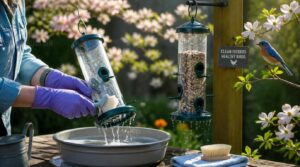
A clean feeder is just as important as what’s in it. Dirty surfaces and old food can spread disease fast, especially when nesting birds visit again and again. Here’s what to keep on your weekly checklist.
Weekly Feeder Cleaning
A dirty hopper does more harm than good during nesting season. Weekly cleaning removes leftover seed, mold spores, and droppings that spread disease to vulnerable nestlings.
| Task | Tool | Frequency |
|---|---|---|
| Soak parts | Warm soapy water | Weekly |
| Scrub crevices | Old toothbrush | Weekly |
| Disinfect | Bird-safe sanitizer | Weekly |
| Log results | Cleaning notebook | Weekly |
Skip bleach. Rinse thoroughly, air-dry fully, and keep a simple log to stay consistent.
Nectar Replacement Timing
Nectar feeders need a different rhythm than seed hoppers. Hummingbirds rely on a 4:1 sugar-to-water ratio, and that sugary mix ferments fast in spring warmth.
- Above 80°F: swap every 2-3 days
- 60-70°F: every 3-4 days
- Watch for cloudiness or sour smell
- Windy days speed spoilage too
Clear nectar means it’s good. Cloudy or smelly? Toss it—microbial growth happens quickly once humidity climbs.
Mold Prevention Tips
Mold loves spring’s warm, damp air just as much as bacteria do. Keep feeder surfaces clean by scrubbing seed ports and trays where moisture collects.
Store seed in airtight containers, away from humid sheds or garages—damp storage breeds mold fast. Toss any seed that’s clumped or musty smelling.
Good airflow around feeders helps too, since stagnant, humid spots invite trouble.
Bird Bath Water Changes
Bird baths need just as much attention as feeders. Change water every 2-3 days to stop algae and bacteria from building up, and go daily in full sun or hot spells.
Keep depth shallow, 1-2 inches, and rinse with a vinegar solution monthly. This simple habit also cuts mosquito breeding before it starts.
Warm-weather Suet Safety
Suet brings woodpeckers and other nesting birds running, but summer heat turns it risky fast. Stick to melt-resistant formulas—they hold up to 70-80°F before softening. Temperature-driven spoilage breeds rancid fats that coat feathers, hurting waterproofing.
- Store unused suet in cool, shaded spots
- Replace blocks every 1-2 days in heat
- Suspend suet above 80°F
- Check for off odors
- Watch for reduced feeding activity
Supporting Fledglings Through Nutrition
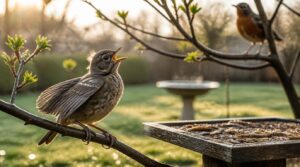
Fledglings leave the nest hungry, clumsy, and still learning the ropes. Your job shifts from feeding them directly to setting up a yard that teaches them how to feed themselves. Here’s how to support that change the right way.
Encourage Natural Foraging
Fledglings learn to eat by searching, not by waiting. Scatter mealworms across leaf litter, rotate foraging substrates monthly, and add a native vegetation patch nearby. These microhabitat techniques mimic real food sources, sharpening foraging behavior.
Try natural containers like hollowed wood instead of obvious feeders, or introduce puzzle feeders for older fledglings. Smart wildlife gardening builds independent, resilient birds ready for life beyond the nest.
Avoid Overfeeding Dependence
Often, a feeder kept full around the clock teaches young birds to wait instead of search, which slows foraging skill development.
To support natural calorie regulation:
- Limit feeding windows to mimic patchy food availability
- Watch body condition monthly for early obesity signs
- Rotate feeding spots so fledglings keep practicing independence
This balance protects fledgling independence training while meeting real biological requirements.
Provide Shallow Water
Newly fledged birds need water as much as food, and a simple bird bath with ideal water depths around shallow edges works best for tiny feet.
Smooth, sloped containers prevent injury, while shaded placement slows evaporation and curbs algae growth.
Add sheltering plants nearby for predator protection, and you’ll boost bird species diversity while supporting the whole backyard environment.
Maintain Native Plants
Your yard is a buffet, and native species selection stocks the shelves with food fledglings already recognize. Native plants host the insects young birds need, support pollinator-friendly blooms, and require less watering once established.
A quick soil pH test helps you choose plants that thrive naturally. Controlling invasive species protects this balance, building real biodiversity garden balance and lasting bird habitat management.
Reduce Yard Chemicals
A pesticide-coated lawn poisons the very insects fledglings need to survive. Skip synthetic sprays and lean on organic weed suppression through mulch and hand-pulling instead.
Safe mulch choices matter too—skip rubber, which leaches chemicals. Let native plants invite beneficial insect attraction, creating natural pest barriers that protect both your garden and the birds depending on it for genuine nature support.
Frequently Asked Questions (FAQs)
How to keep birds healthy during nesting season?
Keep birds healthy by offering high-protein foods, fresh water for hydration, and calcium sources for nutrient absorption.
Reduce stress with sheltered feeders, prevent disease through regular cleaning, and encourage foraging variety—small habits that genuinely boost avian survival rates during breeding season.
What do birds eat during nesting season?
Less can mean more: nesting birds shift from seeds to insect foraging, hunting caterpillars and beetles for amino acids. Protein fuels feather and muscle growth, while caloric density from fats keeps energy steady through breeding season’s relentless demands on baby birds.
Do nesting birds need proper nutrition?
Absolutely, yes. Nesting birds depend on high-protein diets and natural food sources for rapid tissue development, eggshell durability, and hatchling survival rates.
Proper nutrition fuels physiological stress management throughout breeding season and directly correlates with healthier nestling mass.
What is spring bird feeding?
Funny how a handful of seeds can outweigh a whole forest’s worth of foraging.
Spring bird feeding means offering targeted, high-protein diets and calcium-rich foods that meet nesting birds’ nutritional needs, supporting fledgling development and backyard biodiversity during peak seasonal energy demands.
How long should I keep feeding birds after spring?
Watch fledgling behavior and taper feeding gradually through April or May as insect availability rises. Continue if cold snaps delay migration or natural foraging, then phase out supplemental food over several weeks once nesting activity shifts toward independence.
Can I use the same feeder for all bird species?
One feeder won’t cut it, no matter how generous the buffet looks. Feeder design variety matters—tube feeders suit perching finches, ground trays serve sparrows, and mesh suet cages keep woodpeckers happy without competition or wasted seed.
What plants attract the most nesting birds naturally?
Native trees like oaks and maples, fruit-bearing plants such as serviceberry, flowering shrubs, and evergreen shelter give nesting birds natural food sources and cover.
Insect-rich vegetation and pollinator-friendly natives complete the habitat picture for healthy backyard ecology.
How do I know if a nest is active?
Watch for quick, purposeful adult visits, fresh nesting material, and frequent feeding trips.
Eggs or hatchlings confirm activity, while nestling begging calls and parental alarm behavior near nest boxes signal active nesting birds raising baby birds toward fledging.
Should I stop feeding birds once nestlings fledge?
Not abruptly. Parents continue feeding fledglings as they build foraging skills, so gradually reduce supplemental feeding over a few weeks. Watch parental visits and natural insect activity—when both stay strong, fledglings are ready for independence.
Conclusion
Feathering the nest takes more than good intentions—it takes good groceries. Every mealworm, every crushed eggshell, every clean feeder adds up to stronger eggs and healthier chicks, plus parents who survive the marathon of spring.
That’s the heart of spring nesting season nutrition: small, consistent choices meeting real biological needs. You won’t see every nest in your yard, but you’ll know your feeder is doing its job. Keep it filled, keep it clean, and trust the birds to handle the rest.
- https://www.kaytee.com/learn-care/wild-bird/what-do-birds-eat-in-spring
- https://myhappywings.com/why-protein-rich-foods-matter-during-bird-breeding-season
- https://mtpleasant.wbu.com/best-bird-foods-for-nesting-season
- https://web.stanford.edu/group/stanfordbirds/text/essays/Diet_and_Nutrition.html
- https://www.avianandanimal.com/bird-nutrition.html