This site is supported by our readers. We may earn a commission, at no cost to you, if you purchase through links.
Rural properties don’t just attract more squirrels—they attract committed squirrels. The kind that spend entire mornings studying your feeder like it’s a puzzle worth solving. Out here, you’re not dealing with one or two opportunistic raiders; you’re dealing with an organized population that has nothing but time and motivation.
The real problem isn’t losing a little seed. It’s that standard bird feeders weren’t designed with acreage in mind—longer distances between you and the feeder, more wildlife pressure, and no neighbor’s yard to deflect attention. A feeder that holds up in a suburban backyard can get cleaned out and dismantled in a week on a rural lot.
The good news: the right feeder, mounted correctly and loaded with the right feed, genuinely works. These ten options are built for exactly that kind of pressure.
Table Of Contents
- Key Takeaways
- Top 10 Rural Squirrel Proof Feeders
- 1. Squirrel Proof Metal Bird Feeder
- 2. More Birds Double Suet Cake Feeder
- 3. Squirrel Buster Squirrel Proof Suet Bird Feeder
- 4. Erva Starling Proof Double Suet Cake Feeder
- 5. Birds Choice Upside Down Suet Feeder
- 6. Audubon Recycled Plastic Platform Feeders
- 7. Stokes Select Red Rock Twin Chamber Bird Feeder
- 8. Cedar Suet Log Bird Feeder
- 9. North States Two-Way Squirrel Baffle
- 10. Hot Pepper No Melt Suet
- Why Rural Feeders Need Extra Defense
- Best Feeder Types for Rural Properties
- Key Squirrel Proofing Features
- Choosing Feeders by Bird Species
- Installation Rules That Stop Squirrels
- Suet and Seed Protection Tips
- Maintenance for Long-Term Performance
- Frequently Asked Questions (FAQs)
- Conclusion
Key Takeaways
- Rural squirrel pressure is an ecosystem problem, not just a backyard nuisance — you’re up against entire wildlife populations with nothing but time, so your feeder hardware needs to match that reality.
- Weight-activated mechanisms, metal cage construction, and properly mounted baffles are the three features that actually stop squirrels; any feeder missing all three is buying you weeks, not seasons.
- Placement does as much work as the feeder itself — the 5-7-10 rule (5 feet high, 7 feet from any trunk, 10 feet from jump-off points) closes the gaps that even well-built feeders leave open.
- Hot pepper suet and no-melt formulas solve two problems at once: mammals skip the feeder on taste alone, and your suet stays solid through summer heat without turning into a greasy mess.
Top 10 Rural Squirrel Proof Feeders
Rural properties don’t give you the luxury of hoping a feeder holds up — squirrels are persistent, numerous, and not going anywhere. These ten feeders were picked specifically for that reality, covering everything from weight-activated mechanisms to chew-proof materials and strategic baffle systems. Here’s what actually works.
Pairing the right feeder with seeds birds actually prefer can also reduce spillage that attracts squirrels in the first place.
1. Squirrel Proof Metal Bird Feeder
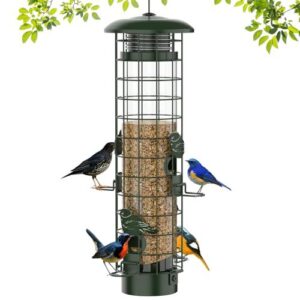
The heavy-gauge metal cage on this feeder does exactly what the name promises — it wraps the seed reservoir in a barrier squirrels simply can’t chew through or pry open. At 15.7 inches tall with weight-activated port closures, it cuts off access the moment anything heavier than a songbird lands on the perch.
The removable lower section keeps cleaning quick, and the 3-pound seed capacity means fewer trips out to refill it on a rural property.
| Best For | Backyard bird enthusiasts who want to attract small songbirds like finches, chickadees, and cardinals without constantly battling squirrels raiding the feeder. |
|---|---|
| Material | Metal |
| Squirrel Deterrence | Metal mesh barrier |
| Target Birds | Finches, chickadees, cardinals |
| Weather Resistance | Outdoor-rated metal |
| Mounting Type | Hanging |
| Maintenance | Removable lower section |
| Additional Features |
|
- Heavy-duty metal mesh construction means squirrels can’t chew through or pry it open
- Removable lower section makes cleaning and refilling quick and genuinely hassle-free
- 3-pound seed capacity cuts down on how often you need to head outside to top it off
- Determined raccoons or squirrels with access to nearby branches may still find a way in
- Strong winds or heavy animals can knock it down, so placement matters
- Wet seed can clog the bottom area, meaning you may need to clean it more often in rainy weather
2. More Birds Double Suet Cake Feeder
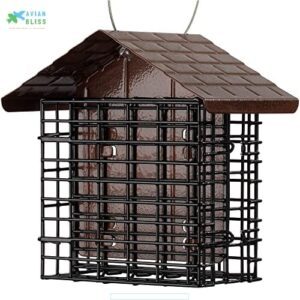
Where the metal cage feeder blocks squirrels from seed, this one focuses on keeping suet stocked and protected. The More Birds Double Suet Cake Feeder holds two standard 12–14 ounce cakes simultaneously in separate cage chambers, so you’re not constantly trudging back out to refill it.
The shingle-patterned weather guard roof sheds rain and slows melt, which matters in exposed rural yards. Powder-coated steel withstands the elements, and the double-locking closures keep everything secure between visits.
| Best For | Bird enthusiasts in rural or exposed yards who want to attract clinging species like woodpeckers and nuthatches without frequent refilling. |
|---|---|
| Material | Powder-coated metal |
| Squirrel Deterrence | Not squirrel-specific |
| Target Birds | Woodpeckers, nuthatches, titmice |
| Weather Resistance | Powder-coated steel |
| Mounting Type | Hanging |
| Maintenance | Double-locking closure |
| Additional Features |
|
- Holds two suet cakes at once, cutting down on how often you need to refill
- Weather guard roof keeps suet fresher longer in rain and snow
- Powder-coated steel construction holds up well to outdoor conditions year-round
- No perch or base, so larger birds like blue jays will struggle to use it
- Thin suet cakes can tip inside the compartment, making them harder for birds to access
- Not squirrel-resistant on its own — you may need a separate baffle to keep them out
3. Squirrel Buster Squirrel Proof Suet Bird Feeder
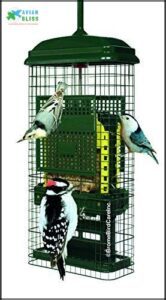
Brome takes a different approach than a basic cage. The Squirrel Buster Suet Feeder uses a weight-activated shroud that drops over the suet ports the moment a squirrel lands — no springs to wear out, no manual resets. It holds two suet cakes, and the integrated crumb port catches fallen bits so nothing goes to waste.
Chew-resistant construction and UV-stabilized components mean it won’t degrade after a season or two outdoors. Woodpeckers and nuthatches get through fine. Squirrels don’t.
| Best For | Backyard bird enthusiasts who want a durable, low-maintenance solution for keeping squirrels away from suet feeders without constant adjustments. |
|---|---|
| Material | Metal |
| Squirrel Deterrence | Weight-activated shroud |
| Target Birds | Woodpeckers, nuthatches, jays |
| Weather Resistance | Durable metal construction |
| Mounting Type | Hanging |
| Maintenance | Tool-free detachable parts |
| Additional Features |
|
- Weight-activated shroud blocks squirrels automatically — no springs, no manual resets required
- Holds two suet cakes at once and captures falling crumbs to minimize waste
- Tool-free disassembly makes cleaning quick and straightforward
- Large birds like crows or magpies may still be heavy enough to trigger the shroud and access the suet
- Small red squirrels might find ways to reach food through the tray openings
- Trays can be tricky to seat correctly on the tracks during setup
4. Erva Starling Proof Double Suet Cake Feeder
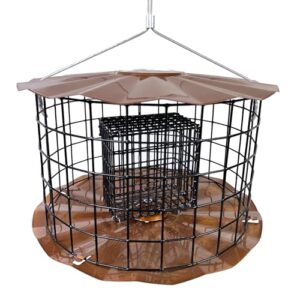
Where the Squirrel Buster experiences mammals, starlings are a different kind of raid. The Erva Starling Proof Double Suet Cage Feeder uses 1.5-inch square mesh openings to keep the big, pushy birds out while chickadees, nuthatches, and titmice slip through easily.
It holds two standard suet cakes, all-metal construction means it won’t crack or bow, and the copper-finish roof adds something decent-looking to your yard. Practical and sharp enough to leave out front.
| Best For | Bird lovers who want to feed small songbirds like chickadees, nuthatches, and titmice without constantly battling starlings, squirrels, or magpies at the feeder. |
|---|---|
| Material | Metal with copper finish |
| Squirrel Deterrence | 1.5-inch cage mesh |
| Target Birds | Chickadees, nuthatches, wrens |
| Weather Resistance | All-metal, long-lasting |
| Mounting Type | Hanging cable included |
| Maintenance | Removable components, clamp |
| Additional Features |
|
- The 1.5-inch mesh cage does a solid job keeping larger, aggressive birds and squirrels out while still letting smaller songbirds pass through freely
- Holds two suet cakes at once, so you’re refilling less often and birds get longer uninterrupted feeding time
- All-metal construction with a copper-finish roof means it holds up outdoors and actually looks good doing it
- Larger desirable birds like red-bellied woodpeckers can’t fit through the cage, so you may miss out on some welcome visitors
- Smaller birds sometimes need time to figure out the caged setup before they feel comfortable feeding
- Crumbs and debris build up inside, so you’ll need to disassemble and clean it regularly to keep things hygienic
5. Birds Choice Upside Down Suet Feeder
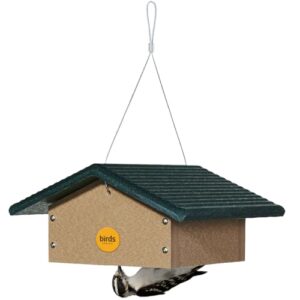
Starlings can cling — but not for long. The Birds Choice Upside Down Suet Feeder flips the script by forcing birds to feed from below, which rules out most nuisance species right away. Woodpeckers, nuthatches, and chickadees handle it naturally.
The recycled poly-lumber construction won’t crack or fade, and the integrated tail prop keeps larger clinging birds steady. One suet cake fits inside, the roof lifts clean for refills, and it holds up year-round without complaint.
| Best For | Backyard birdwatchers who want to attract woodpeckers, nuthatches, and chickadees while keeping starlings and other nuisance birds away. |
|---|---|
| Material | Recycled poly-lumber |
| Squirrel Deterrence | Upside-down design |
| Target Birds | Woodpeckers, nuthatches, chickadees |
| Weather Resistance | Weatherproof poly-lumber |
| Mounting Type | 12-inch hanging cable |
| Maintenance | Top-opening roof access |
| Additional Features |
|
- Upside-down design naturally filters out most nuisance birds without any extra effort
- Recycled poly-lumber holds up year-round and won’t crack, fade, or need repainting
- Top-opening roof makes refilling and cleaning quick and hassle-free
- Birds may need time to adjust to the unconventional feeding position
- Determined squirrels can still access it without a separate baffle
- Larger clinging birds like Blue Jays may eventually figure out the bottom grip
6. Audubon Recycled Plastic Platform Feeders
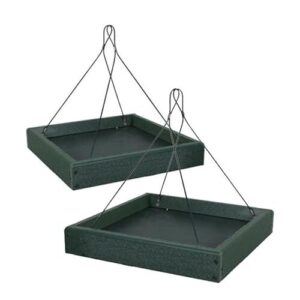
Platform feeders don’t pretend to be something they’re not — they’re open, accessible, and built for variety. The Audubon Recycled Plastic Platform Feeders come two per pack at $83.99, made from 95% recycled plastic that won’t crack, fade, or rot after a few hard seasons.
Pair them with the right setup and you’ll see real results — these tips on attracting birds to your feeder show exactly how placement and surroundings can make all the difference.
The perforated mesh bottom drains water and keeps seed from going moldy between visits. Cardinals, jays, and larger birds feed comfortably on the open tray. Hang them from a branch or pole — the heavy-duty cable aids either without complaint.
| Best For | Bird enthusiasts who want to attract a wide variety of species and prefer eco-friendly products that hold up through tough weather seasons. |
|---|---|
| Material | Recycled plastic |
| Squirrel Deterrence | Open platform, none |
| Target Birds | Diverse species |
| Weather Resistance | Heavy-duty recycled plastic |
| Mounting Type | Cable hanging |
| Maintenance | Simple open design |
| Additional Features |
|
- Made from recycled plastic that resists cracking, fading, and rotting over time
- Perforated mesh bottom drains water and keeps seed fresh between visits
- Open platform design welcomes cardinals, jays, and larger birds that struggle with enclosed feeders
- Open tray offers little protection from heavy rain, which can quickly soak seed
- Requires suitable hanging hardware or locations that may not come standard with the pack
- Higher price point at $83.99 for two feeders may not suit budget-conscious buyers
7. Stokes Select Red Rock Twin Chamber Bird Feeder
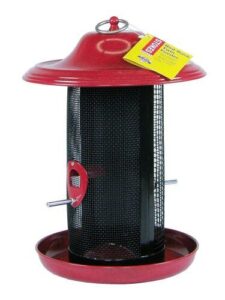
Two seed types, one feeder — that’s the practical appeal of the Stokes Select Red Rock Twin Chamber Bird Feeder. The twin chambers let you run sunflower and mixed blends side by side without cross-contamination, pulling in cardinals, finches, and nuthatches at once.
The metal roof and powder-coated finish handle whatever weather rural properties throw at it. It won’t stop a determined squirrel on its own, so pair it with a pole baffle for real protection.
| Best For | Bird enthusiasts who want to attract multiple species at once without the hassle of managing separate feeders. |
|---|---|
| Material | Metal |
| Squirrel Deterrence | None built-in |
| Target Birds | Cardinals, finches, nuthatches |
| Weather Resistance | Powder-coated finish |
| Mounting Type | Stainless steel hanging ring |
| Maintenance | Twist-lock tops |
| Additional Features |
|
- Twin chambers let you offer two seed types side by side, drawing a wider variety of birds like cardinals, finches, and nuthatches
- Metal roof and powder-coated finish hold up well in all weather conditions, making it a solid year-round option
- Twist-lock tops make refilling and cleaning straightforward compared to most feeders
- Smaller seed particles can slip through the mesh screens and go to waste
- The wide build and small hanging ring make overhead mounting tricky without the right setup
- No squirrel deterrent built in — you’ll need a separate pole baffle to keep larger animals away
8. Cedar Suet Log Bird Feeder
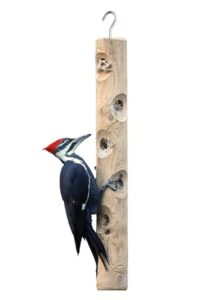
Cedar has a way of looking like it belongs in the woods — and that’s exactly where woodpeckers, chickadees, and nuthatches feel at home. This 24-inch solid cedar log comes with eight pre-drilled suet plug holes plus natural cracks for spreadable suet, peanut butter, or mealworms. The length doubles as a tail prop for pileated woodpeckers.
Squirrels will still chew at it, so treat this one as an attractant, not a fortress — and pair it with a baffle-mounted pole.
| Best For | Bird enthusiasts who want to attract clinging birds like woodpeckers, chickadees, and nuthatches with a natural-looking, versatile feeder. |
|---|---|
| Material | Cedar wood |
| Squirrel Deterrence | None built-in |
| Target Birds | Woodpeckers, chickadees, nuthatches |
| Weather Resistance | Natural cedar wood |
| Mounting Type | Open-ended hook |
| Maintenance | Open-ended access |
| Additional Features |
|
- Eight pre-drilled holes plus natural cracks give you plenty of ways to offer different foods — suet, peanut butter, seeds, or mealworms
- The 24-inch length acts as a tail prop, making it one of the few feeders that comfortably accommodates larger birds like pileated woodpeckers
- Solid cedar construction is built to handle the elements and blends naturally into any backyard or wooded setting
- Suet isn’t included, so you’ll need to stock up separately before the feeder is ready to use
- Squirrels are drawn to it and will chew around the holes over time
- Larger birds like starlings can still get to the food, so it’s not a selective feeder by any means
9. North States Two-Way Squirrel Baffle
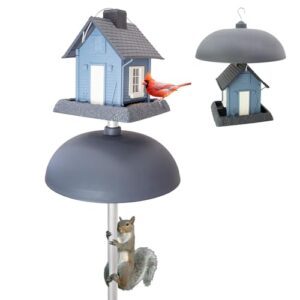
A baffle isn’t glamorous, but it might be the most important piece of hardware at your feeding station. The North States Two-Way fits both hanging and pole-mounted setups, with a 15.75-inch diameter inverted bowl that gives squirrels nothing to grab onto. It works with poles from 0.5 to 1.25 inches in diameter.
The plastic won’t outlast steel, so check it seasonally. Pair it with proper 5-foot pole height and you’ve closed most of the gaps squirrels exploit.
| Best For | Bird enthusiasts who want reliable squirrel and raccoon protection for both hanging and pole-mounted feeders without committing to a pricey metal baffle. |
|---|---|
| Material | UV-protected plastic |
| Squirrel Deterrence | Inverted bowl baffle |
| Target Birds | All feeder birds |
| Weather Resistance | UV-protected plastic |
| Mounting Type | Hanging or pole-mount |
| Maintenance | Rinse with warm water |
| Additional Features |
|
- Works two ways — fits hanging feeders and pole setups (0.5" to 1.25" diameter), so it’s versatile enough for most feeding stations
- The wide 15.75-inch inverted bowl creates a serious barrier, giving squirrels no edge to grip or climb around
- Lightweight and easy to clean with just warm water, making upkeep quick and painless
- Plastic construction means a determined squirrel could chew through it over time — not as durable as a metal alternative
- Needs proper clearance from nearby fences, chairs, or structures, or squirrels will simply leap past it
- Long-term sun exposure can cause fading or gradual UV degradation, so it may need replacing after a few years
10. Hot Pepper No Melt Suet
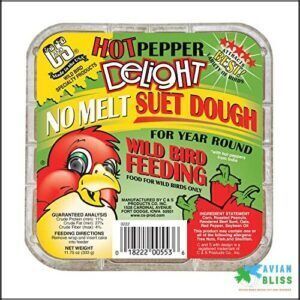
Capsaicin is the real secret here. This suet packs hot pepper into every bite, which mammals find irritating but birds completely ignore — their taste receptors simply don’t register it the same way.
The no-melt formula holds firm up to 100°F, making it practical through summer heat waves when standard suet turns into a greasy mess. At 11.75 ounces per cake, it fits standard wire feeders and draws woodpeckers, chickadees, and nuthatches reliably. Pair it with a caged feeder for best results.
| Best For | Backyard bird enthusiasts who want to attract woodpeckers and other wild birds year-round without dealing with squirrels, raccoons, and other feeder raiders. |
|---|---|
| Material | Rendered suet base |
| Squirrel Deterrence | Hot pepper formula |
| Target Birds | Woodpeckers, crows |
| Weather Resistance | No-melt up to 100°F |
| Mounting Type | Wire suet feeder compatible |
| Maintenance | Refrigerate before removal |
| Additional Features |
|
- Hot pepper formula naturally deters mammals while leaving birds completely unaffected
- No-melt design stays solid in temperatures up to 100°F, making it a reliable warm-weather option
- Fits standard wire suet feeders and works in any season with no special setup required
- Can draw large flocks of starlings, which may crowd out smaller, more desirable birds
- Needs to be refrigerated before opening to make removal from packaging easier
- Pest-deterrent effectiveness may vary depending on how sensitive the local animals are to capsaicin
Why Rural Feeders Need Extra Defense

Rural properties aren’t just dealing with one or two bold squirrels—you’re up against entire populations, unpredictable weather, and feeding stations that can go days without a check. That combination means a basic feeder won’t cut it out here. Here’s exactly why rural setups demand a stronger game plan.
More Squirrels and Wildlife
Rural properties don’t just attract more squirrels — they attract competing squirrels, plus raccoons, opossums, and deer. These animals exist within active wildlife food webs, where pressure on your feeder reflects genuine ecological density.
Squirrels also cache seeds that fuel forest regeneration, so their populations stay strong year-round. That persistence is exactly why standard feeders fail fast in rural settings. Beyond feeding, these animals play an essential role through natural seed dispersal within the environment.
Longer Refill Distances
When your feeder is a half-mile walk from the house, every theft matters more. Longer refill distances mean fewer top-ups, so you need feeders with double-cake capacity that hold seed longer.
- Fuel costs rise with each extra trip
- Route optimization cuts wasted travel
- Container reuse lowers per-refill expense
- Reverse logistics add handling complexity
- Durable suet bird feeders reduce replacement runs
Higher Seed Theft Risk
Squirrels ramp up activity during peak theft hours — early morning and late afternoon — when energy-dense seeds like sunflower and suet draw the heaviest traffic.
Rural properties sit closer to natural foraging territory, so you’re not just fighting one squirrel. Neighboring feeder networks, seasonal autumn spikes, and ground-foraging rodents combine into constant pressure that a standard feeder simply wasn’t built to handle.
Weather Exposure Concerns
Constant squirrel pressure isn’t the only thing wearing your feeder down. Rural setups take the full brunt of the elements — wind gusts, freeze-thaw cycles, and summer UV all degrade materials faster than you’d expect.
Weatherproof metal construction and UV-stabilized plastics hold up where standard feeders crack, warp, or rust through within a single season.
Larger Feeding Stations
Bigger properties mean bigger appetites — from the birds and everything else lurking nearby. A wide feeding station spanning up to 24 inches lets 6 to 8 birds feed at once without chaos.
- Gravity-fed seed delivery keeps flow consistent
- Reinforced 2-inch bases handle heavy loads
- Airtight bins lock out pests between visits
- Double-cake capacity cuts down refill trips
That last one matters most when your feeder is a quarter-mile from the house.
Best Feeder Types for Rural Properties
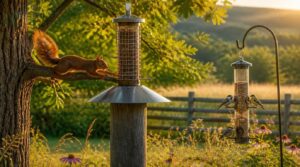
Not all feeders are built to survive the pressure that rural properties throw at them, so picking the right type makes all the difference.
Each design on this list solves a specific problem — whether that’s a determined squirrel, a remote location, or a mix of bird species you actually want to feed. Here are the feeder types that hold their ground best in rural settings.
Weight-activated Feeders
Weight-activated mechanisms work by closing seed ports the moment a heavier animal lands — usually within seconds. The spring-loaded port design resets automatically once the animal leaves, so small birds never lose access long.
You can tune sensitivity thresholds between roughly 3 and 8 ounces, which lets chickadees feed freely while a squirrel-proof suet feeder locks out anything heavier.
Metal Cage Feeders
Metal cage feeders put a physical barrier between squirrels and the seed — simple, reliable, and built to last. Wire openings sized between 1.25 and 1.5 inches let chickadees and nuthatches slip through while blocking anything bulkier.
Powder-coated or stainless steel construction withstands years of rain without rusting. Some cage-style squirrel-proof suet feeders even include dual compartments, letting two species feed at once.
Upside-down Suet Feeders
Flip the feeder upside down and you’ve already won half the battle. Clinging bird species — woodpeckers, nuthatches, chickadees — handle vertical feeding mechanics naturally. Starlings can’t.
Three reasons upside-down designs earn their place on rural properties:
- Starling deterrence without cages
- Built-in suet waste reduction from gravity-assisted closures
- Squirrel proof suet feeders that deny awkward balancing room entirely
Platform Feeder Setups
Platform feeders aren’t usually the first choice for squirrel control, but paired with the right location, they hold their own. Sizes from 8×8 to 12×12 inches let multiple birds feed at once without crowding. Mount them on a pole with a baffle, keep them 7 feet from any trunk, and spillage becomes your biggest problem — not squirrels.
Baffled Pole Systems
A baffled pole system gives rural setups a real backbone. Anchor the bird feeder pole with a ground auger, mount a torpedo-style baffle at 4–5 feet, and squirrels stall out every time.
Three things that make it hold:
- Powder-coated steel weathers years without rusting
- Tapered surfaces strip every grip point away
- Vertical spacing shuts down climbing from every angle
Key Squirrel Proofing Features
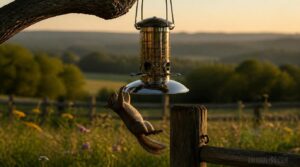
Not every feeder that claims to be squirrel-proof actually holds up when a determined gray squirrel shows up for breakfast.
The difference usually comes down to a handful of specific features — and knowing what to look for saves you from buying the wrong thing twice. Here’s what actually matters when you’re evaluating a feeder for rural use.
Chew-resistant Materials
Squirrels have jaws strong enough to gnaw through soft plastics in under an hour. That’s why material choice matters more than most people realize.
Squirrels can chew through soft plastic in under an hour — material choice is your first line of defense
RoxResin polymers, polycarbonate housings, and powder-coated steel are the heavy hitters — each engineered to outlast persistent gnawing. A solid metal squirrel proof suet feeder built from stainless steel or hardened aluminum stays chew-proof season after season, making it genuinely weatherproof bird feeders worth investing in.
Adjustable Weight Settings
Chew-proof materials keep squirrels out physically — but weight-activated mechanisms add a smarter layer by turning the squirrel’s own body against it.
Most quality squirrel proof suet bird feeder designs let you tune tension springs to close ports at a specific threshold. Species-specific settings mean a chickadee feeds freely while anything heavier gets shut out — no guesswork, just calibrated control.
Secure Locking Lids
Weight settings handle who feeds — locking lids control who refills. A twist-lock mechanism with an audible click confirmation means squirrels can’t pry open the seed chamber by brute force alone. Tamper-evident seals and reinforced hinge points eliminate the weak spots teeth naturally find first.
Look for weatherproof gasket seals around the rim. They keep moisture out and stop pressure-sensitive lids from warping loose after a hard freeze.
Proper Cage Openings
Lids keep squirrels out of the seed chamber — but openings determine whether your cage bird feeder actually works long-term. Wire gaps of 1.25 to 1.5 inches let small birds through while blocking squirrels entirely.
- Access doors 6 to 8 inches wide allow gloved-hand refilling
- Stainless steel latches resist corrosion for years outdoors
- Mesh edges must be welded, never raw-cut
A squirrel proof suet bird feeder with sharp burrs or flimsy hinges won’t last a season.
Weatherproof Construction
Rural weather doesn’t forgive weak materials. Powder-coated steel resists rust through wet seasons, while UV-stabilized polycarbonate panels won’t crack or yellow after years of direct sun. Thermal breaks between metal frames keep heat from reaching stored seed.
For a truly weatherproof bird feeding setup, look for sealed seams and drainage channels — because moisture is often what shortens a feeder’s life before squirrels ever get the chance.
Choosing Feeders by Bird Species
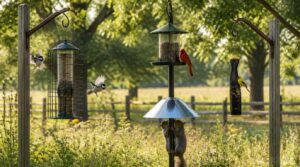
Not every feeder works for every bird, and in a rural yard, that mismatch costs you visitors. The right feeder design comes down to which species you’re actually trying to attract — and which pests you’re trying to keep out. Here’s how to match your setup to the birds showing up at your property.
Woodpeckers and Suet
Woodpeckers are practically suet addicts — and for good reason. Suet delivers high-density fat, fueling the relentless drumming and foraging that defines their day. Look for blends with over 50% fat by weight, plus peanuts or insect pieces for seasonal protein.
A caged suet feeder with a tail prop lets them feed vertically, the way nature intended, while a weight-activated closing shroud keeps squirrels locked out entirely.
Chickadees and Nuthatches
These two are practically a team. Chickadees broadcast predator risk through layered alarm calls — nuthatches eavesdrop and adjust instantly. In rural areas, a weight-activated squirrel proof suet bird feeder provides both:
- Chickadees dash in for quick, acrobatic grabs
- Nuthatches work vertically downward along the feeder face
- Mixed flock interactions keep both species returning together
That setup holds all winter.
Cardinals and Platform Feeders
Cardinals don’t hover — they land, settle, and stay. That’s why a wide platform feeder suits them far better than a tube or cage style. A tray at least 3–4 inches wide gives their feet room to grip.
Load it with safflower or black oil sunflower seed, position it 4–6 feet up, and raise a baffle below. Wind spillage drops with a raised lip edge.
Small Songbird Access
Goldfinches and chickadees need feeders built around their scale. Cage-style squirrel proof suet feeders with 1.25-inch wire openings let these clinging birds slip through easily while keeping larger species out. Keep port openings at 1 to 1⅛ inches.
Upside-down inverted feeding works well for nuthatches — they’re built for it. Nyjer and safflower seed draw small songbirds without competing with bigger visitors.
Excluding Larger Pests
Raccoons and starlings are a different problem entirely — heavier, cleverer, and harder to discourage. A weight-activated squirrel proof feeder calibrated below 0.5 kilograms shuts out most of them automatically.
For persistent raiders, caged suet feeder designs with interlocking wire panels block nimble claws without sacrificing access for smaller birds. Multi-species pest deterrence means layering both strategies rather than picking one.
Installation Rules That Stop Squirrels
Even the best squirrel-proof feeder on the market will fail if you hang it from the wrong branch or set it too close to a fence post. Placement is where most rural setups fall apart, and the fixes are simpler than you’d think. Here’s what actually works.
Follow 5-7-10 Placement
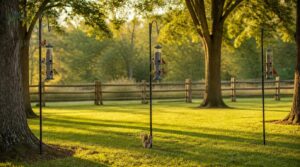
The 5-7-10 rule keeps squirrels grounded — feeders go 5 feet high, 7 feet from any trunk, and 10 feet from branches or rooflines they can leap from.
Space multiple stations at least 5 feet apart to reduce territorial squabbling between birds. Position each feeder so prevailing winds blow toward it, cutting down on seed scatter and squirrel glide paths.
Use Pole Baffles Correctly
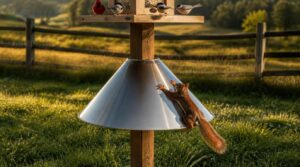
A squirrel baffle only works when it’s mounted 4.5 to 5 feet above ground — any lower and squirrels clear it in a single hop. Cone and barrel shapes are your best bet for pest control; their curved surfaces give rodents nothing to grip.
Check alignment after heavy wind, since a tilted baffle leaves gaps that defeat the whole setup.
Avoid Nearby Launch Points
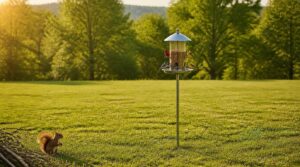
Even with a perfect baffle, a poorly placed feeder hands squirrels a free pass. Keep it at least 12 feet from any tree, shrub, or fence line — that covers their full horizontal jump range.
Prune branches within 8 feet overhead. Open surroundings remove the cover they rely on to stage an approach undetected.
Protect Hanging Feeders
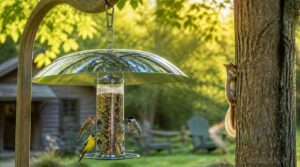
A squirrel baffle dome mounted 6 to 10 inches above your feeder cuts off top-down approaches completely. Go with 12 to 15 inches in diameter — anything smaller and a determined squirrel finds the edge.
Use metal S-hooks or carabiners rated for outdoor loads, not rope. Two-point suspension keeps the feeder level and reduces the swinging that loosens hardware over time.
Secure Rural Feeding Stations
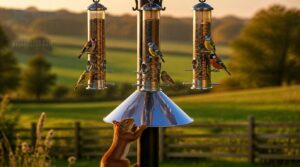
Out in the country, wildlife density changes everything — more animals mean more pressure on every station you set up.
- Space feeders at least 10 feet apart to reduce clustering
- Mount squirrel-resistant suet feeders on baffled poles
- Calibrate weight-activated mechanisms after seasonal temperature shifts
- Inspect mounting brackets after every major weather event
A tight feeding station setup leaves squirrels no foothold.
Suet and Seed Protection Tips
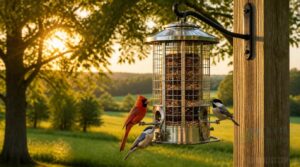
Even the best squirrel-proof feeder won’t do much if you’re filling it with the wrong suet or leaving spilled seed scattered on the ground below. What you put in the feeder — and how you manage it — matters just as much as the hardware. Here’s what actually works to protect your seed and suet from the moment it goes in to the moment birds eat it.
Use Hot Pepper Suet
Capsaicin is the reason hot pepper suet works — mammals feel the burn, birds don’t. Their digestive systems lack the receptors that register heat, so feeding continues without interruption.
| Ingredient | Purpose |
|---|---|
| Rendered beef fat | Dense energy base |
| Cayenne or capsaicin | Mammal deterrent |
| Cornmeal or peanuts | Protein and texture |
Mix your own using rendered fat, cornmeal, and cayenne, or pick up squirrel resistant suet cakes ready-made. Woodpeckers and nuthatches won’t flinch. Squirrels will take one taste and leave.
Choose No-melt Suet
When summer temperatures climb past 35°C (95°F), traditional suet turns into a greasy mess. No-melt suet cakes hold their shape, resist dripping, and stay fresh longer — which matters when you’re not refilling daily.
Most formulas pack in rendered beef fat, nuts, and insect meal, delivering the calories birds burn hard during warm months without the spoilage headache.
Reduce Fallen Seed
Fallen seed is squirrel bait lying on the ground, plain and simple.
Fit a catch tray beneath your squirrel proof bird feeder to recapture dropped seed before it hits soil. Pair that with anti-spill baffles to redirect scatter. On bare earth, lay gravel or mulch — solid ground cover starves out germination and keeps cleanup fast.
Store Feed in Bins
What’s protecting your bulk seed between fills? Squirrels don’t just raid feeders — they’ll chew through thin plastic bags and flimsy containers without hesitation.
A rodent-resistant bin with an airtight gasketed lid cuts off that access entirely, controls moisture, and keeps suet and seed fresh longer. Look for UV-stabilized construction and stainless hardware — both hold up hard in rural conditions.
Rotate Feeder Locations
Squirrels learn patterns faster than you’d think. Rotating feeders across at least three spots spreads spilled seed and droppings instead of concentrating them in one patch:
- Rest each used site for 1–2 weeks before returning
- Vary sun and wind exposure to slow mold growth
- Mark your rotation schedule on a calendar to stay consistent
That simple shift reduces parasite buildup and gives the ground a real chance to recover.
Maintenance for Long-Term Performance
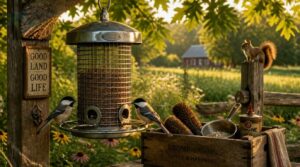
Even the toughest squirrel-proof feeder won’t last if you ignore the upkeep. A little routine maintenance goes a long way toward keeping things running clean, safe, and effective season after season. Here’s what to stay on top of.
Clean Every Two Weeks
Every two weeks is the sweet spot for bird feeder maintenance. Mix a nine-to-one water-to-bleach solution, disassemble all parts, and scrub feeding ports with a dedicated brush to clear packed seed residue. Clear drainage holes so moisture doesn’t pool and breed mold.
Dry everything completely before reassembly — skipping that step is how mildew wins.
Check Moving Parts
Once the feeder is clean and dry, give the mechanical side some attention. Hinges, springs, and latches wear faster than most people expect — a stiff hinge causes lid misalignment, which lets moisture in and causes seeds to jam.
Lubricate rotating bearings each season and recalibrate tension springs on weight-activated closing shrouds, since they drift over time and lose their squirrel-stopping reliability.
Inspect Squirrel Damage
Mechanical wear is only part of the story. Look beyond the feeder itself — roofline entry points and soffits often show chewed openings around 2 inches wide, while attic insulation gets flattened and torn from nesting activity.
Check for gnawed electrical wiring too. That’s where squirrel-resistant hardware earns its keep: chew proof material and antichew technology slow the damage before it compounds.
Prevent Mold Buildup
Mold moves fast when humidity climbs. Keep your indoor storage humidity between 30 and 50 percent, and wipe down any suet cage or tray after wet weather before you bring it inside.
Every two weeks, run a 1:10 bleach-water rinse on plastic parts, rinse thoroughly, and let everything air dry completely — damp reassembly is where mold colonies get their start.
Replace Worn Hardware
Rust is slow, but it wins eventually. Swap aging screws and hinge pins for stainless steel fasteners — they resist corrosion without seizing up mid-season. Weight-activated mechanisms depend on clean, smooth movement, so corroded hardware throws off calibration fast.
Galvanized mounting hardware adds 5–10 years to your feeding station’s service life. When something feels loose or sticky, replace it before a squirrel finds the weakness first.
Frequently Asked Questions (FAQs)
Can squirrel-proof feeders deter raccoons and other wildlife?
Yes — many squirrel-proof feeders double as solid wildlife deterrents. Weight-activated mechanisms and climbing barriers work against raccoons too, blocking heavier animals from reaching seed during overnight nighttime foraging attempts.
How do I attract specific bird species to rural feeders?
Match the seed to the bird. Black oil sunflower pulls finches and chickadees; nyjer draws goldfinches; safflower targets cardinals. High-calorie suet brings woodpeckers year-round, especially in winter.
Can multiple feeders be grouped together safely outdoors?
Group them right, space them well, and your backyard bird feeding setup thrives. Keep feeders 8 to 12 feet apart to prevent tail chases and reduce bird aggression — independent mounting on separate poles keeps everything stable and secure.
Conclusion
How long before the next determined squirrel figures out your current setup? With the right squirrel proof feeders for rural properties, that question stops keeping you up at night.
Placement, materials, and weight-activation do the heavy lifting — your job is picking feeders built for real wildlife pressure, not suburban light duty. Mount them correctly, load them smart, and the birds eat. Out here, that’s the whole win.
- https://www.curlewcall.org/best-squirrel-proof-bird-feeders-2025-reviews-guide
- https://www.birdsandblooms.com/birding/attracting-birds/feeding-birds/squirrel-proof-bird-feeders
- https://www.reviewed.com/home-outdoors/best-right-now/best-bird-feeders
- https://www.kingsyard.com/blog/best-squirrel-proof-bird-feeder-2026
- https://www.allaboutbirds.org/news/how-to-choose-the-right-kind-of-bird-feeder