
This site is supported by our readers. We may earn a commission, at no cost to you, if you purchase through links.

A parakeet slams into a windowpane at full speed, and the sickening thud tells you everything before you even turn around. That icy spike of adrenaline hits every bird owner eventually, because glass doesn’t announce itself as a hazard the way a hot stove does. Reflections trick a bird’s eyes, temperature swings near panes stress its body, and cords dangling from blinds can turn a curious moment fatal.
Finding the right safe distance from windows isn’t guesswork, though it often gets treated that way. Cage placement, perch spacing, even feeder positioning outside all follow specific, testable rules built on how birds see, fly, and regulate heat. Get the distance wrong, and you’re managing a slow-building risk instead of a one-time fix.
What follows breaks down exactly where cages, stands, and feeders belong, and why those numbers matter more than instinct alone.
Table Of Contents
- Key Takeaways
- Safe Distance From Windows for Birds
- Placing Bird Cages Near Windows
- Safe Window Distance for Perches
- Backyard Feeders and Window Safety
- Window Hazards Bird Owners Miss
- Frequently Asked Questions (FAQs)
- Is it safe to sleep near a window?
- Is it okay to put a couch against a window?
- How far away from a wall should a window be?
- What is the code for window next to door?
- How far should furniture sit from windows for child safety?
- What is the recommended window opening gap for children?
- Which windows require tempered glass under building codes?
- How can renters secure windows without drilling into frames?
- Conclusion
Key Takeaways
- Keep your bird’s cage at least 4 feet from windows to eliminate vibration impact and reduce collision risk from startled flight.
- Break up glass reflections with decals or film spaced 2-4 inches apart, since birds mistake reflective panes for open sky and can suffer sudden-impact injuries.
- Watch for temperature swings of 4-8 degrees near windows and use thermal curtains or monitoring thermometers to prevent heat stress or drafts.
- Position backyard feeders either within 1-3 feet or beyond 10-20 feet of windows, since mid-range distances offer the least reaction time and highest collision risk for wild birds.
Safe Distance From Windows for Birds

Where you place your bird’s cage matters more than most owners realize, since windows bring hidden risks beyond just a nice view.
Direct sunlight, drafts, and temperature swings near windows can stress your bird, so it’s worth reviewing these essential tips for keeping birds healthy before choosing a spot.
Glass surfaces create temperature swings, collision hazards, and startle triggers that can affect your bird’s safety and comfort.
Here’s what you need to know before deciding how close is too close.
Minimum Cage Spacing
Half an inch makes the difference between a secure cage and an escape route. For small to medium birds, that’s your minimum safe spacing—tight enough to prevent head entrapment risks, loose enough for airflow.
Larger parrots need 3/4 to 1 inch, built to withstand a strong beak. Always check species specific guidelines before buying; manufacturer specs exist for a reason, not just marketing.
Avoid Direct Glass Contact
Cage bar spacing keeps toes and beaks safe, but glass poses a different threat entirely: sudden impact injuries from panicked flight. Even indoor birds startle and lunge toward reflective surfaces mistaken for open sky.
Treating windows with decals or matte film breaks up that illusion. Positioning furniture or plants between cage and glass adds another interior barrier, cutting collision risk without blocking natural light your bird needs. Always follow proper glass handling safety protocols when cleaning or installing window treatments to prevent accidents.
Watch Drafts and Heat
Glass isn’t just a collision hazard; it’s a temperature trap. Windows swing 4 to 8 degrees in minutes as sun shifts, and drafts from loose frames create uneven microclimates that leave your bird shivering on one perch, sweltering on another.
Watch for panting or wing-spreading—early heat stress signs. Thermal curtains cut heat exchange 20-30%, giving your bird’s roost the stability it actually needs.
Reduce Collision Risk
Temperature control matters, but a bird can’t dodge what it can’t see. That’s why visual pattern disruption works: decals or films spaced 2-4 inches apart break up reflections, cutting collisions dramatically.
- Anti-reflective films (60%+ reduction)
- UV-absorbing coatings for detection
- Safety film, 4-14 mil thickness
- Angled sills redirecting flight paths
- Impact-resistant glass near cages
Placing Bird Cages Near Windows
Where you put your bird’s cage matters just as much as how far it sits from the glass. A few smart placement choices can protect your bird from stress, temperature swings, and sudden panic. Here’s what to keep in mind before you settle on the perfect spot.
Keep Cages Several Feet Back

Four feet isn’t arbitrary—it’s the sweet spot where vibration impact from window contact stops reaching the cage entirely. Keep the base clear of the window sill, since even brushing the glass transmits stress your bird will feel.
For extra peace of mind, pair that four-foot buffer with a bird seed feeding guide that covers smart feeder placement around windows.
That buffer zone also cuts collision risk if something outside triggers a startled flight toward the pane.
Provide Partial Window Views

Position the cage so your bird sees a slice of sky or distant treeline, not a wide-open pane. This partial framing helps maintain circadian rhythms, offers a natural enclosure feel, and cuts visual overstimulation.
- Angled placement beside the frame
- Partial curtain coverage
- Furniture blocking half the glass
Landscape views calm birds; too much glare-heavy exposure unsettles them.
Avoid Full-day Sun Exposure
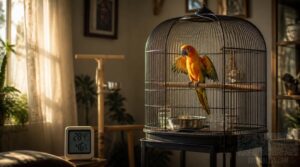
Rarely does a windowsill stay shaded all day, which is why tracking your bird’s sun exposure matters. Keep ideal cage temperatures between 64°F and 82°F, using real-time heat monitoring to catch spikes early.
Favor spots with mid-afternoon shading rather than constant glare. Daily sun tracking helps you notice patterns—and watch for behavioral cooling cues like panting, which signal it’s time to move the cage.
Check Temperature Swings
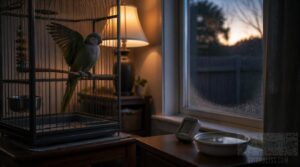
Ever notice how a window seat that feels cozy at noon turns drafty by dusk? That’s a diurnal swing, and birds feel it fast—panting, wing-spreading, or extra noise are stress cues.
Rapid shifts also spike humidity, harming feathers and airways, and can spoil water dishes with bacteria. Use a monitoring thermometer tracking min/max values, so you catch swings before your bird does.
Prevent Startled Flight Paths

A bird that bolts mid-flight is reacting to a threat that isn’t real—usually a reflection mistaken for open sky.
- Sudden wing-beats against cage bars
- Frantic zigzag flight patterns
- Feathers puffed in alarm
Startle response monitoring over a couple weeks reveals problem windows. Pair that with visual boundary implementation—decals, curtains, partial screens—and reflective glare reduction measures to keep flight paths calm and predictable.
Safe Window Distance for Perches

Perches give your bird freedom to move, but that freedom means less control over where it lands and how fast. Set up too close to a window, and you’re inviting the same collision and startle risks you just worked to avoid with the cage. Here’s what to check before you settle on a spot.
Move Stands Away From Glass
A three-foot buffer isn’t overkill—it’s the difference between a startled hop and a full-blown collision.
| Stand Distance | Risk Level | Why |
|---|---|---|
| Under 1 ft | High | Glare, no takeoff space |
| 1–3 ft | Moderate | Some collision buffer |
| 3+ ft | Low | Full flight clearance |
Angle stands away from direct glass, on stable, non-slip matting to keep footing solid when birds launch or land unexpectedly.
Avoid Slippery Landing Zones
Good footing matters as much as distance. A slick perch surface—glossy paint, polished wood, or a windowsill ledge—can send birds sliding on touchdown, especially near the bottom exposed edge of glass.
- Choose textured, non-slip perch materials
- Skip glossy or painted stands
- Mark risky zones for quick visual checks
- Add traction aids like grip tape
- Test footing before placement
Weather shifts humidity, too, so recheck grip regularly.
Use Curtains or Decals
Traction solves footing, but glass itself needs breaking up visually. Patterned decal spacing—rows 2 to 4 inches apart—disrupts reflections that trigger collisions, while thermal curtains add insulation and calm nearby air currents.
Choose UV resistant finishes so decals don’t fade, and pair with safety film for glass breakage prevention. That layered approach turns risky panes into a genuine visual barrier your flock can actually see.
Supervise Free-flight Time
Free flight demands your full attention, not a glance every few minutes. Watch for wing flutter or head bobbing—early fatigue indicators—and keep clear communication with any other handler present. Set emergency stop protocols before releasing your bird, and end sessions on time.
- Stay present for real-time monitoring
- Watch behavior cues constantly
- Debrief after each flight
- Limit session length
Backyard Feeders and Window Safety

Backyard feeders bring wild birds close enough to enjoy, but that same closeness puts them at risk from your windows. The good news is that positioning and a few simple fixes can cut that risk dramatically. Here’s what actually works, starting with where you place the feeder in the first place.
Place Feeders Very Close
Mounting a feeder within 1 to 3 feet of your window shortens the ideal flight distance, easing wing strain on rapid return trips. Set it at eye level on a ledge for monitoring feeding behavior.
Add a raised perch to prevent seed spillage, and watch for lurking cats—managing predator proximity matters even at close range.
Or Place Feeders Farther Away
Push feeders out to 10 feet or more and you buy birds real reaction time, cutting collision odds a lot. This wider spacing also improves visitor diversity—stations set 12 to 15 feet apart reduce dominance squabbles among competing species.
Extra distance helps with predator ambush, too, since cats hiding near siding lose their pounce advantage. It also curbs seed mold by allowing airflow that close-set feeders simply don’t get.
Break Up Glass Reflections
Glass reflections fool birds into seeing open sky or greenery, and that illusion causes sharp, sudden impacts.
Decal placement matters more than decal quantity—space patterns one to two inches apart across the pane’s full height. Light direction shifts throughout the day, so morning and evening glare needs coverage too.
Adding visual texture through frosted film or safety glazing cuts strikes by roughly 45 percent.
Protect Visiting Wild Birds
Wild visitors don’t know your glass from open sky, so strategic feeder placement matters most: keep feeders under 3 feet or beyond 10-20 feet from windows.
Add bird-safe window decals spaced 2 inches apart, plant native shrub barriers nearby, and stay extra vigilant during migratory season, when unfamiliar birds pass through and collision risk climbs sharply.
Monitor Problem Windows
Some windows just cause trouble, no matter how you angle the feeder. If birds keep striking one particular pane, treat it like a recurring hazard, not bad luck.
- Apply safety film
- Add exterior decals
- Install window screens
- Use opening limiters
These reduce glass breakage risk and reflections, working much like troubleshooting a stubborn signal issue: identify the source, then fix it directly.
Window Hazards Bird Owners Miss

Positioning your bird’s space away from the glass solves the obvious problems, but some risks hide in plain sight. A window doesn’t have to be wide open to put your bird in danger. Here are the sneaky hazards that catch even careful owners off guard.
Drafts From Loose Frames
A quiet whistle around an old sash isn’t just annoying, it’s a warning sign. Loose frame gaps shift with the seasons as wood expands and contracts, drawing cold drafts across your bird’s cage at exactly beak-height.
Fix it with fresh weather stripping and a bead of silicone caulk at the joint. It’s cheap insurance against a chilled, stressed bird—and your heating bill.
Overheating in Direct Sun
A sunbeam that feels pleasant to you can turn deadly for a bird trapped behind glass, since radiant energy transmission raises cage temperatures fast, no wind to cool them.
A pleasant sunbeam turns deadly for a caged bird, as trapped heat behind glass climbs fast with no breeze to cool it
Solar gain accumulation peaks by afternoon, creating localized hotspot risks right where the cage sits.
Birds can’t sweat their way out of it.
Watch for panting or drooped wings, then shift the cage before indoor temperature thresholds climb dangerously high.
Blind Cords and Loops
Heat isn’t the only silent danger lurking near your bird’s window setup. Dangling blind cords pose a real strangulation risk if birds climb or perch on loops during free-flight time.
Swap traditional cords for cordless coverings, or add tensioner devices and breakaway tassels — the same fixes protecting toddlers work for feathered flyers too. Keep cord stops secured and loops managed, well away from cages and perch zones.
Open Windows and Screens
Cracking a window for fresh air feels harmless, but for birds it’s a wildcard. A startled flight straight through a torn screen ends badly fast.
Check screen integrity regularly — no rips, no gaps. Pair window ventilation safety with opening limiters so gaps stay narrow, keeping airflow steady while blocking escape routes and unwanted pest intrusion.
Stress From Outdoor Predators
A screen tear isn’t the only outdoor threat. A neighborhood cat pacing the sill, or a hawk’s shadow crossing the glass, triggers real hormonal stress responses in caged birds — even from safely inside.
Those visual cues spike cortisol and heart rate, same as wild prey. Give your bird a partial refuge: a covered corner away from the window satisfies that instinct for habitat refuge design without sacrificing natural light.
Frequently Asked Questions (FAQs)
Is it safe to sleep near a window?
Your window is a two-faced friend at night: it grants fresh air and quieter breathing, yet invites drafts, allergens, noise, and security risks. Balance comfort against safety—crack it smartly, or trade ventilation for a locked, temperature-steady room instead.
Is it okay to put a couch against a window?
Pushing a couch flush against glass invites trouble: it creates furniture climbing risks for kids or pets, blocks emergency egress paths, traps heat against upholstery, and stresses window frame pressure points. Leave 18 inches minimum for safety and airflow.
How far away from a wall should a window be?
Building codes commonly require 20 feet between opposing walls for glare reduction, fire egress paths, and courtyard spacing. These structural corner stresses and safety compliance standards matter for construction, though your bird’s cage placement depends more on drafts and sun exposure.
What is the code for window next to door?
Most homeowners assume any glass near a doorway needs tempering—not quite true. Tempered glazing requirements kick in when glass sits within 24 inches of swinging, sliding, bifold, or patio doors, or below 36 inches from the floor, per safety glass thresholds.
How far should furniture sit from windows for child safety?
Keep dressers and bookcases at least 3 feet from glass, anchored to wall studs to prevent tipping.
Avoid low furniture that invites climbing hazard prevention near sills, and maintain clear safe zone boundaries between play areas and stable furniture placement throughout the room.
What is the recommended window opening gap for children?
Think of a window opening like a lock with a set combination: too wide, and it fails its one job. The safe gap stays under 4 inches, matching ASTM F2090, enforced with window restrictors that prevent squeezes and stop dangerous falls.
Which windows require tempered glass under building codes?
Codes require safety glazing near doors, within 18 inches of floors, above 9 square feet, in stairways and railings, and within 60 inches of tubs or showers—hazardous zones where tempered glass prevents dangerous shattering during accidental impact or breakage.
How can renters secure windows without drilling into frames?
No lease means no lock-outs on safety. Tension lock options, magnetic brackets, adhesive sash braces, and no-drill track clamps all secure windows and limiter gaps to 4 inches—no drilling, no deposit risk, no landlord disputes.
Conclusion
The next startled flight, the next foggy collision, they’re both preventable long before they happen. Your bird doesn’t understand glass, but you understand physics, panic, and how fast a calm room turns chaotic. That’s why measuring the safe distance from windows matters more than reacting after the fact.
Move the cage back, break up reflections, secure loose cords. Small adjustments, made early, spare you the sound you never want to hear twice.
- https://marketplace.safetyculture.com/us/blog/when-do-you-need-fall-protection-on-a-window
- https://shineonanchors.com/window-cleaner/latest-osha-regulations-for-window-cleaning
- https://gainesvillewindowsanddoors.com/osha-safety-window-installer?amp=1
- https://www.grahamwindows.com/architectural-resources/blast-mitigation
- https://okna.ua/en/library/windows-explosion-proof