This site is supported by our readers. We may earn a commission, at no cost to you, if you purchase through links.
A flash of lemon-yellow darts past your feeder, then vanishes into the maple before you grab your binoculars. Sound familiar?
Ohio hosts more yellow birds than most folks realize, from chunky goldfinches that stick around all winter to warblers that blow through for one wild week each May. Some wear bold black masks. Others flash rust streaks or hoods like tiny hooded bandits.
Grab your coffee and your field guide, because spotting yellow birds in Ohio gets a lot easier once you know exactly what to look for, when, and where.
Table Of Contents
- Key Takeaways
- Common Yellow Birds in Ohio to Know
- American Goldfinch: Ohio’s Beloved Yellow Bird
- Yellow Warblers and Other Songbirds in Ohio
- Where to Find Yellow Birds Across Ohio
- Attracting Yellow Birds to Your Ohio Yard
- Frequently Asked Questions (FAQs)
- What birds are yellow in Ohio?
- Are goldfinches rare in Ohio?
- How do I identify yellow birds in Ohio?
- Do yellow birds live in Ohio?
- Are yellow throated warblers spotted in Ohio?
- Which birds can you see in Ohio?
- What does a yellow bird look like in summer?
- What kind of birds are yellow in Ohio?
- What is the most common yellow bird?
- Are goldfinches in Ohio year round?
- Conclusion
Key Takeaways
- American Goldfinches stick around Ohio all year, glowing lemon-yellow with black wings in summer and fading to olive-brown in winter, and they’re easy to attract with nyjer seed feeders.
- Yellow Warblers and other migratory species like the Prothonotary and Hooded Warblers pass through Ohio mainly during the May spring migration peak, especially in wetlands and floodplain thickets.
- Magee Marsh Wildlife Area and Ottawa National Wildlife Refuge are top spots for spotting warblers, with over 36 species moving through during peak migration season.
- You can turn your own yard into a yellow-bird hotspot by combining feeders, native plants like milkweed and viburnum, and a shallow water source like a bird bath.
Common Yellow Birds in Ohio to Know
Ohio has more yellow birds than most people realize, and each one has its own personality, habits, and look. Some are year-round neighbors you’ve probably already spotted; others are fleeting migrants that show up just long enough to make your day. Here’s a closer look at the species worth knowing.
If you’re curious how these sunny species compare to their cool-toned cousins, check out this guide to blue birds spotted across Ohio for a fuller picture of the state’s colorful bird life.
Bright Yellow Species to Spot
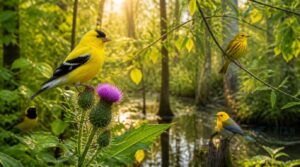
Ohio is home to five standout yellow birds worth knowing by heart. The American Goldfinch glows lemon-yellow with crisp black wings. The Yellow Warbler is vivid yellow top to bottom, with rust-red breast streaks on males. The Prothonotary Warbler brings tropical flair to flooded woodlands. The Hooded Warbler and Common Yellowthroat round out this bright-plumaged crew beautifully.
Birders often use colors for bird identification to distinguish these species.
Yellow Birds With Black Markings
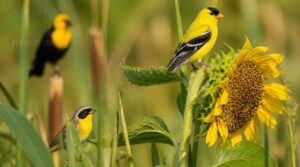
Black markings are the secret handshake of yellow birds in Ohio. American Goldfinch males sport jet-black wings with crisp white bars — unmistakable at any feeder. The Yellow-headed Blackbird flips the script with a golden head blazing against a black body. Here’s what to watch for:
- Black wing patches contrast sharply against bright yellow bodies
- Facial mask patterns — like the Common Yellowthroat’s bold black bandit mask — are instant ID clues
- Tail markings flash dark edges mid-flight, separating similar species quickly
- Breeding season intensifies yellow plumage, making black markings pop even more
Year-Round Vs. Migratory Yellow Birds
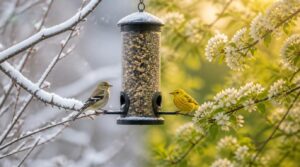
Not every yellow bird in Ohio packs its bags for winter. The American Goldfinch stays year-round, swapping its radiant summer gold for softer, olive-tinged plumage when temperatures drop. Meanwhile, Yellow Warblers head south each fall, returning in May with fresh, vibrant feathers.
Knowing who stays and who migrates helps you plan exactly when to stock your feeders.
Rare Yellow Birds in Ohio
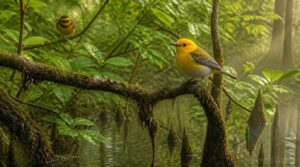
Some yellow birds are tricky finds. The Yellow-throated Warbler shows up in winter rarity lists, while the Prothonotary Warbler ranks among Ohio’s rarest, holding species-of-concern status. Yellow-breasted Chat is a conservation focal species.
Hooded Warblers at Magee Marsh draw crowds when spotted. Even the Yellow-headed Blackbird and Yellow-throated Vireo count as exciting surprises—keep your eyes (and ears) open!
How to Identify Each Species
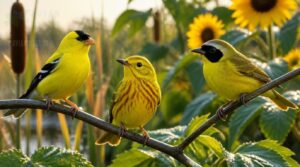
Wondering how to tell these birds apart? Check size, face markings, and habitat clues first. Goldfinches have conical bills; warblers have thin ones. Listen for songs too—each species sings differently.
- Size: 4.3–5.5 inches
- Face: masks, hoods, or eye-rings
- Bill shape: conical vs. thin
- Habitat: wetlands vs. yards
- Song: buzzy vs. melodic
American Goldfinch: Ohio’s Beloved Yellow Bird
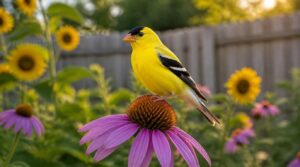
If one bird earned the title of Ohio’s favorite, it’d be this little guy. You’ve probably seen him without even knowing his name. Let’s get you properly introduced.
If you’re hooked on spotting Ohio’s wildlife, you’ll want to check out this guide to Ohio’s birds of prey for your next outing.
Goldfinch Plumage and Size
A male American Goldfinch in summer looks like a flying sunbeam. Breeding plumage brings bright yellow feathers, a black cap, and bold white wing bars. Females stay olive-yellow, no cap.
In summer, a male American Goldfinch transforms into a flying sunbeam, bright yellow with a black cap and bold white wing bars
Come winter, Spinus tristis turns dull grayish-brown—still showing those wing bars, though. Body-wise, they’re tiny: about 4.3 to 5.1 inches long, weighing barely an ounce. *Small bird, big personality.
*
Backyard Feeding Habits
Feeding goldfinches is easy. Nyjer seed is the magic word—their thin beaks are built for it. Skip the giant sunflower seeds; thistle feeders work best.
Morning’s prime time for visits, so fill feeders early. Place feeders near shrubs for quick cover, but keep flight paths clear. Add a shallow water source nearby—goldfinches love a quick splash too!
Year-Round Presence in Ohio
Here’s a fun fact: goldfinches never leave Ohio. They’re true resident species year-round, sticking around through snow and all.
Winter feeding strategies matter most now—their diet shifts to seeds and buds when bugs disappear. Seasonal plumage changes are wild too: males trade bright yellow for olive-brown, blending into backyard birds nearby. Urban year-round habitats with feeders keep them visible all winter long.
Best Feeders to Attract Goldfinches
Want goldfinches mobbing your yard? Get the right feeder. Tube feeders with tiny ports work best, since these small-footed birds love short perches.
- Nyjer seed tube feeders
- Mesh thistle socks
- Inverted feeders (squirrel-proof!)
- Mixed Nyjer-sunflower chip feeders
- Multi-port feeders for groups
Place them near shrubs, clean every two weeks, and watch your backyard birds thrive year-round.
Yellow Warblers and Other Songbirds in Ohio
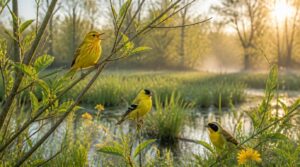
Goldfinches aren’t the only yellow stars in Ohio’s skies. A whole crew of warblers and songbirds bring their own splash of color, sound, and personality to our woods and wetlands. Let’s meet some of these little yellow gems and find out what makes each one special.
Yellow Warbler Habitat and Nesting
Picture a willow branch swaying over a stream—that’s prime real estate for a Yellow Warbler. They build cup nests in vertical forks, 3 to 12 feet up, using grasses, fibers, and soft linings like feathers.
Ohio’s wetland shrub layers and floodplain thickets make ideal nesting habitat. Breeding season runs roughly late May through July, with dense cover lowering nest predation risks from snakes and other hunters nearby.
Common Yellowthroat Identification
That marsh edge near your willows? Listen close, and you’ll likely hear a witchety-witchety-witchety song. That’s your cue: a Common Yellowthroat.
Males flash a bold black mask, bordered in white, over a bright yellow throat. They’re small and chunky, just 4-5 inches, with olive-brown backs. Watch them flick low through reeds—classic edge behavior you won’t forget!
Prothonotary and Hooded Warblers
That mask trick works for yellowthroats, but two other warblers play a different game entirely.
Prothonotary Warblers glow with golden yellow plumage and blue-gray wings. They’re cavity nesters, tucked into tree holes over swampy riparian habitat.
Hooded Warblers sport that black hood and yellow face. They nest low in shrubby understory, perfect for spotting these yellow birds in Ohio’s woodland birding hotspots.
Best Viewing Season for Warblers
Timing makes all the difference with warblers. The May Warbler Peak hits hardest in Ohio, when Yellow Warblers and Magnolia Warblers flood through during spring migration.
Early Morning Hours bring the most action—birds feed and move before 10 a.m. Lake Erie Winds and Rainy Day Viewing can push birds lower, too. Don’t skip the Fall Migration Window either; it’s quieter, but rewarding.
Top Ohio Locations to Find Them
Now, where do you actually go? Magee Marsh Wildlife Area tops the list, with boardwalk birding sites packed with warblers. Nearby Ottawa National Wildlife Refuge adds shoreline hotspots along Lake Erie Trail.
For habitat diversity zones, try Cuyahoga Valley National Park or Blackhand Gorge State Nature Preserve.
Spring migration peaks make all four spots worth the drive, anywhere in Ohio.
Where to Find Yellow Birds Across Ohio
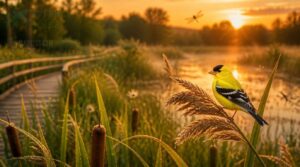
Now that you know who you’re looking for, let’s talk about where to actually find them. Ohio has some real hotspots for yellow birds, from busy marshes to your own backyard. Grab your binoculars, because these spots are about to become your new favorite hangouts.
Magee Marsh and Ottawa Refuge
Want to see warblers up close? Magee Marsh Wildlife Area is your spot. Walk the famous Magee Marsh Boardwalk during the Warbler Migration Hub season—36 warbler species pass through here!
Nearby, Ottawa National Wildlife Refuge (8,000+ acres) offers Ottawa Refuge Trails like the Estuary Trail. Both sites are Spring Birding Hotspots, thanks to ongoing wetland conservation efforts protecting yellow birds in Ohio.
Wetlands and Flooded Woodland Spots
Flooded woodlands and swamp forests are quiet gold mines for birders. Floodplain Hydrology creates pools where amphibian breeding happens every spring. Seasonal water levels shift constantly, shaping habitat along river bottoms.
These wetland plant communities—alders, willows, ferns—pull in insects, perfect bird foraging zones. The Yellow Warbler loves these shrubby wetlands. Check spots near creeks; you might spot a flash of yellow in the brush.
Backyard and Suburban Sightings
You don’t need a swamp to spot yellow birds in Ohio—just look out your window. American Goldfinches visit feeders year-round, especially nyjer or thistle ports. Yellow Warblers occasionally flit through hedges during spring migration.
Plant native asters, add a dripping bird bath, and watch suburban yards come alive at dawn with bright, busy visitors.
Cuyahoga Valley National Park
Cuyahoga Valley National Park packs a lot into 33,000 acres. Hike near Brandywine Falls, walk the Historic Canal towpath, or scan the sandstone ledges—yellow birds in Ohio show up everywhere here.
Wetlands and forest edges host Yellow Warblers and goldfinches alike. Bring binoculars; this valley wildlife hotspot rewards patient birdwatching with bursts of bright yellow against green canopy.
Best Times of Day to Watch
Timing changes everything in birding. Dawn bird song, from 5:30 to 7:00 AM, brings quiet skies and golden hour viewing—yellow feathers practically glow.
Late morning activity (9-11 AM) peaks as insects stir. Midday rest period slows things down, so try shaded streams. Evening roosting window (6-7:30 PM) brings birds back into view, silhouettes and all.
Attracting Yellow Birds to Your Ohio Yard
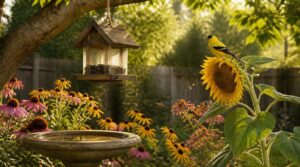
Want yellow birds to actually stick around your yard? It’s not complicated, but a few simple choices make a big difference. Here’s what to set up first.
Top Feeders and Seeds to Use
Want goldfinches in your yard daily? Set up sunflower seed feeders with black oil sunflower seeds—they pull in the widest variety of yellow birds in Ohio.
- Nyjer tube options for finches
- Safflower feeder setups that deter squirrels
- Millet ground feeding for sparrows
A dual feeder setup, pairing sunflower with thistle, doubles your visitors with minimal extra effort.
Native Plants Yellow Birds Love
Feeders are great, but native plants do double duty. Viburnum and dogwood berries fuel goldfinches all winter long. Little bluestem seed heads offer lean-season snacks.
Plant native sunflowers and milkweed too—milkweed nourishes caterpillars, a key protein source for hungry nestlings. *Basically, your garden becomes a 24-hour diner.
- Add wildflowers, and you’ve built a real bird habitat.
Adding Bird Baths and Water Sources
A full diner needs a drink station too. Place baths in shade, near shrubs for quick cover, and keep water shallow for tiny feet.
- Add a small fountain—moving water pulls birds in fast.
- Refill daily in summer; dump and scrub weekly.
- Drain before freezing nights hit.
Smooth edges and steady supply keep your yard buzzing with backyard birding visitors.
Creating a Bird-Friendly Habitat
A water station is great, but birds need a full neighborhood. Layer your yard: shrubs for cover, dead snags for nesting, and native plantings for seasonal food.
| Layer | Example | Benefit |
|---|---|---|
| Ground | Mulch & leaf litter | Insects, moisture |
| Shrub | Hawthorn | Shelter, nesting |
| Canopy | Oak | Cavities, seeds |
| Feeders | Sunflower | Backyard birding |
| Boxes | Nesting boxes | Safe broods |
This mix turns your yard into one of Ohio’s best little bird habitats.
Frequently Asked Questions (FAQs)
What birds are yellow in Ohio?
Ohio’s skies practically explode with sunshine every spring!
Spot the American Goldfinch, Yellow Warbler, Common Yellowthroat, Baltimore Oriole, and Yellow-throated Vireo. Each shows unique markings, habitat preferences, and seasonal color changes, making identification a fun, rewarding birding adventure.
Are goldfinches rare in Ohio?
Population trends in Ohio stay steady, with conservation status listed as stable. You’ll spot them year-round, with high feeder visitation frequency and reliable winter distribution patterns in backyards, fields, and shrubby edges statewide.
How do I identify yellow birds in Ohio?
Start with field mark recognition: note size, shape, wing bars, and eye masks. Check seasonal color changes, listen for distinct calls, and match habitat clues to a range map for accurate identifying characteristics and plumage patterns.
Do yellow birds live in Ohio?
Absolutely, yes! Goldfinches stick around all year, while Yellow Warblers and Orchard Orioles arrive each spring for breeding season. Habitat ranges from backyard feeders to wetland edges, so grab your binoculars—these bird species are closer than you think.
Are yellow throated warblers spotted in Ohio?
Yes, yellow-throated warblers do show up here! Spring migration brings them to southeastern Ohio in April and May. Look for riparian habitats with sycamores, plus that bright yellow throat and gray crown for easy field identification.
Which birds can you see in Ohio?
Ohio hosts the American Goldfinch, Yellow Warbler, Yellow-throated Vireo, Yellow-breasted Chat, and Baltimore Oriole. You’ll find them in wetlands, woodlands, and backyards, with migration peaking in May—prime time for spotting these stunning songbirds!
What does a yellow bird look like in summer?
Picture vibrant plumage: goldfinches glow lemon-yellow with black wings, while warblers show olive-streaked chests. Look for size, shape, masks, and habitat clues—these identifying characteristics make summer bird identification easy for your Ohio checklist.
What kind of birds are yellow in Ohio?
Enough sun-colored species to make your binoculars dizzy! From the American Goldfinch and American Yellow Warbler to the Common Yellowthroat and Eastern Meadowlark, Ohio’s yellow bird identification game spans backyards, wetlands, and meadows—year-round and seasonal alike.
What is the most common yellow bird?
The American Goldfinch wins, hands down. You’ll spot it year-round in feeders, fields, and backyards across Ohio. Males turn canary-yellow each spring, and their love for thistle and sunflower seeds makes them easy backyard regulars.
Are goldfinches in Ohio year round?
Snow falling outside while a flash of yellow flits to your feeder—yes, goldfinches stay all year. Unlike migratory warblers, they form winter flocks, shift to muted plumage, and rely on nyjer feeders through Ohio’s coldest months.
Conclusion
Sure, honestly, go ahead and wait around for a rare exotic tanager to wander into your yard—good luck. Meanwhile, yellow birds in Ohio are practically knocking, sunflower seeds in hand, asking to be noticed.
Goldfinches stick around all winter. Warblers blaze through every spring. All you need is a feeder, a few native plants, and a little patience.
Look up. That flash of yellow you almost missed has been waiting for you all along.
- http://jimmccormac.blogspot.com/2013/07/american-goldfinch.html
- https://ohiodnr.gov/discover-and-learn/animals/birds/american-goldfinch
- https://www.allaboutbirds.org/guide/Yellow-rumped_Warbler
- https://en.wikipedia.org/wiki/American_goldfinch
- https://columbusaudubon.org/winter-warblers-not-as-rare-as-you-may-think/