This site is supported by our readers. We may earn a commission, at no cost to you, if you purchase through links.
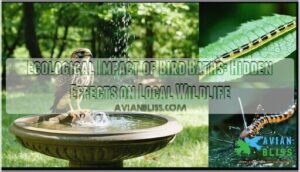 Your bird bath creates a ripple effect throughout your local ecosystem that extends far beyond attracting pretty songbirds.
When you provide this reliable water source, you’re basically establishing a wildlife hub that influences territorial behaviors, predator-prey relationships, and disease transmission patterns.
Bird baths can concentrate wildlife activity, potentially disrupting natural foraging patterns while simultaneously supporting species during drought conditions.
The ecological impact depends heavily on placement, maintenance, and water quality—factors that determine whether you’re creating a beneficial oasis or an ecological bottleneck that could stress local wildlife populations.
Table Of Contents
- Key Takeaways
- Ecological Impact of Bird Baths
- Influence on Wildlife Behavior
- Impact on Local Ecosystems
- Disease Management and Spread
- Attracting Different Bird Species
- Mosquito Control and Management
- Maintaining Water Quality
- Predation Risks and Mitigation
- Effect on Birdwatching and Enjoyment
- Proper Placement and Maintenance
- Frequently Asked Questions (FAQs)
- What are the benefits of a bird bath?
- Are birdbaths a good idea?
- What are the cons of a bird bath?
- Do Bird baths support biodiversity?
- Do bird baths attract birds?
- Do Bird baths help migratory birds?
- Are bird baths ethical?
- What are the disadvantages of a bird bath?
- Why put a penny in a birdbath?
- Why are bird baths important?
- Conclusion
Key Takeaways
- You’re creating a wildlife hub that attracts diverse species beyond birds, including beneficial insects and pollinators that support your garden’s ecosystem balance.
- Your bird bath influences territorial behaviors and social interactions, with dominant species claiming prime drinking times while smaller birds adapt their schedules around this valuable resource.
- Without proper maintenance, you’ll turn your helpful water source into a disease transmission hotspot that can spread avian illnesses like Salmonella throughout local bird populations.
- You’re providing critical drought support that can be lifesaving during dry spells, but poor placement near dense cover creates predation risks that put visiting birds in danger.
Ecological Impact of Bird Baths
When you install a bird bath, you’re creating a Habitat Supplementation hub that transforms your yard into an Urban Ecology powerhouse.
This simple water source provides critical Ecosystem Enrichment by supporting Biodiversity Support far beyond birds alone.
Your bird bath ecology attracts beneficial insects, creating a ripple effect through the food web.
During dry spells, you’re offering lifesaving hydration that maintains ecosystem balance.
The bird bath impact extends to Pollinator Support, as bees and butterflies also utilize these water sources, making your garden a thriving wildlife sanctuary.
Many ground-dwelling birds prefer shallow water sources.
Influence on Wildlife Behavior
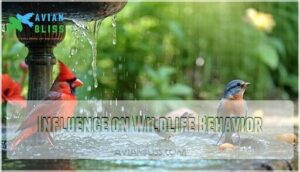
Your backyard bird bath creates a behavioral transformation that extends far beyond simple hydration.
Social Interactions flourish as birds establish new hierarchies around this water source, with dominant species claiming prime drinking times while smaller birds adapt their schedules accordingly.
Foraging Changes emerge as birds alter their hunting patterns, knowing reliable water awaits nearby.
You’ll observe Territory Defense intensifying around your bath, particularly during breeding season when males become protective of this valuable resource.
Learning Behaviors accelerate as juvenile birds watch experienced adults demonstrate proper bathing techniques and Predator Avoidance strategies.
The ecological impact on wildlife behavior creates ripple effects throughout your yard’s avian populations.
Birds begin timing their visits to coincide with insect activity near the moist soil, fundamentally changing their daily rhythms.
Observing these changes can highlight various insectivorous feeding strategies.
This bird bath ecology influences everything from mating displays to migration rest stops, making your simple water feature a behavioral catalyst for the entire local bird community.
Impact on Local Ecosystems

Your garden ecosystem transforms dramatically when you add a bird bath.
These water features create ripple effects throughout local ecosystems, supporting habitat supplementation and biodiversity enhancement.
Urban ecology benefits as bird baths provide essential ecosystem services, attracting diverse species and supporting pollinator populations.
Birdbaths also require consistent weekly cleaning to prevent the spread of disease.
Here’s how bird baths impact your local ecosystem:
- Pollinator support increases – Water availability boosts bee and butterfly visits by 10-20%, enhancing garden ecosystems
- Biodiversity enhancement occurs – Up to 20 additional bird species may visit, creating richer ecological balance
- Microclimate modification happens – Localized cooling and humidity regulation benefit moisture-sensitive species
- Nutrient cycling improves – Bird activity introduces organic matter, supporting various creatures and maintaining ecological impact
Disease Management and Spread
Your bird bath can become a disease hotspot without proper care. Avian disease risks spike when multiple birds share contaminated water, with studies showing 30% of finch deaths linked to infected baths.
Waterborne pathogen control requires weekly cleaning with diluted bleach solution, reducing pathogens by 85%. Cleaning solution efficacy improves dramatically with regular bath hygiene practices.
Daily water changes and outbreak prevention strategies protect local bird populations from avian diseases like Salmonella and trichomoniasis. Implementing strict hygiene practices can further minimize transmission risks.
Proper disease management and bird sanitation create safe havens rather than transmission zones.
Attracting Different Bird Species
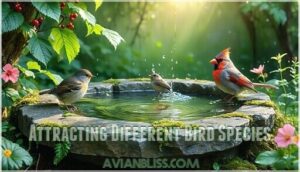
With the right Bath Design, you’ll transform your yard into a bustling avian hub that attracts remarkable bird diversity.
Water Depth variations are essential—shallow areas welcome tiny songbirds while deeper sections accommodate larger species. Add Perch Types like stones or branches for comfortable landing spots.
Location Matters tremendously; placing bird baths near native vegetation creates safe havens that boost bird attraction. Studies show rural installations can attract over 170 bird species, with Seasonal Visitors adding excitement during migration periods.
Thoughtful design choices directly influence bird bath biodiversity, creating thriving ecosystems. Regular cleaning is also essential to prevent bacteria and algae buildup.
Mosquito Control and Management
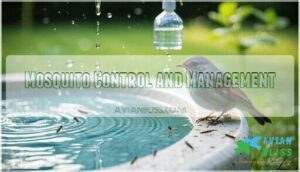
Beyond the obvious benefits for our feathered friends, bird baths can become mosquito breeding bird baths if you’re not careful.
These tiny terrors need just 7-10 days in stagnant water to complete their life cycle, turning your wildlife haven into a buzzing nightmare.
Effective mosquito control requires a multi-layered approach:
- Water agitation – Install solar pumps or drippers to keep water moving; mosquitoes won’t lay eggs in disturbed water
- Mosquito dunks – Drop Bti larvicide application tablets that kill larvae while staying safe for birds
- Regular cleaning – Change water every 3-4 days to interrupt breeding cycles
- Natural predators – Encourage birds that eat mosquito larvae to visit your bath
- Safe treatments – Use approved biological controls rather than harmful chemicals
Smart mosquito management protects both you and your avian visitors. The key is consistency—neglected bird baths become mosquito factories that can spread diseases like West Nile Virus throughout your neighborhood.
Consider implementing a DIY drip system to prevent mosquito breeding.
Maintaining Water Quality
While mosquito control keeps these pests at bay, maintaining water quality remains your top priority for bird bath success. Clean water doesn’t just look appealing—it’s what keeps your feathered friends healthy and coming back.
Algae prevention starts with regular water changes every two to three days. Stagnant water becomes a green, slimy mess that birds won’t touch. Water circulation through small pumps or drippers helps prevent algae growth while creating the moving water that attracts more species.
For bacteria control, scrub your bath weekly with a diluted bleach solution (one part bleach to nine parts water), then rinse thoroughly. Cleaning solutions like white vinegar also work well for removing mineral deposits and biofilm.
Position your bath in partial shade to slow algae development and reduce evaporation. Copper pennies aid algae control, especially pre-1982 versions. Safe additives like beneficial bacteria products can help maintain balance, but avoid chemicals or soap residues.
The bird bath maintenance you perform directly impacts bird bath water quality. Clean water means healthier birds, fewer diseases, and more active wildlife in your yard. Think of yourself as running a five-star hotel for birds—they’ll notice the difference.
Predation Risks and Mitigation
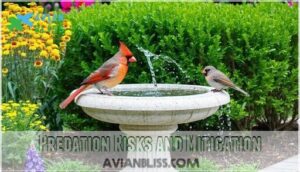
Clean water alone won’t protect your feathered visitors if they become sitting ducks for predators. Bird bath safety requires strategic placement that balances accessibility with protection from cats, hawks, and other threats.
Cover Proximity plays a pivotal role in predation risks. Position your bath 10-15 feet from dense shrubs—close enough for quick escape routes but far enough to prevent ambush attacks. Bath Height matters too; elevated designs reduce ground predator access while maintaining bird comfort.
Effective Predator Deterrents include:
- Motion-activated sprinklers that startle potential threats
- Visual deterrents like reflective tape and wind chimes
Safe Designs incorporate smooth edges that prevent predator perching and thorny plants as natural barriers. You’ll want multiple escape paths around your bath—think of it as creating a bird-friendly neighborhood rather than a trap.
To further enhance safety, consider native plant benefits by incorporating species that provide natural camouflage. Studies show elevated baths with clear sightlines reduce predation risks by up to 60% compared to ground-level models surrounded by nearby cover. Smart placement turns your bird bath into a safe haven where birds can drink and bathe without constantly watching over their shoulders.
Effect on Birdwatching and Enjoyment
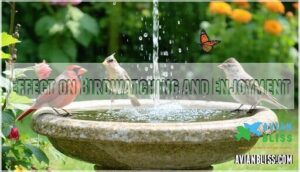
Bird baths transform your backyard birding into a mesmerizing spectacle.
You’ll witness fascinating avian activities as different species exhibit unique bathing behaviors, creating endless photographic opportunities and serving as a natural relaxation source.
Bird baths can also be enhanced by landscaping with native plants to attract local species.
| Birdwatching Benefits | Educational Value | Family Activity |
|---|---|---|
| Enhanced species observation | Learn bird behaviors | Shared nature experiences |
| Better photography angles | Identify local birds | Teaching moments for kids |
| Increased bird diversity | Understand ecosystems | Bonding over wildlife |
Your birdwatching experience becomes richer as you observe social hierarchies, feeding patterns, and territorial disputes.
The bird bath community offers insights into complex ecological relationships, making every viewing session educational.
Bird bath enthusiasts often discover that water features attract species rarely seen at feeders, expanding their birding repertoire substantially.
Proper Placement and Maintenance
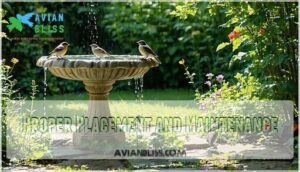
Achieving ideal bird bath placement requires strategic thinking about location safety and accessibility.
Position your bath 3-10 feet from protective cover, allowing quick escape routes while maintaining open sightlines for predator detection.
Material choice affects longevity—concrete and cast stone withstand freeze-thaw cycles better than plastic.
Water depth should vary from 0.5-2 inches to accommodate different species sizes.
Cleaning solutions like diluted vinegar prevent algae without harming birds.
To further enhance the cleanliness of your bird bath, consider following material maintenance tips for optimal care.
Winterizing baths with heaters maintains year-round hydration sources, supporting resident populations through harsh conditions.
Frequently Asked Questions (FAQs)
What are the benefits of a bird bath?
Smaller birds need water twice daily for survival, making your bird bath a lifeline. You’ll provide essential hydration, bathing opportunities for feather maintenance, and attract diverse species to your yard.
Are birdbaths a good idea?
Yes, you’ll find birdbaths are excellent additions to your yard.
They attract diverse bird species, support local wildlife health, and create engaging social hubs while requiring only basic maintenance for maximum benefits.
What are the cons of a bird bath?
Ironically, while you’re trying to help birds, you’ll create new problems. Stagnant water breeds mosquitoes and bacteria, potentially spreading diseases among clustered birds if you don’t maintain it properly.
Do Bird baths support biodiversity?
Bird baths act like neighborhood gathering spots, attracting diverse species from tiny wrens to larger cardinals.
You’re creating water oases that support local ecosystems by providing critical resources for various birds and wildlife, which makes them critical resources.
Do bird baths attract birds?
Water sources like bird baths act as magnets for diverse bird species.
You’ll attract both local residents and migrating visitors who depend on reliable water for drinking, bathing, and social interactions in your yard.
Do Bird baths help migratory birds?
Migratory birds absolutely benefit from your bird bath during their long journeys. You’re providing them with essential rest stops where they can drink, bathe, and rehydrate before continuing their travels.
Are bird baths ethical?
Yes, bird baths are ethical when properly maintained.
They provide essential water sources that support bird health, biodiversity, and natural behaviors.
Regular cleaning prevents disease transmission, making them beneficial wildlife resources that support biodiversity.
What are the disadvantages of a bird bath?
Unfortunately, you’ll face maintenance headaches with stagnant water breeding mosquitoes, spreading diseases, and harboring harmful bacteria that can sicken visiting birds if you don’t clean regularly.
Why put a penny in a birdbath?
You put a penny in a birdbath because copper naturally inhibits algae growth and bacterial development. The copper ions released help keep water cleaner longer between maintenance sessions.
Why are bird baths important?
Bird baths transform your backyard into a thriving wildlife sanctuary.
Providing essential hydration that keeps birds healthy, attracts diverse species to your garden, and creates social hubs where feathered friends gather.
Conclusion
Surprisingly, understanding the ecological impact of bird baths reveals how these simple water features function as complex ecosystem catalysts.
Your bird bath doesn’t just quench thirst—it reshapes local wildlife dynamics, influences territorial boundaries, and creates both opportunities and challenges for various species.
When maintained properly with clean water and strategic placement, bird baths support biodiversity during critical periods.
However, poor maintenance can facilitate disease transmission and create ecological stress points that harm the very wildlife you’re trying to help, leading to ecological stress points and potentially causing disease transmission.
- https://journals.plos.org/plosone/article?id=10.1371%2Fjournal.pone.0150899
- https://www.waterfeaturesadore.com.au/blogs/design-and-symbolism/the-art-and-science-of-bird-baths-attracting-a-diverse-array-of-birds
- https://www.outdoorfountainpros.com/blogs/news/tips-for-attracting-birds-to-your-bird-bath-fountain
- https://www.youtube.com/watch?v=lttkvKtZYxI
- https://www.reddit.com/r/birding/comments/16ddt3k/a_bird_watchingbirdbath_question_for_you_all_we/