This site is supported by our readers. We may earn a commission, at no cost to you, if you purchase through links.
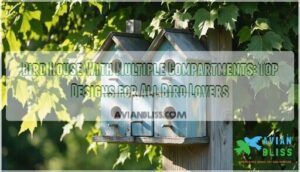 A bird house with multiple compartments is perfect for attracting a variety of birds while providing a safe, shared nesting space.
Think of it as a cozy townhouse for birds, designed to accommodate species like purple martins or sparrows.
Each compartment gives birds privacy and protection from predators.
Look for durable, weather-resistant materials like cedar or durable plastics, and verify proper ventilation and drainage.
Pay attention to entrance hole sizes—smaller openings can keep out larger, unwanted visitors.
Mount it on a sturdy pole or post for stability.
Want to create a bird-friendly community in your yard? This idea’s worth chirping about!
Table Of Contents
- Key Takeaways
- Benefits of Multi Compartment
- Choosing The Right Birdhouse
- Top 8 Multi Compartment Birdhouses
- Designing Effective Birdhouses
- Installing and Maintaining Birdhouses
- Frequently Asked Questions (FAQs)
- Where not to put a bird house?
- Do birds prefer unpainted birdhouses?
- What color birdhouse attracts birds the most?
- Will birds use a birdhouse that swings?
- Where can I buy a large bird house?
- Do finches use birdhouses?
- Do birdhouses have a rough exterior?
- What are birdhouses & how do they work?
- How many purple martins can a birdhouse hold?
- How do you choose a purple martin bird house?
- Conclusion
Key Takeaways
- You can attract diverse bird species by using birdhouses with multiple compartments that reduce nesting competition and promote bird health.
- Choose durable, weather-resistant materials like cedar or cellular PVC, and ensure proper ventilation and drainage for the birds.
- Use the right entrance hole sizes to match the species you’re attracting and protect against predators with baffles or guards.
- Regularly clean and maintain the birdhouse to prevent mold, pests, and structural issues, ensuring a safe environment.
Benefits of Multi Compartment
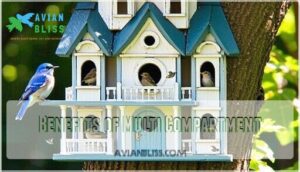
You’ll love how multi-compartment birdhouses attract diverse bird species while promoting a thriving ecosystem in your yard.
By offering separate nesting spaces, they increase safety and nesting success for both small bird families and larger groups.
Attracting Multiple Bird Species
With a multicompartment birdhouse, you’re creating a birdhouse condo that welcomes different species by reducing nesting competition.
A multicompartment birdhouse fosters harmony, offering diverse species a shared space while minimizing competition and enhancing your yard’s lively ecosystem.
Proper birdhouse placement encourages birds to coexist, especially where food sources are plentiful.
Each compartment offers a safe spot for territory defense, suited to varying bird needs, ensuring species compatibility.
Attracting birds becomes easier when you provide a home designed for multiple bird species, making it a great way to support territory defense.
Increasing Nesting Success Rates
A birdhouse condo with multiple compartments boosts your birds’ nesting success by fostering a supportive environment.
It shields nests from predators through design and offers weather protection.
With proper parasite control and quality nesting materials, these birdhouses encourage healthy growth for baby birds.
Regularly monitoring nests guarantees everything runs smoothly, turning your multicompartment birdhouse into a cozy, thriving haven for multiple birds.
Providing a Safe Environment
Creating a safe haven for birds requires thoughtful planning.
Choose an apartment birdhouse made with non-toxic materials to protect nesting birds and their chicks.
Make certain it’s weatherproof and positioned with safe placement away from predators.
Predator deterrents like baffles and secure compartments enhance birdhouse safety.
Multiple compartments allow birds to nest comfortably while shielding them from harm, encouraging thriving families.
Consider adding features like predator guards and baffles to further protect the birds and create a thriving environment with secure compartments.
Enhancing Bird Diversity
A birdhouse for multiple birds enriches habitats by attracting varietals of birds that thrive together.
Apartment birdhouses offer native species a cozy space to nest, promoting ecosystem balance.
With proper placement and care, these bird habitats support conservation efforts by encouraging bird diversity.
You’ll see firsthand how enhancing bird diversity makes your yard a lively and welcoming sanctuary.
Choosing The Right Birdhouse
When choosing a birdhouse, you’ll want to take into account the specific species you’re hoping to attract and their size requirements.
Ensuring the right materials, entrance hole diameter, and placement will provide a safe and welcoming home for your feathered visitors.
Considering Bird Species and Size
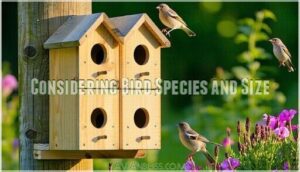
Choosing the right birdhouse for multiple birds starts with understanding species compatibility.
Regional birds vary in size, so match their needs with compartment dimensions and entrance hole size.
Tiny finches? Go small.
For doves or cockatiels, larger compartments work best.
Thoughtful birdhouse placement also matters, ensuring apartment-style compartments offer safety while attracting species with preferred hole sizes and space.
Entrance Hole Diameter and Placement
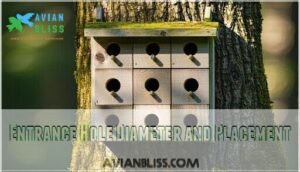
Finding the right entrance hole size and placement in bird house design makes a world of difference.
A 1.5-inch hole suits bluebirds, while smaller species like wrens prefer 1-inch openings.
Place holes 6-12 inches above the floor for nestling visibility.
Face them away from wind and install predator deterrents, ensuring a safe and welcoming bird house entrance design for your feathered guests.
**Correct hole size is essential for safety and comfort.
Material and Durability Considerations
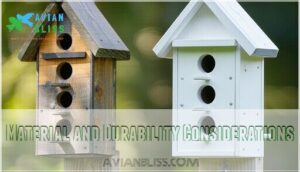
In terms of material choices, wood and cellular PVC stand out.
Solid wood offers natural insulation and a traditional feel, but cellular PVC resists rot and moisture, making it highly durable.
Consider birdhouse material options for longevity.
Prioritize weatherproofing options for extreme conditions.
Construction quality also matters—thick walls and sturdy joints guarantee your bird house survives harsh weather and lasts for seasons to come.
Mounting and Installation Options
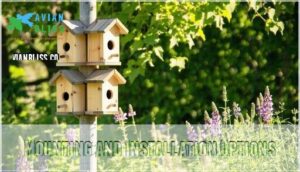
After choosing a durable bird house, think about mounting and installation options for success.
Pole mounting works great for stability and predator prevention.
Tree mounting blends with nature but may attract squirrels.
Ground placement suits larger, heavier birdhouses.
Height considerations, like 5-10 feet, improve safety.
Angle adjustment helps face entry holes away from strong winds, ensuring your bird house location is just right.
Top 8 Multi Compartment Birdhouses
If you’re looking for birdhouses that balance space, functionality, and charm, multi-compartment designs are a smart choice.
These top eight options provide ample nesting spots while meeting the needs of different bird species in your backyard, making them a great option for those who want to attract a variety of birds with functionality.
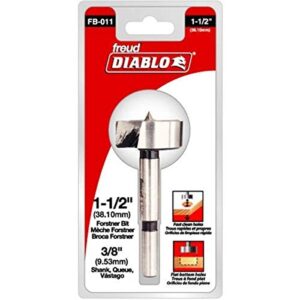
1. Diablo 1 1/2 Forstner Bit
 View On Amazon
The Diablo 1-1/2 Forstner Bit is every woodworker’s trusty partner for precision drilling. With its sharp center spur and angled cutting edges, it creates clean, flat-bottomed holes without splintering.
This bit excels in both handheld drills and drill presses, making it versatile for creating birdhouse compartments. Forged from hardened steel, it’s built for durability, slicing through hardwoods or plywood effortlessly.
Whether you’re crafting birdhouses for martins or guaranteeing professional-quality holes, this Forstner bit’s sharpness and consistency guarantee reliable results every time.
Best For: Professional woodworkers and DIY enthusiasts looking for precise, clean drilling in various wood types.
Pros:
- Sharp center spur ensures accurate hole placement without wandering.
- Durable hardened steel construction for long-lasting sharpness.
- Versatile use in handheld drills and drill presses.
Cons:
- Requires sufficient pressure for optimal performance.
- Some users report coarse grind needing touch-ups before use.
- Occasional packaging damage during shipping.
2. Diablo Forstner Bit 1 1/4 Inch
 View On Amazon
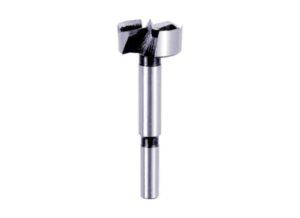
The Diablo Forstner Bit 1 1/4 Inch is your go-to tool for crafting birdhouses with precise entry holes.
Its sharp spur guarantees clean drilling without splinters, making it perfect for multi-compartment birdhouses.
Designed for durability, the hardened steel body holds up across multiple projects.
Ideal for birds like wrens, its 1 1/4-inch diameter creates an inviting, safe entry.
Whether you’re a seasoned woodworker or a beginner, this bit simplifies the process, helping you create functional and bird-friendly homes effortlessly, with a sharp spur that guarantees clean drilling, and a hardened steel body.
Best For: Woodworkers and DIY enthusiasts seeking precise and clean drilling for birdhouse entry holes or similar woodworking projects.
Pros:
- Sharp spur ensures clean, splinter-free entry holes.
- Durable hardened steel body for long-lasting use.
- Suitable for multi-compartment birdhouses and other woodworking applications.
Cons:
- May require speed adjustments on end grain for cleaner cuts.
- Sharpness may need periodic sharpening depending on frequency of use.
- Limited to a 1 1/4-inch diameter, less versatile for other sizes.
3. Large Copper Multi Birdhouse Stake
 View On Amazon
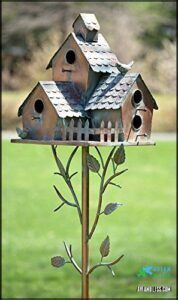
The Large Copper Multi Birdhouse Stake stands tall as a functional and elegant backyard feature.
Its antique copper finish and detailed branch design create a natural charm, blending beauty with functionality.
With space for four bird families and a stable four-prong base, it’s perfect for attracting various species.
Powder-coated galvanized iron guarantees weather resistance, though applying polyurethane adds extra durability.
Easy to assemble and open for cleaning, it’s a practical choice for those who value aesthetics and practicality in birdhouse design.
Best For: Homeowners who want a stylish, functional birdhouse that attracts multiple bird species and adds an artistic touch to their outdoor space.
Pros:
- Attractive antique copper finish and intricate branch design.
- Room for four bird families with easy cleaning access.
- Weather-resistant, powder-coated galvanized iron construction.
Cons:
- Susceptible to rust without additional polyurethane coating.
- Plastic base may snap during assembly.
- Considered expensive for some due to material concerns.
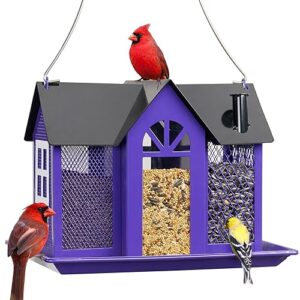
4. Kingsyard Purple Metal Bird Feeder
 View On Amazon
The Kingsyard Purple Metal Bird Feeder offers a perfect blend of style and functionality.
With three compartments, it caters to diverse seed preferences, inviting a variety of bird species to your backyard.
Its sturdy metal design guarantees durability, while built-in drainage holes keep seeds fresh and mold-free.
The easy-lift lid makes refilling and cleaning a breeze, holding up to 1.2 pounds of seeds, it’s ideal for attracting cardinals, chickadees, and more with a beautiful and bird-friendly space.
Add it to your garden for a beautiful, bird-friendly space.
Best For: Bird enthusiasts who want a durable, easy-to-use feeder that attracts a variety of bird species and enhances their backyard experience.
Pros:
- Durable metal construction with weather-resistant design.
- Three compartments for different seed types, increasing bird variety.
- Easy to refill and clean with a convenient lift-lid design.
Cons:
- Limited seed capacity may require frequent refilling for active feeding areas.
- Not suitable for squirrels, as it lacks squirrel-proof features.
- Purple color may not appeal to all aesthetic preferences.
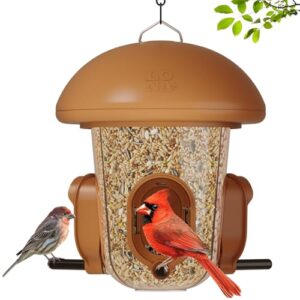
5. LONA Bird Feeder Hanging Weatherproof
 View On Amazon
The LONA Bird Feeder Hanging Weatherproof is perfect for bird enthusiasts who love a functional yet stylish design.
Its weatherproof construction guarantees durability, even in challenging outdoor conditions.
With a smart hanging system, you can easily mount it on trees, walls, or stakes, offering versatility.
The feeder accommodates multiple bird species with its spacious compartments, making it a true bird magnet.
Drain holes keep seeds fresh and mold-free, guaranteeing a consistent food source, and it’s easy to clean and refill, ideal for hassle-free maintenance.
Best For: Bird lovers seeking a durable, versatile, and easy-to-maintain feeder that attracts a variety of wild birds.
Pros:
- Weatherproof design ensures long-term outdoor use.
- Spacious compartments accommodate different seed types.
- Smart hanging system allows versatile mounting options.
Cons:
- Perches may not work well for some bird types.
- Small size and awkward positioning of the filling hatch.
- Potential durability issues if the feeder falls or encounters squirrels.
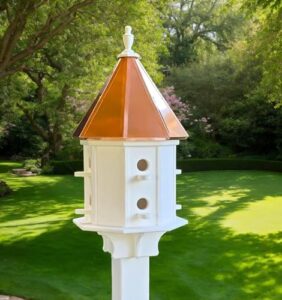
6. Amish Birdhouse Copper Roof Eight Compartments
 View On Amazon
The Amish Birdhouse Copper Roof Eight Compartments is perfect for bird enthusiasts who value quality and style.
Handmade in Pennsylvania, it boasts a weather-resistant build, ensuring durability in any outdoor setting.
With eight spacious compartments and individual perches, it offers ample nesting space for various bird species.
The copper roof adds both charm and functionality, while its dual mounting bracket simplifies installation on different posts.
Crafted from recycled materials, this eco-friendly design enhances your garden’s aesthetics while supporting local craftsmanship and bird conservation efforts.
Best For: Bird lovers and outdoor enthusiasts who want a durable, eco-friendly, and stylish birdhouse to attract diverse bird species.
Pros:
- Handmade with weather-resistant and durable materials.
- Eight compartments with individual perches for various bird species.
- Copper roof adds charm and prevents water damage.
Cons:
- High price point at $189.99, considered steep by some buyers.
- No one-way glass, making birds more likely to see viewers and fly away.
- Poor assembly instructions with limited clarity and no pictures.
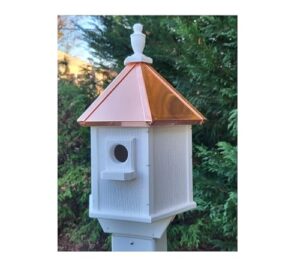
7. Amish Copper Roof Birdhouse Duplex
 View On Amazon
The Amish Copper Roof Birdhouse Duplex brings charm and function to your outdoor space.
This handcrafted beauty features a durable copper roof and recycled plastic body, resisting weather and rot effortlessly.
With its duplex design, it offers two cozy nesting compartments, perfect for attracting bluebirds and other small birds.
The 1.5" entrance guarantees accessibility while keeping aggressive species out.
Easy cleaning and maintenance are guaranteed with its removable top.
It’s a practical and elegant addition, blending utility with timeless craftsmanship.
Best For: Bird enthusiasts looking for a weather-resistant, eco-friendly birdhouse with a charming design.
Pros:
- Durable copper roof and recycled plastic body for longevity.
- Duplex design attracts multiple bird species.
- Removable top for easy cleaning and maintenance.
Cons:
- Stapled corners could be stronger.
- Paint finish quality is poor.
- Visible silver staples detract from overall appearance.
8. Yellow Solar Bird Feeder House
 View On Amazon
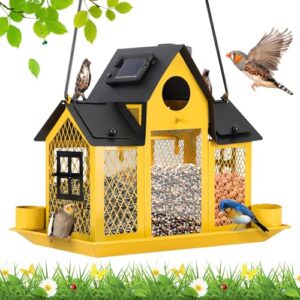
The Yellow Solar Bird Feeder House is perfect for bird lovers seeking a functional and stylish addition to their garden.
Its solar-powered feature lights up your yard at night, creating a cozy ambiance while attracting birds like cardinals and blue jays during the day.
Made from durable, weather-resistant metal, it’s built to last through rain or shine.
With three compartments for various seeds and an easy-to-clean design, this feeder keeps birds happy and your garden lively—a smart choice for nature enthusiasts.
Best For: Bird enthusiasts looking for a durable, functional, and visually appealing feeder that also enhances garden aesthetics.
Pros:
- Solar-powered light adds nighttime ambiance to the garden.
- Durable, weather-resistant, and chew-proof metal construction.
- Multiple compartments allow for diverse seed types to attract various birds.
Cons:
- Some users reported reduced bird activity and seed molding.
- Thin material may require adjustments to maintain shape.
- Squirrels might still access the feeder despite chew-resistant materials.
Designing Effective Birdhouses
Designing effective birdhouses means focusing on features like proper compartment layout, ventilation, and predator protection to create a safe and functional space for nesting.
Each detail, from entrance hole size to drainage systems, guarantees your birdhouse meets the needs of both birds and the environment.
Compartment Size and Layout
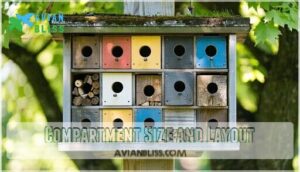
When planning your birdhouse design, focus on ideal dimensions and thoughtful layout variety.
Apartment-style compartments enhance nesting density while keeping birds comfortable.
For the best results, include:
- Square-shaped spaces for consistent warmth.
- Proper spacing considerations for individual nesting.
- Compartments around 6"x6"x6" to match small birdhouse dimensions.
- Multiunit layouts to promote social nesting.
- Flexible birdhouse plans for species-specific needs.
Ventilation and Drainage Systems
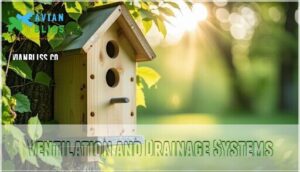
Proper ventilation and drainage keep your birdhouse safe and cozy.
Good airflow and smart drainage design ensure a safe, cozy birdhouse, protecting nestlings and promoting healthy growth year-round.
Good airflow prevents overheating, while a smart drainage design drives out rainwater. Look for features like corner-clipped floors or drilled holes for moisture control.
Materials like cellular PVC add breathability and weather resistance.
Proper ventilation also improves air quality for nestlings.
Regular system maintenance guarantees the birdhouse construction stays strong, protecting your feathered guests year-round, which is crucial for their overall well-being.
Easy Cleaning and Maintenance Features
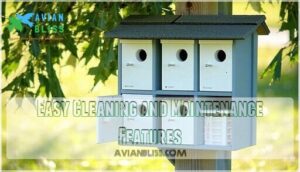
Good birdhouse cleaning starts with thoughtful features.
Access doors make nest removal a breeze, while smart material choices, like cellular PVC, guarantee durability through frequent cleaning.
Apartment-style compartments simplify birdhouse maintenance, letting you handle seasonal upkeep with ease.
Combine this with proper drainage design and birdhouse ventilation, and you’ll enjoy a tidy, welcoming space for your feathered tenants.
Predator Protection Measures
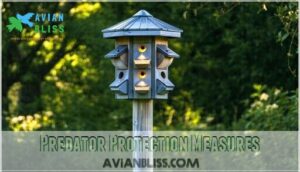
A safe bird house means considering predator protection thoughtfully. Use baffle designs and sturdy guard materials to block ground predators.
Entrance restrictors help keep nests secure while promoting bird house safety. Choose location strategies, like placing birdhouses away from dense bushes.
Monitoring systems, such as motion-sensor lights, can add another layer of bird house protection. Many people implement a baffle predator guard for added security.
- Install strong baffles.
- Add entrance guards.
- Use eco-friendly materials.
- Maintain ideal placement.
Installing and Maintaining Birdhouses
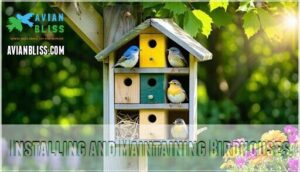
Proper installation and regular upkeep guarantee your birdhouse stays safe and inviting for its feathered residents.
By selecting the right spot and maintaining cleanliness, you’ll create a thriving habitat that supports healthy nesting.
Mounting Options and Placement
When choosing a bird house location, focus on bird safety and comfort. Pole mounting in open areas minimizes predators, while tree mounting blends naturally.
Height considerations matter; 10–15 feet works best. Make certain sun exposure isn’t excessive. Place the bird house near food sources or water.
Proper orientation can offer protection from the elements and predators. Avoid crowding multiple bird house units too closely—it helps limit territorial disputes.
| Mounting Style | Benefits | Challenges |
|---|---|---|
| Pole Mounting | Predator protection, open areas | Requires sturdy foundation |
| Tree Mounting | Natural integration, shaded areas | Harder for cleaning |
| Wall Mounting | Stability, flexibility | Less natural appearance |
The choice of mounting style depends on various factors, including the need for predator protection, the desire for natural integration, and the importance of ease of cleaning. By considering these factors, you can select the best mounting style for your bird house and ensure the well-being of the birds.
Baffle Installation for Predator Control
Protecting your bird house is key to attracting feathered friends. Install predator baffles to keep intruders out.
- Use stovepipe baffles to block climbing predators.
- Verify mounting height is at least 4 feet above ground.
- Opt for wobbling PVC baffles for added bird house safety.
- Regularly inspect baffles for damage—don’t let predators sneak through weak spots.
Consider baffle product options for enhanced protection. Baffles are bird house accessories worth every penny, providing complete security for your birds.
Regular Cleaning and Disinfecting Procedures
Cleaning a birdhouse regularly helps birds thrive.
Clear out nests annually to prevent mold and pests.
Use soapy water and disinfectants safe for wildlife.
Guarantee thorough drying to avoid humidity issues.
For hard-to-reach spots, soft brushes are handy.
Check this quick guide:
| Task | Frequency | Tools Needed | Purpose | Tips |
|---|---|---|---|---|
| Nest Removal | Yearly | Gloves, Scraper | Prevent mold/pests | Remove gently |
| Washing | Quarterly | Soapy Water | Maintain hygiene | Rinse thoroughly |
| Disinfectant Use | After Cleaning | Safe Disinfectant | Kill harmful bacteria | Use wildlife-safe choices |
| Mold Spot Checks | Monthly | Inspection Light | Stop mold spread | Focus on corners |
| Pest Checks | Seasonally | Magnifying Glass | Detect early infestations | Action quickly |
The key to successful birdhouse maintenance is following these steps regularly and ensuring the birdhouse remains clean and dry.
This will help prevent the growth of mold and pests, creating a healthy environment for birds to thrive.
Seasonal Maintenance and Repair Tips
Though seasons change, your birdhouse deserves year-round care.
Start during winter by Winterizing Birdhouses; seal cracks and guarantee weather resistance. When spring arrives, tackle Spring Cleaning and Pest Control. Finally, prioritize repairs by checking for damage.
- Inspect thoroughly for cracks or rot.
- Replace weak spots with repair materials.
- Test durability for seasonal use.
Birdhouse maintenance guarantees happy, safe tenants!
Frequently Asked Questions (FAQs)
Where not to put a bird house?
Don’t place a birdhouse near busy roads, heavily trafficked areas, or near feeders where predators lurk.
Avoid shaded spots with poor sunlight and overly windy locations.
Keep it clear of pesticides or harmful chemicals nearby.
Do birds prefer unpainted birdhouses?
Birds often prefer unpainted birdhouses because natural wood feels more like their natural habitat.
Painted exteriors can work if they’re light-colored and non-toxic, but leave the interior untreated for a safer, cozier environment.
What color birdhouse attracts birds the most?
Soft, natural colors like earthy greens, browns, and tans attract birds most.
These shades mimic nature and feel safe.
Bright colors can deter them, though lighter hues like pale blue can work for specific species like bluebirds.
Will birds use a birdhouse that swings?
Yes, birds will use a swinging birdhouse if it’s stable enough to avoid excessive motion during windy conditions.
Light swaying mimics natural tree nests, but too much movement can discourage nesting or scare away birds.
Where can I buy a large bird house?
You can buy a large birdhouse online from retailers like Amazon, Wayfair, or Home Depot.
Specialty brands such as Wild Wings and Good Directions also offer durable, handcrafted options that suit various bird species’ nesting needs, providing a durable alternative for those looking for high-quality birdhouses.
Do finches use birdhouses?
Don’t worry if you’ve never seen finches nesting in birdhouses—it’s not their usual style.
Finches prefer open, cup-shaped nests in trees or shrubs, so a traditional birdhouse likely won’t attract them.
Do birdhouses have a rough exterior?
Birdhouses typically have smooth exteriors to prevent predators from climbing.
But inside, it’s best to keep walls slightly rough. This helps birds, especially fledglings, grip surfaces better as they try to leave the nest.
What are birdhouses & how do they work?
Think of birdhouses as cozy apartments—they’re designed to attract and shelter birds, offering safe spaces for nesting and breeding.
With entry holes and compartments, they protect from predators and foster bird families conveniently, providing a secure environment that is essential for their survival, which can be considered as cozy apartments.
How many purple martins can a birdhouse hold?
A birdhouse with six compartments, like the Amish barn-style one, can hold about 12 purple martins.
Each compartment typically houses one nesting pair, offering space and comfort for raising their chicks together, with six compartments being a key feature.
How do you choose a purple martin bird house?
Choosing a purple martin birdhouse is like picking a cozy apartment for your feathered friends.
Look for durable materials, proper ventilation, and multiple compartments.
Make certain it’s placed in open spaces far from predators for safe nesting.
Conclusion
Imagine your yard as a bustling bird neighborhood, buzzing with life and color.
A bird house with multiple compartments can create this scene, attracting diverse species while providing safety and comfort.
By focusing on the right materials, design, and proper installation, you’ll both protect birds and support their nesting success.
Whether it’s for sparrows, martins, or other tiny visitors, these birdhouses offer practical, rewarding solutions to promote a bird-friendly ecosystem in your backyard.