This site is supported by our readers. We may earn a commission, at no cost to you, if you purchase through links.
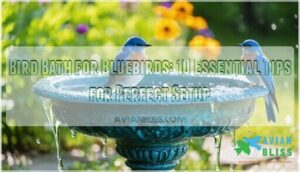 You’ll want a shallow bird bath for bluebirds that’s no deeper than 2 inches – think puddle, not swimming pool.
These beautiful birds are picky bathers who need wide basins with textured bottoms so they won’t slip and slide like they’re on ice.
Position your bath 3-4 feet high in an open area where bluebirds can spot trouble coming.
They’re like nervous neighbors peeking through curtains before stepping outside.
Moving water works like a dinner bell – the gentle sound of dripping or trickling draws them in faster than still water.
Keep it squeaky clean with fresh water every few days.
The secret lies in understanding their specific bathing rituals and safety needs.
Table Of Contents
- Key Takeaways
- Bluebird Birdbath Essentials
- What Makes a Birdbath Attractive to Bluebirds
- Birdbath Design for Bluebirds
- Bluebird Birdbath Placement Strategies
- Water Quality and Bluebird Health
- Tips for Attracting Bluebirds to Your Birdbath
- Bluebird-Friendly Birdbath Features
- Creating a Bluebird Habitat With Birdbaths
- Bluebird Birdbath Safety Precautions
- Bluebird Birdbath Maintenance and Upkeep
- Frequently Asked Questions (FAQs)
- Why put pennies in a birdbath?
- What are the disadvantages of a bird bath?
- Do Bluebirds need a bath?
- How much water does a birdbath need?
- How do birds bathe in shallow water?
- What is a bird bath and why is it necessary?
- How do I choose a birdbath?
- What color bird bath should I use?
- Do bluebirds like bird baths?
- What color bird bath attracts the most birds?
- Conclusion
Key Takeaways
- You’ll need a shallow birdbath with just 1-2 inches of water depth and a textured bottom surface to prevent slipping – think puddle, not swimming pool.
- Position your birdbath 3-4 feet high in an open area with good visibility, keeping it 5-10 feet from shrubs but close enough to trees for quick escape routes.
- Change the water every 2-3 days and scrub with a vinegar solution to prevent algae buildup and maintain the clean, fresh water that bluebirds demand.
- Add moving water features like drippers or small fountains to create irresistible sounds that act like a dinner bell, drawing bluebirds from much farther away than still water.
Bluebird Birdbath Essentials
You’ll need three key elements to create the perfect bluebird oasis: the right birdbath design, smart placement, and spotless water maintenance.
Think of it like setting up a luxury spa for your feathered friends—except instead of cucumber water, they prefer shallow, clean H2O that’s refreshed every couple of days, which is a key part of spotless water maintenance.
Choosing The Right Birdbath
Choosing the perfect bluebird bird bath feels like picking a home for your feathered friends.
Size matters – aim for wide basins with water depth around 1-2 inches, letting bluebirds bathe safely.
Material durability counts too; concrete and resin weather storms beautifully while rough surfaces prevent slippery accidents.
You can find a wide selection online.
Don’t let birdbath cost scare you away from quality.
The best bird bath bluebirds love combines function with aesthetics, creating an irresistible splash zone for attracting bluebirds to your yard.
Positioning The Birdbath
Your birdbath placement can make or break bluebird visits.
Position your bath 5-10 feet from shrubs and trees – close enough for escape routes but far enough for predator avoidance.
Choose ground-level spots with mixed sunlight exposure where you’ll have clear visibility from your house.
Think of it as prime real estate: bluebirds want safe neighborhoods with good perch proximity.
The ideal bird bath distance from trees gives them quick getaway options while the bird bath distance from shrubs prevents sneaky cats from ambushing.
Your bird bath distance from house should allow easy monitoring while maintaining that natural, welcoming feel bluebirds crave.
Maintaining Clean Water
Once you’ve got your bluebird bath positioned perfectly, clean water becomes your next priority.
Think of it as an inviting oasis that’ll keep your feathered friends coming back for more.
Here’s your water maintenance game plan:
- Clean every two days using a vinegar solution for safe, effective bird bath cleaning
- Change water regularly to prevent algae prevention issues and maintain bird bath water quality
- Add de-icing methods like heated elements during winter months
- Monitor for disease control by removing debris and maintaining clean water standards
What Makes a Birdbath Attractive to Bluebirds
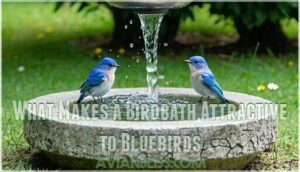
Understanding what draws bluebirds to your yard starts with creating the perfect watering hole.
Water depth of 1-2 inches keeps these delicate birds safe while they bathe and drink. A wide basin size gives them plenty of splashing room, while moving water from a small fountain creates irresistible sounds.
Choose materials with rough surface texture to prevent slips. Smart material choice like concrete or textured ceramic guarantees your bluebird bath withstands weather.
These features transform any shallow bird bath into a magnet for attracting bluebirds to your bluebird habitat.
Birdbath Design for Bluebirds
You’ll want to focus on four key design elements that make bluebirds feel comfortable and safe at your birdbath.
Think of it like setting up a spa for your feathered friends – the right depth, width, water movement, and surface texture can turn an ordinary birdbath into a bluebird magnet.
Shallow Water Depth
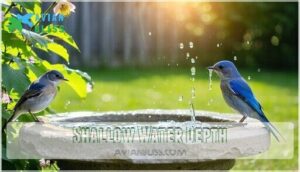
Bluebirds won’t risk drowning in your backyard oasis when you nail the Ideal Depth. Your bluebird bath needs just one to two inches of shallow water—think puddle, not swimming pool.
This bird bath depth guarantees Safe Bathing while Preventing Drowning accidents. Many retailers offer various shallow options.
- Shallow bird bath designs mimic natural puddles bluebirds encounter in the wild
- Depth Variation across the basin accommodates different bird sizes and comfort levels
- Bird bath depth preference varies, but bluebirds consistently choose shallow options over deep ones
- Safe Bathing requires easy entry and exit points for nervous first-time visitors
- Chickadee Baths and bluebird preferences overlap—both species love manageable water depths
Wide Basin

Size matters when choosing your bluebird bath! A wide basin creates the perfect gathering spot for these beautiful birds, offering comfort and convenience they can’t resist.
Here’s why basin size makes all the difference:
- Multiple birds can bathe together without competing for space
- Water evaporation slows down, keeping your bird bath fuller longer
- Easy access from all angles gives bluebirds confidence to approach
- Bluebird comfort increases with spacious shallow water areas for safe bathing
Many prefer to purchase a birdbath with a wide basin.
Moving Water Feature
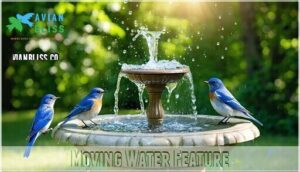
Transform your bluebird bath into a feathered magnet by adding moving water features.
Bird bath fountains and bubblers create irresistible sounds that draw bluebirds from afar.
Solar-powered fountains offer eco-friendly attractiveness with minimal energy consumption.
DIY fountains work too!
The gentle splash prevents mosquito breeding while maintaining appeal.
Consider winter considerations—heated options keep water flowing when temperatures drop, ensuring year-round bluebird visits.
Non-Slip Surface
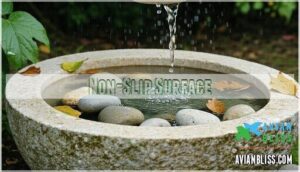
Moving water draws bluebirds in, but material roughness prevents dangerous slips. Smooth surfaces spell trouble for wet bird feet. Texture importance can’t be overstated for bluebird safety.
- Choose unglazed surfaces with natural grip over slick ceramics
- Add small stones for grip enhancement in your bluebird water feature
- Test surface texture – if it’s slippery for you, it’s unsafe for attracting bluebirds
Bluebird Birdbath Placement Strategies
You can’t just plop your birdbath anywhere and expect bluebirds to show up like it’s an all-you-can-splash buffet.
Strategic placement makes the difference between a lonely birdbath and a bustling bluebird gathering spot that’ll have you watching through your window with delight.
Proximity to Food Sources

Place your bird bath within ten feet of mealworm feeders and berry-producing natives.
This mealworm proximity creates a convenient dining-and-bathing combo that bluebirds can’t resist. Berry bush placement near the bath offers natural winter food sources, while nearby insect habitat provides hunting grounds.
Smart positioning turns your yard into a bluebird paradise where they’ll linger longer.
Bluebird Foods Preferred Spot
Visibility From The House

Position your bird bath strategically where you can spot bluebirds from inside your home. Bird bath visibility from your favorite window transforms daily routines into delightful birdwatching sessions.
You’ll catch morning preening rituals and afternoon splashing parties without stepping outside. Consider aesthetic integration when choosing your viewing spot—blend function with beauty.
A clear sightline encourages family engagement as kids can observe bluebird behaviors during homework breaks. Monitoring frequency increases naturally when the birdbath sits within your visual range, helping you track water levels and cleanliness.
Watch for pet interference from indoor cats who might become overly excited by the bird activity. Position the bath close enough for birdbath enjoyment but far enough that window reflections don’t startle visiting bluebirds.
Your living room becomes the perfect observatory for these azure visitors.
Distance From Predators
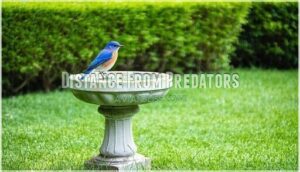
Smart bird bath distance from predators keeps your bluebirds safe and happy.
Position your bird bath at least 50-60 feet from dense shrub proximity where cats or hawks hide.
Safe distances allow predator visibility while giving birds quick escape routes.
Ground placement works best when you create clear sightlines.
This strategic spacing makes attracting bluebirds easier since they’ll actually use your thoughtfully placed bath.
Nearby Perches and Trees

Beyond predator protection, your bluebirds need the perfect staging area. Trees positioned a few yards from your birdbath create ideal hunting locations where these aerial acrobats can spot insects below.
Aim for perch height around 3-4 feet—it’s their sweet spot for surveillance and grooming spots after a cooling splash. Shelter proximity matters too, reducing predator visibility while giving birds quick escape routes.
- Watch bluebirds transform into graceful hunters from their favorite bird perches
- Create a backyard sanctuary where these vibrant beauties feel completely at home
- Provide the perfect blend of safety and adventure with strategically placed bird bath perches
Water Quality and Bluebird Health

You wouldn’t drink from a muddy puddle, and neither will bluebirds visit a grimy birdbath filled with stagnant water.
Clean, fresh water isn’t just attractive to these beautiful birds—it’s essential for their health and keeps harmful bacteria from turning your backyard oasis into a breeding ground for disease.
Preventing Stagnant Water
Stagnant water becomes a breeding ground for mosquitoes and algae within days.
Stagnant water turns your birdbath into a mosquito nursery faster than you can say "splash.
You’ll want to change your bird bath water every 2-3 days to maintain freshness. This simple routine changes prevents harmful bacteria from developing and keeps your feathered visitors healthy.
Think of it like rejuvenating a swimming pool – birds deserve clean water too!
Mosquito control starts with eliminating standing water, so consistent water additives like a splash of apple cider vinegar can help.
Bird bath maintenance isn’t complicated, but routine changes make all the difference for successful algae prevention.
Using a Recirculating Pump
With a recirculating pump, your bluebird garden transforms into a welcoming oasis.
Choose quiet, energy-efficient models to avoid startling visitors while preventing algae growth through water oxygenation.
Select appropriate pump size for your shallow water bird bath—too powerful creates splashing chaos.
Proper installation keeps bluebirds happy and your bird bath recirculating pump running smoothly, creating the perfect backyard retreat.
Cleaning The Birdbath Regularly
Your bluebird’s favorite watering hole deserves royal treatment! Regular cleaning bird bath maintenance keeps your feathered friends healthy and happy.
Here’s your cleaning routine:
- Scrub every two days – Algae prevention starts with consistency
- Mix vinegar solution (9:1 water ratio) for safe, effective cleaning
- Remove debris and change water completely for fresh results
This simple bluebird garden care attracts more visitors to your bird bath sanctuary.
Avoiding Bacterial Growth
Regular cleaning bird bath maintenance keeps your feathered friends healthy, but you’ll also need smart strategies to stop bacteria before it starts.
Moving water acts like nature’s own defense system – bacteria hate circulation. Add a simple water wiggler or pump maintenance routine to keep things flowing.
Your bird bath vinegar solution (nine parts water, one part vinegar) works wonders for algae prevention between cleanings. Consider a bird bath UV sterilizer for extra protection.
Natural enzymes break down organic matter safely. Place your bath in partial shade to slow bacterial growth, and try adding lemon juice for natural inhibition.
Tips for Attracting Bluebirds to Your Birdbath
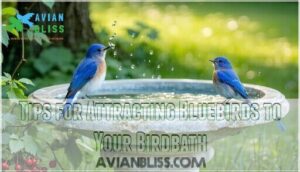
Your birdbath might look perfect, but attracting bluebirds requires more than just clean water and good placement.
You’ll need to create an irresistible package that combines their favorite foods, natural perches, and even some clever audio tricks to turn your yard into a bluebird paradise.
Offering Mealworms
Clean water sets the foundation, but mealworms act like a dinner bell for Eastern bluebirds and Western bluebirds visiting your bird bath. These protein-packed treats create an irresistible combination when placed near your birdbath.
Live vs Dried options each have benefits:
- Live mealworms wiggle with natural appeal but require refrigeration
- Dried mealworms offer convenience and longer shelf life
Feeding Frequency matters—offer small amounts daily rather than large portions weekly. Nutritional Balance requires limiting mealworms to 20% of their diet.
Presentation Methods work best in shallow dishes placed 3-4 feet from your birdbath. Seasonal Adjustments mean reducing offerings during nesting season when natural insects are abundant.
Planting Native Berry Bushes
Transform your yard into a bluebird paradise by planting native berry bushes like elderberry and hawthorn.
These Berry Bush Varieties create the perfect bluebird habitat while providing essential Winter Food Source options. Native plants naturally support the Bluebird Diet by Attracting Insects and offering Native Plant Benefits.
Your feathered friends will feast year-round!
Easy to Grow
Providing a Hunting Perch
Creating the perfect hunting perch transforms your yard into a bluebird paradise.
Position sturdy wooden posts or metal stakes at 3-4 feet for the best perch height. Strategic perch placement near your bird bath guarantees maximum perch visibility while maintaining perch safety from predators.
Consider these essential perch material options:
- Weather-resistant cedar posts
- Galvanized metal stakes
- Natural dead branches
- PVC pipes with rough texture
Playing Bluebird Song Recordings
You’ve set up the perfect hunting perch, now let’s add some musical magic.
Bird bath song recordings work like dinner bells for bluebirds. Play soft Eastern Bluebird calls during morning hours when Song Effectiveness peaks.
Keep Playback Volume whisper-quiet and limit Attractant Duration to 10-15 minutes.
Quality recordings create irresistible birdfriendly environments that transform ordinary bird baths into bluebird magnets.
Bluebird-Friendly Birdbath Features

You’ll want specific features that make your birdbath irresistible to bluebirds, and trust me, they’re pickier than you might think.
The right combination of heated water for winter visits, bubbling fountains that catch their attention, and durable materials that won’t crack after one freeze will transform your yard into bluebird paradise.
Heated Birdbaths for Winter
Winter-weary bluebirds need your help when temperatures drop. A heated bird bath becomes their lifeline, preventing ice formation that blocks access to essential water. These winterization systems maintain safe water temperature around 40°F while keeping energy consumption reasonable.
Here’s your winter setup checklist:
- Choose thermostatically controlled de-icer options for consistent performance
- Select safe materials like ceramic or metal that retain heat effectively
- Consider location considerations – place in sheltered, visible spots
- Monitor energy consumption with efficient models designed for mountain bluebirds and other species
Birdbaths With Fountains or Bubblers
Moving water creates an irresistible invitation that bluebirds simply can’t ignore. The gentle sounds and sparkles from bird bath bubblers and fountains turn ordinary bathing spots into backyard magnets.
You’ll discover these features offer multiple Fountain Benefits beyond attraction.
- Solar-powered fountains provide eco-friendly Water Aeration with minimal Energy Consumption
- Simple drippers create natural spring sounds bluebirds adore
- Bubbler Types range from basic air stones to elaborate recirculating systems
Moving water prevents stagnation while reducing Maintenance Needs, though you’ll still need regular cleaning for peak bird bath performance.
Durable Materials for Longevity
While fountains bring bluebirds running, concrete durability makes your investment worthwhile.
Smart bird bath materials determine whether you’re replacing cracked ceramics next spring or enjoying years of bluebird visits.
Resin stability beats everything else – it won’t crack from winter damage like ceramic longevity promises but rarely delivers. Metal corrosion ruins steel options fast.
Choose recycled plastic or concrete for bird bath durable materials that’ll outlast your patience with cleaning.
Creating a Bluebird Habitat With Birdbaths
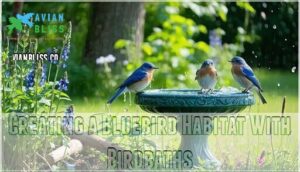
You can transform your yard into a bluebird paradise by combining your birdbath with smart habitat choices that make these beautiful birds feel right at home.
Creating the perfect environment means thinking like a bluebird – they need native plants for insects, dead branches for perching, and pesticide-free spaces where they can safely raise their families.
Incorporating Native Plants
Creating a bird-friendly garden around your bird bath starts with choosing the right native plants. Think of it as setting the dinner table for your feathered guests – you want everything they’d naturally find in their neighborhood.
Native plant diversity creates a buffet that keeps bluebirds coming back for more. Your local extension office can recommend specific varieties that’ll thrive in your area’s conditions.
- Native berry bushes like elderberry and sumac provide seasonal food sources
- Insect attracting plants such as goldenrod bring protein-rich meals
- Shelter providing plants like dogwood offer safe resting spots
- Bird-attracting plants create natural corridors to your birdbath
Leaving Dead Trees and Branches
Your native plants work hand-in-hand with nature’s forgotten treasures: dead trees and branches.
These weathered sentinels aren’t eyesores—they’re bluebird goldmines.
Standing snags provide nesting cavities where woodpeckers excavate holes that bluebirds later claim.
Dead branches create perfect hunting perches, giving your feathered friends prime real estate to spot insects below.
| Feature | Benefit | Bluebird Use |
|---|---|---|
| Dead limbs | Insect habitat | Foraging spots |
| Snags | Nesting cavities | Breeding sites |
| Old posts | Perch availability | Hunting platforms |
Keep those "ugly" dead trees—they’re winter shelter and natural food sources that make your bird bath irresistible.
Providing Nesting Materials
During spring months, you’ll become your bluebirds’ favorite home improvement supplier by offering nesting materials near your bird bath.
Create a bluebird habitat that feels like a one-stop shop:
- Bundle natural fibers like cotton or wool in suet cages
- Collect pet fur (chemical-free) for safe materials
- Gather pine needles and soft grasses for cozy linings
- Position material placement within sight of your nest box
Your thoughtful spring provision transforms ordinary yards into bluebird paradise!
Avoiding Pesticides
Protecting bluebirds from harmful chemicals starts with ditching traditional pesticides near your bird bath.
These toxic substances don’t just kill garden pests—they poison the very insects bluebirds need to survive. When you create a pesticide-free zone around your birdbath, you’re serving up a safe buffet for your feathered friends.
Switch to these organic gardening methods for natural pest control:
- Beneficial insects like ladybugs and lacewings that eat harmful pests
- Companion planting with marigolds and basil to repel unwanted bugs naturally
- Native plants that attract diverse insects while supporting bluebird health.
Your chemical-free approach protects both bluebirds and their food sources.
Bluebird Birdbath Safety Precautions

You’ll want to protect your feathered friends from dangers that can turn a relaxing bath into a dangerous situation.
Smart safety measures keep bluebirds safe from predators, prevent accidents, and guarantee your birdbath becomes their favorite neighborhood hangout spot.
Protecting From Cats and Predators
Your backyard sanctuary needs smart predator deterrents to keep bluebirds safe.
Elevated placement at least 10 feet from hiding spots prevents surprise attacks from cats and other bird bath predators.
Plant thorny shrubs like rose bushes nearby—they’re perfect escape routes when danger strikes.
Motion sensors and sprinklers startle unwelcome visitors, while birdbath shields create protective barriers.
For bird bath cat safety, consider adding a collar with bells to outdoor cats.
Strategic bird bath placement means positioning your bath where you can monitor it easily, ensuring bird safety without compromising their bathing pleasure.
Safety Measure Why It Works
Elevated mounting height
Preventing Bird Collisions
While your bluebird paradise shouldn’t become a collision course, window strikes remain a serious threat near birdbaths.
Here’s your bird-safe checklist:
- Position birdbaths either within 3 feet or beyond 30 feet from windows
- Apply window film or decals with 2-inch spacing for maximum decals effectiveness
- Install external screens to create bird-safe glass barriers
Smart feeder placement prevents tragic bird bath window collisions in birdsafe environments.
Ensuring Birdbath Stability
A wobbly bird bath sends bluebirds flying faster than you can say "splash."
Choose heavy base material like concrete over lightweight plastic. Check your ground surface stays level and firm.
Anchoring methods include stakes or sandbags for wind resistance. Proper weight distribution prevents tipping when birds perch on edges.
Your bird bath stability determines whether bluebirds trust your bird bath design enough to return daily.
Bluebird Birdbath Maintenance and Upkeep

You’ll need to clean your bluebird birdbath every two days to keep the water fresh and prevent algae buildup that can harm your feathered visitors.
Think of it like maintaining a swimming pool for tiny athletes – clean water means healthy, happy bluebirds who’ll keep coming back for their daily splash.
Regular Cleaning Schedule
After setting up your bluebird haven, maintaining a regular cleaning schedule becomes your secret weapon for attracting these azure beauties.
Your bird bath deserves the same attention you’d give your coffee maker – consistent care keeps everything running smoothly!
Bluebirds won’t visit a grimy watering hole, so stick to this winning formula:
- Scrub every two days using a bird bath vinegar solution (nine parts water, one part vinegar) for effective algae prevention
- Select a sturdy brush for thorough debris removal without scratching surfaces
- Rinse three times completely to eliminate all cleaning residue
- Air-dry before refilling with fresh clean water
This process is crucial for maintaining a clean and attractive environment for the bluebirds.
Checking Water Quality
Checking your bird bath’s water quality protects bluebird health and keeps them returning.
Clean water prevents disease while murky conditions drive birds away.
Clarity
Algae Prevention
Debris Removal
Water Testing
Safe additives aren’t necessary—simple shallow water works best for bacteria control.
Replacing Birdbath Components
Even the sturdiest bird bath won’t last forever without some TLC.
Basin cracks, failing pumps, and wobbly stands signal it’s time for bird bath component replacement.
Don’t let broken heater repair or nozzle cleaning issues discourage your bluebirds.
Quick pump replacement or stand replacement keeps your feathered friends happy.
Regular bird bath solutions and bird bath regular cleaning prevent major headaches down the road.
Winterizing The Birdbath
Nobody wants their beloved bluebird visitors to find frozen water on cold mornings. Bird bath winterization protects your investment while keeping fresh water flowing year-round.
Adding a heated bird bath system or de-icer options prevents dangerous ice formation that can crack ceramic or stone basins. Winter cleaning becomes easier with heated systems that resist algae buildup.
- Heated baths welcome shivering birds with warm, life-giving water
- Ice removal tools protect delicate basin surfaces from damage
- Water refilling stays simple when heating elements prevent freezing
- Bird bath heating creates a backyard oasis during harsh winters
Your feathered friends depend on you for survival
Frequently Asked Questions (FAQs)
Why put pennies in a birdbath?
You’ll put pennies in your birdbath to prevent algae growth through copper’s natural antimicrobial properties.
The copper ions slowly release into water, keeping it cleaner longer and reducing your maintenance while providing safer drinking water for visiting birds, utilizing the copper ions effectively.
What are the disadvantages of a bird bath?
Picture stagnant water becoming a breeding ground for mosquitoes and bacteria.
You’ll face constant cleaning duties, potential disease spread among birds, freezing issues in winter, and the headache of regular maintenance to keep water fresh.
Disease spread among birds and the headache of regular maintenance are critical concerns.
Do Bluebirds need a bath?
Yes, bluebirds absolutely need water for bathing and drinking.
They’ll splash around to clean their feathers, remove parasites, and stay hydrated.
You’ll see them visit shallow water sources daily, especially during hot weather.
How much water does a birdbath need?
Think of Goldilocks testing porridge—too much water drowns tiny birds, too little leaves them thirsty.
You’ll want just 1-2 inches of water depth in your birdbath, giving bluebirds perfect bathing conditions without overwhelming their delicate frames.
How do birds bathe in shallow water?
Birds wade into shallow water and dip their heads, splashing vigorously with their wings.
They’ll ruffle feathers, shake water through their plumage, then preen themselves clean.
It’s like nature’s version of a rejuvenating shower!
What is a bird bath and why is it necessary?
Water droplets glisten like tiny diamonds as feathered friends gather around their personal spa.
A bird bath’s a shallow water dish that provides drinking water and bathing opportunities, keeping birds healthy, hydrated, and their feathers clean for ideal flight, which is essential for their overall health.
How do I choose a birdbath?
Choose a shallow birdbath with 1-2 inch water depth and textured surfaces for grip.
Look for durable materials like concrete or ceramic.
Consider moving water features and make certain it’s easy to clean regularly, with a focus on durable materials.
What color bird bath should I use?
Studies show bluebirds see colors differently than humans, preferring earth tones over bright hues.
You’ll attract more visitors with natural colors like gray, brown, or stone.
Avoid flashy blues or reds that might actually scare them away.
Do bluebirds like bird baths?
Yes, bluebirds absolutely love bird baths!
You’ll attract them with shallow water (1-2 inches deep), moving features like fountains, and proper placement near trees.
They need fresh, clean water for drinking and bathing regularly.
What color bird bath attracts the most birds?
Natural colors like browns, grays, and earth tones attract the most birds to your bath.
Bright colors can startle them, while neutral shades blend into their environment, making birds feel safer when they’re vulnerable during bathing time.
Conclusion
Like Noah calling creatures to his ark, you’ve now got the blueprint to create an irresistible oasis for bluebirds.
Your perfectly positioned bird bath for bluebirds will become their daily sanctuary when you follow these ten essential guidelines.
Remember, success lies in the details – shallow water, textured surfaces, and sparkling cleanliness.
With patience and proper setup, you’ll soon witness these azure beauties splashing contentedly in your backyard, transforming your space into their personal spa retreat.