This site is supported by our readers. We may earn a commission, at no cost to you, if you purchase through links.
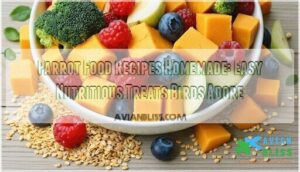 You can whip up nutritious parrot food recipes homemade using simple kitchen staples your feathered friend will absolutely love.
Mix cooked quinoa, diced sweet potatoes, and chopped broccoli for a veggie powerhouse that’ll make your bird’s taste buds sing.
Try birdie bread using whole wheat flour, eggs, and pureed vegetables—it’s like baking cookies, but healthier!
Sweet potato balls rolled in crushed pellets create irresistible treats that pack serious nutrition.
Fresh fruit salads with apples, berries, and mango add natural sweetness without the processed sugar crash, making for a great way to provide natural sweetness.
Your parrot’s diet doesn’t have to be boring when you’ve got the right recipes up your sleeve.
Table Of Contents
- Key Takeaways
- Essential Parrot Care
- Parrot Food Recipes
- Benefits of Bird Bread
- Homemade Bird Bread Recipes
- Importance of Homemade Sun Conure Food
- Choosing The Right Ingredients for Sun Conure
- Sun Conure Food Recipes
- Pellet Paste and Other Treats
- Tips for Preparing Homemade Parrot Food
- Consulting With an Avian Veterinarian
- Frequently Asked Questions (FAQs)
- How do I make my own parrot food?
- What home food can parrots eat?
- What is a healthy recipe for parrots?
- What is the healthiest food for parrots?
- What is the best homemade bird food?
- How do you make homemade parrot treats?
- How often should homemade parrot food be served?
- What are safe storage methods for parrot food?
- Are there specific grains recommended for parrots?
- Can I include herbs in parrot recipes?
- Conclusion
Key Takeaways
- You’ll create nutritious homemade parrot meals using simple kitchen staples like quinoa, sweet potatoes, and fresh vegetables that pack more vitamins and minerals than store-bought options while giving you complete control over ingredients.
- You can make irresistible treats like sweet potato balls, birdie bread muffins, and veggie chop mix that’ll keep your feathered friend excited about mealtime while sneaking essential nutrients past even the pickiest eaters.
- You’ll need to avoid toxic ingredients like avocado, chocolate, onions, and garlic while focusing on safe foods like fresh fruits, colorful vegetables, cooked grains, and unsalted nuts to keep your parrot healthy and happy.
- You should consult with an avian veterinarian to determine your parrot’s specific dietary needs based on their species, age, and health conditions, then serve fresh homemade food daily while removing uneaten portions within 2-3 hours to prevent spoilage.
Essential Parrot Care
You’ll need to provide fresh water and food daily to keep your feathered friend healthy, just like you wouldn’t skip your morning coffee routine.
A varied diet isn’t just about nutrition—it’s mental gymnastics for your parrot’s brain, preventing the boredom that turns sweet birds into feathery destructors.
Fresh Water and Food
Maintaining your parrot’s health starts with the basics that many owners overlook. Fresh water and food aren’t just nice-to-haves—they’re non-negotiables for your bird’s wellbeing. Think of it like running a five-star restaurant where your parrot’s the VIP guest.
Here’s your daily checklist for ideal parrot nutrition guide success:
- Water Quality: Replace water daily using filtered or bottled sources to eliminate harmful chemicals and bacteria.
- Food Freshness: Serve fresh fruits and vegetables each morning, removing any uneaten portions within 2-3 hours.
- Dish Hygiene: Wash food and water bowls with hot, soapy water daily to prevent bacterial growth.
When preparing parrot food recipes homemade, remember that perishable removal and daily changes aren’t suggestions—they’re survival tactics.
A Varied Diet for Mental Stimulation
Beyond nutrition, your parrot’s varied diet serves as a powerful tool for mental stimulation and behavioral enrichment.
Think of mealtime as brain training—each new flavor, texture, and presentation challenges your bird’s intellect. A balanced diet is essential for a long, happy life, but diversity prevents boredom and promotes natural foraging behaviors.
Foraging enrichment transforms simple feeding into engaging puzzle-solving.
Hide healthy snacks inside toys or wrap novel foods in paper for your parrot to unwrap. This sensory stimulation mimics wild behaviors, providing vital behavioral benefits.
Parrot food recipes homemade offer endless variety—mix colorful vegetables, fruits, and grains to create different textures and tastes.
Your feathered friend will approach each meal with curiosity rather than routine, keeping their mind sharp and spirits high.
Parrot Food Recipes
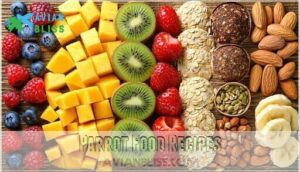
You’ll discover that creating homemade parrot treats isn’t just about mixing ingredients—it’s about crafting nutritious meals that’ll make your feathered friend’s taste buds sing with joy.
These simple recipes transform everyday kitchen staples like sweet potatoes, grains, and blueberries into irresistible snacks that pack essential vitamins and minerals your parrot needs to thrive, providing them with essential vitamins.
Sweet Potato Balls
Sweet potato balls make perfect homemade parrot food treats that’ll have your bird begging for more! These nutritious gems pack vitamins A and C into bite-sized portions your feathered friend will absolutely love.
Here’s your simple parrot food recipes homemade guide:
- Nutritional Benefits: Sweet potatoes boost immune systems and promote healthy feathers
- Recipe Variations: Mix in oats, banana, or crushed pellets for extra nutrition
- Freezing Methods: Store portions in ice cube trays for convenient serving
These treats are easily accessible since you can buy premade options. Perfect Serving Suggestions include offering 2-3 balls daily as healthy snacks!
Veggies and Grains Chop Mix
When you’re crafting the perfect Chop Mix Prep, think of it as building your parrot’s personal salad bar.
Combine colorful veggies and cooked grains for maximum Nutritional Balance and Ingredient Variety. Chop everything finely, then freeze portions in small bags for convenient Storage Solutions.
This homemade parrot chop recipe caters to Parrot Preferences while delivering essential nutrients your bird craves daily.
For convenient parrot food, consider a pre-made veggie option.
| Ingredients | Description |
|---|---|
| Various Vegetables | Fresh and chopped |
| Mixed Grains | Cooked thoroughly |
| Freezing | Preserve freshness |
Blueberry Sweet Potato Parrot Treats
Your picky eater will fall head over tail feathers for these blueberry sweet potato treats.
Mix mashed sweet potato with fresh blueberries for incredible treat nutritional value. These safe treat ingredients create the perfect homemade parrot food combination.
Freezing treat freshness extends shelf life up to three months. Experiment with treat recipe variations by adding chopped nuts or seeds to keep your feathered friend excited about snack time.
Benefits of Bird Bread
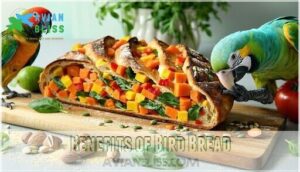
You’ll discover that bird bread packs essential vitamins, minerals, and protein into every bite, making it a nutritional powerhouse that supports your parrot’s health better than plain seeds.
Think of it as sneaking vegetables into a toddler’s meal – your feathered friend gets excited about the bread while you smile knowing they’re eating their greens.
Source of Vitamins and Minerals
Bird bread serves as your parrot’s multivitamin, packed with vitamins and minerals that keep feathers glossy and energy levels high.
You’re basically creating a nutritional powerhouse that supports every aspect of your bird’s health.
Regular consumption of bread, however, can lead to nutrient deficiencies.
- Vitamin A Sources: Dark leafy greens and orange vegetables boost immune function
- Calcium Richness: Strengthens bones and prevents egg-binding in females
- Mineral Absorption: Proper ratios help make sure nutrients actually reach your bird’s system
- Vitamin D Synthesis: Natural ingredients support healthy metabolism
- Freshness Priority: Fresh parrot food ingredients maximize nutritional value
Adding Variety to Diet
Beyond providing vitamins and minerals, homemade bird bread transforms your parrot’s routine into an adventure.
Recipe rotation prevents dietary boredom while introducing novel ingredients like seasonal produce keeps meals exciting.
Your feathered friend craves texture diversity – think crunchy nuts mixed with soft sweet potato chunks.
| Variety Benefits | Examples |
|---|---|
| Foraging enrichment | Hide bread pieces in toys |
| Seasonal excitement | Summer berries, winter squash |
| Texture adventures | Chunky vs. smooth consistencies |
This varied diet approach makes every meal feel like discovering treasure.
Introducing New Foods to Picky Eaters
Getting your feathered friend to try new foods feels like negotiating with a tiny, stubborn diplomat. Persistence pays when dealing with picky eaters who turn their beaks up at anything unfamiliar.
- Start with gradual introduction—mix tiny amounts of new ingredients into familiar favorites
- Focus on food presentation by offering mashed textures that feel less threatening
- Use positive reinforcement to celebrate every small victory, even a curious peek
This approach transforms parrot nutrition adventures into successful parrot diet expansions.
Homemade Bird Bread Recipes
You’ll discover that homemade bird bread transforms your kitchen into a parrot bakery, where simple ingredients like cornbread mix, shredded vegetables, and eggs create nutritious treats your feathered friend can’t resist.
These recipes pack essential vitamins and minerals into bite-sized portions, making it easier to sneak healthy foods past even the pickiest eaters who turn their beaks up at plain broccoli, providing a great way to offer nutritious treats.
Basic Birdie Bread
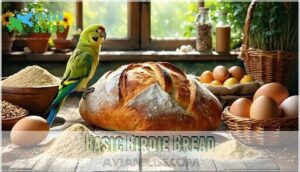
Birdie bread transforms simple pantry staples into nutritious parrot treats your feathered friend will devour.
Master ingredient selection by combining whole wheat flour, cornmeal, and eggs for ideal nutritional balance.
Smart baking techniques include thorough mixing and complete cooking at proper temperatures.
You can find the perfect baking supplies online.
Storage solutions mean freezing extra slices for convenient serving ideas later—perfect homemade recipes that beat store-bought options every time.
Healthy Homemade Bird Bread
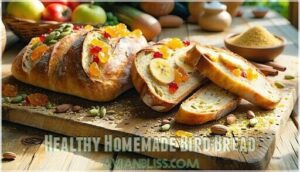
When you’re ready to elevate your bird bread game, healthy homemade versions pack serious nutritional punch.
These recipes focus on nutrient density through smart ingredient sourcing and proper baking techniques.
Key ingredients include:
- Whole grain flours (oat, barley, rice) for essential fiber
- Fresh fruits like mashed bananas for natural sweetness
- Vegetable purees such as pumpkin or sweet potato for vitamins.
Recipe customization makes every batch special.
Eclectus Parrots Bird Bread
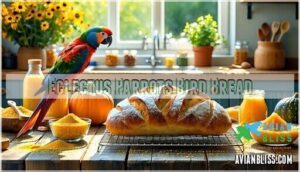
Eclectus parrots deserve bird bread that matches their unique dietary needs.
You’ll create nutritional magic by combining cornmeal with tropical ingredients like papaya and pumpkin.
These Eclectus specifics guarantee proper vitamin A levels while avoiding excess fat that can harm their sensitive digestive systems.
To guarantee dietary needs are met, consider that homemade mixes attract birds to your yard.
Mix ingredients thoroughly, bake until golden, then serve cooled portions to your vibrant companion.
Birdie Bread Muffins
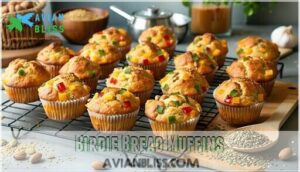
These Birdie Bread Muffins transform your kitchen into a parrot bakery! Muffin Ingredients like eggs and chopped vegetables create nutritious treats, while smart Baking Techniques guarantee perfect texture.
Here’s why your feathered friend will love them:
- Nutritional Value packed into bite-sized portions
- Storage Options make meal prep effortless
- Serving Suggestions keep birds excited about mealtime
Homemade parrot food never tasted better!
Wholesome Birdie Bread
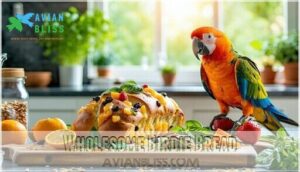
Crafting wholesome birdie bread transforms your kitchen into a nutritional powerhouse for your feathered friend. This versatile recipe welcomes ingredient swaps and texture variations to keep meals exciting.
| Baking Techniques | Storage Solutions |
|---|---|
| Mix wet ingredients first | Freeze individual portions |
| Pulse vegetables in processor | Label with prep dates |
| Bake until golden brown | Use airtight containers |
| Cool completely before slicing | Refrigerate up to 3 days |
Your homemade parrot food becomes their favorite treat with these nutritional boosters.
Importance of Homemade Sun Conure Food
You’ll transform your sun conure’s health when you prepare fresh, homemade meals that pack way more nutrition than store-bought options—think of it as swapping fast food for a home-cooked feast your feathered friend can actually digest properly.
Creating these colorful, nutrient-rich dishes strengthens your bond while ensuring your sun conure gets the precise vitamins, minerals, and antioxidants their vibrant feathers and active lifestyle demand.
Providing The Best Nutrition
Your sun conure’s health depends on what you put in their bowl. Parrot food recipes homemade let you control every ingredient, ensuring superior parrot nutrition without mystery additives. Think of yourself as your bird’s personal chef – you’re crafting meals that meet their exact nutritional needs.
Fresh ingredients make all the difference. Store-bought options can’t match the quality of produce you hand-select. Your homemade parrot food delivers essential vitamins, minerals, and nutrients that support vibrant feathers and energetic behavior.
Plus, you can adjust recipes based on your vet’s recommendations. Dietary variety keeps meals interesting while supporting prime bird nutrition. Mix fruits, vegetables, grains, and proteins to create a balanced diet that prevents deficiencies.
Following safe practices – like washing produce and cooking grains thoroughly – protects your feathered friend from harmful bacteria. When you control the parrot diet, you’re investing in your bird’s long-term wellness. That’s pretty rewarding!
Strengthening The Bond
Beyond providing nutrition, homemade parrot food creates deeper connections with your sun conure. Think of cooking as building bridges between you and your feathered friend.
Homemade meals become your secret weapon for winning your parrot’s heart—one delicious bite at a time.
When you prepare DIY parrot food, you’re investing in relationship-building that goes far beyond basic care. Here’s how parrot food recipes homemade strengthen your bond:
- Shared Mealtime: Eating together while your bird enjoys homemade parrot food creates trust and companionship.
- Foraging Together: Hide parrot treat recipes around their space for Interactive Feeding adventures.
- Training Treats: Use fresh creations for Positive Reinforcement during training sessions.
- Parrot Enrichment: Hand-feeding builds confidence while providing mental stimulation through varied textures and flavors.
Choosing The Right Ingredients for Sun Conure
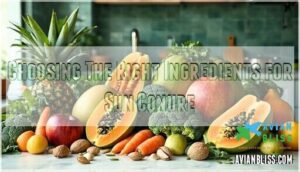
You’ll want to focus on fresh fruits like mango and papaya, colorful vegetables such as carrots and broccoli, plus healthy nuts and protein sources that pack the nutritional punch your Sun Conure needs.
Remember to steer clear of the troublemakers like avocado, chocolate, and onions—they’re basically kryptonite for your feathered friend, and nobody wants a grumpy parrot on their hands.
Fruits, Vegetables, Nuts, and Protein Sources
Your sun conure’s menu deserves thoughtful ingredient selection that balances nutrition with taste appeal.
Fruits like mango, papaya, and berries deliver natural sweetness plus vitamin A for vibrant feathers. Vegetables such as broccoli, carrots, and leafy greens pack essential minerals – steam them lightly for easier digestion during veggie prep.
Nut selection matters too. Almonds and walnuts provide healthy fats, but offer sparingly since they’re calorie-dense. For protein variety, cooked quinoa, lentils, and sprouted seeds work wonderfully in your parrot food recipes.
Mix textures and colors to create visually appealing meals. Your bird’s taste buds will thank you for the variety, and you’ll see the fruit benefits reflected in their energy levels and overall health.
Avoiding Toxic Ingredients
Your Sun Conure’s menu needs careful curation because some ingredients are silent killers. Avocado toxicity tops the danger list—this creamy fruit contains persin, which can cause heart failure in birds. Chocolate dangers lurk in every sweet treat, with theobromine triggering seizures and potentially death.
Onion concerns and garlic risks center around sulfur compounds that damage red blood cells, leading to anemia. Even small amounts pack a punch. Mushroom avoidance matters too—wild varieties can cause liver failure.
Toxic ingredients hide in unexpected places. Apple seeds and fruit pits contain cyanide, while caffeine acts like bird cocaine. Salt overloads their tiny kidneys.
Stick to safe fruits like apples (seedless), berries, and melons. Safe vegetables include carrots, broccoli, and leafy greens. Safe nuts encompass almonds and walnuts. Parrot food safety means checking every ingredient twice—your feathered friend’s life depends on it.
Sun Conure Food Recipes
You’ll discover that Sun Conures aren’t just pretty faces with their bright orange feathers—they’re surprisingly picky eaters who’ll turn their beaks up at boring pellets faster than you can say "rainbow bird."
These vibrant parrots thrive on colorful, nutrient-packed recipes that match their playful personalities, and the following homemade treats will keep your feathered friend both healthy and entertained at mealtime, making them a great way to provide a rainbow bird with a happy life.
Sun Conure’s Favorite Fruit Salad
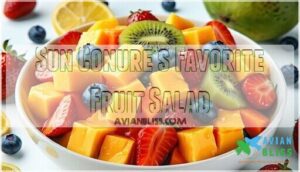
Your sun conure’s taste buds will dance with this colorful fruit salad that packs serious nutritional punch.
Mix fresh fruits like mango, papaya, and blueberries for a vitamin-rich treat that supports bright feathers and energy levels.
This nutritious sun conure meal combines safe fruit choices with natural sweetness your bird craves. Fresh ingredients are essential for bird health.
- Mango chunks – vitamin A powerhouse for gorgeous plumage
- Papaya pieces – digestive enzymes that keep tummies happy
- Blueberries – antioxidant bombs in tiny packages
- Strawberry slices – vitamin C boost with natural sweetness
- Kiwi rounds – tangy twist packed with fiber and nutrients
Nutty Delights for Your Sun Conure
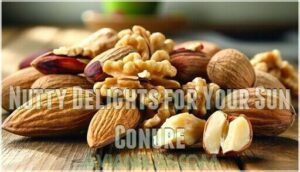
For your nutty delights, your sun conure will go absolutely nuts! Offer raw, unsalted almonds, walnuts, and Brazil nuts for the best Nut Variety.
Proper Nut Preparation means cracking shells yourself—pre-shelled nuts go rancid faster.
Serving Nuts should be limited to treat-sized portions since they’re high in fat. Watch for Nut Allergies and store nuts in airtight containers for Nut Storage.
These nutritious sun conure meal additions make your sun conure recipes irresistible!
Veggie Extravaganza
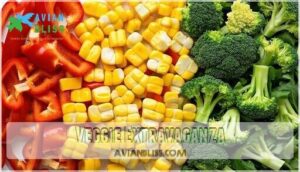
Rainbow-colored vegetables create the perfect Veggie Extravaganza for your sun conure.
Master chopping techniques by dicing bell peppers, broccoli, and leafy greens into bird-sized pieces.
These safe vegetables offer incredible nutritional benefits while overcoming pickiness through vegetable variety.
Your homemade parrot food becomes irresistible when you mix vibrant carrots with sweet corn—creating parrot food recipes that’ll make mealtime exciting!
Protein-Packed Sun Conure Bowl
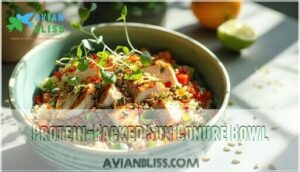
Your sun conure craves protein like a bodybuilder craves gains!
Mix cooked quinoa, lentils, and unseasoned chicken in this protein-packed bowl. These high-protein sources deliver essential conure amino acids for muscle development.
Experiment with bowl texture ideas – chunky quinoa, smooth lentils, or tender chicken pieces. Consider sprout incorporation for extra nutrition.
Skip insect protein unless you’re feeling adventurous with homemade recipes using safe ingredients.
Sun Conure’s Sweet Treats
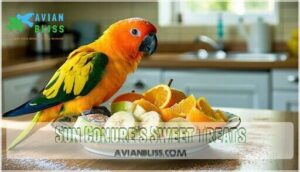
In the case of fruity sweetness, your sun conure deserves nutritious desserts that won’t spike their sugar levels.
Here’s how to create safe sweeteners using natural ingredients:
- Dice apples finely for easy eating
- Mash bananas until perfectly smooth
- Mix with fresh orange segments
- Sprinkle cinnamon lightly for flavor
These homemade parrot food recipe adaptations offer treat variety while keeping sun conures sweet treats healthy and delicious!
Pellet Paste and Other Treats
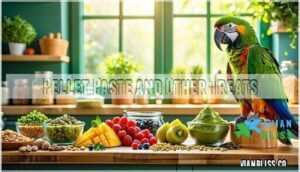
You can transform basic pellets into exciting paste treats by mixing them with a little water or natural fruit juice, creating a soft texture that even picky eaters can’t resist.
These simple combinations, along with creative seed mixes and fresh fruit salsas, give your feathered friend the variety they crave while sneaking extra nutrition into their daily routine with natural ingredients.
Seed Mix and Pellets
Seed mix and pellets create the foundation of smart parrot food recipes. You’ll want seed variety – think quinoa, chia, and flax instead of just sunflower seeds.
Pellet quality matters too; choose organic options without artificial colors. Mix equal parts for nutritional balance, adding water to create a paste-like consistency.
Sprouting seeds boosts nutrition while supplementing pellets with fresh ingredients keeps your feathered friend engaged.
Fresh Mango Salsa
Your parrot will go bananas for this tropical treat that’s easier than teaching them to say "hello." Fresh mango salsa brings vibrant flavors and essential vitamins to their bowl.
Recipe customization made simple:
- Dice ripe mango with red bell pepper for satisfying crunch
- Add fresh cilantro sparingly – too much overwhelms delicate parrot preferences
- Finish with lime juice to enhance natural sweetness
This homemade parrot food delivers mango benefits while satisfying their adventurous palate. For other birds, consider unsalted peanuts for nutrition.
Bird Christmas Tree Idea
Holiday enrichment takes on new meaning when you create a bird Christmas tree that doubles as an interactive feeding station.
This festive project transforms ordinary parrot food recipes into decorative edible ornaments that’ll keep your feathered friend entertained for hours.
Choose Tree Types carefully—small tabletop varieties work best indoors. Skip traditional decorations and focus on Safe Ornaments made from bird-safe materials. Toxicity Concerns disappear when you craft your own Edible Decorations using homemade parrot food ingredients.
Bird-safe wood beads
Dried fruit slices
safe toys
Edible ornaments
The Enrichment Value goes beyond nutrition—it’s mental stimulation wrapped in holiday cheer.
Tips for Preparing Homemade Parrot Food
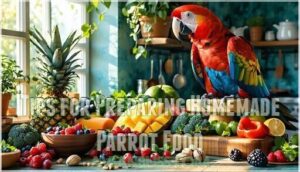
You’ll transform your kitchen into a parrot paradise when you master these essential prep techniques that’ll make your feathered friend think you’re the world’s best chef.
Remember, fresh ingredients and proper cooking aren’t just suggestions—they’re the secret weapons that turn picky eaters into happy, healthy birds who’ll actually gobble up those veggies you’ve been trying to sneak into their diet, making them happy, healthy birds.
Fresh Ingredients
Quality matters when you’re crafting homemade parrot food – think of it as cooking for your feathered family member who deserves the best.
Here’s your fresh ingredients game plan:
- Organic Produce Selection: Choose pesticide-free fruits and safe vegetables, prioritizing seasonal availability for peak nutrition and affordability.
- Sprouting Seeds Preparation: Soak seeds overnight to enhance digestibility and release essential nutrients your bird craves.
- Safe Handling Practices: Wash everything thoroughly, store properly, and incorporate foraging enrichment through varied textures and colors.
Cooking Thoroughly
Three golden rules apply when cooking thoroughly for your feathered friend’s homemade parrot food recipes.
First, Safe Temperatures eliminate harmful bacteria that could make your bird sick. Second, proper cooking enhances Digestibility Factors and Nutrient Retention, making meals easier on tiny tummies. Third, thorough cooking achieves Toxin Reduction in certain ingredients while creating Texture Preferences your parrot will love.
Remember: undercooked birdsafe ingredients can spoil the whole batch!
Serving Size and Age
Precision matters when crafting parrot food recipes that match your bird’s life stage. Age-Based Portions guarantee proper nutrition without waste or overfeeding.
Young birds need smaller, more frequent homemade meals during Weaning Strategies, while Juvenile Diets require nutrient-dense ingredients for growth.
Senior Bird companions often prefer softer textures and may eat less. Adjusting Recipes based on your parrot’s size is vital—raw seeds and spices should be limited to 1/4-1/2 teaspoon portions depending on bird size.
To guarantee balanced nutrition, consider incorporating a bird food pyramid into your parrot’s diet.
Remember, appetites fluctuate with seasons, stress, and activity levels, so monitor your feathered friend’s serving size preferences closely.
Consulting With an Avian Veterinarian
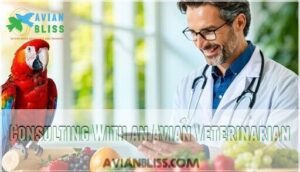
You’ll want to chat with an avian vet before switching your parrot to homemade foods, especially if your feathered friend has special health needs or you’re unsure about portion sizes.
Think of your vet as your parrot’s personal nutritionist—they can help you create a meal plan that keeps your bird healthy and prevents you from accidentally turning into the helicopter parent of the bird world, which can be detrimental to your parrot’s well-being due to excessive and unnecessary intervention, making the vet’s guidance on a meal plan crucial.
Determining Specific Dietary Needs
After mastering food prep techniques, you’ll want to pinpoint your parrot’s unique nutritional blueprint. Every bird is different, just like snowflakes – but with more squawking and personality.
Species Needs vary dramatically between parrots. Your cockatiel won’t share the same parrot diet requirements as a macaw. Consulting an avian veterinarian helps decode these mysteries and guarantees your homemade meals hit the nutritional bullseye.
Consider these key factors when planning parrot food recipes:
- Age Consideration – Young birds need growth-supporting nutrients while seniors require easier digestion
- Health Conditions – Kidney issues or obesity demand specialized parrot nutrition approaches
- Activity Level – Active birds burn more calories than couch potatoes
- Seasonal Changes – Molting periods increase protein needs substantially
Understanding these specific dietary needs transforms you from cook to parrot nutritionist extraordinaire.
Ensuring a Balanced Diet
Your vet becomes your nutrition partner, mapping out the perfect parrot diet balance.
They’ll analyze your bird’s current intake and spot gaps in nutrient ratios that homemade parrot food recipes can fill.
| Diet Component | Professional Guidance | Home Implementation |
|---|---|---|
| Protein Diversity | Species-specific requirements | Rotate legumes, nuts, sprouts |
| Vitamin Sources | Deficiency identification | Target colorful produce |
| Mineral Importance | Calcium-phosphorus balance | Dark leafy greens |
Together, you’ll create balanced diet strategies that address hydration needs while ensuring your homemade meals complement commercial pellets perfectly.
Frequently Asked Questions (FAQs)
How do I make my own parrot food?
You’ll want to mix fresh vegetables, fruits, and cooked grains.
Chop carrots, broccoli, and sweet potatoes finely. Add quinoa or brown rice.
Avoid toxic foods like chocolate, avocado, and onions—they’re toxic. Freeze portions for convenience.
What home food can parrots eat?
The proof is in the pudding—you can feed your parrot fresh fruits like apples and berries, cooked grains, steamed vegetables, and nuts. Avoid chocolate, avocado, and onions completely.
What is a healthy recipe for parrots?
Mix three cups shredded vegetables like carrots, broccoli, and sweet potato with cornbread mix, eggs, and nut butter.
Bake at 400°F for twenty-five minutes.
You’ll create nutritious, freezable portions your feathered friend will devour.
What is the healthiest food for parrots?
Fresh vegetables, fruits, and high-quality pellets form the healthiest parrot diet.
You’ll want dark leafy greens, colorful produce, and sprouted seeds.
Avoid avocado, chocolate, and caffeine—these’re toxic, as balance beats boring every time.
What is the best homemade bird food?
You’ll want to create a nutritious chop combining fresh vegetables, cooked grains, and soaked legumes.
Blend colorful produce like carrots, broccoli, and sweet potato with quinoa and lentils for superior nutrition.
How do you make homemade parrot treats?
Blend blueberries with mashed sweet potatoes, add rolled oats and a touch of honey.
Bake at 325°F until golden.
You’ll create nutritious treats that’ll make your feathered friend chirp with delight!
How often should homemade parrot food be served?
Serve homemade parrot food daily as part of their regular meals.
You’ll want to offer fresh portions each morning, removing any uneaten food within 2-3 hours to prevent spoilage and bacteria growth.
What are safe storage methods for parrot food?
Refrigerate homemade chop for 2-3 days maximum. Freeze portions in airtight containers for longer storage. Always use clean dishes, filtered water, and remove perishable foods within hours to prevent spoilage.
Are there specific grains recommended for parrots?
You’ll want rolled oats, quinoa, and amaranth flour for your feathered friend.
These grains pack protein and nutrients that seed diets often lack.
Cook them thoroughly and mix with vegetables for a balanced, exciting meal your parrot will love.
Can I include herbs in parrot recipes?
Yes, you can add fresh herbs like parsley, cilantro, basil, and oregano to parrot recipes.
They’re packed with nutrients and antioxidants.
Avoid dried herbs with preservatives, and introduce new herbs gradually.
Conclusion
Ready to transform your parrot’s mealtime from mundane to magnificent?
These parrot food recipes homemade will revolutionize your bird’s diet while strengthening your bond together.
From nutrient-packed sweet potato balls to wholesome birdie bread, you’ve got everything needed to create restaurant-quality meals in your own kitchen.
Remember to consult your avian vet about specific dietary needs, use fresh ingredients, and watch portion sizes.
Your feathered friend deserves the best nutrition possible—and now you can deliver it daily.
- https://theparrotsocietyuk.org/site/index.php/parrot-information/pet-parrots/parrot-nutrition/part-one-dietary-needs-of-parrots/
- https://www.sciencedirect.com/science/article/abs/pii/S1055937X98800030
- https://www.sciencefocus.com/nature/do-parrots-have-taste-buds/
- https://www.preciselyparrots.com/showthread.php?7339-Homemade-Recipe
- https://birdsupplies.com/blogs/news/7-bird-nutrition-secrets-every-owner-should-master?srsltid=AfmBOop_RNkA0Or5LdfjioRG8a5ZjCT2W4tCZ5rW-h93B_lArQAsWFO3