This site is supported by our readers. We may earn a commission, at no cost to you, if you purchase through links.
 A good bird seed feeding guide starts with understanding what your feathered guests prefer.
Black oil sunflower seeds are a universal hit, attracting cardinals, chickadees, and finches, while nyjer seeds are goldfinch favorites.
Safflower seeds deter squirrels but please songbirds, and white proso millet draws sparrows and doves.
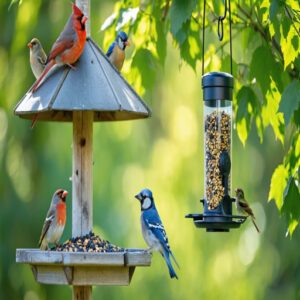
To prevent crowding or waste, choose the right feeder—tube feeders work well for small seeds, and platform feeders invite variety.
Keep everything clean to avoid spreading disease, and store seeds in metal containers to stay ahead of pests.
Curious about boosting your backyard’s bird appeal?
It’s simpler than you might think to create a bird-friendly environment with the right seeds and feeders, making it a great way to attract a variety of species.
Table Of Contents
- Key Takeaways
- Bird Seed Types
- Bird Feeder Options
- Top 10 Bird Seeds
- 1. Wagner 25 lb Black Oil Sunflower Bird Seed
- 2. Lyric No Waste Sunflower Wild Bird Seed 25 lb
- 3. Kaytee 5lb Striped Sunflower Bird Seed
- 4. Wagner Nyjer Seed Wild Bird Food 10 Pound
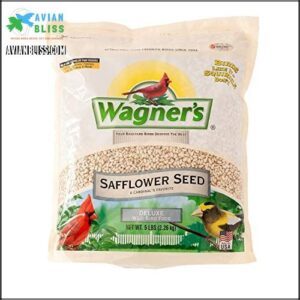
- 5. Wagner 57075 Safflower Seed Wild Bird Food
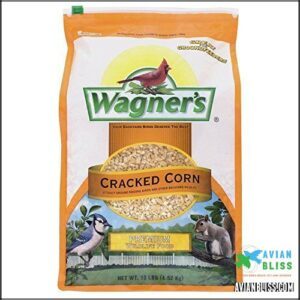
- 6. Wagner 18542 10 Pound Cracked Corn Wild Bird Food
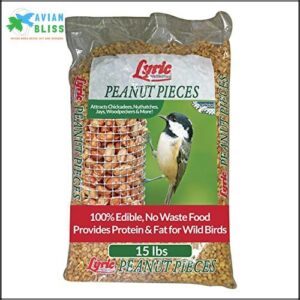
- 7. Lyric No Waste Wild Bird Seed Peanut Pieces
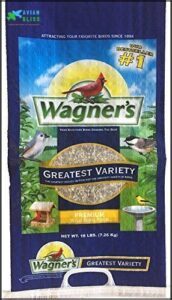
- 8. Wagner 62059 Wild Bird Food Variety Blend
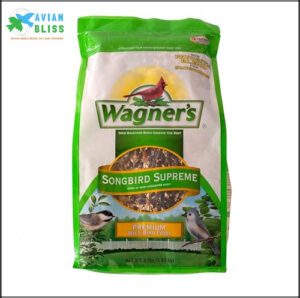
- 9. Wagner Songbird Supreme Wild Bird Food 8lb
- 10. Droll Yankees Finch Flocker Bird Feeder 20 Ports
- Feeding Guide Tips
- Bird Feeding Strategies
- Frequently Asked Questions (FAQs)
- What kind of seed do birds eat?
- What can you feed birds in your backyard?
- How do I choose the right wild bird food?
- Which sunflower seed is best for Feeder Birds?
- Do birds eat seed mixes?
- Do I need a bird feeder?
- What is the 5 7 9 rule for bird feeders?
- Do birds like feeders high or low?
- How much bird seed can a bird eat a day?
- What is the etiquette for bird feeders?
- Conclusion
Key Takeaways
- Focus on providing the right seeds for specific birds—use black oil sunflower seeds for variety, safflower to attract cardinals, and Nyjer for finches.
- Keep feeders clean and store seeds in secure, dry metal containers to prevent pests and maintain seed freshness.
- Use squirrel-proof feeders and strategic placement (at least 10 feet from trees) to protect seeds and birds.
- Offer diverse feeders and seed mixes to attract a wide range of species, from ground-feeders to chickadees and finches.
Bird Seed Types
Understanding bird seed types helps you attract the right species to your feeders and meet their nutritional needs.
Understanding bird seed types ensures you attract the right birds, providing them with the perfect blend of nutrition and energy for every season.
From high-fat sunflower seeds to protein-rich millet, each seed offers unique benefits and appeals to specific birds.
Sunflower Seeds
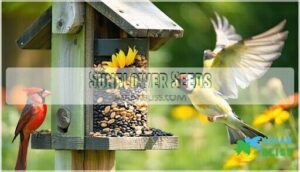
Sunflower seeds are the best bird seed for attracting a variety of species and providing unmatched energy. With 51% fat and 21% protein, their nutrition can’t be beat, especially during harsh winters.
You’ll find three main types:
- Black oil sunflower seeds: Thin shells, easy for most birds to crack.
- Striped sunflower seeds: Thicker shells, preferred by larger birds like grosbeaks.
- Hulled sunflower hearts: Mess-free but higher cost.
- Storage solutions: Metal containers keep seeds fresh and critters away.
Need a squirrel deterrence hack? Try squirrel-proof feeders or offer safflower seeds alongside your sunflower nutrition plan. To attract specific birds, consider feeder placement strategies.
Nyjer/thistle Seeds
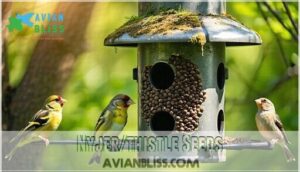
Nyjer seeds, sometimes called thistle seeds, are a favorite among finches thanks to their high oil content and energy-packed punch.
A finch favorite, packed with high oil content and energy, Nyjer seeds keep your feathered friends thriving year-round.
These tiny seeds are ideal for American goldfinches, siskins, and redpolls, whose small beaks handle them with ease.
To offer these, use feeders with tiny ports or mesh socks to minimize waste.
While pricier than other bird seed types, Nyjer’s nutritional value is unmatched for finches.
Keep them fresh by storing in airtight metal containers.
| Feature | Details |
|---|---|
| Bird Preference | Finches, Siskins |
| Nutritional Value | High in energy (40% oil) |
| Feeder Design | Tiny ports or mesh socks |
| Storage Tips | Airtight metal containers |
| Seed Freshness | Best when dry and fresh |
Safflower Seeds
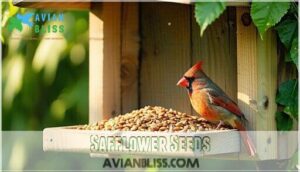
Safflower seeds are a top pick for attracting cardinals and grosbeaks while doubling as a squirrel deterrent.
Packed with 38% fat and 16% protein, they’re a powerhouse for bird feeding.
Their hard shells deter nuisance birds but work well in tray or hopper feeders.
Always store safflower in a cool, dry spot to preserve freshness and nutrition.
White Proso Millet
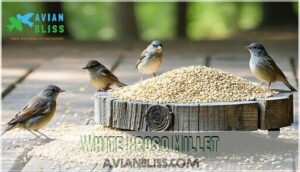
Packed with 73% carbohydrates, 11% protein, and 4% fat, white proso millet is a powerhouse for feeding ground-foraging birds like sparrows, doves, and towhees.
Its small, round seeds make it perfect for tray feeders or scattering directly on the ground.
To prevent spoilage, store millet in a cool, dry place.
Mixing millet into your bird seed ingredients creates a blend that attracts ground-feeders and supports their natural seed preferences, making it a versatile, nutritious, and economical choice for year-round bird feeding.
Shelled and Cracked Corn
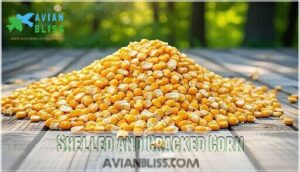
Cracked and shelled corn are budget-friendly bird seed options loaded with 74% carbs, 9% protein, and 5% fat.
They’re irresistible to ground feeders but prone to mold if stored poorly.
- Corn Nutrition supports quail, doves, and jays.
- Use platform feeders for better access.
- Tackle storage concerns with dry, cool metal containers.
- Protect against spoilage risks by replacing corn quickly, especially in humid weather.
Corn keeps birds chirping happily—just manage it wisely!
Bird Feeder Options
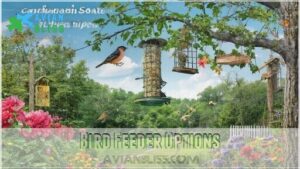
Choosing the right bird feeder helps you attract specific species while keeping seeds fresh and accessible.
From tube feeders to suet cages, each type is designed to suit different bird preferences and feeding habits.
Tube Feeders
Tube feeders are a favorite for bird enthusiasts, offering reliable seed capacity and weather protection. Their vertical design lets you fill them with versatile birdseed mixtures like black oil sunflower or Nyjer.
Built-in ports make it easy for birds to snack, while caged options protect smaller species from bullies. Choose feeders with durable materials and ease of cleaning to guarantee long-term use.
Many people like to purchase quality tube feeders online.
| Feeder Type | Best Seed | Common Birds |
|---|---|---|
| Standard | Black oil sunflower | Chickadees, finches |
| Mesh | Nyjer/thistle | Goldfinches, siskins |
| Caged | Sunflower mix | Small birds only |
Clean with hot, soapy water monthly!
Tray/Platform Feeders
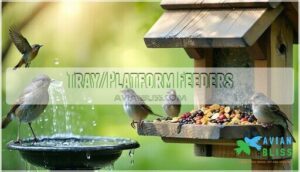
Tray feeders, or platform feeders, are an essential part of any bird feeding guide, offering a simple and effective way to attract diverse bird species.
Their openness advantage suits ground-feeding birds like doves, sparrows, and juncos, while the flat surface reduces seed spillage.
To maximize success:
- Place feeders in open areas to reduce squirrel access.
- Look for feeders with proper drainage design to prevent water pooling.
- Opt for durable materials like recycled plastic or wood.
- Pair tray feeders with a nearby bird bathing station for added appeal.
- Regularly clean to guarantee seeds stay fresh and safe.
Consider various feeder options for your backyard.
Platform feeders create a welcoming spot for feathered visitors and are a great way to enjoy birdwatching with a simple and effective feeder, making them a perfect addition to any backyard.
Window Feeders
Window feeders offer a fun way to observe backyard birds up close, turning your home into a personal bird-watching sanctuary. These feeders, secured with suction cups, bring charm and convenience while minimizing seed spillage.
Placement is key—choose windows low on reflection to guarantee bird safety and mount them at least five feet off the ground. Attracting birds with various seed types, like black oil sunflower seeds, enhances your bird feeding experience.
Consider purchasing a feeder for ideal bird watching. Cleaning ease matters; wash weekly to maintain a healthy environment. Follow this bird feeder guide for mounting options and enjoy the joy of feeding birds right at your window!
Suet Feeders
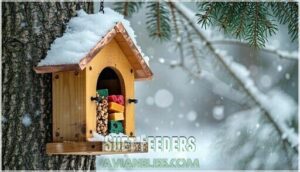
Suet feeders are a game-changer for high-energy birds, especially during winter when food is scarce.
These feeders attract woodpeckers, nuthatches, and chickadees, drawn to the rich nutrition of suet cakes.
Choose squirrel-proof designs to prevent pesky visitors.
Place the feeder off the ground, away from predators, and within bird-friendly vegetation to maximize visits.
Suet spoils in warm weather, so stick to winter feeding for best results.
Keep feeders clean to guarantee safe feeding.
Coated metal options offer durability and natural aesthetics.
- Create DIY suet at home with simple ingredients.
- Attract woodpeckers with suet laced with insects or nuts.
- Enjoy watching birds fuel up with this high-energy bird food year-round.
Top 10 Bird Seeds
Choosing the right bird seed can improve your backyard’s appeal to a wide range of bird species.
Here’s a detailed look at ten exceptional options to satisfy both common and picky feathered visitors.
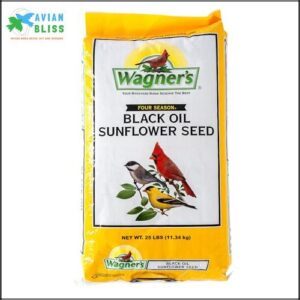
1. Wagner 25 lb Black Oil Sunflower Bird Seed
 View On Amazon
Wagner’s 25 lb Black Oil Sunflower Bird Seed is a must-have if you’re serious about attracting birds.
These thin-shelled seeds are a breeze for small birds, like chickadees and finches, to crack open, offering essential energy and health benefits.
Plus, at $15.98, it’s a superb deal for birdseed.
Here’s why it shines:
| Feature | Detail | Benefit |
|---|---|---|
| Shell Type | Thin | Easy cracking for small beaks |
| Nutritional Content | High-fat, energy-rich | Sustains long flights and cold days |
| Bag Size | 25 lbs | Ideal for frequent backyard feeding |
| Made in | USA | Quality assured |
Pro tip: Use a squirrel-proof feeder to maximize your efforts.
This will help you attract more birds and ensure they get the high-fat, energy-rich seeds they need.
By choosing Wagner’s 25 lb Black Oil Sunflower Bird Seed, you’re providing your backyard birds with the best possible nutrition for a superb deal.
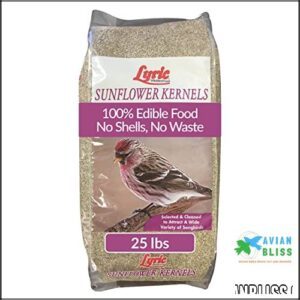
2. Lyric No Waste Sunflower Wild Bird Seed 25 lb
 View On Amazon
If you’re over messes piling up beneath your feeder, Lyric No Waste Sunflower Wild Bird Seed 25 lb could be your go-to solution.
This premium birdseed mix contains pre-hulled sunflower kernels designed for seed purity and waste reduction. Without shells, there’s no cleanup or risk of weeds sprouting around your yard. Packed with high protein and healthy fats, it supports bird energy and health.
This wild bird food attracts countless species like cardinals, chickadees, and finches.
To maximize enjoyment:
- Use in tray, hopper, or tube feeders for flexibility.
- Store in a dry, sealed container to maintain freshness.
- Watch for squirrels—they’re crazy about sunflower seeds!
- Invest in squirrel-proof feeding solutions.
Perfect for a cleaner feeding experience!
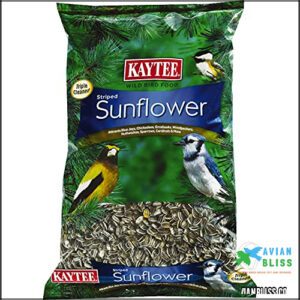
3. Kaytee 5lb Striped Sunflower Bird Seed
 View On Amazon
Looking for bird feeding options that balance quality and economy? Kaytee’s 5lb Striped Sunflower Bird Seed is a smart pick. These striped sunflower seeds boast thick shells, making them sparrow-resistant while attracting cardinals, woodpeckers, and grosbeaks.
The tougher shell also acts as a natural squirrel deterrent—a bonus for outdoor enthusiasts! Although the packaging isn’t resealable, proper seed storage in a cool, dry container maintains freshness.
Clean feeders regularly to avoid debris buildup and maintain hygiene. For a practical cost analysis, this bird seed delivers excellent value and supports large birds’ diets.
It’s a perfect choice to enhance cardinal preference in your backyard.
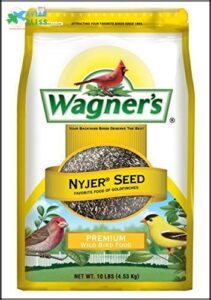
4. Wagner Nyjer Seed Wild Bird Food 10 Pound
 View On Amazon
Nyjer seeds are an excellent choice for bird feeding, especially if you want to attract vibrant finches like goldfinches, house finches, and pine siskins.
These tiny, nutrient-dense seeds are a powerhouse of energy, packed with high fat and protein content to keep your feathered visitors thriving.
Wagner’s Nyjer Seed Wild Bird Food guarantees top-notch quality with extra-clean seeds, minimizing waste and mess in your yard.
Ideal for finch-specific feeders with small ports, it discourages larger birds from raiding the food.
- Nyjer benefits: Energy-packed for wild birds.
- Finch attraction: Loved by finches.
- Seed freshness: Clean and lasting.
- Feeder type: Perfect for finch feeders.
5. Wagner 57075 Safflower Seed Wild Bird Food
 View On Amazon
Safflower seeds are a smart choice if you want to attract cardinals, chickadees, and grosbeaks while keeping squirrels and starlings away.
Packed with nutrients, these seeds provide high-energy sustenance that appeals to your favorite feathered visitors. Their naturally bitter taste acts as a built-in squirrel deterrent, saving you frustration and feeding costs.
Wagner’s 5-pound bag of safflower is perfect for a lasting supply of wild bird food. Gradually introduce it to your feeders to help birds adjust.
Pair it with a platform or hopper feeder for the best results. Cleaner feeding areas and selective bird attraction make safflower a winner!
6. Wagner 18542 10 Pound Cracked Corn Wild Bird Food
 View On Amazon
Wagner’s 18542 Cracked Corn Wild Bird Food is your go-to for attracting ground-feeding birds and wildlife.
Packed with carbohydrates, it’s an energy-boosting treat for species like cardinals, doves, quails, and even ducks.
Cracked corn shines when offered in tray feeders or sprinkled on the ground, making it accessible to bigger birds.
To keep your cracked corn fresh and mold-free, store it in a cool, dry space.
Be mindful of damp areas, as mold can develop quickly.
Pair this bird seed with other types to invite a wider variety of guests.
- Energy-packed, thanks to its high carbohydrate content.
- Ideal for tray feeders or ground feeding.
- Attracts birds, ducks, and small wildlife.
- Requires proper storage to prevent mold.
7. Lyric No Waste Wild Bird Seed Peanut Pieces
 View On Amazon
Lyric No Waste Wild Bird Seed Peanut Pieces are a fantastic choice for anyone serious about bird feeding.
These split, shelled peanuts offer high-energy nutrition without messy shells, making cleanup hassle-free.
Packed with protein and fat, they’re perfect for fueling birds like jays, bluebirds, and woodpeckers.
Versatility is another perk—you can use them in tube, tray, or wire mesh feeders.
Just verify proper seed freshness by regularly checking for mold, especially after rain, and placing feeders where squirrels can’t reach.
Fresh seeds provide more energy.
| Feature | Benefit |
|---|---|
| 100% edible | Avoiding waste and mess |
| High protein/fat | Peanut nutrition for energy |
| No-shell peanuts | Attracting jays, woodpeckers |
| Mold checks needed | Maintains seed freshness |
Reliable and mess-free, it’s a win-win for birds and your yard!
8. Wagner 62059 Wild Bird Food Variety Blend
 View On Amazon
If attracting diverse songbirds is your goal, Wagner 62059 Wild Bird Food Variety Blend packs the punch.
This premium mix includes black oil sunflower seeds, safflower seeds, white millet, Nyjer seeds, raisins, and peanuts—a recipe designed to delight goldfinches, cardinals, and chickadees alike.
Its sunflower-heavy composition (40%) provides high-quality energy, while the balance of ingredients caters to a wide array of backyard visitors.
Use tube, hopper, or platform feeders for best results, but don’t forget squirrel-proof setups—they’ll love this too!
Store your birdseed in airtight containers to maintain freshness and prevent mold.
A true gem for enthusiastic birdwatchers!
9. Wagner Songbird Supreme Wild Bird Food 8lb
 View On Amazon
A diverse birdseed mix like the Wagner Songbird Supreme Wild Bird Food brings life to your backyard.
Its carefully curated blend composition features black oil sunflower seeds, striped sunflower, safflower, sunflower chips, peanuts, and white millet, delivering exceptional nutritional value.
Ideal for tube, hopper, or platform feeders, this wild birdseed mix attracts finches, cardinals, and woodpeckers with its high-energy formula, especially during colder months when birds crave extra calories.
The variety in seed size makes it accessible to both smaller and larger species, enhancing bird attraction.
Frequent refills might be necessary due to its popularity, but the reclosable slider keeps the birdseed fresh.
It’s a cost-effective choice for premium mixes among top birdseed brands.
10. Droll Yankees Finch Flocker Bird Feeder 20 Ports
 View On Amazon
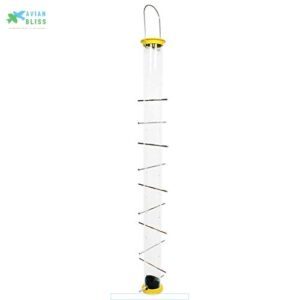
The Droll Yankees Finch Flocker Bird Feeder is perfect if you love watching finches.
Featuring 20 ports and 10 perches, this clever port design allows multiple birds to feed at once.
The tube feeder is built to last with its weather-resistant die-cast metal base and sturdy polycarbonate tube.
Pair it with thistle seeds to cater to finches’ diets.
Its seed capacity is effective for reducing refills, and the easy-clean baffle prevents messy buildup.
Plus, it naturally deters squirrels while giving small birds priority.
This feeder blends durability with functionality, inviting nature right to your backyard with ease and charm.
Feeding Guide Tips
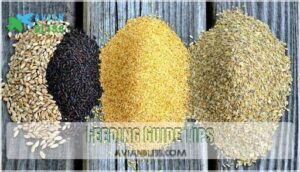
Keeping your feeders clean and offering fresh, safe seeds can help prevent disease and keep birds healthy.
Place feeders thoughtfully, store seeds securely, and take small steps to create a safe environment for your feathered visitors.
Cleaning Bird Feeders Regularly
Keep your feathered friends healthy with regular feeder cleaning.
Follow this quick guide:
- Scrub feeders weekly with hot, soapy water for mold prevention.
- Use safe solutions like a 1:9 bleach-water mix.
- Remove seed debris to guarantee cleanliness.
- Let feeders air dry completely before refilling.
- Rotate or swap feeders to simplify upkeep.
Practicing proper bird feeder hygiene prevents illness!
Providing Safe Food and Maintaining a Clean Environment
Clean feeders often to prevent bacteria, fungus, and aflatoxins.
Offer fresh birdseed stored in dry, secure containers to avoid contamination.
Prevent messes by placing feeders away from damp areas and regularly clearing droppings.
Avoid bread since it lacks nutrition and harms birds.
Add a touch of nature by growing native plants for safe habitats.
| Concern | Solution |
|---|---|
| Mold and Bacteria | Clean feeders regularly |
| Seed Spoilage | Check and store seeds properly |
| Predator Control | Avoid ground seed accumulation |
| Bread Risks | Offer natural seeds instead |
| Safe Water | Fresh water for drinking, bathing |
Storing Seeds in Secure Metal Containers
Protecting your bird seed starts with choosing the right metal container types—opt for sturdy options with secure lids to keep pests out.
Lid security importance can’t be overstated; it’s your first defense against moisture, rodents, and squirrels.
Regular cleaning prevents seed contamination and keeps your bird food storage worry-free.
For the best seed freshness tactics, store in a cool, dry spot.
Consider cleaning feeders with bleach solutions to prevent disease.
These smart seed storage tips guarantee your feathered visitors always enjoy safe, high-quality seeds.
Placing Feeders at Least 10 Feet From Trees
Position bird feeders at least 10 feet from trees to thwart squirrel access and keep birds safe from predators.
This distance enhances bird safety by ensuring clear flight paths while reducing risks like window strikes.
Strategic placement also boosts visibility benefits, gives birds secure feeder accessibility, and complements your backyard bird feeding efforts.
Prioritize habitat considerations to create a peaceful feeding oasis.
Keeping Cats Indoors to Protect Birds
Birds visiting feeders are at risk from roaming cats, which can threaten backyard bird populations.
By keeping cats indoors, you promote bird safety and practice responsible pet ownership.
Enrich your home for your cat with these ideas:
- Offer climbing trees and scratching posts.
- Create secure “catios” for supervised outdoor time.
- Train your cat to walk on a leash.
- Add bird-watching perches for stimulation.
- Rotate toys to reduce boredom and curb predatory behavior.
Protect birds and your cat’s well-being!
Bird Feeding Strategies
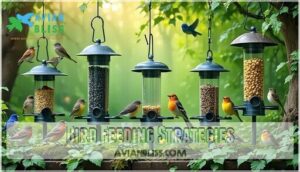
You can attract and support a variety of bird species by tailoring your feeding strategies to their needs.
Providing diverse seeds, safe habitats, and well-placed squirrel-proof feeders guarantees a thriving backyard ecosystem.
Supplemental Feeding During Extreme Weather
Feeding birds year-round means stepping up during extreme weather.
Winter survival needs high-fat bird food like black oil sunflower or nyjer seeds, which pack energy into every bite.
Summer heat and drought impact natural food, so adding suet or peanut pieces helps.
These bird feeding tips guarantee migration support and a nesting boost. Consistency keeps winter birds loyal, easing their struggle when nature’s pantry runs low during harsh seasons.
Creating a Bird-friendly Habitat With Native Plants
Creating a bird-friendly habitat with native plants supports bird conservation and helps birds thrive.
Native Plant Selection guarantees year-round food and shelter, while requiring little maintenance.
Attracting birds is easy when your yard mimics nature:
- Provide shelter and nesting with shrubs or evergreens.
- Support insect population control by planting bird-attracting flora.
- Maintain habitat with water source placement for drinking.
Using Squirrel-proof Feeders
Squirrels can turn bird feeders into their personal salad bars without the right tools.
Squirrel-proof feeders are a clever investment, saving seeds and stress.
- Cage feeders shield seeds using metal grids.
- Weight-activated feeders close when a squirrel climbs.
- Baffles stop climbers cold.
- Tube feeders with small perches deter larger critters.
- Metal seed trays prevent destructive chewing.
Offering Diverse Seed Mixes
Offering a variety of seed mixes is like hosting a buffet for backyard birds.
To attract a wide range of feathered visitors, blend common bird seeds like sunflower, millet, and nyjer. Prioritize seed quality and nutritional balance to keep birds healthy and coming back.
Rotate your birdseed ingredients with seasonal changes for freshness and adaptability. Careful feeder placement guarantees easy access while minimizing waste.
The right mix guarantees attracting variety and supports a thriving, diverse bird population.
Placing Feeders Near Windows to Reduce Collisions
Placing feeders wisely minimizes window collisions and keeps backyard birds safe. Position feeders within 3 feet of windows to reduce impact risks.
Reflections confuse birds, so make glass visible with window decals. Try these strategies:
- Use window feeders for safer feeding.
- Keep feeders clean and stocked.
- Add squirrel deterrents.
- Tweak placement to accommodate bird behavior and feeder proximity to ensure backyard birds are protected.
Frequently Asked Questions (FAQs)
What kind of seed do birds eat?
Birds chow down on seeds like sunflower, safflower, nyjer, millet, and corn.
Each type caters to specific birds—cardinals love safflower, finches adore nyjer, and ground-feeders enjoy millet.
Avoid fillers like oats; they’re birdy turnoffs, as they do not provide the same attraction as seeds like nyjer.
What can you feed birds in your backyard?
You can feed backyard birds sunflower seeds, safflower seeds, Nyjer, millet, or cracked corn.
Avoid bread—it’s junk food for birds.
Toss in fruit or soaked raisins for variety, and keep feeders clean to guarantee safety.
How do I choose the right wild bird food?
Variety is the spice of life—choose seeds like black-oil sunflower for versatility, safflower for cardinals, or Nyjer for finches.
Match seeds to birds’ diets, avoiding fillers, and guarantee freshness for healthier, happier visitors.
Which sunflower seed is best for Feeder Birds?
Black oil sunflower seeds are the best choice for feeder birds.
Their thin shells and high fat content make them easy to eat, attracting a wide variety of species, including chickadees, grosbeaks, and cardinals.
Do birds eat seed mixes?
Did you know seed mixes can attract over 20 bird species?
They’re like buffet lines for birds—ground feeders love millet, finches flock to nyjer, and cardinals savor sunflower seeds.
Just avoid blends with fillers!
Do I need a bird feeder?
A bird feeder isn’t absolutely necessary, but it helps attract and observe birds up close.
Plus, it keeps food clean and accessible.
If you’re serious about birdwatching, feeders are a game-changer for consistent visits!
What is the 5 7 9 rule for bird feeders?
The 5-7-9 rule suggests placing bird feeders either within 5 feet of a window to prevent collisions.
Or beyond 7-9 feet to minimize strikes and provide safe feeding zones for visiting birds.
Do birds like feeders high or low?
Imagine birds as dinner guests; some prefer rooftop views, others cozy tables.
High feeders attract species like chickadees and finches, while low ones suit ground-feeders like sparrows.
Mixing heights caters to all feathered friends, providing a variety of dining experiences, and this can be achieved by having different feeder types.
How much bird seed can a bird eat a day?
Most small birds eat about 1/4 to 1/3 of their body weight in seeds daily. For perspective, that’s like you downing 50 cheeseburgers every day—so, keep those feeders topped up!
What is the etiquette for bird feeders?
Keep feeders clean, place them safely to avoid predators, and offer high-quality seeds suited to local birds.
Avoid overfeeding, use squirrel-proof setups, and provide fresh water.
Respect nature by limiting disturbances and feeding responsibly.
Conclusion
A well-stocked feeder is like a welcoming table for your feathered friends, inviting diverse species to your yard.
By following this bird seed feeding guide, you’ll attract vibrant cardinals, lively finches, and other songbirds while keeping pests at bay.
Choose the right seeds, maintain clean feeders, and store them securely to create a safe, bird-friendly environment.
With a little effort, your backyard can transform into a thriving bird haven, enriching your connection with nature daily.