
This site is supported by our readers. We may earn a commission, at no cost to you, if you purchase through links.

A hungry woodpecker burns through fat reserves fast enough to need refueling every few hours once temperatures drop below freezing. On a rural property, where feeders sit exposed to wind, sun, and every raccoon within a mile, that math changes everything about what you hang from the porch post.
Store-bought cakes melt into greasy puddles by July or vanish overnight into a raccoon’s belly. Homemade blends turn rancid if the fat isn’t rendered right. Choosing suet cakes for rural homesteaders means balancing calorie density, weather resistance, and predator-proofing all at once.
What follows breaks down which cakes hold up, which ingredients to skip, and how to build feeders that keep your birds fed and your yard critter-free.
Table Of Contents
- Key Takeaways
- Best Suet Cakes for Homesteads
- Choosing Rural Suet Cakes
- Homemade Suet Cake Basics
- Ingredients Homesteaders Should Avoid
- Feeders for Rural Properties
- Birds Attracted by Suet Cakes
- Frequently Asked Questions (FAQs)
- What ingredients should I avoid in suet cakes?
- When should you stop putting suet out for birds?
- Is it cheaper to make your own suet cake?
- What birds eat suet cakes in the winter?
- How long does rendered tallow stay fresh?
- Whats the difference between suet and tallow?
- Can suet cakes be made without peanut butter?
- How much suet should birds eat daily?
- Do suet cakes attract unwanted pests or insects?
- Conclusion
Key Takeaways
- No-melt suet formulas made with heat-resistant beef tallow and hot pepper additives keep cakes solid in summer heat while deterring squirrels, raccoons, and other mammals without harming birds.
- Homemade suet cakes built from rendered beef tallow, peanut butter, sunflower seeds, oats, and cornmeal cost less than store-bought options and give you full control over ingredient quality.
- Skip bacon grease, nitrate‑cured fats, moldy grains, and artificial fillers, since these can cause kidney strain, toxin exposure, or contamination that harms birds.
- Predator‑resistant feeders, like cage‑style designs with mesh openings and weight‑sensitive perches, combined with shaded placement and weekly cleaning, keep suet fresh and pests out on rural properties.
Best Suet Cakes for Homesteads
Not every suet cake holds up to homestead life, where weather swings and squirrel traffic test a product fast. Some formulas melt too soon, while others pack in fillers, birds simply pass over.
Choosing a suet blend that resists heat and holds its shape is worth the effort, and these autumn bird feeder strategies walk through picking cakes that survive both sun and scavengers.
Here are four options worth stocking in your feeders, each suited to a different season or challenge.
1. Hot Pepper No Melt Suet
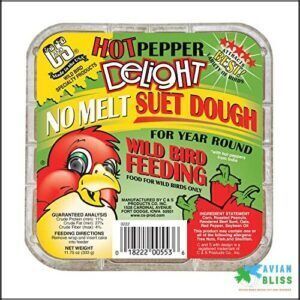
Hot Pepper No Melt Suet earns its spot on rural properties for one simple reason: it stays put through summer heat while still keeping raccoons, skunks, and squirrels at bay. The red pepper irritates mammals without bothering birds at all, so woodpeckers and crows feed freely.
Each 11.75-ounce cake blends beef suet with corn, oats, and roasted peanuts.
Just know it may draw large starling flocks, and cakes need refrigeration for easy removal from the tray.
| Best For | Rural and suburban bird lovers who want to feed woodpeckers and crows year-round without their feeder getting raided by squirrels, raccoons, skunks, or opossums. |
|---|---|
| Weight Per Unit | 11.75 oz |
| Feeding Season | Year-round |
| Pack Quantity | 8 pack |
| Base Ingredient | Rendered beef suet |
| Squirrel Deterrent | Hot pepper formula |
| Target Species | Woodpeckers, crows |
| Additional Features |
|
- Stays solid in temperatures up to 100°F, so it won’t melt into a mess during summer
- Hot pepper formula deters mammals while remaining completely safe and appealing to birds
- Comes as an 8-pack, so you’re stocked for extended feeding without frequent repurchases
- May attract large numbers of starlings, which can crowd out other birds
- Needs to be refrigerated to come out of the packaging easily
- Its effectiveness against pests varies depending on each animal’s sensitivity to capsaicin
2. Kaytee High Energy Suet
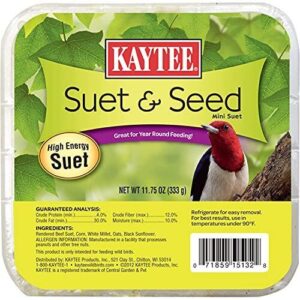
Peppers aren’t the only trick for keeping suet on the menu year-round. Kaytee High Energy Suet uses rendered beef tallow as its base, formed into a preformed cake that slides straight into standard feeder trays without crumbling.
Peanut chips boost fat and protein for insect- and grub-eating birds like woodpeckers and chickadees. The 11.75-ounce cake stores well refrigerated or frozen, and its all-season formula holds shape across temperature swings, making it a dependable pick for homesteaders who refill feeders often.
| Best For | Homesteaders and backyard birdwatchers who want a mess-free, no-melt suet cake that keeps woodpeckers, robins, and cardinals coming back all year. |
|---|---|
| Weight Per Unit | 11.75 oz |
| Feeding Season | Year-round |
| Pack Quantity | 1 tray |
| Base Ingredient | Suet blend |
| Squirrel Deterrent | None |
| Target Species | Woodpeckers, robins, cardinals |
| Additional Features |
|
- Preformed cake slides right into standard Kaytee feeder trays without crumbling or making a mess
- All-season formula holds its shape through both hot and cold weather swings
- High-energy blend keeps birds fueled during winter and summer alike
- Soft, gooey texture can get sticky on your hands while loading it
- May still soften in extreme heat, shortening how long it lasts outdoors
- Not every backyard bird is drawn to suet, so visitor variety can be hit or miss
3. High Energy All Season Suet
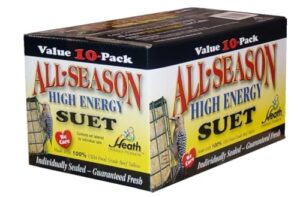
Year-round feeding calls for a suet that won’t turn to soup on a July afternoon. High Energy All Season Suet leans on a beef suet base built for heat resistance, staying firm even as temperatures climb.
Sunflower, millet, and corn round out the mix, drawing cardinals and nuthatches alike. It fits standard cage feeders without modification, and individually sealed cakes hold freshness through unpredictable rural storage.
That balance of durability and appeal makes it a steady middle-ground option between specialty pepper blends and basic winter suet.
| Best For | Backyard bird enthusiasts who want a bulk, year-round suet supply to attract a wide variety of songbirds like woodpeckers, chickadees, nuthatches, and wrens. |
|---|---|
| Weight Per Unit | 11 oz (avg) |
| Feeding Season | Year-round |
| Pack Quantity | 10 pack |
| Base Ingredient | Rendered beef suet |
| Squirrel Deterrent | None |
| Target Species | Woodpeckers, chickadees, nuthatches |
| Additional Features |
|
- Nutrient-rich formula supports birds through all life stages, from winter survival to spring nesting
- Attracts a diverse range of popular songbird species
- Bulk 10-pack offers long-term value for regular feeder maintenance
- Unlabeled individual cakes make it hard to identify once out of the packaging
- Putty-like texture can leave messy residue in feeders or containers
- May attract squirrels, requiring extra feeder modifications or deterrents
4. Hot Pepper Suet Bird Cake
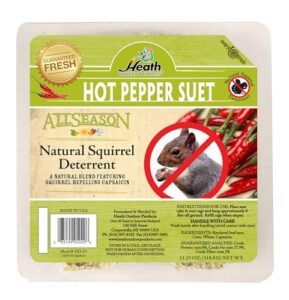
Squirrels raiding a feeder overnight can undo weeks of careful winter prep, which is where Hot Pepper Suet Bird Cake earns its keep. Capsaicin gives the mixture its bite, something squirrels avoid, but birds can’t taste at all.
At 11.25 oz per cake, twelve to a box, it’s built for no-melt, all-season hanging.
Slow-rendered beef tallow gives each cake a firm, weather-resistant texture, which is why our guide to suet cakes for attracting songbirds recommends this style for year-round feeders.
Reviews note inconsistent squirrel deterrence and some crumbling, so pair it with a cage feeder for the best results and less mess underfoot.
| Best For | Bird lovers who want to feed songbirds through the cold months while giving squirrels one less reason to stick around. |
|---|---|
| Weight Per Unit | 11.25 oz |
| Feeding Season | Year-round |
| Pack Quantity | 18 pack |
| Base Ingredient | Nut based suet |
| Squirrel Deterrent | None |
| Target Species | Woodpeckers, cardinals, nuthatches |
| Additional Features |
|
- High-energy, no-melt suet formula works reliably in any season
- Preservative-free and guaranteed fresh for quality nutrition
- Convenient 12-cake box makes restocking feeders simple
- Squirrel deterrent effectiveness varies and isn’t guaranteed
- Cakes can crumble, leading to extra mess around the feeder
- Best used with a cage feeder for optimal results, which may mean an added purchase
Choosing Rural Suet Cakes

Rural properties bring their own set of feeding challenges, from harsh winter temperatures to persistent squirrels raiding the feeder. Picking the right suet cake means weighing factors like season, pest resistance, and how many birds you’re feeding at once. Here’s what to keep in mind before stocking up.
Cold-weather Energy Needs
Winter turns backyard birds into tiny furnaces, and suet cakes supply the energy-dense bird food they need to survive cold snaps.
Just as homes rely on solid insulation R-values to hold warmth, birds burn fat reserves fast—suet delivers roughly 9 kcal per gram, fueling the cold-weather feeding that keeps chickadees and woodpeckers alive when insects vanish and temperatures plummet.
No-melt Summer Formulas
Melt-resistant suet keeps hot-weather feeding stations active when regular cakes turn to puddles. Increased beeswax binding ratios, slow cooling techniques, and heat stable antioxidants like Vitamin E maintain structure above 35°C.
- Steady energy for exhausted, molting parent birds
- No sticky messes on porches or feeders
- Fewer wasted, rancid batches
- Reliable visits from loyal backyard regulars
Summer moisture control and UV protected storage prevent noMeltSuetDough from spoiling within its 6-8 week shelf life.
Squirrel-resistant Options
Rural properties often border woodlots, which means squirrels raid feeders far more aggressively than in tidy suburban yards.
Metal mesh enclosures paired with weight-sensitive perches stop heavier animals from reaching suet nuggets. Look for chew-proof materials like polycarbonate or thick steel, plus anti-tamper locks.
Smart port design seals access instantly when excess weight triggers the mechanism, keeping squirrelproof feeders truly squirrel-resistant. These feeders often use weight-sensitive perch mechanisms that close ports when a squirrel steps on them.
Bulk Feeding Value
Feeding twenty birds costs pennies per cake once you buy suet by the case instead of the single-pack.
Bulk purchasing brings real volume discount benefits, while fewer delivery trips mean lower logistics labor across the season.
Buying ahead also helps inventory control, letting you track stock and forecast needs before winter demand spikes.
Cases sourced from one supplier keep nutrient profiles consistent, so every energy-dense cake feeds birds the same reliable formula.
Ingredient Quality Checks
What actually goes into a suet cake matters as much as the fat itself. Reputable suppliers maintain batch purity standards between 99-100%, backed by rancidity testing methods and heavy metal screening for minerals.
Before buying in bulk, check for:
- Supplier traceability records tying each lot to its source
- Moisture content monitoring to prevent spoilage
- Documented nutrient-dense fat sourcing
These checks protect your birds from contaminated ingredient quality.
Homemade Suet Cake Basics
Making your own suet cakes gives you full control over what ends up in your birds’ feeder, and it’s simpler than you might think.
A handful of basic ingredients, combined the right way, can rival anything you’d find on a store shelf.
Here’s what goes into a solid homemade batch, starting with the fat that holds it all together.
Rendered Beef Tallow Base

Every solid suet cake starts with one humble ingredient: rendered beef tallow. Made by slow-rendering beef suet over low heat, tallow develops a high smoke point and clean flavor while avoiding oxidative rancidity.
Its saturated fat content keeps cakes firm at ambient temperatures, holding seeds and oats without separating. Expect roughly half the starting suet’s weight in finished yield—a solid foundation for bird feeding success.
Peanut Butter Binding
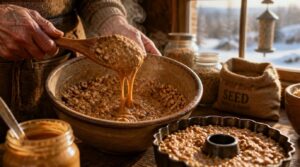
Tallow gives suet cakes their structure, but peanut butter is what holds everything else together. Its thick fats and sticky proteins create emulsification and binding, trapping oats, seeds, and cornmeal in place.
Warm it slightly—around 32-35°C is the sweet spot for peanut butter viscosity—before stirring into the mix. This prevents fat separation and keeps your homemade suet birdseed from crumbling once it hits the feeder.
Sunflower Seed Additions
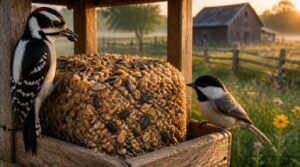
Once peanut butter binds the base, sunflower seeds add crunch and nutrient density—magnesium, phosphorus, and healthy fats birds need most.
Consider particle size:
- Whole seeds attract woodpeckers
- Chopped seeds suit chickadees
- Ground seeds mix into no-melt summer mixes
Seed oil boosts caloric yield and glossiness. Always choose unsalted, shelled seeds—excess sodium disrupts a bird’s water balance, undermining your DIY suet recipe’s value at the feeder.
Oats and Cornmeal
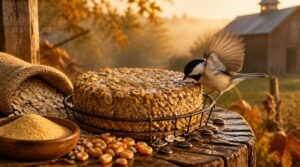
Grains round out the mix, giving structure to soft suet cakes without diluting fat content.
Oat beta-glucan offers soluble fiber, while cornmeal’s higher starch content adds carbohydrate energy. Comparing grain fiber, oats deliver roughly 10.6g per 100g against cornmeal’s 7.3g.
Both bring antioxidant grain benefits and solid nutritional profiles—supporting the same birds now visiting your suet nuggets.
Fruit and Millet Blends
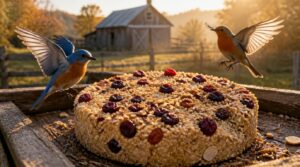
Once oats and cornmeal set the base, dried fruit and millet add the finishing touch. Foxtail or pearl millet brings mild nutty flavor, while raisins or cranberries offer natural fruit sugars for quick energy.
Soak briefly to soften texture before mixing.
These nutrient-dense additives especially draw bluebirds and robins—store finished suet cakes in airtight, frozen containers for long-term freshness.
Ingredients Homesteaders Should Avoid

Not every ingredient in your kitchen belongs in a suet cake, no matter how convenient it seems. Some additions can harm the very birds you’re trying to feed, while others simply spoil the batch before it reaches the feeder. Here’s what to leave out when you’re mixing up a batch on the homestead.
Salty Bacon Grease
Skip the bacon fat. Rendering concentrates its salt, and that sodium can strain a bird’s kidneys over time.
Bacon grease pairs beautifully with potatoes or greens in your kitchen, but birds need low-sodium diets:
- Kidney strain
- Dehydration risk
- Disrupted electrolyte balance
- Poor chick development
Store kitchen grease separately, away from suet batches, for cooking use only.
Nitrate-rich Animal Fats
Cured or commercially processed animal fats often carry curing agent residues, since nitrates are added during processing for color and preservation.
During digestion, these convert to nitrite, raising nitrosamine formation risks and disrupting a bird’s gut microbiota. For nutrient-dense suet cakes, choose fresh, unprocessed rendered fat only. When sourcing in bulk, ask suppliers about nitrate detection testing before adding any animal fat to your homesteading feeding routine.
Moldy Grains or Seeds
A powdery white or greenish-black film on cornmeal or sunflower seeds signals mycotoxin contamination, a real risk to birds’ liver and kidney function.
Aspergillus and Fusarium thrive when moisture exceeds 13 percent, so check bins with a moisture meter before mixing suet cakes.
Store grains off the ground with good aeration, and toss anything musty-smelling immediately.
Artificially Colored Fillers
Why add color birds never notice? Wild birds key in on scent and fat content, not dye.
- Synthetic dyes like Red 40 add zero nutrition
- Pigment fillers (titanium dioxide) risk buildup over time
- Regulatory standards permit trace use, but skip them anyway
Stick to natural, nutrient-dense bird food for your birdseed recipe—suet cakes should feed, not decorate.
Spoiled or Rancid Fat
Rancid suet smells sour and turns sticky, warning signs no bird wants near its beak. Oxidation sets in once fat meets air, heat, or light for too long.
Saturated fats like tallow resist rancidity better than plant oils. Store cakes airtight, in the freezer, away from moisture. A pinch of rosemary extract adds natural antioxidant protection. When in doubt, toss it—spoiled fat isn’t worth the risk.
Feeders for Rural Properties

The right suet cake means little if the wrong feeder lets it spoil, wash away, or vanish into a squirrel’s den. Rural properties bring their own challenges, from open sky to hungry wildlife roaming just beyond the porch light.
Here’s what to look for when picking a feeder built for homestead conditions.
Cage Suet Feeders
Think of a cage suet feeder as a security checkpoint for your backyard buffet: birds get through, raccoons and squirrels don’t. Mesh size selection (½ x 1 inch) keeps larger pests out.
- Hinged doors for tool-free refills
- Dual compartment models for two cakes
- Squirrel deterrent coatings on wire
- Powder-coated steel resists rust
- Mounting height between 5–8 feet
Weekly cleaning with soapy water prevents mold buildup between suet cake refills.
Log-style Suet Feeders
A hollowed log with drilled holes offers a rustic alternative, letting birds cling and peck like they would on natural bark. Hole diameter between 1 and 1.25 inches suits chickadees and nuthatches, while cedar’s natural wood durability resists rot outdoors.
Horizontal log mounting on posts or branches deters predators, and predator baffles add extra security. Brush-clean holes weekly to keep suet logs fresh.
Upside-down Feeders
Some feeders flip the entire design, placing feeding ports beneath the perches so birds must grip upside down to reach seed. Goldfinches take to this readily, clinging acrobatically while house finches and sparrows usually pass by.
Durable polycarbonate construction resists cracking, and reinforced caps offer real squirrel deterrence. Sealed chambers also curb seed moisture buildup during humid stretches.
Shaded Placement Spots
Where you hang a feeder matters as much as what’s inside it. North-side placement (in the northern hemisphere) dodges harsh afternoon sun, while dense foliage offers cooling, diffuse shade.
- Use shade cloth over open yards
- Pick a shady space near shrubs
- Avoid south-facing walls
- Check for moisture buildup weekly
- Rotate spots if temperatures spike
Good bird feeding guidelines start with smart placement.
Weekly Feeder Cleaning
Shade keeps suet from turning rancid, but weekly cleaning stops mold and bacteria before they start.
Scrub trays and ports with warm water and mild soap, never bleach, then rinse and dry fully. Disassemble removable parts monthly for deeper scrubbing.
Watch for oily residue buildup and droppings near entry points—both invite disease and pests if ignored.
Birds Attracted by Suet Cakes
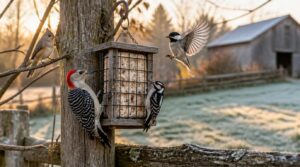
Hang a suet cake on your property, and word travels fast through the local bird community. Different species show up for different reasons, from year-round residents to seasonal visitors passing through. Here’s a look at who you can expect to see at the feeder.
Woodpeckers and Nuthatches
Two very different climbing styles, one shared love of suet cakes: woodpeckers hammer bark for larvae, while nuthatches creep head-first down trunks foraging crevices.
Woodpeckers hammer bark for larvae while nuthatches creep head-first down trunks, two climbing styles united by one love of suet
- Bark foraging exposes hidden insects
- Cavity nesting reuses old woodpecker holes
- Drumming calls signal territory to rivals
Their acoustic signaling and cavity work boost forest biodiversity — reasons enough to keep suet nuggets stocked in your rural feeders year-round.
Chickadees and Titmice
Small, curious, and always first to arrive, chickadees and titmice bring nonstop motion to any suet feeder. Both switch from insects to high-energy bird food as winter foraging shifts limit natural prey.
| Species | Feeding Trait | Winter Habit |
|---|---|---|
| Chickadee | Caches seeds | Stores fat reserves |
| Titmouse | Hammers seeds open | Joins mixed flocks |
Their alarm calls warn nearby birds of predators, while cavity nesting habits keep them close to feeders year-round.
Bluejays and Wrens
Blue jays and wrens couldn’t feed more differently, yet both benefit from a well-stocked suet cake.
- Jays arrive loud and bold, dominating in groups
- Wrens slip in quietly, darting from nearby brush
- Each fills a unique niche at the feeder
Jays cache acorns and shift to fruit come winter; wrens forage insects near cover, defending nest sites with sharp alarm calls.
Bluebirds and Robins
Robins and bluebirds rarely crowd the same suet cake, but both cash in on its energy-dense fat when insects are scarce.
Robins hop the ground below feeders, snatching fallen bits; bluebirds swoop from fence posts.
Look for the robin’s red breast and yellow bill versus the bluebird’s blue back and thin insect-catching beak—fruit or millet blends draw both species readily.
Winter Warblers and Kinglets
Weighing barely 4 grams, kinglets rank among the smallest visitors your suet feeder will host, yet their metabolic rate demands constant fuel.
Watch for the golden crowned’s orange patch or the ruby crowned’s red flash. Both flit through evergreen thickets, gleaning insects alongside yellow-rumped warblers.
Suet nuggets rich in fat support small bird thermoregulation during subfreezing spells, fueling the short, restless movements these tiny foragers depend on all winter.
Frequently Asked Questions (FAQs)
What ingredients should I avoid in suet cakes?
Not every fat belongs in a feeder. Skip salty bacon grease, nitrate-cured meats, moldy seeds, and artificial fillers—these threaten avian health through dehydration, toxins, or contamination.
Rancid fat turns harmful fast, so freshness and unsalted, additive-free ingredients matter most for backyard bird nutrition.
When should you stop putting suet out for birds?
Watch spring foraging cues like budding plants and rising insect activity, then taper feeding over a week. Regional timing varies—southern homesteads stop by March, northern ones wait until May.
Track weather and feeder visits; cold snaps may warrant a brief return.
Is it cheaper to make your own suet cake?
Yes, especially in bulk. Rendering your own tallow and mixing in oats, cornmeal, and sunflower seeds costs far less per cake than store-bought blocks, and buying ingredients wholesale stretches your savings even further over a season.
What birds eat suet cakes in the winter?
A frozen buffet draws a hungry crowd: woodpeckers, nuthatches, chickadees, and titmice flock to suet for concentrated fat, while blue jays and wrens join in, and wintering warblers or kinglets sneak bites when insects vanish from subfreezing landscapes.
How long does rendered tallow stay fresh?
Rendered tallow keeps 12 months at room temperature, 12-18 months refrigerated, and 24 months or longer frozen in airtight, moisture-proof containers. Proper moisture removal during rendering, plus glass or steel storage away from light and heat, prevents oxidation and rancidity.
Whats the difference between suet and tallow?
Suet is raw animal fat, crumbly with a higher melting point and stronger flavor.
Tallow is rendered suet—smoother, purified, and more mineral-stable. Rendering transforms texture and shelf life, making tallow ideal for bird feeding and high-heat cooking alike.
Can suet cakes be made without peanut butter?
Nuts fuel some birds, but they threaten others sharing your feeder. Nut-free binders like sunflower seed butter, coconut oil, or melted animal fat bind cornmeal and oats just as well, keeping cakes safe for allergy-conscious households.
How much suet should birds eat daily?
Small songbirds usually eat 5 to 5 grams daily, rising toward 2 grams during cold snaps when energy demand spikes 30 percent.
Watch for overfeeding risks—moderate access matching flock visitation keeps bird weight healthy while still meeting avian nutrition needs.
Do suet cakes attract unwanted pests or insects?
Yes, warm weather melts fat and spreads scent, drawing ants and wasps. Sugar residue and crumb spills lure scavengers, too. Combat this with mold prevention, hot pepper deterrent recipes, and consistent bird feeder hygiene through weekly cleaning.
Conclusion
A telegraph operator would recognize this rhythm: steady signals sent, reliable responses returned. That’s the promise behind good suet cakes for rural homesteaders, cake after cake, season after season.
Your feeders become a dependable line between your land and the wild things sharing it. Choose weather-resistant blends, mount them where predators struggle to reach, and clean often.
Do that, and your porch post turns into a year-round gathering place, humming with wings and quiet gratitude.
- https://foxpineshomestead.com/how-to-make-perfect-homemade-bird-suet-cakes
- https://www.houseofhawthornes.com/no-melt-suet-cakes-for-birds
- https://georgiawildlife.com/out-my-backdoor-buyers-guide-suet-bird-puddings
- https://www.kaytee.com/learn-care/wild-bird/wild-bird-suet
- https://www.allaboutbirds.org/news/suet-mealworms-and-other-bird-foods