
This site is supported by our readers. We may earn a commission, at no cost to you, if you purchase through links.
Chickens will eat almost anything you toss their way—and pineapple is no exception.
That sweet, tangy flesh disappears fast once it hits the ground.
But before you start slicing up a whole pineapple for your flock, there’s more to know than just "yes, they can eat it."
The wrong pieces, the wrong amounts, or the wrong frequency can turn a healthy treat into a digestive problem.
Pineapple offers real nutritional value for backyard chickens—vitamin C, bromelain, and natural hydration—but only when you serve it the right way.
Table Of Contents
- Key Takeaways
- Can Chickens Eat Pineapple?
- Pineapple Parts Chickens Can Eat
- Pineapple Parts Chickens Should Avoid
- Pineapple Nutrition for Chickens
- Health Benefits for Backyard Chickens
- Safe Pineapple Portions for Chickens
- How to Prepare Pineapple
- How Often Chickens Can Eat Pineapple
- Pineapple Risks and Warning Signs
- Pineapple for Chicks and Breeds
- Frequently Asked Questions (FAQs)
- Can chickens eat pineapple?
- Can chickens eat pineapple crowns?
- Can birds eat pineapple?
- How much pineapple should a chicken eat a day?
- How do you prepare pineapple for chickens?
- What is not good to give chickens?
- Can I feed chickens raw pineapple?
- Are any fruits poisonous to chickens?
- Can birds eat pineapple skin?
- What fruit do chickens love?
- Conclusion
Key Takeaways
- Chickens can safely enjoy pineapple flesh once or twice a week, but keep servings at one tablespoon per bird — no more than 5% of their daily food.
- Skip the skin, crown, and large core chunks entirely, since these are tough, fibrous, and can cause choking or digestive blockages.
- Pineapple brings real benefits to your flock — vitamin C, bromelain for digestion, and natural hydration — but only when it’s ripe, fresh, and cut into tiny cubes under 1 cm.
- Watch for loose droppings, reduced appetite, or a squishy crop after serving pineapple, and stop immediately if any of these warning signs show up.
Can Chickens Eat Pineapple?
Yes, chickens can eat pineapple — and most of them love it. But like any treat, it works best when you know the rules.
Pineapple makes a great occasional treat, but their everyday diet should still center on nutritionally balanced chicken feed for healthy birds.
Here’s what you need to keep in mind before tossing a chunk into the coop.
Yes, in Moderation
Yes, chickens can eat pineapple — but portion control is everything. Think of it like a seasoning, not a main dish.
A small cube or two per bird is plenty.
Safe feeding guidelines for chickens keep fruit treats under 5% of daily intake.
Overdo it, and you’ll see loose droppings fast.
Stick to those limits and your flock stays happy and healthy.
Best as an Occasional Treat
Pineapple works best as part of a smart treat rotation — not something you toss in the feeder every day. Offer it 1–2 times weekly, and scale back when temperatures drop. Seasonal timing matters here. A few frozen cubes during a heat wave cooling stretch? Perfect.
Safe feeding guidelines for chickens in mind:
- Serve small amounts, 1–2 tablespoons per bird
- Rotate with other fruits to avoid overfeeding pineapple’s sugars
- Adjust frequency based on bird preference and droppings
- Budget-friendly tip: use fresh scraps, never canned in syrup
Not a Replacement for Feed
Think of pineapple as a bonus, not a base. Your chickens still need their balanced feed every single day. That’s your feed first principle in action.
Without it, nutrient gap risks sneak in fast — missing amino acids, minerals, and proteins that fruit simply can’t cover. Keep treat portion control tight, dietary consistency strong, and always balance fruit treats with regular chicken feed.
Pineapple Parts Chickens Can Eat
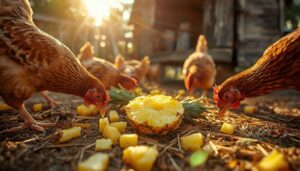
Not every part of a pineapple is safe to toss into the run. Knowing which parts are fine and which to skip will save you a lot of guesswork.
Here’s what you can safely share with your flock.
Ripe Pineapple Flesh
The safest part to offer your flock is ripe pineapple flesh — golden in color, fragrant, and tender with just a little crisp bite. That color indicator and aroma cue tell you it’s ready.
Look for:
- Warm yellow flesh with good juiceness level
- Sweet sugar sweetness without mushiness
- Firm texture crispness, not soft or slimy
It delivers vitamin C and bromelain, so portion size recommendations for fruit treats matter.
Small Core Pieces Only
The core isn’t off-limits — but Chunk Size Guidelines matter here. Cut it into pieces no bigger than 1 cm for proper Gizzard Compatibility and Sticky Residue Prevention.
Tough fiber is harder to process, so Fiber Management and Portion Monitoring keep things safe. Follow portion control for poultry: treat it as a small extra, not a main event.
Stop if droppings look off.
Fresh or Frozen Cubes
Both fresh pineapple and frozen pineapple work well as treats — it really comes down to what’s on hand. Freezing Benefits include longer Shelf Life Management and a cool, icy texture your flock will love on hot days.
For Thawing Practices, let cubes soften slightly before serving. Cube Size Consistency matters either way: keep pieces under 1 cm.
This facilitates easy portion control for poultry and reduces the risk of overfeeding vitamin C-rich treats.
Pineapple Parts Chickens Should Avoid
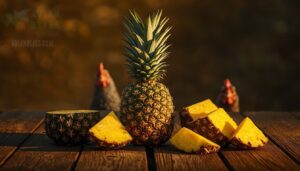
Not every part of a pineapple is fair game for your flock. Some parts can cause real problems, from choking hazards to digestive trouble.
Here’s what to keep away from your chickens.
Skin and Crown
The pineapple skin and crown aren’t just tough — they’re genuinely harmful. The rough, fibrous skin can lodge in the crop or gizzard, and identifying edible parts of pineapple matters here.
Skip the crown entirely. Both parts are indigestible and can cause blockages.
Only soft, ripe flesh belongs in the feeder. When in doubt, peel it thoroughly before offering any piece.
Moldy or Rotten Fruit
Moldy fruit is a hard no — don’t even try to cut around it. Mold Penetration Depth means that what you see on the surface has already spread deeper into soft tissue. Discarding Moldy Fruit protects your flock from Mycotoxin Risks and Bacterial Contamination Risk.
Watch for these Visual Mold Signs before feeding any pineapple:
- White or green fuzzy patches
- Black or dark cottony growth
- Soft, mushy spots or bruising
- Sour or fermented smell
- Discolored, slimy flesh
Mycotoxins from moldy pineapple damage the liver and kidneys. Food safety for chickens — and food safety for livestock generally — means when in doubt, throw it out. Mold prevention in feed starts with you.
Canned Pineapple in Syrup
Canned pineapple seems convenient, but it’s not a safe choice for your flock. The syrup sugar levels and added preservatives make it a poor fit for portion control in poultry.
That extra sugar content in fruits like canned pineapple causes digestive upset fast.
Shelf stability comes at the cost of nutrient dilution — and food safety for chickens always wins over convenience.
Stick to fresh.
Large Tough Core Pieces
The core might look harmless, but large tough pieces are a real gizzard blockage risk for your flock.
Fiber indigestibility means the tough strands don’t break down well, and higher enzyme concentration in the core can irritate sensitive digestive tissue.
For healthy digestive health in chickens, skip big core chunks entirely — or cut them tiny for strong-beaked birds only.
Pineapple Nutrition for Chickens
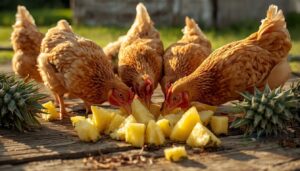
Pineapple isn’t just a tasty treat— actually brings some real nutritional value to your flock. You might be surprised by what’s packed inside that yellow flesh.
Here’s a closer look at what your chickens are getting with every bite.
Vitamin C Content
Fresh pineapple flesh is a solid source of vitamin C — delivered as ascorbic acid. This nutrient directly bolsters your flock’s immune system, helping birds fight off stress and infection.
But Ascorbic Acid Stability matters: Cut Fruit Oxidation and Heat-Induced Vitamin Loss both reduce potency quickly.
Freezing Preserves C better than leaving pieces out. Serve fresh or frozen for the strongest nutritional advantages.
Manganese and Trace Minerals
Vitamin C gets the headlines, but manganese quietly does some heavy lifting too. It’s a key player in the Manganese Enzyme Role — acting as a cofactor for antioxidant enzymes that protect your birds at the cellular level. Pineapple also delivers iron, zinc, and potassium — all trace minerals your flock needs in small but non‑negotiable amounts.
- Manganese role in eggshells: Enhances bone density and shell strength through enzyme-driven metabolism
- Trace Mineral Bioavailability: Pineapple’s natural form is often easier to absorb than inorganic mineral supplementation for chickens
- Manganese Toxicity Risk: More isn’t better — excess mineral intake in birds gets excreted, not stored
- Environmental Mineral Excretion: Poor mineral balance means more waste, which matters in backyard flock management
Water and Natural Sugars
Beyond minerals, fresh pineapple brings something your flock really appreciates on a hot afternoon — natural hydration. Its Moisture Content sits around 86–88%, meaning the Fluid Balance benefit is built right into every bite. The Natural Sweetness comes from fructose and glucose — about 10–12g per 100g — but Water Activity keeps that Sugar Osmotic Balance in check naturally.
| Property | Value | Benefit |
|---|---|---|
| Moisture Content | 86–88% | Natural hydration |
| Sugar Content in Fruits | 10–12g/100g | Quick energy |
| Water Activity | High | Helps fluid balance |
Bromelain Enzyme Benefits
Pineapple also contains bromelain, a natural enzyme with real bromelain health benefits for your flock. Here’s what it does:
- Digestion — breaks down proteins, promoting the role of bromelain in poultry digestion
- Swelling Reduction — eases minor inflammation
- Joint Health — helps birds stay comfortable and mobile
- Blood Clot Modulation — promotes healthy circulation
Enzyme stability matters, though—heat destroys it, so always serve pineapple fresh.
Health Benefits for Backyard Chickens
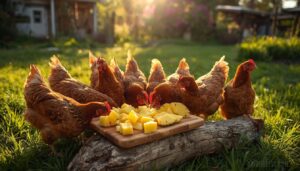
Pineapple isn’t just a tasty treat — it actually does some real work for your flock. The nutrients inside support everything from gut health to staying cool on a hot afternoon.
Here’s a closer look at the specific benefits your backyard chickens can get from a few small bites.
Immune Support
Your chickens’ immune system works hard every day — and a few pineapple cubes can quietly support that effort. The vitamin C in fresh pineapple drives antioxidant defense and oxidative stress reduction at the cellular level.
It also fuels neutrophil activity and macrophage function, two frontline defenders. Zinc adds complement system support, rounding out a solid immune boost for birds.
| Nutrient | Immune Role | Found in Pineapple |
|---|---|---|
| Vitamin C | Antioxidant activity, neutrophil support | Yes |
| Zinc | Macrophage function, complement system support | Yes (trace) |
| Antioxidants | Oxidative stress reduction | Yes |
Digestion Support
One of pineapple’s quiet superpowers is bromelain, a natural enzyme that promotes digestive health in chickens by breaking down proteins more efficiently. It improves gut motility, helping food move smoothly through the digestive tract. The fruit’s fiber bulk acts as prebiotic fiber, feeding beneficial gut bacteria.
Bromelain in pineapple breaks down proteins, boosts gut motility, and feeds the beneficial bacteria chickens need to thrive
Keep chew size small and mind feeding timing — fresh, tiny cubes digest best.
Hydration in Hot Weather
Hot days drain your hens fast. That’s where pineapple’s 80% water content earns its place in your summer hydration for hens’ routine.
It works best alongside smart shade placement, cool waterers, and a consistent drinking schedule. Think of it as one piece of your heat stress mitigation through a diet plan — not a substitute for misting systems, electrolyte supplements, or fresh water access.
Potential Egg Quality Support
Don’t expect pineapple alone to transform your egg basket — but it does play a small supporting role when your flock’s core diet is already solid. Here’s how it fits:
- Antioxidant load: Vitamin C reduces oxidative stress, protecting cells involved in egg production improvement.
- Protein balance: Bromelain aids protein digestion, helping hens absorb amino acids more efficiently.
- Nutritional benefits of pineapple for chickens work best alongside Vitamin D synergy and Calcium absorption from your regular feed — not instead of it.
Safe Pineapple Portions for Chickens
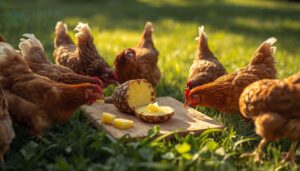
Getting the portion right makes all the difference when feeding pineapple to your flock. Too much of a good thing can quickly turn into a stomachache — or worse.
Here’s what to keep in mind before you start slicing.
Small Bite-size Pieces
Size really does matter here. Cut pineapple chunks into cubes no larger than 1 cm — small enough for easy pecking and gizzard compatibility without risk of choking.
That consistent cube dimension keeps your feeding rhythm smooth and safe. Smaller pieces also deliver a satisfying texture crunch your birds will love.
Think of it as built-in portion control for poultry, one tidy bite at a time.
Limit Treats to a Small Share
Pineapple is a treat, not a meal replacement. Keep it to roughly 5% of daily feed weight — about 5 grams per bird.
Think of it as treat budgeting: when fruit takes up too much room, balanced feed gets crowded out.
Smart portion control for poultry means better digestive stability, steady sugar control, and nutrient prioritization every single day.
Adjust for Bantams
Bantams need smaller portions — think of bantam treat scaling as cutting the standard serving in half. Tiny cube size matters too, since their beaks are small and choking risks are real. Because they eat less overall, sugar load management becomes critical fast.
Gradual food introduction works best: start with a pinch, watch their reaction, then adjust.
Keep Water Nearby
After sorting bantam portions, don’t forget the water. Pineapple is one of the best hydrating treats for poultry, but it’s also acidic — and digestion runs smoother with fresh water close by.
Follow these five water tips when feeding pineapple to chickens:
- Waterer Placement — Set it within a few steps of the treat spot.
- Shallow Openings — Help smaller birds drink without struggle.
- Multiple Waterers — Prevent crowding when the whole flock rushes over.
- Water Temperature — Cool, fresh water beats warm, stale water every time.
- Hygiene Checks — Rinse daily; fruit treats for chickens attract debris fast.
How to Prepare Pineapple
Getting pineapple ready for your flock takes just a few simple steps, but each one matters. Done right, it’s safe, easy, and something your chickens will actually get excited about.
exactly what to do before you serve it.
Wash and Peel First
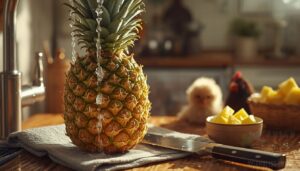
Before your knife ever touches the fruit, start with clean hands — scrub them with soap for at least 20 seconds.
Rinse the whole pineapple under running water for surface bacteria removal.
This simple rinse technique prevents knife sanitation issues by stopping cross‑contamination when the blade passes through the pineapple rind.
Even though chickens won’t eat the pineapple skin, washing the peel protects the safe parts of pineapple inside.
Remove Skin, Crown, and Core
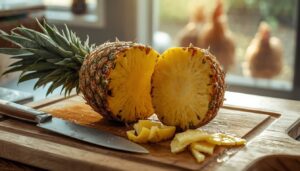
Once the fruit is clean, good trimming techniques make all the difference. Slice off the pineapple crown at the top, then work your knife down the sides to remove the pineapple skin in strips.
pineapple core last — it’s too tough and fibrous. Following these prep workflow and knife safety steps leaves only the safe parts of pineapple, supporting proper guidelines for feeding pineapple to poultry.
Smart waste management means tossing every trimmed bit immediately.
Cut Into Tiny Cubes
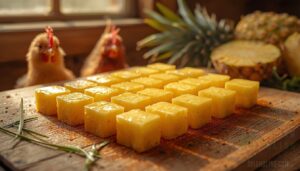
Getting the cut right makes feeding pineapple to chickens much easier. Uniform cube size — about 1 cm — keeps portion control for poultry simple and consistent.
Here’s why it matters:
- Portion Estimation — Even cubes help you count pecks per feeding accurately.
- Easy Pecking — Small pineapple chunks let birds grab pieces without struggling.
- Cooling Cube Treats — Freeze pre‑cut cubes for hot days; cube storage tips like airtight bags keep them fresh up to a month.
Serve Fresh, Not Spoiled
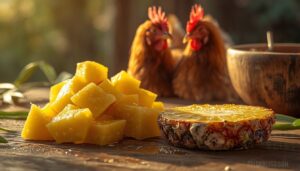
Always do a quick Visual Freshness Check before serving — look for mold, odd coloring, or slimy spots. Odor Detection matters too: if it smells fermented or sour, toss it.
Both overripe pineapple and underripe pineapple can upset digestion.
Shelf Life Limits mean refrigerated pieces last three days max. Temperature Control and Discard Leftovers Promptly, after 20–30 minutes are safe feeding practices for poultry that prevent mold and spoilage in chicken treats.
How Often Chickens Can Eat Pineapple
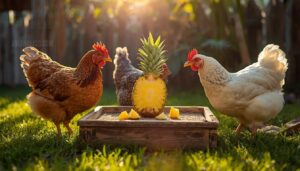
Pineapple is a treat your chickens will love, but how often you offer it matters just as much as how you prepare it.
Too much too soon can throw off their digestion and crowd out the balanced feed they actually need.
Here’s a simple breakdown of how to time pineapple treats the right way.
One to Two Times Weekly
Stick to once or twice a week — that’s the sweet spot for pineapple.
smart treat feeding schedule keeps moderation front and center, balancing fruit treats with regular chicken feed so nutrition stays on track. Treat rotation helps too, since variety prevents overreliance on any one food.
Watch weight monitoring signals like sluggish behavior, which can hint at frequency of fruit treats causing obesity concerns.
Less Often in Cold Weather
Cut back to once a week when temperatures drop. Cold Digestion Slowdown means food moves through the gut more slowly, making sugary treats riskier. Energy Demand Spike also shifts focus away from digestion toward staying warm.
Watch for:
- Reduced Water Intake near frozen waterers
- Treat Temperature Impact from icy pineapple
- Mold Risk Management with freeze-thaw storage
- Loose droppings after cold-weather feeding
Reduce for Sensitive Birds
Some birds just don’t handle acidity well — and that’s okay.
For sensitive chickens, your Portion Adjustment starts smaller than usual: think half a teaspoon, not a full tablespoon. Your Observation Protocol matters here.
Offer pineapple earlier in the day, then watch droppings closely. Texture Modification helps too — ultra-soft, tiny cubes reduce digestive strain.
If anything seems off, stop immediately.
Balance With Regular Feed
Pineapple is a treat, not a meal replacement. Your Feed Ratio Management goal is simple: keep pineapple under 5% of daily intake.
That’s your Treat Timing Strategy in action — offer it after regular feed, not instead of it. Nutrient Balance Monitoring means watching droppings and energy levels week to week.
When feed comes first, pineapple stays the bonus it’s meant to be.
Pineapple Risks and Warning Signs
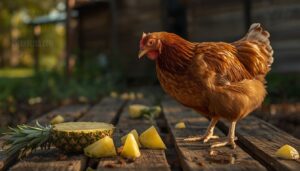
Pineapple is a safe treat for chickens, but too much of a good thing can cause real problems.
Knowing what to watch for helps you catch trouble early before it gets worse.
Here are the key risks to keep in mind.
Loose Stools and Diarrhea
Too much pineapple can trigger loose stools and diarrhea fast. The acidic flesh, high sugar content, and active bromelain enzyme all stress your flock’s digestive system when overfed.
Watch for watery droppings — that’s your Dehydration Warning signal.
Prioritize Hydration Strategies immediately, offer Electrolyte Replacement in their water, and consider Probiotic Support to restore gut balance.
Parasite Screening is wise if diarrhea persists beyond two days.
Sour Crop or Upset Stomach
Sour crop is the next thing to watch for. When acidic content and bromelain overload the crop, Food Retention sets in — feed just sits there, fermenting.
That Fermentation Gas causes Crop Swelling and a doughy feel. Regurgitation Odor — that sour, unpleasant breath — is your warning.
Stress Digestive Impact makes it worse. If you spot swelling or smell something off, skip the pineapple immediately.
Choking From Large Pieces
Choking is another real risk — and it follows directly from poor prep. Large chunks can block the airway quickly, especially in smaller breeds. Chunk Size Guidelines matter here: cut every piece under 1 cm. Chewing Efficiency Impact and Feeding Pace Management both play a role, too.
- Keep cubes under 1 cm
- Never offer pineapple rind or core chunks
- Watch Species Size Variability — bantams need even smaller pieces
Watch for Reduced Appetite
Beyond choking risks, keep an eye on how much your chicken actually wants to eat after a pineapple treat. Behavioral cues like slower pecking, leaving grain untouched, or low activity level can signal digestive issues. Watch for dropping changes and reduced water intake too.
| Warning Sign | What to Do |
|---|---|
| Reduced appetite next day | Skip pineapple that week |
| Loose or watery droppings | Increase water intake access |
| Low activity level | Separate and observe closely |
| Swollen or squishy crop | Contact a vet promptly |
| Steady weight monitoring drop | Review frequency of fruit treats |
Balancing fruit treats with regular chicken feed prevents overfeeding fruit to poultry and keeps hens healthy.
Pineapple for Chicks and Breeds
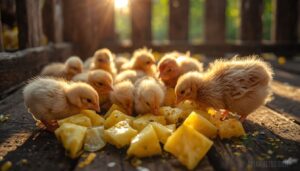
Not every chicken deals with pineapple the same way, and age and breed make a real difference. Some birds need extra care before this treat ever hits their bowl.
Here’s what to keep in mind for chicks and smaller breeds.
Avoid for Young Chicks
Young chicks under 8–10 weeks aren’t ready for pineapple. Their immature gizzard risk is real — digestion simply can’t handle it yet.
Keep these guidelines in mind:
- High sugar content causes loose stools fast
- Acidic flesh triggers stomach irritation in developing guts
- Spoiled fruit danger rises quickly — chicks are tiny
- Chick growth interference happens when treats crowd out balanced feed
Stick to chick feed only.
Use Extra Caution With Bantams
Bantams need special care regarding fruit treats. Their small bodies mean even a tiny extra cube counts for more — think health sensitivity in action.
Cut pieces to half the usual size, feed no more than once weekly, and watch closely for soft droppings.
Bantam backyard chicken care also means staying mindful of space limits and stress, which affects how well they handle sugary foods.
Providing adequate minimum indoor space requirement ensures they stay healthy.
Watch Individual Digestion
Every chicken digests pineapple differently. Watch for stool consistency changes, crop emptying timing, and water intake shifts after each serving.
One bird may handle bromelain sensitivity well; another may show subtle behavioral comfort changes or reduced appetite.
These digestive effects of pineapple on chickens reflect individual acid tolerance and digestive enzymes in birds.
A single trial portion tells you a lot.
Stop if Any Reaction Appears
Stop pineapple the moment something looks off. Your reaction checklist is simple: loose droppings, lethargy, gagging, or refusal to eat.
Practice safe removal by taking away the treat immediately. Offer emergency water right away to support digestion.
Observing chicken reactions to new foods like pineapple is essential. If breathing trouble or severe symptoms appear, vet consultation is your next step — no waiting.
Frequently Asked Questions (FAQs)
Can chickens eat pineapple?
Yes, chickens can eat pineapple safely as an occasional treat. Stick to small, ripe flesh pieces and keep portions modest — too much sweetness can upset their digestion quickly.
Can chickens eat pineapple crowns?
skip the pineapple crowns entirely. Those spiky leaves pose real Spiky Crown Injuries risks — they can scratch a chicken’s mouth and throat.
Stick to soft flesh only for safe, happy birds.
Can birds eat pineapple?
Birds can eat pineapple in small amounts. Offer only fresh, ripe flesh cut into tiny pieces. Skip the skin, crown, and canned varieties packed with syrup.
How much pineapple should a chicken eat a day?
Keep it to about 1 tablespoon of fresh pineapple per adult chicken per serving — that’s roughly 5% of their daily food. Offer it once or twice a week, not every day.
How do you prepare pineapple for chickens?
Wash the pineapple, peel the skin, remove the crown, and sanitize cutting tools. Use food-grade containers to store cubes. Chill before serving. Avoid cross-contamination. Cut into tiny, bite-size pieces.
What is not good to give chickens?
Chocolate toxicity, candy xylitol, avocado persin, and raw bean poisoning can seriously harm chickens.
High salt dangers, moldy food, and acidic or overripe pineapple with high sugar content also pose real potential health risks of overfeeding pineapple.
Can I feed chickens raw pineapple?
Yes, you can feed chickens raw pineapple — just keep it to small, ripe flesh cubes. Skip the skin and crown.
It’s a sweet, hydrating treat best offered once or twice a week.
Are any fruits poisonous to chickens?
Some fruits do carry real risks. Stone fruit pits and apple seed cyanide top the list.
Elderberry toxicity is another concern.
Moldy fruit hazard and canned fruit sugar also threaten flock health.
Can birds eat pineapple skin?
Skip the pineapple rinds. The peel is tough, fibrous, and hard on digestion.
It risks acid irritation, pesticide exposure, and fiber digestion issues. Always remove pineapple skin and serve only the soft flesh.
What fruit do chickens love?
Chickens have a sweet tooth, no doubt about it.
They go wild for watermelon chunks, strawberry pieces, banana slices, apple wedges, and cantaloupe cubes — juicy, colorful treats your flock will eagerly peck clean.
Conclusion
Chickens could devour pineapple all day if you let them—but that’s exactly why you’re the one holding the knife. Can chickens eat pineapple?
Yes, and when done right, it’s one of the better treats in your rotation. Stick to fresh flesh, skip the skin and core, and keep servings small, a couple of times a week.
Your flock gets the nutrition. You keep peace in the coop.
- https://www.healthline.com/health/bromelain
- https://coldhubs.com/2023/05/11/2023-5-11-risk-in-consuming-rotten-fruits-and-vegetables/
- https://apsjournals.apsnet.org/doi/pdf/10.1094/PDIS-10-24-2263-FE
- https://develop-static.stg.livestrong.com/article/473318-how-to-tell-if-a-fruit-is-spoiled/
- https://news.yahoo.com/safe-eat-produce-touched-other-094507908.html?guccounter=2