This site is supported by our readers. We may earn a commission, at no cost to you, if you purchase through links.
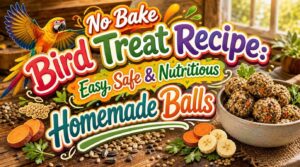
70% of a parrot’s health problems are traced back to nutritional gaps—not disease. Commercial treats often pack more salt and filler than actual nutrition, prioritizing shelf life over avian well-being. A no-bake bird treat recipe solves this by letting you control ingredients, avoiding processed additives, and ensuring freshness.
Sweet potato, banana, and a handful of bird-safe vegetables combine into nutrient-dense treat balls your bird will actually recognize as food. This simple recipe requires minimal prep—no baking, no complex tools—and stores easily in the freezer. The steps below cover every critical detail, from verifying ingredient safety to optimal freezer storage methods.
Table Of Contents
- Key Takeaways
- Essential Bird-Safe Ingredients
- No-Bake Sweet Potato Bird Treat Recipe
- Nutrition and Serving Guidelines
- Storage and Freezing Tips
- Top 4 Tools for Making Bird Treats
- Frequently Asked Questions (FAQs)
- Can wild birds eat these no-bake treats?
- How often should I give bird treats?
- What bird species enjoy these treats most?
- Are there toxic ingredients to avoid for birds?
- Can I add seeds or nuts directly?
- Can wild birds eat these homemade treats too?
- How do you hang treats inside a bird cage?
- Which bird species benefit most from sweet potato?
- Can you use a food processor instead of a mixer?
- Are these treats safe for baby or juvenile birds?
- Conclusion
Key Takeaways
- Most bird health problems stem from poor nutrition, not disease, so making your own treats with sweet potato, banana, and bird-safe vegetables puts real control in your hands.
- Skip salted nuts, avocado, chocolate, onions, garlic, and any fruit pits—these common ingredients can seriously harm or even kill your bird.
- Keep treats to 1–3 marble-sized balls per day (under 10% of your bird’s diet), adjusting the amount based on your bird’s size and activity level.
- Freeze treat balls individually on a parchment-lined tray before bagging them, and they’ll stay fresh and ready to serve for up to 2–3 months.
Essential Bird-Safe Ingredients
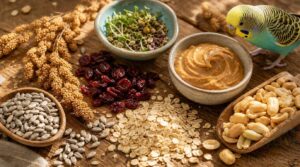
What you put into these treats matters just as much as how you make them. Every ingredient plays a role in keeping your bird healthy, energized, and safe.
Choosing the right base matters too—these top-rated parrot food pellet options break down exactly what’s worth including and what to skip.
Have on hand before you start.
Sweet Potato as a Nutritious Base
Sweet potato is the backbone of NoBake Birdie Sweet Potato Balls — and for good reason. As a complex starch source packed with mineral density, it provides steady energy and real nutritional benefits for pet birds. Here’s what makes this sweet potato-based snack so valuable for avian nutrition:
- Antioxidant power from beta carotene boosts immune health
- Vitamin A — over 4,000 IU per medium potato — protects vision
- Potassium boost aids muscle function and hydration
- Varietal color differences reflect unique carotenoid profiles worth exploring
Ingredient selection for avian health starts here.
Banana for Natural Sweetness and Binding
Once you’ve prepared the sweet potato base, mashed banana acts as the natural glue in No-Bake Birdie Sweet Potato Balls. It binds dry ingredients while adding fragrant sweetness and moisture.
Ripeness significantly impacts this recipe: the riper the banana, the better it performs. This ensures optimal binding and flavor enhancement.
| Banana Benefit | What It Does |
|---|---|
| Potassium Power | Promotes muscle and electrolyte health |
| Natural Binding | Holds the fruit and vegetable mixture together |
This nutrient-rich bird snack skips refined sugar entirely, relying on natural ingredients for sweetness and health benefits.
Bird-safe Fruits Like Diced Apple
Diced apple is a simple seasonal fruit addition that gives your no-bake bird treat preparation a hydration boost birds genuinely enjoy. Remove the seeds and core first — they contain compounds that can harm small birds. Slice the flesh into small pieces for easy nibbling. For fruit variety and antioxidant benefits with smart sugar moderation, apples are a reliable choice among safe fruits and vegetables for birds.
Oranges peeled and sectioned can be offered sparingly to add a vitamin C boost.
Mixed Vegetables for Added Nutrients
Fruits carry natural sugars, so vegetables balance the mix. Fresh mixed vegetables or frozen mixed vegetables both work well here — just skip pre-seasoned blends. Bird-safe vegetables deliver real phytonutrient diversity and antioxidant power, which your bird benefits from daily.
Top 5 nutrient-dense picks:
- Carrots — vitamin A support
- Spinach — mineral enrichment
- Bell peppers — vitamin spectrum boost
- Broccoli — fiber synergy
- Green peas — plant protein
Together, they build genuinely nutrient-dense bird food.
Low-sugar Granola or Cereal Base
The granola base you choose makes or breaks the whole recipe. Stick to low-sugar granola cereal or a wholegrain cereal — ideally under 5 grams of added sugar per serving. A good oat seed ratio is 2 parts rolled oats to 1 part ground flaxseed, which manages flaxseed binding beautifully. Skip honey-heavy brands and use unsweetened coconut for texture instead.
| Feature | What to Look For |
|---|---|
| Natural Sweeteners | Fruit puree only |
| Calorie Management | Under 50 cal/ball |
This keeps your batch a genuinely nutrient-dense bird food without hidden sugar spikes.
Raw, Unsalted Seeds and Nuts
A handful of the right seeds and nuts transforms your batch into nutrient-dense bird food worth making again and again. Black oil sunflower seeds, millet, and nyjer are excellent bird-safe seeds, while walnuts deliver omega-3 fatty acid benefits and almonds qualify as vitamin E nuts.
Always skip salted varieties — bird nutrition depends on clean, raw ingredients. These energy-dense snacks support daily vitality without overloading small bodies.
Ingredients to Avoid in Bird Treats
Some ingredients can kill your bird.
Avocado toxicity is real — persin damages the heart and lungs.
Chocolate and caffeine combinations trigger seizures.
This claim isn’t supported by evidence, but if you’re curious about what wild turkeys actually eat, wild turkey diet and foraging habits make for a surprisingly interesting read.
Salt overload strains kidneys fast.
cyanogenic pits from peaches, cherries, and plums release compounds that poison quickly.
Moldy seeds cause liver damage.
Avoiding toxic foods in avian diets means you also avoid onions and garlic entirely.
No-Bake Sweet Potato Bird Treat Recipe
This recipe comes together in about 20 minutes and makes roughly 80 marble-sized treats your birds will actually enjoy.
You don’t need an oven, fancy equipment, or hard-to-find ingredients — just a microwave and a mixing bowl. Here’s how to make them, step by step.
Microwaving The Sweet Potato Until Tender
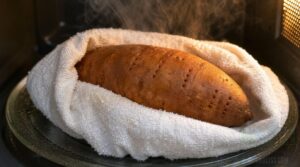
Start with the Piercing Technique — use a fork to poke holes all over your sweet potato before microwaving. This simple step prevents steam buildup inside. Wrap it in a Damp Towel Wrap, then microwave on high for 5–7 minutes.
Midway Turning ensures even softening throughout the cooking process. Flip the potato halfway through the microwaving time to maintain consistent texture.
Allow a short Resting Period after cooking — this achieves the soft texture ideal for your bird’s treat mixture.
Cooling and Mashing The Base Mixture
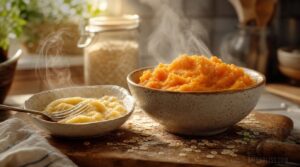
Once your sweet potato emerges from the microwave, prioritize temperature monitoring—allow it to cool naturally below 60°C without sealing it in a container. This ensures even steam release through natural cooling airflow. Stir the potato every 2 minutes during this process to maintain consistency.
To achieve the ideal texture, follow these steps precisely:
- Keep the surface consistently dry before handling to prevent sticking.
- Stir every 2 minutes during cooling to release steam evenly.
- Mash the banana separately before combining it with the sweet potato.
- Use hand-dusting with oats if the mixture becomes sticky.
- Aim for a smooth, moldable texture as the final goal.
Adding Fruits, Vegetables, and Granola
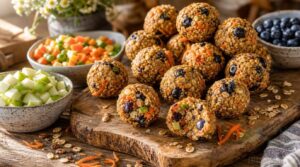
Now comes the fun part — building flavor and nutrition into every bite.
| Add-In | Benefit | Amount |
|---|---|---|
| Diced apple | Seasonal fruit combos, fiber-rich | 1 cup |
| Mixed vegetables | Colorful veggie blends, vitamin C | 1 cup |
| Low-sugar granola | Granola texture tips, sustained energy | 1½ cups |
| Blueberries | Antioxidant fruit picks | ½ cup |
| Shredded carrot | Fiber-rich veg choices, beta carotene | ¼ cup |
Fold everything gently into your mashed base.
Mixing Until Fine and Moldable
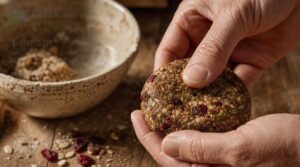
Once everything’s folded in, beat the mixture on high speed with an electric mixer for several minutes. You’re aiming for even ingredient distribution — no chunks, just a fine, uniform dough.
After mixing, let it rest for five to ten minutes. Then perform a finger press test: if the dough holds a smooth shape without collapsing, it’s ready for the next step.
Adjusting Texture With Small Amounts of Water
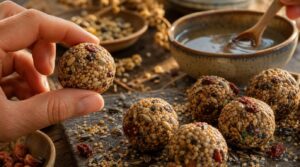
If your dough cracked during the finger press test, don’t worry — incremental water addition fixes that fast. Add water one tablespoon at a time into your mixing bowl, then mix thoroughly before adding more.
- Add 1 tablespoon, mix, and pause
- Allow moisture rest timing of 5 minutes
- Do a tactile texture check by squeezing gently
Avoiding surface stickiness means stopping the moment no-bake sweet potato balls hold shape without clinging to your hands.
Rolling Marble-sized Treat Balls
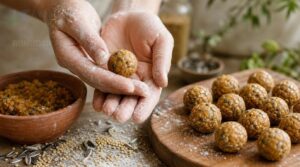
Once your mix holds its shape, lightly flour your hands — that’s your sticky prevention move — then pinch off small portions. Use a gentle rolling motion between your palms to shape the balls.
Aim for marble-sized balls, roughly the diameter of a large pea, as uniform sizing matters here. This hand-molding step ensures your no-bake sweet potato balls remain consistent for fair serving portions.
Expected Prep Time and Batch Yield
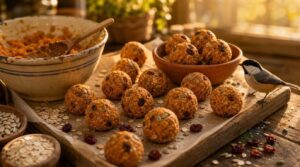
Once your balls are rolled and lined up on the tray, here’s what to expect for Prep Time Breakdown and Batch Size Scaling:
- Total active time runs 20–40 minutes, including microwave tendering and shaping
- Each batch yields roughly 40–80 no-bake sweet potato balls, depending on Yield Variability Factors like moisture and fruit substitutions
- Pre-mashing overnight is one of the best Time-Saving Hacks for quick and healthy treat prep
Nutrition and Serving Guidelines
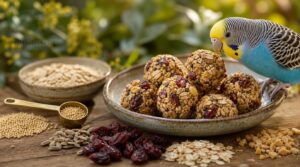
These little treats pack more nutrition than you might expect from something so simple to make. Knowing what’s inside each ball — and how much to offer — helps you feel confident you’re doing right by your bird.
Here’s a closer look at what the numbers say and how to serve them well.
Calories Per Marble-sized Treat
Each marble-sized ball contains roughly 10 to 15 calories — a small but meaningful bit. Calorie variability depends on the exact mix of fruits, granola, and vegetables. For pet bird portion control, this energy density simplifies caloric benchmarking.
| Treat Component | Approximate Calories |
|---|---|
| Sweet-potato base | ~4 cal |
| Banana + apple | ~3 cal |
| Granola | ~4 cal |
| Full marble ball | 10–15 cal |
Carbohydrates, Fiber, and Protein Content
Each treat packs 2.8 g total carbohydrate with a gentle glycemic impact, thanks to starch complexity from sweet potato and oats. You’re also getting 0.4 g dietary fiber — a blend of soluble and insoluble fiber types that aids steady digestion.
Protein quality stays modest at 0.4 g, but it meaningfully complements seeds. Together, this nutrition information makes every ball a nutrient-dense bird food worth offering.
Vitamin a From Sweet Potato
Sweet potato brings serious nutritional benefits of sweet potato for birds to every no-bake sweet potato ball you roll. Its rich beta-carotene bioavailability aids retinol conversion in your bird’s gut, fueling eye health and immune support naturally.
Fat-enhanced absorption means a small seed addition boosts vitamin A uptake even further. One sweet potato-based bird treat delivers meaningful nutrition your flock genuinely needs.
Potassium From Banana
Mashed banana does more than hold your recipe together — it quietly delivers real nutrition. Banana potassium levels sit around 422 mg per medium fruit, supporting your birds’ muscle and nerve function. Potassium bioavailability in bananas is high, meaning your birds actually absorb it well.
While bananas vs. potatoes shows potatoes win on raw numbers, bananas remain a convenient, safe choice for this nutrient-rich bird snack.
Recommended Daily Serving Amount
Keep treats to no more than 10 percent of your bird’s daily calorie intake — that’s usually 1 to 3 balls per day. For reliable portion control, use scale-based portioning with a digital gram scale.
Training rewards also count toward the daily treat limit: every small pea-sized piece contributes to the total.
Monitor your bird closely and follow these guidelines consistently when serving homemade bird treats.
Adjusting Portions by Bird Size
Bird size shapes every portion decision you make. A budgie’s needs look nothing like a macaw’s — and that difference matters.
- Small bird portions: 35–45% pellets, 1 ball daily
- Medium bird servings: 40–50% pellets, 1–2 balls daily
- Large parrot allocations: 60–70% pellets, up to 3 balls daily
- Juvenile calorie boost: add 10–20% more
- Seasonal size adjustment: increase 5–10% in winter
Always monitor your bird weekly for bird health monitoring and management.
Why Treats Should Supplement Regular Food
Treats work best as a small but meaningful addition to your bird’s main diet — not a replacement. Think of them as a micronutrient boost that fills seasonal nutrient gaps when fresh food variety drops. The nutritional profile of homemade bird treats enhances enrichment variety and behavioral stimulation without crowding out nutrient-dense bird food.
Homemade bird treats shine as a micronutrient boost, not a meal replacement
Smart portion control for pet birds keeps everything in healthy balance.
Storage and Freezing Tips
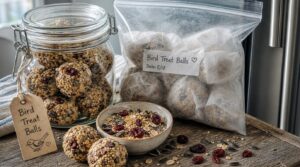
You’ve put real care into making these treats — now let’s make sure they stay fresh and safe for your birds.
Proper storage is what separates a great batch from a wasted one, so a few simple steps go a long way. Here’s what you need to know to keep every ball in perfect condition.
Refrigerating Treats in Airtight Containers
Once your treat balls are rolled, pop them into an airtight container — preferably BPA-free hard plastic or glass — to maintain moisture control and material safety.
Follow basic storage guidelines for homemade bird food: refrigerate at 1–5°C, label date tracking on every container, and keep treats away from strong-smelling foods. Temperature consistency matters here. Don’t skip the label; freshness windows close fast.
Freezing Balls Individually Before Bagging
Refrigeration keeps treats fresh short-term, but freezing lets you plan ahead with full batches. Lay your rolled balls on a parchment-lined tray in a single-layer arrangement — this facilitates airflow optimization around each ball. Use the quick freeze technique: freeze solid before bagging. This makes freezing and storing bird treats simple and mess-free.
- Arrange balls without touching for even freezing
- Label the tray with the date for portion size labeling
- Freeze 2–3 hours until completely solid
- Transfer to an airtight container or zip bag
- Use plastic wrap between layers if needed
Preventing Sticking, Crumbling, and Freezer Burn
Once your balls are frozen solid, protecting them is the next step. Press out all air before sealing—air removal prevents freezer burn from ruining your batch. Use plastic wrap or waxed paper as a moisture barrier between layers to avoid sticking.
To enhance durability, incorporate binding additives like mashed banana to reduce crumbling. For optimal preservation, vacuum seal or flash freeze the prepared items.
| Problem | Cause | Fix |
|---|---|---|
| Freezer burn | Air exposure | Vacuum seal bags |
| Crumbling | Weak binding | Add mashed banana |
| Sticking together | No barrier | Use waxed paper layers |
Safe Thawing Before Serving
When it’s time to serve, defrost the frozen balls safely using one of three methods. Refrigerator thawing overnight keeps treats at or below 40°F — the safest option.
Cold water thawing works in about 30 minutes; change the water every 30 minutes.
For quick microwave defrost, use your defrost setting and serve immediately. Never refreeze after microwave defrosting.
Refrigerator Shelf Life
Once your treats are made, the refrigerator becomes your best ally for short-term freshness. Store the treats in an airtight container and keep them in the main body — not the door — to avoid temperature fluctuations.
Humidity control matters too, so don’t crowd the container. Proper shelf positioning and smart container choice ensure optimal storage conditions.
These steps give you up to 3 days of safe, mold-free snacks. Check daily for mold before serving to maintain quality.
Freezer Storage Timeline
When done right, your homemade bird treats can last 2–3 months in the freezer — plenty of stock to keep your birds happy. Follow these freezer storage essentials for pet food:
- Flash Freezing: Lay balls on a tray first, freeze solid, then bag them.
- Air-Tight Packaging: Use heavy-duty freezer bags with air removed.
- Labeling dates: Mark each bag so you can freeze and store bird treats responsibly.
- Freezer Shelf Life: Quality is best maintained within 2–3 months.
- Thawing methods: Defrost overnight in the refrigerator before serving.
Handling and Hygiene for Homemade Bird Snacks
Clean hands are your bird’s first line of defense. Wash with soap and warm water for 20 seconds before touching any ingredients — that’s non-negotiable.
Practice utensil segregation and surface sanitization to prevent cross-contamination.
Always do a quick ingredient inspection, discarding anything bruised or moldy.
Proper temperature control and safe defrosting methods for bird treats keep your homemade food genuinely reliable.
Top 4 Tools for Making Bird Treats
Having the right tools in your kitchen makes this whole process so much easier. You don’t need anything fancy — just a few reliable pieces that handle the work without fuss.
Here are the four tools that’ll take you from raw sweet potato to a full tray of bird-ready treats.
1. Toshiba Smart Microwave Oven
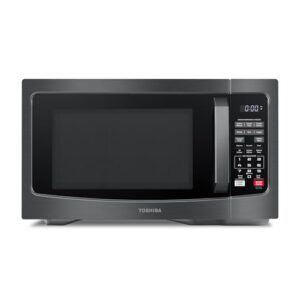
The Toshiba Smart Microwave Oven makes prepping the sweet potato base almost simple. Its 1000-watt output cooks a large sweet potato evenly in 5–9 minutes, and the built-in Smart Sensor automatically adjusts power based on moisture levels — so you don’t have to guess or hover. The 12.4-inch turntable accommodates a full-sized potato with ease.
At roughly 1.2 cubic feet, there’s plenty of room, and the Easy Defrost feature is handy when thawing frozen treat balls later.
| Best For | Home cooks in smaller spaces who want reliable, no-fuss reheating and everyday cooking without a lot of manual guesswork. |
|---|---|
| Primary Use | Sweet potato cooking |
| Food Safe | Yes |
| Easy Cleanup | Wipe interior clean |
| Temperature Range | Up to 1000W heat output |
| Space Efficiency | 1.2 cu ft compact body |
| Durability | Solid build quality |
| Additional Features |
|
- Smart Sensor technology takes the guesswork out of reheating and cooking common foods like pizza or leftovers
- One-touch start and preset menus make quick meals genuinely quick — no digging through settings
- Mute mode and compact footprint make it a solid fit for apartments, offices, or open-plan kitchens
- No Wi-Fi or app connectivity, so "smart" really just means the built-in sensor — nothing you can control remotely
- The 1.2 cu ft interior can feel tight if you’re working with larger cookware or cooking in bulk
- Full-power cooking can overcook some foods, so you’ll likely need to dial the power back to 80–90% for certain items
2. Silpat Non Stick Baking Mat
Once you’ve rolled those marble-sized treat balls, you need a clean and non-stick surface to set them. The Silpat Non-Stick Baking Mat is perfect for this purpose.
Its food-grade silicone surface ensures nothing sticks—eliminating the need for parchment, spray, or messy cleanup. It withstands temperatures from –40°F to 500°F, making it ideal for both freezer storage and warming surfaces.
The mat fits a standard half-sheet pan and cleans easily with warm, soapy water.
| Best For | Home bakers who want consistently sized, evenly baked cookies without the hassle of parchment paper or greasing pans. |
|---|---|
| Primary Use | Treat ball setting |
| Food Safe | Yes |
| Easy Cleanup | Warm soapy water |
| Temperature Range | -40°F to 500°F |
| Space Efficiency | Half-sheet pan fit |
| Durability | Hundreds of reuses |
| Additional Features |
|
- Truly non-stick surface handles everything from cookies to sticky caramel without any prep work
- Handles temps from –40°F all the way to 500°F, so it goes straight from freezer to hot oven
- Reusable for hundreds of baking sessions, which saves money and cuts down on waste over time
- Metal spatulas or knives will damage the silicone, so you have to be careful with your tools
- Higher upfront cost than just grabbing a roll of parchment paper
- Some users notice a slightly oily feel after washing, so you’ll want to rinse it really well
3. Silicone Spatula Set For Kitchen

With your treat balls ready and your mat prepped, the next essential tool is a good spatula. This silicone spatula set offers three versatile pieces: a small jar spatula, a large bowl scraper, and a spoon spatula, ensuring the right tool for every task.
The set’s silicone heads withstand heat up to 480°F without damaging bowls or pans. Comfortable wood grips simplify mixing thick batters, like sweet potato, reducing hand strain.
| Best For | Home bakers and everyday cooks who want a reliable, cookware-safe spatula set that handles everything from scraping jars to mixing thick batters. |
|---|---|
| Primary Use | Batter mixing |
| Food Safe | Yes |
| Easy Cleanup | Hand wash only |
| Temperature Range | Up to 480°F |
| Space Efficiency | 3-piece nestable set |
| Durability | Long-lasting silicone heads |
| Additional Features |
|
- Three purpose-built shapes mean you’ve always got the right tool — whether you’re folding batter, scraping a jar clean, or scooping a quick taste
- Handles heat up to 480°F, so you can leave them resting on a hot pan without worry
- Gentle on all cookware surfaces, including non-stick and cast iron, so no scratching or scraping damage
- Hand wash only — tossing them in the dishwasher will shorten their lifespan
- The unfinished wood handles can splinter over time with heavy use
- The silicone heads are on the firmer side, so they’re not ideal for delicate jobs like folding a thin omelet
4. Colorful Plastic Mixing Bowls Set

Good tools make the whole process smoother, and the right mixing bowl matters more than you’d think. This Cook With Color 12-piece set gives you six BPA-free polypropylene bowls with matching lids, ranging from 0.3 to 5.5 liters.
The anti-slip silicone base keeps each bowl steady while you beat your sweet potato mixture on high. Clear lids let you store leftover ingredients without guessing.
Color-coded sizing means less fumbling and more focus on your birds.
| Best For | Home cooks who meal prep regularly and want an affordable, space-saving bowl set that pulls double duty for mixing and storing. |
|---|---|
| Primary Use | Ingredient storage |
| Food Safe | Yes |
| Easy Cleanup | Top-rack dishwasher safe |
| Temperature Range | Freezer to microwave safe |
| Space Efficiency | Stackable nested bowls |
| Durability | BPA-free polypropylene |
| Additional Features |
|
- Six size options cover everything from small sauces to big batches, so you’re not stuck grabbing the wrong bowl mid-recipe.
- Clear, color-coded lids make matching and storing leftovers quick and painless.
- Anti-slip base keeps bowls steady while you mix, beat, or whisk without chasing them across the counter.
- The silicone anti-slip ring can loosen over time and may not sit flush in its groove.
- Bowl walls feel a bit flexible, so handle with care when dealing with hot or heavy contents.
- The largest 5.8 qt bowl is genuinely big — it might be a squeeze in tighter cabinets or smaller kitchens.
Frequently Asked Questions (FAQs)
Can wild birds eat these no-bake treats?
Yes, many wild birds can enjoy these treats. Fruit-loving species like robins, mockingbirds, and catbirds are especially drawn to the sweet potato and banana base.
How often should I give bird treats?
For most small to medium birds, 2 to 3 times per week is ideal.
Highly active species can have a small portion daily, but always keep treats under 5 percent of their total diet.
What bird species enjoy these treats most?
Cardinals, chickadees, and nuthatches absolutely love these sweet potato balls. Bluebirds and robins favor the soft fruit texture, while finches and sparrows go straight for the seed-rich bites.
Are there toxic ingredients to avoid for birds?
Absolutely — some everyday kitchen staples are dangerous to birds.
Avocado, chocolate, onions, garlic, and salty or caffeinated foods can all cause serious harm, even in tiny amounts. Always keep these away.
Can I add seeds or nuts directly?
You can add seeds and nuts, but grind or finely chop them first. Whole pieces can be hard to swallow for smaller birds. Always use raw, unsalted varieties only.
Can wild birds eat these homemade treats too?
Yes, and it’s a happy coincidence — the same wholesome ingredients that delight pet birds, like sweet potato, banana, and apple, also appeal to many wild backyard visitors.
Just place a few balls near your feeder.
How do you hang treats inside a bird cage?
Thread sturdy ribbon or twine through a hole made with a skewer while the treat is still soft. Avoid yarn or thin thread — both can entangle birds.
Which bird species benefit most from sweet potato?
Parrots, cockatiels, and budgies benefit most from sweet potato. Its vitamin A promotes feather health and immunity. Robins and cardinals also enjoy it as a fruit-like supplement during cooler months.
Can you use a food processor instead of a mixer?
A food processor works great here. Use short pulses to avoid turning the mix into mush. It blends soft ingredients fast and keeps the texture moldable for rolling.
Are these treats safe for baby or juvenile birds?
Ironically, the softest birds need the most careful feeding. These treats suit juvenile birds well — mashed sweet potato, banana, and diced apple are gentle on young digestive systems.
Offer tiny portions only.
Conclusion
Every treat you roll is a small act of care pressed into your bird’s daily life. This no-bake bird treat recipe puts real nutrition in your hands—sweet potato, banana, and bird-safe vegetables working together without additives or guesswork.
You’ve learned what’s safe, how to store it, and how much to serve. Now your bird gets food that actually fuels it.
That’s not just a recipe—it’s a healthier relationship built one marble-sized ball at a time.
- https://monroecountymga.org/2022/01/08/gelatin-based-bird-see-cakes/
- https://www.savoryonline.com/recipes/no-bake-birdseed-ornaments/
- https://www.gardenesque.com/blogs/the-garden-journal/how-to-make-no-bake-bird-seed-ornaments?srsltid=AfmBOor4uwC77FPPMpxkSIJKIsfe_O6_bg9N9-_fSoRNcrtHfKjD5sM0
- https://queenslanderaviaries.com/blogs/news/bird-safe-nuts-and-seeds?srsltid=AfmBOoogAABFGpnj5yXmJydedEAhQx1HbNzkMXBmMd3MyxpCyP8Ub_E7
- https://www.allpetseducationandtraining.com.au/homemade-bird-treats.html