This site is supported by our readers. We may earn a commission, at no cost to you, if you purchase through links.
Squirrels are opportunistic foragers by nature, and their diet is far more varied than most people realize. Acorns and seeds get all the attention, but a squirrel will readily take protein where it finds it—including insects, eggs, and the occasional unlucky nestling.
So when mealworms enter the picture, squirrels don’t hesitate. They eat them live, dried, and packed into suet cakes.
That flexibility matters if you’re feeding backyard birds, because the mealworms you put out for bluebirds may disappear faster than you’d expect.
Understanding how squirrels interact with mealworms—and where the line sits between a healthy snack and a dietary problem—keeps everyone in your yard better off.
Table Of Contents
Key Takeaways
- Squirrels are natural omnivores that readily eat mealworms in any form — live, dried, or packed into suet — because insects are already part of their wild diet.
- Mealworms offer real nutritional benefits like high protein and energy-dense fat, but their poor calcium-to-phosphorus ratio makes them a treat, not a staple.
- Feeding no more than 10 live or 2–3 grams of dried mealworms a few times a week keeps things safe without tipping into overfeeding territory.
- If you’re feeding backyard birds, a caged feeder, baffle, or weight-sensitive port is the simplest way to make sure your mealworms reach the right mouths.
Yes, Squirrels Eat Mealworms
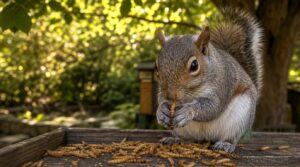
Yes, squirrels do eat mealworms — and they’re actually quite enthusiastic about it. As natural omnivores, they’ll take insects whenever the opportunity shows up, whether in the wild or at your backyard feeder. Here’s a closer look at the different forms squirrels encounter and eat.
Their appetite for protein doesn’t stop there — squirrels are also known to raid nests, as explored in this piece on whether squirrels eat birds and eggs.
Live Mealworms
Squirrels absolutely eat live mealworms — the larval stage of Tenebrio molitor — and will snatch them up whenever they find them. These wriggling larvae are high protein snacks, offering around 14–25 grams of protein per 100 grams. They experience a complete metamorphosis cycle in nature.
- Live mealworms mimic natural foraging
- They stimulate instinctive hunting behavior
- Fresh larvae should smell clean and move actively
Dried Mealworms
If live mealworms aren’t practical, dried mealworms are the next best thing — and squirrels genuinely prefer them.
Moisture is removed through hot air or freeze‑drying, concentrating nutrients into a high-protein, nutrient-dense food with up to 60% protein by dry weight.
Proper airtight packaging preserves freshness and prevents rancidity, giving you a convenient, shelf-stable option squirrels will reliably seek out.
Mealworm Suet
Mealworm suet takes things a step further by combining the protein punch of mealworms with energy-rich fat in a single block. It’s a convenient format that squirrels won’t ignore.
- Suet blocks usually contain 20–40% protein and up to 60% fat
- Many formulations include calcium enrichment to support bone health
- Available as cakes, logs, or pellets for flexible feeder use
Wild Foraging Habits
Out in the wild, squirrel foraging behavior is surprisingly strategic. They follow optimized routes, shift focus by season, and practice scatter hoarding to protect cached nuts from rivals. Insects, including mealworms, get eaten opportunistically when other food runs low. That same flexibility explains why your backyard squirrel won’t hesitate around a mealworm feeder.
Squirrels forage strategically in the wild, so a backyard mealworm feeder simply feels like instinct
| Foraging Trait | Practical Effect |
|---|---|
| Seasonal shifts | Insects eaten more in lean months |
| Scatter hoarding | Diverse diet reduces single-food dependence |
Why Squirrels Like Mealworms
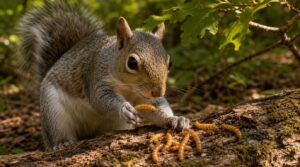
Squirrels don’t eat mealworms by accident — there are real nutritional reasons they keep coming back for more. Their attraction comes down to a few key things packed into that small, wriggly package. Here’s what makes mealworms so hard for a squirrel to pass up.
Mealworms deliver protein, fat, and moisture in one bite — the same reason a well-stocked squirrel-proof bird feeder keeps every backyard visitor coming back.
High Protein Content
Think of mealworms as a tiny but mighty protein package.
Dried mealworms hit around 52 percent protein by dry weight, and even live mealworms deliver 20–25 percent of their fresh weight as protein. Better still, that protein comes with a complete amino acid profile — everything a squirrel needs for muscle repair, healthy tissue, and steady growth.
Energy-Rich Fat
Fat is the other reason squirrels keep coming back. Dried mealworms pack 25–35% fat by dry weight, and at roughly 9 calories per gram, that fat is seriously energy dense.
For a small mammal burning through reserves all day, a few mealworms deliver a concentrated caloric boost that nuts alone often can’t match.
Natural Insect Food
Squirrels are naturally omnivorous, and insects are part of their diet in the wild — not just an occasional bonus. They dig through decaying logs and leaf litter hunting larvae, so mealworms feel completely familiar to them. Offering dried mealworms simply mirrors what they’d find foraging. It’s instinct, not novelty.
Scarcity Feeding Behavior
When food runs short, everything changes. Squirrels shift their priorities fast — diet breadth expands, and high‑protein options like mealworms become far more attractive.
During seasonal food scarcity, they’ll consume 2–3 mealworms per feeding, sometimes more. Supplemental feeding with mealworms meets that urgent energy demand, making your yard a reliable patch when natural protein sources are hardest to find.
Are Mealworms Good for Squirrels?
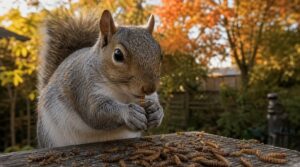
Mealworms can be a genuinely useful addition to a squirrel’s diet, but the full picture is a bit more nuanced than just "good" or "bad." Like most things in wildlife nutrition, the benefits come with a few conditions worth knowing. Here’s what you need to keep in mind before tossing a handful their way.
Occasional Treat Benefits
Offered in small amounts, mealworms work like a nutritional treat for squirrels — a brief, satisfying addition that delivers real value without disrupting their diet.
That mood boost from a nutrient-dense snack mirrors what research shows about reward-based eating: a little variety goes a long way.
It also provides stress relief during lean seasons, keeping foraging behavior engaged and natural.
Growth and Lactation Support
For nursing mother squirrels, mealworms do something genuinely useful. Protein for lactation is a real nutritional need — milk production demands more energy and amino acids than normal daily life.
Mealworms deliver both, supporting milk composition and helping juveniles develop properly. Breeding squirrels especially benefit, since adequate protein and energy intake directly influence how well their young grow.
Calcium Imbalance Risks
That protein boost is genuinely valuable — but mealworms come with a catch worth knowing about.
Their calcium-to-phosphorus ratio is dangerously lopsided. Phosphorus far exceeds calcium, which blocks proper calcium absorption. Over time, that imbalance can trigger metabolic bone disease, weakening bones and raising fracture risk — similar to osteoporosis in humans.
- Hypocalcemia symptoms include muscle spasms and tremors
- Bone density loss develops with prolonged calcium deficiency
- Cardiac arrhythmia can result from severe calcium disruption
- Kidney stone risk rises when mineral balance stays off
That’s why calcium supplementation matters before feeding.
Overfeeding Concerns
Calcium imbalance isn’t the only thing to watch. Too many mealworms can tip into overfeeding territory, and the downstream effects are real.
Consistent excess leads to weight gain and fat accumulation, and over weeks, that extra load raises the risk of insulin resistance and blood lipid changes — including elevated triglycerides.
Think of mealworms as a nutrient-dense treat, not a staple.
Safe Feeding Amounts
So, how much is actually safe? A good rule of thumb: no more than 10 live mealworms per feeding, or around 2–3 grams dried. Mealworms should stay under 10% of daily food intake — a small handful, a few times a week. That feeding schedule keeps things balanced without tipping into overfeeding.
- Stick to occasional, not daily feeding
- Mix mealworms with nuts or seeds
- Remove uneaten portions within an hour
Protect Bird Mealworms From Squirrels
If you’re putting out mealworms for birds, squirrels will almost certainly find them first. The good news is there are some simple, effective ways to keep your feathered visitors eating in peace. Here are the setups worth knowing about.
Squirrel-Proof Feeders
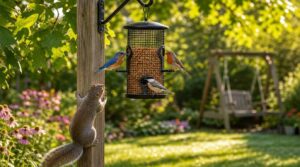
A squirrel-proof feeder is honestly one of the simplest ways to keep your mealworms where they belong — in the beaks of birds.
Look for chew-resistant materials like powder-coated steel, since squirrels are persistent gnawers.
Weight-sensitive feeder ports automatically close under a squirrel’s heavier load, while cage mesh designs block paws entirely without disturbing smaller birds.
Feeder Baffles
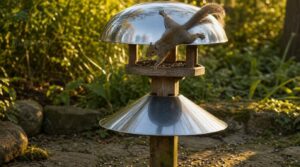
A squirrel baffle might be the most reliable tool in your arsenal. Dome baffles — commonly 16 to 24 inches wide — mount above hanging feeders, while cone baffles fix below pole-mounted ones to block climbing from underneath:
- Smooth ABS plastic or powder-coated steel reduces grip
- Dome design deflects squirrels attempting aerial approaches
- Cone profiles leave no foothold along the pole
- Combining both creates full multi-directional protection
Weight-Sensitive Ports
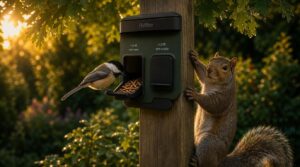
A weight-sensitive feeder works by detecting how much load is pressing on the port.
Birds are light enough to trigger a release; squirrels aren’t.
The load sensor threshold — usually adjustable between 5 and 50 grams — lets you tune access precisely.
Heavier visitors simply don’t get the mealworms; no chasing required.
Caged Bird Feeders
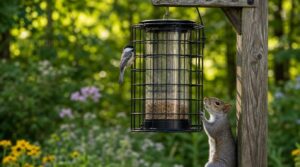
A caged bird feeder puts a simple but effective barrier between your mealworms and uninvited visitors. The outer cage has gaps sized just right for small songbirds, but too narrow for squirrel paws to reach through.
- Welded metal construction resists bending and tampering
- Fine mesh prevents dried mealworms from spilling
- Removable trays simplify weekly cleaning routines
- Mounting hardware secures the pole or hanger installation
- Weather-resistant finishes protect against rust outdoors
Smart Feeder Placement
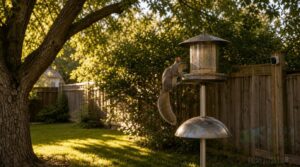
Where you place your feeder matters just as much as what’s inside it. Mount it 5 to 6 feet high on a smooth pole with a baffle, at least 10 to 12 feet from nearby trees. Angle it slightly downward for drainage, tuck it under partial shade, and align a camera for smart home monitoring so you always know what’s visiting.
Keep Squirrels Away Safely
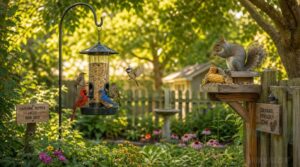
Keeping squirrels away from your bird feeders doesn’t have to mean a battle of wills. A few simple, humane strategies can redirect their attention without harming them or disrupting your yard’s natural balance. Here’s what actually works.
Cayenne Pepper Deterrents
Cayenne pepper is one of the simplest tools you can use to keep squirrels away from mealworms. Capsaicin, the active compound in cayenne, causes a burning sensation that squirrels find unbearable — yet birds don’t react to it at all. Dust dried mealworms lightly or apply a diluted pepper spray to the feeder area.
Reapply after rain, since moisture washes away the residue quickly. Wear gloves when handling it, and keep it away from your eyes.
Separate Squirrel Feeding
Sometimes the easiest solution isn’t keeping squirrels out — it’s giving them their own spot. Separate squirrel feeding stations redirect their attention away from bird feeders entirely.
Since squirrels do eat mealworms eagerly, place a dedicated feeder at least six feet from windows, in a shaded area, and offer a small portion of dried mealworms as a controlled protein source.
Slippery Feeder Poles
If a separate feeding station doesn’t fully solve the problem, a slippery feeder pole is your next reliable line of defense. Squirrels can’t raid what they can’t climb.
Galvanized steel or powder-coated aluminium poles with smooth, polished finishes give their claws nothing to grip — pair that with a rotating baffle below the feeder, positioned at least two meters up, and most squirrels simply give up.
Clean Feeding Areas
A clean feeding station does more than look tidy — it actively discourages squirrels from lingering. Debris removal routine matters here: spilled mealworms left on the ground are an open invitation.
Sweep regularly, disinfect surfaces monthly with a pet‑safe solution, and use platform feeders on nonporous surfaces to simplify cleanup and block moisture from seeping into soil.
Avoid Unsafe Foods
Keeping the area clean removes temptation, but what you feed matters just as much. Never offer moldy or spoiled mealworms — they carry toxins that can make squirrels seriously ill. Watch for three red flags:
- Chemical contamination from pesticide-treated batches
- Parasite screening gaps in low-quality suppliers
- Food pairing risks from mixing mealworms with spoiled fruit
Frequently Asked Questions (FAQs)
Are mealworms good for squirrels?
Mealworms can be a smart protein supplement for squirrels when offered sensibly. They deliver real nutritional benefits — supporting muscle, energy, and growth — but calcium management and portion control matter to keep things balanced.
Do squirrels eat worms?
Yes, squirrels eat worms. They’re opportunistic foragers, and earthworms make an easy protein grab — especially after rain, when worms surface. It’s casual, not a habit, but a natural part of their varied diet.
What do squirrels eat?
Like a tiny survivalist, a squirrel eats whatever the season offers — nuts, seeds, and fruits form the backbone, while insects, fungi, and cached acorns fill the gaps in their remarkably omnivorous diet.
What animals eat mealworms?
Squirrels aren’t alone in their love of mealworms. Birds, reptiles, amphibians, and small mammals all eat them. Backyard birds like robins and cardinals, plus frogs, lizards, and mice, will eagerly devour them.
What are the disadvantages of mealworms?
They seem like a perfect snack, but mealworms carry real downsides: calcium deficiency, obesity risk, digestive issues, and bacterial contamination. Phosphorus excess can quietly harm bone health, while nutritional imbalances and allergic reactions add further concern.
What should you not feed a wild squirrel?
Avoid salt, chocolate, avocado, and onions — all toxic to squirrels. Skip processed snacks, dairy, and sugary foods too. Raw potatoes and rhubarb are equally dangerous, as is any moldy or pesticide-treated produce.
Do squirrels eat insects?
Yes, squirrels eat insects regularly. They forage through soil, bark, and leaf litter for beetles, caterpillars, and larvae — especially when nuts are scarce. Insects deliver nutrient-rich protein that promotes growth, reproduction, and seasonal energy demands.
Can squirrels eat chili?
Technically, they can nibble chili, but capsaicin burns mammals. Squirrels instinctively retreat after tasting hot peppers. That burning sensation makes cayenne pepper and chili powder reliable, humane deterrents — birds feel nothing, so your feeder stays safe.
Can you eat squirrels?
People have eaten squirrels for centuries. The meat is lean, protein-rich, and safe when cooked to 165°F. Always follow local hunting regulations and handle the meat carefully to avoid contamination.
What animal eats mealworm?
A surprising range of animals eat mealworms. Birds, reptiles, amphibians, and small mammals all consume them eagerly — from robins at bird feeders to geckos, frogs, squirrels, and even fish.
Conclusion
Ironically, the creature raiding your bird feeder might actually belong there.
Squirrels do eat mealworms, and in small amounts, those insects offer real nutritional value—protein, fat, and a boost during lean seasons.**
The problem isn’t the squirrel; it’s an unmanaged yard. A baffle here, a caged feeder there, and everyone gets fed without conflict.
Manage the setup thoughtfully, and your backyard stops being a competition and starts working like a small, functioning ecosystem.
- https://www.wigglywigglers.co.uk/blogs/blog/jos-hot-tip-to-stop-grey-squirrels-eating-your-bird-food
- https://georgiawildlife.com/out-my-backdoor-appeal-mealworms
- https://www.thespruce.com/what-birds-eat-mealworms-385834
- https://www.livescience.com/28182-squirrels.html
- https://core.ac.uk/download/pdf/17211616.pdf