
This site is supported by our readers. We may earn a commission, at no cost to you, if you purchase through links.
That green film coating your bird bath isn’t just ugly, it’s a warning sign. Algae and mineral buildup turn a backyard oasis into a place birds start avoiding, and dirty water breeds bacteria fast in summer heat. The fix sits in your kitchen cabinet.
Vinegar bird bath cleaning cuts through grime without harsh chemicals that could harm your feathered visitors. Grab the right supplies, follow a few safety steps, and you’ll have that basin sparkling again in under an hour. Your birds will notice the difference before you even refill the water.
Table Of Contents
- Key Takeaways
- Check Vinegar Safety and Gather Supplies
- Empty and Pre-Rinse The Bird Bath
- Scrub The Bird Bath With Vinegar
- Treat Stubborn Algae and Mineral Deposits
- Rinse, Refill, and Maintain Cleanliness
- Frequently Asked Questions (FAQs)
- What is a safe way to clean a bird bath with vinegar?
- Do pennies keep a bird bath clean?
- Is white vinegar safe for birds?
- How often should I clean a bird bath overall?
- Can I use apple cider vinegar instead?
- Is vinegar safe for birds if residue remains?
- Why not use bleach or soap instead?
- Does vinegar work on plastic or resin baths?
- Conclusion
Key Takeaways
- Use plain five-percent white vinegar full-strength on the basin, let it sit wet for 20 to 30 minutes, then scrub to break down algae and mineral crust without harsh chemicals.
- Never mix vinegar with bleach, since the combo creates dangerous chlorine gas, and always test stone, metal, or plastic surfaces first since vinegar can etch or dull some materials.
- Rinse the bath thoroughly with a hose until no vinegar smell or residue remains, since leftover acid can irritate birds’ feet and feathers.
- Empty and refresh the water daily to stop mosquitoes from breeding, and do a full vinegar clean every two to three days to keep birds coming back safely.
Check Vinegar Safety and Gather Supplies
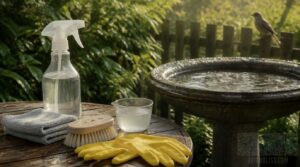
Before you grab a spray bottle, take a minute to set yourself up right. A little prep now keeps your birds safe and saves you a headache later. Here’s what to check and gather before you start scrubbing.
For a full rundown of supplies and safety tips, check out this guide on how to clean bird feeders safely before you dive in.
Choose Five-percent Distilled White Vinegar
Grab five-percent distilled white vinegar off the grocery shelf, the plain kind with no additives. That’s standard food grade, with a pH around 2.4 to 2.6, strong enough to cut algae and mineral buildup but still safe for birds once rinsed. Skip cider or cleaning vinegar here.
Five percent hits the sweet spot: enough acidity to disinfect, without overdoing it. This specific vinegar is commonly available as distilled white vinegar with 5% acidity.
Never Mix Vinegar With Bleach
Never mix vinegar with bleach, even by accident. The combo releases chlorine gas, which irritates eyes and lungs fast.
Keep the two stored apart. If you’re using bleach elsewhere:
- Rinse containers fully with water first
- Work in open air, not a closed shed
- Label bottles clearly
- Never combine cleaners
- If gas hits you, get outside immediately and call for help
Check Bath Material Compatibility
Bleach isn’t the only thing to watch for, your bath’s material matters just as much.
- Stone surface caution: Skip vinegar on natural stone, marble, or concrete basins, it etches and dulls over time.
- Metal finish check: Test hardware first; some finishes pit with contact.
- Plastic compatibility test: Dab a small spot, check for cloudiness.
- Wood seal inspection: Confirm seals are intact.
- Grout absorption risk: Porous grout stains easily.
Gather Brush, Gloves, and Hose
Once you know your bath’s material can handle vinegar, round up your tools.
- A stiff nylon brush with a long handle for the basin
- Nitrile gloves, size M or L, for grip and skin protection
- A 50-75 foot hose with an adjustable nozzle for rinsing
Good gear makes scrubbing algae and mineral buildup faster, safer, and a lot less messy.
Keep Birds Away Temporarily
Why give birds a reason to visit mid-scrub? Clear the area for an hour using simple visual deterrents like reflective tape, or shift a decoy nearby—no acoustic methods needed for a quick job.
| Deterrent | Duration |
|---|---|
| Reflective tape | 1 hour |
| Decoy owl | 1 hour |
| Relocate bath | 1 hour |
| Cover basin | 1 hour |
This prevents mildew-causing moisture contact while you clean.
After washing, letting everything air dry completely is just as important as choosing bird cage perch materials that resist moisture buildup in the first place.
Empty and Pre-Rinse The Bird Bath
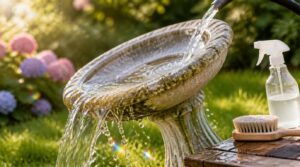
With your supplies ready, it’s time to get the bath truly empty. A quick prep round makes the vinegar work faster once you get to scrubbing. Here’s how to clear the way, step by step.
Remove All Standing Water
Standing water is a mosquito magnet, so tip the bath and dump it out completely before any vinegar touches the surface.
Pour it onto a sloped area away from soil, not back near the base, so it drains instead of pooling again.
Set the empty bath on a shaded, well-drained spot. Good airflow speeds evaporation and keeps moisture from lingering where you’re about to clean.
Clear Leaves and Debris
Clumped leaves and stray twigs sit in an empty basin like litter waiting for a broom. Skim by hand or use a small net to lift debris out before vinegar goes anywhere near the surface.
Toss the scraps in your compost pile, not back near the bath, so wind won’t blow them right back in.
A clear basin means vinegar reaches every inch of grime.
Rinse Away Loose Grime
Grab your hose and give the basin a light debris rinse before vinegar touches anything. A quick initial rinse loosens dust and loose grime clinging to the surface.
Run a quick water pressure test first, adjusting nozzle strength so you don’t splash nearby birds. This pre-wash spray step, plus a fast surface debris check, sets up better vinegar cleaning results down the line.
Inspect Algae and Mineral Buildup
Take a good look before you scrub. What’s growing here, and what’s crusting over?
- Green film on the surface means light and nutrients
- Slime patches on walls signal biofilm
- Waterline mats show steady moisture
- Cloudy, greenish water points to algae bloom
- Chalky crusts near the rim mean mineral buildup
Scrub The Bird Bath With Vinegar
Now that your bird bath is rinsed and ready, it’s time for the real cleaning power. Vinegar does the heavy lifting here, breaking down grime you can’t just rinse away. Here’s how to get every part of the bath scrubbed and spotless.
Apply Undiluted White Vinegar
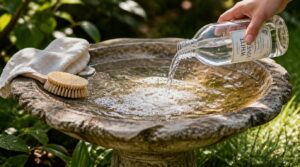
Time to let the acid do the work. Pour undiluted white vinegar straight onto the basin, no watering down.
Full-strength vinegar breaks down grime fast without extra scrubbing prep.
| Surface | Vinegar Method |
|---|---|
| Basin | Pour directly |
| Rim | Cloth application |
| Perches | Brush application |
| Concrete | Soaked compress |
Use a cloth or brush to spread it evenly across every surface for consistent natural cleaning.
Keep Surfaces Visibly Wet
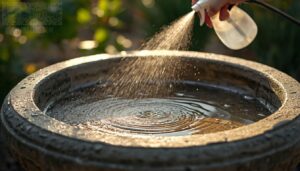
Once you’ve spread the vinegar around, don’t walk away yet. Visible wetness is what keeps acetic acid working on that grime.
Watch for a shiny, water-like sheen. If spots dry fast, re-wet them right away.
- Check the surface every few minutes.
- Re-spray dry patches immediately.
- Watch for consistent sheen.
- Avoid letting droplets bead and vanish.
Allow Sufficient Contact Time
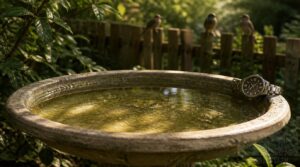
Patience pays off here. Vinegar needs a solid 20 to 30 minutes of wet contact to break down grime and knock back bacteria hiding in the basin.
Warmer days speed things along, while cool or shaded spots slow the reaction down. Either way, keep checking for dry patches and rewet as needed. Stubborn algae or scale? Let it sit the full time before scrubbing.
Scrub Basin, Rim, and Perches
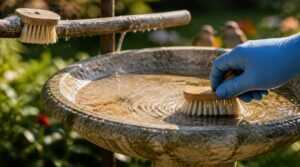
Once the vinegar’s had its soak, grab your soft brush and get to work. Start with the basin floor, then move to the rim edges, where grime and algae like to hide.
Scrub perches last, checking their material as you go.
- Basin: circular strokes
- Rim: edge-to-edge passes
- Perches: gentle, back-and-forth scrubs
Target Slippery Algae Biofilm
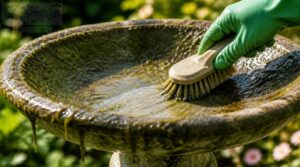
That slime coating perches and basin walls isn’t just dirt, it’s a living algae biofilm, held together by a sticky EPS matrix. Vinegar’s acid disrupts this glue, breaking down cell adhesion.
Scrub firmly while wet. Circular strokes lift stubborn patches, stopping regrowth and nutrient buildup that feeds new algae and mold.
Treat Stubborn Algae and Mineral Deposits
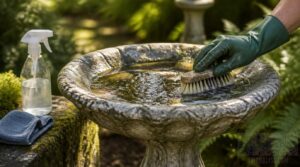
Sometimes a quick scrub just doesn’t cut it. Tough algae stains and crusty mineral buildup need a little extra patience and a targeted approach. Here’s how to handle those stubborn spots so your bird bath looks brand new.
Soak Porous Concrete Stains
Concrete birdbaths hold onto stains like a stubborn memory. That’s because porous concrete has tiny voids that let algae and minerals sink in deep, past what scrubbing alone can reach.
Porous concrete holds algae and minerals deep in tiny voids, past what scrubbing alone can reach
For these spots, skip the quick scrub. Pour undiluted white vinegar right onto the stain and let it soak for a full 20 minutes. This dwell time softens mineral deposits and breaks down algae biofilm trapped below the surface.
Apply Vinegar-soaked Paper Towels
When pouring vinegar straight on won’t cut it, grab paper towels for a direct contact treatment. Soak them fully in undiluted white vinegar, then press onto the stain, covering it edge to edge.
This towel application method targets stubborn spots better than scrubbing, giving concentrated vinegar contact time exactly where you need it. Keep towels moist for effective stain targeting and mold inhibition.
Leave Severe Spots Overnight
For spots that just won’t budge, patience wins the day. Leave the vinegar-soaked towel in place overnight, letting the overnight vinegar soak work into the grime undisturbed.
Keep it away from direct sun or heat, and don’t skip a step: check back in the morning to see how much the stubborn stain treatment has softened.
Soften Calcium and Lime Deposits
That chalky white crust isn’t dirt, it’s hard water scale, and vinegar dissolves it fast.
- Crusty, neglected basin turning smooth again
- Rims free of that gritty white buildup
- Water flowing freely, not blocked by scale
- Birds returning to a fresh, inviting bath
- Mineral deposit removal without scrubbing raw
Soak deposits 20 minutes in full-strength white vinegar. Calcium and lime soften into a paste, ready to lift away.
Repeat Scrubbing When Necessary
Some grime just won’t quit after one pass. If dark algae or mineral haze lingers, grab your brush and go again.
| Sign You See | Action to Take |
|---|---|
| Dark, slick biofilm | Re-scrub with fresh vinegar |
| Chalky white haze | Scrub, then rinse clean |
Second scrubs restore shine without needing harsher chemicals.
Rinse, Refill, and Maintain Cleanliness
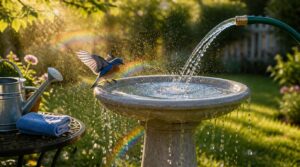
The scrubbing part is done, but you’re not finished yet. A clean bird bath still needs a good rinse and a plan to stay that way. Here’s how to wrap things up and keep the birds coming back safely.
Rinse Away All Vinegar
Once scrubbing’s done, blast the whole bird bath with a hose on high pressure.
Vinegar left behind can irritate feet and feathers, so rinse every inch: basin, rim, and perches. Run water for a full minute, tilting the bath to drain completely.
Let it air-dry a few minutes before refilling, and give it one more splash if you catch that vinegar smell lingering.
Check for Lingering Residue
Give the basin one last look before refilling. Run a finger along the rim, then check a white cloth wiped across the surface, no color should transfer.
- Dry finish: matte, not sticky
- Smell test: no sharp vinegar tang
- Hard water film: faint haze means rinse again
- Cloth check: stays clean after wiping
Hard water speeds up film buildup, so recheck sooner in those areas.
Refill With Fresh Water
Passed the cloth check? Time to fill up. Use a clean hose, add water slowly to cover perches without reaching the rim.
Aim for lukewarm water, around 20-25°C, never straight from a hot tap. If using tap water, let it sit a bit first to dissipate chlorine. Place the bath in shade to keep things stable and cool.
Clean Every Few Days
That clean water won’t stay clean for long. Algae and mineral buildup creep back fast, especially in warm weather.
Full clean every two to three days keeps biofilm from forming and prevents mildew. Swap the water sooner if it looks cloudy. This routine cleaning habit, paired with your regular vinegar rinse, is what actually keeps the bath safe and inviting for visiting birds.
Prevent Bacteria and Mosquito Larvae
Standing water is mosquito nursery number one. Empty the bath daily to break the breeding cycle before eggs hatch.
Vinegar won’t kill larvae, but it fights biofilm reduction and bacterial buildup that feeds them. Pair it with:
- Daily water changes
- Drying after cleaning
- Debris removal routine
Skip antimicrobial sprays. Plain vinegar and consistent habits protect your feathered visitors better than any harsh disinfectant could.
Frequently Asked Questions (FAQs)
What is a safe way to clean a bird bath with vinegar?
Mix five-percent white vinegar with water, scrub gently, then rinse well. Check surface compatibility first, target algae within 10-15 minutes, and rinse residue fully. Clean every few days for a safe, effective bird bath routine.
Do pennies keep a bird bath clean?
Old copper pennies won’t work miracles, but pre-1982 pennies release copper ions that slow algae growth. Modern zinc pennies risk zinc toxicity in birds, so skip coins entirely and stick with vinegar cleaning for safer algae prevention.
Is white vinegar safe for birds?
Yes, when diluted properly—a 1:3 or 1:4 ratio with water. Birds have sensitive respiratory systems, so avoid undiluted, full-strength solutions and always rinse surfaces completely before letting them back near the bath.
How often should I clean a bird bath overall?
Picture a summer bath left untouched for a week: green slime, mosquito larvae. Refresh water daily in heat, deep clean weekly with vinegar, and stretch to every two to three weeks once cooler weather slows algae growth.
Can I use apple cider vinegar instead?
Apple cider vinegar works in a pinch, but its stronger scent can linger and bother sensitive noses. Stick with white distilled vinegar as your acidic solution for routine washes, always diluting cider vinegar and rinsing twice for residue removal.
Is vinegar safe for birds if residue remains?
Not really. Leftover acidic solution can irritate feet, feathers, and eyes, especially in small birds. Rinsing thoroughly matters more than concentration. Skip full-strength residue—soap and water or a plain rinse work as safer alternatives for sensitive visitors.
Why not use bleach or soap instead?
One rescue center swapped bleach for vinegar after finding chlorine residue on perches. Bleach risks pitting and chemical buildup; soap leaves slippery film. Vinegar’s cheap, biodegradable, and rinses clean, protecting surfaces and feathers alike.
Does vinegar work on plastic or resin baths?
Yes. Acrylic and PVC baths handle vinegar well with no warping. Do a quick vinegar compatibility test on a hidden spot first, keep soak time brief, then rinse and inspect for dulling before refilling.
Conclusion
Picture that basin catching morning light, water clear enough to see straight to the bottom, wings splashing without hesitation.
That’s what vinegar bird bath cleaning delivers: a simple habit that keeps your yard trustworthy to visitors with plenty of other options.
Grab your brush every few days, don’t let grime creep back, and you’ll turn a plain basin into the busiest, most trusted spot in the whole yard.