This site is supported by our readers. We may earn a commission, at no cost to you, if you purchase through links.
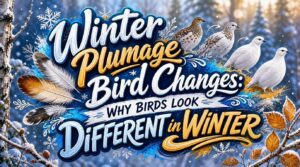
That bird at your feeder looks different than it did in July—and you’re not imagining it. Winter plumage bird changes are real, systematic, and driven by a precise biological machinery that kicks in the moment days start getting shorter.
swap flashy breeding colors for muted, camouflaged tones; others grow a completely different set of feathers engineered for cold survival.
A Rock Ptarmigan, for instance, trades its brown summer coat for pure white—not through magic, but through hormonal signals triggered by photoperiod shifts.
Understanding what’s actually happening beneath those feathers changes how you see every bird that visits your yard this winter.
Table Of Contents
- Key Takeaways
- What is Winter Plumage?
- Do Birds Change Color in Winter?
- How Molting Creates Winter Feathers
- Hormones and Daylight Triggers
- Winter Feather Structure Changes
- Why Winter Plumage Looks Duller
- Camouflage and Predator Avoidance
- Species That Change—or Don’t
- Identifying Winter Birds at Feeders
- Supporting Birds in Winter Plumage
- Frequently Asked Questions (FAQs)
- Conclusion
Key Takeaways
- Winter plumage isn’t just a color fade — it’s a full biological overhaul triggered by shorter days, when dropping hormone levels signal birds to swap flashy breeding feathers for denser, insulating ones built to survive the cold.
- Feather growth is surprisingly expensive, consuming up to 25% of a bird’s total body protein and spiking metabolic rate by nearly 30%, which is why consistent, protein-rich food at your feeder genuinely matters during molt season.
- Some birds transform completely — ptarmigans go from mottled brown to pure white through structural changes in their feathers, not pigment — while others like blue jays barely change at all, since their color comes from light-scattering feather structure rather than seasonal pigments.
- When plumage makes identification tricky in winter, behavior becomes your best field guide — watch feeding order, movement tempo, and call notes, because a bird’s rhythm at the feeder often tells you more than its feathers ever will.
What is Winter Plumage?
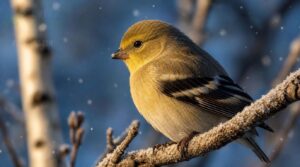
Winter plumage is more than just a seasonal wardrobe swap — it’s a biological system with its own rules, triggers, and trade‑offs.
Driven by hormones and daylight cues, these shifts follow surprisingly precise timing — much like the seasonal patterns behind rare bird species habitat changes.
To really understand why that goldfinch at your feeder looks so different in January, it helps to break the concept down into its key parts. Here’s what winter plumage actually means, and what shapes how a bird looks once the breeding season ends.
Basic Plumage Definition
Basic plumage is simply a bird’s complete feather covering — every contour feather, wing feather, and tail feather that defines its shape and surface appearance. Think of it as the default outfit, the stable visual baseline that remains after the prebasic molt and holds until the next major molt cycle. Ornithologists use this term consistently across species, making it the foundation for nonbreeding and winter plumage identification.
This regular non‑breeding feather covering is what ornithologists refer to as basic plumage.
Nonbreeding Season Appearance
Once that stable baseline is in place, what you’re actually looking at through autumn and winter is a bird’s nonbreeding plumage — quieter, more muted, and built for survival rather than display.
Seasonal molt drives this shift, swapping out worn summer feathers for denser winter ones that prioritize insulation and camouflage over attracting a mate.
Winter Versus Breeding Plumage
Think of winter versus breeding plumage as a bird’s two wardrobes — one for survival, one for show.
Breeding plumage bursts with bold color and sharp contrast, driven by the metabolic push to attract a mate.
Winter plumage quietly steps back, trading vivid plumage coloration changes for muted camouflage that keeps a bird alive through the cold months.
The tradeoff is remarkably practical.
Molt Versus Feather Wear
Molt and feather wear are two different forces that shape how a bird looks — and they often work together.
Molting is the deliberate, hormonally timed replacement of old feathers with new ones.
Feather wear and abrasion, by contrast, is just daily life doing its damage.
Both contribute to winter plumage, but through completely different mechanisms.
Age and Sex Differences
Age and sex shape winter plumage in surprisingly distinct ways. Females molt earlier in autumn — about four days ahead of males on average — while males often hold onto brighter baseline tones before fading into quieter nonbreeding season colors. Juveniles face the steepest climb, needing roughly 20 percent more protein to complete juvenile molt timing on schedule.
- Female earlier molt prioritizes cryptic camouflage sooner
- Males delay for residual male plumage brightness
- Young birds show slower, hormonally driven feather arrival
- Sex habitat partitioning produces distinct winter patterns within the same species
Do Birds Change Color in Winter?
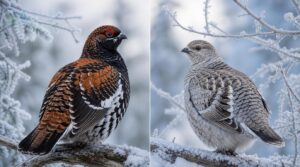
Yes, but it’s more complicated than a simple yes or no. Some birds swap one color for another entirely, some just fade, and others barely change at all. Here’s how the spectrum actually breaks down.
True Color-changing Species
Some birds don’t just fade — they completely rebuild their look. Ptarmigan white transformation is the most dramatic example: these birds swap mottled summer brown for a pure white winter coat, disappearing into snow-covered landscapes almost entirely.
| Species | Winter Color Change |
|---|---|
| Rock Ptarmigan | Pure white winter plumage |
| Snow Bunting | Pale gray with white tips |
Snow Bunting gray tones and white-tipped feathers serve the same purpose — blending into open, snowy terrain where predators have a clear sightline. These aren’t subtle shifts. They’re full seasonal reinventions driven by melanin pigmentation cycles tied to daylight length.
Boreal Chickadee paler coloring and Black-capped lightening of underparts show how even small adjustments matter. Less contrast means less visibility. That’s winter color adaptation working quietly, species by species.
Birds That Only Fade
Not every bird goes through a dramatic reinvention. Some species simply fade at the edges, their summer brilliance slowly worn down by wind, cold, and the quiet economics of survival.
Goldfinches are the clearest example — olive drab replaces that electric yellow, not through any theatrical molt, but through a measured energy tradeoff that winter demands.
Partial Seasonal Changes
Some birds split the difference — not a full reinvention, not a simple fade, but a selective feather swap that leaves them looking like two seasons at once.
- Head and body feathers replace through staggered molt phases, while wings stay unchanged
- Younger birds often show less pronounced partial shifts than adults
- Regional plumage shifts mean harsher climates drive more visible change
- Worn and fresh feathers create a mixed winter plumage across the body
- Age-related variation shapes how dramatically the seasonal plumage differs bird to bird
Species With Little Change
Not every bird gets a seasonal makeover. Some species maintain year-round plumage with minimal seasonal variation — Blue Jays and Northern Cardinals, for instance, look nearly identical in January as they do in June.
| Species | Winter vs Summer Plumage |
|---|---|
| Blue Jay | Consistent coloration year-round |
| Black-capped Chickadee | Unchanged winter appearance |
| Downy Woodpecker | Static feather patterns throughout |
Plumage Versus Lighting Effects
Here’s a twist worth considering: sometimes the bird hasn’t changed at all — your lighting has.
Light angle effects shift dramatically in winter, when the sun sits lower in the sky, casting plumage in flatter, cooler tones.
Snow luminance impact can wash out subtle markings entirely, while overcast skies flatten color contrast, making even familiar species look strangely muted and harder to read.
How Molting Creates Winter Feathers
Molting is the engine behind every seasonal wardrobe swap you notice at your feeder. It’s a precise biological process, timed and sequenced in ways that would impress any engineer. Here’s what’s actually happening when birds swap out their feathers each year.
Prebasic Molt Timing
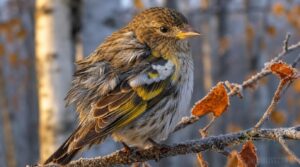
Right after the breeding season wraps up, most songbirds begin their prebasic molt, replacing worn feathers before winter arrives. Molt start timing isn’t random — it’s shaped by photoperiod effects, food availability, and how hard a bird worked during breeding. Heavy breeders often delay the molting cycle until nesting duties are completely finished.
Key factors that influence feather molt timing:
- Food resource influence is huge — birds need protein-rich diets to fuel feather synthesis efficiently
- Breeding effort delay means late nesters may begin seasonal plumage changes weeks after early breeders
- Primary feather sequence follows a reliable inner-to-outer pattern, minimizing flight disruption during replacement
Partial Versus Complete Molt
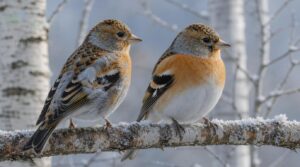
Not every bird swaps out its entire wardrobe at once.
In a partial molt, only selected feather tracts are replaced — body feathers, perhaps some wing coverts — while flight feathers stay put. A complete molt replaces everything, demanding far more protein and time.
The tradeoff is real: more feathers renewed means longer downtime, but also fresher insulation heading into winter.
Wing and Tail Replacement
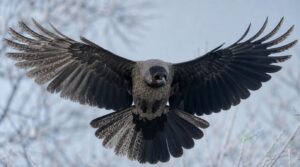
Flight feathers are the last to go during the feather replacement cycle — and for good reason. Losing primary wing and tail feathers too quickly would ground a bird entirely. Instead, molt follows a careful sequence, replacing feathers symmetrically so lift stays balanced throughout.
- Wing alignment process preserves aerodynamic stability
- Component inspection protocols mirror how birds drop damaged feathers first
- Tail feathers support steering during this vulnerable phase
- Structural integration completes once symmetry is restored
Feather Growth Energy Costs
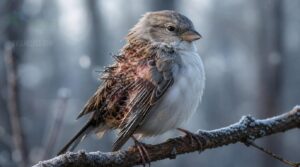
Growing a new set of feathers isn’t free. Feather synthesis consumes up to 25% of a bird’s total body protein, and resting metabolic rate climbs roughly 28% during peak molt.
Feather synthesis consumes up to 25% of a bird’s total body protein, and molt spikes resting metabolic rate by nearly 30%
Keratin production itself is surprisingly inefficient — only 2–4% of that energy actually becomes feather. The rest fuels supporting tissues.
Small birds pay this bill fast; larger species spread it over months.
Avoiding Migration Overlap
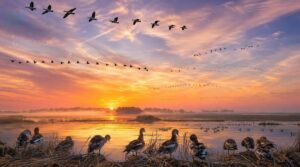
Molting and migration can’t happen at the same time — the energy demands simply don’t stack. That’s why birds have evolved remarkably precise scheduling strategies to keep these two costly processes from colliding:
- Staggered departure timing lets local populations leave days apart, avoiding crowding at stopover sites
- Separate flyways route subpopulations through distinct corridors
- Route adjustments shift slightly year to year based on wind and jet stream patterns
- Stopover management spreads habitat use across multiple protected sites
- Dawn chorus signals help cohorts track and coordinate their own departure windows
Hormones and Daylight Triggers
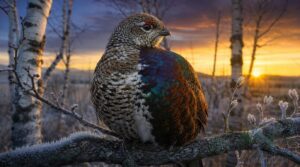
Birds don’t just decide to change their feathers on a whim — their bodies follow a precise internal calendar, and that calendar runs on hormones and light.
As days grow shorter, a cascade of biological signals tells the body it’s time to swap plumage, long before the first frost arrives.
Here’s what’s actually driving that process.
Shorter Daylight Cues
Think of daylight as a biological clock that birds can’t ignore. As summer fades, day length decline does something quiet but profound — it tells a bird’s brain that winter is coming, long before the first frost arrives.
This is photoperiodism at work. When daylight drops below roughly 12 hours, many temperate species cross a critical photoperiod threshold, and the countdown to seasonal plumage begins. Longer nights reduce melatonin suppression, which cascades into hormonal shifts that trigger molt timing shifts and the development of winter plumage. It’s a remarkably precise system.
But here’s the catch: artificial light impact is real. Urban birds exposed to streetlights and lit-up buildings experience scrambled night length influence, which can delay or advance their seasonal plumage on an unpredictable schedule. Your backyard birds might be flying on a broken clock.
| Daylight Condition | Photoperiod Effect | Molt Response |
|---|---|---|
| Above 14 hours | Breeding hormones active | No molt initiated |
| Around 12 hours | Threshold crossed | Molt process begins |
| Below 10 hours | Night length dominant | Winter plumage develops |
| Artificial light present | Night signal disrupted | Molt timing shifts unpredictably |
Understanding hormonal triggers tied to light helps explain why feather coloration changes aren’t random — they’re deeply wired into the calendar.
Declining Breeding Hormones
Once daylight crosses that critical threshold, the hormonal dominoes start falling. Declining GnRH levels pull testosterone and estrogen down with them, effectively switching off the machinery behind bright breeding plumage.
Here’s what that hormonal shift actually does:
- Reduces gamete production and mating drive
- Allows subdued winter coloration to emerge
- Frees up metabolic energy previously spent on pigment synthesis
- Coordinates molt timing with seasonal survival needs
Thyroid Hormone Activity
While sex hormones control whether a bird looks bright, thyroid hormone (T4) controls how fast it transitions. When thyroxine surges, it activates deiodinase enzymes that convert T4 into the more potent T3, ramping up metabolic rate and triggering rapid feather follicle activity.
That biochemical acceleration is fundamentally what powers the molt engine from the inside.
Melatonin and Night Length
Think of melatonin as the bird’s internal clock-keeper, one whose voice gets louder every autumn.
As nights grow longer, the pineal gland extends its nocturnal melatonin secretion, and that longer signal coordinates the cascade of seasonal hormones governing winter plumage development. It’s a beautifully simple mechanism — night length tells the bird exactly what time of year it is.
Stress Effects on Molt
Stress is a silent saboteur of moulting. When corticosterone spikes — say, during food scarcity or a harsh cold snap — your bird’s body quietly redirects energy away from feather growth toward pure survival. Corticosterone suppression of molt can stretch the process out, lower feather quality, and compromise winter plumage before it even forms.
- Molt duration increase happens when chronic stress limits keratin synthesis
- Immune molt tradeoff forces birds to choose between fighting pathogens and growing feathers
- Feather quality decline shows up as thinner, weaker vanes with structural abnormalities
- Stress hormone impact can trigger partial or entirely skipped molts in vulnerable individuals
Winter Feather Structure Changes
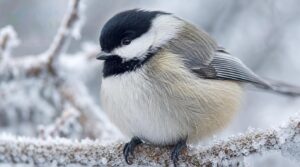
Winter plumage isn’t just about color — the feathers themselves are built differently. A bird’s winter coat is structurally upgraded in ways that would surprise most people. Here’s what actually changes beneath the surface.
Denser Insulating Barbs
Winter feathers aren’t just thicker — they’re architecturally smarter. Dense barb clusters pack tightly along each feather shaft, creating countless micro air pockets that trap still air against the bird’s skin. This air trapping microstructure acts like a built-in sleeping bag.
Meanwhile, barbule alignment patterns lock neighboring barbules together, sealing gaps where cold air could sneak through and dramatically improving insulation efficiency.
Added Feather Volume
All those tightly packed barbs create structure, but structure alone isn’t enough — birds also need raw feather volume to survive winter.
During prebasic molt, new contour feathers grow with thicker down clusters and longer outer plumes, producing a noticeably fuller silhouette.
That extra bulk traps more still air, amplifying thermal insulation right where cold hits hardest: chest, flanks, and rump.
Stronger Feather Attachment
More feathers only help if they stay in place. That’s where feather attachment mechanics earn their keep. Cuticular hooklets on each barb latch onto neighboring barbules, creating barbule interlocking that holds the feather vane together under wind pressure and wing flexion.
A reinforced follicle collar anchors each quill more firmly, while enlarged quill knobs distribute wing load across multiple attachment points rather than stressing a single root.
Keratin Lipid Changes
The attachment system keeps feathers anchored, but the chemistry inside those feathers is doing quiet work too.
Lipid composition shifts during winter, with long-chain fatty acids and waxes integrating more deeply into the keratin matrix.
This creates micro-lamellar waterproof layering that sheds moisture efficiently, while boosting thermal insulation and feather rigidity — less flexibility, more protection.
Smart engineering at a molecular scale.
Feathered Feet Adaptations
Some birds take winter insulation all the way down to their toes. Species like Willow Ptarmigan grow winter foot plumage that covers the tarsus and toes completely, acting as built-in snowshoes.
This thermal foot regulation reduces heat loss dramatically during cold foraging bouts, while toe feather coverage also doubles as camouflage against snowy ground — function and concealment, beautifully combined.
Why Winter Plumage Looks Duller
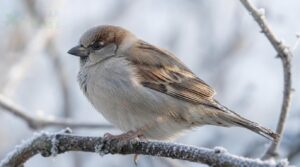
If you’ve ever wondered why that backyard sparrow looks so washed-out compared to your field guide photos, you’re not imagining it. Winter plumage is genuinely duller, and there are real biological reasons behind every muted tone and faded edge. Here’s what’s actually driving that color shift.
Reduced Pigment Production
Think of it like a dimmer switch — your bird’s color doesn’t flip off, it just turns down. During melanin synthesis decline, feather follicles produce less pigment as breeding hormones drop with shorter days. Tyrosinase activity falls, slowing melanin production at the source:
- Pigment granules become coarser and fewer
- Genetic pigment regulation shifts toward faster feather growth
- Hormonal pigment suppression dulls winter feather pigmentation overall
- Carotenoid pigments also fade as color fading becomes metabolically strategic
Less Breeding Ornamentation
Once breeding season ends, ornament reduction kicks in fast. Feather complexity drops by 15–25% in many passerine species, and eye rings, facial patches, and wing covert contrast all simplify noticeably.
Bright carotenoid reds and yellows give way to cryptic patterns — muted tones that help birds blend into bark, snow, and dormant vegetation, where standing out isn’t charming, it’s dangerous.
Energy-saving Color Choices
Color isn’t just visual — it’s metabolic. In winter plumage, color-driven energy savings matter more than looking good. Producing rich carotenoid pigments costs real resources, so birds simply stop. Duller tones require less synthesis, freeing energy for survival.
Darker heat absorption through melanin-rich feathers also helps retain warmth, making muted winter coloration a quietly efficient thermal strategy.
Worn Feather Tips
Feather wear is a slow, quiet process — and by winter, it shows. As the season drags on, tip abrasion causes barbs to fray and break, leaving ragged edges that scatter light differently than fresh feathers do. That subtle roughness is part of why winter plumage often looks duller than a fresh fall molt would suggest.
Here’s what’s actually happening beneath that worn surface:
- Worn tip drag increases slightly with each wingbeat, as frayed edges catch air less cleanly than sharp, new feathers.
- Microscratch dirt accumulates in tiny barbule grooves, reducing the feather’s ability to repel water and stay clean.
- Waterproofing loss follows, as micro-abrasions disrupt the smooth surface that normally sheds rain and morning dew.
- Winter wear signs — ragged silhouettes, faded edges, exposed rachis — are reliable clues that a bird is working with older feathers, not freshly molted ones.
What’s smart about this, though, is that feather wear isn’t purely a liability. In species like the Northern Cardinal, worn gray tips gradually reveal the vivid red beneath — a built-in color reveal that requires zero extra energy. For many others, abraded tips reduce reflectivity, quietly improving camouflage against dull winter backgrounds. Nature’s efficiency, hiding in plain sight.
Muted Nonbreeding Patterns
By winter, a bird’s pattern doesn’t just fade — it simplifies. Contrast diminishment is the defining shift: the bold lines and sharp boundaries of breeding plumage give way to softer, blended tones. Head markings wash out, facial stripes turn indistinct, and the olive-gray palette settles across the body like a quiet default mode.
| Feature | Winter Change |
|---|---|
| Facial markings | Fade to faint, washed-out lines |
| Body color | Shifts to olive or gray tones |
Melanin production declines during nonbreeding status, pulling pigment intensity down across the board. That pattern simplification isn’t a flaw — it’s camouflage doing its job quietly.
Camouflage and Predator Avoidance
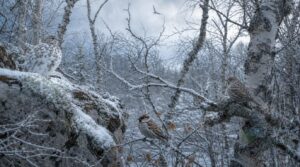
Dull winter plumage isn’t just an energy-saving shortcut — it’s a survival strategy playing out right in front of you. A bird that blends into its surroundings is a bird that makes it to spring. Here’s how winter coloration works as a camouflage system across different habitats and species.
Snow Background Matching
Against a snow-covered landscape, avian camouflage becomes almost architectural.
Birds like the Rock Ptarmigan and snow bunting develop white wing bars, pale mantles, and gray undertones that mirror snowy terrain under diffuse winter light.
They also practice microhabitat choice and silhouette minimization, crouching low on snow-covered branches to shrink their shadow and disappear into the background.
Leaf-litter Camouflage
Not every bird hides against snow. For species that winter in woodland understories, leaf-litter camouflage is the real survival strategy.
Muted browns, tans, and olive tones in their winter plumage mirror decomposing leaves and dappled shadow.
Irregular feather edges and speckled patterning break up body outlines against the forest floor’s chaotic texture, making a resting bird genuinely hard to spot.
Shorebird Winter Grayness
Shorebirds take a different approach. Species like the gray plover shed their bold breeding contrast for a uniform, muted palette — soft grays and washed browns that mirror mudflats, wet sand, and pebbled shorelines. It’s winter camouflage at its most functional.
- Back feathers show faint darker speckling that breaks up a clean outline
- Wing coverts lose bright markings, reducing conspicuous flashes during movement
- Belly contrast fades, minimizing silhouette against open flats
Lower Predator Detection
That muted look isn’t just aesthetic — it’s survival. Snow Camouflage and the Countershading Effect work together, making birds nearly invisible against pale winter backdrops when viewed from above.
Add Tucked Posture to shrink their visible profile, Dawn Foraging when predator vision is weakest, and Group Dilution, spreading individual risk across the flock, and winter plumage becomes a remarkably complete predator avoidance system.
Habitat-specific Coloration
Where a bird lives shapes what it wears. Microhabitat adaptation fine-tunes winter plumage beyond simple "look dull" logic:
- Rocky shores favor mottled gray-brown tones matching pebbles
- Wetland edges push birds toward dark olive-green hues
- Open tundra drives near-white seasonal coloration for snow cover
Environmental pigments drawn from local diets reinforce these habitat-specific shifts naturally.
Species That Change—or Don’t
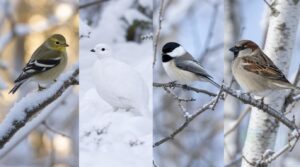
Not every bird follows the same winter makeover script, and that variation is actually what makes seasonal birding so interesting. Some species swap their colors so dramatically that you might double-check your field guide, while others barely look different from one season to the next.
Here’s a closer look at a handful of familiar birds and what winter does—or doesn’t—do to their appearance.
Goldfinches Turn Olive-drab
The American Goldfinch is basically a different bird in winter. Through molting cycles driven by shorter daylight, males swap their electric yellow for olive drab genetics expressed as muted, earthy tones — a full seasonal plumage reset that catches many feederwatchers off guard.
| Season | Male Appearance |
|---|---|
| Summer | Bright yellow, black cap |
| Winter | Olive-green, buffy wingbars |
Their winter foraging behavior shifts too, favoring dense seed patches where dull coloring actually helps.
Cardinals Show Gray Tips
Male Northern Cardinals don’t disappear in winter — they just go a little gray.
Gray tip timing peaks in fall, when prebasic molt lays down freshly grown feathers carrying reduced carotenoid pigment near their edges. That muted fringe is temporary, not permanent, and it’s actually a useful field identification clue for winter birding.
Ptarmigans Become White
Ptarmigans pull off winter’s most dramatic disguise. Through a prebasic molt triggered by shorter days and dropping hormone levels, Rock and Willow ptarmigans trade their mottled brown summer coat for pure white feathers — a textbook case of photoperiodism in action.
That white isn’t paint; it’s structural, built from melanin-depleted barbules that scatter light evenly, keeping them invisible against snow no matter the conditions.
Robins Stay Reddish
Not every species follows the molt-to-dull playbook. European robins hold onto their bright red breast year-round, a striking example of seasonal plumage stability that surprises many birders expecting winter to mean washed-out colors.
That color comes from carotenoid retention in the feathers — and since both sexes keep it, the red breast doubles as a territorial signaling tool through the coldest months.
Blue Jays Remain Blue
Blue Jays are the rare exception that makes you rethink winter plumage altogether. Their blue isn’t pigment — it comes from microscopic feather structures that scatter light, so seasonal molt can’t strip it away.
Even in cold, flat winter light, that structural color holds.
While other backyard birds fade to olive or gray, Blue Jays stay unmistakably, reliably blue.
Identifying Winter Birds at Feeders
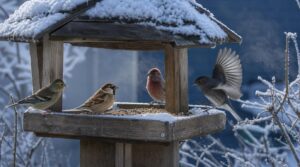
Winter feeders are basically a free masterclass in bird ID, if you know what to look for. The tricky part is that many species look surprisingly similar once breeding colors fade, and males often resemble females more than you’d expect. A few reliable clues can cut through the confusion fast.
Wing-bar Color Clues
Wing bars are one of the most reliable field identification clues you have in winter, especially when overall plumage looks washed out and dull. In goldfinches, pale wing bars stand out cleanly against olive-brown wings, while chickadees show crisp white bars even in flat winter light.
Fresh post-molt feathers keep those bars sharp — worn tips soften the contrast considerably.
Rump Patch Markings
Rump patches are another surprisingly reliable plumage cue when you’re squinting at a winter flock. The Yellow-rumped Warbler practically announces itself — that bright patch holds up even as other seasonal plumage fades around it.
Look for contrast between the rump and tail base; field identification gets much easier when that mark stays bold.
Size and Posture
Beyond rump patches, size and posture tell a surprisingly rich story. A bird huddled at your feeder in January isn’t just cold — it’s actively managing heat loss. Leg tucking behavior, feather bulk effect, and neck extension all shift how large a bird actually looks:
- Body size perception changes when winter feathers add visible girth
- Feather density makes small birds look rounder, almost puffed-up
- Wing fold dynamics keep heat trapped close to the body
- Thermal regulation causes hunching, compressing the silhouette
- Energy conservation explains why birds crouch rather than stand tall
That hunkered sparrow isn’t smaller than usual. It’s just warmer.
Similar-looking Sexes
Size and posture get you surprisingly far, but then winter’s real curveball arrives: similar-looking sexes. During basic plumage, males and females of many songbirds share the same muted browns and grays, making plumage dimorphism nearly invisible.
Your best fallback? Watch feeding order and listen closely — subtle vocal differences and feeder dominance often reveal sex when coloration simply won’t.
Behavior-based Identification
When plumage fails you, let behavior take over. Watch the foraging sequence closely — juveniles hop erratically, sampling multiple seeds, while experienced adults settle into a groove.
Movement tempo slows in cold snaps, and call notes grow shorter, sharper.
A bird’s rhythm at the feeder often tells you more than its feathers ever will.
Supporting Birds in Winter Plumage
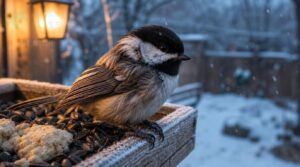
Once you understand what birds are going through during a winter molt, it’s hard not to want to help. Feather synthesis burns through serious protein reserves, and cold nights add even more pressure on their system. A few simple changes to how you set up your yard can make a real difference.
Protein-rich Bird Foods
Feathers cost a lot to build — mealworm nutrition delivers roughly 45% protein by dry weight, making them one of the smartest additions to your feeder during molt season. Pair that with peanut protein and suet blends loaded with insect fragments, and you’re covering both energy and feather maintenance in one go.
High-protein seeds like black oil sunflower round it out naturally.
Consistent Feeding Stations
Consistency is what separates a helpful feeder from a forgotten one. Birds in winter plumage are already burning extra energy to stay warm, so predictable food availability matters more than variety.
Place your station in a sheltered, covered spot — this keeps seed dry and gives birds a reliable landing pad even through wind and snow.
Elevated feeder height cuts ground predator risk, making every visit safer.
Ice-free Bird Baths
Water is often overlooked, but birds need it for drinking and feather maintenance even in winter. Ice-free bird baths are worth prioritizing.
A submersible de-icer or heated bath mat keeps a thin liquid surface available without running constantly. Solar-powered options work well on clear days, and dark-colored basins naturally absorb more heat, buying extra time before freezing.
Shelter From Wind
Wind cuts through winter feathers fast, and even dense insulating plumage can’t fully compensate when gusts strip away the warm air birds trap near their skin.
Positioning feeders behind dense shrubs or evergreen hedges creates a sheltered microclimate — sometimes 2 to 4 degrees warmer — giving birds more time to feed comfortably without burning extra energy just to stay warm.
Predator-safe Feeding Areas
A feeder that attracts birds also attracts what hunts them — so predator-safe design isn’t optional.
Mount feeders on smooth poles 4–6 feet high, keep the ground bare beneath them, and clear brush within 15 feet.
Buried hardware cloth blocks diggers, while camera monitoring helps you catch problems early and respond fast.
Frequently Asked Questions (FAQs)
Can climate change disrupt seasonal molt timing?
Yes, climate change disrupts molt timing. Warming advances fall molt by roughly one day per year in some songbird populations, creating phenology mismatches between feather replacement and peak food availability.
Do urban birds molt differently than rural birds?
Cities are a different kind of ecosystem. Urban birds molt earlier and longer than their rural counterparts, shaped by light pollution, year-round food, and stress hormones that stretch the whole process out.
Which winter birds benefit most from backyard shelter?
Small birds like chickadees, goldfinches, and nuthatches benefit most. Roosting boxes, dense evergreens, and brush piles cut heat loss greatly, helping birds conserve the energy their winter insulation alone can’t fully protect.
Do birds recognize each other after plumage changes?
Yes — birds rely on vocal and behavioral cues, familiar shapes, and individual memory to recognize each other even when seasonal plumage dulls dramatically. Color is just one piece of a much richer recognition system.
Conclusion
Winter plumage bird changes are less a disguise and more a dialogue—birds reading the season’s cues and responding with astonishing biological precision. Every muted feather, denser barb, and hormonal shift tells you something real about the animal in front of you. Once you understand that machinery, a dull winter sparrow stops looking ordinary.
Stock your feeders, keep your bath ice-free, and watch closely. The birds have already adapted.
The only question is whether you’re paying attention.
- https://web.stanford.edu/group/stanfordbirds/text/essays/Molting.html
- https://avianreport.com/bird-molting
- https://www.birdsoutsidemywindow.org/2019/06/22/ptarmigans-change-with-the-seasons
- https://factsanddetails.com/asian/Northern_Asian_and_European_Animals/sub2_8e/entry-9505.html
- https://www.reconnectwithnature.org/news-events/the-buzz/why-do-birds-molt