This site is supported by our readers. We may earn a commission, at no cost to you, if you purchase through links.

Small enough to fit in your hand and quiet enough to vanish against pine bark, the flamulated owl often goes unnoticed even in forests where it returns each spring. Its dark eyes, flame-like markings, and low hoots belong to one of western North America’s most elusive nocturnal birds.
Unlike larger owls that hunt rodents in open country, this species stays deep in cool conifer woods, slipping from perch to perch after moths and beetles.
Once you know its size, plumage, calls, and migration route to Mexico and Central America, the bird comes into sharper focus—a small predator shaped by mountain forests and the rhythms of insects.
Table Of Contents
- Key Takeaways
- What is The Flammulated Owl?
- Physical Appearance and Identification
- Habitat, Range, and Elevation
- Behavior, Diet, and Nesting
- Conservation Status and Population Threats
- Frequently Asked Questions (FAQs)
- What is the meaning of Flammulated Owl?
- Do Flammulated Owls hoot?
- What does a flammulated owl look like?
- What is a flammulated owl?
- What is flammeolus owl?
- What do flammulated owls eat?
- Where do flammulated owls nest?
- Do owls fight Bluebirds?
- What are some fun facts about Flammulated Owls?
- What is the difference between a screech owl and a Flammulated Owl?
- Conclusion
Key Takeaways
- The flammulated owl (Psiloscops flammeolus) is a palm-sized nocturnal hunter of western mountain forests, weighing just 45–63 g, with dark eyes and flame-patterned plumage that make it nearly invisible against conifer bark.
- It feeds almost entirely on insects—moths and beetles—caught in short sallies from mid-canopy perches, with prey size typically ranging from 6–14 mm, tying its survival directly to seasonal insect cycles.
- Every year it makes a roughly 1,900‑mile migration south to Mexico and Central America, timing its departure with the collapse of insect abundance in its mountain breeding grounds.
- Though currently rated Least Concern by the IUCN, the species faces mounting pressure from fire suppression, logging, habitat fragmentation, and climate-driven shifts that compress its elevational range and disrupt prey timing.
What is The Flammulated Owl?

The Flammulated Owl is one of those birds that rewards the curious — small enough to fit in your palm, yet tough enough to migrate across mountain ranges every year. Its scientific name, classification, and quirky flame-inspired identity all tell a story worth knowing.
To improve your odds in Colorado, this guide to Colorado owl sounds and flammulated owl calls helps you recognize its soft, low hoots.
The Flammulated Owl is palm-sized but mountain-crossing tough, a tiny migrant with a name as vivid as its markings
Here’s what sets this little owl apart from the rest.
Scientific Name and Classification
Flammulated Owl carries the scientific name Psiloscops flammeolus, placing it within the family Strigidae under the order Strigiformes.
Its taxonomic history includes a reclassification from the genus Otus, reflecting updated phylogenetic relationships.
binomial nomenclature, first established by Johannes Kaup in 1852, remains the universal identifier — no synonymy or revisions have displaced it from formal checklists since. Biological classification organizes immense diversity across all organisms.
Meaning Behind The Name Flammulated
The name itself tells a story. Flammeolus comes from the Latin flame-colored, a nod to the flamelike markings stitched across this owl’s shoulders and back.
Early naturalists documenting Morphology Inspired Naming chose well — that variegated pattern of brown and rust genuinely mimics flickering light on bark. Today, the Flammulated Owl carries that Latin Flame Origin as Birding Community Recognition shorthand for its cryptic plumage in the field.
How It Compares to The Western Screech-Owl
Side by side, the Flammulated and Western Screech-Owl look like distant cousins at best. Here’s where they split apart:
- Size — Flammulated weighs ~60g; Screech-Owl doubles that at ~120g.
- Wing Morphology — Flammulated’s narrower wings enable Flight Agility through dense conifers.
- Call Pitch — Flammulated calls softer and higher; Screech-Owl screeches broadly.
- Prey Composition — Flammulated hunts insects almost exclusively; Screech-Owl takes mammals too.
- Territory Range — Screech-Owl tolerates suburbs; Flammulated stays mountain-bound.
Physical Appearance and Identification
The Flammulated Owl packs a lot of character into a surprisingly small frame, and knowing what to look for makes all the difference when you’re scanning a dark ponderosa pine at dusk. A few key physical traits set it apart from every other small owl in western North America.
Here’s what you’ll want to notice.
Size, Weight, and Measurements

Don’t let the size fool you — this owl packs a lot into a compact frame.
That small build helps explain why the barn owl’s wingspan and hunting style feel so surprisingly efficient in flight.
The Body Length Range sits at 6–7 inches (15–18 cm), with Wingspan Dimensions reaching roughly 16 inches.
Sexual Size Dimorphism means females run slightly larger.
Seasonal Weight Changes keep body mass between 45–63 g, while the short tail and modest Beak Length complete these understated Body Dimensions.
| Measurement | Value |
|---|---|
| Body Length | 6–7 in (15–18 cm) |
| Wingspan | ~16 in (36–42 cm) |
| Body Mass | 45–63 g |
Gray and Red Color Morphs

Two distinct looks define this species — gray and red — both rooted in genetic color variation rather than age or sex. Gray morphs carry mottled grey and brown plumage that melts into lichen-covered bark, while red morphs show rusty marks on shoulders and warm cinnamon tones driven by higher pheomelanin levels. Seasonal color shift can subtly alter intensity during molt.
Here’s what separates them in the field:
- Gray morphs reduce predator visibility by mirroring spruce and fir bark almost perfectly.
- Red morphs display heavily mottled plumage with amber warmth concentrated on the upper body.
- Morph distribution varies locally, with grays favoring higher elevations and reds appearing more in mixed forest zones.
Distinctive Dark Eyes and Facial Disc
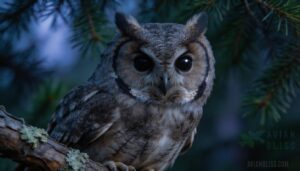
Although small, you notice large dark eyes set in a shallow disc, an Acoustic Funnel Design supporting Binocular Depth Perception, and Pupil Dilation Mechanics for precise nocturnal tracking in dim forest light.
| Feature | Function |
|---|---|
| Eye Contrast Camouflage | cryptic camouflage |
| Facial Disc Flexibility | hearing focus |
| ear tufts | subtle outline |
| mottled grey and brown plumage | identification features and plumage of Flammulated Owl |
Camouflage Plumage and Field Marks
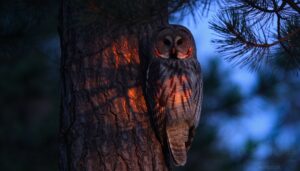
When perched, the owl’s Mottled Background, Bar Stripe Patterns, and Countershading Tonality, plus Facial Mask Emphasis, create cryptic coloration that dissolves its outline against bark.
A Seasonal Plumage Shift enhances Camouflage and cryptic coloration in owls, while red morphs improve the Morphology and plumage characteristics of Flammulated Owl, strengthening Identification features and plumage of Flammulated Owl as field identification markers.
Habitat, Range, and Elevation

To understand where the flamulated owl fits, you first need a clear picture of the places it uses across the West.
The next points look at the forest types it prefers, the broad sweep of its breeding range, and how elevation shifts from one region to the next. That framework makes the habitat pattern easier to follow.
Preferred Coniferous and Mixed Forest Types
Best found where dry and cool forests meet, you should look in Ponderosa Pine Stands, Mixed Conifer-Hardwood tracts, and Montane Spruce-Fir mosaics.
This owl favors mountain pine forests with ponderosa pine, open coniferous or mixed forests, mixed forest habitat, coniferous mountain forest structure, Lodgepole Pine Fire patches, and Deadwood Snag Habitat that supplies cover, foraging perches, and nesting cavities nearby.
Breeding Range Across Western North America
Its breeding map runs broad but precise: from the Pacific Northwest and Rocky Mountains through the Western United States; Northern Range Limits reach southern British Columbia, while Southern Range Extensions approach northern Baja and Mexico.
Microclimate Influence shapes habitat preferences and elevational range, Breeding and nesting behavior of Flammulated Owl, Genetic Diversity Patterns, and Forest Fragmentation Effects across conifer landscapes.
Elevational Distribution and Regional Variation
Elevation shapes the Regional distribution of flammulated owl: Pacific Northwest Elevation centers at 900–2100 m, Southwest Desert Limits on 1500–2400 m pockets, and the Rocky Mountain Span reaches 1000–2600 m.
Habitat preferences and elevational range follow an Insect Phenology Gradient, with Mid-elevation Refugia supporting Seasonal movement between high mountains and lowlands, including Lowlands in spring near High Mountains during migration windows.
Behavior, Diet, and Nesting
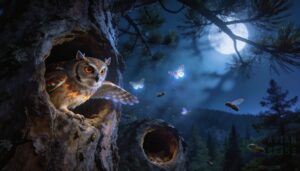
This section looks at how the Flammulated Owl moves through the night and uses forest cavities through the breeding season. You’ll see the key patterns that shape its feeding, nesting, calling, and seasonal movements.
The points below break those behaviors into clear, practical pieces.
Nocturnal Hunting and Foraging Habits
Although rarely seen, the owl’s Silent Flight Mechanics, Moonlight Influence, Perch Selection, Ear Asymmetry, and Prey Detection shape its nocturnal hunting adaptations.
Your field notes on nocturnal hunting and vocalizations of Flammulated Owl should track prey capture technique, because its insectivorous diet, diet composition and hunting behavior, and short sallies from mid-canopy perches peak soon after dusk, then taper before dawn.
Insect-Dominated Diet and Prey Types
The dusk hunting you track is driven by an insectivorous diet: moths, beetles, and other arthropods taken through short sallies. Prey Size Range usually falls near 6–14 mm, linking diet composition and hunting behavior to prey capture technique and Microhabitat Foraging.
Seasonal Prey Shifts alter Nutritional Value, while Prey Diversity Benefits buffer lean years and support efficient nocturnal feeding patterns.
Cavity Nesting and Nest Site Selection
After insect-rich foraging, you can trace cavity nesting to careful nest site selection in a tree cavity or artificial nest boxes. Key filters are:
- Entrance Diameter
- Cavity Depth
- Microclimate Effects
- Predator Shielding
Forest management and Dead Wood Management maintain shaded conifer cavities, usually high in large trees, where occupancy rises with deep, irregular interiors and limited disturbance from human activity.
Vocalizations and Call Patterns
Near those nesting cavities, you’ll usually detect Vocalizations and call patterns of Flammulated Owl before you see one: a Territorial Hoot, the monotonous low hoot or deep woop territorial call, soft low‑pitched hoots in courtship, a Contact Trill between mates, and an Alarm Chirp under disturbance.
Seasonal Song Variation and Playback Response both sharpen survey work in dense conifer stands.
Seasonal Migration to Mexico and Central America
- Because Migration Timing tracks insect abundance, Flammulated Owls leave breeding forests early.
- Transit Routes run south through corridors into Mexico, Guatemala, and El Salvador.
- Migration patterns and wintering areas shift yearly with weather and prey conditions.
- Agricultural Corridors, Labor Demand, or Remittance Impacts drive these nocturnal movements.
- Habitat loss and fragmentation effects likely disrupt stopovers, connectivity, and survival rates.
Conservation Status and Population Threats

To understand where the flamulated owl stands today, it helps to look at its current status and the pressures shaping its forest habitat. The next points walk you through the main conservation concerns, from broad landscape changes to on-the-ground support efforts.
Together, they set up a clear view of the challenges this species faces and the work tied to its future.
Current IUCN Status and Population Estimates
Status can mislead: the Flammulated Owl currently holds IUCN Status Least Concern under Assessment Criteria, yet Conservation status and population trends remain partly unresolved.
Survey Methods, Population monitoring techniques for owls, Regional Estimates, and persistent Data Gaps shape the Conservation status assessment.
Population Trends are mixed, and the overall Population trend still appears stable to declining across portions of its range.
Threats From Logging and Fire Suppression
Although small, this owl faces threats from forest management practices that reshape forest fire ecology and habitat creation:
- Fuel Load Increase, Fire Suppression Accumulation
- Canopy Gap Microclimate, Edge Habitat Fragmentation
- Salvage Logging Impacts, Snags retention, Habitat loss and fragmentation effects
These forest management practices dry fuels, remove nesting cavities, and raise burn severity in breeding stands across montane conifer forests.
Climate Change and Habitat Fragmentation
Climate pressure reshapes this owl’s map. Elevational Range Shifts compress habitat upslope, while Edge Microclimate Effects warm fragmented stands, disrupt prey timing, and create Prey Phenology Mismatch during breeding.
Reduced Corridor Connectivity increases habitat fragmentation impacts and Genetic Isolation Risks, sharpening the impact of climate change on owl habitats and worsening Conservation status and threats to Flammulated Owl across regional mountains.
Nest Box Programs and Monitoring Efforts
Think of nestboxes as field instruments: standardized checks reveal how human impact and nestbox usage shape breeding success across mountain forests, one box at a time.
- Box Placement Guidelines
- Entrance Size Standards
- Predator Guard Design, Volunteer Training
- Data Submission Protocols
- Role of citizen science in monitoring owl populations, Population trends and monitoring of Flammulated Owl, Nesting ecology of cavity-nesting owls.
Frequently Asked Questions (FAQs)
What is the meaning of Flammulated Owl?
On a dusk survey, a biologist hears Psiloscops flammeolus: Flammulated Owl, or Flammulated Scops Owl, means “little flame-colored owl,” from Latin Etymology, describing Flame-like Plumage, in Field Mark Identification despite Taxonomic history and classification changes.
Do Flammulated Owls hoot?
Yes, males produce soft lowpitched hoots, including Male Territory Hoots and a lowpitched boobooboo call; females answer with Female Courtship Calls, a booboot call.
Moonlit Hoot Frequency and Hoot Propagation Factors influence Acoustic Survey Detection.
What does a flammulated owl look like?
Robin-sized, size L 67 WS 16, dark brown overall and bark-mottled, with short ear tufts, a golden nape, broad and rounded wings.
Bill Morphology slight, Ear Tuft Size modest, Leg Feathering, Wing Shape, Tail Structure.
What is a flammulated owl?
A Flammulated Owl is a migratory, insect-eating forest owl of western North America, identified by dark eyes, mottled gray-red plumage, cavity nesting, and hoots.
Its IUCN Status is Least Concern, though Habitat Connectivity remains important.
What is flammeolus owl?
Psiloscops flammeolus is a small nocturnal owl of western North American coniferous forests, measuring 15–17 cm, relying on silent flight and acoustic localization to hunt insects under the cover of darkness.
What do flammulated owls eat?
Almost exclusively insect-driven, their diet leans heavily on Moth Preference and Beetle Consumption, with insects making up 99% of intake.
Seasonal Insect Shifts shape Prey Size Selection, while Pellet Composition reveals chitinous exoskeleton remnants.
Where do flammulated owls nest?
They nest exclusively in tree cavities — woodpecker holes, snags, mature forest habitats — usually 15 to 40 feet up, favoring ponderosa pine with sun exposure orientation and microhabitat predator avoidance built naturally into their cavity height preferences.
Do owls fight Bluebirds?
Yes, owls and bluebirds do clash.
Bluebirds use mobbing behavior against intruding birds of prey, but predation risk remains real — especially at dusk, when temporal activity overlap peaks near shared cavity nesting sites.
What are some fun facts about Flammulated Owls?
Like a whisper in the pines, these tiny owls pack surprising secrets — dark eyes, serrated wing feathers for silent flight, and marathon migrations stretching nearly 1,900 miles south each winter.
What is the difference between a screech owl and a Flammulated Owl?
The biggest giveaway? Eyes.
Screech Owls flash bright yellow eyes, while the Flammulated Owl shows dark brown ones — a rare trait among North American owls and one of its most reliable identification characteristics.
Conclusion
Imagine holding the fate of an entire species in your hands – a bird so elusive, it vanishes into thin air. The flamulated owl‘s story acts as a poignant reminder of the delicate balance between conservation and extinction.
As we work to protect its habitat and mitigate climate change impacts, every small action counts. By supporting conservation efforts and preserving coniferous forests, you can make a difference.
The outlook for this impressive owl depends on it.