
This site is supported by our readers. We may earn a commission, at no cost to you, if you purchase through links.
A snowy owl can spot a lemming from a kilometer away, then fly a thousand miles the next season chasing a different meal entirely. That kind of range says a lot about where this bird chooses to live.
The habitat of the snowy owl stretches from windswept Arctic tundra to prairie fields and airport grasslands far south of the breeding grounds. Nesting happens on frost-heaved mounds and rocky outcrops north of 71.2° N, while winter can push these owls into Kansas fields or European farmland during irruption years.
You’ll find the pattern behind these movements tied to prey, snowmelt, and terrain, each shaping where these owls settle next.
Table Of Contents
- Key Takeaways
- Snowy Owl Habitat Overview
- Arctic Tundra Breeding Grounds
- Preferred Nesting Habitat Features
- Winter Habitat and Range
- Open Habitats Beyond The Arctic
- Prey and Habitat Selection
- Snowy Owl Habitat Adaptations
- Seeing Snowy Owls Responsibly
- Frequently Asked Questions (FAQs)
- How rare is it to see a snow owl?
- What is the owl’s main habitat?
- Do Snowy Owls live alone?
- Do snow owls sleep at night?
- What is the main habitat of an owl?
- Why do snowy owls live in the tundra?
- Is the snowy owl in the Arctic?
- What trees do snowy owls live in?
- Why does the snowy owl live in the tundra?
- Where are Snowy Owls most active?
- Conclusion
Key Takeaways
- Snowy owls breed on Arctic tundra north of 71.2° N, mainly in Alaska and Canada, which hold 90-95% of the population.
- Their movements are driven by prey availability, especially lemming and vole cycles, sometimes pushing owls 500 to 1,000 miles from breeding to wintering grounds.
- During winter, snowy owls seek open, treeless landscapes like prairies, farmland, and airport grasslands that mimic tundra sightlines for hunting.
- Physical adaptations like dense plumage, daylight hunting, sharp vision, and ground-level nesting help snowy owls survive and thrive in harsh, open environments.
Snowy Owl Habitat Overview
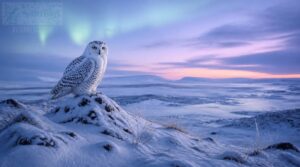
Snowy owls find their homes across wide, open spaces shaped by Arctic extremes. Their habitats shift with the seasons and the search for food. Here’s where you’ll find these astonishing birds thriving.
Enduring these harsh, icy landscapes takes a toll, which is part of why understanding what shapes a snowy owl’s lifespan offers such fascinating insight into their resilience.
Open Arctic Landscapes
Picture a landscape stripped down to its essentials: wind, snow, and space. Open Arctic landscapes stretch across treeless expanses with sparse vegetation, shaped by strong winds and windblown snow that form patterned ground.
Extreme seasonal contrast drives everything here. Short summers bring rapid snowmelt, feeding shallow lakes and reshaping Arctic hydrology. Coastal zones add braided streams and dune systems, rounding out these wide-open Arctic ecosystems.
Recent studies show that declining arctic species are struggling as competitive plants gain ground in warming regions.
Treeless Tundra Zones
Beneath the wide-open sky lies frozen ground: permafrost locks moisture in place, leaving only a shallow active layer for roots.
Mosses, lichens, and dwarf shrubs survive here, low and slow-growing, patched by wind and snowbeds. Nutrient cycling stays sluggish in these acidic soils.
It’s tough terrain, but it gives snowy owls the open sightlines they need to hunt.
Seasonal Habitat Shifts
That tundra doesn’t hold onto its owls year-round. As daylight fades and temperatures drop, they shift toward the wintering range, moving into southern Canada, the northern U.S., and open Eurasian plains.
This isn’t random wandering. It’s prey-driven migration, tracking lemming and vole cycles, with some owls covering over 1,000 kilometers between breeding and wintering grounds.
Prey-Rich Open Areas
Wherever the owls land, food does the talking. Open prairies, grasslands, and even airport turf offer the same thing the Arctic tundra does: clear sightlines and steady supplies of small rodents.
Grassland prey cycles bring booms of voles and lemmings every few years. Coastal foraging and agricultural fields add backup options, while flat prairie terrain keeps hunting easy year-round.
Arctic Tundra Breeding Grounds
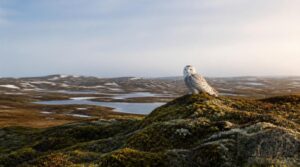
If you want to find snowy owls in summer, you’ll need to look far north. Their breeding grounds stretch across a handful of remote regions near the top of the world. Here’s where you’ll find them nesting.
Alaska and Canada
Ask yourself: where does most of North America’s snowy owl population actually nest? The answer is Alaska and Canada, home to 90-95% of breeders.
- Shared wildlife corridors link Yukon and Alaska
- Deep Indigenous land ties shape stewardship
- Resource industries operate near breeding zones
- Cross-border conservation tracks permafrost landscape changes
These factors shape the Arctic tundra distribution range across both nations’ breeding grounds.
Greenland and Scandinavia
Snow-covered fjords and rocky highlands make Greenland part of the snowy owl’s circumpolar breeding range, though populations here run smaller than in Alaska.
| Region | Political Ties | Arctic Role |
|---|---|---|
| Greenland | Danish foreign policy | Autonomous tundra habitat |
| Scandinavia | Nordic heritage | Research collaboration hub |
| Both | Shared stewardship | High Arctic monitoring |
Greenlandic autonomy and Nordic research partnerships shape ongoing habitat tracking across this stretch of the Arctic Circle.
Northern Russia
Along Russia’s Arctic coast, the Barents and White Seas frame a stretch of breeding range shared with fishing ports and mining towns. Permafrost infrastructure challenges shape life here as much as they do owl nesting choices. Key features:
- Tundra north of the Arctic Circle
- Barents Sea weather patterns
- Indigenous coastal livelihoods
- Arctic maritime ecosystems supporting prey
High Arctic Islands
Isolation shapes everything on islands like Bylot, Ellesmere, and Axel Heiberg. Glacial plateau topography and arctic coastal moraines create nesting mounds above flat terrain, while insular habitat complexity keeps prey and predators concentrated.
These remote refuges also offer clues about population health, since understanding snowy owl conservation status and threats helps explain why such isolated nesting grounds matter so much.
| Island | Elevation | Notable Feature |
|---|---|---|
| Bylot | Moderate | Stable long-term population |
| Ellesmere | High | Glacial plateaus |
| Axel Heiberg | High | Rugged coastline |
Sea ice polynyas nearby support hunting during lean months.
Permafrost and Low Shrubs
Permafrost anchors the entire tundra environment snowy owls depend on. Nesting occurs north of 71.2° N, where shrub thermal bridging cools frozen ground through winter, then reverses each spring as shrub canopies trap solar heat.
- Low shrubs shape snow depth and insulation
- Permafrost thaw processes release nutrients feeding tundra vegetation
- Tundra albedo changes influence local warming patterns
This shifting balance keeps open tundra intact, favoring nesting success.
Preferred Nesting Habitat Features
Snowy owls don’t build nests the way most birds do. Instead, they look for ground that gives them a clear view in every direction. Here’s what catches their eye when they’re scouting a spot to raise young.
Ground Nesting Sites
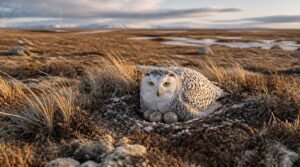
No towering trees, no cozy cavities — snowy owls simply scrape a bowl into the open tundra. These shallow ground depressions rely on nearby grasses and dwarf shrubs for concealment, with soil tones offering natural camouflage.
Placement favors microclimate stability, balancing wind exposure and thermal regulation for the eggs. Nesting density often rises near openings with good visibility, keeping predators guessing and eggs safer.
Windswept Ridges
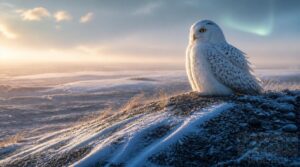
Ridge lines across the Arctic tundra offer something a flat bowl scrape can’t: crest visibility for spotting predators early.
Wind abrasion sorts sediment along these crests, leaving coarser, well-drained ground ideal for nesting. Ridge formation also shapes microclimate effects, keeping snow off eggs longer.
Owls favor ridges that offer:
- Elevated sightlines
- Firm, dry soil
- Wind-sculpted crests
Rocky Outcrops
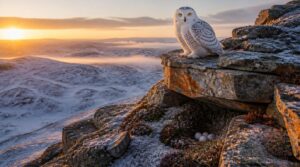
Where ridges give height, rocky outcrops give shelter. Granite domes and sandstone ledges create wind-blocked crevices where owls tuck nests away from the worst gusts.
Sun-warmed rock surfaces run 5–10°C above surrounding air, offering natural thermal regulation for eggs and chicks. These outcrops also host lichens and hardy endemic plants, making them small biodiversity islands within the wider tundra environment.
Early Snowmelt Areas
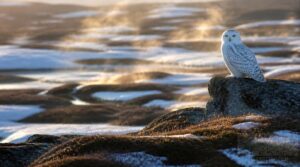
Timing matters as much as terrain. Owls favor patches where soil warming starts weeks early, kickstarting plant growth and speeding nutrient mineralization.
This creates a microhabitat patchwork across the arctic tundra, with drier soil, earlier flowering, and shifting albedo feedback loops that boost local warmth—all cues owls read when choosing nesting ground ahead of seasonal migration patterns.
Elevated Tundra Mounds
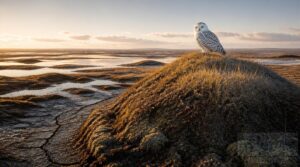
Small rises in the arctic tundra, built by repeated frost heave cycles, give owls another edge. Elevated mounds drain faster than surrounding flats, keeping nests dry after snowmelt.
Permafrost thaw at mound edges shifts moisture patterns, while drier crests support different plants than nearby lowlands—a microhabitat shift that suits an owl’s habitat requirements for firm, well-drained breeding grounds within the wider tundra landscape.
Winter Habitat and Range
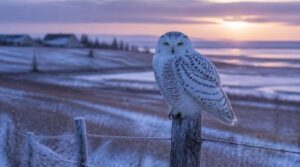
When breeding season ends, snowy owls don’t just settle down for the cold months. Some head south to unexpected places, while others stay put near the ice they know best. Here’s where you might spot one once winter sets in.
Southern Canada
Southern Canada offers snowy owls open, treeless ground that mimics tundra. Prairie climate trends in Alberta, Saskatchewan, and Manitoba bring dry, windswept fields ideal for hunting.
Agricultural land use across these grasslands provides the rodents owls rely on. Farther east, the Great Lakes lowlands and Trent River Basin offer flat, humid terrain, while Maritime coastal ecosystems round out this varied wintering range within their seasonal migration.
Northern United States
Across the northern United States, snowy owls appear in open landscapes like the Great Lakes basin, prairie fields, and airport grasslands. Harsh winters and lake effect snow shape their wintering range.
You’ll find them near major urban hubs—Chicago, Detroit, Minneapolis—yet they favor spaces with abundant prey and clear sightlines. Migration brings these North American owls south during irruptive years.
Central Russia
Central Russia marks the far eastern edge of the snowy owl’s winter range, well beyond the Moscow economic hub and its dense urban sprawl.
These owls avoid heavy Russian urban density, favoring open ground over the Volga River trade corridors and rural plains near the historic Golden Ring towns, where flat terrain still echoes their Arctic tundra breeding grounds.
Continental Europe
Continental Europe pulls in some of the snowy owl’s most unpredictable wintering guests. Birds drift south along the European plain, occasionally reaching Alpine microclimates or Mediterranean coastal corridors during irruption years.
- Open farmland near the Ural mountain borders
- Scattered sightings across temperate lowlands
- Rare visits to Iceland and the British Isles
- Flat terrain mimicking tundra conditions
Sightings stay irregular, tied to lemming cycles far north.
Arctic Sea Ice
Not every snowy owl heads south. Some stay put, hunting near sea ice, polynyas, and open leads year-round.
Multiyear ice loss matters here — thicker ice once gave stable hunting platforms. Now, seasonal melt patterns shift faster.
| Sea Ice Feature | Owl Relevance |
|---|---|
| Polynyas | Open-water hunting |
| Leads | Prey access points |
| Multiyear ice | Stable perches |
| Ice albedo feedback | Habitat shifts |
Ocean heat storage and lead formation patterns keep this Arctic habitat unpredictable.
Open Habitats Beyond The Arctic
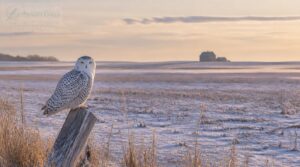
When snowy owls leave the Arctic, they don’t scatter at random. They look for wide, open spaces that feel familiar underfoot. Here’s where you’re most likely to spot one.
Coastal Dunes
Coastal dunes offer snowy owls a landscape that echoes home: open, windswept, and treeless. Wind-driven sand transport builds these ridges, while native grasses trap sand and add protection against storms.
Foredunes and parabolic formations create elevated perches similar to Arctic mounds. Beyond the Arctic tundra’s wintering areas, dunes also act as natural barriers, protecting inland coastal habitat from surges.
Saltwater Marshes
Sand dunes give way to a wetter kind of flatness once you head toward tidal ground. Saltwater marshes flood and drain daily, providing halophytic plant zoning that owls use for cover and hunting perches.
- Nutrient-rich mud provides nursery habitats for fish and invertebrates
- Sediment accretion builds elevation over time
- Grass zones shift with tides
- Open sightlines aid diurnal hunting
Open Prairies
Grasslands take over where wetlands end, and this is where the snowy owl’s wintering range stretches deepest inland. Open prairies offer the same unbroken sightlines the owl relies on, aided by loamy, well-drained soils that grow dense stands of bluestem and switchgrass.
Fire regimes and drought cycles shape grass height, while grasshopper-rich soil provides for voles, the owl’s backup prey when lemmings run scarce.
Agricultural Fields
Farmland fills a similar niche, offering the same open sightlines prairies do. Fallow and cover crop fields, with their low stubble and wide field margins, suit hunting owls best.
Soil fertility practices and crop diversification create patchy vegetation heights, drawing voles and mice. Irrigation systems and pest management indirectly shape prey abundance, feeding this irruptive species during winters far outside its usual breeding and wintering ranges.
Airport Grasslands
Boston Logan International Airport draws snowy owls for good reason: wide flat expanses mimic tundra sightlines. Runway safety management requires mowed stubble, discouraging ground-nesting birds and rodents alike.
Wildlife hazard mitigation teams monitor grass height regulation closely, balancing aviation vegetation control with airport biodiversity balance. It’s an odd overlap of avian ecology and aircraft safety, offering owls unexpected winter refuge within regular wildlife observation range.
Prey and Habitat Selection
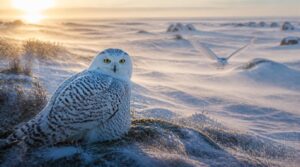
Where a snowy owl chooses to hunt comes down to one thing: food. Follow the prey, and you’ll find the owl close behind. Here’s what shapes that search across the tundra and beyond.
Lemming-Rich Tundra
Beneath the snow lies a hidden world of tunnels that keeps the tundra environment running. Snow insulation effects protect lemmings through winter, letting them forage safely.
Come spring, this creates predator-prey pulses—a burst of food sources for snowy owls. Trampling and burrowing drive nutrient cycling, while hummocks and polygons add microhabitat diversity, shaping vegetation response cycles across the Arctic.
Vole Population Cycles
Voles don’t boom and bust randomly—their numbers follow multi-year cycles, often peaking every two to five years. Three forces drive this pattern:
- Delayed density dependence from prior seasons
- Winter survival tied to snow cover and forage
- Predator-prey feedback from owls and mustelids
When lemmings and voles sync their booms, snowy owls thrive, turning scarce tundra food sources into successful breeding seasons.
Ptarmigan Hunting Areas
Ptarmigan don’t hide in forests—they live wherever the ground stays open, from coastal meadow foraging grounds to alpine scree hunting zones. Snowy owls track them across subalpine meadows, wetland fringes, and ecotone patrol areas.
| Zone | Ptarmigan Activity | Owl Advantage |
|---|---|---|
| Coastal meadow | Foraging | Open sightlines |
| Alpine scree | Cover-seeking | Elevated ambush |
| Ecotone edge | Transit | Predictable paths |
This predator-prey relationship sustains the broader tundra environment.
Coastal Bird Colonies
Coastal areas act as a second pantry. Seabird colonies along tundra shorelines range from a few dozen pairs to tens of thousands, offering predictable prey pulses near sea ice and open water. Owls target these dense nesting substrate patches during incubation peaks.
Human disturbance can shrink colony productivity, shifting bird distribution—which pushes owls to track fish-rich, low-disturbance stretches of the arctic environment instead.
Nomadic Food Tracking
A snowy owl doesn’t stay loyal to any one patch of tundra. Nomadic movement patterns drive owls 500 to 1,000 miles, tracking food sources tied to the lemming cycle.
Peak years brought 70 lemmings around one Quebec nest—proof of real prey density mapping.
Seasonal resource shifts and foraging success variables push owls onward, triggering the population booms that fuel their unpredictable diet and predator-prey relationship with Arctic prey.
Snowy Owl Habitat Adaptations
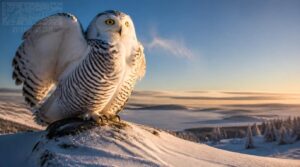
Surviving the Arctic takes more than tough attitude. The snowy owl carries a set of physical and behavioral traits built for open, cold, unforgiving country. Here’s what makes this bird so well suited to life on the tundra.
Cold-Weather Plumage
Thick feathers are the owl’s real winter coat. Dense down traps warm air while natural oil coatings shed moisture, keeping insulation dry through snow squalls.
Late-summer molt timing ensures fresh plumage before the coldest months hit. Color stays pale white with buff shading, blending into the arctic environment—proof that climate adaptation isn’t just about survival, it’s about staying unseen.
Daylight Hunting
Good camouflage only helps if you can still find food, and that’s where the Snowy Owl breaks the rules. Unlike most owls, it’s diurnal, hunting by daylight using sharp visual acuity to spot prey across open tundra. Endless Arctic light cycles make this possible.
Perch-to-pounce tactics and quiet dives capture lemmings and voles, proving daylight foraging efficiency beats nocturnal hunting when the sun barely sets.
Open-Country Vision
Sight does the heavy lifting once daylight hunting is underway. A Snowy Owl can spot movement up to a kilometer off, using binocular depth perception to judge distance before it strikes.
Snow’s ultraviolet glare actually sharpens prey outlines, aiding ultraviolet snow contrast. Narrow pupils handle Arctic glare adaptation, while a 270-degree head turn powers scanning head rotation across the open tundra landscape — no wasted movement, just steady, patient watching.
With a near-360-degree gaze and eyes tuned to snow glare, the snowy owl watches its icy world with tireless precision
Ground-Level Nesting
No tree cabinets here — a Snowy Owl scrapes a shallow bowl right into the tundra, lining it with sparse grasses and lichen for nest insulation.
- Camouflage against bare ground
- Quick drainage on gentle slopes
- Rocky cover for predator avoidance
- Reused sites year after year
- Minimal materials, minimal detection
This ground-level strategy suits avian reproduction in a harsh tundra environment, where every low profile counts.
Long-Distance Movement
That low, hidden nest is just the starting point — snowy owls don’t stay put for long. When lemming numbers crash, these birds travel 500 to 1,000 miles, riding tailwinds to conserve energy. Storms can push individuals over 2,500 kilometers off course.
As a circumpolar species, they read snow patterns and daylight shifts as navigational cues, keeping this arctic wildlife moving across its vast range.
Seeing Snowy Owls Responsibly
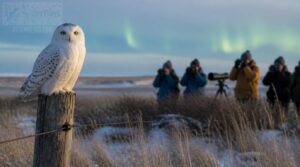
Spotting a snowy owl in the wild is a rare treat, and a little know-how goes a long way. Your presence can affect these birds more than you’d think, especially during breeding season. Here’s what to keep in mind before you head out with your binoculars.
Winter Viewing Areas
Winter Concentration Hotspots shift as owls leave the tundra habitat for open plains, coastal marshes, and farmland. Look near airports, Great Plains fields, and coastal lagoons for coastal lagoon hunting activity. Agricultural prey access draws owls to fence posts and hay bales. Prioritize best sightlines across flat, open terrain, and follow viewing site etiquette: quiet observation, distance, and patience reveal Arctic wildlife shaped by shifting bird migration patterns.
Keep Safe Distance
Give a snowy owl room to breathe. Stay at least 200 meters from roosting or feeding birds, using binoculars instead of closing the gap.
Approaching too closely raises stress hormones and risks habituation, changing normal hunting behavior. Good wildlife viewing etiquette means slow movements, quiet voices, and patience. Respecting these buffers protects the snowy owl’s fragile arctic habitat and lets natural animal behavior continue undisturbed across its distribution range.
Avoid Nest Disturbance
Finding a snowy owl nest tucked into the tundra feels rare and special, but that’s exactly when caution matters most. Stay at least 100 meters away, and never linger if you must pass by.
Loud noises, dogs, or lingering scent trails can trigger nest abandonment. Respect seasonal closures, move quietly, and let the breeding pair carry on undisturbed in this fragile Arctic environment.
Use Binoculars
Good binoculars turn a distant white speck into a real Arctic owl. Choose a pair with 8x to 10x magnification and a 40mm or larger objective lens for sharp clarity in low tundra light.
Adjust interpupillary distance for one clear circle, and check eye relief if you wear glasses. Clean lenses with a microfiber cloth, avoiding scratches that dull plumage detail and hinder identification.
Respect Protected Habitats
Protected zones exist for a reason: they keep the Arctic owl’s fragile world intact. Legislative conservation rules ban nest disturbance in breeding season, while habitat fragmentation risks threaten the tundra’s natural balance.
You can help through community stewardship roles and responsible tourism practices—reporting disturbances, staying on trails. These adaptive management strategies protect sea ice hunting grounds and northernmost regions, keeping the arctic environment thriving for generations of owls to come.
Frequently Asked Questions (FAQs)
How rare is it to see a snow owl?
Spotting one is genuinely rare. Sighting probability hinges on lemming cycles and irruption years—most winters bring few sightings south of the tundra, since these owls stay tied to their northernmost regions and remote arctic habitats.
What is the owl’s main habitat?
Wide, windswept, and wild — the snowy owl thrives across open Arctic tundra, where sparse vegetation, permafrost, and flat ground meet sea ice edges. This treeless terrain in the northernmost regions gives them clear sightlines for hunting lemmings.
Do Snowy Owls live alone?
For the most part, yes. Snowy Owls follow solitary breeding patterns, defending territory alone, though they form lifelong pair bonds. Juveniles gain independence early, and prey-driven socializing sometimes draws them together near abundant lemmings or voles.
Do snow owls sleep at night?
Yes, but not exclusively. Nocturnal foraging happens when darkness falls and prey stirs, though snowy owls favor diurnal hunting when Arctic daylight allows. They conserve energy through rest, adjusting sleep patterns seasonally to match light and food availability.
What is the main habitat of an owl?
Like a compass always pointing home, your owl returns to one place: open Arctic tundra. This treeless, low-shrub landscape near the North Pole offers wide sightlines, sea ice access, and prey-rich ground for hunting lemmings across shifting seasonal ranges.
Why do snowy owls live in the tundra?
Open, treeless ground gives snowy owls astonishing hunting visibility and stable lemming cycles. Permafrost keeps nesting sites dry, snowmelt timing suits early breeding, and the tundra environment’s extreme cold matches their thick plumage perfectly.
Is the snowy owl in the Arctic?
Absolutely, Bubo scandiacus holds true circumpolar breeding zones between 60° and 82° N. This northernmost habitat spans Arctic tundra across continents, proving the snowy owl’s biological range stays firmly tied to true high-latitude arctic environments.
What trees do snowy owls live in?
Trees don’t factor into it at all — arboreal habitat avoidance defines this species. Bubo scandiacus nests on open tundra, using tundra shrub utilization and rocky perches instead, favoring ground-level views across the arctic landscape for hunting and safety.
Why does the snowy owl live in the tundra?
The answer lies in survival math: treeless landscapes offer astonishing arctic visibility for spotting prey.
The tundra’s prey detection efficiency, camouflage, and open sightlines make it ideal for extreme weather survival and successful hunting across this vast, wind-scoured arctic environment.
Where are Snowy Owls most active?
You’ll find them most active where prey runs thick: windswept tundra edges, coastal dunes, and farmland during winter hunting.
Prey density hotspots and irruption years push activity toward Great Lakes shores and open prairies, following lemming cycles across the arctic landscape.
Conclusion
Like a compass needle, the snowy owl always finds true north, then wanders south when hunger calls it elsewhere. That restless pull between tundra and farmland defines the habitat of the snowy owl more than any map ever could. You won’t find fixed borders here, only shifting ground shaped by prey and season.
Watch one drift over a quiet field, and you’ll understand: home isn’t a place. It’s wherever the lemmings are.
- https://www.canada.ca/en/environment-climate-change/services/species-risk-public-registry/cosewic-assessments-status-reports/snowy-owl-2025.html
- https://www.audubon.org/field-guide/bird/snowy-owl
- https://oceanwide-expeditions.com/blog/secrets-of-the-snowy-owl-habitat-adaptations-and-other-facts
- https://www.dnr.state.mn.us/birds/snowyowl.html
- https://peregrinefund.org/explore-raptors-species/owls/snowy-owl