This site is supported by our readers. We may earn a commission, at no cost to you, if you purchase through links.
A bird standing on the same smooth dowel rod every day faces a problem most owners never notice. Its feet grip the same spot, at the same angle, with the same muscles—hour after hour. Over time, that repetition creates pressure sores, weakens foot muscles, and strips away the sensory stimulation birds rely on to stay mentally sharp.
Wild birds land on bark, climb rough branches, and shift their grip dozens of times a day. That constant variation isn’t accidental—it’s what keeps their feet healthy. Understanding why birds need different perch textures means understanding what captive life quietly takes away, and how the right perch setup gives it back.
Table Of Contents
- Key Takeaways
- Why Birds Need Different Perch Textures
- How Texture Protects Bird Feet
- How Variety Builds Stronger Feet
- Best Materials for Textured Perches
- Why Perch Diameter Matters
- Smart Perch Placement and Layout
- Rotating Perches for Better Health
- Top 7 Perches to Consider
- Perch Mistakes Bird Owners Should Avoid
- Frequently Asked Questions (FAQs)
- Why do birds need different sized perches?
- Is homosexuality common in birds?
- What bird has the highest IQ?
- How often should perches be fully replaced?
- Can birds share perches without spreading disease?
- Do perch textures affect sleep quality in birds?
- How does stress show up in a birds feet?
- Can chewing perches damage a birds beak?
- Conclusion
Key Takeaways
- Standing on the same smooth perch every day concentrates pressure on identical spots on your bird’s feet, which quietly leads to sores, muscle weakness, and a higher risk of bumblefoot over time.
- Different perch textures, diameters, and placements work together to keep your bird’s toe muscles, tendons, and circulation active — the same way varied terrain does for wild birds.
- Materials matter a lot — untreated natural wood and rope perches support foot health, while smooth plastic limits muscle engagement and painted or treated wood can leach toxic chemicals.
- Rotating perches regularly and watching for warning signs like toe curling, limping, or perch avoidance let you catch foot problems early before they turn into something serious.
Why Birds Need Different Perch Textures
bird’s feet are working every time it grips a perch, and the surface underneath matters more than most owners realize. different textures do different jobs — for foot health, muscle strength, mental engagement, and daily comfort.
Mixing up perch types is one of the simplest wins for your bird’s wellbeing — healthy bird care tips break down exactly why variety keeps feet strong and minds sharp.
Here’s what you need to know about why variety isn’t just a nice extra but a real necessity.
How Texture Mimics Natural Branches
Good textured perches don’t just look natural — they’re built to feel that way too.
Bark Pattern Replication, Irregular Ridge Design, and Growth Ring Mimicry recreate the uneven surfaces your bird would grip in the wild.
Micro-roughness Simulation adds subtle tactile feedback underfoot, while Moisture-responsive Texture maintains grip during misting.
These features mirror natural branches closely, supporting foot health through consistent, varied material roughness across every perch texture.
Why One Perch Surface is Not Enough
Texture variety matters more than most bird owners realize. single perch surface limits sensory feedback, restricts species preference expression, and concentrates pressure on the same foot spots daily — raising bumblefoot risk.
Perch texture diversity facilitates responsive load balancing across foot pads, boosts cognitive stimulation through environmental enrichment, and encourages microclimate interaction. Material variety simply keeps your bird healthier, more active, and far less stressed.
Providing the recommended perch space per bird helps prevent foot stress.
How Varied Textures Support Daily Movement
Every step your bird takes on a varied perch triggers Tactile Feedback Loops that guide foot placement in real time. Different surfaces demand Toe Angle Modulation and Micro‑Grip Adjustments, which naturally support Foot Pressure Redistribution across the foot.
This Adaptive Step Timing keeps foot muscles active throughout the day — delivering quiet, consistent muscle stimulation without your bird even noticing it’s working.
Varied perch textures keep foot muscles working all day — and your bird never even notices the workout
Why Texture Variety Improves Cage Enrichment
Beyond movement, perch texture variety feeds your bird’s mind just as much as its body. Environmental enrichment through varied perch textures drives Behavioral Diversity and Cognitive Engagement — birds spend more time investigating, pecking, and exploring instead of repeating stress behaviors.
- Sensory Stimulation from mixed surfaces lowers cortisol and promotes Stress Reduction
- Rough patches invite natural foraging postures and Social Interaction during play
- Bird enrichment through texture keeps boredom-driven feather plucking at bay
- New tactile targets extend daily exploration, sharpening curiosity over time
How Texture Protects Bird Feet
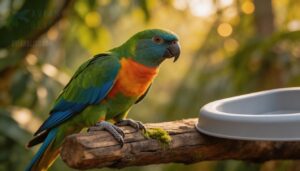
The surface your bird stands on every day does more work than most people realize. Texture isn’t just about grip — it directly shapes how healthy your bird’s feet stay over time.
Here’s how the right perch surface protects those feet from the ground up.
Reducing Pressure Points on The Feet
When your bird stands on the same smooth perch all day, pressure concentrates on identical foot pad spots every single time. Micro-Texture Shifts and Adjustable Perch Angles naturally trigger Variable Load Distribution, spreading force across changing contact zones.
Think of it like Foot Pad Rotation — your bird’s feet never stay loaded in one fixed spot. That constant variety is what keeps pressure injuries from quietly building up.
Preventing Bumblefoot and Calluses
Bumblefoot doesn’t appear overnight — it builds slowly through repeated pressure on the same spot. Rough perch texture, combined with Dry Bedding Maintenance and Perch Surface Hygiene, reduces that buildup substantially.
Pair perch variety with a Nail Trimming Schedule, Weight Monitoring, and Regular Foot Inspections, and you’re catching foot pad injuries before they harden into calluses or deepen into serious infection.
Improving Grip and Circulation
When a bird can grip without slipping, small weight shifts happen naturally throughout the day. That’s where perch texture does quiet but important work — supporting Micro Movement Stimulation and Variable Pressure Shifts that keep Circulatory Flow Enhancement steady.
Rough surfaces drive Toe Flexibility Training and Grip Strength Conditioning, while slip resistance reduces the frozen, locked stance that cuts off healthy blood flow and strains foot health over time.
Lowering The Risk of Abrasions
Worn or splintered perches act like sandpaper against tender toe skin. Prioritizing Edge Smoothing on hardware and wood prevents localized scraping, while Moisture Management and regular Debris Cleaning stop grit buildup that makes surfaces abrasive.
Add Soft Landing Zones near perches to cushion awkward steps. A consistent Foot Inspection Routine catches early redness before minor roughness becomes a real pressure sore.
How Variety Builds Stronger Feet
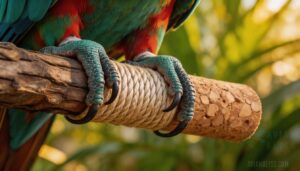
Think of your bird’s feet like an athlete’s legs — they need more than just rest to stay strong. Different perch textures put different muscles to work, and that variety adds up over time.
Here’s how each type of surface contributes to building real foot strength.
Engaging Different Toe and Leg Muscles
Every time your bird grips a perch, it’s doing a mini workout. Different perch textures trigger Toe Flexor Activation, Extensor Coordination, and Leg Stabilization all at once.
Arch Support Dynamics shift with each surface change, while Fine Motor Adjustments keep toes constantly recalibrating.
This perch variety drives real foot muscle development — making avian foot health far more dependent on muscle exercise than most owners realize.
Improving Balance Through Unstable Surfaces
Unstable perches are nature’s version of perturbation training for your bird’s feet. When a rope sways or an angled branch shifts, your bird’s intrinsic stability system kicks in — making constant multi‑directional sway corrections.
Smooth surfaces and slippery perch design actually remove this challenge entirely.
Smart perch texture variety builds recovery resilience and real skill transfer to everyday movement, keeping your bird balanced and confident.
Supporting Tendon Flexibility With Uneven Shapes
Balance work sets the stage for something deeper — what happens inside the tendon itself. Uneven perch texture triggers toe‑angle modulation and micro‑adjustment loading, cycling tendons through varied tension states.
This varying tension cycling activates collagen crimp activation across different strain levels. Regional strain variation means no single tendon segment bears all the load. Smart perch design and flexibility variety quietly protect long‑term foot health.
Encouraging Climbing and Active Perching
Healthy tendons need movement to stay strong — and that means your bird needs real climbing opportunities, not just a place to sit. Perches placed at varied heights create natural vertical flight paths.
activity perches, active rope swings, or multi-level climbing nets, and you’re giving feet a full workout. Smart perch design with texture variety keeps birds moving, which directly promotes long-term foot health.
Best Materials for Textured Perches
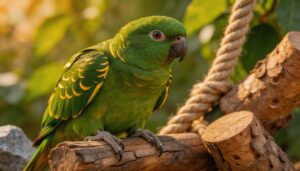
Not every perch material works the same way for your bird’s feet, grip, and daily comfort. Some options genuinely support foot health, while others fall short or even cause harm.
Here’s what you need to know before choosing.
Benefits of Untreated Natural Wood
Untreated natural wood stands out because it does so much quietly. Its surface facilitates humidity regulation and gentle moisture exchange, keeping your bird’s feet comfortable across changing cage conditions.
There’s no coating, so you get a true chemical-free environment with real natural scent stimulation that birds respond to instinctively.
That combination of temperature comfort and varied perch texture makes natural wood a reliable foundation for bird foot health.
When Rope Perches Add Useful Variety
While natural wood covers the foundation, rope perches layer in something different — movement.
- Rope-Wood Hybrids combine soft compliance with rough grip zones, creating active grip challenges that shift pressure across your bird’s foot pads.
- Knot configuration benefits include irregular footholds that prevent habituation and support foot health.
- Adjustable rope tension and aerial play enrichment make rope a smart tool for preventing bumblefoot through varied perching surfaces and environmental enrichment.
How Sandy Perches Help With Nail Wear
Sand-coated perches work quietly in the background — every grip, every shift, every landing contribute to gradual nail trimming without a vet visit. The sand grit calibration keeps abrasion gentle enough to support foot health while preventing nail overgrowth. That’s self-maintaining abrasion doing its job daily.
Easy perch cleaning keeps the surface safe, and consistent nail wear means your bird stays comfortable longer.
Why Smooth Plastic Offers Limited Stimulation
Smooth plastic perches might seem like a low‑maintenance win, but your bird’s feet tell a different story. Uniform Pressure Distribution across a flat surface means no varied grip challenges — just Toe Grip Uniformity that limits muscle engagement. Reduced Sensory Feedback from a Lack of Micro‑Bumps starves your bird of the Limited Proprioceptive Cues it needs for foot health and environmental enrichment.
- Plastic perches don’t flex, shift, or stimulate
- Perch texture directly affects psychological stress levels
- Smooth surfaces reduce natural grip adjustments over time
Materials to Avoid for Safety
Some materials look fine at a glance but quietly cause harm. Lead paint perches, toxic wood treatments like creosote or CCA-treated wood, and PVC plasticizers in cheap plastic perches all leach dangerous chemicals when chewed.
Formaldehyde off-gassing from coated or glued wood irritates airways.
Heavy-metal dyes and painted hard surfaces pose real toxicity risks.
Stick to untreated hardwoods and certified-safe options only.
Why Perch Diameter Matters
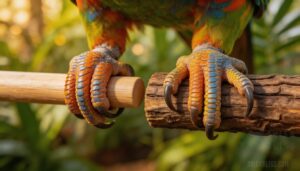
Texture gets a lot of attention, but diameter is just as important regarding keeping your bird’s feet healthy. Getting the size right affects how your bird grips, rests, and moves throughout the day.
Here’s what you need to know about choosing the right diameter for your bird.
Proper Toe Wrap for Secure Footing
Think of toe wrap like a handshake — firm enough to feel secure, but never tight enough to cut off circulation. When your bird grips a perch, proper foot pressure distribution matters more than most owners realize.
- Wrap Tension Guidelines keep grip snug without restricting blood flow
- Circulation Checks confirm color returns quickly after brief pressure
- Material Breathability reduces moisture buildup and skin irritation
- Fit Assessment ensures the wrap matches your bird’s toe span
Problems With Perches That Are Too Thin
Too-thin perches create real foot problems fast. Your bird’s toes can’t spread naturally, which drives toe joint stress and circulation impairment with every grip.
Slippage risk rises without enough surface contact, and constant readjusting causes foot fatigue.
Over time, pressure sores and nail wear follow. Perch diameter variation isn’t optional — it’s essential for foot fatigue prevention and genuine injury prevention.
Problems With Perches That Are Too Thick
Too thick is just as problematic as too thin.
When your bird can’t wrap its toes properly, joint strain builds quickly and weight distribution shifts onto the central foot pad.
That crowding raises pressure sore prevention concerns and accelerates foot fatigue.
Altered gait follows, nail overgrowth risk increases from reduced contact points, and perch diameter variation becomes critical for maintaining genuine foot pad health.
Matching Diameter to Bird Size
Every bird species has its own ideal perch diameter range. Small birds need roughly ¼ to ½ inches, while large macaws do best between 1 and 2 inches.
Species-specific sizing matters because foot span measurement guides your choices more reliably than guessing.
Growth stage adjustments and seasonal weight shifts can change the fit slightly, so a diameter rotation schedule keeps bird foot health on track.
Combining Texture and Diameter for Better Support
Once you’ve matched diameter to your bird’s size, pairing it with the right texture takes foot support even further. Texture-diameter matching creates synergistic grip that improves pressure distribution across the sole.
- Toe wrap optimization improves by 15% on textured mid-diameter perches
- Adaptive load balancing reduces foot slipping during active climbing
- Diameter variety combined with texture lowers repetitive pressure points
That combination is where real foot health and injury prevention begins.
Smart Perch Placement and Layout
Choosing the right perch is only half the job — where you put it matters just as much. A well-arranged cage gives your bird clear paths to move, rest, eat, and play without bumping into things or feeling cramped.
Here’s what smart placement actually looks like in practice.
Mixing Horizontal, Angled, and Platform Perches
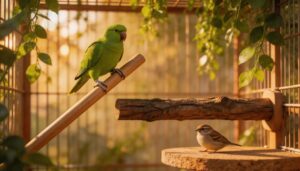
Not all perches should face the same direction. Horizontal platform synergy gives your bird stable resting spots, while angle variety benefits foot health by shifting grip pressure across different surfaces.
Varied perch sequencing — rotating between flat, tilted, and wide platform styles — enhances cage space utilization and environmental enrichment.
Together, these orientations improve perch texture exposure and overall foot health naturally.
Creating High, Mid, and Low Perching Zones
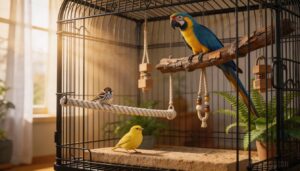
Direction isn’t the only thing that matters — height tier guidelines do too.
Place perches at low, mid, and high levels to create natural vertical spacing intervals. Your bird gets enrichment distribution across the whole cage, supporting avian foot health through constant movement. Perch height and perch variety together shape how your bird exercises, rests, and stays mentally engaged throughout the day.
Separating Resting Perches From Activity Perches
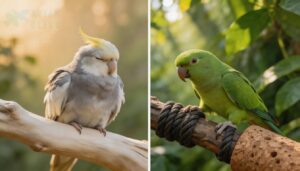
Not all perches serve the same purpose. Your bird needs a clear sleeping perch away from noisy, active zones — that’s noise buffering in practice.
Zonal visual cues like smoother textures signal rest, while rougher play perches signal activity.
Behavioral timing and lighting influence when birds switch zones. These movement pathways support foot health and environmental enrichment through varied perch textures throughout the day.
Placing Perches Near Food and Play Areas
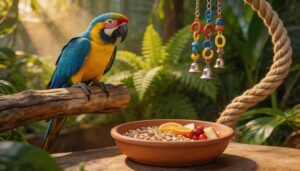
Where you place perches near food and play areas shape your bird’s entire daily routine. Keep feeding station perches at least 15 cm from bowls to support perch material hygiene and reduce contamination.
Adjustable perch positioning near toys boosts environmental enrichment and stress reduction proximity.
Play perches slightly elevated above food zones naturally encourage movement, weaving activity into every meal.
Preventing Slips and Collisions in The Cage
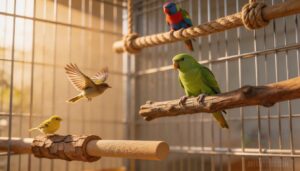
Designing smart Cage Traffic Flow starts with thinking about where birds land, not just where they rest. Poor layout leads to midair collisions and slips — both are real foot health risks.
- Use Collision Buffer Zones between active perches
- Add nonslip surfaces and rough natural perch materials for captive birds
- Apply Landing Angle Guidance with staggered heights
- Mark Visual Perch Markings to support Slip-Resistant Pathways
Surface stability protects feet every time.
Rotating Perches for Better Health
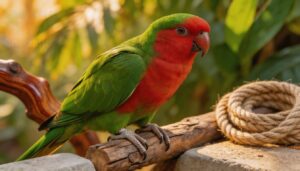
Even the best perch setup can wear out its welcome if nothing ever changes. Your bird’s feet land in the same spots day after day, and that repetition adds up faster than you’d think.
Here’s what to know about rotating perches to keep things fresh and your bird’s feet in good shape.
How Rotation Prevents Repetitive Pressure
Think of your bird’s feet like yours after standing in one spot all day — the same pressure, same spot, same soreness.
Perch rotation solves this through pressure redistribution, shifting load across different toe pads.
Regular rotation promotes skin recovery cycles, circulatory stimulation, and micro-adjustment frequency, all working together for overuse injury prevention and lasting foot health.
When to Introduce New Textures
Timing matters more than you’d think. A gradual texture rollout — not a sudden swap — helps your bird adjust without stress.
Follow these steps:
- Introduce one new texture every one to two weeks
- Watch for feeding cue signs like increased curiosity or confident grip
- Use age-based milestones and species-specific perch requirements to guide your texture rotation schedule
Supervision guidelines keep the process safe throughout.
Signs a Bird Needs Perch Changes
Your bird’s body tells you when something’s off — you just need to know what to look for.
Toe curling, limping after landing, or perch avoidance are clear signals that foot health is slipping. Callus development and excessive preening around the feet also point to poor surface fit.
Use this table to match signs to action:
| Sign | Likely Cause | Recommended Action |
|---|---|---|
| Toe curling | Slick or thin perch | Add textured or wider perch |
| Limping after landing | Hard or sharp surface | Swap to softer natural wood |
| Callus development | Repetitive flat pressure | Rotate to varied diameters |
| Perch avoidance | Wrong texture or diameter | Introduce new surface gradually |
| Excessive preening of feet | Irritation or early bumblefoot | Monitor foot health closely |
Monitoring Foot Comfort After Rotation
After spotting those warning signs, your next step is to watch what happens once you make the switch.
Check both feet within the first day — Swelling Observation and Pressure Spot Checks catch early trouble fast. Run a Toe Wrap Assessment to confirm full contact, and do Nail Snag Detection on rope fibers.
Footpad Condition monitoring and foot pad inflammation checks confirm that perch rotation and placement for balanced weight distribution is actually working.
Keeping Variety Consistent Over Time
Once foot health audits confirm steady progress, keeping that momentum going is just about staying organized. A simple Enrichment Consistency Log tracks your Texture Rotation Schedule week by week.
Flexible Perch Planning lets you build in Seasonal Perch Rotation without guessing. Your perch variety checklist, paired with regular cleaning and inspection, makes maintenance and rotation of perches for ongoing diversity feel smooth — not overwhelming.
Top 7 Perches to Consider
Knowing what to look for in a perch is one thing — finding options that actually deliver is another.
These seven perches cover a solid range of textures, materials, and designs worth adding to your bird’s space. Here’s a closer look at each one.
1. Penn Plax Y Shaped Wooden Bird Perch
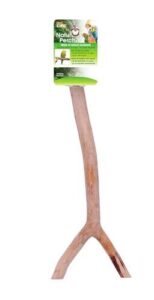
If your small bird needs a perch that works more like a real branch, this one’s worth a look. The Y-shaped design gives two resting spots at different angles, so your bird naturally shifts grip and stretches its toes.
It’s made from natural hardwood with a rough surface that helps healthy foot pads.
Tool-free installation makes setup simple.
It fits budgies, parakeets, and cockatiels well — though it’s not built for larger, stronger beaks.
| Best For | Small bird owners with budgies, parakeets, cockatiels, or parrotlets who want a natural-feeling perch that’s quick to set up and easy on their bird’s feet. |
|---|---|
| Material | Natural hardwood |
| Bird Size Fit | Small birds |
| Mounting Type | Wing-nut bolt |
| Tool-Free Install | Yes |
| Foot Health Benefit | Natural grip surface |
| Enrichment Support | Climbing and gnawing |
| Additional Features |
|
- The Y-shape gives two perching angles, which encourages natural foot movement and keeps toes healthier over time.
- No tools needed — the wing-nut setup means you can get it mounted fast without messing with the cage.
- Natural hardwood is gentler on foot pads than concrete perches and gives birds something safe to gnaw on.
- The wood is too thin for bigger birds — aggressive chewers or strong beaks can crack it pretty easily.
- The bolt stays fixed once installed, so repositioning it later means grabbing tools whether you like it or not.
- The central splice can have a sharp edge right out of the box, so a quick sanding pass before use is a smart move.
2. JW Pet Flexible Rope Bird Perch
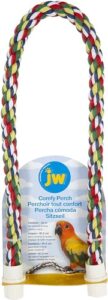
Where the Y-shaped perch offers rigid angles, this one goes soft. The JW Pet Flexible Rope Perch bends into whatever shape fits your cage layout, giving your bird a cushioned surface that distributes foot pressure more evenly than hard wood.
That rounded rope profile is especially helpful for birds with sensitive feet.
At 32 inches, it suits larger species like macaws and African greys.
Just inspect it weekly—rope frays, and loose fibers can become a swallowing hazard fast.
| Best For | Owners of larger parrots like macaws, cockatoos, or African greys who want a flexible, foot-friendly perch they can reshape to fit different cage setups. |
|---|---|
| Material | Synthetic rope |
| Bird Size Fit | Large birds |
| Mounting Type | Cage bar screw |
| Tool-Free Install | Yes |
| Foot Health Benefit | Pressure distribution |
| Enrichment Support | Grip strength exercise |
| Additional Features |
|
- Bends into multiple shapes, so you can switch things up and keep your bird mentally engaged
- The soft, rounded rope surface takes pressure off your bird’s feet during long perching sessions
- Easy to mount horizontally or vertically with the screw-on connectors—no tools needed
- Rope frays over time and chewed fibers can become a real ingestion risk if you’re not checking it regularly
- Some buyers have received units with missing or broken end caps right out of the box
- Only attaches to cage bars, so it won’t work on a wall-mounted play stand or flat surface
3. Deloky Natural Wood Bird Perch Stand
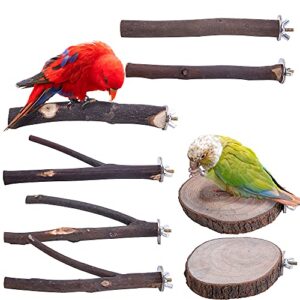
The Deloky’s 8-piece kit gives your bird something most single perches can’t — real variety in one package. You get three hanging multi-branch perches, three straight stands, and two round platforms, all made from untreated hardwood.
That bark-like texture mimics natural branches, so your bird’s feet stay engaged instead of sitting flat on a smooth rod all day.
The built-in bolts make installation simple.
Just note that it’s sized for small birds like budgies, lovebirds, and cockatiels — not larger parrots.
| Best For | Small bird owners with budgies, lovebirds, or cockatiels who want to add variety and enrichment to their cage setup without a lot of hassle. |
|---|---|
| Material | Natural hardwood |
| Bird Size Fit | Small birds |
| Mounting Type | Wing-nut bolt |
| Tool-Free Install | Yes |
| Foot Health Benefit | Varied diameters |
| Enrichment Support | Chewing and foraging |
| Additional Features |
|
- Eight pieces in one kit means you get real variety — different shapes, diameters, and surfaces all at once
- Untreated hardwood is safe for chewing, which helps keep your bird’s beak in good shape naturally
- Built-in bolts and wing nuts make installation quick with no extra tools needed
- The washers can have oversized holes, so you might need to swap them out for a snug fit
- Softer wood wears down faster than metal or plastic, especially if your bird is an aggressive chewer
- Eight pieces can feel like too much for a smaller cage, so you may end up leaving some out
4. Wooden Bird Perch Platform
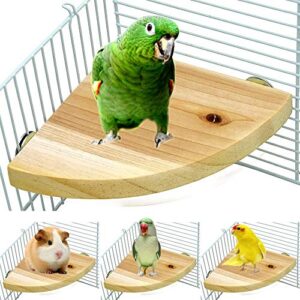
Sometimes your bird just needs a place to land and rest — and that’s exactly what the Borangs Wooden Bird Perch Platform delivers. This compact corner-mount shelf (about 17.5 cm × 17.5 cm) is made from untreated fir wood, so there’s no risk of chemical exposure when your bird chews or grips it. It doubles as a feeding station, which naturally encourages activity.
Just watch for loosening screws over time, and sand the surface occasionally to keep it splinter‑free.
| Best For | Bird and small pet owners who want a simple, safe resting spot that doubles as a feeding station inside a cage. |
|---|---|
| Material | Natural fir wood |
| Bird Size Fit | Small to medium |
| Mounting Type | Corner screws |
| Tool-Free Install | No |
| Foot Health Benefit | Fatigue reduction |
| Enrichment Support | Chewing and climbing |
| Additional Features |
|
- Made from untreated fir wood, so no chemicals to worry about when your pet chews or grips it
- Mounts in the corner to keep the center of the cage open for flying and playing
- Works for birds, hamsters, gerbils, and other small pets — pretty versatile for the price
- Screws can loosen over time, especially if you clean it often
- The porous wood holds onto droppings, so it needs regular wiping and occasional sanding
- Heavy chewers can wear it down in as little as five or six months
5. Penn Plax Natural Wood Bird Perch
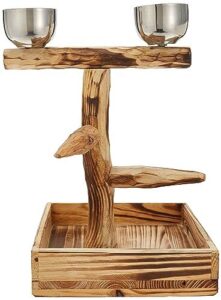
If your bird spends most of its day on one perch, surface really matters. This natural wood stand features two tapered branches ranging from 0.25 to 2 inches in diameter, so your bird shifts grip constantly — working different toe muscles without any extra effort from you.
The stainless-steel cups keep food and water close, and the drop tray catches the mess underneath.
It’s a practical, tool-free setup that works well for parakeets, cockatiels, and conures.
| Best For | Bird owners with small to medium-sized birds like parakeets, cockatiels, or conures who want a natural perch that doubles as a feeding station. |
|---|---|
| Material | Natural wood |
| Bird Size Fit | Small to medium |
| Mounting Type | Freestanding base |
| Tool-Free Install | Yes |
| Foot Health Benefit | Grip exercise |
| Enrichment Support | Foraging and perching |
| Additional Features |
|
- The two tapered branches give your bird different grip widths, which helps exercise their feet and naturally wear down nails over time.
- Stainless-steel food and water cups mean your bird can eat and drink in one spot — no need to buy separate bowls.
- Quick to put together and take apart without tools, so moving it room to room (or on a trip) is genuinely easy.
- The wood soaks up droppings and can stain, so you’ll want to line the tray with newspaper or a puppy pad to keep cleanup manageable.
- The main perch is about an inch thick, which can be tough for very small birds — especially ones with clipped wings trying to climb up or down.
- Some units have come with burnt wood marks, sharp edges, or protruding staples, so it’s worth giving it a close look before letting your bird near it.
6. K H Thermo Perch Heated Bird Perch
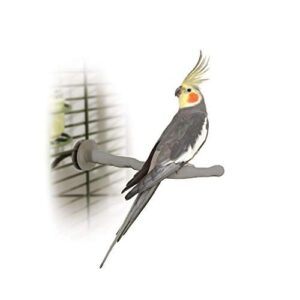
Cold drafts hit birds harder than most owners realize. This perch runs on 12V DC power and uses dual internal thermostats to hold a steady, gentle warmth — giving your bird a reliable warm spot without hot spikes.
The tapered plastic shape helps distribute foot pressure evenly, which enhances comfort during long rest periods.
It comes in three sizes and mounts easily to wire cages.
Daily temperature checks are smart, since overheating has been reported if the thermostat fails.
| Best For | Bird owners with sick, elderly, or cold-sensitive exotic birds who need a reliable heat source during cooler months or in air-conditioned spaces. |
|---|---|
| Material | Non-toxic plastic |
| Bird Size Fit | Small to large |
| Mounting Type | Cage bar clip |
| Tool-Free Install | Yes |
| Foot Health Benefit | Orthopedic support |
| Enrichment Support | Warmth and comfort |
| Additional Features |
|
- Gentle, consistent warmth helps birds — especially recovering or older ones — stay comfortable and active
- Tapered shape takes pressure off the feet, which is a real plus for birds that spend a lot of time perching
- Three size options and simple wire cage mounting make it easy to fit most setups
- Thermostat failures have caused overheating and burns, so you’ll need to check the surface temperature every day
- The plastic mounting clips can snap under heavier birds, making it a risky choice as a top perch
- The smooth surface can be slippery for some species, and the smallest size may still be too big for tiny birds like finches or canaries
7. Pollys Sandy Bird Perch
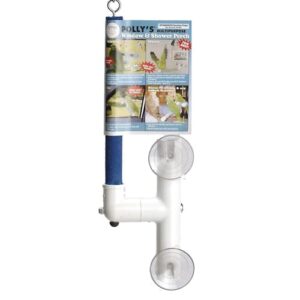
Two birds, one perch — that’s the idea here. The sandy coating gently files nails and conditions the beak during normal perching, so grooming happens passively.
Oversized suction cups mount it to windows or shower stalls in seconds, no tools needed.
The adjustable angle knob lets you tilt it for comfort.
Just keep sessions short — the abrasive surface can irritate sensitive foot pads with prolonged contact.
Best used as a grooming station, not a primary perch.
| Best For | Bird owners who want a hands-free way to keep nails and beaks trimmed during bath time or window watching. |
|---|---|
| Material | Injection-molded plastic |
| Bird Size Fit | Small to medium |
| Mounting Type | Suction cups |
| Tool-Free Install | Yes |
| Foot Health Benefit | Nail trimming |
| Enrichment Support | Toy attachment hook |
| Additional Features |
|
- The sandy surface files nails and conditions the beak just from normal perching — no separate grooming trips needed
- Suction cups stick to windows, mirrors, and shower glass in seconds with zero tools
- Folds flat, so it’s easy to toss in a bag for travel or hotel stays
- The abrasive surface can irritate sensitive feet if your bird hangs out on it too long
- Suction cups can lose grip on humid or textured surfaces, which is a real fall risk
- The angle knob isn’t built for bigger birds — if you have a macaw, don’t count on it holding steady
Perch Mistakes Bird Owners Should Avoid
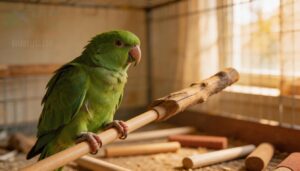
Even the most well-meaning bird owners make perch mistakes that quietly chip away at their bird’s foot health and overall comfort. Most of these missteps are easy to fix once you know what to look for.
Here are the most common ones worth paying attention to.
Using Only One Texture Throughout The Cage
Sticking to one perch texture might feel like a win for Cleaning Simplicity and Cost Efficiency, but it quietly works against your bird.
Uniform perches cause Behavioral Stagnation, limit perch variety, and create repetitive pressure points that threaten Foot Health and Injury Prevention for Pet Birds.
Material Longevity means nothing if Safety Oversight is sacrificed — and Environmental enrichment through varied perch textures is simply too important to skip.
Choosing Slippery or Overly Smooth Surfaces
Texture variety matters — and so does avoiding the opposite extreme. Smooth or slippery surfaces fail your bird just as badly as uniform ones.
Poor Surface Friction Assessment means ignoring how plastic or synthetic perches lose grip after wear. Add Moisture Impact from humid cages or Cleaning Residue Effects from soapy rinses, and Material Slip Potential spikes.
Species Slip Sensitivity varies, but no bird thrives on painted or coated surfaces — the importance of perch texture for bird health is clear when you see how health implications of perch surface characteristics and effects of uniform perches on foot health compound each other.
Overusing Concrete Perches
Concrete perches aren’t bad by nature — but overusing concrete perches is a real problem. Hard, rigid surfaces create pressure sores, foot stiffness, and skin irritation over time. Chipped edges release dust linked to dust inhalation risks, while moisture trapped in cracks fuels microbial growth.
For solid avian foot care and perch material safety, watch for:
- Bumblefoot signs like redness or swelling
- Greyish skin discoloration near talon joints
- Reduced rest time on the perch
Ignoring Perch Wear, Mold, or Fraying
Worn perches carry risks that are easy to miss. Undetected splinters snag toes, frayed rope hazards tangle legs, and hidden bacterial growth thrives in cracks long before you notice anything wrong.
Mold infections spread through porous wood quietly. That’s why regular cleaning and inspection are essential — neglected maintenance risks your bird’s foot health faster than most owners expect.
Check perches weekly without skipping.
Picking Unsafe Treated or Painted Materials
Painted and treated wood perches carry real risks. Toxic wood preservatives like CCA contain arsenic and chromium — chemicals never meant for repeated animal contact.
Painted surfaces release lead paint fumes and VOC inhalation risk increases when birds chew coatings, creating chemical leaching hazards.
Allergen coating residues build up over time.
Always choose natural wood branches — perch material durability means nothing if the material itself is harmful.
Forgetting Species-specific Perch Needs
Every bird has its own species foot shape, and ignoring that is a real mistake. Zygodactyl preference means parrots need irregular grip surfaces, while finches need thinner, smoother options. Habitat mimicry, tail length impact, and behavioral perch choice all shape what works best.
- Wrong diameter strains foot health daily
- Mismatched textures cause grip fatigue
- species-specific perch requirements harms long-term wellbeing
Frequently Asked Questions (FAQs)
Why do birds need different sized perches?
Different perch diameters support foot joint health and weight distribution balance across toe placements.
Species-specific ergonomics and perch size selection guarantee your bird’s feet wrap correctly, preventing strain and promoting long-term comfort through proper perch variety.
Is homosexuality common in birds?
Same-sex partnerships — or alternative pair bonds — are well-documented across many bird species. Penguins and ducks show strong pair bond stability, courtship behavior, and shared nesting.
Species prevalence varies, but these bonds are genuinely common in nature.
What bird has the highest IQ?
The African Grey parrot is widely considered the bird with the highest IQ.
Its ability to use language in context, categorize objects, and recall long-term relationships sets it apart from nearly every other species.
How often should perches be fully replaced?
Replacement timelines depend on material and use. Inspect natural wood monthly and replace rope perches every 2–4 months. High-activity cages need faster turnover—every 1–2 months—to stay safe and hygienic.
Can birds share perches without spreading disease?
Yes, but it depends on hygiene and contact time.
Shared perches can carry bacteria and pathogens, so cleaning perches weekly and practicing smart perch hygiene protocols keep disease risk low between birds.
Do perch textures affect sleep quality in birds?
Just like a good mattress shapes how well you sleep, perch textures directly affect your bird’s rest.
Rougher surfaces provide Nighttime Pressure Relief, support Restful Posture Support, and deliver a quiet Sleep Duration Boost through Reduced Micro-Movements overnight.
How does stress show up in a birds feet?
Stress shows up in your bird’s feet through trembling foot grip, abnormal perch stance, foot pad inflammation, and even self-mutilation signs.
You may also notice foot color changes like darkening or swelling.
Can chewing perches damage a birds beak?
Chewing perches can damage a bird’s beak, especially when sharp edge formation, chewable material toxicity, or fiber impaction risk is involved.
Monitor beak wear closely and always prioritize natural wood branches over unsafe materials.
Conclusion
Providing your bird with varied perch textures is like giving them a key to open a healthier, happier life. Just as our feet crave different surfaces, so do theirs.
By understanding why birds need different perch textures, you can create a more stimulating environment that promotes their well-being.
Mix and match textures, diameters, and placements to keep their feet strong and engaged.
bird’s comfort and health depend on it, every day.
- https://linkinghub.elsevier.com/retrieve/pii/S0039625701002119
- https://www.canada.ca/en/health-canada/services/home-garden-safety/pollutants-furniture-building-materials.html
- https://www.ncbi.nlm.nih.gov/books/NBK524881/
- https://www.hse.gov.uk/construction/faq-paint.htm
- http://www.dtic.mil/docs/citations/ADA625511