This site is supported by our readers. We may earn a commission, at no cost to you, if you purchase through links.

Montana’s woods don’t stay quiet for long once you learn the sound of a woodpecker. A fast rattle on a cottonwood trunk might mean a Northern Flicker staking out territory, while a deep, hammering beat from mature timber often points to a Pileated Woodpecker.
That mix of open prairie edges, mountain aspen, burned forest, and snags gives woodpeckers in Montana an unusual range of places to feed and nest.
Some show up all year, some only during breeding season, and a few appear like miracles. Knowing who’s who turns any walk, campsite, or feeder watch into a richer birding experience.
Table Of Contents
- Key Takeaways
- Montana Woodpecker Species Overview
- Montana Woodpecker Identification Tips
- Montana Woodpecker Habitats and Range
- Montana Woodpecker Behavior and Ecology
- Attracting Woodpeckers in Montana
- Frequently Asked Questions (FAQs)
- What bird looks like a woodpecker but is not?
- What kind of woodpeckers are in Montana?
- Are woodpeckers good to have in your yard?
- How rare is it to see a downy woodpecker?
- Why are woodpeckers pecking my house?
- What sounds do Montana woodpeckers make when drumming?
- Do Montana woodpeckers migrate during winter months?
- How deep are woodpecker holes in Montana trees?
- What predators threaten woodpeckers in Montanas forests?
- How long do Montana woodpeckers typically live?
- Conclusion
Key Takeaways
- Montana supports broad mix of woodpeckers because its forests, riparian areas, open woodlands, burned tracts, and even suburban yards offer feeding and nesting habitat.
- The species you’re most likely to find year-round include Downy, Hairy, Northern Flicker, and Pileated Woodpeckers, while others like Lewis’s, Red-naped Sapsucker, and Williamson’s are mainly seen during the breeding season.
- The quickest way to identify Montana woodpeckers is to watch size, bill shape, plumage, and feeding behavior, especially when separating look-alikes like Downy and Hairy or spotting a large Pileated.
- Woodpeckers are both useful birds to watch and important parts of the ecosystem because they control insects, create nest cavities for other wildlife, and respond strongly to habitat features like dead wood, mature trees, and post-fire forest conditions.
Montana Woodpecker Species Overview
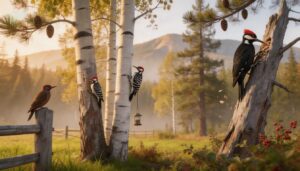
Montana gives you a surprisingly wide mix of woodpeckers, from familiar backyard birds to a few that are much harder to find. Some stay year-round, while others show up mainly during the breeding season or on rare occasions.
For a fuller look at the species sharing Montana neighborhoods, this guide to Montana backyard birds and woodpeckers helps.
The quick list below will help you see which species are most likely, which are seasonal, and which are unusual.
Common Woodpeckers Found Across Montana
Several Montana woodpecker species list staples include Downy, Hairy, Northern Flicker, and Pileated.
Identification guides for woodpeckers start with size, bill shape, and plumage.
Habitat preferences of Montana woodpeckers, Woodpecker foraging and diet habits, Hybridization Occurrences, Population Trends, Climate Change Impacts, Molt Timing, Predation Risks, and Feeding and attracting woodpeckers in backyards all shape what you’ll notice across the state.
The Northern Flicker most common woodpecker dominates the state’s woodpecker community.
Seasonal Woodpeckers Seen During Breeding Months
Beyond the year-round regulars, the Seasonal presence of woodpeckers in Montana rises in Breeding season. Lewis’s, Red-naped Sapsuckers, and Williamson’s appear as Courtship Drumming Peaks in April to July, each following Habitat-specific Breeding Windows.
Watch riparian cottonwoods and montane aspen stands: Nest Site Fidelity is strong, though Breeding Phenology Shifts and Juvenile Dispersal Timing can nudge dates with weather locally.
Rare and Accidental Woodpecker Sightings
As seasonal presence of woodpeckers in Montana peaks, watch for vagrant woodpecker sightings in Montana. Vagrant Detection often hinges on Edge Habitat Triggers, Post-Fire Vagrancy, and careful Citizen Reporting.
Rare Vagrant species, including odd Pileated wanderers, can test Woodpecker range and migration patterns, while Color Morph Records sharpen Birdwatching tips for Montana woodpeckers and improve identification in riparian burn edges.
Conservationists note that preserving old-growth forest habitats helps Pileated Woodpeckers.
How Many Woodpecker Species Live in Montana
Rare sightings raise the count question.
Your Species Inventory and Species Census for Woodpeckers in Montana depend on Species Enumeration rules:
- ten regular species
- four accidental records
- Species Presence in forests
- shifting Seasonal distribution of woodpeckers in the Treasure State
That Species Comparison explains Woodpecker species diversity in Montana, though some State woodpecker list versions mention 11 species in Montana.
Quick Species List for Birdwatchers
A handy birdwatching guide starts with your Top Five Picks: Downy, Hairy, Northern Flicker, Pileated, and Red-headed. For Woodpeckers in Montana, the Checklist Order reflects Birdwatchers’ Priorities, Species Ranking, and quick observation tips.
Use this state woodpecker list beside a Woodpecker identification guide for Montana to grasp the Woodpecker species diversity in Montana during your first spring walk in April.
Montana Woodpecker Identification Tips
Montana woodpeckers are easy to name at a glance, while others take a closer look. The good news is that few simple clues, like size, bill shape, color pattern, and where the bird is feeding, can quickly narrow things down.
field marks below will help you sort each species with more confidence.
Northern Flicker Field Marks

Spot the Northern Flicker by its size markings and habits, a smart start for identification of woodpeckers by visual markers in any Montana backyard.
- Yellow Underwing Flash
- Red Shafted Contrast
- White Rump Patch
- Black Crescent Bib, Mottled Breast Pattern
This Woodpecker identification guide for Montana helps you catch field marks fast, especially when the bird flushes from open ground nearby.
Downy Vs. Hairy Woodpecker Differences
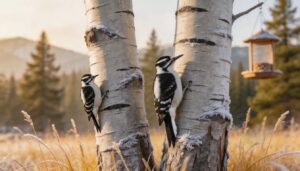
Two look-alikes test your eye: the Downy Woodpecker is sparrow-sized with a short bill, while the Hairy Woodpecker is robin-sized with a long, chisel bill.
In Woodpeckers in Montana, Foot Morphology, Predator Avoidance, Winter Roosting, Population Trends, and Hybridization Potential matter less than size, tail spots, Habitat preferences of Montana woodpecker species, and any Woodpecker feeder visit you notice most.
How to Spot a Pileated Woodpecker
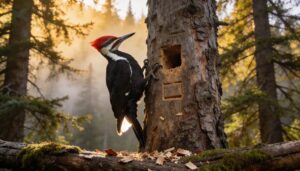
Think crow-sized, not backyard-small: here’s how to identify a Pileated Woodpecker in Montana.
- Red Crest
- Large Rectangular Holes
- White Underwing Flash
- Silhouette Flight
- Bark Chip Trails
Skip the woodpecker feeder; this bird favors mature forest habitat. Listen for Woodpecker vocalizations and drumming patterns, then watch for that bold Pileated Woodpecker shape on trunks and logs.
Identifying Black-backed and American Three-toed Woodpeckers

Here’s the trick: start with Toe Count, then check the Malar Stripe, Crown Patch, Wing Bar Contrast, and Bill Length. For Woodpecker species identification in Montana, Black-backed Woodpecker shows a solid black back and stout bill, while American Three-toed Woodpecker looks more barred.
Habitat preferences of Montana woodpecker species beat backyard feeders when you’re searching high-country snags after recent fires.
Red-headed, Lewis’s, and Red-naped Sapsucker Traits

- Red-headed Woodpecker: red head
- Lewis Woodpecker: dusky face
- Red-naped Sapsucker: red nape
- Wing patches flash
- Sap well drilling
Crown coloration helps first, but harsh vocalizations and territorial displays seal the ID. Habitat preferences of Montana woodpecker species also attract woodpeckers to aspen, willow, and open pine edges during spring and early summer mornings.
Size, Bill Shape, and Plumage Clues
After those bold head colors, shift to structure: in Woodpeckers in Montana, bird identification often starts with size and plumage characteristics.
Bill Proportions separate Downy from Hairy, while Head-to-Body Ratio helps with Pileated.
Watch Wing Span Variation and Size Related Flight, then use Plumage Pattern Contrast, especially blackandwhite plumage, to learn how to identify birds fast across woods and yards.
Male Vs. Female Identification Differences

After size and plumage, sex clues can sharpen bird identification. In sexual dimorphism in Montana woodpeckers, crest color or a facial stripe may differ, as on pileateds. Vocal pitch can vary too, though subtly.
Tail length is less reliable than the comparison of woodpecker size and plumage characteristics. Watch courtship display near a bird feeder; sexual dimorphism often shows there.
Montana Woodpecker Habitats and Range
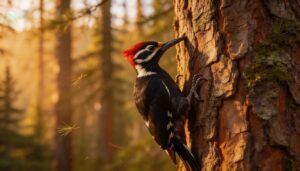
Where you look in Montana often matters just as much as what field marks you know. Some woodpeckers stick to deep forests, while others show up along rivers, in open country, or even in town.
The sections below will help you match each species to the places and seasons where you’re most likely to find it.
Forest Types That Attract Woodpeckers
Because food and nesting come first, Montana woodpeckers cluster in Conifer Dominant Stands, Mixed Pine Hardwood, Bottomland Hardwood, Montane Oak Pine, and Mature Deciduous forests.
These habitats, including mixed conifer forests, aspen groves, and nearby open woodlands or riparian woodlands, offer bark insects, varied trunk sizes, and the dead and fallen trees that woodpeckers need for probing, roosting, and nesting successfully.
Open Woodlands, Riparian Areas, and Suburban Yards
Beyond denser forest stands, woodpeckers in Montana also use open woodlands, where Canopy Gaps and Edge Effects expose bark insects and ground prey.
In riparian woodlands, a healthy Riparian Buffer sustains Insect Pulses near cottonwood and willow.
In suburban bird habitats, Yard Connectivity, mature trees, water, and safe snags help you learn how to identify regular visitors through every season.
Burned Forests and Post-Fire Specialists
Although flames look destructive, Woodpeckers in Montana often thrive in postfire habitats. A Post-Fire Habitat Mosaic of burnt trees and firekilled trees fuels a Fire-Driven Insect Boom, strengthening the Burned Food Web.
That benefits Fire-Adapted Woodpeckers and Fire-Edge Nesting, especially Black-backed and American Three-toed species. The Impact of forest fires on woodpecker populations can be surprisingly positive, early on, there.
Western, Central, and Eastern Montana Patterns
Three patterns shape your Birdwatching guide to Montana woodpeckers:
- West: Moisture gradients and elevation effects favor species.
- Center: Seasonal insect peaks fill riparian corridors.
- East: Fire regime influence and pine breaks aid nesters.
- Statewide: Human activity impact shifts habitat preferences of Montana woodpecker species, shaping comparison of woodpecker species across Montana regions and foraging and drumming behavior in working landscapes.
Year-Round Residents Vs. Migratory Species
Because Woodpeckers in Montana split between permanent residents and birds that arrive seasonally, a Comparison of resident vs migratory woodpeckers starts with Territory Dynamics, Migration Timing, and Energy Expenditure.
Residents depend on Winter Food Sources in stable forests, while migrants follow migration patterns through connected corridors where Habitat Connectivity shapes breeding success and survival across Montana forests and riparian corridors.
Best Seasons to See Each Species
Want better odds in the field?
Spring Migration Peaks and the Summer Breeding Surge reveal Summer migrants, while Winter residents shine during Winter Beetle Foraging.
Add the Fall Insect Surge, Late Summer Flocks, and shifting Migration patterns, and the Seasonal behavior and migration of woodpeckers explain the Seasonal distribution of woodpeckers in the Treasure State across forests, burns, and valleys.
Montana Woodpecker Behavior and Ecology
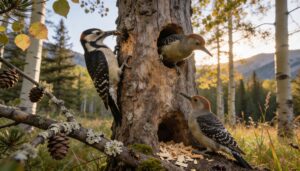
Once you know where Montana woodpeckers live, the next step is watching what they actually do. Their feeding, nesting, and signaling habits can tell you a lot about the species in front of you and the health of the habitat around it.
the sections below will help you notice those patterns more clearly in the field.
Diet and Foraging Strategies
Here’s the trick: Diet and foraging strategies of woodpeckers center on an insect diet, with ant foraging, beetle specialization, and aerial insect hunting all in play. Seasonal diet shifts and fruit seed intake rise with seasonal insect availability, influencing woodpecker feeding.
The sapsucker feeding strategy broadens the feeding habits and diet of woodpeckers across Montana’s changing seasons for many species.
Ground Feeding, Bark Probing, and Sap Wells
Look closely: Woodpeckers in Montana reveal Ground Foraging Patterns in grassy edges, especially during Seasonal Food Shifts and Winter Foraging Adaptations.
Bark Probing Mechanics expose beetle galleries, and Sapsucker sap well creation and usage turn sap wells into a Sap Well Microhabitat that shapes foraging behavior near backyard feeders.
- patient searchers
- bark readers
- sap tenders
- quiet winter persistence each day
Drumming, Calls, and Territorial Behavior
After sap wells, listen instead: drumming communication often carries farther than sight. Use these backyard birdwatching tips for woodpecker enthusiasts: note Seasonal Drum Timing, then compare pace and pitch between neighbors, especially flickers and sapsuckers daily.
| Cue | Meaning | When |
|---|---|---|
| Drum Pattern Variation | territorial behavior | spring |
| territorial calls | Territorial Song Types | dawn |
| Call Frequency Analysis | Acoustic Territory Mapping | Woodpeckers in Montana |
Nest Cavities, Snags, and Breeding Sites
After the drumming fades, watch where birds breed:
- Cavity Orientation and Sunlit Cavity Benefits aid cavity nesting.
- Snag Decay Stages shape woodpecker nesting site selection, Predator Guarded Entrances, and the role of dead trees in woodpecker ecology.
- Nest cavities, use of nest boxes by woodpecker species, and Secondary Cavity Users all matter across Montana’s mixed forests statewide.
How Woodpeckers Support Montana Ecosystems
Nest holes do more than raise chicks. Their Cavity Creation Benefits shelter Secondary Cavity Nesters, showing Cavity creation and secondary nest site importance.
Insect Pest Control and Nutrient Cycling Enhancement shape the Impact of woodpeckers on forest ecosystems. Through the Role of dead trees in woodpecker ecology, Woodpecker diversity in Montana fosters Forest Succession Facilitation, Ecosystem services provided by woodpeckers.
Why Woodpeckers Signal Forest Health
That same cavity work also makes woodpeckers strong indicator species: Deadwood Indicators of Forest Resilience, mosaic age structure, and the role of dead trees in woodpecker ecology.
The ecological indicator value of blackbacked woodpecker also reflects the Impact of forest fires on woodpecker populations, while insect control, biodiversity boost, and woodpecker-induced tree health impacts reveal recovering, insect-rich forests today.
Attracting Woodpeckers in Montana

If you want more woodpeckers in your yard, a few simple habitat choices can make a real difference. The key is to offer the things these birds look for every day, from food and water to shelter and safe places to forage.
Here’s what to focus on in a Montana backyard if you want to make it more inviting.
Best Feeders for Montana Woodpeckers
- Pick a Woodpecker feeder or suet feeder with strong Tail Prop Design and smart Feeding Port Design.
- Favor Squirrel Proofing Features, sturdy Construction Materials, and cleanable backyard feeders.
- Use Placement Options near trees, five to six feet high, to attract woodpeckers safely through Montana winters and windy open yards.
Suet, Peanuts, Insects, and Natural Foods
Because Montana winters burn energy fast, offer High‑Energy Suet in a suet feeder, plus Protein‑Rich Peanuts in backyard feeders or a woodpecker feeder.
Add Insect Enrichment with dried mealworms to support an insectivorous diet, especially during breeding.
Mix in fruit or seeds for Seasonal Food Variety, and follow Feeder Hygiene Practices, so foods stay fresh, safe, and attractive to insects.
Bird Baths and Moving Water Features
Because moving water catches attention fast, add a bird bath near bird feeders and bird feeding stations for better backyard bird feeding and birdwatching.
Try Cascading Bowl Design or Solar Fountain Installation, keep Dripper Bath Depth at 1 to 2 inches, follow a simple Bubbler Maintenance Routine, and enjoy Misting Water Benefits that make water look fresh, safe, and inviting.
Native Trees and Shrubs to Plant
Think of your yard as a living buffet: plant native trees like Ponderosa Pine, Quaking Aspen, and Rocky Mountain Maple for insects, sap, and cover. Add Serviceberry Shrubs and Elderberry Plantings as native fruit-bearing plants that match woodpecker habitat preferences.
This native vegetation shows the role of native trees in woodpecker ecology, helping birds feed and linger longer there.
Preserving Dead Wood and Nesting Habitat
Old dead trees are busy apartments. Keep some standing where safe, because nest cavities and cavity excavation depend on Decay Stage Habitat and smart nesting site selection.
Standing dead trees are busy apartments, giving woodpeckers the safe nesting space they need
- Leave dead trees and snags.
- Create Deadwood Buffer Zones.
- Support Legacy Forest Management, Long-Term Monitoring, and Conservation Incentives.
That Conservation of dead tree habitats for woodpeckers protects food, future cavities, and healthier woods.
Humane Ways to Prevent Property Damage
Damage control can stay kind: use Reflective Tape, Motion Sensors, Tree Pruning, Sealant Application, and Bird Netting first.
Balance that with Use of bird feeders to support woodpeckers, smart Feeding methods and supplemental feeders for woodpeckers, Attracting woodpeckers to residential yards thoughtfully, careful Human interaction with woodpeckers in backyard feeders, and Use of nest boxes by woodpecker species when possible.
Backyard Tips for Year-Round Woodpecker Visits
Kind prevention works best, and so does Attracting woodpeckers to residential yards with Branch Perches, Misting Stations, Insect Habitat, Windbreak Planting, and Squirrel Baffles.
Add Use of bird feeders to support woodpeckers, smart Feeding methods and supplemental feeders for woodpeckers, respect Winter food storage strategies of woodpeckers, and encourage Use of nest boxes by woodpecker species through Montana’s long snowy season.
Frequently Asked Questions (FAQs)
What bird looks like a woodpecker but is not?
Unbelievably, Brown Creeper causes Treecreeper Confusion; Nuthatch Mimicry, Titmouse Look-alike, and Warbler Resemblance test how to identify.
Use bird identification tips, species identification, Birdwatching tips for identifying woodpeckers, and Backyard birdwatching tips for woodpecker enthusiasts.
What kind of woodpeckers are in Montana?
Montana is home to ten woodpecker species, from the tiny Downy Woodpecker to the crow-sized Northern Flicker, including the Hairy Woodpecker, Red-Naped Sapsucker, and American Three-Toed Woodpecker.
Are woodpeckers good to have in your yard?
They’re backyard superheroes: pest control, noise impact, tree damage, educational value, and seasonal interest all help you decide wisely.
Bird feeders and nest boxes directly support woodpeckers, while suet and sunflower seeds provide essential nutrition.
However, consider woodpecker-induced tree health impacts—balancing their ecological benefits with potential tree damage is key.
How rare is it to see a downy woodpecker?
Seeing a Downy Woodpecker isn’t especially rare; observation frequency stays high in survey data and citizen reports, especially near yards and riparian trees.
Range map coverage plus population trends show this bird is common year-round.
Why are woodpeckers pecking my house?
Usually, woodpeckers peck houses when insect infestation in wood siding, tree proximity, seasonal weather, tree decay, drumming sound, insect diet, and nest cavities attract them.
light color and human modifications to support woodpecker habitats help.
What sounds do Montana woodpeckers make when drumming?
Ever wonder why drumming sound varies?
Tempo Range, Surface Resonance, Species Rhythm, Frequency Spectrum, and Seasonal Intensity shape rhythmic drumming; a high-pitched whinnying sound or short, sharp peek clearly adds drumming as communication among woodpeckers.
Do Montana woodpeckers migrate during winter months?
Most are winter residents, not summer migrants, in Montana; migratory patterns mainly involve Food-Driven Movements, Snow Influence, Winter Range Shifts, Short-Range Relocation, and shifting Winter Foraging Patterns, rather than long-distance woodpecker migration and seasonal movements.
How deep are woodpecker holes in Montana trees?
Like hidden hallways, nest cavities run 6–35 inches deep: Species Depth Variation.
Tree Hardness Influence, Seasonal Depth Changes, and Snag vs Live shape Cavity Depth Range, guiding breeding behavior and woodpecker nesting-site selection in snags.
What predators threaten woodpeckers in Montanas forests?
Raptor attacks, Mammal nest raiders, Snake predation, Corvid egg theft, and Raccoon raids strongly threaten adults, eggs, and fledglings.
Cavity competition and nesting site choice shape predation and territorial defense in woodpeckers during breeding season.
How long do Montana woodpeckers typically live?
Usually, they live about 4 to 12 years, with lifespan variation shaped by food, weather, predators, and nesting sites. Pileated, Hairy, and Northern Flickers often reach 9 to 12 years; Downies average 5 to
Conclusion
Did you know Montana is home to over 20 woodpecker species? This notable diversity is thanks to the state’s varied landscapes.
As you’ve learned, woodpeckers in Montana thrive in forests, prairies, and backyards.
By recognizing their unique calls, habitats, and behaviors, you’ll access a richer birding experience.
With these new insights, you’ll be well-equipped to spot and attract these fascinating birds, deepening your connection to Montana’s natural world and its impressive avian residents.
- https://www.youtube.com/watch?v=UTVWIloVPeU&t=2s
- https://www.britannica.com/animal/sapsucker
- https://scholarworks.montana.edu/server/api/core/bitstreams/9d8c9415-c2e5-40a8-8f7b-618dca3f0395/content
- https://a-z-animals.com/blog/what-do-woodpeckers-eat/
- https://avianreport.com/woodpeckers-food-diet-foraging/