This site is supported by our readers. We may earn a commission, at no cost to you, if you purchase through links.
 Mealworm bird food benefits pack a nutritional punch that’ll make your feathered friends sing with joy.
These protein-rich treats contain 20-25% protein, essential amino acids, healthy fats, and vital minerals like calcium and phosphorus.
They’re like nature’s multivitamin for birds, supporting everything from robust immune systems to glossy feathers.
During breeding season and harsh winters, mealworms provide the extra energy boost birds desperately need.
You can offer them live or dried, though dried ones are easier to store and handle.
Think of mealworms as the ultimate bird superfood that transforms ordinary backyard visitors into vibrant, energetic creatures.
The secret lies in understanding exactly when, how, and which birds benefit most from this protein treasure.
Mealworms are a great way to support the health and well-being of your feathered friends, providing them with the nutrients they need to thrive, making them a nature’s multivitamin for birds, and ultimately becoming a crucial part of their diet, especially during times when they need an extra energy boost and a nutrient-rich protein-rich diet.
Table Of Contents
- Key Takeaways
- Mealworm Nutrition Benefits
- Feeding Mealworms Safely
- Mealworm Benefits for Birds
- Choosing Mealworms for Birds
- Mealworm Feeding Best Practices
- Mealworm Impact on Bird Health
- Frequently Asked Questions (FAQs)
- Are mealworms good for birds to eat?
- What are the cons of mealworms?
- What are the benefits of feeding mealworms?
- What time of year do birds eat mealworms?
- Are mealworms safe for wild baby birds to eat?
- Can mealworms attract unwanted pests or predators?
- Do mealworms affect local insect populations or ecosystems?
- How do mealworms compare to suet as bird food?
- Are there ethical or sustainability concerns with mealworm farming?
- Conclusion
Key Takeaways
- You’ll provide powerful protein support – Mealworms deliver 20-25% protein content with essential amino acids that boost energy levels and support muscle development, especially crucial during breeding seasons and harsh winters.
- You’ll see healthier, more vibrant birds – The high protein and mineral content promotes glossy feather growth, stronger immune systems, and more alert, energetic behavior in your backyard visitors.
- You can choose between live or dried options – Live mealworms offer easier digestion with 62% moisture content, while dried varieties provide convenience with 53% protein and a longer shelf life for storage.
- You need to feed them in moderation – Offer mealworms as 10-20% of the total bird food intake, using them as nutritious supplements rather than primary meals to maintain proper dietary balance and prevent dependency.
Mealworm Nutrition Benefits
Mealworms pack a powerful nutritional punch that’ll transform your backyard birds into feathered athletes.
You’re looking at nature’s protein bar – loaded with essential vitamins, healthy fats, and minerals that keep your winged visitors thriving year-round, with essential vitamins being a key component.
High Protein Content
Picture your backyard birds as tiny athletes needing premium fuel.
Give your feathered athletes the protein punch they need to soar, sing, and shine in your backyard arena.
Dried mealworms pack 50-75% protein by weight, delivering essential amino acids like lysine and arginine that power muscle growth and energy boost.
This high protein food transforms into a nutritional powerhouse, supporting tissue repair and hormone production.
Your feathered friends get complete protein benefits that rival fish meal, making mealworm nutrition an unbeatable protein supplement for ideal bird health.
The use of insect protein sources can provide similar benefits to traditional protein sources, promoting healthy bird development.
Essential Vitamins and Minerals
Beyond protein, mealworms pack essential vitamins and minerals that keep your feathered friends thriving.
Vitamin B6 supports red blood cell production, while iron content strengthens their circulatory system.
Calcium benefits bone health, and phosphorus role includes cellular function support.
This mineral balance delivers copper, zinc, magnesium, and manganese—creating nutritional value that rivals premium bird supplements for peak health.
Healthy Fats and Fiber
Mealworm bird food contains 11-25% healthy fats that fuel your feathered friends through demanding seasons.
These essential fatty acids work like premium fuel, supporting energy-intensive activities while promoting ideal digestive health through natural fiber content.
- Fatty Acid Benefits: Essential oils support cellular function and energy metabolism
- Fiber Content: Natural roughage promotes healthy digestion and gut function
- Healthy Oils: Premium fats maintain body temperature during harsh weather
- Nutrient Balance: Moderate fat levels complement protein without overwhelming systems
- Digestive Health: Soft texture and fiber content support smooth nutrient absorption
Easy Digestion for Birds
Your feathered friends will appreciate mealworms’ soft texture, which makes digestion a breeze.
Unlike hard seeds that can stress a gentle stomach, mealworms break down easily, promoting better nutrient uptake and digestive health.
This easy absorption means birds get maximum nutritional benefits without digestive strain.
Following proper bird nutrition tips guarantees your mealworm bird food supports prime digestive health while meeting nutritional requirements, ensuring overall well-being with maximum nutritional benefits.
Feeding Mealworms Safely
Feeding mealworms to birds requires attention to safety practices to promote maximal health benefits.
You’ll need to understand the differences between live and dried options, proper feeding amounts, and how to prevent potential health issues.
Live Vs Dried Mealworms
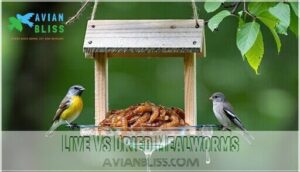
When choosing between live and dried mealworms, you’ll discover significant differences that impact your feathered friends’ health.
Live Mealworms offer superior digestibility and 62% moisture content, while Dried Options provide convenience with longer Shelf Life.
Here’s what matters for effective bird feeding:
- Live Mealworms – easier digestion, natural movement attracts birds
- Dried Options – 53% protein vs. 20% in live varieties
- Mealworm Storage – refrigerate live, store dried in airtight containers
- Freshness Matters – live last days, dried last months
- Bird Feeding Benefits – both work well as supplemental nutrition
Mealworm advantages vary by type, but dried mealworms won’t escape your feeder.
For superior bird health, understanding live mealworm benefits is vital for informed decisions.
Safe Feeding Practices
When implementing safe feeding practices, start with proper feeder placement near vegetation but away from windows to reduce collision risks.
Maintain strict hygiene practices by cleaning feeders weekly with diluted bleach solution.
Establish consistent feeding schedules during peak bird activity periods like early morning.
Store mealworms in airtight containers to prevent contamination, and monitor birds for potential allergies or unusual behavior after introducing mealworms to their diet, following proper and consistent feeding habits.
Avoiding Overfeeding
Once you’ve set up safe feeding practices, it’s time to keep overfeeding in check. Too many mealworm supplements can upset Bird Diet Balance and lead to Overfeeding Risks.
Stick to these bird feeding tips for nutrient control:
- Offer a small Mealworm Portion per bird
- Use mealworms as treats, not main meals
- Monitor Feeding Limits for essential bird health benefits
Understanding the importance of mealworm dietary benefits is vital for maintaining a balanced bird diet.
Preventing Allergies and Sensitivities
Most birds tolerate mealworms well, but some may develop sensitivity to high-protein foods.
Watch for signs like decreased appetite, unusual droppings, or behavioral changes when introducing mealworm supplements. Start with small portions to test tolerance.
If bird allergies appear, discontinue feeding immediately and consult an avian veterinarian for proper sensitivity tests.
| Signs to Watch | Prevention Method | Action Required |
|---|---|---|
| Decreased appetite | Start with small portions | Monitor for 24-48 hours |
| Unusual droppings | Gradual introduction | Reduce portion size |
| Behavioral changes | Quality mealworm sources | Consult avian vet |
Mealworm Benefits for Birds
When you offer mealworms to backyard birds, you’re providing a nutritional powerhouse that supports their most demanding life stages.
These protein-rich larvae deliver essential nutrients that boost energy levels, enhance feather quality, and improve overall health during breeding seasons and migration periods, which can be considered a complete concept in the birds’ life cycle.
Supporting Breeding and Migration
When breeding seasons arrive, mealworms become nutritional powerhouses that fuel bird reproduction and long-distance journeys.
Their high protein content and essential nutrients help birds build energy reserves for migration while supporting the demanding process of raising young.
How mealworms support critical life stages:
- Breeding Nutrition – Protein-rich mealworms provide amino acids needed for egg production and chick development during nesting success periods
- Migration Patterns – Birds store fat from mealworms as fuel for their epic journeys, with some species traveling thousands of miles
- Feather Growth – Essential nutrients promote strong, healthy plumage that’s vital for flight efficiency and temperature regulation
Providing Energy and Nutrition
Your birds get an incredible energy boost from mealworms’ exceptional nutritional value.
These protein sources deliver 49-60g protein per 100g, matching beef’s power while supporting rapid bird growth.
The balanced nutrient profile meets diverse dietary needs through essential fatty acids, vitamins, and minerals, providing a protein-packed fuel that energizes everything from daily activities to demanding life stages when birds need maximum nutrition for rapid growth.
Promoting Healthy Feathers and Beaks
Why do healthy feathers matter so much for birds?
Mealworms provide essential amino acids and minerals that fuel feather growth and maintain beak health.
The high protein content supports plumage care during molting seasons, while vitamins promote strong, vibrant feathers.
This nutritional value enhances bird grooming behaviors and overall avian nutrition, keeping your feathered friends looking their absolute best year-round.
Enhancing Bird Behavior and Socialization
Energy transforms when you offer mealworms to your feathered friends.
These protein-rich treats spark natural foraging strategies and strengthen flock dynamics through shared feeding experiences.
Watch as bird communication flourishes around feeders, creating vibrant social hubs that enhance bird attraction and transform bird feeding habits.
Here’s how mealworms boost bird socialization:
- Encourage group feeding – Multiple birds gather at mealworm feeders, promoting natural flock interactions
- Stimulate foraging behaviors – Birds exhibit natural scratching and searching patterns around feeding areas
- Improve territorial communication – Well-fed birds display healthier vocalizations and territorial behaviors
- Support nesting behavior – Parent birds demonstrate feeding techniques to offspring at mealworm stations
- Increase visitor diversity – Different species interact peacefully when abundant, nutritious food sources are available
By understanding bird social structures, you can create a more welcoming environment for various bird species to thrive in your backyard.
Choosing Mealworms for Birds
Choosing the right mealworms for your feathered friends doesn’t have to feel like rocket science—it’s actually pretty straightforward once you know what to look for.
You’ll need to take into account which bird species visit your yard, understand their specific nutritional needs, and learn how to properly balance mealworms with other foods while storing them correctly, considering the overall nutritional needs.
Selecting Suitable Species
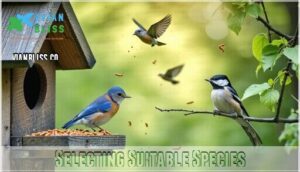
Most songbirds readily accept mealworms, but species compatibility varies substantially.
Bluebirds, robins, chickadees, and woodpeckers enthusiastically consume them, while seed-eating finches show less enthusiasm.
Wild birds like wrens, nuthatches, and mockingbirds also benefit from this protein-rich supplement.
Before selecting mealworms for your feathered visitors, research specific bird species in your area to guarantee the best avian nutrition and species selection success.
The nutritional value of live mealworms is influenced by their live food quality, which is a critical factor in providing the best possible diet, and it is essential to consider live mealworms as a valuable resource for wild birds.
Considering Dietary Needs
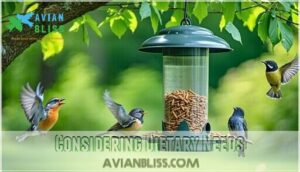
Consider your birds’ unique dietary needs when choosing mealworms.
Young birds and breeding females require higher protein levels, while seed-eating species need fewer dietary supplements.
Match mealworm feeding strategies to seasonal demands – more during migration and nesting periods.
Understanding individual bird nutrition requirements guarantees effective meal planning and proper nutrient balance in their diet.
Balancing Mealworms With Other Foods
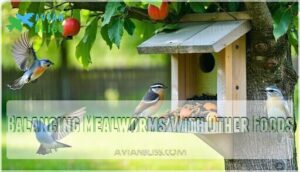
You shouldn’t rely on mealworms alone for your feathered friends.
Think of them as the dessert in your bird’s meal planning – delicious but best served alongside the main course.
Mix mealworms with seeds, fruits, and grains to create food variety that meets complete dietary needs.
This feeding strategy guarantees proper nutrient balance while using mealworms as effective bird food supplements for ideal bird diet enrichment.
Understanding the bird mealworm benefits is vital for creating a well-rounded diet for your birds, and using mealworms as effective bird food supplements.
Storing Mealworms Properly
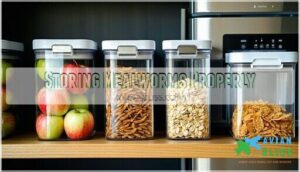
Proper mealworm storage keeps your feathered friends’ protein source fresh and nutritious.
Store both live and dried varieties in airtight containers to maintain ideal moisture levels and extend shelf life.
Here’s your storage game plan:
- Live mealworms: Use shallow plastic containers with ventilated lids, adding apples and oatmeal for nutrition
- Dried mealworms: Store in metal or plastic airtight containers with desiccant packets for humidity control
- Temperature matters: Refrigerate live ones to slow growth; keep dried varieties in cool, dry spots
Smart storage prevents spoilage and pest infestations.
Using proper mealworm containers is vital for maintaining a healthy environment.
Mealworm Feeding Best Practices
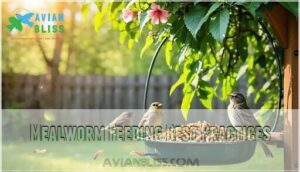
You’ll want to follow proven feeding strategies to maximize the nutritional benefits mealworms provide your backyard birds.
Smart placement and portion control guarantee birds get the protein boost they need without creating dependency or health issues, which is crucial for their overall well-being and can be achieved by following proven feeding strategies.
Using Mealworms in Moderation
Your feathered friends need mealworms like you need balance in your diet—moderation is key.
Following proper feeding guidelines prevents overfeeding issues while maintaining bird nutrition. Smart mealworm rationing guarantees balanced diets that complement natural food sources rather than replacing them entirely.
Understanding mealworm dietary benefits is vital for creating a well-rounded feeding plan.
| Feeding Frequency | Daily Amount |
|---|---|
| Small birds (chickadees) | 5-10 mealworms |
| Medium birds (robins) | 10-15 mealworms |
| Large birds (woodpeckers) | 15-20 mealworms |
| Breeding season | Increase by 25% |
Store mealworms properly and offer them as 10-20% of total bird food intake.
This approach supports healthy bird feeding preferences without creating dependency on your feeder.
Crushing or Soaking Mealworms
In the context of mealworm feeding, a little Mealworm Preparation goes a long way.
Crushing Methods make mealworms easier for nestlings to eat, while Soaking Benefits include boosting Moisture Levels and making dried mealworms plumper.
Think of soaking as turning crackers into soup—much gentler on tiny tummies and a great Digestion Aid for birds exploring new bird food options.
Maintaining a Varied Diet
While mealworms offer excellent protein and nutrients, they’re just one piece of your bird’s nutritional puzzle. Think of them as the cherry on top – essential but not the whole sundae.
Essential Diet Planning components:
- Seeds and grains – provide carbohydrates and baseline nutrition
- Fresh fruits and berries – deliver vitamins and natural sugars
- Other insects – offer varied protein sources beyond mealworms
- Suet or nuts – supply healthy fats for energy storage
Balanced diet approaches prevent nutritional deficiencies while supporting ideal bird nutrition year-round.
Placing Feeders Strategically
Strategic feeder placement transforms your yard into a bird feeding paradise.
Position mealworm feeders near natural cover like shrubs or trees, giving birds quick escape routes from predators.
Set feeding heights between three to five feet for maximum bird attraction.
Choose locations visible from your window but away from high-traffic areas.
Smart yard layout and predator control make your backyard birding setup irresistible to hungry visitors.
Understanding proper bird feeder placement is essential for creating an effective bird feeding strategy.
Mealworm Impact on Bird Health
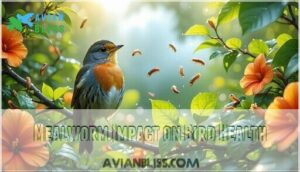
When you add mealworms to a bird’s diet, you’re giving them a powerful boost for growth, energy, and bright feathers.
Scientific studies show that mealworms support healthy development, strong immunity, and keep birds looking alert—even if they’re not morning birds themselves, which can lead to healthy development.
Supporting Growth and Development
High-quality protein in mealworms fuels rapid bird growth during critical development stages.
Young birds require double the protein intake of adults, making mealworms perfect for meeting these demanding development needs.
- Nestling muscle formation – protein builds strong flight muscles
- Feather development – amino acids create vibrant, healthy plumage
- Bone strengthening – minerals support skeletal growth
This nutrient balance provides the energy boost growing birds need.
Enhancing Immune Function
Immune-boosting power packs arrive when you offer mealworms to your feathered friends.
These protein-rich treats deliver vitamin B12 and zinc that strengthen white blood cells and antibody production.
The chitin in mealworms acts as a natural prebiotic, supporting healthy gut bacteria that bolster immune defenses.
This nutrient combination creates stronger disease resistance.
Promoting Brighter Feathers and Increased Energy
You’ll notice a remarkable transformation in your feathered visitors when mealworms become part of their diet.
The high-quality protein sources directly fuel feather growth, creating lustrous plumage that catches sunlight beautifully.
Bird energy levels soar as nutrient balance improves, with birds displaying increased activity and playful behavior.
This protein-rich boost supports ideal avian health, turning dull feathers into vibrant displays of wellness.
Contributing to Vibrant and Alert Appearances
Mealworms transform your backyard birds into vibrant, energetic showstoppers. The protein and nutrients create stunning transformations that’ll make your neighbors wonder what magic you’re working.
Your backyard becomes a bird paradise when you add these protein-packed treats to the menu.
- Brilliant red cardinals develop deeper crimson chest feathers that catch sunlight like tiny flames
- Chickadees display sharper black caps and whiter cheeks, creating striking contrast patterns
- Blue jays showcase more intense azure wing bars with glossy, almost metallic sheens
This healthy appearance stems from mealworms’ complete amino acid profile supporting feather protein synthesis, while essential fatty acids enhance plumage luster and bird energy levels. The presence of mealworms leads to vibrant and stunning transformations.
Frequently Asked Questions (FAQs)
Are mealworms good for birds to eat?
As the saying goes, "the proof is in the pudding" – mealworms are excellent for birds.
They’re packed with 49-60% protein, essential fats, and essential minerals.
You’ll notice healthier feathers, increased energy, and better breeding success when offering these nutritious treats.
What are the cons of mealworms?
Overfeeding mealworms can cause digestive issues and health problems for birds.
They’re high in fat, which isn’t ideal as a primary food source.
You’ll also face higher costs and storage challenges compared to regular birdseed.
What are the benefits of feeding mealworms?
You’ll boost your birds’ energy, feather color, and muscle growth with mealworms.
They’re packed with protein, healthy fats, and minerals—think of them as a power snack.
Birds flock to feeders, especially during breeding or chilly weather.
What time of year do birds eat mealworms?
Birds eat mealworms year-round, but they’re especially valuable during breeding season (spring/summer) when protein demands peak, and winter months when natural food sources become scarce, helping birds maintain energy.
Are mealworms safe for wild baby birds to eat?
You can safely offer mealworms to wild baby birds—they’re soft, protein-packed, and easy to digest.
Just remember, moderation is key.
Too many can upset tiny tummies, so think of mealworms as a treat, not the main course.
Can mealworms attract unwanted pests or predators?
Absolutely, mealworms can turn your peaceful bird feeding station into a wildlife magnet! You’ll attract rodents, raccoons, cats, and insects who smell the protein-rich feast you’ve laid out for birds.
Do mealworms affect local insect populations or ecosystems?
Commercial mealworm feeding doesn’t substantially impact local ecosystems since you’re using cultivated larvae, not wild insects. However, uneaten mealworms can establish in soil, potentially competing with native decomposers.
How do mealworms compare to suet as bird food?
If you’re choosing between mealworms and suet, think of mealworms as a protein bar and suet as an energy-packed snack.
Mealworms boost muscle and feather growth, while suet’s high fat content helps birds stay warm.
Are there ethical or sustainability concerns with mealworm farming?
Large-scale mealworm facilities are now converting food waste into protein more efficiently than traditional livestock.
You’ll find that mealworm farming shows promise as a sustainable alternative, requiring substantially less land and producing fewer greenhouse gas emissions compared to conventional meat production
Conclusion
Scientists once debated whether high-protein insects could truly replace traditional bird seeds—the evidence now overwhelmingly supports mealworms as nutritional powerhouses.
You’ve discovered how mealworm bird food benefits transform ordinary backyard feeding into strategic wildlife support.
By offering these protein-rich treats responsibly—whether live or dried—you’ll witness healthier feathers, stronger immune systems, and more energetic birds.
Remember to balance mealworms with varied foods, store them properly, and feed in moderation for ideal results.
- https://www.beakybites.co.uk/blog/top-tips-for-feeding-small-birds-dried-mealworms-feeding-guide
- https://kennedywildbirdfood.co.uk/blog/how-to-use-mealworms-as-bird-food/
- https://www.countryvisionscoop.com/news/country-store-news/dried-mealworms-will-birds-eat-them
- https://unclejimswormfarm.com/feed-mealworms-wild-birds/
- https://www.sialis.org/feeder/