This site is supported by our readers. We may earn a commission, at no cost to you, if you purchase through links.
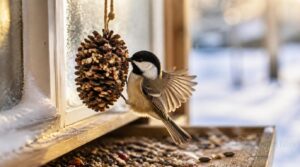
A single pinecone rolled in birdseed can bring a chickadee to your classroom window within days—and that moment, when a kid freezes mid-sentence and whispers "it’s actually eating it," is worth every sticky table.
Suet feeders work because birds need dense, calorie-rich food, especially when temperatures drop and foraging gets hard.
Making them by hand teaches students something textbooks rarely do: that small, intentional actions ripple out into living ecosystems.
These suet bird feeders for school nature projects are low-cost, allergy-adaptable, and genuinely exciting to build—so here’s exactly how to pull it off.
Table Of Contents
Key Takeaways
- A pinecone rolled in birdseed or a recycled mug filled with melted suet is all it takes to build a working bird feeder—no budget or woodworking skills required.
- Swapping peanut ingredients for sunflower seed butter or coconut butter keeps your project allergy‑safe without losing any of the birds or the fun.
- Where you hang feeders matters as much as how you build them—stay 3+ feet from windows, space feeders 10 feet apart, and mount them high to protect visiting birds from collisions and predators.
- Pairing feeder-building with weather tracking and species logging turns a craft project into real citizen science, your students can submit to Project FeederWatch.
Choose Safe Suet Project Materials
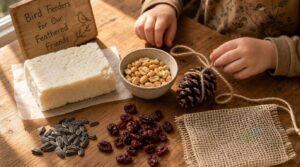
Before you start melting anything, it helps to know what you’re working with. The materials you choose make a real difference—for the birds, for your students, and honestly, for how smoothly the project goes. Here’s what works well for a classroom suet feeder build.
If you’re just getting started, this guide to window bird feeders for classrooms breaks down exactly which materials hold up best in a busy school setting.
Rendered Fat or Shortening
The backbone of any suet feeder is the fat. Rendered animal fat — beef tallow or lard — works best because it melts around 40–50°C, coats seeds evenly, and sets into a firm, moldable solid.
Rendered fats are high in saturated fatty acids stability, giving them higher oxidative stability.
Can’t find rendered fat? Vegetable shortening is a great classroom swap. Store your batch sealed in the fridge for up to two weeks, or freeze extras for six months.
Birdseed and Dried Fruit
Once your fat base is ready, it’s time to mix in the good stuff. Black-oil sunflower seeds are your best friend here — they’re high in fat and attract chickadees, nuthatches, and finches.
Toss in some dried fruit like raisins or cranberries for extra energy. Just make sure the fruit is unsweetened and free of coatings.
Peanut-free Classroom Options
Now, here’s something worth pausing on before you grab the lard. Many classrooms have a peanut-free policy — and that affects your suet mix more than you’d think.
| Safe Swap | Why It Works |
|---|---|
| Sunflower seed butter | Same creamy texture, zero peanut risk |
| Coconut butter | Binds suet mixtures without allergens |
Student involvement activities like label-reading and ingredient checks turn this into a real lesson. Always use your nut-free snack list as a guide.
Recycled Feeder Containers
Good news: you don’t need to buy anything fancy. Recycled plastic bottles, milk jugs, and clean food containers all make surprisingly solid suet feeders.
Sand or tape any sharp edges before students handle them — safety first.
Add a wooden dowel perch, loop some wire through the top, and you’ve got a feeder that costs you nothing and keeps plastic out of the landfill.
Natural Pinecones and Logs
Pinecones and small logs aren’t just forest debris — they’re natural DIY bird feeder materials waiting to be used.
Pinecone scales open and close with moisture, which actually helps suet and seed cling better.
A simple pinecone bird feeder or log suet bird feeder brings real ecology into the project, and students can collect them for free.
Make Easy Student Suet Feeders
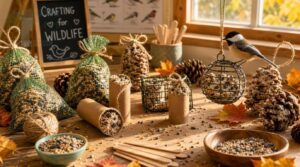
The good news is that you don’t need a woodworking shop or fancy supplies to build a feeder students will actually be proud of. Most of these designs use things you’d normally toss in the recycling bin or find on a nature walk. Here are five easy options that work great in a classroom setting.
Once your feeder is up, you can even log your backyard visitors through Project FeederWatch’s citizen science data collection program and turn birdwatching into real science.
Pinecone Suet Feeders
If you want a feeder that practically builds itself, the pinecone bird feeder is your best friend. Just coat an open pine cone with melted suet or shortening, roll it in birdseed or dried fruit, tie on a durable string, and hang it outside.
Chickadees and nuthatches especially love them — the scales create natural gripping points for feeding from any angle.
Mug Suet Feeders
A coffee mug suet feeder is one of those ideas that’s almost too simple — and that’s exactly what makes it perfect for a classroom.
Attach a small wooden dowel perch under the rim, add a wire hanger, and fill it with your suet mix. Birds cling to the edge and feed naturally. Use stoneware or powder-coated metal mugs; they won’t crack in freezing temperatures.
Clean thoroughly between refills to prevent mold.
Plastic Bottle Feeders
Recycled plastic bottles make surprisingly solid DIY bird feeders — and your students probably have one in the recycling bin right now.
Here’s how to build one:
- Cut low side holes for feeding ports
- Thread wooden dowels through as perches
- Fill with a nut-free suet mixture
- Hang with sturdy wire or cord
- Clean with soapy water and dry fully before refilling
Wire Cage Feeders
Wire cage feeders are a classroom favorite because they’re nearly indestructible. The metal mesh design lets small birds like chickadees grip and feed from multiple sides at once.
Grid spacing of 1–2 cm keeps bigger, pushy birds out. Squirrels struggle too — the thick wire resists chewing.
Best part? The open structure dries fast between rain showers, so mold doesn’t stand a chance.
Log Suet Feeders
[ORIGINAL TEXT]
Log suet feeders feel straight out of the forest — and that’s exactly the point. Here’s what makes them a standout choice for DIY bird feeder projects:
- Log construction uses untreated cedar or pine to resist rot naturally
- A cylinder core holds standard suet blocks snugly inside
- Port dimensions of 1.25–2 inches fit clinging birds perfectly
- Steel wire or braided cord supports hanging methods securely
- Regular scrubbing follows a simple cleaning protocol to prevent mold
Woodpeckers especially love these. For educational bird projects, the natural look sparks great classroom conversations about habitat.
[/ORIGINAL TEXT]
Follow Step-By-Step Classroom Directions
Once you’ve gathered your materials, it’s time to put everything together. These steps walk your class through the whole process, from mixing the suet to hanging the finished feeders. Here’s exactly what to do.
Prepare The Suet Mixture

Start with the fat. Gently melt natural suet or lard over low heat — never rush this step, or it’ll scorch. Once liquid, whisk in your dry ingredients: cornmeal, oats, and seeds. This is your seed mixture binder, the glue holding everything together.
| Step | What to Do |
|---|---|
| Melt fat safely | Use low heat, stir slowly |
| Mix dry ingredients | Add cornmeal, oats, seeds gradually |
| Temperature control | Let cool slightly before molding |
For allergy-free options, skip peanuts entirely — sunflower seeds work great. Once mixed, refrigerate or freeze extras in labeled bags.
Fill or Coat Feeders

Now that your suet mixture is ready and slightly cooled, it’s time to coat feeder surfaces and fill every cavity evenly. Spread the warm mixture firmly into log holes, bottle openings, or mug interiors.
For pinecone feeders, roll them thoroughly so the natural suet clings to every crevice.
Let everything cool completely before moving on — rushed feeders crumble.
Add Perches and Hangers
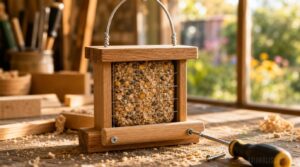
Once your feeders are filled and firm, it’s time to add perches and hangers so birds can actually use them.
- Use smooth, sanded wood dowels for perches — no splinters
- Stainless steel screws hold perches securely and resist rust
- Keep perch diameter small-to-medium for chickadees and nuthatches
- Loop 12 inches of sturdy wire or string for hanging
- Test each hanger with a gentle tug before it goes outside
Label Each Student Project
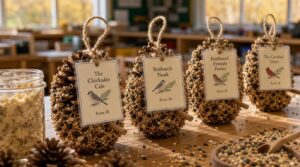
Now that your feeders have perches and hangers, give each one its own identity. Label each student project clearly before it goes outside.
Print each label on 65 lb matte cardstock, then laminate it. Include the student’s name in uppercase, the project title like Pinecone Suet Feeder, the date, and your room number and teacher initials.
Attach it centered on the front — never over perches or feeding holes.
Freeze Extras Safely
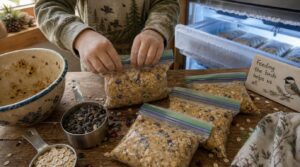
Once your feeders are labeled and ready, don’t toss any leftover suet mixture — freeze it for next time.
Here’s how to do it right:
- Freeze within 2 hours of preparing the mix
- Portion into 50–100g bags for single classroom use
- Store at −18°C (0°F) or colder
- Thaw in the refrigerator for 24 hours before reuse
Never refreeze thawed portions.
Place Feeders for Bird Safety
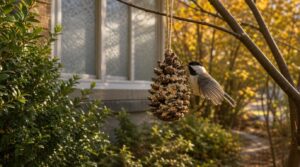
Building a feeder is only half the job — where you hang it matters just as much for the birds’ safety. A few simple placement choices can protect them from windows, predators, and crowded conditions. Here’s what to keep in mind before you pick your spot.
Avoid Dangerous Window Placement
Windows can be deadly traps for birds — up to 1 billion U.S. birds die each year from glass collisions. When hanging your homemade bird feeder near a classroom window, that’s worth pausing over.
Up to 1 billion birds die from glass collisions yearly — placement near windows can be fatal
| Placement Zone | Risk Level | Action Needed |
|---|---|---|
| Within 3 feet | High | Relocate immediately |
| 3–9 feet | Moderate | Add window decals |
| 10+ feet away | Safe | Ideal placement |
Reflective surface management matters too — matte or non-glossy feeder materials reduce dangerous glass reflections that confuse birds mid-flight.
Space Feeders Ten Feet
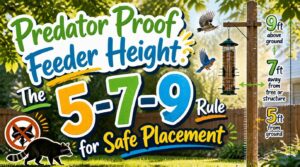
Ten feet is the magic number here. Spacing feeders at least 10 feet apart cuts down on crowding, reduces squirrel interference, and gives birds clear, open flight paths in and out.
Mount each feeder on a tall pole or high branch, so smaller songbirds can land one at a time without jostling — safer and calmer for everyone visiting.
Choose Sheltered Hanging Spots
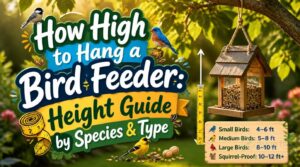
Think of a good hanging spot as a bird’s version of a cozy reading nook — tucked away, calm, and protected. Hang feeders 5 to 8 feet high under dense tree canopy, a porch overhang, or near evergreen shrubs.
These spots block wind, reduce rain exposure, and hide birds from aerial predators during feeding.
Limit Squirrels and Predators
Squirrels are clever — but you can outsmart them. Raise feeders 6 to 8 feet off the ground, and wrap your suet log bird feeder in a wide mesh cage barrier to block determined climbers.
Here’s what makes a squirrel-proof feeder setup work:
- Use weighted base feeders that stay stable under pressure
- Add predator deterrent perches with narrow designs
- Choose recycled mesh materials for cage barriers
- Inspect regularly for chew marks or damage
Remove Feeders During Outbreaks
Sometimes the kindest thing you can do for birds is take your feeders down. During a disease outbreak, crowded bird feeding sites can spread illness fast.
If you spot sick or dead birds nearby, remove your suet log bird feeder immediately, clean it with a 10 percent bleach solution, and monitor the area for two to three weeks before reintroducing it.
Turn Feeding Into Nature Science
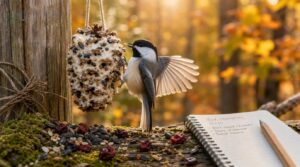
Hanging a feeder outside is just the beginning — the real fun starts when you start paying attention. A few simple habits can turn your bird-watching into actual science, the kind that teaches you something new every week. Here’s how to make that happen.
Record Visiting Bird Species
Once birds start visiting your feeders, keep a bird observation journal to write down every species you spot. Note the date, time, how many birds you saw, and any field marks like wing patterns or beak shape.
Photo documentation helps confirm tricky IDs. You can even submit your data to Project FeederWatch — real citizen science straight from your schoolyard.
Track Weather and Temperature
Your bird journal gets even richer when you pair it with weather notes. Use a classroom thermometer to record the morning and afternoon temperature daily — around 8 AM and 2 PM work well.
You’ll quickly notice that sudden cold snaps bring more birds to the feeders, while warmer afternoons slow things down. That’s temperature-dependent feeding in action.
Compare Feeder Designs
Once you’ve got temperature data piling up, turn that same scientific eye toward your feeders themselves. Which design actually works best?
Set up two or three side by side — a log suet feeder, pinecone bird feeders, and a plastic bottle version — and count visits to each. You might be surprised which one wins.
Note Feeding Behaviors
Counting visits tells you a lot — but how birds behave at your feeder is even more revealing. Watch for dawn pecking clusters, when the most visits tend to stack up early morning.
You’ll also notice feeding dominance hierarchy in action: larger birds eat first, smaller ones wait. That’s avian behavior you can actually see and record.
Join Citizen Science Projects
Here’s where your bird feeder STEM challenge stops being just a classroom project and starts mattering beyond your school walls.
Project FeederWatch, run by the Cornell Lab of Ornithology, lets students submit real observations that scientists actually use. Log which species visit your log suet bird feeder, note the weather, and upload your data — your class just joined citizen science.
Frequently Asked Questions (FAQs)
How often should students clean their feeders?
Clean your bird feeder every two weeks — more often in rain or heat. Suet spoils fast in humidity. Assign each student a cleaning day to build real student responsibility.
Which bird species visit suet feeders most?
Downy woodpeckers, chickadees, and nuthatches are your most reliable winter suet visitors. Tufted titmice and white-breasted nuthatches show up fast too. In western yards, watch for Steller’s jays joining the crowd.
Can suet feeders stay outside in summer?
Suet feeders can stay outside in summer, but watch the heat. Above 25°C, suet melts fast. Use no-melt suet, pick a shaded spot, and check daily for spoilage.
How much food do birds eat daily?
Birds eat 15 to 30 percent of their body weight daily. Cold weather pushes that higher. A chickadee weighing 20 grams might need up to 6 grams — more in winter.
Do suet feeders attract unwanted invasive birds?
Yes, they can. European starlings and house sparrows are the usual gate-crashers, swooping in and crowding out smaller native birds. Upside-down feeders and tight cage designs help keep them away.
Conclusion
Imagine a third-grader named Mia who barely looked up from her desk all fall—until a nuthatch landed on the feeder she built from a recycled mug.
She started keeping a tally on her notebook cover. By December, she’d logged nine species.
That’s what suet bird feeders for school nature projects actually do: they turn quiet kids into careful observers, and ordinary windows into front-row seats to something real and wild and worth paying attention to.