This site is supported by our readers. We may earn a commission, at no cost to you, if you purchase through links.
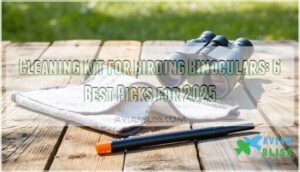 You’ll want a cleaning kit for birding binoculars that includes microfiber cloths, lens cleaning solution, and an air blower to remove dust without scratching.
Quality kits like Zeiss, Nikon, or Vortex offer professional-grade tools that keep your optics crystal clear.
Avoid using tissues or clothing – they’ll scratch those expensive lenses faster than you can say "rare warbler."
A good cleaning pen with retractable brush works wonders for stubborn smudges.
Regular maintenance prevents permanent damage and guarantees you won’t miss that once-in-a-lifetime bird sighting because of dirty glass.
The right tools make all the difference between spotting feather details and squinting through smudges, ensuring a crystal clear view for rare warbler sightings.
Table Of Contents
- Key Takeaways
- Lens Cleaning Importance
- Cleaning Techniques Matter
- Top 6 Birding Binocular Kits
- Essential Cleaning Kit Features
- Choosing Right Cleaning Kits
- Frequently Asked Questions (FAQs)
- What can I use to clean binoculars?
- What is the best lens cleaning kit?
- Can I use rubbing alcohol to clean binoculars?
- Can you take binoculars apart to clean them?
- How often should I clean my binoculars?
- Can I use household cleaners on lenses?
- Whats the shelf life of cleaning solutions?
- Should I clean both objective and eyepiece lenses?
- How do I clean binoculars in rain?
- Conclusion
Key Takeaways
- You’ll need four essential components: microfiber cloths, lens cleaning solution, air blower, and cleaning pens to maintain your binoculars without damaging expensive protective coatings.
- Don’t use household cleaners, tissues, or clothing on your lenses – they’ll scratch protective coatings and permanently damage your optics, costing you hundreds in repairs.
- Clean only when you notice reduced image clarity from dust or smudges, not after every use – over-cleaning damages coatings more than under-cleaning.
- Professional kits from Zeiss, Nikon, or Vortex offer better value than DIY solutions, with prices ranging from $8-42 depending on your specific birding needs and binocular type.
Lens Cleaning Importance
Your binoculars are only as good as the lenses you can see through, and dirty optics turn crystal-clear bird sightings into frustrating blurs.
Clean lenses aren’t just about aesthetics—they’re essential for maintaining your binoculars’ performance and protecting the delicate coatings that make sharp, bright images possible, which is crucial for sharp sightings.
Maintaining Binocular Functionality
Your binocular cleaning kit acts as preventive medicine for your optics, keeping dirt and moisture from compromising delicate internal mechanisms.
Proper maintenance guarantees your birding binoculars deliver crisp images season after season.
Essential maintenance practices:
- Optimal Storage – Store binoculars in dry cases with desiccant packs
- Component Replacement – Replace worn cleaning cloths and brushes regularly
- Humidity Control – Use moisture-absorbing packets in storage areas
- Impact Protection – Clean after dusty conditions to prevent scratches
- Regular Servicing – Schedule professional cleaning for internal components
Preventing Lens Damage
Your binocular’s delicate lens coatings are surprisingly vulnerable to damage from improper cleaning techniques.
One careless wipe can ruin expensive lens coatings forever.
Abrasive particles like dust and sand can scratch these expensive surfaces if you rub without first using your binocular cleaning kit’s blower.
Coating degradation occurs when harsh pressure or wrong cleaning frequency strips protective layers.
Safe storage and gentle lens cleaning solution prevent costly repairs by ensuring the longevity of your binoculars, and proper cleaning is essential to maintain their quality.
Ensuring Clear Viewing
Looking through clean binoculars transforms your birding experience completely. Proper binocular lens cleaner and lens cleaning kit maintenance guarantees you’ll spot every feather detail with crystal-clear image clarity.
Coating protection preserves key light transmission and color fidelity for comfortable viewing sessions. A vital factor is the lens’s vibration reduction to stabilize images.
- Sharp contrast between a robin’s orange breast and blue sky
- Crisp definition of hawk wing patterns during flight
- True color reproduction of vibrant warbler plumage
Cleaning Techniques Matter

You’ll get crystal-clear views only when you clean your binocular lenses properly using the right techniques.
One wrong move with improper cleaning methods can permanently damage expensive lens coatings and turn your sharp optics into blurry disappointments.
Safe Cleaning Practices
Start by removing loose particles with your air blower or soft brush—this prevents scratches from grinding debris across delicate coatings.
Apply lens cleaning solution to your microfiber cloth, never directly onto the lens surface. This coating protection technique prevents fluid from seeping into your binoculars’ internal mechanisms.
To keep your equipment safe, consider natural cleaning ingredients to avoid harmful chemicals.
Use gentle circular motions for effective residue removal while safeguarding those expensive optical coatings.
Avoiding Common Mistakes
Never breathe on lenses—you’ll create water spots that cloud your view.
Don’t rub dry, dusty lenses without removing debris first; you’ll scratch the coatings permanently.
Harsh chemicals like window cleaners destroy optical coatings, so stick to specialized lens cleaning solutions.
Paper towels and clothing leave scratches and lint.
Always dry lenses completely before storing your binoculars to prevent moisture damage inside.
Regular Maintenance Tips
Consistency is your binocular’s best friend.
Clean your optics cleaning kit monthly, replacing worn microfiber cloths and checking fluid levels in your binocular maintenance kit.
Store birding binocular care supplies in humidity-controlled environments to prevent mold.
Inspect eyecup care regularly for cracks, and don’t forget tripod maintenance for stable viewing.
Coating protection starts with proper storage solutions.
Top 6 Birding Binocular Kits
You’ll find six standout cleaning kits that tackle everything from dust particles to stubborn fingerprints on your binocular lenses.
Each kit offers unique strengths, whether you need portable convenience for field trips or thorough cleaning power for extensive maintenance.
You can choose a kit that suits your needs, from thorough cleaning power to convenient field trip solutions.
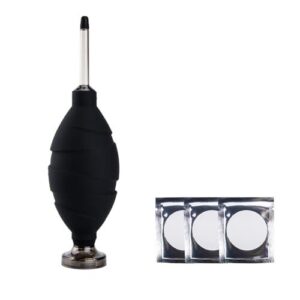
1. Camera Sensor Lens Safe Air Blower
 View On Amazon
When dust particles threaten your binocular lenses, an air blower becomes your first line of defense.
This tool removes loose debris without touching delicate coatings, preventing scratches that cloth cleaning might cause.
You’ll appreciate the "no-backflow" design that delivers clean air through single-way valves and built-in filters.
The silicone tip won’t damage your optics, though the plastic filter assembly can loosen with heavy use—just tighten it occasionally for reliable performance and to ensure the built-in filters continue to function properly.
Best For: Photographers, astronomers, and optical equipment users who need safe, contact-free dust removal from delicate lenses, sensors, and binoculars.
- No-backflow design with built-in filters ensures clean air delivery and prevents contamination
- Silicone soft tip protects delicate optical surfaces from accidental damage during cleaning
- Strong airflow effectively removes stubborn dust particles without physical contact or scratching risk
- Plastic filter assembly can loosen and detach with repeated use, requiring frequent tightening
- Lacks storage cap for nozzle protection and perceived as overpriced for build quality
- Brittle plastic components may affect long-term durability compared to metal alternatives
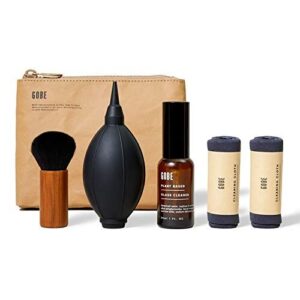
2. Gobe Glass Cleaning Kit Professional
 View On Amazon
You’ll appreciate how this professional-grade kit goes beyond basic cleaning with its eco-friendly approach.
The Gobe kit includes an ergonomic blower, ultra-fine brush that’s soft as a cosmetic brush, oversized microfiber cloths, and 30ml chemical-free solution in a glass bottle.
What sets it apart is its sustainable materials and lifetime warranty.
The plant-based cleaning fluid protects nano-coatings while achieving streak-free results.
At $30, it’s pricier than competitors, but you’re investing in quality that lasts.
Plus, your purchase plants five trees—cleaning your lenses while helping reforest the world with an eco-friendly mindset.
Best For: Photographers, birders, and tech users who prioritize eco-friendly lens care with professional-grade results and lifetime durability.
- Chemical-free, plant-based formula safely cleans nano-coated optics without damage while achieving streak-free results
- Sustainable materials with lifetime warranty and tree-planting program create positive environmental impact
- Professional-grade components including ultra-fine brush and oversized microfiber cloths deliver superior cleaning performance
- Higher $30 price point compared to basic cleaning alternatives may not suit budget-conscious buyers
- Some users report occasional spray bottle functionality issues and zipper malfunctions on the travel case
- Standard blower component doesn’t match the premium quality of other kit elements
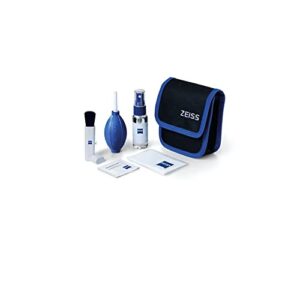
3. Zeiss Lens Cleaning Kit Complete
 View On Amazon
Precision meets practicality with Zeiss’s thorough cleaning solution.
You’ll get everything needed for pristine optics: air blower, retractable brush, cleaning fluid, pre-moistened wipes, microfiber cloth, and travel case.
The ammonia-free formula protects delicate coatings while removing fingerprints and smudges streak-free.
While some users criticize the brush quality, the overall effectiveness makes this kit a solid investment.
At $25-30, it’s competitively priced for professional-grade cleaning that keeps your expensive binoculars performing like new.
This price point, combined with the kit’s effectiveness, makes it a worthwhile purchase for maintaining pristine optics.
Best For: Photographers, birders, and outdoor enthusiasts who need professional-grade cleaning for expensive optical equipment like camera lenses, binoculars, and spotting scopes.
- Complete all-in-one kit with air blower, brush, fluid, wipes, microfiber cloth, and travel case for comprehensive cleaning
- Ammonia-free, streak-free formula safely protects delicate anti-reflective and coated optics without damage
- Compact, portable design with fabric travel case makes it ideal for field use and travel
- Brush quality issues reported by some users, including bristle shedding and waxy residue
- Higher price point compared to similar generic cleaning kits from other manufacturers
- Some users experience occasional streaking when cloth isn’t properly maintained or used incorrectly
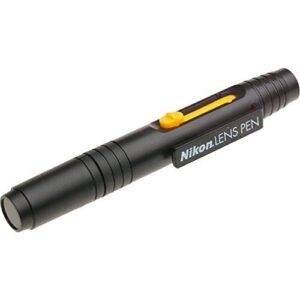
4. Nikon Lens Pen Cleaning System Black
 View On Amazon
Nikon’s lens pen offers a genius two-in-one design that’s perfect for birders on the move.
You’ll love the retractable brush that sweeps away dust particles, while the carbon compound tip tackles stubborn fingerprints and smudges without any messy liquids.
This compact powerhouse fits easily in your pocket and removes 99% of visible marks with gentle circular motions.
The non-liquid system means no residue or leakage—just clean, clear optics every time.
At under $12, it’s undoubtedly the best bang for your buck in lens maintenance tools, providing a great value with its ability to clean 99% of visible marks.
Best For: Photographers and birders who need reliable, portable lens cleaning without the mess of liquid solutions.
- Dual-action design combines retractable brush for dust removal and carbon compound tip for fingerprints and smudges
- Non-liquid system eliminates residue, leakage, and drying issues while removing 99% of visible marks
- Exceptional portability and value at under $12, weighing less than 30g and fitting easily in pockets or camera bags
- Some users report shorter lifespan than expected under heavy usage conditions
- Carbon tip may initially shed micro-particles that require brushing away during first uses
- Length could be more compact for optimal portability according to user feedback
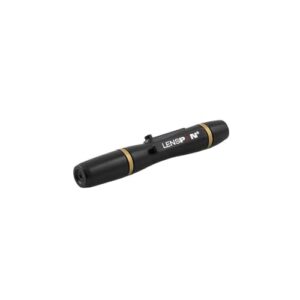
5. LensPen NLP-1 Camera Lens Cleaner
 View On Amazon
Simplicity meets effectiveness with this pocket-sized cleaning powerhouse.
You’ll love how the LensPen NLP-1’s dual-action design tackles lens maintenance without any messy fluids.
The retractable goat-hair brush sweeps away dust particles, while the carbon cleaning tip removes fingerprints and oils in seconds.
Its concave tip perfectly matches your binocular lenses’ curved surface, ensuring thorough cleaning every time.
At under $15, you get up to 500 uses before replacement, and the pen-shaped design with pocket clip makes field cleaning effortless during your birding adventures.
Best For: Photographers and birders who need quick, fluid-free lens cleaning during field work and travel.
- Dual-action design with retractable brush and carbon tip cleans without liquids or mess
- Ultra-portable pen shape with pocket clip fits easily in camera bags for on-the-go use
- Long-lasting value with up to 500 uses before replacement at under $15
- Delicate goat-hair brush requires careful handling to avoid contamination
- Carbon tip can leave faint residue if used too aggressively on heavily soiled lenses
- Screw-on cap design can be slightly cumbersome for quick one-handed operation
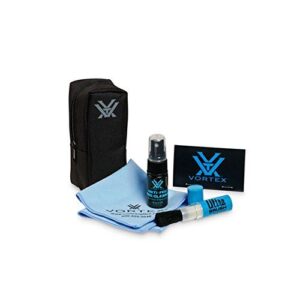
6. Vortex Optics Lens Cleaning Field Kit
 View On Amazon
For serious birders who mean business, the Vortex Optics Field Kit delivers professional-grade cleaning without breaking your budget.
This lightweight powerhouse packs an Ultra brush with retractable bristles, Vor-Tek microfiber cloth, and anti-fog lens cleaner into one compact pouch.
You’ll appreciate how the ammonia-free formula keeps your expensive coatings intact while the microfiber cloth tackles stubborn fingerprints like a champ.
At just 3.2 ounces, it won’t weigh down your pack during those long birding expeditions.
Best For: Field birders, hunters, and photographers who need reliable, professional-grade optics cleaning in a compact, portable package.
- Complete cleaning solution with Ultra brush, microfiber cloth, and anti-fog lens cleaner in one lightweight 3.2oz kit
- Ammonia-free formula safely cleans all coated and non-coated optics without damaging expensive lens coatings
- Compact design with sturdy carrying case fits easily in range bags or birding kits for field convenience
- Small 1-milliliter cleaner bottle requires frequent refills for heavy users with limited refill size options
- Anti-fog protection receives mixed reviews from some users who find it less effective than expected
- Limited to basic cleaning tools without specialized accessories for heavy-duty or professional maintenance needs
Essential Cleaning Kit Features
When shopping for a birding binocular cleaning kit, you’ll want four core components that actually work in the field.
The right features make the difference between crystal-clear optics and smudged lenses that’ll have you squinting at what might be a rare warbler or just a leaf.
Microfiber Cloths
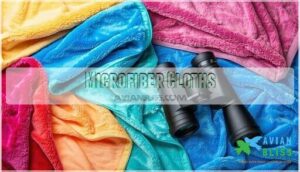
When selecting your microfiber cloth, you’re investing in the backbone of effective binocular cleaning supplies.
These ultra-fine synthetic fibers trap dust and oils while eliminating static charge that causes debris to resettle. Microfiber cloths are also excellent for chemical-free cleaning, often requiring only water to effectively remove dirt and smudges.
Quality microfiber cloth features include:
- Cloth Material: Split-fiber technology outperforms cotton by 100 times
- Weave Density: Professional-grade construction prevents lint and scratches
- Cleaning Technique: Works effectively without chemical solutions
- Storage Solutions: Reusable across hundreds of cleaning sessions
- Brand Comparison: Optics cleaning cloth quality varies substantially between manufacturers.
Choose microfibre cloth designed specifically for birding binocular care rather than generic alternatives.
Air Blowers
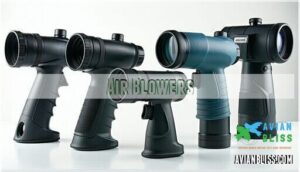
Think of an air blower as your lens’s best friend—it removes dust without touching delicate surfaces.
You’ll want robust airflow power and precise nozzle design for effective cleaning. While some air pumps produce an annoying squeak, they’re essential cleaning tools for dust removal before using cloths.
Many users seek specialized models online for enhanced performance.
| Feature | Benefit | Consideration |
|---|---|---|
| Blower Material | Durable rubber construction | Check for squeaking issues |
| Nozzle Design | Precise dust targeting | Removable tips aid cleaning |
| Airflow Power | Strong particle displacement | Jet blower preferred over weak puffs |
| Alternative Uses | Camera sensor cleaning | Multi-purpose cleaning tools |
| Portability | Field-ready dust removal | Compact size matters |
Lens Cleaning Fluids
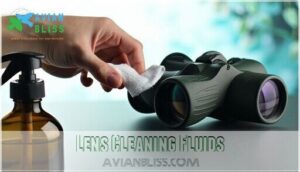
Professional lens cleaning fluid tackles stubborn smudges and oils that won’t budge with dry methods alone. These specialized solutions protect delicate coatings while delivering streak-free results—think of them as your binoculars’ spa treatment.
You can find a variety of lens cleaning products online.
- Fluid Composition: Isopropyl alcohol (99.8%) works best for glass lenses; avoid acetone on plastic optics
- Application Methods: Always apply cleaning fluid to your cloth first, never directly onto lenses
- DIY Solutions: Distilled water works for light cleaning, but specialized lens cleaner handles oils better
- Residue Concerns: Quality lens cleaning solutions evaporate completely without leaving streaks or film
- Storage Guidelines: Keep cleaning fluid tightly sealed and away from extreme temperatures to maintain effectiveness
Double-Sided Cleaning Pens
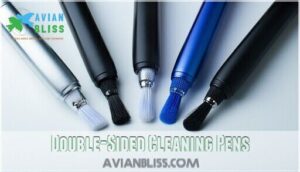
Double-sided cleaning pens pack serious punch in your binocular maintenance toolkit.
These handy gadgets feature a retractable brush on one end for dust removal and a non-liquid cleaning pad on the other for stubborn smudges.
| Feature | Brush End | Cleaning Tip |
|---|---|---|
| Primary Use | Loose dust removal | Oil and fingerprint elimination |
| Contact Type | Gentle bristle sweep | Direct pad contact |
| Cleaning Agent | None required | Dry compound reservoir |
| Replacement | Entire pen when worn | Tip replacements available |
Pen effectiveness shines through their dual-action design and coating safety features.
The brush quality varies between brands, so check bristle softness before purchase.
These lens cleaning accessories offer excellent pen alternatives to traditional liquid methods, making optics cleaning kit assembly simple.
Your birding optics care routine becomes streamlined with a quality lens cleaning pen that fits any pocket.
Choosing Right Cleaning Kits
You’ll want to match your cleaning kit to your specific binocular model and birding style since different optics have varying coating sensitivities and maintenance needs.
Consider whether you need a compact field kit for hiking trips or a thorough home maintenance set, then weigh the component quality against your budget to find the sweet spot between effectiveness and value.
Considering Binocular Type
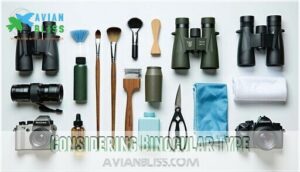
Your binocular type shapes your cleaning needs.
Roof prism models with ED glass or apochromatic lenses need gentle, coating-safe fluids since premium optics demand careful binocular maintenance.
Porro prism designs handle standard cleaning better.
Image stabilization binoculars require extra care around moving parts.
Waterproof models need corrosion-resistant tools for proper binoculars care and birding optics care.
To remove debris, consider using pressurized air effectively for a more efficient cleaning process with your optics.
Evaluating Cleaning Kit Components
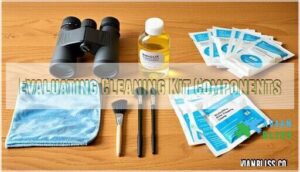
Look beyond compatibility when choosing your kit—component quality determines cleaning success.
Top-tier microfibre cloth and air pump combinations outperform basic alternatives, while effective lens cleaning fluid removes stubborn residue safely.
To guarantee the safety of nearby pets, consider bird safe cleaners for your workspace.
- Cloth Quality: Premium microfibre cloths trap dust without scratching delicate coatings
- Fluid Effectiveness: Optics-specific solutions dissolve oils better than generic cleaners
- Brush Design: Quality optics cleaning brush bristles won’t shed or leave waxy marks
- Pen Utility: Double-sided lens pen combines dust removal with non-liquid cleaning compounds
- Tissue Convenience: Individual lens cleaning wipes stay moist and provide streak-free results
Comparing Prices and Value
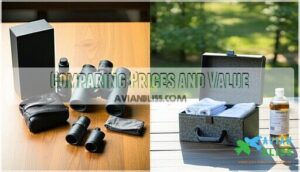
Budget-conscious birders can find solid optics care kit options starting at just $8, while premium Zeiss lens cleaning kit and Swarovski cleaning kit models reach $42.
DIY kit value shines when you mix components—grab a jet blower, quality wipes, and microfiber cloths separately.
Brand price differences often reflect marketing more than performance. Consider cleaning frequency impact and long-term savings over flashy packaging.
Frequently Asked Questions (FAQs)
What can I use to clean binoculars?
Wondering what’ll keep your optics crystal clear? You’ll need a microfiber cloth, lens cleaning solution, and an air blower. These essentials remove dust, fingerprints, and smudges without damaging delicate coatings.
What is the best lens cleaning kit?
You’ll find multiple top-rated options, but Altura Photo Professional Cleaning Kit consistently ranks as the best overall choice.
It includes thorough tools, comes with a carry case, and offers excellent value for maintaining pristine glass.
Can I use rubbing alcohol to clean binoculars?
Like polishing a prized gem, cleaning binoculars demands the right touch.
Don’t use rubbing alcohol—it’s too harsh and can damage delicate lens coatings.
Instead, stick with cleaning solutions specifically made for optics.
Can you take binoculars apart to clean them?
You shouldn’t disassemble your binoculars for cleaning.
Modern binoculars are precision instruments with complex internal mechanisms that require specialized tools and expertise.
Taking them apart risks damaging delicate components and voiding your warranty completely.
How often should I clean my binoculars?
Over-cleaning damages coatings more than under-cleaning.
Clean your binoculars only when you notice reduced image clarity from dust, smudges, or fingerprints – typically every few birding outings rather than after each use.
Can I use household cleaners on lenses?
Never use household cleaners like Windex or bleach on your binoculars. They’ll strip protective coatings and permanently damage your lenses. Stick to optics-specific cleaners or distilled water instead.
Whats the shelf life of cleaning solutions?
Time stands still for nothing, but cleaning solutions aren’t immortal either.
Most lens cleaning fluids last 2-3 years unopened, but once you’ve cracked them open, they’re good for about 12-18 months before effectiveness starts declining, which impacts their overall usefulness.
Should I clean both objective and eyepiece lenses?
Yes, you should clean both objective and eyepiece lenses.
Dirt on either surface degrades image quality.
Start with objectives since they collect more debris, then clean eyepieces gently to avoid damaging coatings.
How do I clean binoculars in rain?
Wait for breaks in rainfall before cleaning your binoculars outdoors.
If you must clean wet lenses, gently remove water droplets with a microfiber cloth using light dabbing motions, not wiping, to prevent streaking and coating damage.
Conclusion
Coincidentally, you’ve invested hundreds in premium binoculars, yet a smudged lens ruins every birding adventure.
Don’t let poor maintenance sabotage your equipment investment. The right cleaning kit for birding binoculars transforms frustrating moments into crystal-clear wildlife encounters.
Whether you choose professional-grade options from Zeiss or budget-friendly alternatives, consistent care protects your optics and guarantees every feather detail remains sharp.
Your binoculars deserve the same attention you give bird identification—proper tools guarantee peak performance for years of successful birding expeditions ahead.
- https://betterwithbirds.com/blogs/birding-gear/how-to-clean-binoculars
- https://www.birdwatching.com/optics/education/cleaning_binoculars.html
- https://oberwerk.com/product/oberwerk-lens-cleaning-pen/
- https://shoptimeandoptics.com/blogs/news/birding-optics-care-guide-10-tips-for-longevity-and-performance
- https://wildlatitudes.com/how-to-clean-your-binoculars-video/