This site is supported by our readers. We may earn a commission, at no cost to you, if you purchase through links.
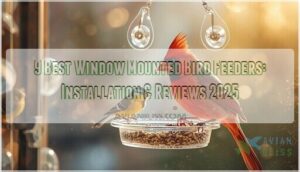 A Northern Cardinal lands six inches from your breakfast plate. Through the window glass, you watch sunlight catch each crimson feather as the bird cracks open a sunflower seed. Window-mounted bird feeders transform ordinary mornings into front-row wildlife shows, bringing chickadees, finches, and nuthatches close enough to see the intelligence in their eyes.
These transparent feeders stick directly to your glass with industrial-strength suction cups, turning any window into a portal to the outdoor world. Installation takes five minutes. The payoff lasts years. You’ll identify field marks you’ve never noticed before—the subtle rust patch on a titmouse’s flank, the way goldfinches tilt their heads to shell seeds.
Nine standout feeders deliver crystal-clear views while withstanding storms, squirrels, and daily use.
Table Of Contents
- Key Takeaways
- Top 9 Window Mounted Bird Feeders
- 1. Transparent Acrylic Window Bird Feeder
- 2. Clear Window Bird Feeders Kit
- 3. Clear Window Bird Feeders House
- 4. Hummingbird feeder jewel box window
- 5. Hummingbird Window Mount Feeder Outdoor
- 6. clear window outdoor bird feeder
- 7. Clear Acrylic Window Bird Feeder
- 8. Clear Outdoor Window Bird Feeder
- 9. Clear Window Bird Feeders Column
- Key Benefits of Window Bird Feeders
- Types of Window Bird Feeders Explained
- Essential Features to Look For
- How to Install a Window Bird Feeder
- Maintenance and Cleaning Tips
- Attracting Birds to Your Window Feeder
- Preventing Bird Collisions With Windows
- Eco-Friendly and Durable Materials
- What to Know Before Buying
- Frequently Asked Questions (FAQs)
- Conclusion
Key Takeaways
- Window feeders mounted within three feet of glass cut bird collisions by up to 60% because birds lack the space to build dangerous speed, making close placement safer than distant setups.
- Acrylic feeders deliver 95%+ clarity for detailed observation, while polycarbonate models resist impact and temperature extremes better, though both materials require suction cup maintenance every few days in changing weather.
- Black oil sunflower seeds attract over 25 species with 40%+ fat content, while nyjer pulls goldfinches and safflower deters squirrels—matching seed type to target species drives visitation success.
- Daily checks and weekly cleaning with 10% bleach solution prevent mold that appears within 48 hours on wet seed, protecting bird health while maintaining the feeder’s transparency and suction strength.
Top 9 Window Mounted Bird Feeders
You’ve got plenty of options for window-mounted feeders. Each one brings something different to the table—whether you’re watching finches, hummingbirds, or a mix of backyard visitors.
Here’s a look at nine solid choices that’ll get birds flocking to your window.
1. Transparent Acrylic Window Bird Feeder
 View On Amazon
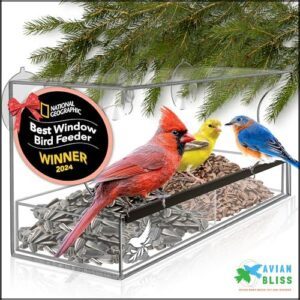
A transparent acrylic window bird feeder puts you inches away from chickadees, cardinals, and finches feeding right on your glass. You’ll spot every feather detail through the crystal-clear design—most models hit 95% visibility or better. The acrylic construction holds up through rain and sun for around two years before any yellowing shows.
Three to four vacuum-lock suction cups grip your window tight, supporting up to five pounds even in wild weather.
These feeders also cut window collisions by up to 60% when mounted within three feet, making your setup safer for the birds you’re watching.
Best For: Bird lovers who want close-up views of feeding birds without leaving their home, especially those with limited mobility or who enjoy indoor birdwatching.
- Crystal-clear acrylic gives you 95% visibility to see every feather detail up close while birds feed just inches from your window.
- Strong vacuum-lock suction cups hold up to 5 pounds through rain, wind, and temperature swings from -10°C to 40°C.
- Reduces bird-window collisions by up to 60% when mounted within 3 feet, making it safer for the birds you’re attracting.
- Birds may take time to discover and trust the new feeder, so expect a break-in period before regular visitors show up.
- Squirrels can sometimes reach window-mounted feeders depending on your home’s layout and nearby trees or ledges.
- Seeds can slip below the removable tray and collect debris, requiring occasional deep cleaning beyond the weekly tray maintenance.
2. Clear Window Bird Feeders Kit
 View On Amazon
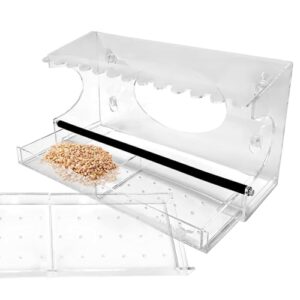
Clear Window Bird Feeders Kit bundles everything you need: polycarbonate housing, industrial-grade suction cups, and removable dual-compartment trays. These Bird Feeder Kits hold a half to two cups of seed—enough for days of Bird Watching Tips from your kitchen window.
Acrylic Window Feeders feature perforated trays that boost drainage, cutting spoilage by 30% and easing Feeder Maintenance. Dual compartments let you offer sunflower and nyjer together, inviting Bird Species Diversity you won’t see with single-seed setups.
Window Bird Feeder Reviews praise the Clear Viewing and fast assembly. Your Window Mounting stays locked through storms, and you’ll refill without detaching the base.
Best For: Families and birdwatching enthusiasts who want close-up views of backyard birds without leaving home.
- Clear acrylic design with 180-degree viewing angle lets you watch birds from inside while the dual-compartment tray attracts up to 36% more species.
- Industrial-grade suction cups hold up to 4 pounds securely through storms, and the removable tray makes weekly cleaning take under 10 minutes.
- Perforated drainage reduces seed spoilage by 30% and the extended perch keeps birds at the feeder up to 40% longer.
- Tray can fall out if squirrels jostle the feeder or birds tap it too hard during feeding.
- Suction cups may lose grip over time and need repositioning, especially if not cleaned properly before mounting.
- Not ideal for very large birds or high-traffic areas where constant activity might dislodge the feeder.
3. Clear Window Bird Feeders House
 View On Amazon
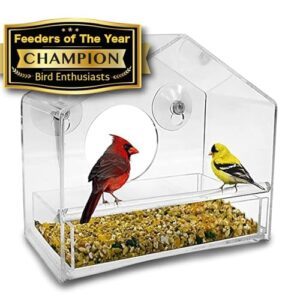
House Designs bring a charming twist to standard Window Bird Feeders—picture a mini shelter clinging to your glass. Nature Gear’s model uses weather-resistant Acrylic Clear Design with a rounded viewing portal and metal perch, turning your pane into a Window Cafe Window Mount for cardinals and chickadees.
The removable bowl simplifies Feeder Maintenance, and powerful suction holds firm through rain. Bird Feeder Safety improves because squirrels struggle with the small entry, while Acrylic Window Feeders offer Clear Viewing of Bird Species behavior—preening, feeding, even courtship displays—just inches from your nose.
Window Mounting takes seconds, no tools required.
Best For: Bird watchers who want close-up views from inside their home, cat owners seeking window entertainment, or families introducing kids to backyard wildlife.
- Clear acrylic window provides unobstructed views of birds feeding just inches away, perfect for photography or observation
- Weather-resistant construction with strong suction cups stays mounted through rain and wind without tools
- Removable seed tray makes refilling and cleaning quick, while the house design offers some squirrel resistance
- Suction cups may fail on textured or dirty windows, requiring regular checks and repositioning
- Small capacity means frequent refills if you attract multiple birds or larger species
- Some users report the removable tray can pop out unexpectedly, creating a mess and potentially defeating squirrel protection
4. Hummingbird feeder jewel box window
 View On Amazon
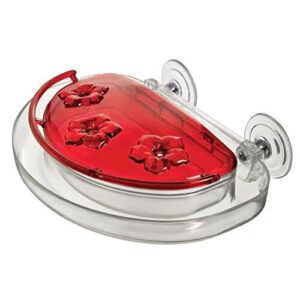
Aspects’ Jewel Box Hummingbird Window Feeder shifts focus from seed-eaters to nectar-sippers—Ruby-throats and Anna’s hover inches from your glass. Its eight-ounce Nectar Capacity allows for multiple visits before refills, while three flower-shaped ports let birds drink together. A HighView Perch wraps the base, so Hummingbird Attraction thrives when birds rest mid-feed.
The polycarbonate Feeder Design resists impacts and weather, and suction-cup Window Mounting installs tool-free. An optional ant moat boosts Bird Safety, blocking crawlers from the nectar.
The hinged lid speeds cleaning—critical since weekly scrubs prevent mold. This Window Mount transforms your pane into a Hummingbird stage.
Best For: Bird lovers who want close-up hummingbird viewing right at their window without the hassle of hanging feeders or complicated installation.
- HighView perch lets hummingbirds rest while feeding, giving you longer viewing time and better photo opportunities just inches from your glass
- Easy-fill hinged lid and dishwasher-safe parts make weekly cleaning quick, which matters since clean feeders keep birds healthy
- Optional ant moat and leak-proof design keep pests out and nectar fresh without constant maintenance
- Eight-ounce capacity means more frequent refills during peak season when multiple birds visit daily
- Higher price compared to basic hanging feeders, though the window-mount convenience may justify the cost
- Some users report occasional dripping from feeding ports, especially in temperature swings
5. Hummingbird Window Mount Feeder Outdoor
 View On Amazon
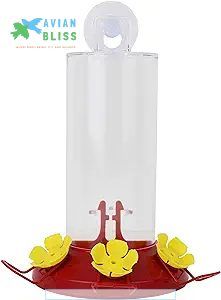
Perky-Pet’s outdoor Hummingbird Window Feeder mounts with Suction Cups strong enough to hold eight ounces of nectar—enough Nectar Capacity for days of Bird Watching without constant refills.
Three hollyhock-shaped ports offer Bee Deterrence, while shatterproof plastic delivers Material Safety and Weather Resistance through summer storms.
The Port Design invites multiple Ruby-throats at once, turning your pane into a backstage pass for Bird Feeders enthusiasts.
Easy disassembly means you’ll scrub mold away fast, keeping Window Bird Feeders clean and hummingbirds healthy.
Best For: Birders who want a close-up view of hummingbirds without sacrificing durability or easy maintenance.
- Three bee-resistant ports allow multiple birds to feed at once while keeping insects away
- Strong suction cups hold 8 oz of nectar securely through typical weather conditions
- Shatterproof plastic construction and easy disassembly make cleaning fast and safe
- Plastic feeding ports can break with extended use and lack available replacement parts
- Suction cups may fail in extreme weather or if the window isn’t perfectly clean
- Red base design features tight spaces that make thorough cleaning difficult
6. clear window outdoor bird feeder
 View On Amazon
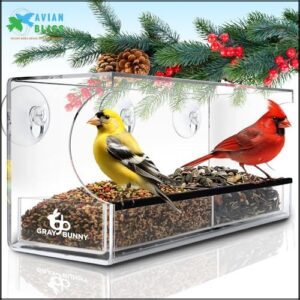
Gray Bunny’s Clear Window Outdoor Bird Feeder scores high on Feeder Durability—its extra-thick acrylic and four Window Mounting suction cups anchor up to a pound through storms. Drain holes and a sloping roof keep seed dry, while removable trays simplify scrubbing for Bird Feeder Safety.
You’ll enjoy Bird Watching as cardinals, finches, and chickadees visit the three-cup tray, boosting Bird Species Diversity at your pane.
Window Bird Feeder Reviews from 69 users average 4.5 stars, with 83 percent recommending this Window Mount for Outdoor Placement that survives wind and rain.
Best For: Bird lovers who want a front-row view of cardinals, finches, and chickadees feeding right at their window, plus anyone looking for a sturdy, weather-resistant feeder that’s easy to clean and refill.
- Extra-thick acrylic and four strong suction cups hold up to 1 pound through storms, with an average 4.5-star rating from 69 users
- Three-cup seed capacity with drain holes and a sloping roof keeps food dry, while the removable tray makes weekly cleaning quick and tool-free
- Attracts multiple species like woodpeckers, robins, and juncos, and the clear design provides unobstructed bird-watching for the whole family (even cats enjoy the show)
- Narrow tray may prevent some larger birds from comfortably bending down to eat
- Suction cups can lose grip after repeated removal or in extreme weather, especially on high-rise windows
- Strong animals like squirrels can dislodge the tray and potentially cause it to break
7. Clear Acrylic Window Bird Feeder
 View On Amazon
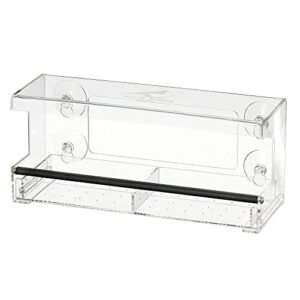
The hiBirdie Clear Acrylic Window Bird Feeder uses extra-thick shatterproof panels and four industrial suction cups that hold up to three seed cups firmly against your pane—Acrylic Quality at work. Feeder Placement directly on glass sharpens Bird Watching and cuts Window Safety risks because cardinals and chickadees recognize the barrier before collision.
The removable tray accelerates Feeder Maintenance, letting you scrub algae and swap seed in under thirty seconds.
Bird Feeder Reviews spotlight its weatherproof build and Window Bird Feeder Benefits for finches, jays, and nuthatches drawn to the transparent stage, making these Window Feeders a top pick for observing Bird Behavior from inches away.
Best For: Bird watchers who want close-up views of cardinals, finches, and chickadees while reducing window collision risks through direct glass mounting.
- Extra-thick shatterproof acrylic with four industrial suction cups securely holds up to three cups of seed, even in wind and rain.
- Removable tray lets you clean and refill in under 30 seconds, making maintenance quick and hassle-free.
- Direct window placement helps birds recognize the glass barrier, cutting collision risks while offering transparent, inches-away viewing of bird behavior.
- Suction cups may fail on textured, frosted, or dirty glass, requiring regular checks and clean surfaces for reliable attachment.
- Limited 3-cup capacity means frequent refills if you’re hosting multiple hungry birds or larger species like jays.
- Not ideal for high-squirrel areas since the open tray design offers easy access to seed thieves.
8. Clear Outdoor Window Bird Feeder
 View On Amazon
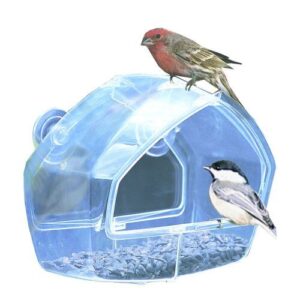
Window Mounting demands weather resistance, so the Clear Outdoor Window Bird Feeder uses UV-stabilized polycarbonate that won’t crack under summer heat or winter freeze. Its four-cup capacity and removable seed tray simplify Window Bird Feeder Installation and Feeder Durability checks every two weeks.
Bird Feeder Safety improves when you position it within one meter of glass, letting chickadees and finches spot the barrier before impact.
Bird Feeder Reviews praise its drainage channels that keep Bird Seed Types dry, and Outdoor Placement flexibility draws cardinals and jays to your pane, delivering Window Bird Feeder Benefits for close observation without binoculars.
Best For: Bird watchers who want close-up views of chickadees, finches, and cardinals from inside their home without needing binoculars.
- UV-stabilized polycarbonate construction resists cracking in extreme temperatures and includes drainage channels that keep seed dry and fresh.
- Four-cup capacity with removable seed tray makes refilling and biweekly cleaning simple and straightforward.
- Four suction cups provide stable mounting within one meter of glass, reducing window collision risk while maximizing viewing opportunities.
- One-cup capacity (as specified in product specs) is smaller than the typical 2-4 cup range, requiring more frequent refills during high bird traffic.
- Suction cups may lose grip over time or in humid conditions, potentially causing the feeder to detach from the window.
- Takes time for birds to discover the feeder initially, and requires weekly cleaning in hot weather to prevent bacterial growth.
9. Clear Window Bird Feeders Column
 View On Amazon
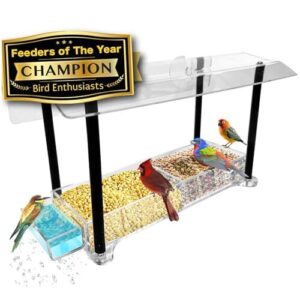
Column feeders pull your eye vertically—they hold over 2.8 quarts of mixed seed and use shatter-resistant polycarbonate for Eco Friendly Materials that withstand storms without warping. Strong suction cups anchor the tube to glass, simplifying Window Mounting and Feeder Maintenance by letting you detach trays without removing the entire unit.
Bird Collision Prevention works best when you fix it less than three feet from the pane, giving chickadees and nuthatches no room to accelerate.
Window Bird Feeders like these score above 4.5 in Bird Feeder Reviews because they keep seed dry through drainage slots, and Bird Feeder Safety improves with routine scrubbing every week, stopping mold that harms wild visitors during Bird Watching sessions.
Best For: Bird watchers who want a high-capacity, vertical feeder that stays mounted through storms and lets you watch chickadees and nuthatches up close without constant refills.
- Holds over 2.8 quarts of seed, so you refill less often and spend more time watching birds instead of maintaining the feeder.
- Shatter-resistant polycarbonate construction handles weather extremes without warping, cracking, or rotting across multiple seasons.
- Mounting less than three feet from the window cuts collision risk by reducing the space birds need to accelerate, keeping them safer.
- Column design can make cleaning trickier than open tray feeders, especially if seed gets stuck in the tube.
- Suction cups may lose grip over time in extreme heat or cold, requiring occasional reattachment or maintenance with oil.
- Squirrels can sometimes climb onto the feeder or dislodge it if they’re persistent, especially in areas with high squirrel activity.
Key Benefits of Window Bird Feeders
Window bird feeders bring wild birds right to your glass, turning everyday moments into close-up nature shows. They’re affordable, work in any space, and connect you to the outdoors without stepping outside.
Here’s what makes them worth adding to your window.
Enjoy Birdwatching Up Close
There’s something almost magical about watching a chickadee flip its head sideways just inches from your face, close enough to count every feather. Window feeders turn your glass into a front-row seat for backyard birding.
Window feeders bring chickadees close enough to count every feather, turning ordinary glass into a front-row seat for backyard birding
You’ll catch wing flutters, seed-cracking behavior, and the personality quirks that binoculars can’t quite capture. Each species shows up differently—cardinals bold, nuthatches acrobatic.
Bird watching becomes intimate when there’s nothing between you and them but clarity.
Easy Installation and Affordability
Most window feeders cost less than your morning coffee run and stick up in under two minutes—no drill, no hardware, no weekend lost to installation. Here’s what makes them ridiculously accessible:
- Tool-free installation with strong suction cups—press, hold, done
- Budget options starting under $15 for solid, clear acrylic designs
- Simple refill systems using sliding trays you can swap one-handed
Affordable kits let anyone join the birdwatching world without hassle.
Safe for Birds and Your Home
Beyond low cost and quick setup, proper window feeder installation actually protects both birds and your space. Placing feeders within three feet of glass cuts fatal collision rates below 5%—compared to nearly 60% when feeders sit five to ten meters out. You’ll also dodge the mess and pest trouble that comes with ground feeding, since suction-mounted designs keep seed off soil and away from rodents.
Add window decals near your feeder, and you reduce bird window collisions by up to 84% while enjoying safe, close-up views. Understanding bird safety tips is essential for creating a bird-friendly environment.
Ideal for All Ages
Whether you’re five or ninety-five, a window feeder turns every meal into front-row entertainment without requiring sharp eyes, steady hands, or a long hike outdoors.
Kids discover cardinal behavior and seed preferences up close, making bird watching for beginners a natural classroom lesson.
Meanwhile, older adults enjoy easy viewing from a favorite chair, with minimal bird feeder maintenance keeping family fun alive year-round—these bird-friendly window feeders suit every household.
Types of Window Bird Feeders Explained
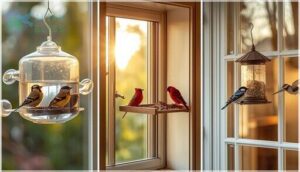
Not all window feeders work the same way. Some attach with suction cups, while others fit into your window frame or hang from hooks.
Let’s break down the main types so you can pick what works best for your setup.
Suction Cup Feeders
You’ll find suction cup feeders support up to 15 pounds when mounted on clean glass. Most use 2 to 4 suction cups—four for larger models—and they’re built for year-round weather.
These window bird feeders hold 8 ounces to 1 pound of seed, and suction cup installation works on sliding, double-hung, or casement windows. They’re your easiest window mount option for safe bird feeding.
For best results, consider using the right bird feeder types to attract various bird species.
Inside-Frame Window Feeders
If you’re craving a semi-permanent setup, inside-frame window feeders deliver rock-solid security. Frame mounting requires a partial window opening but eliminates accidental falls.
These window bird feeders hold 10 to 16 ounces in removable seed trays, giving you easy refills. They boost bird visibility while ensuring window safety and feeder durability—just check window bird feeder reviews before committing.
Tube and Platform Feeders
Tube feeders slice through seed waste while platform designs invite a crowd—here’s how these window mounted bird feeders compare for serious bird watching.
- Tube feeders hold 4 ounces to 1 pound and work best with black-oil sunflower seeds or millet, minimizing scattered seed
- Platform feeders offer 180° perches for small and medium birds, boosting bird diversity with blends or suet cakes
- Both use clear acrylic trays for easy feeder maintenance and smart seed selection
- Feeder comparison tip: platforms hold under 1 cup but platforms invite more species to your window feeders
Hummingbird and Nectar Feeders
Hummingbird window feeders bring jewel-toned aerial acrobats within inches of your glass—perfecting sugar water ratio and feeder placement turns your window mount into a migration hotspot.
These specialized nectar feeders demand fresh mixtures every 3–5 days for ideal bird attraction.
| Feature | Benefit |
|---|---|
| 8–16 oz nectar reservoirs with 3–6 ports | Facilitates multiple hummingbirds during peak hummingbird migration |
| Ant moats and flower-shaped ports | Protects nectar recipes while driving bird attraction |
| Clear bottoms with 2+ suction cups | Watch tongues lap 12 times per second with secure bird feeder features |
Essential Features to Look For
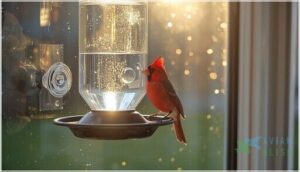
Not all window feeders are built the same. The right features make the difference between a feeder that lasts through seasons and one that falls off after the first rain. Here’s what you should check before you buy.
Clear Acrylic or Plastic Design
A clear view matters—without it, you’re watching shadows instead of cardinals. Acrylic feeders offer exceptional visibility and resist yellowing better than standard plastic durability options. Design innovations in window-mount bird feeder features now include UV-resistant coatings that maintain that clear view for years.
Material selection matters for these reasons:
- Acrylic benefits include scratch resistance—you’ll see feather details on finches without distortion
- Polycarbonate plastic durability withstands hail and temperature swings better than cheaper alternatives
- Crystal-clear construction reveals bird behavior you’d miss with tinted or cloudy window bird feeders
Suction Cup Strength and Durability
Your feeder won’t budge if suction cups meet these standards. Top designs use three to four heavy-duty cups that hold 15–16 ounces of seed plus visiting birds without slipping—even through storms. Quality cup material resists UV damage and temperature swings, while proper suction cup installation on squeaky-clean glass delivers adhesion that lasts months between maintenance checks.
| Durability Factors | Minimum Standard | Premium Performance |
|---|---|---|
| Suction Power | 2 cups, 12 oz capacity | 4 cups, 16+ oz capacity |
| Weather Resistance | Basic UV coating | UV-resistant, weatherproof material |
| Adhesion Tests | Holds through light rain | Withstands storms, temperature extremes |
| Window Mount Longevity | 1–3 months | Several months to years |
Easy installation starts with warm water pre-treatment—softening cup material improves initial grip on your window bird feeders.
Removable Trays and Drainage
Slide-out trays turn cleanup from a dreaded chore into a 30-second ritual—and drainage holes keep that seed dry instead of turning into a moldy mess. Here’s what makes removable tray designs worth their weight in birdseed:
- Quick detachment – No screwdrivers needed for feeder cleaning
- Corner drainage ports – Water management prevents soggy seed
- Dishwasher-safe trays – Bird feeder maintenance becomes simple
- Wide refill openings – You won’t spill seed everywhere
- Snap-lock mechanisms – Window feeder features that actually work
These window bird feeders with smart seed tray systems let you focus on watching birds, not wrestling with refill options.
Weatherproof Construction
Your feeder won’t last a season if rain seeps in and snow cracks the seams, so weatherproof construction isn’t optional—it’s survival. Look for durable materials like clear acrylic with UV-resistant coatings and sealed edges that block moisture.
| Feature | Why It Matters |
|---|---|
| UV-resistant coating | Prevents clouding and cracking |
| Sealed seams | Blocks water infiltration |
| Polycarbonate panels | Withstands freeze-thaw cycles |
Storm protection means your window bird feeders stay crystal-clear through every season, turning outdoor durability into years of reliable bird feeder installation.
How to Install a Window Bird Feeder
Installing a window bird feeder doesn’t require tools or complicated steps. You’ll pick the right spot, prep your window, and secure the suction cups properly.
Follow these tips to get your feeder mounted and ready for visitors.
Choosing The Best Window Location

Pick a window that gives you the best view from inside—somewhere you’ll actually sit and watch—because the magic of a window feeder only works if you’re there to see it.
Look for these factors when choosing your window feeder placement:
- Sunlight exposure: Morning or partial sun attracts birds without overheating them
- Feeder height: Ground-level to mid-height windows work best for bird visibility
- Obstruction removal: Clear branches or shrubs that block your view
- Bird watching from home: Pick spots near your favorite chair or kitchen table
Consider how birds approach—they prefer windows with nearby perches.
Cleaning and Preparing The Surface

Once you’ve found your perfect spot, the next step is dead simple—just make sure that window glass is spotless and bone-dry before you stick anything to it.
Use rubbing alcohol or glass cleaner for proper surface preparation and window sanitizing—this helps suction cup installation stick tight. Wipe away dust, oils, and feather removal from previous visitors.
Clean window bird feeders work better when glass cleaning removes every trace of grime, ensuring your window suction cup bird feeder holds strong.
Attaching Suction Cups Securely
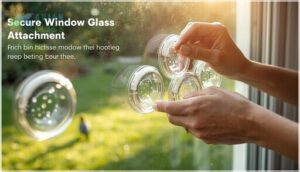
Press each suction cup firmly against the clean glass and hold for a few seconds—you’ll feel it grab and seal when the air pushes out completely. Check adhesion methods by gently tugging—your window suction cup bird feeder shouldn’t budge. If it slips, dampen the cups slightly for better feeder stability.
These mounting techniques guarantee your window mounted bird feeder stays put during easy installation and beyond.
Tips for a Stable Setup
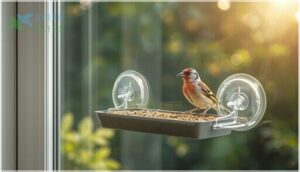
A few small adjustments now prevent your feeder from crashing down mid-meal—or worse, scaring off finches just as they settle in. Keep these mounting tips in mind:
- Check suction cups every few days—temperature swings loosen their grip on window frames
- Center your window bird feeders for feeder balance—uneven bird weight shouldn’t tilt the setup
- Avoid overloading—hassle-free installation means respecting seed capacity limits
Proper window mounting ensures easy installation that lasts.
Maintenance and Cleaning Tips

A clean feeder keeps your birds healthy and coming back for more. Regular maintenance prevents disease and ensures your feathered visitors get fresh, safe food every time.
Here’s what you need to know to keep your window feeder in top shape.
Frequency of Cleaning
You’ll want to clean your window feeder every few days—or at least once a week—to keep your feathered visitors healthy and coming back. When bird watching picks up or the weather’s humid, bump up your cleaning schedules to every two or three days.
Regular feeder sanitizing stops seed rotation from becoming a sticky, moldy mess that threatens bird health. If you spot wet clumps or discoloration, don’t wait—clean it now for effective mold prevention.
Preventing Mold and Bacteria
Moisture turns seed into a bacterial breeding ground faster than you’d think, so staying ahead of contamination is your real job here.
Use a 10% bleach cleaning solution or white vinegar weekly for feeder sanitation—it’s proven bacteria control that works. Rinse thoroughly and air-dry completely before refilling.
Store seed in airtight containers away from humidity to prevent mold before it ever reaches your window feeders.
Refilling and Monitoring Seed Supply
Letting your feeder run dry is like leaving birds stranded mid-route—they’ll abandon your window for more reliable food sources.
Check seed levels daily and refill when the seed tray drops below halfway—bird preferences vary, so monitor which seed types disappear fastest.
Small feeder capacity means more frequent refilling, but consistent bird feeding solutions keep your regulars coming back.
Store bird seeds properly between refills to maintain freshness.
Inspecting Feeder Condition
Cracks, warping, or cloudy plastic don’t just look bad—they can trap moisture, harbor bacteria, and turn your window feeder into a health hazard for visiting birds.
Inspect suction cups weekly for wear—loose grips mean sudden drops that startle birds and damage feeders.
Replace window feeders showing stress fractures or discoloration, since compromised materials fail faster and cleaning window bird feeders becomes ineffective once plastic degrades.
Attracting Birds to Your Window Feeder
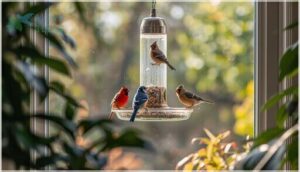
Getting birds to visit your new feeder takes the right food and a little patience. You’ll want to think about what species live nearby and how to make your window setup feel safe.
Here’s what works to turn your feeder into a busy bird hub.
Selecting The Right Bird Seed
Your seed tray choices directly determine which birds show up at your window. Black oil sunflower seeds dominate the market for good reason—they attract over 25 species and pack more than 40% fat content.
Here’s what works:
- Sunflower seeds pull in cardinals, chickadees, and nuthatches with minimal waste
- Safflower keeps squirrels away while feeding titmice and cardinals (80% of consumption)
- Nyjer brings goldfinches and siskins, especially in winter months
Store birdseed in sealed containers and swap it every 1-2 days to prevent mold, which spikes to 30% within 48 hours when moisture hits shelled varieties.
Creating a Bird-Friendly Environment
Birds need more than just seeds—they’re looking for shelter, water, and a place that feels safe enough to linger. Plant native shrubs for cover, add a shallow birdbath, and keep feeders visible but near escape routes. Your bird-friendly gardening approach fosters biodiversity and wildlife conservation while creating ecosystems that draw diverse species.
Bird watching becomes richer when your garden design mimics natural bird conservation principles—you’re not just feeding birds, you’re fostering entire ecosystems.
| Bird Habitat Element | What It Provides | Birds It Attracts |
|---|---|---|
| Native shrubs | Shelter, nesting sites | Cardinals, wrens, sparrows |
| Shallow water (1-2″) | Drinking, bathing | Robins, bluebirds, finches |
| Dense branches nearby | Quick escape cover | Chickadees, titmice, warblers |
| Dead trees (snags) | Insect food, cavities | Woodpeckers, nuthatches, flycatchers |
Dealing With Skittish Birds
Even with a welcoming setup, some birds will hang back—nervousness runs deep in species like towhees and juncos, especially when they first spot your feeder. Patience wins here—keep movement minimal near window bird feeders, maintain consistent feeder placement, and let skittish species observe from a distance.
Calming birds takes gentle feeding habits:
- Stay still indoors – sudden motion through glass spooks nervous visitors instantly
- Place feeders near cover – bushes within 3-6 feet give quick escape routes
- Avoid sudden refills – top off seed during low-traffic hours for bird behavior stability
- Use natural seed mixes – familiar food builds trust faster than novel offerings
- Watch quietly – bird watching rewards those who respect wild rhythms and bird conservation
Seasonal Bird Watching Tips
Seasons shift bird behavior dramatically, and your window feeder will capture different species, feeding patterns, and migration waves throughout the year. Winter birding brings finches and cardinals seeking high-energy seeds during cold snaps. Spring observations reveal territorial displays and nest-building trips. Fall patterns showcase bird migration surges—warblers and thrushes pause at window bird feeders during southbound journeys.
Track wild birds through seasonal feeding shifts for richer backyard birding tips and bird identification skills year-round.
Preventing Bird Collisions With Windows
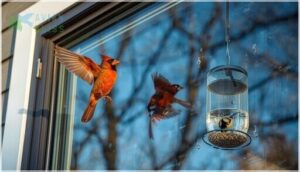
Window feeders bring birds close, but that same proximity can turn deadly if birds mistake glass for open sky. The good news? You can keep your feeder and protect your feathered visitors with a few smart moves.
Here’s what actually works to cut collision risks without sacrificing your view.
Understanding Collision Risks
Window reflections and glass create invisible barriers that birds can’t detect. Preventing bird window collisions starts with understanding the science: feeders placed within 1 meter of glass see around 0.64 collisions per trial, and collision rates spike during migration—jumping from 0.11 in winter to 1.08 in fall.
Key collision factors include:
- Glass characteristics that mirror sky and vegetation
- Bird behavior changes during spring and fall migration
- Window reflections that create false flight paths
- Feeder placement near reflective surfaces
Bird strikes happen because your feeder draws them close to danger zones.
Feeder Placement Strategies
The safest spot for your feeder is either pressed directly against the glass or moved beyond the 30-foot danger zone where birds build up collision speed. Window orientation matters—east-facing mounts catch morning light when birds are most active. Place your window bird feeder at eye level where you’ll spot collision risks early.
Consider nearby bird habitat; feeders near dense shrubs give birds quick escape routes. Smart seed placement and proper window mount height work together for collision prevention while attracting birds to window feeders safely.
Window Decals and Treatments
Applying decals creates a visible barrier pattern that birds recognize before they reach glass. Space window decals or window clings no more than 2 inches apart—closer spacing stops birds from attempting flight through gaps.
UV blockers and specialized glass coatings reflect ultraviolet light that birds see but you don’t, making window bird feeders safer. Window films work best when covering the entire pane around your bird feeders.
Monitoring During Migration Seasons
Spring and fall migrations turn your window into a collision hotspot—vigilance during these peak months protects the very birds you’re trying to attract.
Track seasonal trends and flock behavior around your window bird feeders to spot risk patterns:
- Monitor migration patterns from March through May and August through October when wild birds travel through your area.
- Watch for increased activity at dawn when bird migration peaks and visibility drops.
- Document collision incidents through feather analysis near windows to identify vulnerable species during wildlife viewing.
- Adjust feeder placement if bird tracking reveals repeated strikes during specific seasonal trends.
Eco-Friendly and Durable Materials
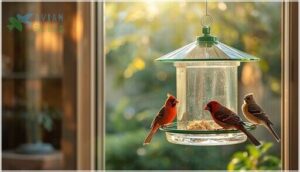
You want a feeder that lasts and doesn’t harm the planet. Most window feeders use acrylic or polycarbonate, but newer models now feature recycled plastics that hold up just as well.
Let’s look at what makes each material worth your consideration.
Acrylic Vs. Polycarbonate Plastics
Most window feeders use either acrylic or polycarbonate plastic, and knowing the difference helps you pick one that won’t crack, fog up, or fade after a few months outside.
Acrylic feeders offer crystal-clear views but scratch more easily, while polycarbonate boasts enhanced material strength and impact resistance—essential during hail or temperature swings.
| Feature | Acrylic | Polycarbonate |
|---|---|---|
| Clarity | Excellent transparency | Slight yellow tint over time |
| Durability | Moderate impact resistance | High impact resistance |
| Cost | More affordable | Premium pricing |
Both materials deliver solid durability for window mount setups, though polycarbonate is the better choice for long-term use in harsh climates.
Recycled Plastic Options
More feeders now use recycled plastics to cut down on waste, and some brands even advertise the percentage of post-consumer material baked into their design.
These eco-friendly bird feeding solutions deliver the same clarity and strength you’d expect from new plastic, proving sustainable materials don’t mean compromise.
You’re supporting plastic recycling efforts while attracting birds—a win for green products and environmental impact alike.
Weather Resistance and Longevity
Your feeder won’t last long if it cracks under summer heat or turns cloudy after a single rainstorm. Premium materials like polycarbonate resist UV damage and temperature swings better than basic acrylics. Window bird feeders built for outdoor performance keep their clarity through freeze-thaw cycles and downpours, giving you seasons of easy installation and bird-watching joy.
- Watch finches year after year through crystal-clear walls that laugh off hailstorms
- No cloudy plastic blocking your view when weather conditions turn rough
- Save money long-term by choosing a bird feeder with proven seasonal endurance
- Feel good knowing your setup stays put through wind, rain, and scorching sun
Environmental Impact Considerations
Longevity matters, but so does what happens when your feeder finally gives out. Plastic bird feeders can sit in landfills for over 400 years, and less than 10% of feeder plastics get recycled globally. Choosing sustainable materials like bamboo or recycled content cuts waste reduction by up to 40%. Eco-friendly options support bird conservation and nature conservation without adding to the problem.
| Material Type | Environmental Effects | Wildlife Observation Benefit |
|---|---|---|
| Virgin Plastic | 400+ year landfill persistence | Clear viewing but high waste |
| Recycled Plastic | 40% less landfill waste | Good clarity, lower impact |
| Bamboo | Regenerates without replanting | Natural look, minimal footprint |
| Certified FSC Wood | Lower deforestation risk | Blends with gardening and bird conservation |
| Repurposed Materials | Diverts existing waste | Creative, low environmental impact |
What to Know Before Buying
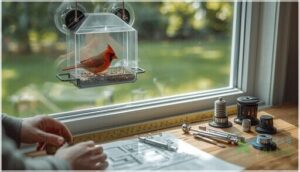
Picking the right window feeder isn’t just about slapping one on the glass and hoping birds show up. You need to match the feeder to your window, your space, and the birds you want to attract. Here’s what matters most before you buy.
Factors to Consider for Your Home
Before you commit to any window feeder, think about where you live and how birds actually behave in your neighborhood. Urban settings attract different species than rural yards.
Check your window size—some bird feeders won’t fit smaller panes. Consider your home style too; a sleek acrylic window mount looks sharp on modern glass, while traditional homes might suit classic designs better.
Mounting Type and Window Compatibility
Once you’ve locked down your window size and home style, it’s time to figure out how the thing actually sticks to your glass.
Most feeders use one of these mounting styles:
- Suction cup — Standard for vertical sliding windows, offering hassle-free installation
- Window frames — Wedges into the frame for a secure, no-slip fit
- Adhesive strength — Industrial-grade stickiness for heavy-duty window mount options
- Window Cafe Window Mount — Bracket-style system for maximum stability
- Glass compatibility — Check thickness; tempered or textured glass affects suction
Match your mounting type to your actual window setup for a rock-solid hold.
Seed Capacity and Bird Species
After you’ve nailed the mount, the next thing that matters is how much seed it holds—and which birds you’re hoping to see show up. Smaller seed trays work fine for finches and chickadees, but if you want cardinals or jays, you’ll need more capacity.
Match your seed types to your target species—sunflower for variety, nyjer for goldfinches, or suet cakes for woodpeckers. Bigger bird feeders mean less refilling and better bird diversity at your window.
Budget and Consumer Reviews
Prices span from under $15 for budget-friendly bird feeding solutions to over $280 for premium models. Most window bird feeders fall between $15 and $40, which drives the strongest sales.
Buyer feedback shows top-rated options score 4.3 to 5 out of 5, with consumers praising clarity and suction strength. Review trends reveal over 63% recommend window feeder prices in this range for value and birdwatching joy.
Consumer insights confirm low-cost bird feeders under $25 dominate purchases across major retailers.
Frequently Asked Questions (FAQs)
How often should I refill my window feeder?
Like clockwork in nature’s pantry, you’ll want to check your feeder every two to three days.
Seed Refresh Rate depends on bird visitation and feeder capacity—busy feeders need daily refills, while quieter ones last a week.
Keep seed storage dry to maintain quality.
What birds are most attracted to window feeders?
Cardinals, finches, chickadees, and sparrows commonly visit window feeders. Seed preferences drive bird behavior—sunflower seeds attract cardinals while nyjer draws finches.
Migration patterns affect seasonal visits, making window bird feeders excellent for bird watching year-round.
Can window feeders damage my windows or sills?
Suction cups won’t scratch glass, but they can leave marks if not cleaned first.
Window feeder design matters—poorly fitted window mount systems may trap moisture against sills, risking paint damage or wood rot over time.
How do I keep squirrels away from feeders?
Squirrels can’t grip smooth glass, so window bird feeders naturally deter them. For extra squirrel proofing, use weight-activated cage feeders or add feeder guards.
Hot pepper repellent seeds also work—birds don’t taste capsaicin, but squirrels avoid it.
Whats the best seed for attracting cardinals?
Black oil sunflower seeds are a top choice for cardinals. They’ll also go for safflower seeds and striped sunflower seeds.
Mix these into your bird seed blend at window bird feeders for reliable visits from these red beauties year-round.
Conclusion
What if the difference between watching birds and truly knowing them is just six inches of glass? Window-mounted bird feeders dissolve that barrier, turning your home into a field station where every visit becomes a lesson in plumage, behavior, and survival.
You’ll learn species by their feeding styles—the finch’s delicate seed selection, the nuthatch’s upside-down acrobatics. Install one feeder. The birds will teach you the rest. Your window becomes their stage, and suddenly, you’re not just observing wildlife—you’re part of their daily ritual.
- https://www.alliedmarketresearch.com/press-release/bird-feeder-market.html
- https://www.factmr.com/report/bird-feeder-market
- https://www.accio.com/business/amazon-best-seller-bird-feeder
- https://www.homedepot.com/p/Nature-s-Way-Clear-View-Window-Bird-Plastic-Feeder-2-Cup-WIN-3-CP1/328906019
- https://birdswindows.biology.ualberta.ca/bird-feeders-and-their-effect-on-bird-window-collisions/