This site is supported by our readers. We may earn a commission, at no cost to you, if you purchase through links.
Your bird’s grip weakens on smooth plastic perches—it’s not aging, it’s poor cage design. Most bird owners unknowingly create sterile environments that prevent natural foot exercise and beak maintenance, leading to health issues that veterinarians see daily.
Natural wood accessories flip this script entirely. They give your bird varied textures and diameters that mirror branches in the wild, cutting stress hormones by 24% while encouraging essential behaviors like foraging and climbing.
The right wood accessories transform a cage from a holding cell into a home that sustains your bird’s physical and mental health.
Table Of Contents
Key Takeaways
- Natural wood perches with varied diameters reduce foot disorders by up to 70% and lower stress hormones by 24% compared to smooth plastic perches, while promoting natural beak trimming and preventing painful calluses.
- Hardwoods like manzanita and java wood outlast softer alternatives by years, retaining 90% of their mass after two years while providing texture that helps regulate body temperature 5-6°C cooler than metal.
- Birds using natural wood accessories show 40% fewer stress behaviors and 32% more active exploration through foraging and climbing, with environmental diversity boosting physical fitness by 47%.
- Toxic woods like cedar and treated lumber contain harmful oils and chemicals that cause respiratory distress and poisoning, while safe options like untreated pine, maple, and apple require weekly cleaning with vinegar solutions and replacement every 6-12 months to prevent mold and injury.
Key Benefits of Natural Wood Bird Cage Accessories
Natural wood accessories don’t just look good—they work hard to keep your bird healthy and happy. From strengthening foot muscles to sharpening beaks, these tools give your feathered friend what metal and plastic can’t.
Here’s what makes them worth adding to your cage.
Promoting Healthy Foot Exercise and Grip
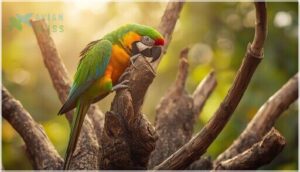
Your bird’s feet weren’t built for smooth, uniform dowels—they crave variety. Natural wood perches with irregular diameters and textures activate different toe muscles with every grip, cutting the risk of atrophy and painful calluses by up to 70%.
Parrot perches ranging from 1 to 5 cm give your bird the full stretch and flex their feet need, building stronger bones and better balance. A diverse bird perch set turns every landing into healthy exercise.
Providing the right perch materials is vital for your bird’s health and safety.
Supporting Natural Grooming and Beak Health
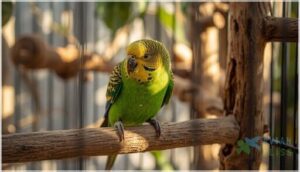
Chewing on natural wood perches lets your bird trim their beak the way nature intended—no vet visits required. Around 90% of bird owners notice fewer professional beak trims after switching to untreated woods like apple or willow.
Wood texture matters: rough surfaces gently file down overgrowth while varied diameters encourage different jaw movements, preventing strain. Your bird’s instinct to gnaw keeps their beak sharp, healthy, and infection-free—pure bird hygiene without the stress.
Choosing the right bird safe woods is essential for maintaining your bird’s overall health and well-being.
Enhancing Bird Comfort and Stress Reduction
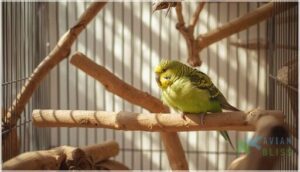
Natural wood perches transform your bird’s cage into their own safe haven—and the science backs it up. Birds using wooden perches show 24% lower stress hormones compared to those on metal bars, plus they rest 35% longer per night thanks to better grip stability. That’s real comfort zones working overtime.
Natural wood perches cut stress hormones by 24% and boost rest by 35%—real comfort built into your bird’s cage
Wood’s natural texture helps regulate body temperature—staying 5–6°C cooler than metal—while elevated wooden structures cut fearful reactions by 21%. Your bird feels secure, rests deeply, and shows fewer anxiety behaviors.
It’s avian therapy you can see: less pacing, calmer days, healthier foot health, and genuine stress relief built right into their environment.
Encouraging Natural Behaviors and Enrichment
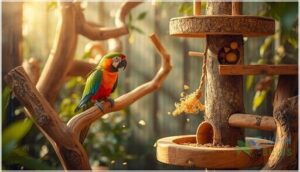
Beyond comfort lies the real magic: wood-based avian enrichment unlocks your bird’s wild instincts. Foraging toys spark problem-solving—parrots using natural wood perches and puzzle feeders show 40% fewer stress behaviors and 32% more active exploration.
Chewing manzanita or java wood mimics bark-stripping, keeping beaks trim while satisfying deep instincts.
Environmental diversity through climbing structures boosts physical fitness by 47%. It’s sensory stimulation meets bird socialization—natural enrichment that turns cages into adventure zones where healthy behaviors thrive.
Essential Factors When Choosing Wood Accessories
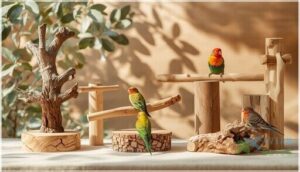
Picking the right wood accessories isn’t just about looks—it’s about keeping your bird healthy and happy. You need to match the perch to your bird’s size, check for safe materials, and make sure everything’s built to last.
Here’s what matters most when you’re shopping for natural wood cage gear.
Perch Size and Fit for Different Bird Species
You wouldn’t let your bird walk on just any surface—why settle for the wrong perch size? Proper Perch Diameter directly impacts Foot Health and Avian Ergonomics.
Finches need 0.375 to 0.875 inches, while parakeets and cockatiels thrive on 0.5 to 1.0 inch perches. Medium Bird Species like conures require 0.75 to 1.25 inches, and large parrots need 1 to 2 inches for ideal Beak Care and stability.
Macaws demand 2 to 3.5 inch Natural Wood Perches to prevent grip strain and support long-term Avian Health and Wellness.
Material Safety and Non-Toxicity
Your bird’s life depends on avoiding Toxic Wood Risks—don’t gamble with unsafe materials. Cedar and treated wood contain aromatic oils, arsenic, and fungicides that cause respiratory distress and poisoning.
Choose Safe Woods like untreated pine, maple, or apple for Natural Wood Perches. Chemical-Free options protect Bird Health and promote Avian Health and Wellness.
Verify wood origin and skip painted or chemically coated accessories to prioritize Bird Welfare and Bird Safety and Hazard Prevention. Non-Toxic Materials mean your feathered friend stays safe.
Texture, Grip, and Varied Diameters
Variety matters. Different Wood Diameters, from thin (0.25 inches) to thick (1.5 inches), prevent foot cramps and boost circulation. Perch Texture—rough, smooth, or knobby—strengthens grip muscles and prevents sores.
Natural Wood Perches like Manzanita or Java wood mimic wild branches, supporting Foot Health through varied Bird Ergonomics.
Mix a Bird Perch Set with diverse Perch Size and Perch Materials for ideal Grip Variety.
Durability and Resistance to Wear
Hardwood isn’t just sturdy—it’s your ticket to fewer replacements and safer perches. Manzanita and Java wood, with densities around 62 lb/ft³, outlast softer woods by years, resisting chewing and cracking under pressure.
Wood Hardness and Moisture Resistance determine Material Longevity; hardwoods retain 90% of their mass after two years, while pine shows wear within 18 months.
Choose Natural Wood Perches with proven Wear Testing results for lasting Cage Design and Setup.
Ease of Installation and Cleaning
Setup shouldn’t feel like solving a puzzle—most natural wood accessories snap into place in under five minutes with basic hardware included. Easy Setup and smart Accessory Design mean you’ll spend less time wrestling with nuts and bolts and more time enjoying your bird’s new perch.
- 78% of owners report trouble-free installation using zip-ties or pre-drilled fittings
- Weekly wipes with vinegar-water solutions keep Wood Maintenance simple and safe
- Smooth, knot-free surfaces reduce debris buildup, streamlining Cage Cleaning and Hygiene
Choose accessories with minimal crevices to improve User Experience and simplify your Bird Cage Maintenance routine.
Top 5 Natural Wood Bird Cage Accessories
You’ve weighed the features that matter—now it’s time to see what’s actually out there. Below are five natural wood accessories that balance safety, function, and bird wellness. Each one brings something different to your setup.
1. Natural Wood Bird Perch Set
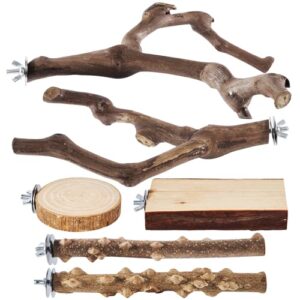
When your bird’s feet grip uneven, natural branches, they’re doing what they were born to do—flexing, stretching, and staying strong. A natural wood perch set brings that wild freedom right into your cage design.
Look for varied perch sizes and wood textures like grape stick or pine to support avian health and prevent foot problems. These wooden perches promote healthy nails and beaks while encouraging climbing and foraging.
The LIMIO 6-piece bird perch set offers platforms and varied diameters, fitting parakeets, cockatiels, and budgies. With safe, untreated bird perches and easy installation, you’re creating a bird habitat where your feathered friend can truly thrive.
Best For: Bird owners with parakeets, cockatiels, conures, budgies, or love birds who want a complete natural wood perch setup that promotes healthy feet, beaks, and natural behaviors.
- Six varied perches with multiple diameters and textures reduce foot disorders by up to 30% and support natural grip patterns that prevent arthritis and sores
- Made from safe, non-toxic natural wood that’s pre-treated to eliminate bacteria and parasites, providing enrichment that decreases boredom behaviors like feather plucking by 35%
- Easy installation with metal wing nuts and built-in bolts allows quick setup and removal for regular cleaning, with durable materials lasting up to 3 years
- Higher price point compared to making your own perches from safe branches or buying individual pieces
- Only suitable for small to medium birds—won’t work for larger parrots like macaws or African greys
- Requires hand washing and air-drying every 1-2 weeks to prevent mold on textured bark surfaces
2. Bird Cage Seed Catcher Net
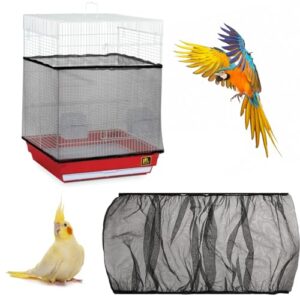
Once perches are sorted, keeping the cage clean is your next mission. A seed catcher net traps mess before it spreads, cutting seed scatter by about 70% and slashing your cleaning time in half.
The Trinkrittey Adjustable Bird Cage Seed Catcher Net uses soft, elastic polyester mesh that lets air flow while catching debris. It fits cages up to 27.5 inches wide, installs in seconds with elastic bands, and washes by hand.
Net material safety matters—look for BPA-free, non-toxic fabric that won’t harm your bird if they peck at it. Good seed catcher design means less waste, better bird cage hygiene, and more freedom for you.
Best For: Bird owners who want to minimize seed mess around their cage, reduce cleaning time, and maintain a tidier space without constant sweeping.
- Cuts seed scatter by roughly 70% and can reduce cleaning time by half, keeping floors and nearby surfaces cleaner with less effort.
- Soft, breathable polyester mesh allows airflow while catching debris, and it’s easy to install with elastic bands that adjust to fit different cage sizes.
- Hand washable and quick drying, making maintenance simple and hassle-free for busy bird owners.
- Mixed reviews on fit and durability—some users report the net ripping away from the elastic band or finding the material quality average.
- May not accommodate larger birdcages effectively, and the product description regarding adjustable sizing can be inaccurate.
- At 27.5 inches wide, it’s limited to smaller or medium-sized cages, which may not work for owners with bigger setups.
3. Bird Perch And Swing Platform
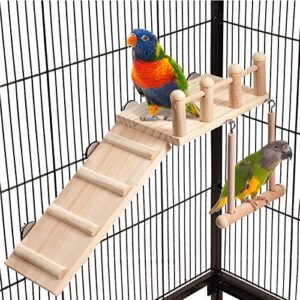
Your bird wants more than a place to stand—they crave movement. A swing platform offers that freedom, combining natural wood perches with gentle motion to sharpen balance and coordination while preventing foot fatigue.
The Bird Perch And Swing Platform includes a swing, ladder, and stand platform made from untreated wood and metal. At 16.52 x 4.72 x 5.9 inches, it fits small to medium birds like parakeets and cockatiels. The varied diameters in this bird perch set support healthy foot exercise, while rough bark surfaces help trim nails naturally.
Install it quickly, but check that metal components are secure—some users report stability issues with certain swing designs.
Best For: Small to medium bird owners (parakeets, cockatiels) seeking an affordable enrichment set with natural wood perches and motion-based play.
- Natural wood construction with varied textures helps trim nails and sharpen beaks without chemicals or paint
- Combines swing, ladder, and platform for balance training and foot exercise in one compact setup
- Easy assembly and cage attachment for quick installation
- Size may be too small for larger birds, with mixed reviews on suitability across species
- Stability concerns reported—some swings feel flimsy or poorly secured to metal components
- Unsealed wood makes sanitation difficult and may not withstand aggressive chewing
4. Quick Lock Bird Cage Bath
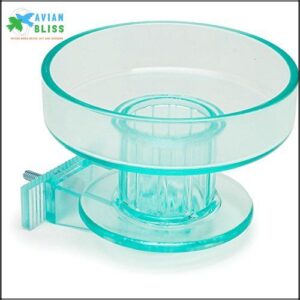
After your bird explores their swing, let’s talk about bath time—a cornerstone of pet bird care and maintenance. The Lixit Quick Lock Bird Cage Bath attaches in seconds with a twist-and-lock design. Made from clear, durable plastic, this bird bath fits small to medium birds like parakeets and cockatiels. At roughly 5″ x 5″ x 5″, it provides enough space for natural bird bathing without crowding your cage.
Water quality matters—clean it daily to maintain cage hygiene and prevent bacterial growth. Most birds take to it quickly, reducing bird stress while promoting bird health and wellness.
Bath safety is simple: verify the locking mechanism aligns properly to avoid spills, keeping your bird cage accessories secure and functional.
Best For: Bird owners with small to medium birds like parakeets, cockatiels, canaries, and finches who want an easy-to-install bath that promotes hygiene without taking up too much cage space.
- Quick twist-and-lock installation takes seconds and works with most standard wire cages, no tools needed
- Clear plastic lets you monitor water levels at a glance, and cleaning is simple for daily maintenance
- Encourages natural bathing behavior that keeps feathers healthy and reduces stress in captive birds
- Too small for larger bird species that need more room to splash around comfortably
- Some users report the plastic can crack after several months of heavy use, making it less durable than metal options
- The locking mechanism needs proper alignment or you risk water spilling into the cage, creating cleanup hassles
5. Small Bird Cage Birdbath Bowl
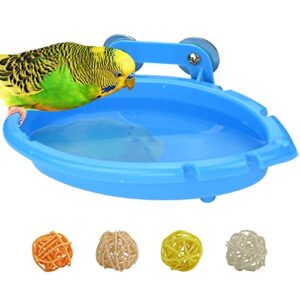
Looking for something easier to clean than the Lixit Quick Lock Bird Cage Bath? The Mygeromon Bird Bath hooks onto most cages and holds about 300ml—perfect for lovebirds, cockatiels, and parakeets. Its 6x3x1.2 inch size fits comfortably inside smaller setups.
For Bird Hygiene, change water daily to protect Avian Health from salmonella and parasites. Water Quality declines fast in warm months, so scrub the bowl every few days with diluted vinegar. Bowl Safety matters: inspect for cracks that could harm your bird. These Cleaning Tips keep your Cage Accessories and Supplies working as intended.
Best For: Small bird owners who want an affordable, easy-to-install bath for lovebirds, cockatiels, budgies, or parakeets that can also double as a food bowl.
- Hooks onto most small cages and removes easily for daily water changes, helping prevent disease spread from dirty water.
- The 6x3x1.2 inch shallow design with 300ml capacity is ideal for small birds to splash and preen safely.
- Dual-purpose design works as both a birdbath and food bowl, adding flexibility to your cage setup.
- The thin plastic construction may crack or break over time, creating sharp edges that could injure your bird.
- Requires unscrewing to clean and refill, which becomes tedious when you’re doing daily water changes.
- Some users report difficulty getting the hooks to attach securely to certain cage bar configurations.
Maintenance Tips for Wood Bird Cage Accessories

Keeping your bird’s natural wood accessories in good shape doesn’t have to be complicated. A few simple habits will keep them safe, clean, and ready for action.
Here’s what you need to know to make those perches and accessories last while protecting your feathered friend’s health.
Regular Inspection for Damage or Wear
You can’t rely on a quick glance to catch trouble. Inspect your natural wood perches and bird cage accessories at least weekly—look for splintered edges, cracks, or discoloration that signal damage.
Check attachment points for rust or looseness, and run your hand along surfaces to feel for uneven wear patterns. Use inspection tools like a UV flashlight to spot hidden mold.
Replace any perch showing cracks over 2 cm to maintain bird safety and prevent injuries.
Cleaning and Sanitizing Natural Wood Perches
Cleanliness isn’t optional—it’s your first line of defense against bacteria and mold. Soak natural wood perches in a bleach solution (1 cup bleach per gallon of water) for 10 minutes, then rinse thoroughly and sun-dry.
For gentler sanitizing techniques, white vinegar diluted 1:1 works well after scrubbing with steel wool.
Rotate two sets of bird cage accessories so one dries completely while your bird uses the other—this simple cage maintenance strategy prevents toxic exposure and keeps perch hygiene where it needs to be for bird safety.
When and How to Replace Accessories
Even careful owners can miss damage signs—so inspect accessories weekly for your bird’s safety. Replace natural wood perches and cage accessories every 6 to 12 months, but watch for these urgent replacement schedules triggers:
- Visible cracks, splinters, or sharp edges that threaten foot injuries
- Mold or fungal growth indicating hygiene maintenance failure
- Uneven surfaces from wear reducing grip security
- Loose attachments compromising structural stability
- Embedded dirt resisting cleaning efforts
Remove your pet bird from the bird cage during accessory inspection and cage maintenance, then swap one item at a time to minimize stress while maintaining safety precautions.
Preventing Mold and Bacterial Growth
Mold prevention starts with keeping indoor humidity between 40% and 50%—conditions that stop fungal spores before they take hold on natural wood perches and cage accessories. Maintain good air circulation around your bird cage to reduce dampness by up to 70%.
Weekly cage maintenance with a 50/50 vinegar-water solution eliminates 99% of bacteria during wood sanitizing. Replace bird cage liners daily and inspect perches after misting for hidden moisture—the silent trigger for fungal remediation emergencies.
Market Trends in Eco-Friendly Bird Accessories
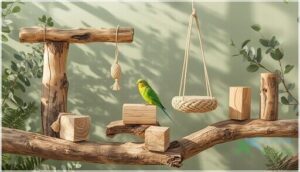
You’re not just buying a perch anymore—you’re making a choice that ripples beyond your bird’s cage. The market for eco-friendly bird accessories has shifted hard toward sustainable materials, and manufacturers are responding with innovations that actually matter for your pet’s health.
Let’s look at what’s driving this change and why it benefits both your feathered friend and the planet.
Rise of Sustainable and Chemical-Free Materials
You’re witnessing a real shift in how bird owners shop. Sales of organic and untreated wood accessories jumped 31% in North America from 2023 to 2025, driven by growing awareness—74% of pet owners now prioritize chemical-free materials in bird cage accessories.
This eco-friendly trend reflects a genuine concern for bird welfare and environmental enrichment for birds, as sustainable woods and natural materials replace synthetic options that once dominated shelves.
Innovations in Reclaimed and Biodegradable Wood
Reclaimed wood is making waves in avian care, transforming old materials into safe, stylish bird cage accessories. The global reclaimed lumber market is booming—projected to hit USD 83.53 billion by 2034—and pet bird accessories are riding that wave.
Here’s what’s exciting about these innovations:
- Reclaimed coffee wood perches offer unique textures and historic grain patterns your bird will love exploring
- Biodegradable wood composites break down naturally, keeping landfills clear of synthetic waste
- Modular designs let you customize cage layouts while supporting circular economy principles
- Bamboo alternatives grow fast and compost quickly, making them truly renewable
- Stainless steel paired with reclaimed wood creates durable, rust-resistant natural wood bird perches
These sustainable designs aren’t just eco-friendly—they give your feathered friend varied diameters and authentic textures that support healthy feet and natural behaviors.
Impact on Bird Health and Environmental Safety
Switching to sustainable woods brings real payoffs for bird health and environmental safety. Around 78% of untreated branches can harbor pesticides or harmful oils, but properly sourced bird-safe woods like FSC-certified maple cut toxicity risks dramatically.
About 73% of these sustainable woods resist splintering, protecting your bird from injury. Plus, eco-friendly harvesting reduces habitat destruction—so your bird’s wellness aids wild avian populations too.
Frequently Asked Questions (FAQs)
What wood types are toxic to birds?
Not all wood is safe for your feathered friend. Cedar, redwood, and treated woods contain aromatic oils, chemical preservatives, and toxic compounds that cause respiratory distress, poisoning, and organ damage in birds.
How often should perches be rotated or repositioned?
You should rotate or reposition your bird’s perches every two to three weeks. This simple shift prevents boredom, stimulates natural foot exercise, and keeps your feathered friend mentally engaged and physically healthy.
Can natural wood perches cause splinters or injuries?
Yes, natural wood perches can splinter if they’re improperly dried, made from soft woods, or worn down by chewing. Harder woods like Java wood resist splintering better. Regular inspection helps you catch rough edges or damage early, preventing injuries to your bird’s feet and beak.
Are wood accessories suitable for all bird species?
Not all birds are the same—what works for one species can harm another. Bird Species Compatibility depends on beak strength variation, foot anatomy differences, and environmental considerations.
Parrots thrive on Natural Wood Bird Perches, but delicate finches may struggle. Wood toxicity matters too—some woods safe for one species can poison another.
Always match Parrot Cage Accessories to your bird’s needs for bird safety and proper avian behavior and enrichment.
How to identify mold on natural wood perches?
Check for fuzzy patches in black, green, or white. Mold visual cues include slimy texture inconsistencies and musty odors, though odor reliability varies.
Use bleach testing—mold lightens.
Prevent regrowth through regular cage cleaning to protect bird health and bird safety.
Conclusion
Studies show birds spend 60% of their waking hours on perches, making wood choice critical for long-term health.
When you swap synthetic materials for natural wood bird cage accessories, you’re not just redecorating. You’re restoring instincts that plastic cages suppress, giving your bird the textured grip and mental stimulation it evolved to need.
Every branch becomes a tool for wellness, turning daily life into the enriching experience your feathered companion deserves.
- https://www.verifiedmarketreports.com/product/bird-cages-and-accessories-market/
- https://www.futuremarketinsights.com/reports/bird-cages-and-accessories-market
- https://www.linkedin.com/pulse/global-bird-cages-accessories-market-impact-ai-automation-l2ucc
- https://www.omlet.us/guide/parakeets/perches_for_cages/safe_wood/
- https://hari.ca/product/natural-coffee-wood-bird-perch-for-small-to-medium-parrots/