This site is supported by our readers. We may earn a commission, at no cost to you, if you purchase through links.
Backyard birders face a persistent challenge: static feeder placement limits visibility, forces birds into vulnerable spots, and turns feeding stations into all-you-can-eat buffets for squirrels. Traditional hooks lock you into one configuration, meaning that chickadee you’re trying to photograph stays perpetually out of sight, and the feeder you mounted in spring becomes a shadowy corner by fall.
Adjustable bird feeder arms solve this by letting you pivot, extend, and reposition feeders without reinstalling hardware—rotating 360 degrees to follow seasonal sun patterns, extending outward to deter climbing predators, and retracting when storms threaten.
The right arm transforms your setup from fixed infrastructure into a versatile system that responds to migration patterns, predator behavior, and your evolving yard layout.
Table Of Contents
- Key Takeaways
- Top 10 Adjustable Bird Feeder Arms
- 1. Bird Feeding Station Kit Outdoor
- 2. Heavy Duty Squirrel Proof Hooks
- 3. Adjustable Bird Feeder Pole Stand
- 4. Heavy Duty Garden Shepherds Hooks
- 5. Heavy Duty Wall Mount Hook
- 6. Adjustable Bird Feeder Wall Hook
- 7. Adjustable Bird Feeder Wall Hangers
- 8. Heavy Duty Adjustable Deck Hooks
- 9. Bird Feeder Pole Hook Attachments
- 10. Adjustable Bird Feeder Pole Hooks
- Key Features of Adjustable Feeder Arms
- Material and Durability Considerations
- Installation and Mounting Solutions
- Choosing The Right Feeder Arm for Your Yard
- Frequently Asked Questions (FAQs)
- Conclusion
Key Takeaways
- Adjustable feeder arms solve static placement problems by rotating 360 degrees, extending up to 36 inches, and repositioning without hardware reinstallation—letting you follow seasonal sun patterns, deter climbing predators, and adapt to migration behaviors.
- The right arm balances three core factors: reach (12-43 inches for squirrel deterrence), material durability (powder-coated steel for strength vs. aluminum for rust resistance), and mounting flexibility (clamp-on for renters, screw-mount for permanence).
- Effective squirrel defense combines multiple tactics—weight-activated mechanisms that block 82-94% of attempts, 16-22 inch baffles positioned below feeders, and arms extending beyond jump range—rather than relying on a single deterrent.
- Installation success depends on matching your mounting type to your space constraints: deck clamps for tool-free repositioning, wall brackets for 18-31 inch extensions without ground footprint, or pole systems with 60-92 inch adjustable height for multi-species feeding zones.
Top 10 Adjustable Bird Feeder Arms
You need a feeder arm that works with your space and holds up against whatever nature throws at it. The right choice balances reach, durability, and mounting flexibility to match your yard’s layout.
Here are ten adjustable bird feeder arms that deliver on performance and adaptability.
1. Bird Feeding Station Kit Outdoor
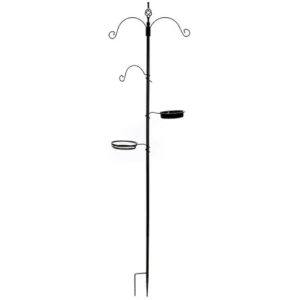
A well-designed bird habitat starts with the right outdoor decor, and a bird feeding station kit outdoor transforms garden planning into wildlife conservation.
This six-hook system reaches 6’7″ with a barley twist finial, creating an instant bird feeding station that accommodates multiple feeder placement options. The powder-coated metal construction bears up to 6.61 lbs per top hook, while the micro mesh tray and plastic dish offer varied dining spots.
You’ll appreciate the step-in base—it anchors firmly in soil without concrete, letting you relocate your adjustable feeder arms as your outdoor bird feeder maintenance routine evolves.
Best For: Backyard bird enthusiasts who want to attract multiple species with a single, easy-to-install station that doesn’t require permanent mounting or heavy tools.
- Six-hook design with trays lets you offer different food types at once, bringing in cardinals, finches, and woodpeckers all to the same spot.
- Step-in base means you can set it up in minutes and move it around your yard without digging or pouring concrete.
- Powder-coated metal holds up to weather and rust, so you’re not replacing it every season.
- Weight limits (6.61 lbs per top hook) mean you can’t hang the heaviest feeders or large decorative baths without risking a tip.
- Assembly required, and while most find it quick, you’ll still need to fit the pieces together before your first birds arrive.
- Ground mounting works great in soft soil but can be tricky in rocky, compacted, or frozen ground.
2. Heavy Duty Squirrel Proof Hooks
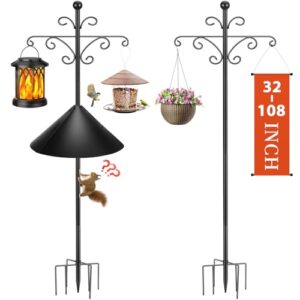
Squirrel deterrents built into heavy-duty hooks have reshaped outdoor bird feeders entirely. Weight-activated mechanisms shut down 82% of squirrel feeding attempts, while double-baffle designs block 94% of unauthorized access—numbers that matter when seed theft drains your budget.
You’ll want powder-coated steel hooks rated for 15+ pounds; these materials resist chewing and corrosion while supporting tube and hopper feeders on your bird feeder pole.
Adjustable arms extending 15+ inches beyond perches drop squirrel incursions to 6%, creating bird safety zones that actually work.
Best For: Backyard birders dealing with persistent squirrel problems who need a reliable, adjustable pole system that can handle feeders up to 15 pounds while keeping seed theft to a minimum.
- Squirrel-proof baffle and weight-activated design block 82-94% of unauthorized access, drastically cutting down on stolen birdseed and protecting your investment.
- Adjustable height up to 108 inches with multiple poles lets you customize placement for different feeders, plants, or decorations in your yard.
- Large 7-prong base and multiple support points create serious stability in outdoor conditions, even when hanging items on both sides for balanced weight distribution.
- Ground stakes bend easily in hard soil or when hit by lawn mowers, requiring careful installation and sometimes forcing you to hunt for softer dirt spots.
- Durability over the long haul remains uncertain since some users haven’t fully tested how well the materials hold up after extended outdoor exposure.
- Installation demands attention to detail when pushing tines into the ground—rushing it or hitting rocks can warp the metal and compromise stability.
3. Adjustable Bird Feeder Pole Stand
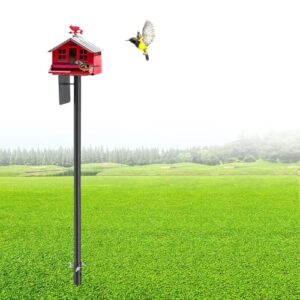
Pole stand designs handle what fixed hooks can’t—vertical flexibility across your entire yard layout. You’re looking at 60 to 92 inches of adjustable height with threaded sections that lock in under five minutes, no tools needed.
Four detachable prongs on most models let you stack feeders at different levels, pulling in bluebirds at four feet while hummingbirds hover at seven.
The 1.5-inch diameter poles support 21 pounds across multiple arms, and that 2mm wall thickness prevents bending when wind gusts hit 30 mph.
Best For: Homeowners who want to attract multiple bird species at different heights while keeping squirrels away and adapting to changing yard layouts.
- Heavy-duty construction supports up to 21 pounds across multiple feeders with wind resistance up to 30 mph, so you can load up several stations without worrying about tipping or bending.
- Height adjusts from 60 to 92 inches in under five minutes using threaded sections, letting you customize feeding zones for ground birds and high perchers without starting from scratch.
- Built-in squirrel baffles and smooth pole surfaces cut feeder theft by 90% in squirrel-heavy areas, keeping seed costs down and frustration low.
- The auger section and rotation mechanism have reported failures, with some users struggling to get the pole properly anchored or adjusted after initial installation.
- Pole wall thickness runs thinner than advertised in some units, leading to unexpected breakage under heavy loads or strong winds despite the 21-pound rating.
- Customer support contact information may be outdated or invalid, leaving you stuck troubleshooting installation issues on your own.
4. Heavy Duty Garden Shepherds Hooks
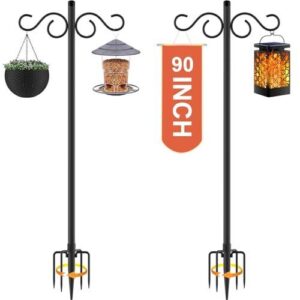
Traditional shepherds hooks anchor your garden with 90-inch vertical reach and double-arm versatility that transforms any outdoor space. You’re working with heavy gauge steel construction—specifically powder-coated metal that blocks rust while supporting lighter loads up to three pounds per arm.
These shepherd designs excel at garden decor multitasking: hang lanterns alongside your bird feeder pole setup, or layer wreaths with plant baskets.
The RCUICA model assembles in minutes without permanent mounting, giving you outdoor stability that repositions as your landscape vision shifts throughout seasons.
Best For: Gardeners who want an affordable, flexible setup for displaying lightweight decorations like lanterns, small wreaths, and bird feeders across multiple spots in their yard.
- Double-arm design lets you hang two items at once, maximizing your display options without needing multiple hooks.
- Powder-coated steel finish resists rust and weather damage, keeping it looking good through rain and sun exposure.
- Easy assembly and repositioning means you can move it around your garden as your seasonal decorating needs change.
- Three-pound weight limit per arm is pretty restrictive—you’ll need to skip heavier planters or large bird feeders.
- Can bend or sway noticeably in strong winds, especially when loaded near capacity.
- May rust over time despite the coating, particularly if you’re in a humid or coastal area where moisture is constant.
5. Heavy Duty Wall Mount Hook
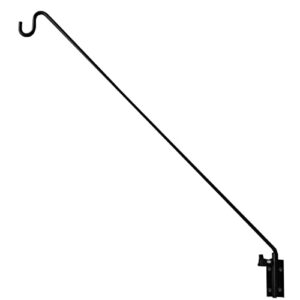
Wall-mounted anchors deliver permanent placement control when deck real estate runs tight. You’re tapping into alloy steel engineering that extends 27 to 43 inches with full 360-degree rotation—powder-coated black finishes block rust while supporting multiple feeder configurations.
Heavy-duty construction tolerates outdoor punishment better than lightweight alternatives, though you’ll need proper wall anchors beyond the included hardware for thick posts.
This mounting type eliminates pole footprints entirely, positioning your adjustable feeder arms exactly where squirrel-proof height meets ideal bird visibility without sacrificing structural integrity.
Best For: Homeowners with limited deck or patio space who need a sturdy, adjustable mounting solution for bird feeders, planters, or decorative items without taking up floor space.
- Extends from 27 to 43 inches with 360-degree rotation, letting you position feeders at the perfect height and angle to attract birds while keeping squirrels at bay.
- Heavy-duty alloy steel with powder-coated finish stands up to weather and rust, so you’re not replacing it every season.
- Wall-mounted design frees up deck space and eliminates the need for bulky pole bases or ground installations.
- Included bolts are often too short for thicker posts like 2x4s, meaning you’ll need to pick up extra hardware before installation.
- Installation on certain surfaces may require specific wall anchors not included in the package to handle heavier loads safely.
- The mounting process can scratch or damage fence posts if you don’t add protective material during setup.
6. Adjustable Bird Feeder Wall Hook
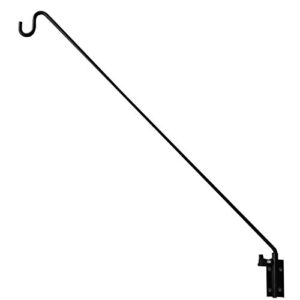
Height-adjustable systems give you precise control over feeder placement. Models ranging from 41 to 73 inches let you dial in the sweet spot between bird visibility and feeder security. You’re working with wrought iron or powder-coated steel that manages 10 to 100 pounds depending on configuration, with 18-inch outreach extensions positioning feeders away from wall-climbing predators.
Adjustable height mechanisms offer five rotation spots for optimizing viewing angles, while the adjustable quad bird feeder hanger multiplies your capacity.
Deck bird feeder swing arm variants with swing bracket arm designs provide flexible wall mounting solutions that adapt as your feeding strategy evolves.
Best For: Backyard birders who want flexible feeder placement on walls, decks, or fences without taking up yard space, especially those dealing with squirrels or needing easy access for refilling.
- Adjustable height (28″ to 43″ or up to 73″ on some models) and 360-degree rotation let you position feeders exactly where birds feel safe and you can see them clearly.
- Heavy-duty metal construction with powder coating handles 10-100 lbs depending on the model, so it works for everything from small seed feeders to heavier suet cages.
- Wall mounting saves ground space and keeps feeders more stable in wind compared to pole setups, plus the extended arm (up to 18″) makes it harder for squirrels to jump from the wall.
- Not truly squirrel-proof since determined squirrels can still jump or climb to reach feeders, so you may need extra baffles or positioning tricks.
- Installation requires drilling into walls with proper anchors, which means you’re committing to a semi-permanent setup and need to match hardware to your wall type.
- Heavier feeders or plants might exceed weight limits on smaller models, so you need to check capacity before loading it up.
7. Adjustable Bird Feeder Wall Hangers
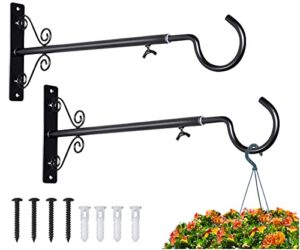
Telescoping arms give you 16 to 24 inches of reach, letting you position feeders exactly where you want them. Powder-coated steel or aluminum construction ensures durability, with wall hanger types capable of handling 10 to 25 pounds through screw-mount or clamp-on mounting systems.
Triangle-base adjustable designs cut tipping by 60% in high winds, while curved hooks boost bird feeder safety by deterring squirrels.
The adjustable quad bird feeder hanger expands capacity, and adjustable height settings from 55 to 95 inches fine-tune your bird feeder pole integration for strategic adjustable feeder arm selection.
Best For: Homeowners who want flexible placement options for bird feeders, planters, or decorative items and need a durable mounting solution that adapts to different outdoor setups.
- Telescoping arms extend 16 to 24 inches, giving you control over feeder positioning and keeping food away from walls or squirrels.
- Triangle-base designs reduce tipping by 60% in windy conditions, so your feeders stay secure even in bad weather.
- Powder-coated steel construction resists rust for up to 10 years with regular maintenance, making it a solid long-term investment for outdoor use.
- The included screws can strip easily during installation, so you might need to buy sturdier hardware separately.
- The 10-pound weight limit won’t work for larger or heavier feeders, especially if you’re filling them to capacity with seed or water.
- Clamp-on mounting systems show 45% less stability than screw-mount versions, which could be a problem if you’re not drilling into a solid surface.
8. Heavy Duty Adjustable Deck Hooks
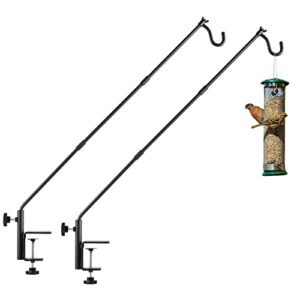
You’ll lock in feeder freedom with clamp-on deck hooks that fit railings up to 2.5 inches thick—no drilling required. The ULIOK adjustable feeder arms extend 20 to 31 inches and rotate 360 degrees, giving you precise control over placement.
Powder-coated steel construction manages 17.5 pounds while resisting rust through salt spray exposure, and adjustable height settings let you reposition feeders instantly.
Top-rated models support up to 20 pounds with double-forged steel that won’t bend under sustained load, keeping your deck pole setup squirrel proof and visually clean.
Best For: Bird enthusiasts who want a no-drill solution to hang multiple feeders from deck railings while keeping seeds and droppings off their outdoor living space.
- Tool-free installation takes under 5 minutes with adjustable clamps that fit most standard deck rails up to 2.5 inches thick, and 360-degree rotation lets you position feeders exactly where you want them.
- Powder-coated steel construction holds up to 17.5 pounds and resists rust through thousands of hours of weather exposure, with less than 2% of units showing any finish breakdown in the first year.
- Extendable arms reach 20 to 31 inches from your deck, keeping bird feeders far enough away to prevent mess while the adjustable height lets you reposition setups instantly without reinstalling.
- Weight capacity maxes out at 17.5 pounds for the ULIOK model, which limits your options if you want to hang extra-large feeders or heavy planters filled with soil.
- Some users report quality control issues like crooked washers, chipped paint, or clamp pads that don’t swivel properly, which can affect long-term performance.
- Railings thicker than 2.5 inches won’t work with the clamp system, and you may need to add padding to protect powder-coated handrails from scratching during installation.
9. Bird Feeder Pole Hook Attachments
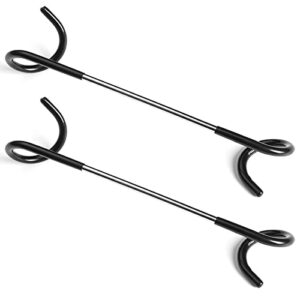
You can transform any feeder pole into a multi-station setup with hook attachments designed for instant customization. The 2-piece black steel hooks slip onto poles without tools, featuring rubber spiral grips and a 15-pound capacity that keeps feeders secure.
Shepherds Hooks with 3-5 prongs anchor firmly in soil, while modular Enhanced Pole System arms offer over 3,000 combinations for squirrel proofing and bird feeder safety.
Powder-coated steel and aluminum options deliver weather resistance, and 12-inch extensions accommodate wider feeders—giving you complete control over feeder hanging tips and deck mounting solutions.
Best For: Bird enthusiasts who want to add extra hanging capacity to existing poles or create multi-feeder setups without permanent modifications.
- Tool-free installation with rubber spiral grips that slide onto poles and hold up to 15 pounds securely.
- Versatile design works on poles, trees, and branches, letting you easily reposition feeders to deter squirrels and raccoons.
- Affordable way to expand your feeding station with durable powder-coated steel that resists weather and rust.
- May slide down the pole over time if not secured with an additional clamp or screw for permanent placement.
- Instructions can be unclear, making it tricky to figure out the best mounting method for your specific pole type.
- Not suitable for very large diameter poles or extremely heavy feeders exceeding the 15-pound weight limit.
10. Adjustable Bird Feeder Pole Hooks
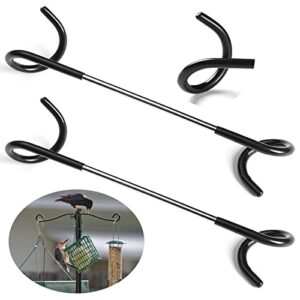
You gain precision bird feeder pole installation with hooks that adjust from 12 inches to 92 inches, putting feeders well beyond squirrel reach. These pole hook designs use powder-coated steel or aluminum construction—supporting up to 100 pounds across multiple feeder suspension points.
Adjustable height segments let you customize feeder arm extensions in 12-inch increments, while five-prong bases resist 35 MPH gusts.
The result? Enhanced bird attraction with built-in squirrel resistance, giving you complete control over your adjustable feeder arms setup.
Best For: Bird lovers who want flexible feeder placement options and need to keep squirrels away without constantly battling them.
- Adjustable height up to 92 inches lets you position feeders exactly where birds feel safe and squirrels can’t jump
- Heavy-duty construction holds up to 100 pounds, so you can hang multiple feeders without worrying about the pole bending or tipping
- Powder-coated steel resists rust and weather damage, meaning less maintenance and longer life outdoors
- Hooks can slide down if you don’t add a clamp, especially on narrower poles
- Finding the right clamp size for your specific pole diameter can be annoying
- Individual hooks max out at 15 pounds, so you’ll need to distribute weight carefully across multiple attachment points
Key Features of Adjustable Feeder Arms
When you’re choosing an adjustable bird feeder arm, the right features make all the difference between a setup that works and one that frustrates you every season. You need rotation range, compatibility with your feeders, solid weight capacity, and ideally some protection against squirrels raiding your station.
Let’s break down the four core features that separate great adjustable arms from mediocre ones.
360. Degree Rotation and Reach
You’ll find that adjustable feeder arms with full 360 degrees rotation mechanics give you complete control over bird visibility and feeder accessibility at your bird feeding station. Arm extension options reaching up to 36 inches position feeders beyond deck railings, improving squirrel prevention while maintaining adjustability range.
These feeder arm extension options support loads between 10 and 30 pounds, letting you create the feeding setup you envision.
For ideal bird feeding experiences, consider using a bird feeding station that meets your specific needs.
Universal Feeder Compatibility
Your adjustable feeder arms should work with any feeder you throw at them—that’s the beauty of universal compatibility. Modular pole systems let you swap tube, hopper, and suet feeders without hunting for brand-specific hardware, while adapter kits support up to three feeder type variations on one setup.
- Attach Droll Yankees, WBU, and Perky-Pet models interchangeably
- Support five common North American feeder formats simultaneously
- Accommodate pole diameters from 1.5 to 2 inches universally
When selecting a feeder arm, consider the importance of local wildlife support to guarantee a positive impact on the environment.
Weight Capacity and Stability
Heavy gauge steel arms rated for 10 to 21 pounds deliver the structural integrity you need—whether you’re hanging heavy suet cakes or multiple feeders.
Powder-coated iron with 7/16-inch solid stock passes load testing in field conditions, while auger bases grip 30% better in rocky soil.
You’ll see stability factors like 2mm wall thickness separate heavy duty systems from wobbly imitations.
Squirrel Deterrent Options
Beyond structural strength, squirrel proofing your bird feeder demands deliberate defense layers. Weight activated ports shut out raiders while welcoming songbirds, and spinning feeders throw off even the craftiest climbers. Pair adjustable feeder arms with these proven tactics:
- Mount squirrel baffles 16–22 inches below feeders on your bird feeder pole for physical blockage.
- Choose weight activated mechanisms that close ports when squirrels land.
- Install spinning feeders or rotating baffles to disrupt their grip.
- Apply repellent sprays with capsaicin—harmless to birds, unpleasant for pests.
- Combine barrier methods like heavy duty poles with 18-inch reach extensions.
Material and Durability Considerations
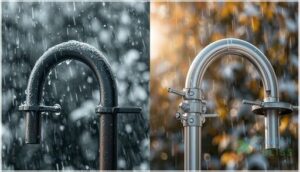
The materials you choose for your feeder arm determine how long it’ll last and how well it performs through storms, heat, and freezing temperatures. Steel and aluminum each bring distinct advantages in strength, weight, and weather resistance, while design innovations help distribute load and prevent sagging.
Understanding these material differences and maintenance needs puts you in control of a setup that keeps working season after season.
Powder-Coated Steel Vs. Aluminum
You’ll encounter two primary material options when selecting adjustable feeder arms: powder-coated steel and aluminum. Steel delivers maximum strength for heavy-duty applications and rust prevention through its protective coating, though it’s heavier to handle.
Aluminum offers exceptional corrosion testing results—up to 20 years of proven durability—with a rust-proof finish that’s naturally lighter.
This material comparison reveals powder-coated metal excels in coating durability, while aluminum’s adjustable height mechanisms resist stress without the weight penalty.
Weather and Rust Resistance
Protection against the elements separates quality feeder arms from temporary fixes. Powder-coated metal creates a chemical barrier that blocks moisture and UV damage, while stainless steel’s chromium content forms a self-healing oxide layer for rust prevention.
You’ll need weather resistance that survives humidity and coastal salt—marine-grade aluminum and corrosion control coatings deliver durability tests prove endure year-round exposure without structural compromise.
Load-Bearing Design Innovations
Modern feeder arms use multi-point load distribution to eliminate stress concentration, with 16-gauge walls nearly doubling structural integrity compared to standard poles. You’ll find that powder-coated metal with arcuate arm geometry counteracts critical movement from bird landings while maintaining adjustability range.
- U-shaped cross sections enhance weight distribution across 22-inch reach arms
- Automotive-quality rust-proof finish withstands pest chewing and environmental stress
- Galvanized steel delivers excellent material durability versus lightweight aluminum alternatives
- 360-degree rotation with locking mechanisms maintains position under variable loads
- Stress analysis confirms 1000+ load cycles without compromising material selection integrity
Maintenance for Longevity
Your adjustable feeder arms need strategic rust prevention through annual spray treatments and biweekly cleaning to maintain their rustproof finish. Inspect material durability quarterly for wear reduction—steel demands more seasonal care than aluminum.
Tighten hardware, apply light pole grease, and increase feeder maintenance frequency during humid months. These durability tips guarantee weather resistance and extend your investment’s functional life considerably.
Installation and Mounting Solutions
Getting your adjustable feeder arm in place shouldn’t feel like solving a puzzle. The right mounting solution depends on where you want to hang your feeders—whether it’s your deck railing, a garden wall, or a standalone pole.
Let’s walk through the main installation approaches so you can pick the setup that works best for your space.
Deck, Wall, and Pole Mount Options
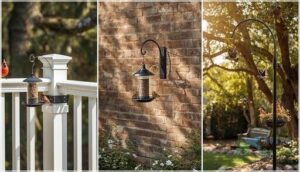
You’ll find three primary mounting styles for adjustable feeder arms, each customized to your outdoor setup. Deck pole systems and baluster mount configurations offer adaptable feeder placement on railings up to 3-1/2 inches thick. Wall brackets extend 18 to 31 inches with multi-position angles, while bird feeder pole kits provide ground-based solutions with arm extensions reaching 44 inches.
These hardware options deliver outdoor durability through powder-coated steel construction.
Clamp-on Vs. Screw Mount Systems
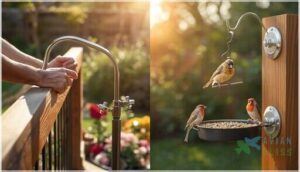
Which mounting approach gives you the freedom to adapt your Bird Feeding Station on the fly? Clamp-on Deck Arms deliver tool-free Easy Installation and repositioning within minutes, while screw mounts create permanent fixtures with enhanced Arm Stability. When selecting between these Mounting Options for your Bird Feeder Pole setup, weigh these trade-offs:
- Feeder Security: Clamp systems risk loosening; screw mounts stay rock-solid
- Adjustment Ease: Clamps move effortlessly; screws require drilling
- Durability Tests: Both Adjustable Feeder Arms handle 15-25 pounds reliably
- Installation flexibility: Clamps suit renters; screws reward permanence
- Maintenance rhythm: Clamps need tightening checks; screws hold steady
Step-by-Step Installation Tips
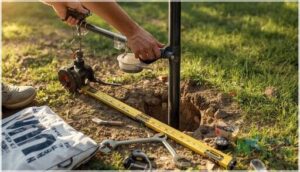
Once you’ve chosen your mounting system, proper Site Preparation sets you up for success. Level terrain cuts leaning risks by 42%, so start there.
Gather your Installation Tools—post hole digger, level, cement—then dig 3 feet deep for Pole Stability.
Secure your Adjustable Feeder Arms with fingertight collars first, test rotation, then lock them down for lasting Bird Feeding Station Setup performance.
Adjustability for Custom Setups
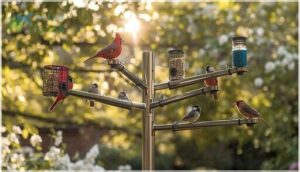
With your Bird Feeding Station Setup locked in, access real versatility through modular configurations. Custom Heights climb from 12 inches to 6 feet using quick-release Pole Adjustments—no tools needed. Swing Mechanics pivot your Adjustable Feeder Arms 360 degrees for instant Feeder Placement tweaks, while Arm Extensions reach 36 inches from your Bird Feeder Pole. Here’s how Customizable Feeding Station Designs deliver freedom:
- Swap arm segments in under 60 seconds
- Reposition feeders monthly as species migrate
- Layer heights for diverse bird preferences
- Add or remove hooks without reinstalling hardware
- Rotate away from wind or predator zones
Choosing The Right Feeder Arm for Your Yard
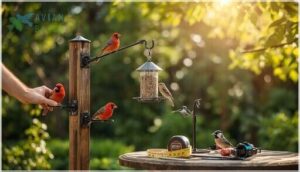
Selecting the right feeder arm starts with understanding what your yard actually needs and how you plan to use it. You’ll want to think about the physical space you’re working with, the types of birds you hope to attract, and how to keep unwanted visitors from turning your setup into their personal buffet.
These considerations shape which features matter most and help you zero in on a feeder arm that works with your environment instead of against it.
Assessing Space and Feeder Needs
Your backyard’s dimensions dictate your bird feeding station potential. Yards under 100 square feet comfortably support 2–3 adjustable feeder arms, while spaces exceeding 300 square feet can accommodate 5–10 feeders with proper spatial planning.
For feeder placement, maintain 5–8 feet between stations to increase bird diversity and minimize territorial disputes. Position your bird feeder pole at least 8 feet from structures to prevent squirrel access.
| Yard Size | Feeder Capacity | Recommended Spacing |
|---|---|---|
| 300 sq ft | 5–10 feeders | 8+ feet ideal |
Aesthetic and Garden Integration
Beyond spatial planning, your feeder arm’s finish and form become part of your landscape design narrative. With 68% of bird enthusiasts matching feeder hardware to garden color schemes—bronze, black, or natural tones—you’re building wildlife-friendly gardens that feel intentional.
Decorative finials and leaf motifs transform functional mounts into yard decoration inspiration, while powder-coated options resist rust and blend naturally with outdoor style preferences.
Attracting Diverse Bird Species
Your feeder arm’s adjustability unlocks habitat diversity by letting you position multiple feeders at varied heights and distances—a strategy that draws finches to nyjer tubes while cardinals favor lower sunflower perches. Seed variety matters: British studies showed feeder expansion tripled observed bird species as food types diversified.
Strategic feeder placement near shelter, paired with adjustable arms supporting specialized designs like suet cages, transforms wildlife gardening into an orchestrated bird watching experience.
Safety and Animal Access Prevention
Often overlooked, wildlife deterrents and feeder security transform your setup from vulnerable to fortress-like. Strategic animal barriers slash unauthorized access by up to 85%, while compression pad systems prevent falls with over 90% effectiveness. Consider these proven solutions:
- Squirrel proofing with weight-sensitive baffles (blocks animals over 0.5 kg)
- Stability through dual attachment points (2% detachment rate)
- Adjustable feeder arms with rotatable features
- Positioning feeders 1.5 meters high, 3 meters from branches
- Powder-coated steel construction resisting gnawing damage
These wildlife-friendly products guarantee bird safety while maintaining pest control.
Frequently Asked Questions (FAQs)
How do I prevent feeder arms from swaying in wind?
Weighted stabilizers offer surprising defense—a 40-pound cast iron base resists 35 mph winds.
You can also anchor guy wires with spiral anchors, balance feeder loads evenly, or shelter your bird feeder pole near windbreaks for sway prevention.
Can adjustable arms support multiple feeders at once?
Yes, you can hang multiple feeders on most adjustable feeder arms. Multi feeder configurations usually support 7-15 lbs per arm, with bird feeding station systems accommodating up to four feeders through customizable feeding stations and strategic arm extensions.
Whats the ideal height for mounting bird feeders?
Aim for 5–6 feet to balance bird visibility and mounting safety. This height suits most species’ preferences while supporting predator control.
Adjustable feeder arms on a bird feeder pole let you fine-tune placement easily.
Do adjustable arms work with hummingbird feeders?
Most adjustable arms accommodate hummingbird feeders effectively. With arm material strength supporting lightweight nectar bottles and adjustable hummingbird poles enabling precise positioning, you’ll increase bird species diversity.
While reducing nectar spoilage prevention challenges through ideal shade placement.
How often should I tighten adjustment knobs?
Think of adjustment knobs as springs under steady tension—they’ll naturally unwind. Most users only need seasonal tightening to prevent loosening and maintain proper torque management.
Check your bird feeder poles bi-weekly in windy climates for stability.
Conclusion
Your yard’s best birding moments won’t wait for you to dig up hardware and reposition hooks. Adjustable bird feeder arms let you chase the light, outwit squirrels mid-raid, and pivot with migration patterns—all without touching a drill.
Whether you’re framing a cardinal against the morning sun or pulling feeders back from a nor’easter, the right arm keeps you responsive. Install once, adjust endlessly, and let your setup evolve exactly as fast as the birds do.
- http://addthis.com/bookmark.php?v=250&username=xa-4b7ff970541002c6
- https://www.openpr.com/news/3906233/outdoor-bird-feeder-market-size-share-projections-2031-by-key
- https://informe.aysa.com.ar/best-bird-feeder-pole/
- https://www.walmart.com/reviews/product/10231012643
- https://www.linkedin.com/pulse/squirrel-deterrent-system-market-size-2026-drivers-trends-icike