This site is supported by our readers. We may earn a commission, at no cost to you, if you purchase through links.
Your bird depends on clean water every day, but traditional open dishes invite contamination from droppings, feathers, and debris within hours of filling them. A properly designed bird cage water dispenser protects your pet from bacterial infections while keeping the cage cleaner and reducing your daily maintenance routine.
Whether you’re caring for a delicate finch or a large parrot, the right dispenser provides consistent access to fresh water without the mess and health risks of conventional bowls.
The challenge lies in selecting a unit that matches your bird’s species, drinking behavior, and cage configuration—factors that directly impact whether your bird will actually use it and thrive.
Table Of Contents
Key Takeaways
- Clean water dispensers prevent bacterial infections by keeping water away from droppings and debris, which can contaminate traditional open dishes within hours of filling them.
- Choosing the right dispenser requires matching your bird’s species size and drinking behavior to the appropriate capacity—small finches need 4-8 oz bottles while African greys require 200+ mL dispensers with larger flow rates.
- Daily water changes and weekly deep cleaning with safe agents like vinegar or chlorhexidine are essential to prevent biofilm buildup and bacterial growth that threaten your bird’s health.
- Automatic and gravity-fed systems reduce maintenance time while providing consistent access to fresh water, but you’ll need to verify cage bar spacing and mounting compatibility before installation.
Best Bird Cage Water Dispensers Reviewed
You want a water dispenser that keeps your bird healthy and your cage clean without constant refills. The right system depends on your bird’s size, your cage setup, and how much time you can spend on daily maintenance.
Here are six dispensers that handle different needs, from single small birds to larger flocks.
1. JW Clean Water Silo Bird Waterer
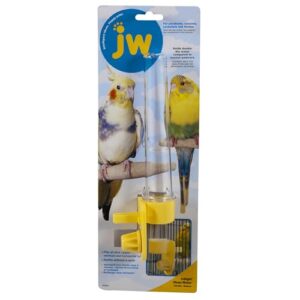
The JW Pet Clean Water Silo Bird Waterer offers a vertical reservoir that stays outside your cage while the drinking cup extends through the bars. You can secure it to horizontal or vertical bars, reducing the risk your parakeet, canary, or cockatiel will knock it over.
The patent-pending valve aims to prevent spills during refills, though some owners report leakage issues over time. Its dishwasher-safe design simplifies cleaning, but mineral buildup can collect on the clear tube between washes, requiring extra attention to maintain hygiene.
Best For: Small bird owners who want a larger water capacity that stays outside the cage and reduces spillage from active birds.
- External reservoir design keeps the bulk of the water outside, saving interior cage space and making refills easier without disturbing your bird.
- Patent-pending valve system is designed to prevent spills during top-ups, letting you add water without removing the entire unit.
- Dishwasher-safe construction simplifies regular cleaning and helps maintain better water hygiene compared to hand-washing alone.
- Some users report the unit can develop leaks over time, requiring periodic replacement or careful monitoring.
- Mineral deposits and algae can build up inside the clear tube, making it harder to clean thoroughly despite being dishwasher safe.
- The mounting system may not fit securely on all cage types, particularly those with curved or non-standard bar spacing.
2. Lixit Chew Proof Small Animal Bottle
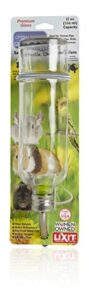
If your parrot or conure gnaws at everything, the Lixit Chew Proof Flat Sided Water Bottles offer heavy-duty glass construction with a bite-resistant metal cap and stainless steel tube. You’ll mount the 6 oz, 12 oz, or 26 oz bottle outside your bird cage using the included spring holder, keeping the reservoir beyond reach while the drinking tube extends through the bars.
The clear glass lets you monitor water levels without opening the cage, and the flat-sided design sits flush against wire walls for stable mounting. Some users report occasional leakage, so proper tube seating and angle adjustments may be necessary.
Best For: Bird and small-animal owners dealing with persistent chewers who need a durable, see-through water bottle that mounts securely on wire cages.
- Heavy-duty glass body with metal cap and stainless steel tube resists gnawing from rabbits, guinea pigs, ferrets, and medium birds
- Clear construction lets you check water levels and cleanliness at a glance without opening the cage
- Outside-mount design with spring holder keeps the glass reservoir out of reach while the drinking tube stays accessible
- Some users report leaking issues that require fiddling with tube angle and seating to fix
- Heavier than plastic bottles, which may stress weaker cage bars or mounting points
- Mixed reviews on long-term durability, with a few customers noting malfunctions after several months
3. Lixit Automatic Nipple Waterer Valve
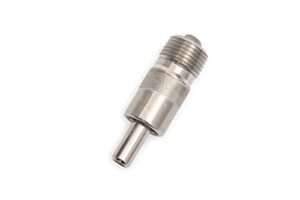
For aviaries or multi-cage setups, the Lixit ½ Inch Automatic Nipple Drinking Waterer delivers continuous fresh water through stainless steel valve material that resists corrosion and bacterial buildup.
You’ll connect this nipple valve directly to your water supply using the ½ inch pipe thread, then adjust flow between 20 and 60 PSI to match your bird species’ drinking needs.
The diaphragm design prevents leaks while maintaining proper water pressure, supporting avian health through automatic watering that reduces contamination risks and ensures consistent bird hydration and water quality.
Best For: Bird owners with aviaries or multiple cages who want a low-maintenance watering system that keeps water fresh and reduces contamination from droppings or debris.
- Stainless steel construction resists corrosion and lasts for years without needing frequent replacements
- Adjustable flow between 20-60 PSI lets you dial in the right water pressure for different bird species
- Automatic operation cuts down on daily refilling and keeps water cleaner than open bowls
- Requires plumbing knowledge to install the ½ inch pipe connection into your water system
- Some users report occasional leaks that need troubleshooting or extra hardware to fix
- Birds need time to learn how to activate the valve, so you might need to keep backup water dishes during training
4. JW Pet Clean Cup Bird Feeder
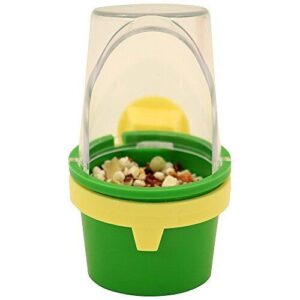
Beyond nipple valve systems, the JW Pet Clean Cup offers dual-purpose functionality for birds that prefer traditional bowl-style water access. Material durability allows for repeated washing cycles, and spill control design keeps surrounding cage areas drier than open dishes.
You’ll appreciate the screw-on mounting system that clamps securely through standard cage bars, positioning the dishwasher-safe cup at perch height for cockatiels, conures, and lovebirds. The clear plastic hood reduces splash and debris while maintaining visibility, and you can twist the cup free for quick daily cleaning without removing the bracket.
Best For: Bird owners with cockatiels, conures, or lovebirds who want a mess-reducing feeder that’s easy to clean and keeps water or food contained inside the cage.
- Screw-on mount stays attached while you twist out the cup for fast refills, cutting down on daily hassle
- Clear hood blocks most splashing and seed scatter without stressing birds who don’t like dark enclosures
- Dishwasher-safe plastic and smooth corners make thorough cleaning simple and help prevent bacteria buildup
- Some users report the cup breaks or doesn’t lock securely after repeated use, especially with active birds
- Size can be too small for larger parrots or multiple birds sharing one feeder
- Plastic may degrade if placed in direct sunlight near windows or outdoor aviaries
5. PetSafe Healthy Pet Water Station
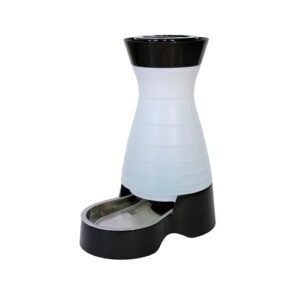
For larger aviaries or multi-bird setups, you’ll find the PetSafe Healthy Pet Water Station offers capacity options ranging from 0.5 to 2.5 gallons, reducing refill trips dramatically. Gravity-fed flow control maintains a steady water level in the removable stainless steel bowl—a material veterinarians recommend for enhanced hygiene.
The BPA-free reservoir locks into place to prevent spills when birds perch nearby, and both components are dishwasher safe for cleaning ease. Though designed for dogs and cats, the system adapts well to cage-adjacent placement for larger parrots requiring substantial daily hydration.
Best For: Large aviaries or multi-bird households that need high-capacity water storage with minimal daily refilling.
- Holds up to 2.5 gallons, keeping water available for extended periods even with multiple birds drinking throughout the day
- Stainless steel bowl resists bacteria and cleans easily in the dishwasher, making daily sanitation simple
- Gravity-fed system works without electricity, so no cords near the cage and no risk of mechanical failure
- Designed for dogs and cats, so you’ll need to position it carefully near (not inside) bird enclosures
- Some users report occasional leaks, which could create mess near sensitive cage setups
- Replacement filters cost extra and need regular swapping to keep water tasting fresh
6. Lixit Top Fill No Drip Bottle
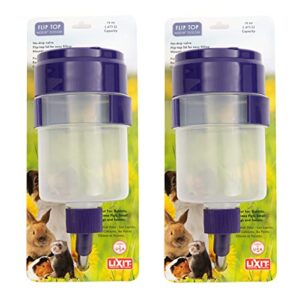
If you prefer refilling without removing hardware, the Lixit Top Fill No Drip Bottle simplifies daily maintenance with its flip-top lid—just open and pour. Available in 16, 32, and 44-ounce capacities, this bottle-style dispenser uses a patented stainless steel ball valve for leak-proof performance, though 20% of reviewers report occasional drips in larger sizes.
The BPA-free construction ensures material safety, while dual flat sides allow secure cage mounting inside or outside wire panels. Top-fill design eliminates wrestling with clips during cleaning—rinse the bottle thoroughly every few days to prevent biofilm.
Best For: Small pet owners who want convenient refilling without removing the bottle from the cage, especially those with rabbits, guinea pigs, or ferrets.
- Top-fill design makes daily refills quick and easy without dealing with mounting hardware
- Patented stainless steel ball valve provides reliable leak-proof performance in most cases
- Multiple size options (16, 32, and 44 oz) let you match capacity to your pet’s needs
- About 20% of users report occasional leaking issues, particularly with the larger 32 oz and 44 oz models
- Sharp plastic edges can potentially cause injury during cleaning
- Not suitable for all setups—doesn’t work well with glass tanks due to wire-mount design
Key Features of Bird Water Dispensers
Not all bird water dispensers are created equal, and knowing what separates a reliable system from a frustrating one can save you time and protect your bird’s health.
The right features make daily care easier while ensuring your feathered companion always has access to clean, fresh water.
Let’s look at the essential elements you should prioritize when choosing a dispenser for your cage.
Leak-Proof and Spill Prevention
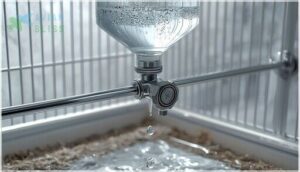
A leaky water bottle can turn your bird’s home into a soggy mess overnight. Bottle flood rates can reach 2.2% even with quality designs, while debris contamination causes up to 40% of valve failures.
Look for leakproof dispensers with quality silicone seals that resist distortion—poor autoclave vacuum effects and silicone component wear are common culprits. Regular assessment can help identify potential valve failures.
Preventing water spillage protects your bird’s health and keeps cage hygiene manageable.
Automatic and Gravity-Fed Operation
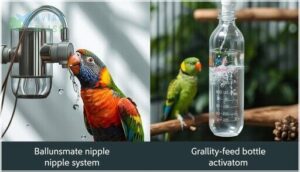
Automatic water dispensers and gravity-fed systems work differently to keep your bird hydrated without constant intervention. Understanding flow mechanics helps you choose the right setup for your flock.
- Flow rates: Small-cage automatic valves deliver 50–60 ml per minute to match drinking speed, while gravity-fed bottles usually release water at 10–27 ml per minute as birds mature.
- Reservoir volume: Gravity dispensers commonly hold 130–250 ml, supplying several hours to multiple days of water depending on your bird’s size and the number of birds sharing the system.
- Automatic valve types: Nipple drinkers activate only when your bird pecks, reducing spillage by over 40% compared to open pans, while float-valve systems refill automatically from your water line.
- Pressure regulation: Tube diameter and pressure regulators maintain stable gravity-assisted flow in automatic bird watering systems without over-delivery or dry valves.
- Refill automation: Automatic refilling from float tanks eliminates daily cage-by-cage topping, letting you focus on other care tasks while ensuring consistent water access. For best performance, consider using a water supply system that meets your birds’ specific needs.
Material Durability and Safety
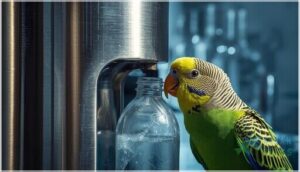
Material choice isn’t just about how long a bottle lasts—it directly affects your bird’s health. Food-grade plastics can leach phthalates (around 102–710 μg/kg in common PET bottles), though levels generally stay below safety limits.
UV aging quickly degrades plastic, with elongation dropping by 75% after just two hours of sun, triggering microplastic release.
Stainless steel sidesteps chemical migration and heavy metal toxicity, offering durable, nontoxic safety for bird cages.
Easy Filling and Cleaning
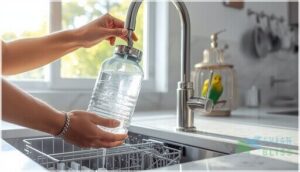
You’ll spend less time wrestling with water bottles if you choose designs built for quick refills and cleaning. Top-fill convenience shines in models like the Lixit Top Fill No Drip Bottle, letting you refill without removing the entire unit from the cage.
For maintenance efficiency, wide-mouth openings support thorough cleaning three times daily, while dishwasher safety in components like PetSafe’s stainless steel bowls streamlines hygiene and cleanliness routines, minimizing spill prevention hassles.
Choosing The Right Dispenser for Your Cage
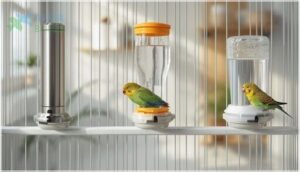
Your bird’s health depends on having the right water dispenser for their specific needs. Not every dispenser works for every cage, and choosing the wrong one can lead to dehydration, spills, or hygiene issues.
Let’s walk through the key factors you’ll need to think about before making your purchase.
Cage Compatibility and Mounting Options
Before you install any dispenser, check your cage’s bar spacing—finches need 0.25–0.5 inches, cockatiels 0.5–0.625 inches, and larger parrots up to 1.5 inches.
Mounting location matters: position the spout at chest height, away from food dishes.
Choose stable attachment hardware—wire clips for small birds, reinforced brackets for strong beaks. Outside mounting saves interior space, while inside setup suits certain cage designs.
Water Capacity for Different Bird Species
Once you’ve sorted out mounting, match dispenser sizing to your bird species’ water consumption. Different birds have very different capacity needs:
- Small finches and canaries drink 0.25–1 oz daily, so a 4–8 oz bottle works for pairs
- Parakeets and cockatiels need 5–10 mL each, requiring 60–120 mL dispensers
- African greys consume around 6 oz per day—choose 200+ mL bottles
Environmental impact and dietary moisture also shift these numbers, and bathing habits can double usage.
Hygiene and Cleanliness Considerations
Hygiene and cleanliness considerations become your main concern once capacity is dialed in. Biofilm prevention starts with dispenser design—choose bottles with wide-mouth openings you can scrub thoroughly. Water quality degrades fast in narrow-neck models where bacteria colonize hidden surfaces.
Daily water changes and weekly hot-soapy disinfection cut microbial loads dramatically; open cups near perches accumulate droppings and demand twice-daily cleaning to prevent contamination that compromises your bird’s health.
Ease of Installation and Use
Choosing bird water dispenser features that install in seconds makes daily care less of a chore. Look for tool-free mounting—most clip-on models attach to cage bars by hand in under two minutes. Refilling ease matters just as much; top-fill designs let you add water without removing the bottle, and transparent reservoirs show at a glance when it’s time to refill.
- Check cage compatibility early—horizontal and vertical bar spacing must match your dispenser’s clips or brackets.
- Minimize setup errors by hand-tightening caps correctly; overtightening deforms seals and causes leaks.
- Plan for a learning curve—older birds may need a few days to recognize automatic water dispensers as their new source.
Maintenance and Cleaning Best Practices

Keeping your bird’s water dispenser clean isn’t just about appearances—it’s essential for preventing illness and ensuring your feathered friend stays healthy. Even the best dispenser can harbor harmful bacteria if you don’t maintain it properly.
Here’s what you need to know about establishing a cleaning routine that protects your bird’s health without taking over your day.
Regular Cleaning Schedules
Think of water cleaning like brushing your teeth—daily care prevents bigger problems down the road. You’ll want to empty, wash, and refill your bird’s water dispenser every 24 hours to stop bacterial growth. Temperature effects matter too; warm cages speed up biofilm formation. Species variation plays a role—birds that dunk food need twice-daily changes to maintain bird cage cleanliness and reduce zoonotic risks.
| Cleaning Frequency | Purpose |
|---|---|
| Daily (every 24 hours) | Prevents bacterial proliferation and maintains hygiene cleanliness |
| Weekly deep clean | Removes biofilms and organic debris for cage maintenance and cleaning |
| Monthly disinfection | Controls pathogens in the clean environment |
Removing Mineral Deposits and Stains
White vinegar or citric acid (30–50 g per liter) effectively dissolves calcium carbonate buildup from hard water. Contact time matters—citric acid works in 15–30 minutes, while vinegar needs 30–60 minutes. Scrubbing synergy boosts results, so soak first, then gently scrub.
This chemical selection protects both water quality and cage maintenance. Maintaining bird cage cleanliness prevents water contamination that threatens your flock’s health.
Safe Cleaning Agents for Bird Health
When maintaining bird cage hygiene and cleaning water dispensers, you’ll need agents that kill germs without harming your flock. Chlorhexidine safety and F10 disinfectant offer veterinary-grade protection, while bleach dilution (1 ounce per quart) works when thoroughly rinsed. Vinegar cleaning addresses routine tasks effectively.
Avoid toxic ingredients like ammonia, phenolics, and quaternary compounds—these damage sensitive avian respiratory systems and threaten preventing water contamination in your setup.
Preventing Bacterial Growth
Bacterial growth in water dispensers starts within hours if you don’t stay on top of cleaning them. Material impact matters—plastic and glass resist biofilm better than porous surfaces.
Water source hygiene begins with tap water over hose water, which harbors millions of bacteria.
Cleaning frequency of weekly deep-cleans plus daily water changes keeps your flock safe while maintaining bird cage hygiene and preventing water contamination effectively.
Benefits of Automatic Bird Water Dispensers
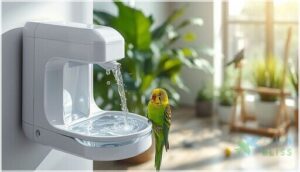
Automatic bird water dispensers transform daily cage maintenance from a time-consuming chore into a hands-off system that benefits both you and your feathered companions. These devices deliver consistent hydration while reducing contamination risks that come with traditional open water dishes.
Let’s examine the key advantages that make automatic dispensers worth considering for your bird’s health and your peace of mind.
Time-Saving Refill Features
Automatic water dispensers dramatically cut down the time you spend on refills. Top-fill ease means you won’t remove bottles from the cage—just pop the lid and pour.
Larger capacity models, like the 44-ounce Lixit Top Fill No Drip Bottle, let you go days between refills instead of daily checks. Automatic refilling and hands-off operation free you up for other bird care tasks, reducing labor and extended intervals between maintenance.
Consistent Access to Fresh Water
Your bird needs fresh, clean water every 24 hours to stay healthy—delays put hydration and health at risk.
Automatic bird water dispensers deliver a steady supply, so even when life gets busy, your bird cage never runs dry. Gravity-fed systems and automatic refill benefits mean water stays available around the clock, reducing contamination risks that stagnant bowls invite and supporting prime bird health through consistent hydration.
Improved Cage Hygiene
Clean water doesn’t just keep your bird healthy—it transforms cage hygiene. Automatic dispensers reduce fecal contamination and bacterial load by sealing water away from droppings and debris.
You’ll notice less cage soiling, a cleaner feeding environment, and lower handling contamination during maintenance.
These systems are easy to clean and simplify bird cage maintenance, maintaining a clean cage environment with no mess, so hygiene and cleanliness improve dramatically.
Promoting Healthy Bird Hydration
Your bird’s health depends on more than just clean water—it hinges on consistent access. Small birds need roughly 5–15 ml per 100 g of body weight daily, and even subtle dehydration below 5% isn’t visible on exam.
Your bird needs consistent access to clean water daily—even mild dehydration below 5% often goes unnoticed until serious health issues develop
Water dispensers help your bird meet its water intake needs around the clock, preventing dehydration symptoms before they escalate into serious metabolic responses or health crises.
Frequently Asked Questions (FAQs)
Can water dispensers work in outdoor aviaries?
Ironically, outdoor aviaries need water dispensers most yet face the toughest conditions. Freezing prevention, biosecurity risks, and valve reliability matter more than indoor setups—but automatic systems work well when you match design to climate and train birds properly for consistent avian hydration.
How often should dispenser tubes be replaced?
You should replace dispenser tubes every three to six months, depending on cleaning effectiveness and usage frequency.
Biofilm buildup and material degradation occur even with regular maintenance, compromising water quality and bird health despite your best hygiene efforts.
Do birds prefer cold or room temperature water?
Most pet birds drink comfortably at room temperature. Cool water between 50–60°F aids hydration without shocking their system, while excessively cold or warm water can discourage drinking and compromise bird health and hydration.
Can multiple birds share one water dispenser?
Yes, multiple birds can share one dispenser, but you’ll need adequate capacity—budgerigars consume 5–10 ml daily—and must change water every 24 hours to prevent disease transmission risks and guarantee behavioral access dynamics for all flock members.
What water dispenser capacity suits travel cages?
Trip duration and bird size determine travel cage capacity needs. For short journeys under four hours, 100–150 mL water dispensers provide ample hydration while minimizing spill risk and refill frequency during travel stress.
Conclusion
Like a reliable faucet that never runs dry, the right bird cage water dispenser transforms daily care from a chore into a simple routine. You’ve now seen how species-specific designs, mounting options, and maintenance requirements determine whether your bird stays hydrated and healthy.
Match the dispenser to your bird’s drinking habits and cage setup, commit to weekly cleaning, and you’ll protect your feathered companion from preventable infections while reclaiming hours each week. Your bird deserves nothing less than consistent, contamination-free hydration.
- https://www.russellfeed.com/products/watersilobird
- https://www.petmatepartners.com/31300-pd.html
- https://www.brosa.com.au/br/buy/pet-station-australia-jw-pet-insight-clean-water-silo-waterer-for-small-birds-18cm-98-31300/
- https://www.tractorsupply.com/tsc/product/lixit-chew-proof-glass-water-bottle-26-oz
- https://lixit.com/glass-chew-proof-water-bottle-6-ounce/