This site is supported by our readers. We may earn a commission, at no cost to you, if you purchase through links.

Most bird owners pick a cage based on what looks right—roomy enough, sturdy enough, maybe even stylish enough to fit the living room. But birds don’t care about aesthetics.
They care about space to stretch, climb, and move without hitting a wall of metal bars. A cage that seems generous to you can feel like a closet to a creature built for open air.
Feather damage, repetitive pacing, muscle loss, and stress-driven screaming are all ways your bird tells you the space isn’t working. Knowing the signs your bird needs a bigger cage could change everything about their health and daily life.
Table Of Contents
- Key Takeaways
- Physical Signs of Cramped Living
- Behavioral Signs The Cage is Small
- Health Problems Linked to Small Cages
- How to Measure Your Bird
- Cage Dimensions That Prevent Crowding
- Size Guidelines by Bird Species
- Safe Cage Design Essentials
- Common Cage Sizing Mistakes
- Helping Your Bird Adjust
- Top 3 Cage Upgrade Picks
- Frequently Asked Questions (FAQs)
- What is the 3-3-3 rule for birds?
- Is a bigger cage better for a bird?
- How to play with a new budgie?
- Can cage size affect a birds lifespan?
- How often should cage upgrades be considered?
- Does cage size impact a birds ability to bond?
- What role does cage size play in molting?
- Are outdoor cages a viable alternative for more space?
- Conclusion
Key Takeaways
- Feather damage, muscle loss, and repetitive pacing are early physical signs that your bird’s cage is too small — catching them early can prevent serious, lasting health problems.
- Your bird’s cage width should be at least 1.5 times its wingspan, with rectangular shapes offering far more usable space than round designs.
- Behavioral changes like excessive screaming, feather plucking, and corner-sleeping aren’t personality quirks — they’re your bird telling you it’s stressed and cramped.
- When upgrading, introduce the new cage gradually over two weeks, keep familiar perches and toys inside, and make daily supervised out-of-cage time part of the routine.
Physical Signs of Cramped Living
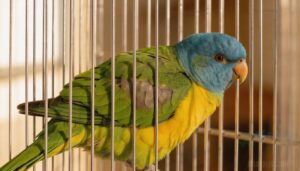
Your bird’s body tells the truth before anything else does. When the cage is too small, the physical signs show up quietly at first — a bent feather here, a dull patch there — but they’re worth catching early.
Knowing exactly what to look for helps — this guide to unhealthy bird feather signs and problems breaks down the subtle changes most owners miss.
Here are the key physical signs to look for.
Wing or Tail Feather Damage From Bar Contact
One of the clearest signs your bird’s cage is too small shows up in the feathers. When the wing span exceeds the available bar spacing, flight and tail feathers repeatedly brush against the bars, creating distinct feather wear patterns — frayed edges, dull surfaces, and quill scuffing signs along the vane.
Tail clearance issues make this worse, especially at corners. Check for uneven wear; it’s mechanical damage, not feather plucking.
Constant Wing Folding and Reduced Stretching
Beyond feather damage, watch how often your bird actually stretches.
A cramped cage changes wing folding patterns quickly — instead of full wing extension, your bird stays compact, shoulders low, wings tucked. That shift in postural adaptations reduces stretching frequency and limits flight muscle engagement.
Over time, restricted wingspan movement quietly narrows wing joint mobility, making even simple flaps shorter and less purposeful without proper wing clearance.
Muscle Loss in The Chest and Legs
postural shift has a real cost. When your bird can’t move freely, the pectoral muscles weaken — pectoral atrophy signs include a flatter stance and labored push-ups from perches.
Leg muscle weakness follows too, with softer grip and slower stepping between perches.
Stiff joint mobility and lowered flight stamina develop quietly, making cage size issues a direct bird health concern.
Dull Plumage or Stress-related Feather Loss
Muscle loss is one signal, but your bird’s feathers tell their own story.
Chronic stress triggers Molt Timing Disruption, Feather Bar Faults, and feather plucking — all clear bird stress indicators tied to cage size issues.
Poor nutrition from stress-reduced appetite causes Pigment Deficiency and Nutrient Deficiency, leaving plumage dull and washed-out.
Hormonal Imbalance can follow, further limiting enrichment opportunities and overall avian welfare.
Abnormal Beak or Toenail Wear From Poor Balance
Take a close look at your bird’s beak and toenails — they quietly reveal a lot about cage size and perch selection.
- Uneven Foot Pressure causes toenails to wear unevenly or splay
- Perch Surface Mismatch leads to slipping and Nail Curling Issues
- Beak Tip Friction develops when birds steady themselves on bars
- Foot Placement Training improves with varied, correctly sized perches
Both beak health and foot health depend on enough room to grip naturally.
Behavioral Signs The Cage is Small
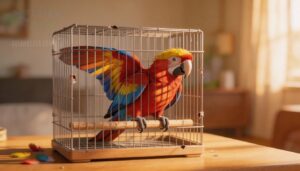
Physical signs are easier to spot, but behavioral changes can be just as telling — sometimes even more so. When a bird doesn’t have enough room to move freely, its behavior starts to shift in ways that are hard to ignore.
Here are the key behavioral signs that your bird’s cage may be too small.
Repetitive Pacing Along The Bars
Watch your bird’s path along the bars — bar path consistency is a quiet red flag. When a bird traces the same route, back and forth, day after day, that repetitive rhythm signals frustration, not habit. Pacing trigger times, like morning wake-up or post-feeding moments, reveal the pattern clearly.
Poor cage layout influence limits natural movement, and without behavioral enrichment impact, the bars become the only road.
Increased Feather Plucking or Beak Gnawing
Feather plucking and beak gnawing aren’t random — they’re signals worth taking seriously. Targeted feather damage often appears in the same spot daily, while localized beak wear tells you beak health is already affected.
Boredom-induced chewing replaces foraging that your bird can’t do in a tight space.
environmental stress triggers and routine change sensitivity can start the cycle, so identifying signs of inadequate cage size early matters.
Research shows that severe feather pecking correlates with lower total plumage scores, highlighting the importance of early detection.
Excessive Screaming Beyond Normal Vocal Habits
Screaming that spikes at predictable times — like when you approach the cage or start cleaning — isn’t just noise. These scream timing patterns often signal vocal stress triggers rooted in confinement.
High pitch vocalization that masks household sounds, or screaming during transitions, points to frustration from limited space. Identifying signs of inadequate cage size early helps bird stress reduction before behavioral changes become entrenched.
Aggression, Lunging, or Unusual Irritability
A bird that lunges at the bars isn’t being mean — it’s cornered. Bar defensive posturing, territorial snap triggers, and hormonal irritability all intensify when cage size issues limit escape routes.
Escape route fear turns small spaces into pressure cookers. Watch for stress posture indicators like pinned feathers or sudden jerky movements.
These behavioral changes signal it’s time to revisit your cage size guidelines.
Lethargy, Reduced Play, and Less Exploration
A lethargic bird isn’t just tired — it’s telling you something’s wrong. When cage size issues limit movement, you’ll notice quiet, telling shifts in behavior.
Track these signs using a simple Daily Activity Log:
- Toy Interaction Frequency drops — less chewing, tugging, or exploring new items
- Perch Rotation Patterns shrink — your bird stays on one favorite spot
- Wing Stretch Frequency decreases — fewer deliberate stretches or repositioning hops
- Social Engagement Levels fade — less curiosity toward you or household activity
These behavioral changes signal unmet bird exercise needs and insufficient mental stimulation.
Sleeping in Corners or Avoiding Interaction
Corner sleep patterns often follow naturally from the lethargy you just noticed. When cage size limits perch accessibility, birds retreat to tight corners where they feel less exposed.
Watch for avoidance body language — turning toward the wall, one eye half-open, pulling away when you approach. These bird stress signs point to sightline stress factors and deeper mental health strain.
Safety cue adjustments, like repositioning perches, help restore normal social habits and bird sleep patterns.
Health Problems Linked to Small Cages
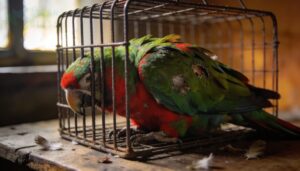
small cage doesn’t just make your bird uncomfortable — it can quietly chip away at their health over time. The problems that develop are often gradual, which makes them easy to miss until they’ve become serious.
Here’s what you need to watch for.
Obesity From Limited Movement
When cage is too small, obesity sneaks up faster than you’d expect. Without enough flight space for targeted exercise, your bird burns fewer calories and gains weight quietly.
Fat builds around the abdomen, muscle atrophy sets in, and physical health declines.
Calorie control starts with the cage itself — proper food portioning, weight tracking, and metabolic screening matter, but movement is the foundation.
Stress, Anxiety, and Depression
A cramped space doesn’t just wear down the body — it wears down the mind.
Chronic stress raises cortisol levels, which can trigger hormonal imbalance, sleep disruption, and appetite changes that silently reshape your bird’s behavioral health.
Watch for:
- Social withdrawal and ignoring familiar people or toys
- Anxiety-driven pacing, clinging to bars, or corner-seeking
- Depression-like stillness and reduced mental engagement
Mental health matters just as much as physical.
Fatigue Caused by Lack of Exercise
Beyond affecting mood, a small cage quietly drains your bird’s physical energy. Reduced Muscle Endurance builds up slowly — limited flight space means fewer opportunities to stretch, climb, or flap, leading to Lower Metabolic Output and Joint Stiffness over time.
Weak Activity Motivation follows, as Slower Recovery after even minor movement keeps birds resting longer.
Lethargy isn’t laziness — it’s exhaustion from a cage size that demands too little.
A bird’s stillness is not rest — it is the slow surrender of a body given nowhere to go
Irregular Droppings During Chronic Stress
Chronic stress quietly disrupts gut motility, and a too-small cage is a common culprit.
You might notice Stool Consistency Shifts — droppings that seem wetter, drier, or vary in size throughout the day.
Dropping Frequency Variability and changes in the Urine-Feces Ratio signal that your bird’s digestive rhythm is off.
These avian health warning signs often persist for days, pointing directly to cage size and mental health of birds.
Higher Injury Risk From Cramped Movement
A small cage doesn’t just stress your bird — it puts them in physical danger.
Bar Impact Injuries happen when flapping or turning sends wings and skin into metal bars repeatedly.
Toe Pinching occurs when cramped perch spacing leaves no room to step cleanly.
Feather Ulceration can develop from constant rubbing. Without adequate wing clearance, Joint Overload and Wing Fracture Risk follow quickly.
How to Measure Your Bird
Before you can find the right cage, you need to know your bird’s actual measurements — not just a rough guess. Grab a soft measuring tape and a helper if you can, because a few quick numbers will make all the difference.
Here’s how to measure your bird properly.
Measure Wingspan From Tip to Tip
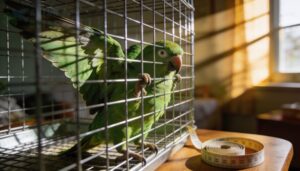
Getting the wingspan right is the foundation for measuring appropriate cage dimensions for birds. Place your bird on a flat surface, use a mirror or helper for mirror alignment, and gently extend both wings fully — including the primary feathers.
- Measure tip to tip in standard units (inches or centimeters)
- Calm handling keeps your bird still for an accurate read
- Avoid common error sources like wing twisting or partial extension
- The cage width should be one and a half times the size of the bird’s wingspan for ideal wing clearance
Take Multiple Readings for Accuracy
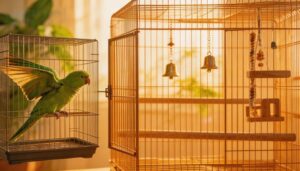
One reading rarely tells the whole story. Birds shift posture constantly, so repeated measurement sessions — taken at different times of day — give you a far more reliable picture.
Measure the right cage size by checking from alternate cage corners and varying bird angles each time.
Multiple observer checks also help catch what one person misses.
Consistent timing intervals, like morning and evening, help you regularly assess true movement patterns and confirm your cage dimension guidelines.
Measure Body Length and Tail Clearance
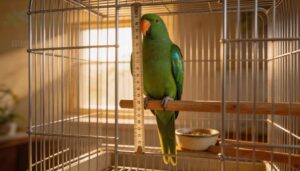
Body length tells you just as much as wingspan. Here’s a simple Body Length Protocol to follow:
- Stand your bird naturally — use a soft tape as your Measurement Tool from beak tip to tail end.
- Mark Clearance Reference Points around perches, corners, and dishes.
- Apply Standardized Positioning — measure only when feathers are relaxed.
- Confirm your Tail Gap Measurement leaves the tail tip fully free of bars.
Check Full Wing Extension Inside The Cage
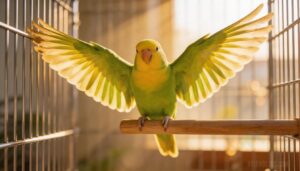
Here’s the real test: place your bird on its perch and watch it stretch both wings fully. During that Full Spread Observation, the wing tips should clear the bars by at least two inches — that’s your Wing Tip Clearance standard.
A quick Bar Design Review also matters; primary feathers shouldn’t snag on welds or joints.
This Wing Health Check confirms whether your cage size actually provides ideal wing clearance and healthy bird flight space.
Factor in Perch and Toy Placement
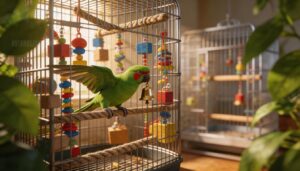
Wing clearance tells part of the story — but perches and toys fill the rest. Crowded accessories shrink usable space fast.
Provide perches at Vertical Perch Levels, spaced 2–4 inches apart, with Perch Material Variety for foot health.
Strategic Toy Distribution keeps a Clear Flight Corridor open midcage. Follow a Toy Rotation Schedule weekly, and your cage enrichment stays fresh without blocking movement.
Cage Dimensions That Prevent Crowding

Once you have your bird’s measurements, the next step is making sure those numbers translate into a cage that actually fits. Every dimension matters — width, height, depth, and floor area each play a specific role in keeping your bird comfortable and active.
Here’s what each measurement should look like to prevent crowding.
Width Should Be 1.5 to 2 Times Wingspan
Cage width is where most sizing mistakes happen. For proper Flight Path Width and Bar Collision Prevention, the cage should be one and a half times the size of the bird’s wingspan — ideally two times for active flyers. For a 12-inch wingspan, that’s 18–24 inches minimum.
Why Stress-Free Width matters:
- Allows full Wing Extension Clearance without touching bars
- Provides natural Perch Distribution Flexibility across the space
- Keeps ideal wing clearance during movement and play
- Prevents feather damage from cramped cage dimensions
- Helps your bird feel secure in its cage size
Height Needs Headroom Above Perches
Width sets the stage, but vertical space often gets overlooked.
Your bird needs Perch Ceiling Clearance of at least 2–3 inches above its highest perch for ideal wing clearance.
Without that, Wing Tip Clearance disappears quickly — especially during stretching flaps.
Vertical Flight Space and Perch Height Ratio force repeated ceiling contact, gradually fraying feathers and discouraging natural movement inside the cage dimensions.
Depth Should Allow Full Tail Clearance
Depth often gets ignored when measuring your bird for cage fit — but it matters just as much as height. Your bird’s tail needs full clearance from front to back.
Aim for a Depth Width Ratio that provides Tail Feather Protection without crowding horizontal cage space.
Smooth Interior Surfaces and Rounded Rear Corners prevent snagging.
For macaws, that means 2.5–3× their tail length in depth.
Horizontal Space Matters More Than Height
Most bird owners obsess over height — but horizontal space is what truly drives your bird’s daily wellbeing. Think of it as the flight path your bird actually uses.
Here’s why horizontal cage space matters most:
- Wing Stretching happens side-to-side, not up and down
- Flight Path length directly affects energy expenditure and muscle tone
- Stress Layout improves when birds move freely across wider cage dimensions
- Social Width facilitates parallel play without crowding
- Ideal wing clearance requires cage size at least 1.5× your bird’s wingspan
When measuring your bird for cage fit, prioritize width first.
Floor Area Should Support Walking and Play
Don’t overlook the floor — it’s prime real estate for your bird’s daily routine. Cockatiels and conures walk, forage, and play at ground level all day long.
Aim for at least 1.5 square feet of flat walking surface, keeping it clear enough for ground foraging areas and rotating floor toys. A foot-friendly substrate with cushioned flooring protects joints and prevents bumblefoot.
Size Guidelines by Bird Species

Not every bird needs the same amount of space, and that’s exactly where species-specific guidelines become so useful. Getting the right fit means knowing what your particular bird actually needs to thrive.
Here’s a breakdown of minimum cage sizes by species so you can find the best match.
Small Birds Need Room for Short Flights
Small birds like finches and lovebirds aren’t built to sit still — they thrive on short, quick flights of one to three meters, side to side.
That’s why Horizontal Space Emphasis matters most.
Your cage needs full wing extension room, with ideal wing clearance along open flight paths.
A Flight Path Design with smart Perch Placement Strategy keeps Wing Stretch Zones clear and movement natural.
Budgies and Canaries Need Wider Cages
Both budgies and canaries move side to side — not up and down — so your Cage Footprint Ratio matters more than height.
- Horizontal Flight Area: Width should reach twice their wingspan for full wing extension
- Wingspan minimum: At least 18 inches wide for budgies
- Perch Variety: Spread perches horizontally to encourage movement
- Toy Rotation Strategy: Swap toys without blocking open flight lanes
- Stress-Free Placement: Cramped cage size triggers lethargy and excessive screaming
Cockatiels and African Greys Need Larger Footprints
Cockatiels and African greys are active steppers, not just fliers — and that changes everything about cage planning. Their walking footprint, perch arrangement, and tail clearance all matter as much as wing room.
Aim for at least 30×30×36 inches for cockatiels and larger for African greys. Keep toy positioning clear of movement paths, and vary perch heights to reduce footpad pressure during daily climbing.
Macaws and Cockatoos Need Substantial Space
Macaws and cockatoos are built for wide, open movement — and their cages need to match that scale. Horizontal Flight Space matters most here, since these birds stretch and reposition side to side constantly.
- Wingspan: Minimum 36×36×48 inches to support ideal wing clearance
- Tail Clearance: Enough depth to prevent Bar Rubbing Signs along cage walls
- Perch Spacing: Spread perches so birds pivot freely without feather contact
- Enrichment Layout: Arrange toys to preserve open movement paths and measure the right cage size before adding accessories
Multiple Birds Require Added Clearance Per Bird
When you house multiple birds together, cage size requirements scale up — not slightly, but substantially. Add at least 50% more wingspan clearance per bird, and think beyond that single number.
Each bird needs its own entry corridor spacing, separate perch separation zones, and individual feeding station spacing, so dominant birds can’t block access.
Flight lane width and handling access space must accommodate every occupant safely.
Bar Spacing Must Match Species Size
Bar spacing isn’t just about preventing escapes — it’s about keeping your bird physically safe every single day. A gap that looks harmless can trap a beak, snag a toe, or let a head slip through with no way back out.
- Head width clearance matters most: if your bird’s head fits between bars, it can get stuck.
- Toe slip prevention requires spacing tight enough that feet can’t twist and fracture during normal perching.
- Beak entrapment risk rises when curious birds press against bars to explore or beg for attention.
Also, consider chewing bar widening — stronger species like macaws can deform softer metals over time, making once-safe gaps dangerous. Bar material strength (stainless steel holds up best) keeps spacing consistent long‑term. These bar spacing considerations for different bird species aren’t optional details. They’re the foundation of species‑specific cage requirements and smart cage size decisions when choosing the right cage size by species.
Safe Cage Design Essentials
Getting the size right is only part of the equation — how the cage is built matters just as much.
The shape, material, bar spacing, and layout all affect whether your bird can move, play, and rest safely.
Here’s what to look for when evaluating cage design.
Rectangular Cages Provide Better Usable Space
Regarding cage shape, rectangular cages genuinely outperform other designs.
Their layout facilitates horizontal flight paths without obstruction, and optimized perch arrangement along the long walls creates natural activity zones.
You get efficient cleaning access through wider front doors, enhanced visibility for health checks, and modular accessory placement that keeps movement paths clear — all without sacrificing usable cage dimensions during a cage upgrade.
Avoid Round Cages With Poor Layout
Round cages look charming, but the layout works against your bird. Without corners, nowhere to retreat, rest, or forage. Cornerless Perching forces birds into a continuous loop along the rim, disrupting Flight Path Clearance and natural movement. Enrichment Placement becomes cramped, Cleaning Accessibility suffers, and poor Lighting Uniformity near curved walls can quietly disrupt sleep cycles.
round cage layout problems:
- Perches curve unnaturally, limiting straight-line movement
- Toys crowd central space, blocking cage layout flow
- No corners means no retreat zones during stress
- Rim-based doors increase escape risk during a cage upgrade
Choose Stainless Steel or Powder-coated Metal
Regarding cage material, stainless steel and powder-coated metal are your two safest choices.
Stainless steel wins on Corrosion Resistance and Cleaning Ease — it’s nonporous, won’t off-gas, and manages humid conditions without degrading.
Powder-coated metal scores better on Weight, Portability, and Cost Comparison, though you’ll want to inspect it regularly for chips.
Both materials address Toxicity Concerns, making them the standard for safe bird-friendly materials.
Use Safe Bar Spacing to Prevent Injury
Bar spacing is one of those details that are easy to overlook — but it matters more than most people realize. Consistent Bar Gaps prevent Foot Entrapment, Head Pinching Risk, and Wing Tail Snagging during normal movement.
For Beak Injury Avoidance, follow bar spacing guidelines for different bird sizes: ¼–½ inch for small birds, up to 1 inch for larger parrots.
Safe cage construction truly starts here.
Leave Open Movement Paths Between Accessories
Even a spacious cage size becomes limiting when poor Accessory Layout Planning creates dead zones and blocked flight paths. Aim for Corridor Width Standards of at least 1.5 times your bird’s wingspan between perches, toys, and feeders.
Three-Level Perches encourage vertical movement, while Regular Toy Rotation prevents congestion buildup. Regular Path Obstruction Audits — monthly, at minimum — keep enrichment and toys working with your bird’s movement, not against it.
Add Secure Locks and Wide-access Doors
A good lock does more than keep your bird in — it keeps stress out.
Look for these three things in any cage you choose:
- Lock Redundancy via multipoint locking mechanisms, so no single failure opens the door.
- Magnetic Latches with Anti-Chew Coatings to prevent gnawing that weakens secure door locks.
- Wide Swing Doors with an Emergency Release Mechanism for safe, quick access.
Cage size, shape, and cage materials all matter — but so does the hardware holding it together.
Common Cage Sizing Mistakes

Even well-meaning bird owners make a common mistakes regarding cage sizing. Some of these slip-ups are easy to overlook, especially when you’re shopping for the first time.
Here’s what to watch out for so your bird gets the space it actually needs.
Buying for Appearance Instead of Function
A beautiful cage can fool you.
Ornate bars and glossy decorative finishes catch your eye, but illusory size perception kicks in fast — polished chrome reflects light, making the interior look roomier than it actually is.
Stylish frame materials like thin coated wire bend under regular use, while ornate accessory overload and poor aesthetic bar spacing quietly shrink the space your bird actually needs for healthy movement.
Choosing Cages Below Minimum Dimensions
Many owners assume "close enough" works — but falling below minimum cage dimensions carries real consequences. Regulations in some regions create legal compliance risks for substandard housing, and the cost vs space tradeoff rarely favors the cheaper option long-term.
Measuring appropriate cage dimensions for birds matters because cage size recommendations exist for good reason: your bird needs at least one and a half times its wingspan in usable width.
Overfilling The Cage With Toys and Dishes
Stuffing a cage with too many toys and dishes is just as limiting as choosing a cage that’s too small. Toy clutter impact is real — overfilling can shrink usable flight path obstruction zones by 40 percent.
Aim for an open space ratio of at least 40 percent clear width.
Practice smart dish placement strategy and rotate toys to keep things clean and navigable.
Ignoring Wingspan, Tail Length, and Activity Level
Wing span neglect and tail length oversight are easy mistakes to make. bird’s activity level matters just as much as its measurements.
Cockatiels and parakeets flap, pivot, and hop constantly — space allocation errors that ignore that movement leave wingtips and tails scraping bars daily.
Always factor in wing span measurement, full tail length, and how active your specific bird actually is.
Using Travel Cages as Full-time Housing
Travel Cage Portability is great for vet visits, but don’t let convenience become a permanent arrangement. A travel cage’s compact design limits space optimization, restricts temperature regulation, and offers poor accessory compatibility for daily life.
- Width must be at least 1.5× your bird’s wingspan
- Perches and toys crowd the limited floor area quickly
- Noise reduction suffers as stressed birds vocalize more in tight quarters
Forgetting Extra Space for Shared Cages
Sharing a cage brings its own set of challenges. Social Stress Overcrowding raises stress hormones, fuels Perch Competition, and causes Territorial Confusion that leads to Shared Memory Loss around feeding spots.
Managing multiple birds in one cage means Hygiene Issues compound quickly.
Follow minimum space requirements per bird species, and add 50% more cage dimensions — prioritizing rectangular cage shape — per additional bird.
Helping Your Bird Adjust
Getting your bird comfortable in a bigger cage takes a little patience, but it’s very doable. A few simple steps can make the move feel safe and familiar rather than stressful.
Here’s what to do to help your bird settle in smoothly.
Introduce The Bigger Cage Gradually
Think of this shift the way you’d ease into a cold pool — one step at a time. A two-week Adjustment Timeline built around Gradual Acclimation makes upgrading to a larger bird cage far less stressful for your bird.
Use Positive Reinforcement and Stepwise Perch Placement to build confidence:
- Place the new cage at the same height as the old one for familiar eye-level comfort
- Begin with 30-minute daily proximity sessions before expecting your bird to enter
- Practice Stress Monitoring by tracking droppings and appetite throughout the first week
Keep Familiar Perches and Favorite Toys
Your bird already knows what it likes — and that matters. Moving familiar perches and favorite toys into the new cage gives your bird an immediate sense of "home".
Maintain consistent perch height and honor toy preference by keeping comforting textures and perch variety intact. Perch familiarity and favorite toy rotation support mental stimulation, easing the adjustment without disrupting your bird’s sense of security.
Create Climbing, Foraging, and Play Zones
Once your bird feels at home, it’s time to make that space work. A well-planned zone layout planning approach divides the cage into distinct activity areas your bird can explore on its terms.
- Climbing zone: Use vertical ladder spacing to allow natural movement — no foot traps, no frustration.
- Foraging zone: Hide foraging toys at varied heights to encourage neck stretching and problem-solving.
- Play zone: Hang bells and chewables near climbing structures for texture variety and beak engagement.
- Rest zone: Keep one quiet corner undisturbed — birds need downtime too.
- Puzzle rotation schedule: Swap enrichment and toys for cage environment weekly so curiosity stays sharp.
Secure everything using safety attachment methods — nothing should wobble or detach under an enthusiastic bird.
Rotate Toys Without Blocking Movement
Rotating toys keep your bird mentally sharp — but placement matters as much as the toys themselves. A smart toy placement strategy leaves clearance buffer zones of at least 6 inches around each rotating element, so wings never snag mid‑flight.
axis alignment tips: mount toys between perches, not in front of them. Use safety fasteners for quick cleaning, and keep rotation speed control gentle for calm, confident exploration.
Support Daily Supervised Out-of-cage Exercise
Even a spacious cage can’t replace real freedom.
Let your bird out of its cage daily, and make sure it’s supervised during this time — ceiling fans off, pets out, windows covered.
Good bird exercise routines start with consistent exercise timing and a hazard free zone.
Use familiar training cues and a reward system to guide step-ups, and mind your perch placement for smooth, confident movement.
Watch for Stress During The Transition
Moving to a bigger cage is a win — but don’t be surprised if your bird doesn’t see it that way at first.
Watch for Perch Reorientation Anxiety, like clinging to corners or skipping meals.
Routine Disruption Effects, Environmental Noise Sensitivity, and Lighting Change Stress can all surface.
Social Isolation Impact may show as silence or withdrawal.
Consistent schedules and mental stimulation through behavior enrichment ease the shift.
Top 3 Cage Upgrade Picks
Once you’ve decided it’s time for an upgrade, the next step is finding the right cage for your bird’s size and habits.
These three options offer a solid mix of space, safety, and practical design. Here’s a closer look at each one.
1. Capuca Small Bird Travel Cage
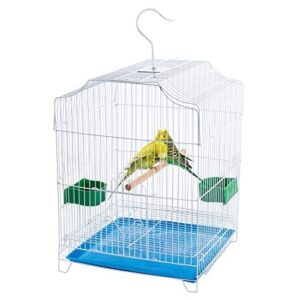
If your small bird needs a safe place during vet visits or short trips, the Capuca Small Bird Travel Cage is worth a look. At 11.5 × 13.3 × 16.5 inches, it’s designed for parakeets, lovebirds, finches, and canaries on a temporary basis.
The slide-out tray and removable mesh front make cleaning straightforward.
Built-in hanging hooks add flexibility for outdoor stops.
Just remember — at $28.97, it’s a solid travel option, not a permanent home.
| Best For | Bird owners who need a lightweight, no-fuss cage for vet visits, short trips, or temporary outdoor use with small birds like parakeets, finches, or canaries. |
|---|---|
| Price | $28.97 |
| Weight | 3.99 lb |
| Cleaning Tray | Removable slide-out tray |
| Included Perches | 2 plastic perches |
| Feeding Accessories | 2 plastic cups |
| Intended Use | Travel or temporary |
| Additional Features |
|
- Slide-out tray and removable mesh front make cleaning quick and easy
- Hanging hooks let you secure it outdoors on a tree or rope for fresh air
- Comes with cups, perches, and assembly tools right out of the box
- Plastic parts can feel flimsy, and some reviewers found the assembly instructions unclear
- Food and water dispensers may need adjusting to fit properly
- Way too small for long-term housing or anything bigger than a small bird
2. Prevue Pet Parakeet Manor Bird Cage
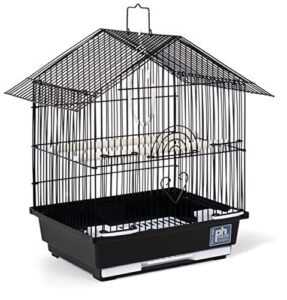
For birds that need more than a travel cage, the Prevue Pet Parakeet Manor is worth considering as a proper home base. It measures around 26 × 14 × 22 inches — enough room for a budgie or cockatiel to stretch comfortably.
The powder-coated steel frame is non-toxic and easy to disinfect.
A pull-out tray and removable grille keep cleaning simple.
With ½-inch bar spacing and solid door latches, your bird stays safe and secure daily.
| Best For | Bird owners who need a lightweight, affordable cage for short trips, vet visits, or temporary use with small birds like parakeets, canaries, or finches. |
|---|---|
| Price | $27.50 |
| Weight | 2.8 lb |
| Cleaning Tray | Removable pull-out tray |
| Included Perches | 2 plastic perches |
| Feeding Accessories | 2 plastic feeding bowls |
| Intended Use | Travel or temporary |
| Additional Features |
|
- Comes ready to go with two feeding bowls, a swing, and two perches — no extra shopping needed
- The pull-out tray makes cleaning quick and painless
- Lightweight at under 3 pounds, so it’s easy to carry around with the built-in handle
- Too small for permanent housing — really only works for one small bird at a time
- The feeders don’t stay put inside the cage, which gets annoying fast
- Build quality feels flimsy; the plastic base can arrive warped or scuffed out of the box
3. AideeGrowth Portable Travel Bird Cage
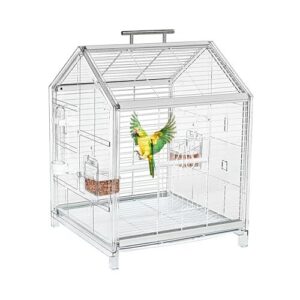
If you’re looking for something more compact for vet visits or short outings, the AideeGrowth Portable Travel Bird Cage fits that need well.
It’s lightweight, easy to carry, and includes secure locking doors so your bird won’t accidentally get loose in transit.
The removable washable tray keeps cleanup quick, and BPA-free bowls provide extra safety.
Just don’t use it as a permanent home — it’s built for trips, not daily living.
| Best For | Bird owners who need a lightweight, affordable cage for vet visits, short trips, or temporary use with small to medium birds like canaries, lovebirds, or small parrots. |
|---|---|
| Price | $39.99 |
| Weight | 5.5 lb |
| Cleaning Tray | Slide-out tray with grille |
| Included Perches | Multiple perches included |
| Feeding Accessories | 2 food feeders, 1 water bottle |
| Intended Use | Travel or temporary |
| Additional Features |
|
- Weighs only about 5.5 lb and has a top carry handle, making it genuinely easy to grab and go
- Transparent side panels and a triangular roof give you a clear view of your bird from any angle
- Slide-out cleaning tray makes tidying up quick without disturbing your bird
- Assembly can be frustrating — parts aren’t numbered and the instructions are reportedly confusing
- Some buyers received bent or misaligned pieces, which is a real concern for keeping your bird safe
- The food and water dishes are small, so active birds will need frequent refills
Frequently Asked Questions (FAQs)
What is the 3-3-3 rule for birds?
3-3-3 rule is a quick cage-sizing check based on three measurements — your bird’s wingspan, body length, and tail length — to make sure it can stretch, turn, and perch comfortably without touching the bars.
Is a bigger cage better for a bird?
Generally, yes — a bigger cage gives your bird more room to move, stretch, and stay mentally healthy.
Just make sure it still has the right bar spacing and layout for your bird’s size.
How to play with a new budgie?
Like making a new friend, take it slow. Start with short 5–10 minute sessions, speak softly, and let your budgie step onto your finger when it’s ready.
Build trust before adding toys or handling.
Can cage size affect a birds lifespan?
Yes, it can.
A cramped cage limits movement, leads to muscle loss, increases chronic stress, and raises injury risk — all factors that quietly chip away at your bird’s long-term health and lifespan.
How often should cage upgrades be considered?
cage upgrades as routine checkups, not emergencies.
Most cages deserve a fresh look every 12 to 24 months, or sooner if your bird’s behavior or body is quietly telling you otherwise.
Does cage size impact a birds ability to bond?
Cage size absolutely affects bonding. When a bird feels cramped and stressed, it becomes irritable and avoidant — making trust much harder to build.
More space means a calmer, more approachable bird.
What role does cage size play in molting?
Molt is already stressful. A cramped cage makes it worse.
tight spaces raise stress hormones that disrupt feather replacement cycles, damage fragile pin feathers, and limit the preening movements birds need to come through molt healthy.
Are outdoor cages a viable alternative for more space?
Outdoor cages can absolutely give your bird more room to move, stretch, and even fly short distances.
Just make sure the structure is secure, weatherproof, and predator-proof before making the switch.
Conclusion
Your bird’s cage is like a home – it needs to fit their lifestyle, not just their size. Watching for signs your bird needs a bigger cage can transform their health and happiness.
A spacious cage lets them stretch, climb, and thrive. By upgrading to a roomy, well-designed home, you’re showing love and care.
Give your feathered friend the freedom they crave, and enjoy a more vibrant, playful companion. Their well-being depends on it.