This site is supported by our readers. We may earn a commission, at no cost to you, if you purchase through links.
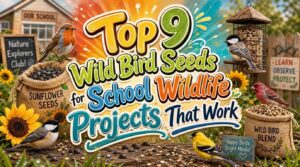
A single bag of black oil sunflower seeds can turn an ordinary schoolyard into a living classroom almost overnight. Birds notice new feeders within hours, and students who’ve never paid attention to what’s outside the window suddenly can’t stop watching. The data writes itself in real time—this quick connection between seed choice and which species shows up makes wild bird seeds for school wildlife projects so effective.
Different seeds attract different birds with surprising predictability, which means you can design a project around actual questions rather than hoping something interesting happens. The right seed-feeder combinations make observation structured, repeatable, and genuinely exciting for students of every grade.
Table Of Contents
- Key Takeaways
- Top 9 Wild Bird Seeds
- 1. Kaytee Wild Bird Ultimate No Mess Seed
- 2. Audubon Park Extreme Variety Bird Seed
- 3. Kaytee Wild Bird Seed Blend
- 4. Cool Birds All Birds Seed Blend
- 5. Audubon Park Cardinal Blend Bird Seed
- 6. Lyric Supreme Wild Bird Seed
- 7. Kaytee Nut Fruit Wild Bird Seed
- 8. Happy Wings Nyjer Thistle Bird Seed
- 9. Morning Song Sunflower Hearts Bird Seed
- Choose Seeds by Bird Species
- Sunflower Hearts for Finches, Chickadees, and Cardinals
- Black Oil Sunflower Seeds for Mixed Wild Bird Visits
- Safflower Seeds for Cardinal-focused School Feeders
- Nyjer Seeds for Goldfinches and Small Finches
- White Proso Millet for Ground-feeding Birds
- Nut and Fruit Blends for Added Protein and Variety
- No-mess Blends for Cleaner Schoolyard Observation Areas
- Set Up School Bird Feeders
- Match Seed Types to Feeder Styles
- Use Tube Feeders for Sunflower Hearts and Blends
- Use Mesh Feeders for Nyjer Seed
- Use Tray Feeders for Millet and Larger Seed Pieces
- Place Feeders Near Classroom Viewing Areas
- Add Nearby Shrubs or Cover for Bird Safety
- Install Baffles to Reduce Squirrel Access
- Keep Feeders Far Enough From Busy Student Traffic
- Run Seed Observation Projects
- Pick a One-week Bird Seed Comparison Activity
- Offer Different Seeds in Separate Feeders
- Record Bird Species, Visit Times, and Seed Choices
- Use Binoculars and Field Guides for Identification
- Compare Results by Seed Type and Feeder Design
- Track Non-bird Visitors Like Squirrels or Mice
- Discuss Bird Needs: Food, Water, Shelter, and Safety
- Connect Observations to STEM and Ecology Lessons
- Maintain Seeds and Feeders
- Store Bird Seed in Airtight Containers
- Keep Seed Cool, Dry, and Mold-free
- Use Smaller Bags for Short Classroom Projects
- Choose Resealable Bags for Easier School Storage
- Clean Feeders Every Two Weeks
- Remove Wet, Spoiled, or Clumped Seed Quickly
- Use High-fat Seeds During Cold Months
- Add Protein-rich Options During Spring Nesting Season
- Frequently Asked Questions (FAQs)
- Conclusion
Key Takeaways
- Black oil sunflower seeds attract the widest variety of birds — cardinals, finches, chickadees, nuthatches, and woodpeckers — making them the single best starting seed for any school wildlife project.
- Matching seed type to feeder style (tube for sunflower hearts, mesh for nyjer, tray for millet) keeps birds coming consistently and makes student observations more structured and reliable.
- Running a one-week seed comparison project — with each seed type in its own feeder and daily species logs — turns casual birdwatching into a real, repeatable science activity.
- Storing seed in airtight containers, cleaning feeders every two weeks, and swapping in high-fat seeds during cold months keeps your feeding station healthy and birds returning all year.
Top 9 Wild Bird Seeds
Not all bird seeds are created equal, and for a school wildlife project, picking the right ones makes all the difference.
Knowing which seeds actually nourish your local species — not just attract them — is where bird seed nutrition and selection advice can really sharpen your project.
These nine options cover a range of species, feeder types, and budgets, so there’s something here for every classroom setup.
Here’s what made the list.
1. Kaytee Wild Bird Ultimate No Mess Seed
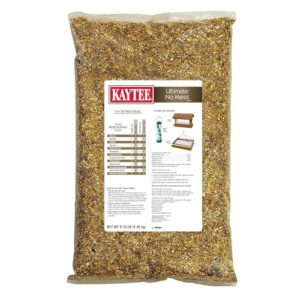
Kaytee Premium No Mess Seed is a solid starting point for school wildlife projects. At 9.75 pounds, it packs hulled sunflower seeds, shelled peanuts, white millet, cracked corn, and calcium carbonate for bone health — all without a single hull left behind.
This formulation ensures no sprouting mess under your feeder and enables easier cleanup after class.
It reliably draws cardinals, chickadees, finches, and nuthatches, providing consistent bird activity.
Your students gain more bird action and face less distraction from scattered debris, enhancing their learning experience.
| Best For | Backyard bird lovers who want a clean, no-fuss feeding setup that attracts a wide mix of songbirds without the mess of leftover hulls. |
|---|---|
| Net Weight | 9.75 lb |
| Price | $21.99 |
| Feeder Compatibility | Hopper, gazebo, tube |
| Bird Life Stages | All life stages |
| Squirrel Risk | High |
| Primary Seed Type | Hulled sunflower + millet |
| Additional Features |
|
- 100% edible mix means no hulls piling up under your feeder — way less cleanup
- Packed with peanuts and sunflower hearts, so birds actually stick around longer
- Draws a solid variety of birds year-round, from cardinals to nuthatches
- A few buyers have found moths or bugs in the bag, so it’s worth airing it out before storing
- Squirrels and bigger birds tend to muscle in and crowd out the smaller species
- It’s pricier per pound than bulk seed you’d find at a farm co-op
2. Audubon Park Extreme Variety Bird Seed
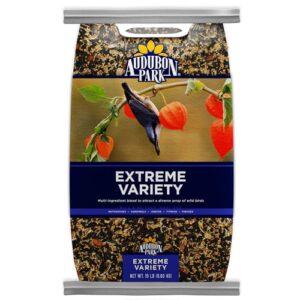
If you want even more variety in your feeder, the Audubon Park Extreme Variety Bird Seed is worth a look. This 15-pound resealable bag blends black-oil sunflower seeds, peanuts, sunflower hearts, raisins, striped sunflower seeds, and assorted tree nuts — all for $19.99.
This mix attracts cardinals, finches, nuthatches, woodpeckers, and even fruit-loving species like waxwings during migration.
It works in tube, hopper, or platform feeders, giving your classroom setup real flexibility.
| Best For | Backyard bird enthusiasts who want to attract the widest possible variety of species and have the flexibility to use multiple feeder styles. |
|---|---|
| Net Weight | 15 lb |
| Price | $19.99 |
| Feeder Compatibility | Tube, hopper, platform |
| Bird Life Stages | All life stages |
| Squirrel Risk | High |
| Primary Seed Type | Black-oil sunflower + nuts |
| Additional Features |
|
- Huge variety of ingredients — sunflower seeds, peanuts, raisins, tree nuts — pulls in a wide range of birds including cardinals, woodpeckers, and finches.
- Works with tube, hopper, and platform feeders, so it fits almost any backyard setup.
- Resealable 15-lb bag keeps seed fresh and offers solid value at $19.99.
- Large nuts like almonds and walnuts can clog tube feeders, so a platform or tray feeder works better.
- Peanuts and tree nuts are basically a squirrel invitation — expect some uninvited guests.
- Contains multiple allergens (peanuts, tree nuts, soy, wheat, possible fish), which could be a concern depending on who’s handling the seed.
3. Kaytee Wild Bird Seed Blend
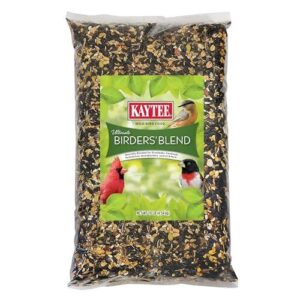
For a budget-friendly pick, the Kaytee Wild Bird Seed Blend brings variety to your school feeder. It combines black oil sunflower seeds, white millet, cracked corn, safflower, and peanuts in a 10-pound bag — enough seed to sustain a week-long classroom observation without constant restocking.
Smaller songbirds love the millet, while woodpeckers and cardinals favor the sunflower and safflower seeds. This blend caters to diverse bird preferences, making it ideal for educational settings.
The mix is a practical, no-fuss solution, performing well across platform and tray feeders. Its balanced composition ensures broad appeal without compromising convenience.
| Best For | Bird enthusiasts, educators, and backyard birders who want to attract a wide variety of songbirds without spending a lot. |
|---|---|
| Net Weight | 10 lb |
| Price | $19.01 |
| Feeder Compatibility | Tube, hopper, platform |
| Bird Life Stages | All life stages |
| Squirrel Risk | Moderate |
| Primary Seed Type | Safflower + sunflower |
| Additional Features |
|
- Attracts a solid mix of birds — cardinals, woodpeckers, finches, blue jays, and more all find something they like in here.
- A 10-pound bag gives you plenty of seed to work with before you need to restock.
- Made in the U.S., allergen-free, and easy to toss into most platform or tray feeders.
- The bag is bulky — you’ll want a separate storage bin to keep things tidy.
- Some seeds (like milo) tend to get ignored, so expect a bit of waste and ground litter.
- Contains artificial flavor, which is a turnoff for some buyers, and it’s not safe for pet birds.
4. Cool Birds All Birds Seed Blend
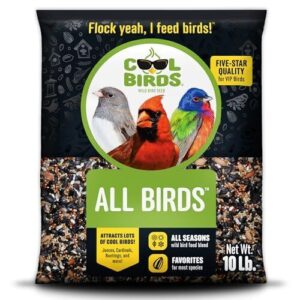
Step things up a notch with the Cool Birds All Birds Seed Blend, a 10-pound mix priced at $15.74 that earns its spot on this list. It combines black oil sunflower seeds, safflower, white millet, sunflower hearts, and peanuts — no corn added.
This matters because corn attracts pests more than birds. The blend reliably draws Cardinals, blue jays, woodpeckers, and sparrows.
It works seamlessly with tube, tray, hopper, and platform feeders, ensuring your classroom setup requires no adjustments.
| Best For | Backyard bird enthusiasts who want one versatile mix that attracts a wide variety of species without the hassle of juggling multiple seed types. |
|---|---|
| Net Weight | 10 lb |
| Price | $15.74 |
| Feeder Compatibility | Tray, tube, hopper, platform |
| Bird Life Stages | All life stages |
| Squirrel Risk | Moderate |
| Primary Seed Type | Black-oil sunflower + safflower |
| Additional Features |
|
- No corn means fewer pests and more of the birds you actually want to see
- Works with pretty much any feeder you already own — tube, tray, hopper, platform, you name it
- Peanuts and sunflower seeds give birds real energy, not just filler
- White millet goes ignored in a lot of regions, so you may end up with wasted seed at the bottom
- Finches and other specialty birds might turn their beaks up at it — they tend to want nyjer
- A 10-pound bag needs proper sealed storage or it’ll go stale on you fast
5. Audubon Park Cardinal Blend Bird Seed
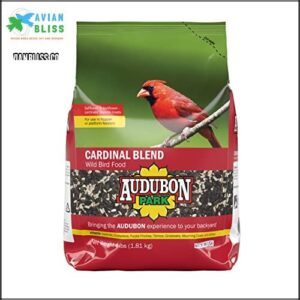
The Audubon Park Cardinal Blend (model 12231) prioritizes black-oil sunflower and safflower seeds, eliminating filler ingredients to provide exactly what cardinals, chickadees, grosbeaks, and finches prefer. This focused formula ensures squirrels are naturally discouraged by safflower, maintaining a cleaner feeder and keeping students focused on observing birds.
At $7.99, the blend fits classroom budgets while offering versatility for hopper, tube, or platform feeders that educators likely already own. Its practical design and affordability make it an ideal choice for educational settings.
| Best For | Backyard bird enthusiasts and educators who want to attract cardinals, chickadees, and finches without dealing with squirrels raiding the feeder. |
|---|---|
| Net Weight | 4 lb |
| Price | $7.99 |
| Feeder Compatibility | Hopper, tube, platform |
| Bird Life Stages | All life stages |
| Squirrel Risk | Low (safflower) |
| Primary Seed Type | Sunflower + safflower |
| Additional Features |
|
- No filler seeds — just black-oil sunflower and safflower, so birds actually eat what’s in the feeder
- Safflower naturally deters squirrels, which means less mess and less refilling
- Works with hopper, tube, or platform feeders, so you don’t need to buy anything new
- Costs more per pound than generic mixed seed blends
- No millet, nyjer, or cracked corn, so birds that prefer those won’t be as interested
- Squirrels may still try their luck despite the safflower deterrent
6. Lyric Supreme Wild Bird Seed
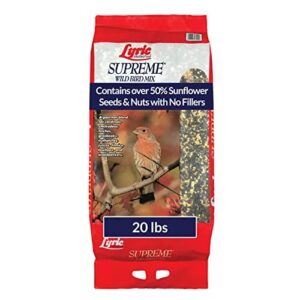
Lyric Premium Wild Bird Seed (model 2647418) is packed with more than 50 percent sunflower seeds, offering a nutrient-rich blend designed for variety. The 20 lb bag combines black oil sunflower, safflower, Nyjer, millet, peanuts, pecans, and pistachios—with no filler, just real nutrition.
For families looking to make bird feeding a hands-on experience, this nutrient-packed mix pairs perfectly with kid-friendly wild bird seed activities and tips.
This mix attracts chickadees, finches, cardinals, woodpeckers, and jays, providing students with plenty to observe.
At $30.99, it costs slightly more but delivers an all-natural formula compatible with tube, hopper, or tray feeders commonly found in classrooms.
| Best For | Backyard birding enthusiasts who want to attract a wide variety of songbirds without dealing with filler seeds and wasted mess. |
|---|---|
| Net Weight | 20 lb |
| Price | $30.99 |
| Feeder Compatibility | Tube, hopper, tray, window |
| Bird Life Stages | Adult birds |
| Squirrel Risk | High |
| Primary Seed Type | Sunflower (50%+) + nuts |
| Additional Features |
|
- Over 50% sunflower seeds with a rich mix of nuts and Nyjer — real nutrition, no junk filler
- Works with almost any feeder style, so you’re not locked into one setup
- No milo means less waste on the ground and fewer weeds popping up under your feeder
- At $30.99 for 20 lbs, it runs pricier than basic store-brand blends
- Peanuts and tree nuts can pull in squirrels and rodents alongside the birds you actually want
- The 20 lb bag is heavy and seed spillage is common, so expect to clean up around your feeder regularly
7. Kaytee Nut Fruit Wild Bird Seed
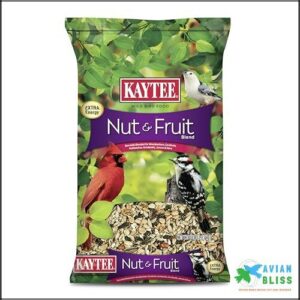
If you want something a little different from a standard seed mix, Kaytee Nut Fruit Wild Bird Seed (model 100061951) is worth a look. This 5 lb bag blends sunflower seeds, peanuts, mixed nuts, raisins, and cherries into a high-energy mix that birds find hard to resist.
With roughly 38–42% fat and 17–19% protein, it fuels cardinals, chickadees, nuthatches, and woodpeckers through every season. Store it sealed and cool, since the fruit pieces can attract moisture faster than plain seed.
| Best For | Backyard birdwatchers who want to attract a wide variety of birds and don’t mind paying a bit more for a premium, fruit-and-nut blend. |
|---|---|
| Net Weight | 5 lb |
| Price | $12.59 |
| Feeder Compatibility | Standard outdoor feeders |
| Bird Life Stages | All life stages |
| Squirrel Risk | High |
| Primary Seed Type | Sunflower + nuts + fruit |
| Additional Features |
|
- Pulls in a solid mix of species — cardinals, woodpeckers, nuthatches, and more all show up for this one
- The high fat and protein content keeps birds coming back and staying longer at the feeder
- Allergen-free and good for all life stages, so it works year-round without any fuss
- It’s pricier than your average seed mix, which adds up fast if you’re filling feeders often
- Squirrels and rodents love it just as much as the birds, so you may need a squirrel-proof feeder
- The blend can vary batch to batch — sometimes fewer peanuts, more sunflower seeds — which not every bird will be thrilled about
8. Happy Wings Nyjer Thistle Bird Seed
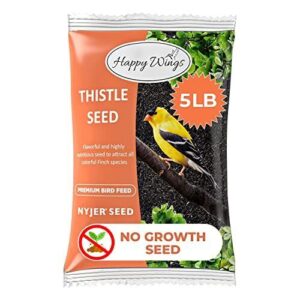
Happy Wings Nyjer Thistle Bird Seed is a smart pick if goldfinches and pine siskins are your target. The 5 lb resealable bag keeps things fresh in a classroom storage closet, and the no-grow formula means dropped seeds won’t sprout under your feeder.
At about 16% protein and 30% fat, it gives small finches the energy they need, especially in colder months. Just pair it with a tube or mesh feeder — these tiny seeds slip right through standard openings.
| Best For | Backyard birders who want to attract goldfinches, finches, and other small birds without dealing with weeds or mess under the feeder. |
|---|---|
| Net Weight | 5 lb |
| Price | ~$20.00 |
| Feeder Compatibility | Nyjer tube feeders |
| Bird Life Stages | All life stages |
| Squirrel Risk | Low |
| Primary Seed Type | Nyjer (thistle) |
| Additional Features |
|
- No-grow formula means dropped seeds won’t sprout, so your yard stays cleaner with less upkeep
- High protein and fat content gives small birds the fuel they need, especially through winter
- Resealable bag keeps the seed fresh longer, which is handy if you’re not refilling constantly
- At around $4 per pound, it’s pricier than most bulk seed options out there
- Only works well for small birds — larger species won’t get much use out of it
- The lightweight seeds can scatter in the wind if you’re not using a feeder built specifically for Nyjer
9. Morning Song Sunflower Hearts Bird Seed
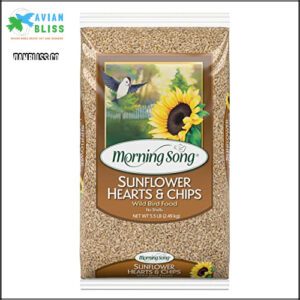
Morning Song Sunflower Hearts Bird Seed keeps things simple — and that’s exactly the point. These 100% shell-free sunflower hearts eliminate messy hulls under feeders, making them ideal for schoolyard setups. The no-mess design ensures clean, hassle-free feeding environments.
Finches, chickadees, nuthatches, and cardinals are frequent visitors, drawn to the seed’s accessibility. The 5.5 lb bag is compact enough for most classroom storage spaces, balancing convenience with practicality.
This seed works seamlessly in tube, hopper, or platform feeders, offering versatility for different setups. If low maintenance and broad bird appeal are priorities, this product delivers both efficiently.
| Best For | Backyard birders and casual feeders who want to attract a wide variety of songbirds without dealing with shell cleanup or feeder mess. |
|---|---|
| Net Weight | 5.5 lb |
| Price | $14.99 |
| Feeder Compatibility | Tube, hopper, platform |
| Bird Life Stages | All life stages |
| Squirrel Risk | Moderate |
| Primary Seed Type | Sunflower hearts |
| Additional Features |
|
- 100% shell-free, so there’s no hull buildup under your feeder — your patio or yard stays clean with minimal effort.
- Pulls in a solid mix of birds — finches, cardinals, chickadees, nuthatches, and more — so you get a lively feeder without needing multiple seed types.
- Works in basically any feeder style (tube, hopper, platform), so you’re not locked into a specific setup.
- It’s just sunflower hearts — no nyjer, suet, or other high-protein options, so larger or more specialized birds may not stick around.
- The 5.5 lb bag goes fast if you’ve got a busy feeder, meaning more frequent reorders than you might expect.
- Chipped seeds can scatter in the wind, so you may still need to do a little sweeping on breezy days.
Choose Seeds by Bird Species
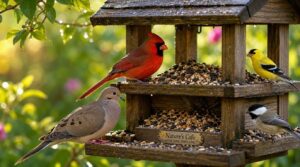
Not every bird shows up for the same meal, and that’s actually what makes feeder watching so interesting. Matching the right seed to the right species is the fastest way to get more birds — and more variety — at your feeders.
Here’s a breakdown of which seeds work best for the birds you’re most likely to spot.
Sunflower Hearts for Finches, Chickadees, and Cardinals
Sunflower hearts might just be the smartest seed you can offer. Their small, uniform kernels are a perfect small beak fit for finches and chickadees, while cardinals grab whole hearts without fighting shells. With 20–25% protein for feather growth nutrition, vitamin E protection, and high‑fat fuel for cold days, they deliver real nutrition and minimal seed waste. They also offer high‑energy winter nutrition to help birds maintain weight in cold weather.
- Finches flock in fast — easy to peck, quick energy
- Chickadees grip the soft kernels without struggle
- Cardinals pick out whole hearts with confidence
Black Oil Sunflower Seeds for Mixed Wild Bird Visits
Black oil sunflower seeds attract a diverse range of bird species to school feeders, including cardinals, chickadees, nuthatches, jays, and finches. This creates ideal conditions for observing mixed flock dynamics. With a 40–50% fat content, these seeds offer exceptional caloric efficiency, making them perfect for elementary science projects tracking seasonal visitor patterns.
| Bird Species | Feeder Compatibility | Fatty Acid Benefits |
|---|---|---|
| Cardinal | Hopper, platform | Feather condition |
| Chickadee | Tube, hopper | Cold-weather energy |
| Nuthatch | Tube feeder | Muscle maintenance |
| Blue Jay | Platform, hopper | Breeding support |
| House Finch | Tube feeder | Immune function |
Their uniform shells significantly reduce feeder scatter, minimizing mess around observation areas. Adding them as a seed blend base maximizes species variety while reducing waste, ensuring a cleaner and more efficient feeding environment.
Safflower Seeds for Cardinal-focused School Feeders
Safflower seeds offer cardinal feeding dominance at your classroom feeder. Cardinals easily crack their tough seed coats, while squirrels tend to walk away. Black oil seeds draw a crowd, but safflower provides a more focused appeal.
With roughly 38% fat and 16% protein, safflower seeds ensure high nutrient absorption efficiency year-round. This makes them ideal for hands-on science projects and classroom observation logs. Try Audubon Park Cardinal Blend Wild Bird Food to engage students in wildlife study.
Nyjer Seeds for Goldfinches and Small Finches
If safflower draws cardinals, Nyjer brings the finches. Happy Wings Nyjer Thistle Seeds is a smart pick for attracting diverse wild bird species like goldfinches and pine siskins. Their small beaks handle the seed’s size advantage perfectly.
With roughly 35% fat, Nyjer aids fat metabolism and winter thermoregulation — great for hands-on science projects where elementary students observe birds braving cold mornings.
White Proso Millet for Ground-feeding Birds
Not every bird visits a hanging feeder — and that’s where white proso millet shines.
Scatter it on the ground or a low tray, and you’ll draw mourning doves, juncos, and native sparrows almost immediately.
Its nutrient profile includes about 11% protein, B vitamins, and minerals that support seasonal energy needs.
Millet is a simple, budget-friendly seed for educational bird feeding lessons and hands-on science projects for elementary students.
Nut and Fruit Blends for Added Protein and Variety
Kaytee Nut Fruit Wild Bird Seed blends almonds, pistachios, and dried fruit into a nutrient-dense option that promotes a protein-rich diet year-round.
Nut selection guidelines matter here: avoid salted varieties. Fruit moisture considerations apply too — store in cool, dry spots.
Seasonal blend adjustments, like adding more fat-heavy pieces in winter, help small-bird safety stay a priority.
No-mess Blends for Cleaner Schoolyard Observation Areas
No-mess seed blends are a smart, clean feeding solution for schoolyard setups. Hull-free seeds ensure waste reduction happens naturally—ground debris control becomes almost effortless, cutting cleanup time by up to 60 percent. That’s a real win during hands-on science projects for elementary students.
Feeder sealing lids further enhance efficiency. Better bird feeder hygiene translates to cleaner sightlines, stronger observation clarity, and more focused outdoor learning.
Set Up School Bird Feeders
Getting the right feeder in the right spot makes all the difference for a successful school wildlife project.
A few smart choices about feeder style, placement, and squirrel-proofing can turn a quiet schoolyard into a busy bird hub.
Here’s what to keep in mind before you hang your first feeder.
Match Seed Types to Feeder Styles
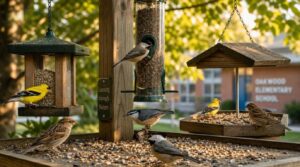
Think of your feeder as a delivery system — it only works when the seed fits the design. Hopper compatibility and clog-free design matter more than most people realize.
Platform feeders handle bulkier mixes well, while tube feeders and smart feeder integration suit smaller, flowing seeds.
Getting perch size matching and platform suitability right from the start makes seed type selection and feeder compatibility painless.
Use Tube Feeders for Sunflower Hearts and Blends
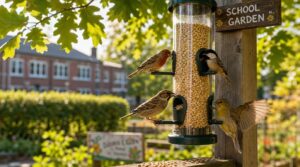
Tube feeders are a smart pick for wild bird feeding at school. Their clear tube visibility lets students check seed levels at a glance — no guessing, no wasted trips.
Sunflower hearts slide through small ports without jamming, and multiport crowd reduction means several birds feed at once.
The moisture seal design keeps your seed blend dry, ensuring long-lasting freshness.
Managing seed dust inside the tube keeps hands-on science projects for elementary students clean and stress-free.
Use Mesh Feeders for Nyjer Seed
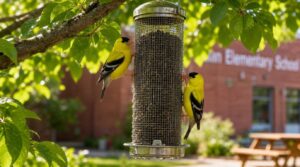
Nyjer seed requires specialized feeders, and mesh feeders are ideal. Unlike tube feeders, their fine stainless steel mesh (0.8–1.6 mm openings) perfectly regulates seed flow for tiny finch beaks. Happy Wings Nyjer Thistle Seeds Wild Bird Food pairs beautifully with these designs.
For classroom safety and wild bird feeding success, keep these four things in mind:
- Mesh durability — inspect quarterly for tears
- Color visibility — bright feeders attract passing goldfinches faster
- Weather shielding — an overhang keeps Nyjer dry and mold-free
- Feeder compatibility — position feeders 10 feet from student traffic for undisturbed bird observation
Use Tray Feeders for Millet and Larger Seed Pieces
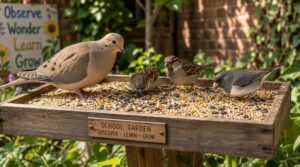
Tray feeders are a natural fit for millet and larger seed pieces.
Their open, flat surface lets ground-feeding birds like sparrows, doves, and juncos eat comfortably without fighting narrow ports.
Anti-slip design and edge height adjustment keep your seed mix in place, supporting seed spill control during busy school days.
| Tray Feature | Classroom Benefit |
|---|---|
| Open platform | Easy species counting |
| Removable inserts | Cleaning efficiency between sessions |
| Textured surface (texture optimization) | Birds grip seeds more easily |
| Raised edges | Reduces seed spill control issues |
hands-on science projects for elementary students and DIY Bird Seed Feeders alike.
Place Feeders Near Classroom Viewing Areas
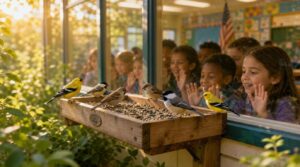
Once your tray feeder is set, position it within three feet of classroom windows—that is the sweet spot for clear sightlines and fewer window strikes. Mounting height also matters: eye-level works best for students seated inside.
Proper lighting placement makes a real difference, transforming casual glances into genuine bird observation moments.
Add Nearby Shrubs or Cover for Bird Safety
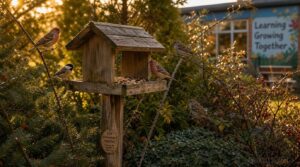
Birds don’t just need food — they need a safe place to land before and after visiting your feeder. Planting evergreen shelter shrubs nearby gives them that refuge. Think of it as setting a table with a nearby exit door.
A bird feeder without nearby shelter is just a meal with no safe exit
- Use native shrub corridors to connect feeders to natural cover
- Try thorny deterrent planting to block ground predators near feeding zones
- Add ground-level cover with low-spreading shrubs for shy fledglings
- Practice strategic shrub placement 3–6 meters from high-traffic student areas
Install Baffles to Reduce Squirrel Access
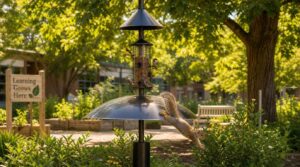
Even with shrubs in place, squirrels will still test your setup. That’s where baffles come in. Dome Baffle Design works well on poles, blocking climbers with a wide, slippery surface.
For hanging feeders, Hood Baffle Installation adds a conical shield above. Tubular Baffle Placement wraps the pole itself.
For tougher spots, a Multi-Layer Baffle Strategy using both styles closes almost every gap.
Keep Feeders Far Enough From Busy Student Traffic
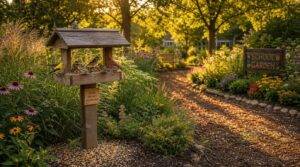
Baffles handle squirrels, but student foot traffic is its own challenge. Keep feeders at least 20 meters from main walkways, and use buffer zones like garden beds to separate the feeding area. Good feeder placement tips make all the difference:
- Post safety signage reminding students to observe quietly
- Route pathways away from feeders using mulch trails
- Mount feeders at a height that discourages reaching
Quiet observation starts with smart setup.
Run Seed Observation Projects
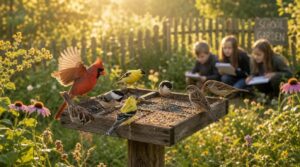
Once the feeders are up, the real learning begins. A simple one-week seed comparison project gives students hands-on science experience while revealing exactly which birds prefer which seeds.
Here’s how to run one that actually works.
Pick a One-week Bird Seed Comparison Activity
A one-week seed comparison is one of the cleanest science fair project ideas you can run with students. It follows the scientific method naturally — experimental design, observation logging, and result visualization built right in. Set a consistent daily check-in time and keep student reflection simple.
| Activity Step | Purpose |
|---|---|
| Choose 3 seed types | Facilitates statistical comparison |
| Log species per feeder daily | Builds observation logging habits |
Offer Different Seeds in Separate Feeders
When each seed type gets its own feeder, something clicks for students — and for the birds. Competition reduction happens naturally, since species that prefer nyjer won’t crowd out cardinals at the safflower station.
You also get real data consistency day after day.
Simplified cleaning becomes easier too, since there’s no cross-contamination between seed types, making this one of the best hands-on science projects for elementary students.
Record Bird Species, Visit Times, and Seed Choices
A simple data collection sheet goes a long way. Have students record species, visit times, and which seed mix drew each bird — that’s your preference analysis right there.
Note arrival trends across the week, paying attention to timing patterns like early morning spikes. This feeding schedule data, gathered through consistent recording protocols,
gives students a real taste of the scientific method in action.
Use Binoculars and Field Guides for Identification
Good binoculars and a bird field guide turn guessing into real identification. For magnification selection, 8x to 10x binoculars hit the sweet spot — close enough for field mark identification without shaky views. Binocular ergonomics matter too, so choose lightweight, waterproof models kids can hold comfortably.
Keep observation data sheets nearby for logging what you spot:
- Match size and silhouette first before color
- Look for wing bars, eye rings, and tail patterns
- Cross-reference similar species to avoid mix-ups
- Use audio cue integration when birds are hidden in shrubs
- Note feeding behavior to confirm your ID
Studying local bird species in your school’s backyard suddenly feels like detective work — and with the best bird seeds drawing regulars to feeders, there’s always something worth identifying.
Compare Results by Seed Type and Feeder Design
After a week of watching, your data tells a real story. Comparing results by seed type and feeder design reveals clear patterns in species diversity, visit frequency, and feeder waste.
| Seed Type | What You’ll Notice |
|---|---|
| Sunflower hearts | High visit frequency, low waste |
| Nyjer thistle | Small finch clusters, minimal mess |
| White millet | Ground-feeder activity near trays |
| Safflower | Cardinal regulars, fewer squirrels |
| Mixed blends | Broadest species diversity overall |
Seasonal shifts also show up here — what worked in winter won’t always draw the same crowd in spring.
Track Non-bird Visitors Like Squirrels or Mice
Birds aren’t your only visitors. Squirrels can arrive at a feeder within seconds of fresh seed dropping, while mice tend to show up at dusk or after school hours.
Use camera monitoring to catch these patterns without disturbing wildlife. Track seed loss metrics daily to measure deterrent effectiveness.
Squirrel-resistant feeding designs and squirrel deterrent seed options like safflower reduce non-bird visits noticeably.
Discuss Bird Needs: Food, Water, Shelter, and Safety
Once you’ve noted your squirrel visitors, zoom out and look at the bigger picture. Every bird you observe has four basic needs: food, water, shelter, and safety. Thermoregulation and feeding matters most in winter — high-fat seeds keep small birds alive overnight.
Seasonal water provision, predator guard designs, nest box placement, and habitat cover planning round out bird habitat enrichment. These elements transform feeders into real hands-on science projects for elementary students.
Connect Observations to STEM and Ecology Lessons
All that data you’ve collected? It connects directly to real STEM skills. Students practice data graphing when they chart visit frequency by seed type, and basic statistical analysis when comparing species counts across feeders.
Feeder design ties into engineering thinking, while tracking squirrels and songbirds together opens up ecological interactions.
Scientific communication grows naturally when students share what they observed.
Maintain Seeds and Feeders
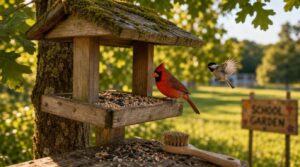
Good bird watching doesn’t stop when the students head home — it depends on what happens between visits. Keeping your seed fresh and your feeders clean is what separates a thriving school wildlife station from one that quietly goes quiet.
Here’s what to stay on top of.
Store Bird Seed in Airtight Containers
Once you’ve chosen your seeds, storing them right makes all the difference. A good airtight container keeps moisture out and freshness in — protecting your investment and your birds. Here’s what works best for classroom seed storage:
- Container material selection: Heavy-duty plastic with airtight gaskets or metal canisters resist humidity and pests reliably.
- Seal integrity testing: Press the lid down firmly — if air escapes easily, it’s not tight enough.
- Pest barrier design: Sealed containers block weevils and moths that quietly ruin stored seed.
- Moisture indicator usage: Tuck a desiccant pack inside large bins to absorb hidden condensation.
- Storage tips for bird seed freshness: Label each container with the purchase date so you always rotate stock properly.
Clear containers make quick visual checks easy without ever opening the lid.
Keep Seed Cool, Dry, and Mold-free
Airtight containers are only half the battle. Mold grows fast when humidity climbs above 60 percent, so humidity monitoring matters year-round. Tuck a desiccant application pack inside each bin, store seed in a cool spot between 35–50°F for real temperature stabilization, and keep lids slightly vented for airflow ventilation.
Rotate stock using FIFO stock rotation so older seed always goes first.
Use Smaller Bags for Short Classroom Projects
Smaller bags are a smart pick for short classroom projects. Budget-friendly packaging keeps costs low, while student-friendly portability allows kids to carry their own labeled seed mix between stations without spilling. Minimized seed waste is critical for week-long projects. Clear labeling systems further streamline rapid project turnover between classes.
For hands-on science projects, smaller bags enhance bird-feeding safety and make DIY Bird Seed Feeders more manageable. Their compact size ensures elementary students can handle materials confidently, aligning with educational goals while reducing mess and resource use.
Choose Resealable Bags for Easier School Storage
Resealable bags simplify seed storage for classroom projects. Opt for BPA-free polyethylene to ensure bag durability and safety materials, especially when handled daily by elementary students.
Clear panels enhance portability and allow quick identification of seeds. Implement color-coded write-on panels for effortless organization, helping students track your best bird seeds for wild birds without mix-ups.
Clean Feeders Every Two Weeks
Every two weeks, scrub your feeders with warm soapy water — that’s your non-negotiable cleaning schedule for good feeder hygiene. Slip on gloves, rinse all surfaces completely, and let everything air dry before refilling.
For deeper feeder cleaning, use a diluted bleach solution as a safe disinfectant. Keep a simple maintenance log to track cleaning dates and support mold prevention all season.
Remove Wet, Spoiled, or Clumped Seed Quickly
Wet seed spreads mold fast — don’t let it linger. Moisture detection is your first line of defense, so check feeders after every rain.
When you spot trouble, act quickly:
- Pull all wet or musty seed within 24 hours
- Spread remaining seed thin for rapid drying in a ventilated space
- Use clump-breaking techniques with a dry spoon before reuse
- Practice proper mold disposal — never compost spoiled seed
- Tuck desiccant usage into your storage routine with sealed silica packs
No-mess seed blends help reduce buildup, supporting cleaner, safer feeding all season.
Use High-fat Seeds During Cold Months
Cold months are tough on birds — their bodies work overtime for warmth. That’s where high-fat seeds make a real difference. Black oil sunflower seeds deliver roughly 45–50 percent fat by weight, giving birds a genuine Metabolic Heat Boost.
Swapping in peanuts and sunflower hearts for Calorie-Rich Seed Selection will yield stronger Winter Species Diversity at your feeders almost immediately.
Add Protein-rich Options During Spring Nesting Season
Spring nesting season is the busiest time in any bird’s year — and they need more than seeds to pull it off. Swapping in Mealworm Supplements and Insect Boosted Blends promote Calcium Protein Balance when parents are feeding nestlings daily.
- Dried mealworms boost high protein intake by up to 50 percent
- Nut-rich blends support a protein-rich diet during egg laying
- Crushed eggshells near feeders aid Seasonal Protein Timing naturally
Swapping in Mealworm Supplements and Insect Boosted Blends promote Calcium Protein Balance when parents are feeding nestlings daily.
Frequently Asked Questions (FAQs)
How to make a bird feeder for school project easy?
Making DIY Bird Seed Feeders is simpler than you’d think. With recycled materials and simple instructions, even a budget-friendly build like a milk carton feeder comes together safely in minutes.
Full student participation ensures an engaging, hands-on project that fosters creativity while promoting sustainability.
Can students build their own bird feeders?
Yes, students can absolutely build their own DIY Bird Seed Feeders. With basic Safety Guidelines, smart Material Sourcing, and Design Creativity, a handmade bird feeder becomes a hands-on Skill Development win for any classroom.
Which seeds attract the most diverse bird species?
Black oil sunflower seeds attract the widest variety — cardinals, finches, chickadees, nuthatches, and woodpeckers all show up. For true seed mix diversity, combine sunflower, nyjer, and safflower.
How much do school bird feeding programs cost?
A small setup with two or three feeders and seasonal seed runs about $150–$350 a year. Bulk buying and community donations can cut that cost considerably.
Do bird feeders work year-round in all climates?
Bird feeders work year-round, but climate suitability matters. In hot, humid areas, heat rancidity and moisture management become real concerns.
Seasonal seed rotation and feeder weatherproofing keep things fresh and effective, no matter where you are.
How do birds find feeders for the first time?
They rely on visual landmarks, feeder contrast, and social learning. Bright colors help from a distance, while nearby birds signal others. Scent cues and weather timing play supporting roles too.
Conclusion
Wild bird seeds for school wildlife projects transform into a window into the living world, offering students real data, real questions, and real reasons to pay attention. What begins as a simple bag of seeds becomes a gateway to engagement, where learners observe nature’s rhythms firsthand.
The birds arrive unconcerned with lesson plans, yet their presence sparks curiosity. When students watch closely, they begin to care—not because they’re told to, but because the experience feels authentic. This is the kind of learning that sticks long after the school year ends, rooted in wonder and discovery.
- https://www.plt.org/educator-tips/bird-feeder-projects-natural-recycled-materials/
- https://www.birds.cornell.edu/k12/starting-a-bird-club-2/
- https://www.allaboutbirds.org/news/types-of-bird-seed-a-quick-guide/
- https://www.scribd.com/document/480275925/design-brief-2020
- https://birdingwire.com/releases/0b026b6b-e1c6-4007-9f54-0e83cb3efb4e