This site is supported by our readers. We may earn a commission, at no cost to you, if you purchase through links.

A domestic cat kills roughly 1.3 to 4 billion birds in the United States each year—and that figure accounts only for cats. Adding hawks diving at 120 km/h, raccoons raiding nests after dark, and rat snakes scaling poles before dawn, your backyard feeding station starts looking less like a sanctuary and more like a hunting ground. Most bird lovers set up feeders without realizing predators treat them as reliable food sources, too.
The good news is that behavioral ecology gives us precise, evidence-based tools—pole baffles, entrance hole sizing, layered planting, scent barriers—that interrupt predator patterns without harming a single animal.
Table Of Contents
- Key Takeaways
- Identify Common Bird Predators
- Build Safer Feeding Stations
- Protect Birdhouses and Nests
- Use Protective Garden Barriers
- Try Natural Deterrent Methods
- Reflective Objects for Disrupting Predator Approaches
- Motion-activated Lights and Sound Deterrents
- Predator Decoys That Move or Rotate
- Mint, Citrus, and Herb-based Scent Barriers
- Seasonal Adjustments for Nesting and Migration Periods
- Humane, Non-lethal Deterrent Best Practices
- Legal Considerations for Protected Wildlife Species
- Top 5 Predator Deterrent Products
- Frequently Asked Questions (FAQs)
- Conclusion
Key Takeaways
- Domestic cats alone kill up to 4 billion birds annually in the U.S., making predator management one of the most impactful things you can do for backyard birds.
- Smooth metal poles with 18–24-inch baffles installed 4–6 feet high block cats, raccoons, and snakes far more reliably than any single deterrent used alone.
- Matching birdhouse entrance holes to species-specific diameters — 1⅛ to 1½ inches depending on the bird — is a simple, low-cost step that cuts predator access dramatically.
- Rotating your deterrents every 1–2 weeks, whether scent barriers, reflective tape, or moving decoys, prevents predators from habituating and keeps your defenses genuinely effective.
Identify Common Bird Predators
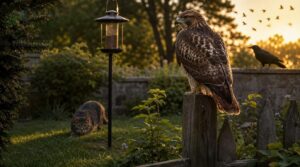
Before you can protect your backyard birds, you need to know what you’re actually up against. Predators come in more shapes and sizes than most people expect — from the neighbor’s cat to a hawk circling overhead.
Understanding what each predator wants — whether it’s eggs, nestlings, or adults — helps you find smarter ways to protect them, like adjusting feeders or trying homemade bird food recipes that keep birds fed without attracting the wrong attention.
Here are the most common threats worth knowing about.
Cats and Their Ground-stalking Attack Patterns
Cats are remarkably effective predators — and understanding why helps you protect your birds. Using a low crouch and quiet pawing, they close distance almost invisibly. Tail stabilization keeps movement silent, while whisker detection gauges air pressure near prey. A stealth pause before the final pounce locks in timing.
- Catios to contain outdoor cats
- Physical barriers around ground-level feeders
- Predator guards on poles
- Protective barriers with plants like thorny shrubs
- Groundnesting bird deterrence through elevated feeder placement
Even well‑fed cats can produce multiple daily kills, reflecting their strong predatory drive.
Hawks, Owls, and Aerial Predator Risks
While hawks stoop at speeds exceeding 120 km/h, owls exploit thermal updrafts near urban edges, hunting from dawn through dusk using silent flight. Both predators dominate aerial territories, making silhouette detection critical for bird defense.
Perch visibility is paramount—tall isolated trees become launch platforms for ambushes. Seasonal migration peaks intensify raptor activity, requiring proactive measures to mitigate threats.
To counter these risks, strategically deploy hawk decoys, owl figurines, reflective bird scare tape, and rotating predator decoys. These deterrents disrupt hunting patterns during high-pressure periods.
Raccoons Targeting Eggs and Nestlings
Unlike aerial hunters, raccoons work the night shift. Nighttime Nest Raids peak in spring when clutches are most vulnerable—and these animals are surprisingly skilled. Paw-Driven Egg Extraction lets them crack shells with coordinated precision.
Watch for these risk factors in your yard:
- Nests near water face Riparian Corridor Attraction, drawing raccoons along nightly travel routes
- Clumped Nest Risks increase when multiple boxes sit close together
- Low, reachable poles invite cavity access
- Post-Nesting Food Scavenging at feeders pulls raccoons toward active nest zones
- Large entrance holes give paws easy reach inside
Snakes Climbing Into Nests and Birdhouses
Raccoons aren’t your only climbers. Rat snakes routinely scale poles up to 6 meters high, raiding nests during early morning hours when birds are least alert. Corrugated Pole Design actually works against you here — rough surfaces give snakes grip. Replacing these with smooth metal poles, implementing Elevated Nest Placement above 2 meters, and adopting Baffle Overhang Design with Gap-Free Hardware dramatically reduce access.
| Threat Factor | Protective Solution |
|---|---|
| Snake climbing grip | Corrugated Pole Design replaced with smooth metal |
| Low nest height | Elevated Nest Placement above 2 meters |
| Hardware gaps | Gap-Free Hardware with sealed joints |
| Vertical access | Baffle Overhang Design below and above box |
Seasonal Snake Monitoring during spring nesting peaks is critical — inspect boxes for disturbed material or egg fragments. Pair baffles with predator guards, physical barriers, and fencing solutions like Chicken wire domes, alongside prickle strips around post bases. This creates a layered defense that eliminates opportunities for snakes.
Warning Signs of Predator Activity Near Feeders
Scattered feathers near the base of a feeder, a suddenly empty feeding tray, or disturbed seed on the ground all signal predator presence. Predator tracks in soft soil confirm mammal activity.
Watch for sudden silence too — when birds vanish mid-morning, that behavioral shift rarely means nothing.
Build Safer Feeding Stations
Your feeder setup matters more than most people realize—small changes in placement and design can make a big difference for the birds visiting your yard.
The good news is that you don’t need expensive gear or a complete overhaul to get results. Here are five practical adjustments that can help turn your feeding station into a much safer space.
Place Feeders Away From Predator Launch Points
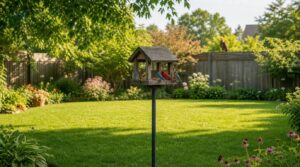
Feeder placement is your first line of defense. A Launch‑Site Exclusion zone of 8–12 feet from walls, fences, and shrubs eliminates common predator launch points. Maintain an Open‑Ground Perimeter with clear Line‑of‑Sight Corridors so birds spot threats early. Distance Buffer Zones matter more than most backyard birders realize.
- Keep feeders 10–12 feet from dense cover
- Maintain 15 feet of open ground for escape routes
- Position Elevated Feeding Posts away from overhead branches
Use Smooth Metal Poles With Predator Baffles
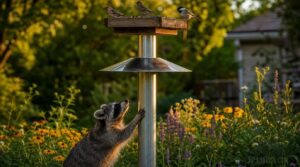
Smooth galvanized or powder-coated metal poles deny cats and raccoons the grip they need to climb. Baffle Diameter Selection matters here — choose 18–24 inches, installed 4–6 feet up following Installation Height Guidelines.
For help identifying which backyard birds your setup is actually attracting, the backyard songbird identification chart makes it easy to put a name to every visitor.
The Wobble Mechanism Benefits are a real benefit: an unstable baffle discourages steady ascent.
Clean annually and check hardware each season — your Maintenance Routine Checklist keeps these nonlethal deterrent techniques reliably effective.
Keep Feeding Areas Clean and Low-attractant
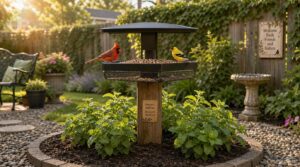
A messy feeder is basically a dinner invitation for rats, mice, and the predators that follow them. Spill containment starts with low-scatter feeders and seed catchers positioned over coarse gravel or mulch — the best ground cover selection for absorbing moisture.
Attractant-free seed mixes reduce leftover scraps, minimizing waste. This approach ensures feeding areas remain clean and low-attractant.
Routine tray cleaning weekly, combined with a mint scent barrier around the base, keeps maintenance effective. These practices collectively create a genuinely effective pest-deterrent system.
Provide Nearby Escape Cover Without Hiding Predators

Think of escape cover as a one-way door — birds get through fast, predators don’t. A patchy ground mix of leaf litter and low grasses, paired with multi-height shrub layers and native understory plants, creates high-visibility corridors where birds can monitor threats mid-retreat.
Escape cover works like a one-way door — birds pass through fast, predators don’t
Gentle exit slopes and contrasting texture cues guide them toward safety within seconds, without hiding anything that shouldn’t be hidden.
Adjust Feeder Height for Vulnerable Bird Species
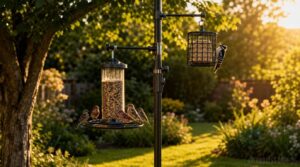
Height isn’t just convenience — it’s a survival variable. Small songbirds feed most securely at 5 to 6 feet, while suet cages protecting woodpeckers belong at 6 to 8 feet.
During migration, height adjustments matter, too: wind-exposed placement destabilizes feeders and disrupts visibility corridors. An adjustable pole lets you fine-tune small-songbird levels seasonally, supporting strategic placement of bird feeders and houses year-round.
Protect Birdhouses and Nests

A birdhouse is only as safe as the protections built around it. Even well-placed houses can fall victim to predators if a few key details are overlooked.
Here’s what you can do to give nesting birds a genuinely secure home.
Match Entrance Holes to Target Bird Species
One overlooked detail in nest protection can make or break your birdhouse’s effectiveness: entrance hole diameter. Species-specific diameters matter more than most people realize — bluebirds and tree swallows need 1½ inches, wrens 1¼ inches, and chickadees just 1⅛ inches. Tighter openings reduce multi-species interference and block opportunistic predators.
Mount boxes at species-appropriate heights — usually 5 to 8 feet — for best results.
Add Metal Predator Guards Around Openings
Getting the entrance hole right is just the start — predator guards take that protection further. Metal guards, typically made of galvanized steel with 1/8-inch mesh, wrap flush around openings and extend 1–2 inches outward, effectively blocking raccoons from reaching inside.
Material selection is critical: powder-coated finishes resist weathering, ensuring durability against environmental exposure.
Mounting methods are straightforward: corrosion-resistant screws secure the guards firmly, eliminating the need for interior access during installation.
These physical barriers deliver meaningful, low-cost protection, combining practicality with long-term reliability.
Install Birdhouses on Baffle-protected Poles
A well-placed baffle stops predators before they reach the entrance, achieving what metal guards alone cannot. Mount your birdhouses on smooth metal poles fitted with adjustable baffle designs, positioned at least 4 feet high. Use eco-friendly materials like powder-coated aluminum for seasonal baffle replacement without waste, minimizing environmental impact.
Integrated drainage systems keep the box dry, while visibility enhancements help birds detect threats early. These features collectively strengthen your physical barriers, ensuring comprehensive protection for nesting birds.
Avoid Trees, Fences, and Walls Predators Climb
Even the best baffle-protected pole loses its advantage if you mount your birdhouse near a fence or tree trunk. Cats and raccoons use these surfaces as natural ladders.
A tree-free buffer and fence-free perimeter of at least 10–12 feet, combined with wallless mounting on isolated poles, gives you true groundline isolation. Climb-deterrent trims complete the defense.
Inspect Nests for Disturbance Without Overhandling
Checking nests doesn’t have to mean hovering over them. Stay at least 5 meters back and rely on Remote Camera Monitoring or binoculars — your presence alone can trigger abandonment.
Use Brief Observation Windows under two minutes, timed during midday lulls. Run through a simple Disturbance Indicator Checklist:
- Alarm calls or prolonged scolding
- Scattered nesting debris nearby
- Adults repeatedly flushing from the nest
- Empty nest cups with fresh lining material
Use Protective Garden Barriers

Your garden’s layout can do a lot of the predator-deterrent work for you.
The right plants, placed thoughtfully, create natural boundaries that cats, raccoons, and aerial hunters simply don’t want to cross. Here are the key strategies worth building into your yard.
Plant Thorny Shrubs to Block Cats and Raccoons
Think of thorny shrubs as your yard’s natural security system. Barberry planting along garden edges creates dense, spine-studded thickets that cats and raccoons simply won’t cross. Hawthorn maintenance keeps hedges tight and hostile.
Rugosa rose pruning encourages thick, thorned regrowth.
Pyracantha care and Blackthorn propagation add year-round structural density.
These protective plants offer eco-friendly garden predator control — physical barriers and fencing solutions rooted in nature.
Use Dense Evergreens for Aerial Predator Cover
Dense foliage overhead acts like a roof your birds can actually trust. Evergreen Species Choice matters here — northern white cedar, arborvaita, and juniper create thick canopy layers that break a hawk’s line of sight.
- Windward Placement blocks predator approach paths before they develop
- Vertical Layering stacks trees above shrubs for continuous cover
- Seasonal Pruning and Corridor Connectivity preserve escape routes year-round
Design Layered Habitat for Different Bird Types
Different birds live at different heights — and your garden should reflect that.
Canopy layering shelters tree-dwellers overhead, while understory diversity of mid-height shrubs nurtures warblers and thrushes.
Ground nest zones require low, concealing cover for sparrows.
This layered habitat design, built on a native plant mosaic with vertical connectivity, provides year-round resources and stands as one of the most effective natural methods for protecting backyard birds.
Add Native Berry Plants With Protective Growth
Native berry plants pull double duty — feeding birds while physically blocking predators. Each species brings something different to your yard’s defense:
- Serviceberry food fence – edible berries from late spring; dense branching deters cats
- Chokecherry fruit wall – tight clusters attract thrushes while thorny growth discourages raccoons
- Juniper winter shelter – persistent berries sustain waxwings; dense foliage blocks aerial approaches
- Elderberry migration magnet – draws songbirds in late summer through protective plants with thick canopy
- Currant sun trap – bright early-season fruit in open, visible spots suits seasonal adjustments for bird safety
Using layered planting for predator deterrence with native plants gives you lasting, low-maintenance protection.
Maintain Visibility So Birds Can Detect Threats
Open sightlines are your birds’ first line of defense. Keep sparse vegetation within 2–3 meters of feeders so birds can spot movement, shadows, and size cues before a predator closes in. Strategic lighting near dusk helps too.
| Visibility Feature | Why It Matters |
|---|---|
| Elevated perches | Enable ground-threat scanning |
| Clear escape corridors | Allow fast 5–10m retreats |
Try Natural Deterrent Methods

Physical barriers do a lot of the heavy lifting, but natural deterrents give you another layer of protection that works around the clock.
The good news is most of these methods are low-cost, humane, and easy to set up with things you likely already have at home. Here’s what actually works.
Reflective Objects for Disrupting Predator Approaches
Reflective objects are one of the most practical natural methods for protecting backyard birds — simple, affordable, and surprisingly effective. Stainless steel discs, holographic tape, and Mylar strips all exploit predators’ instinctive wariness of erratic light. Keep these four principles in mind:
- Reflector Spacing: Place reflectors several meters apart to create unpredictable, multi-directional visual frequency across approach corridors.
- Angle Optimization: Mix vertical and horizontal orientations so sunlight hits them throughout the day, not just at noon.
- Material Durability: Choose UV-resistant, weatherproof materials — quality reflectors maintain 70% reflectivity for two to five years.
- Seasonal Positioning: Reposition every two to three weeks and adjust angles as the sun’s path shifts, because predators quickly habituate to static arrangements.
Rotating visual deterrents and integrated bird predator deterrence strategies consistently outperform fixed installations — movement is what keeps the deterrence honest.
Motion-activated Lights and Sound Deterrents
Motion-activated units detect approaching predators within 5 to 30 meters using PIR sensors and trigger 85–130 dB alarms instantly, operating differently from reflectors by responding to threats.
Sound Frequency Tuning lets you target specific species without disturbing others, ensuring precise deterrence.
Pairing solar power integration with weatherproof enclosures guarantees reliable nighttime coverage, even in harsh conditions.
Smart Home Connectivity allows remote adjustments, adapting to challenges like a stubborn fox learning your schedule.
Predator Decoys That Move or Rotate
Static decoys fool birds for maybe a day or two before they stop reacting entirely. That’s where moving predator decoys change the equation.
Models with Multi-Axis Rotation, Solar-Powered Motors, and Weatherproof Housing simulate natural predators convincingly — motion-activated owl replicas trigger Proximity Triggered Movement within 6–12 meters. A Realistic Plumage Finish strengthens the effect, making visual deterrents and decoy rotation work together continuously.
Mint, Citrus, and Herb-based Scent Barriers
Natural scent deterrents like citrus peels, peppermint oil, and herb blends create an invisible boundary mammals dislike crossing. Citrus mint synergy is especially effective—their volatile compounds combine, strengthening the barrier.
For your essential oil spray, mix 2 tablespoons peppermint oil per gallon of water. Follow a scent refresh schedule every 1–2 weeks to maintain effectiveness.
Keep herb placement strategies pet-safe by avoiding concentrated applications near food or water sources. This ensures deterrents remain harmless to household animals while protecting desired areas.
Seasonal Adjustments for Nesting and Migration Periods
Birds don’t follow a fixed calendar — and neither should your deterrent strategy. Migration Timing Shifts mean spring arrivals now happen days earlier than past decades, driven by Temperature Arrival Cues like warming air and longer daylight hours. Adjust your seasonal protection accordingly:
- Reinforce using plants and barriers to ward off predators before Insect Emergence Sync peaks trigger early nesting.
- Refresh scent barriers and reposition decoys during Stopover Resource Pulses, when migrating birds concentrate in yards.
- Extend protections into higher latitudes if Breeding Latitude Shifts bring new species to your area.
Adapting strategies seasonally — rather than once yearly — keeps your defenses matched to real seasonal bird behavior patterns.
Humane, Non-lethal Deterrent Best Practices
Every humane bird deterrent tool—such as predator decoys, visual deterrents, and sound deterrents like audio playback of calls—should be combined with timed feeding schedules to minimize overnight attractants. This integrated approach ensures deterrents protect birds without harming repelled animals.
Community watch programs and education outreach amplify collective efforts across neighboring yards, fostering broader participation in bird protection strategies.
Where practical, predator-training dogs offer a nonlethal bird control option, complementing other humane measures.
Legal Considerations for Protected Wildlife Species
Check your local protected species status before setting up any deterrent—because what’s legal in one county can trigger enforcement actions in another. Nest protection laws, including the Migratory Bird Treaty Act, prohibit disturbing active nests, even unintentionally.
Permit requirements vary by method, so confirm restrictions on deterrent methods with wildlife authorities first. Environmental compliance isn’t just paperwork—it’s how you protect birds responsibly.
Top 5 Predator Deterrent Products
Sometimes the right tool makes all the difference, and predator deterrents are no exception. The market has a handful of products worth knowing about, each targeting a specific weak point in your yard’s defenses.
Here are five options that consistently earn solid results.
1. Natures Dome Natural Pest Control Spray
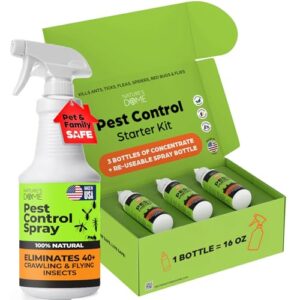
Nature’s Dome Natural Pest Control Spray offers a plant-powered approach to pest control, ensuring safety for backyard birds. Its active blend—geraniol, cinnamon oil, and cottonseed oil—targets over 40 common pests like ants, fleas, and roaches on contact.
Each 16 oz concentrate covers approximately 1,500 sq ft, and the starter kit includes three vials plus a reusable sprayer.
The product is child- and pet-safe, though heavy infestations may require repeat applications for lasting results.
| Best For | Families and pet owners who want a simple, chemical-free way to handle everyday pest problems around the home. |
|---|---|
| Primary Use | Pest Control |
| Material | Essential Oils |
| Outdoor Suitable | Yes |
| Weight | 2 oz (concentrate) |
| Price Range | Mid-range |
| Repositioning Needed | No |
| Additional Features |
|
- Plant-based formula (geraniol, cinnamon, cottonseed oil) is safe around kids and pets
- One 16 oz bottle covers up to 1,500 sq ft, and the starter kit gives you three vials plus a reusable sprayer
- Works on contact against 40 common pests—ants, fleas, roaches, mosquitoes, and more
- Shorter residual effect than synthetic sprays means you’ll likely need to reapply more often
- May not cut it for heavy or stubborn infestations without multiple treatments
- Some users report inconsistent results, especially with certain ant species
2. Lonyeon Electric ULV Backpack Fogger
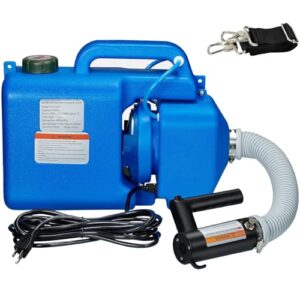
If you’re already applying scent-based deterrents like mint or cayenne around your feeders, the Lonyeon Electric ULV Backpack Fogger offers a significant delivery upgrade. Its 8-liter tank and corrosion-resistant spray head propel atomized mist 8–10 meters (roughly 32–40 ft), efficiently covering large yard areas in a single pass.
The adjustable flow screw allows precise control over output, enabling particle sizes as fine as 0–50 µm or a lighter drift, ensuring sensitive planting areas are not oversaturated.
To maintain optimal performance, limit each operating session to under 20 minutes to prevent the motor from overheating.
| Best For | Homeowners or facility managers needing quick, hands-free coverage for large areas with scent-based deterrents or disinfectants. |
|---|---|
| Primary Use | Pest/Disinfectant Spray |
| Material | ABS & PP Plastic |
| Outdoor Suitable | Yes |
| Weight | 8 L tank capacity |
| Price Range | Mid-range |
| Repositioning Needed | No |
| Additional Features |
|
- Covers big spaces fast with a powerful, adjustable mist.
- Backpack design keeps your hands free and boosts mobility.
- Supports many uses—from pest control to fragrance distribution.
- Motor is prone to overheating and failure after a year or two.
- Backpack straps aren’t very comfortable for long sessions.
- Each run should be kept under 20 minutes to avoid heat issues.
3. YOFIT Horned Hawk Bird Deterrent
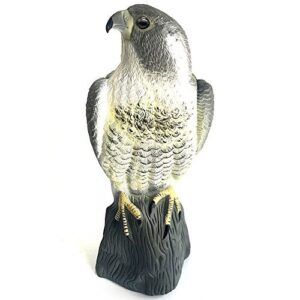
Standing nearly 16 inches tall, the YOFIT Horned Hawk Decoy leverages predator psychology to deter unwanted birds in your yard. Its molded plastic silhouette—featuring a hooked beak, forward-facing eyes, and a dark upper body—triggers an instinctive avoidance response in smaller birds like pigeons, sparrows, and swallows.
To ensure stability, fill the hollow base with sand or gravel, then mount it somewhere visible. This setup mimics a natural predator presence, enhancing its effectiveness.
The key is movement: reposition the decoy every one to two weeks to prevent birds from acclimating to the threat. Without regular relocation, birds may stop perceiving it as a genuine danger, reducing its impact over time.
| Best For | Homeowners, gardeners, or anyone dealing with pigeons, sparrows, or swallows on patios, balconies, or garden spaces who want a simple, no-fuss deterrent without installing spikes or netting. |
|---|---|
| Primary Use | Bird Deterrent |
| Material | Molded Plastic |
| Outdoor Suitable | Yes |
| Weight | 0.75 lb unfilled |
| Price Range | Budget |
| Repositioning Needed | Yes, every 1–2 weeks |
| Additional Features |
|
- Affordable and easy to set up — just fill the base, pick a visible spot, and you’re done.
- Targets common pest birds like pigeons and sparrows using their natural fear of predators.
- Hollow base lets you add sand or gravel so it stays put in wind.
- Birds will catch on if you leave it in the same spot — you have to move it every week or two, which takes effort.
- Won’t work on every bird species, so results can be hit or miss depending on what’s bugging you.
- Plastic can fade or wear down over time, especially in harsh sun or strong winds.
4. WonderField Owl Bird Deterrent
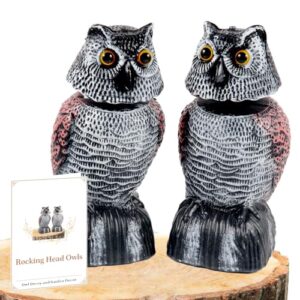
The WonderField Owl Bird Deterrent is a solid option for deterring smaller birds like doves and sparrows. Its realistic feather detailing, bright eyes, and flexible spring-connected head create a lifelike quality that triggers avoidance in pests. Standing at 8.3 inches tall, its compact size allows placement on patios, eaves, or garden stakes.
For stability, fill the base with sand. Remember to reposition it every couple of weeks—birds will habituate to a stationary decoy, reducing its effectiveness over time.
| Best For | Homeowners and gardeners looking for an affordable, humane way to keep smaller birds and critters away from gardens, patios, or boats. |
|---|---|
| Primary Use | Bird Deterrent |
| Material | PE Plastic |
| Outdoor Suitable | Yes |
| Weight | Not specified |
| Price Range | Budget |
| Repositioning Needed | Yes, periodically |
| Additional Features |
|
- Comes as a 2-pack for $18.99, so you get solid coverage without spending much
- The spring-mounted head sways in the wind, making it look more lifelike to passing birds
- Easy to move around — portable enough for gardens, barns, decks, or even a car dashboard
- Birds can get used to it quickly, so you’ll need to reposition it every few weeks to keep it working
- The 8.3-inch size might not scare off larger or bolder bird species
- Results are hit or miss — some users see a real difference, others notice no change at all
5. GiftExpress Rotating Owl Garden Deterrent
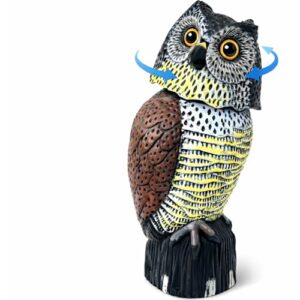
If you want something with a bit more reach, the GiftExpress Rotating Owl takes things up a notch. At roughly 16.5 inches tall, it’s noticeably larger than compact decoys, and its wind-driven rotating head makes a real difference — movement is what keeps birds guessing.
No batteries needed; simply position it somewhere with decent airflow, weigh down the hollow base with sand for stability, and let the breeze do the work. Reposition it every few weeks to prevent habituation.
| Best For | Anyone dealing with birds or small pests on patios, decks, or garden beds who wants a low-maintenance, no-power deterrent with a decorative look. |
|---|---|
| Primary Use | Bird Deterrent |
| Material | PE Plastic |
| Outdoor Suitable | Yes |
| Weight | 14.07 oz empty |
| Price Range | Budget |
| Repositioning Needed | Yes, periodically |
| Additional Features |
|
- Wind-powered rotating head adds realistic movement without any batteries or wiring
- Hollow base lets you add sand or rocks for a stable, sturdy setup
- Does double duty as a garden accent while keeping pests at bay
- Needs a decent breeze to work — light wind won’t get the head moving
- Pests can get used to it over time, so you’ll need to move it around regularly
- A few buyers reported units arriving damaged due to weak packaging
Frequently Asked Questions (FAQs)
What deters predatory birds?
Like a fence that keeps the neighbors’ dog out, the right deterrents work by blocking opportunity.
Reflective objects, motion-activated devices, physical barriers, and scent repellents all interrupt predators’ approaches before birds are ever at risk.
How long will vinegar keep birds away?
Vinegar usually keeps birds away for just a few hours to a day.
Rain, wind, and sunlight all shorten that window fast, so you’d need to reapply it constantly to see any real effect.
How do weather conditions affect predator activity levels?
Weather really sets the predator pace. Cold snaps push hunters out earlier and more often, while heavy rain forces them to hunt by scent.
High winds and midday heat? Predators pull back almost entirely.
Which bird species are most vulnerable to predation?
Small-bodied ground nesters like sparrows, wrens, and thrushes face the highest predation risk. Short incubation periods and open cup nests leave eggs and nestlings exposed to cats, snakes, and raccoons.
Do predators return after being scared away once?
Yes, predators almost always return after being scared off once. Cats, raccoons, and hawks quickly reassess the situation and come back — sometimes within minutes — if prey activity resumes and escape routes remain accessible.
How do community efforts reduce neighborhood predator pressure?
Think of it like a medieval village watch — neighbors sharing predator sightings, mapping activity online, and coordinating deterrents together cuts response time dramatically and keeps pressure off any single yard.
Conclusion
Your yard is a theater, with predator and prey locked in an ancient script.
But you’re not just a spectator. By applying natural predator deterrents—baffled poles, entrance-sized nest boxes, layered plantings, scent barriers—you rewrite the stage directions without removing any actors.
The feeding station becomes a refuge, not a trap.
Science has given you the tools. Now the birds simply need you to use them.
- https://www.birdbgone.com/blog/which-decoy-is-best-hawk-vs-owl/?srsltid=AfmBOoqCcdfKYbilALObA-b_1oQwkakNWL-O706ewst73f9jeZ2p0Q8s
- https://permies.com/t/14637/Owl-Decoys-work
- https://shooobird.com/
- https://aviancontrolinc.com/what-smell-do-birds-hate/?srsltid=AfmBOorE8PZfjdx9K308YH9S2zJx11W5CsqZlDslncifwHDDXAjqhOb8
- https://open.spotify.com/album/0DBx9l6UwEaazToAbtGuUR