This site is supported by our readers. We may earn a commission, at no cost to you, if you purchase through links.
A chickadee in January burns through roughly half its body weight in fat reserves every single night. That’s not a typo. When temperatures drop below freezing, small songbirds ramp up their metabolism by up to 50% just to stay alive until morning—which means your backyard feeder isn’t a nice amenity. It’s a survival station.
Weather shapes how birds eat, when they eat, and what they need in ways most people never consider. Understanding how weather affects bird seed consumption helps you stock the right seeds, place feeders smarter, and keep more birds coming back through every season.
Table Of Contents
- Key Takeaways
- Weather Directly Changes Seed Consumption
- Cold Weather Increases Feeding Demand
- Rain Quickly Spoils Bird Seed
- Heat Reduces Feeder Activity
- Wind, Snow, and Feeder Placement
- Frequently Asked Questions (FAQs)
- How does weather affect the breeding ecology of birds?
- How does rainfall affect birds?
- Does weather affect birds’ phenology?
- How do birds adapt to drought?
- What month should you stop feeding the birds?
- Which bird species visit feeders most in winter?
- Do squirrels compete with birds at feeders?
- How does humidity affect seed shelf life indoors?
- Do hummingbirds need special feeders during cold snaps?
- Conclusion
Key Takeaways
- In freezing temps, small birds like chickadees burn up to 50% more calories overnight, making your feeder a genuine survival tool — not just a backyard decoration.
- Rain is your feeder’s quiet enemy: wet seeds mold within 24 hours, releasing toxins that can sicken birds, so drainage design and post-rain cleaning aren’t optional.
- Heat suppresses midday feeding and turns high-oil seeds rancid fast, so shifting to shaded feeder placement and dawn/dusk refills keeps birds coming back through summer.
- Smart placement — windbreaks, roofed designs, and 4–5 feet of height — cuts seed waste by up to 40% and keeps birds feeding through wind, snow, and ice.
Weather Directly Changes Seed Consumption
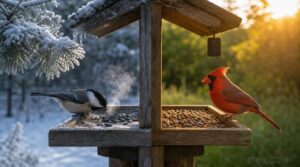
Weather doesn’t just affect your comfort — it changes how much birds eat, when they show up, and whether your feeder is doing any good at all. A cold snap, a heat wave, a rainy week — each one shifts bird behavior in ways that are pretty predictable once you know what to look for.
Once you spot the patterns, weather-driven changes in wild bird feeder activity start making a lot more sense.
Here’s how the main weather patterns play out at your feeder.
Cold Increases Calorie Needs
When temperatures drop below freezing, birds face severe temperature stress. Shivering energy burns fast — they may need up to 50% more calories just to survive the night. This triggers a Brown Fat Boost in real time, alongside a Resting Metabolism Rise and shifts in Body Composition Influence, as avian energy demands spike collectively.
Freezing temperatures force birds to burn up to 50% more calories just to survive the night
Stock high-energy seeds like black-oil sunflower to meet these critical needs. Your winter feeding strategies genuinely matter in supporting their survival.
Heat Reduces Midday Feeding
Summer flips the script. While cold pushes birds to feed constantly, Sunlight Heat Stress triggers Thermal Appetite Suppression—birds simply lose their appetite when it’s hot. Above 25°C, you’ll notice a clear Feeding Time Shift: midday visits drop sharply as Heat-Induced Panting kicks in. Seed consumption can fall 15–25% during peak hours.
That’s weather-driven bird behavior in action—predictable once you know the pattern.
Storms Disrupt Feeder Access
Storms throw everything off at once. Debris blockage—like fallen branches—can plug feeder ports or knock units sideways, creating immediate access issues.
Strong winds tilt hanging feeders, causing seed to spill rapidly and wasting resources while attracting pests.
Flooded access paths become hazardous, trapping birds and blocking caregivers from restocking feeders safely.
Power outages cripple automatic feeders entirely, halting food distribution until electricity returns.
Low visibility during storms pushes birds toward denser natural cover, reducing feeder reliance significantly.
Smart placement strategies help mitigate risks, but storms often overwhelm defenses.
- Debris and fallen branches block feeder entrances
- Wind tilts hanging feeders, spilling seed
- Flooding cuts off safe access paths
- Power outages disable automatic feeders
- Low visibility drives birds to natural shelter
Migration Shifts Feeding Peaks
Migration reshapes your feeder calendar in ways storms never could. Warmer springs push Early Spring Arrival one to two weeks earlier — meaning peak Seasonal Changes in Feeder Visitation hit before you’ve even noticed the snowdrops.
Pre-migration Fattening drives intense Stopover Fueling bursts, especially at Urban Stopover Hotspots.
Watch for weather-driven bird behavior and climate-induced mismatches — Migration Timing Cues tell you exactly when to stock up.
Cold Weather Increases Feeding Demand
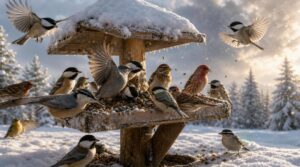
When temperatures drop below freezing, birds aren’t just cold — they’re burning through energy fast just to stay alive. Your feeder suddenly becomes one of the most important stops in their day.
Here’s what’s driving that winter feeding surge and how you can meet the demand.
Higher Winter Energy Needs
Winter hits birds hard. When temperatures drop below freezing, their metabolic rate boost kicks into overdrive — small songbirds like finches and chickadees can burn up to 20% more calories just staying warm.
Shorter days cut foraging time, so a surge in caloric intake at your feeders is completely normal.
These thermoregulation behaviors and winter foraging tactics make reliable, high-energy seeds genuinely critical for winter survival.
Best High-fat Seeds
Not all seeds pull equal weight when temperatures plunge. Fat calorie density is what really matters — and these high-fat diets deliver:
- Black-oil sunflower (~49% fat, ~520 cal/100g) — broad species appeal, thin seed coat boosts palatability
- Pumpkin seeds (~45% fat, shelled) — highly palatable, minimal seed coat impact
- Hemp seeds (~30% fat) — balanced omegas, easy access
- Sesame seeds (~50% fat) — dense but suit larger birds
- Flax seeds (~42% fat) — crush them; whole coats slow digestion
Storage freshness matters too — rancidity kicks in fast without airtight containers.
Snow-covered Natural Food
When snow blankets the ground, natural food scarcity hits fast. Hidden seed reserves get buried, and snow crust dynamics makes melt pocket foraging the only real option. Fluffy snow access is easier — soft layers let small beaks dig through. But hard crusts block everything.
Snow insulation benefits seeds beneath by slowing spoilage, yet cold weather drives birds straight to your feeders.
Nighttime Temperature Drops
Overnight cold is no joke for small birds. Temperature stress in birds spikes when clear nights drive hard drops—metabolic rates climb 5–15% just to stay warm. Ground frost effects near feeders also raise seed-freezing risks.
Freeze-resistant ports and feeder insulation strategies help a lot, mitigating these challenges.
Urban spots with natural nighttime heat retention stay slightly warmer, shifting weather-related seed consumption patterns noticeably by dawn.
Flocking at Feeders
Cold drives birds together — and that’s actually good for your feeder. Flocking is weather-driven bird behavior at its most visible. Mixed-species groups share warmth and watch for predators, which keeps bird activity steady through bitter mornings.
Smart feeding strategies work with this:
- Match seed preference to species — sunflower for cardinals, nyjer for finches
- Use feeder design with multiple ports to ease dominance hierarchy tensions
- Place feeders near cover, supporting predator awareness and seasonal composition shifts
Rain Quickly Spoils Bird Seed
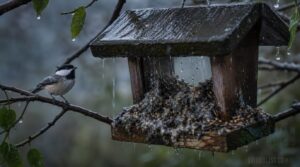
Rain is one of the fastest ways to ruin a feeder full of fresh seed. Once moisture gets in, you’re on the clock — mold, clumping, and blocked ports follow quickly.
Here’s what to watch for and how to stay ahead of it.
Wet Seed Mold Risks
Rain turns your feeder into a petri dish faster than you’d think.
Wet seeds clump and mold growth kicks in within 24 hours — releasing mycotoxin hazards like aflatoxins that genuinely sicken birds. Good moisture management for feeders means staying ahead of it.
| Risk Factor | Moisture Threshold | Seed Mold Prevention |
|---|---|---|
| Mold initiation | RH > 70%, seed > 12% moisture | Antifungal seed blends |
| Mycotoxin production | 24–48 hrs damp exposure | Rapid drying methods |
| Bacterial growth | Persistent dampness | Ventilation designs |
Clumping Blocks Feeder Ports
Mold isn’t the only problem wet seeds create. When moisture hits the feeder, wet seeds clump together and jam seed ports completely. That sticky mass blocks birds from reaching food right when they need it most.
Feeders with alignment guiding slots, adjustable block inserts, and quick-release cleaning access make unclogging fast. Baffle clog prevention and moisture seals keep ports flowing, making moisture management for feeders genuinely practical.
Drainage and Rain Guards
Clogged ports are frustrating, but a well-designed feeder fights back before water ever reaches the seed. Drainage holes and rain guards serve as your first line of defense — and Guard Material Selection matters here.
Look for feeders with:
- Integrated Water Channels that route runoff away from seed trays
- Overhang Drainage Design with sloped roofs that shed rain naturally
- Sealant Strategies around mounting points to block wind-driven moisture
Weatherproof feeder designs built from UV-stable polycarbonate or stainless steel handle rain and wet weather without warping. Solid Maintenance Routines ensure drainage holes remain clear, making moisture management effective during storms.
Post-rain Feeder Cleaning
Even a well-drained feeder needs attention after heavy rain. Your Cleaning Schedule should include a weekly cleaning — more often during wet spells.
The Disassembly Protocol is simple: take it apart, rinse with hot water, then apply a 1:9 sanitizing solution bleach mix to stop biofilm formation. Dry completely before refilling.
Mold Inspection and Drying Techniques together make feeder hygiene practices your birds will thank you for. Understanding wet seed mold risk can guide your maintenance plan.
Safe Seed Storage
Good feeder hygiene only goes so far if your backup supply is sitting in a damp garage. Cool storage in airtight packaging keeps seed longevity high and mold growth prevention simple. Aim for moisture control below 8 percent — silica gel helps. A light fungicide treatment before sealing adds another layer.
Practice rotation tracking so humidity damage to seeds and temperature fluctuations never catch you off guard.
Heat Reduces Feeder Activity
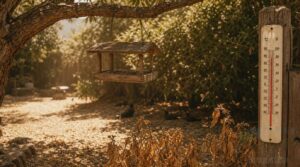
Heat doesn’t just make you uncomfortable — it quietly works against your feeder setup too. From seed going rancid to birds skipping midday visits altogether, summer warmth brings its own set of challenges.
Here’s what you need to know to keep things running smoothly when temperatures climb.
Seed Rancidity in Sunlight
Full sun turns seed rancid faster than you’d expect. Sunflower and other high-oil seeds are especially vulnerable — their polyunsaturated fats break down through photooxidation, leaving behind that telltale stale, soapy smell.
Rancidity smell checks are your first warning. Use sun-shielded feeders and opaque storage solutions to slow UV-induced rancidity.
Shade isn’t just comfort — it’s seed preservation.
Dawn and Dusk Feeding
At dawn and dusk, birds shift into high gear. These crepuscular behaviors aren’t random—they’re weather-driven survival strategies. Low-light foraging allows birds to access feeders when predator avoidance is easier and midday heat hasn’t yet peaked.
Energy surge timing is critical: chickadees and finches front-load calories at first light, then refuel at dusk before roosting.
Shade Placement Benefits
Smart shade utilization creates a cooler microclimate that keeps birds comfortable and seeds fresh longer.
Proper summer heat feeder placement delivers these key benefits:
- Lowers feeder temperatures 15–20°F during peak sun hours
- Cuts UV-induced rancidity, boosting seed longevity
- Reduces condensation and moisture clumping
- Extends feeding windows beyond just dawn and dusk
- Draws more consistent visits through bird comfort
Sheltered feeder locations are a simple win.
UV-resistant Feeder Materials
Your feeder’s material matters more than you’d think. Standard plastics crack and warp within a few years due to UV degradation — bad news for both seed freshness and UV-induced rancidity.
Opting for UV-resistant polycarbonate durability ensures longevity through seasons of direct sun, while fiber-reinforced composites add structural toughness. Stainless steel resilience excels in withstanding heat and moisture.
Lighter colors help mitigate heat through their reflective properties. Ultimately, a weatherproof setup built from quality materials simply lasts.
Fresh Water During Heat
Heat stress on birds is real — and seed isn’t the only thing they need. When temperatures climb, a reliable water source can be the difference between a thriving yard and an empty one. Smart water provision keeps birds active longer.
- Cool water placement in shade prevents overheating and algae
- Shallow water trays let small songbirds drink safely
- Multiple water stations reduce crowding during peak heat
- A gentle water ripple signals freshness and invites birds in
- Elevated water dishes minimize ground contamination near feeders
Wind, Snow, and Feeder Placement
Wind and snow are two weather forces that can quietly wreak your feeding setup before you even notice.
Birds will skip a feeder that’s icy, exposed, or buried — no matter how good the seed is.
A few smart placement choices make all the difference, and here’s where to start.
Windbreaks Protect Feeding Birds
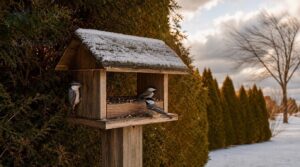
A windbreak is one of the simplest feeder placement strategies — and one of the most effective. Position it on the prevailing wind side, extending 6–12 feet out, and you’ve created a sheltered area that cuts gusts dramatically.
That calmer pocket encourages weather-related seed consumption patterns by keeping birds on the feeder longer, reducing waste by up to 40%.
Ice Blocks Seed Access
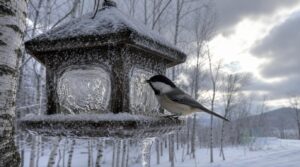
Ice buildup is a real problem — frozen ports mean locked-out birds.
But here’s something worth knowing: ice blocks can actually work in your favor. Use them to create a temporary ice windbreak around the seed tray, enabling precise portion control and tiered seed levels for different species. Their melt-release mechanism refreshes access naturally, and the anti-theft pocket design limits weather exposure and seed freezing without full disassembly.
Roofed Feeder Designs
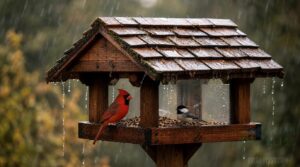
A good roof changes everything. Sheltered feeder designs with overhangs — usually extending two inches past the tray — cut weather exposure greatly and slow seed spoilage. Rain guards do the heavy lifting during showers.
Look for a snow-shedding pitch around 15–20 degrees, transparent view panels so you can monitor seed levels at a glance, and hinged roof access for quick, clean refills without the hassle.
Raised Feeder Height
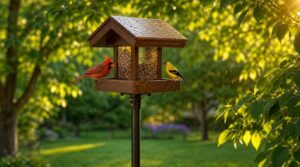
Height matters more than most people realize. Mounting your feeder 4–5 feet off the ground isn’t just about smart feeder placement — it directly shapes weather-related seed consumption patterns by reducing splash contamination and improving airflow after rain.
- Elevated visibility draws birds faster, cutting hesitation time
- Ground pest deterrence keeps squirrels and rodents at bay
- Neck strain drops when birds feed at natural breast height
Predator avoidance also improves, and seed spillage decreases noticeably.
Weather-based Feeding Adjustments
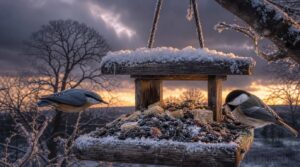
Once your feeder sits at the right height, the next step is feeding smarter with the weather, not against it. Forecast-Driven Refills—topping up before storms hit, not after—and Adjust Seasonal Seed Ratios by prioritizing high-fat options in winter.
Adaptive Feeding Schedules, Emergency Food Reserves, and Microclimate Feeder Placement work together to minimize waste while ensuring birds return consistently.
Frequently Asked Questions (FAQs)
How does weather affect the breeding ecology of birds?
Timing is everything.
Weather shapes bird breeding from start to finish — shifting nest initiation, altering nest survival rates, and creating phenological prey mismatches that leave hungry chicks waiting when caterpillars peak too late.
How does rainfall affect birds?
Rain throws birds off their routine, causing them to shift their flight paths, perch more frequently, and seek shelter in habitats, which ultimately raises their energy expenditure.
Insect decline pushes them toward seeds, but waterlogged seeds and spoilage deter many birds from accessing this alternative food source.
Does weather affect birds’ phenology?
Like a metronome set by the sun, weather conducts every beat of bird phenology —
First arrival, breeding onset, egg-laying dates, molt scheduling, and winter departure all shift in direct response to temperature and precipitation cues.
How do birds adapt to drought?
Drought pushes birds into survival mode fast. They shift to metabolic water conservation, ramp up enhanced kidney efficiency, and lean on birdbaths heavily.
Microclimate foraging shifts and drought-resistant seed preference keep them going.
What month should you stop feeding the birds?
There’s no single "tweet" moment — it’s more of a slow fade. Watch for temperature thresholds above 5°C holding steady, migration cues winding down, and fledgling emergence.
Regional calendars vary, but a tapering strategy beats cold-turkey stopping.
Which bird species visit feeders most in winter?
Chickadees lead the pack, with Cardinal visitors close behind. Add sparrows in numbers, Finch presence spiking when wild seeds vanish, and Woodpecker activity surging — cold weather fills your feeder fast.
Do squirrels compete with birds at feeders?
Yes, squirrels compete heavily with birds at feeders. Baffle effectiveness, elevated feeder design, and seed type rivalry all matter.
Use weight-activated perches and offer nyjer to reclaim temporal feeding windows for your birds.
How does humidity affect seed shelf life indoors?
Indoor humidity is sneakier than rain. Seeds silently absorb moisture from the air, softening their coats and inviting mold. Moisture equilibrium tips quickly — a delicate balance easily disrupted.
A desiccant strategy and controlled humidity storage keep spoilage from winning quietly, preserving seeds before decay takes hold.
Do hummingbirds need special feeders during cold snaps?
Hummingbirds absolutely need feeders that don’t freeze. Standard ones freeze quickly, leaving them with nothing.
Look for insulated feeder housing, anti‑icing port design, or solar‑powered warmers — small upgrades that keep nectar flowing when temperatures drop hard.
Conclusion
Your feeder is a lifeline stretched across the seasons, and weather pulls it taut every single day. Once you understand how weather affects bird seed consumption, you stop guessing and start responding—switching to high-fat seeds before a cold snap, cleaning up after rain before mold sets in, shifting feeders out of the summer sun.
Small adjustments. Real impact.
The chickadee that makes it to February didn’t do it alone.
- https://www.perkypet.com/articles/winter-bird-feeding
- https://www.audubon.org/magazine/top-10-foods-winter-bird-feeding
- https://sawyergardencenter.com/blog/82968/winter-wildbird-feeding-101
- https://extension.colostate.edu/gilpin/resource/winter-bird-feeding
- https://www.almanac.com/best-winter-bird-foods