This site is supported by our readers. We may earn a commission, at no cost to you, if you purchase through links.

pretty cage can still send a bird to the vet. I’ve treated parrots with bumblefoot from flat plastic perches and finches who slipped through bars sized for a cockatiel, not a canary.
The cage itself, not the bird inside it, often causes the problem.
Dimensions, bar spacing, materials, perch variety, dish placement: each detail carries real consequences for your bird’s feet, lungs, and mood.
Knowing birds need in their cage means thinking like your bird, not like a shopper. Get these essentials right, and you’ll build a space that promotes health long after the cage looks finished.
Table Of Contents
- Key Takeaways
- The Right Cage Size for Your Bird Species
- Safe Cage Materials That Protect Your Bird
- Perches Every Bird Cage Must Have
- Food and Water Dishes Done Right
- Toys and Enrichment Keep Birds Mentally Healthy
- Cage Placement Affects Your Bird’s Well-Being
- Cleaning Routines That Keep Birds Healthy
- Cage Covers and Nighttime Sleeping Needs
- Frequently Asked Questions (FAQs)
- Conclusion
Key Takeaways
- Cage size and bar spacing need to match your bird’s species exactly, since too‑small spaces and wrong-sized gaps cause injuries, stress, and even escapes.
- Stick to safe materials like stainless steel, untreated hardwood, and lead‑free coatings, because corroded metal, chipped paint, and plastic dishes can quietly poison or sicken your bird over time.
- Offer varied perch diameters and rotate enrichment toys weekly to protect your bird’s feet from conditions like bumblefoot and keep its mind active enough to avoid stress behaviors like feather‑plucking.
- Where you place the cage matters just as much as what’s inside it, so aim for a social, draft‑free spot with proper lighting, steady temperatures, and 10‑12 hours of nightly darkness for healthy sleep.
The Right Cage Size for Your Bird Species
Choosing the right cage size is one of the most important decisions you’ll make for your bird’s health and comfort.
A good starting point is reviewing top-rated parakeet cage options for home use to see how size, bar spacing, and layout work together in practice.
The space your bird lives in affects everything from how well it moves around to how stress‑free its daily life feels.
Here’s what to know about sizing, bar spacing, and setup before you start shopping.
Minimum Dimensions by Bird Size
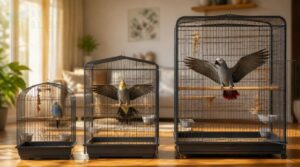
One of the most common mistakes new bird owners make is underestimating how much space their bird actually needs.
A small budgerigar requires a minimum cage of 18 × 18 × 18 inches, while a cockatiel needs at least 20 × 20 × 24 inches. African Greys need considerably more: 24 × 36 × 48 inches minimum.
According to the calculator, the minimum width rule states that the cage should be roughly twice the bird’s wingspan.
Bar Spacing for Small Vs. Large Birds
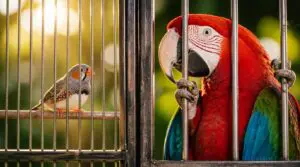
Bar spacing is just as important as cage dimensions.
For small birds like finches and canaries, gaps of ¼ to ⅜ inch prevent head entrapment and toe injuries.
Cockatiels and conures need ½ to ⅝ inch spacing.
Macaws require up to 1½ inches.
Always choose the smaller bird’s spacing when housing mixed-size groups to avoid escapes or injury.
Rectangular Cages Vs. Round Cages
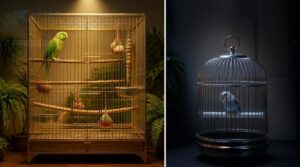
Cage shape matters more than most people realize.
Rectangular cages give your bird longer flight corridors, diverse perch arrangements along two walls, and natural corner retreats for shy moments. For cleaning, flat walls are simply easier to reach.
Round cages lack those corners and cluster perches awkwardly near the center.
When in doubt, rectangular wins.
Housing Multiple Birds Together
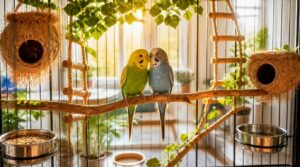
When you already have a bird and you’re thinking about adding a second, the cage you chose for one won’t cut it. Space must at least double for two birds of the same species — and grow even more for larger additions.
- Match similar-sized species to reduce dominance.
- Distribute food and water at opposite cage ends.
- Quarantine new arrivals before full introduction.
- Log daily interactions to spot early stress signs.
- Provide retreat zones so each bird has space.
Safe Cage Materials That Protect Your Bird
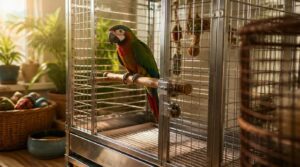
The cage itself is your bird’s whole world, so what it’s made of matters more than most people expect. Some materials are genuinely safe for long-term use, while others carry hidden risks that can harm your bird over time. Here’s what you need to know about the most common cage material options.
Stainless Steel Vs. Powder-Coated Metal
When choosing a cage material, think of it as a long-term investment in your bird’s safety. Stainless steel is the premium option — it resists rust, cleans easily, and usually lasts 10–20 years.
Powder-coated metal cages cost less upfront and come in many colors, but chipped coating can expose bare metal, creating a hidden hazard worth monitoring carefully.
Non-Toxic Coatings and Paint Safety
If a powder coating chips or peels, your bird can mouth or ingest the exposed finish — that’s why paint safety matters as much as the cage itself.
Look for coatings with zero or ultra-low VOC levels (under 50 g/L), plant-based binders, and no lead or cadmium pigments.
Always verify ASTM-certified, heavy metal-free labeling before purchasing.
Wooden Cages: Pros and Cons
Wooden cages have genuine appeal — they blend naturally with home interiors and offer mild insulating warmth that metal simply can’t match.
Here’s a quick breakdown:
- Hardwoods like beech or maple resist chewing better than softwoods
- Untreated wood absorbs moisture, inviting mold and odor
- Bird-safe materials mean zero toxic finishes or sealants
- Regular inspection for splinters keeps perch materials safe
Lead and Zinc Components to Avoid
Two hidden dangers in many cages are lead and zinc components — and both can quietly poison your bird before you notice anything wrong.
Heavy metal leaching from corroded fittings, toxic solder hazards at welded joints, and dangerous coating flakes from aging paint all create real lead exposure and zinc poisoning risks.
Always verify cage hardware is lead-free and zinc-free.
Perches Every Bird Cage Must Have
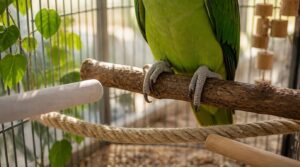
Perches do more for your bird than just give it somewhere to stand — they’re one of the biggest factors in long-term foot health. The wrong setup can lead to real problems, so getting this part right matters more than most people realize. Here’s what every bird cage should have regarding perches.
Varying Diameter Perches for Foot Health
Your bird’s feet work hard every day — and the right perches make all the difference. Think of perch diameter like footwear: wearing the same shoe size constantly causes soreness, but varying the fit keeps muscles active and healthy.
Here’s why perch diameter selection matters:
- Muscle development: Different widths engage separate muscle groups across the foot arch, building strength evenly.
- Grip variety: Alternating thin and thick perches forces micro-adjustments that mimic natural branch stepping.
- Bumblefoot prevention: Uniform diameters create chronic pressure on identical foot spots, increasing sore risk.
- Circulation support: Changing grip width redistributes weight, reducing stagnation in foot tissues.
Offer perches ranging 0.5 to 2 inches in diameter. Smaller birds do well between 0.5 and 1.0 inches; larger parrots and macaws benefit from 1.0 to 2.0 inches. Natural wood perches — like manzanita or apple branches — naturally vary in diameter along their length, delivering built-in foot health benefits without extra effort on your part.
Natural Wood Vs. Rope Perches
Both wood and rope bring something different to your bird’s daily experience. Natural wood perches — especially hardwoods like manzanita — offer textured surfaces that support beak exploration, provide a firm grip, and last considerably longer.
Rope perches encourage climbing and balance but can harbor moisture in their fibers, making thorough sanitizing difficult. Frayed rope also poses a real entanglement risk to toes and beaks.
Ideal Perch Placement Inside The Cage
Where you place each perch matters as much as what it’s made of. Install perches at three to four heights, from low near the front to high near the back, creating a natural climbing path.
Keep at least 1.5 inches from cage sides for tail clearance, and maintain 2 inches between adjacent perches to prevent toe entanglement.
Signs a Perch Needs Replacing
Even perfectly placed perches wear out. Check wooden perches weekly for cracks, splinters, or mold growth — dark staining usually signals moisture damage beneath the surface.
Rope perches fray dangerously, while plastic perches lose grip texture fast.
Watch your bird’s feet for redness or shifting weight, both early signs that a perch needs replacing immediately.
Food and Water Dishes Done Right
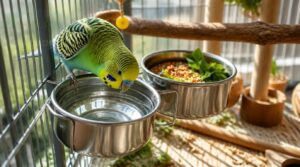
What goes into your bird’s food and water setup matters more than most people realize. The right dishes, cleaning schedule, and placement can make a real difference in keeping your bird healthy day to day. Here’s what to get right regarding feeding and hydration inside the cage.
Best Materials for Bird Bowls
The bowl you choose matters more than you might think. Stainless steel bowls are the top choice — they resist rust, won’t absorb bacteria, and hold up against determined chewers.
Ceramic bowls work well too, provided the glaze is lead-free.
Avoid plastic entirely; scratches harbor bacteria, and chemical leaching poses real health risks.
How Often to Refresh Food and Water
Fresh food and water aren’t "set it and forget it." Replace drinking water at least twice daily — morning and evening — and more frequently when temperatures climb above 80°F. If water looks cloudy or smells off, change it immediately.
Remove fresh fruits and vegetables within two hours to prevent mold. Small birds need water refreshed every 6–12 hours.
Positioning Dishes Away From Perches
Where you position your bird’s food and water containers matters more than most owners expect. Droppings from overhead perches contaminate bowls fast, so place dishes lower than most perches and 2–3 inches away from them. Keep these tips in mind:
- Use vertical space separation between perch paths and bowl locations
- Position stainless steel bowls away from corners where debris accumulates
- Keep two separate bowls — one for food, one for water — at different cage heights
This strategic bowl placement dramatically reduces dropping contamination risks and promotes consistent bird hygiene.
Mineral Blocks and Cuttlebone Benefits
Calcium and beak health go hand in hand, which is why both cuttlebone and mineral blocks belong in your bird’s cage.
Cuttlebone is roughly 85% calcium carbonate, supporting bone strength, eggshell quality, and beak conditioning through natural pecking.
Mineral blocks add trace minerals like zinc, iodine, and magnesium — filling nutritional gaps common in seed-heavy diets while stimulating your bird’s foraging instincts daily.
Toys and Enrichment Keep Birds Mentally Healthy
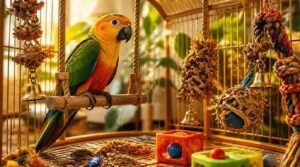
A mentally understimulated bird doesn’t just get bored — it can develop real behavioral problems, from feather-plucking to repetitive pacing.
A bored bird doesn’t just sit quietly—it can spiral into feather-plucking and restless pacing
The good news is that the right toys make a noticeable difference, and choosing them wisely isn’t as complicated as it sounds. Here’s what your bird’s cage actually needs to keep that mind engaged and healthy.
Safe Materials for Bird Toys
Not every toy that looks colorful and fun is actually safe for your bird. The materials used in bird toys matter more than most owners realize.
Here are five safe material categories to know:
- Untreated hardwoods like maple, applewood, and birch resist splintering and are non-toxic for chewing.
- Kiln-dried pine is acceptable when fully untreated and free of resins.
- Natural fibers like cotton rope, sisal, and hemp offer safe beak exercise without chemical treatments.
- Stainless steel hardware resists corrosion and won’t release toxic compounds during contact.
- BPA-free beads sized large enough to prevent swallowing add safe texture and engagement.
Avoid any toy containing galvanized or zinc-coated parts, synthetic dyes, or small detachable components. Vegetable-tanned leather is fine in moderation, but skip anything with metal snaps or chromium finishes. When in doubt, check that every component — wood, plastic, fiber, or hardware — is confirmed non-toxic before placing it inside the cage.
Rotating Toys to Prevent Boredom
Birds, like people, lose interest in the same routine. Rotate 3–5 toys weekly to keep your bird mentally engaged — swap them out on a consistent schedule so familiar objects feel new again.
Varying textures, colors, and sounds across each rotation delivers fresh sensory input that promotes healthy brain activity and reduces stress‑driven behaviors like feather‑plucking.
Foraging Puzzles and Problem-Solving Toys
Foraging puzzles tap into your bird’s instinct to seek and discover. Start with simple, one-step puzzle feeders — a lid to flip or a slider to nudge — then gradually introduce multi-compartment designs as your bird succeeds.
- Begin with single-action puzzles
- Add compartments progressively
- Use seeds, pellets, or fruit as rewards
- Rotate puzzle types every few days
- Monitor activity and feather condition for enrichment success
Chew Toys for Beak Maintenance
Your bird’s beak never stops growing, so chewable toys aren’t optional extras. Offer untreated hardwood with safe wood textures for daily beak conditioning.
| Material | Benefit | Watch For |
|---|---|---|
| Hardwood | Grinding action | Pesticide-free |
| Mineral block | Calcium support | Added chemicals |
| Sisal rope | Texture variety | Fraying |
Mineral block benefits include preventing beak overgrowth while encouraging natural beak grinding techniques—genuine enrichment toys that double as preventive care.
Cage Placement Affects Your Bird’s Well-Being
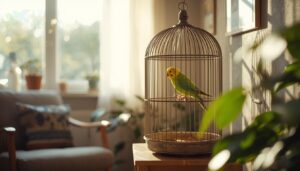
Where you place your bird’s cage matters more than most people realize. The right spot can support healthy sleep, reduce stress, and keep your bird socially engaged throughout the day. Here’s what to keep in mind when choosing the best location and environment for your bird’s cage.
Best Room Location for Bird Cages
Where you place your bird’s cage shapes their daily experience more than you might expect.
Living areas with family activity give your bird the social connection it craves, while isolated rooms breed boredom and stress.
Keep the cage against a wall for security, away from drafty windows, kitchen fumes, and unpredictable noise sources that can quietly harm your bird.
Lighting and Temperature Requirements
Lighting and temperature work together to keep your bird’s body clock on schedule.
Aim for 10–12 hours of full-spectrum light daily, ideally around 5,500–6,500 Kelvin, which closely mimics natural daylight and promotes vitamin D synthesis. Keep temperatures steady between 65–80°F, avoiding sudden swings that stress your bird’s metabolism and feather condition.
- Position lights at least 12 inches above the cage
- Use diffusers to soften glare and reduce eye strain
- Never aim heating vents or fans directly at the cage
- Cover the cage at night to protect your bird’s circadian rhythm
Drafts, Fumes, and Hazards to Avoid
Getting the light and temperature right is only part of the equation — airborne hazards can undermine your bird’s health just as quickly.
Keep the cage away from open windows, heating vents, and fans, since sudden drafts and temperature fluctuations stress small birds and raise respiratory infection risk.
Never use ammonia-based cleaners, aerosol sprays, or scented plug-ins nearby, as these release toxic fumes that irritate airways within minutes.
Social Interaction and Visual Stimulation
Air quality isn’t the only thing that shapes your bird’s mood — eyes and ears matter too.
Position the cage where your bird can watch household activity and make eye contact with you; this social signaling builds trust and curiosity.
Rotating toys and varied perch heights encourage visual exploration, while gentle daily interaction offers real socialization opportunities that mimic flock mate recognition and cooperative play.
Cleaning Routines That Keep Birds Healthy
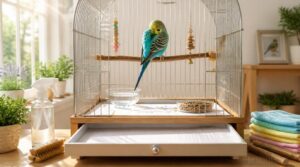
A clean cage isn’t just about appearances — it’s one of the most direct ways you protect your bird’s health every single day. Bacteria, mold, and waste can build up faster than you’d expect, and birds are surprisingly sensitive to what’s in their environment.
Here’s what a solid cleaning routine actually looks like, broken into daily, weekly, and monthly steps.
Daily Spot Cleaning Essentials
Think of daily spot cleaning as your bird’s first line of defense against bacteria and odor. Each day, remove droppings, leftover food, and feathers from the cage floor, then replace the liner.
Wipe surfaces with a damp cloth and mild, bird-safe soap. Always replace water daily, dry the bottom tray completely, and wash your hands thoroughly after.
Weekly Washing of Perches and Dishes
Scrubbing perches and dishes every week is one of the most impactful habits you can build for your bird’s health. Follow this consistent routine:
- Wash food and water bowls daily with hot water and mild, fragrance-free soap
- Rinse thoroughly to prevent soapy residue ingestion
- Wipe perches with a damp cloth, inspecting rope and wood for fraying or cracks
- Air dry completely before reassembling to avoid moisture buildup
- Log each cleaning session, noting any items needing replacement
Use dedicated brushes exclusively for cage cleaning to prevent cross-contamination.
Monthly Deep-Clean Disinfection Steps
Once a month, your cage hygiene routine needs to go deeper than wiping surfaces.
| Step | What to Do |
|---|---|
| Remove and pre-wash | Clear all contents; scrub with warm soapy water |
| Rinse thoroughly | Eliminate all residue before applying disinfectant |
| Apply bird-safe disinfectant | Follow label dwell times precisely |
| Dry completely | Air dry fully, then log date and products used |
Cage Covers and Nighttime Sleeping Needs
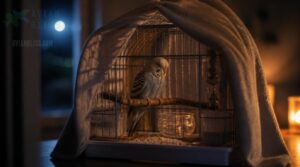
Sleep isn’t optional for birds — it’s when their bodies reset, and getting it wrong affects everything from mood to immune function. A good nighttime routine comes down to a few straightforward factors that are easy to get right once you know what to look for. Here’s what your bird actually needs when the lights go out.
Why Birds Need Nightly Darkness
Birds run on a finely tuned internal clock, and nightly darkness is what keeps it accurate. Without a consistent dark period, your bird’s circadian rhythm drifts, disrupting melatonin production and preventing genuine rest.
Artificial light at night can also trigger nighttime stress behaviors like vocalization and restlessness — signs your bird’s mental health is quietly suffering.
Choosing a Breathable Cage Cover
Not all breathable cloth works the same way, so material choice matters. Look for natural cotton blends or lightweight mesh with fine mesh density, balancing airflow with light blocking. Dual-layer designs—mesh outside, blackout fabric inside—let you adjust darkness levels.
Choose non-toxic dyes for bird safety guidelines, and select machine-washable covers. Easy cleaning methods keep your bird’s sleep schedule consistent and cage placement hygienic.
Ideal Sleep Hours for Pet Birds
As diurnal creatures, your bird’s body clock runs on light and darkness, not a clock on the wall. Aim for 10 to 12 hours of nightly darkness, roughly 10–12 hours before sunrise.
A consistent cage cover routine, paired with reduced blue light exposure and minimal light pollution after dusk, protects melatonin production and promotes a stable bird sleep schedule.
Signs Your Bird Isn’t Sleeping Well
Even with the cage covered at night, your bird’s body language tells you whether that bird sleep schedule is actually working. Watch for fluffed feather posture, open-mouth breathing, or restless perch shifting instead of settled rest.
- Daytime activity changes, like skipping toys
- Nighttime vocalization or unusual quietness
- Breathing difficulty signs, including tail bobbing
These stress signs often trace back to cage placement, busy rooms, or lingering light.
Frequently Asked Questions (FAQs)
What should I put in my bird’s cage?
Your bird’s cage works best as a living habitat, not just a box. Fill it with perches, foraging toys, fresh food and water containers, and safe climbing accessories suited to your bird’s size.
How often should I trim my birds nails?
Most pet birds need nail trims every 4 to 8 weeks, though smaller species like budgies may need them sooner, around every 3 to 6 weeks.
Can birds share a cage with other pet species?
Sharing a cage across species is rarely a peaceful arrangement. Cross-species disease spread, resource guarding, and predation risks make it unsafe. Keep birds separate and allow only supervised socialization outside enclosures.
What temperature range is safest for pet birds?
Keep your bird’s room between 65°F and 80°F, avoiding drafts, sudden swings, and extreme temperatures. Monitor cage microclimates with a nearby thermometer, since proper temperature regulation prevents both cold stress and heat stress effectively.
Do birds need a bath inside their cage?
Yes—offer a shallow bath dish or misting spray 2–4 times weekly. Both support hygiene and feather health; watch for preening afterward, a sign of good water quality, proper humidity, and an enjoyable, well-managed bathing routine.
How do I reduce noise stress in pet birds?
Lower stress by identifying noise triggers like vacuums, schedule loud chores consistently, and add steady background sound for sound masking. Watch for screaming or frantic climbing, then adjust placement, lighting, and sleep environment to restore calm behavior.
Conclusion
Pet stores love selling pretty bars and ignoring biology. But your bird doesn’t care about aesthetics; it cares about footing, air quality, and whether its world feels safe.
What do birds need in its cage, really? Correct dimensions, varied perches, hygienic dishes, rotating enrichment, and a quiet, draft‑free corner for real sleep.
Get those right, and you’re not decorating a cage. You’re building a habitat your bird can actually thrive in, season after season.
- https://www.petmd.com/bird/must-have-bird-supplies
- https://caitec.com/collections/accesories
- https://shopcheekybeaks.com/hy/blogs/bird-parenting-tips/the-best-cage-accessories-for-birds-from-perches-to-play-stations
- https://www.quillandroost.com/blogs/parrot-ponderings-feathered-wisdom/finding-the-perfect-bird-cage-your-ultimate-guide-to-a-happy-bird
- https://www.breedingcage.com/blogs/happy-bird-blog/bird-cage-setup-checklist-for-first-time-owners