This site is supported by our readers. We may earn a commission, at no cost to you, if you purchase through links.
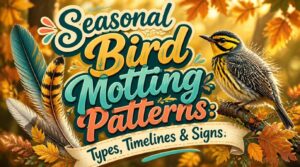
A bird that looks ragged and patchy in August isn’t sick — it’s mid-renovation. Feathers take a beating over a breeding season, and by summer’s end, most birds are quietly swapping out worn plumage for fresh gear before the demands of migration hit.
What drives that timing isn’t random. Day length, hormones, diet, and even neighborhood noise all push and pull the molt schedule in measurable ways. Miss the window, and a bird heads south with degraded flight feathers that can’t deliver the lift the journey requires.
Understanding seasonal bird molting patterns tells you far more about a bird’s health and life history than its color ever could.
Table Of Contents
Key Takeaways
- Molt timing isn’t random — day length, hormones, diet, and stress all drive a precise biological schedule that directly determines a bird’s survival odds during migration.
- Different species use different molt strategies (complete, partial, sequential, or simultaneous) based on their size, ecology, and energy budget, so no single pattern applies universally.
- Symmetrical feather loss signals a healthy molt cycle, while asymmetric gaps, stalled regrowth beyond eight weeks, or bleeding pin feathers are warning signs that warrant veterinary attention.
- Captive birds, juveniles, and females often molt on shifted timelines due to artificial lighting, developing hormone systems, and competing reproductive demands — making age and environment key variables to watch.
What is Seasonal Bird Molting?
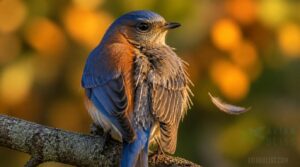
Seasonal bird molting is the controlled, cyclical process by which birds shed old feathers and grow new ones, driven by hormonal shifts tied to day length and breeding cycles.
For a closer look at how this process affects flight and insulation, these bird molting and feather loss signs to watch for help you track what’s normal and what isn’t.
It’s not random feather loss — it follows precise biological rules that vary by species, age, and time of year.
Here’s what you need to understand before exploring the different forms it takes.
Feather Renewal Basics
Feather renewal follows a precise biological sequence: old feathers shed, new ones emerge as blood feathers with active blood supply in the shaft, then harden as barbs and barbules interlock into a mature, functional structure.
Preening assists this process by aligning feather structure and removing debris.
Disrupting a blood feather can cause significant bleeding, making careful handling essential during active molt.
The flight feather regrowth timeline varies from 3 to 12 weeks depending on species and size.
Why Birds Molt
Once you understand how feathers grow, the next question is why birds replace them at all. Worn feathers lose aerodynamic efficiency and insulation capacity, directly reducing survival odds. Molt solves three core problems:
- Restores flight performance by replacing frayed primary feathers
- Rebuilds thermal insulation before seasonal temperature drops
- Reallocates energy from reproduction to feather regeneration after breeding
That timing isn’t accidental — it’s precision biology.
Molt Versus Feather Damage
Knowing why birds molt makes the next distinction easier to grasp: not every feather gap you see is part of a healthy cycle.
Normal molt produces symmetrical feather loss across matching body regions, with no skin irritation or bleeding.
Damage from plucking, parasites, or wear creates irregular, asymmetric patches, often on accessible areas like the chest, and may involve pin feather bleeding — a sign that warrants prompt attention.
Old Feathers Versus New
Once you can distinguish molt from damage, the next skill is reading what stage a bird is in.
Old feathers show UV-faded pigment, frayed barbules, and reduced aerodynamic efficiency from repeated flexion during flight. New feathers arrive with sharper vane edges, richer color, and better thermoregulation. That contrast — dull beside vivid — is your clearest visual marker of an active feather replacement cycle.
Where old feathers fade and fray, new ones arrive vivid and sharp — that contrast is molt made visible
Main Types of Bird Molt
Not all birds molt the same way — the strategy a species uses depends on its size, ecology, and energy budget. Some replace every feather at once, while others shed in careful stages to preserve flight through the process. Here are the five main molt types you’ll encounter.
Complete Prebasic Molt
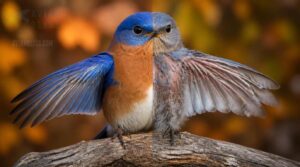
Think of the complete prebasic molt as a bird’s annual reset — every primary, secondary, and tail feather replaced in one coordinated cycle after breeding.
The sequence follows three predictable steps:
- Inner primaries drop first, preserving wing symmetry maintenance
- Feather sheath formation begins as pin feathers emerge
- Definitive basic plumage locks in before migration
Migratory plumage readiness depends entirely on completing this cycle on time.
Partial Prealternate Molt
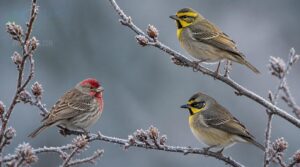
Where the complete prebasic molt replaces everything, the partial prealternate molt is selective — targeting head and facial feathers on wintering grounds to refresh breeding signals without a full plumage overhaul.
| Species Group | Molt Region | Timing |
|---|---|---|
| Warblers | Crown and face | Late winter |
| Finches | Head dominantly | Early spring |
| Flycatchers | Partial head tracts | Winter overlap |
Species variation makes field identification during this phase genuinely challenging.
Sequential Flight Feather Molt

Sequential flight feather molt solves a problem that simultaneous replacement can’t — how to renew primary feathers without grounding the bird entirely. Feathers drop in a center-out replacement pattern, preserving wing symmetry and aerodynamic balance throughout.
Watch for these field indicators of active sequential molt:
- Staggered primary gaps progressing outward from the innermost feather
- Shorter, growing feathers mid-wing alongside full-length retained primaries
- Slight wing-loading changes visible in takeoff angle
Simultaneous Molt Patterns
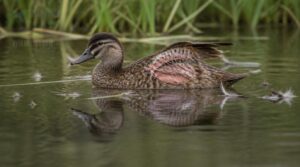
Some birds accept a brief window of reduced flight capability to replace multiple primaries at once — a high-risk, high-reward strategy timed to periods of abundant food and stable weather.
| Species | Molt Pattern | Flight Impact |
|---|---|---|
| Parulid warblers | Synchronized rectrix molt | Minimal |
| Some shorebirds | Multiple primaries replaced | Brief reduction |
| Great gray owls | Tail feathers synchronized | Temporary imbalance |
Wing loading increases temporarily, but rapid synchronized regrowth limits the vulnerability window.
Species-specific Molt Strategies
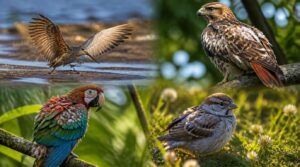
No two species run the same avian molt cycle — evolution has tuned each one differently.
- Shorebird flight priorities push wing feathers first, keeping birds airworthy during long hauls
- Raptor molt cycles stretch across years, replacing feathers selectively to preserve hunting ability
- Tropical asynchronous molt keeps multiple tracts cycling independently year-round
- Ground-feeder nutrient needs drive earlier molt starts when food peaks
Migrant timing tradeoffs shape everything.
Seasonal Molting Timelines
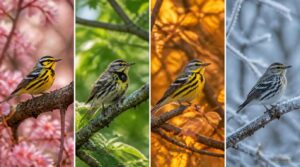
Molt doesn’t follow a single calendar — it shifts with the season, the species, and what each bird needs to survive. Timing is everything, and even a few weeks’ difference can mean the gap between a successful migration and a dangerous one. Here’s how molt unfolds across the year.
Spring Breeding Plumage
Spring is fundamentally nature’s costume change.
As day length increases, rising temperatures trigger molting hormones that launch prebreeding molt, renewing head and chest feathers first for immediate visual impact. Males usually reach full breeding plumage within two to six weeks, displaying bold yellows, reds, and blacks that signal quality to rivals and mates alike.
Summer Post-breeding Molt
Once breeding wraps up, the real work begins — postbreeding molt kicks in while food is still plentiful and energy can support rapid feather synthesis.
The primaries replacement sequence usually follows this order:
- Head and scapular feathers shed first
- Flight efficiency recovery drives wing feather priority
- Protein intake importance peaks during this window
- Migratory readiness timing locks in fresh plumage before departure
Fall Migration Preparation
Fresh plumage sets the stage — but fall migration preparation demands more than just new feathers.
| Preparation Step | Driver | Outcome |
|---|---|---|
| Fat accumulation | Shortening days | Flight fuel reserve |
| Muscle hypertrophy | Hormonal restlessness | Takeoff power |
| Stopover refueling | Navigational cues | Sustained energy expenditure |
Molt timing must finish before departure — worn feathers mid-migration simply aren’t an option.
Can Birds Molt During Winter?
Yes — some birds absolutely molt in winter, though it’s slower and more selective than summer cycles.
Watch for these winter molt indicators:
- Cold weather molt-pauses in food-scarce regions stall feather growth
- Tropical resident patterns show light, ongoing replacement year-round
- Winter plumage insulation improves as degraded feathers refresh
- Flight efficiency maintenance drives partial wing molt
- Overwintering resource availability determines whether molt progresses at all
Molt Duration by Species
How long molt takes depends entirely on the species — and the range is striking.
Hummingbird metabolic speed drives full replacement in under six weeks. Waterfowl migration pauses compress wing molt into three to five weeks on wintering grounds. Raptor molt cycles can stretch past sixteen weeks. Parrot replacement years aren’t exaggerations — some individuals molt across many months. Seabird feather counts simply demand more time.
Factors That Shape Molt Patterns
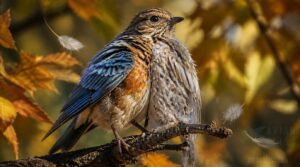
Molt doesn’t happen in a vacuum — a bird’s age, diet, stress level, and environment all push and pull the timing in different directions. Once you know what’s driving the process, the patterns start to make a lot more sense. Here’s what’s actually behind them.
Age and Sex Differences
Not every bird follows the same molt schedule — age and sex both push the timeline in different directions. Males begin prebreeding molt earlier, driven by rising testosterone, to display vibrant plumage before rivals claim prime territories. Females, focused on nesting duties, often delay.
Meanwhile, juveniles show slower feather regrowth and duller colors, with the full juvenile to adult change sometimes stretching into late summer.
Day Length and Hormones
When days grow longer, a bird’s internal clock doesn’t just notice — it triggers a precise hormonal chain reaction that drives the entire molting cycle.
Melatonin photoperiod links set the pace:
- Shorter nights reduce melatonin, cueing pituitary hormone shifts
- GnRH neuroendocrine pathways activate gonadal and feather renewal signals
- Rising prolactin molt triggers initiate post-breeding feather loss
- Artificial light disruption can desynchronize the molt schedule entirely
Nutrition and Feather Quality
Most feather problems trace back to one thing — what the bird is eating during molt.
Essential amino acids like methionine and cystine build keratin structure directly, so protein deficiency risks show up fast as thin, brittle shafts. Mineral bioavailability — especially zinc and selenium — reinforces strength. Fatty acid benefits support pigment and skin health. Together, micronutrient synergy determines whether new feathers emerge strong or fragile.
Stress and Habitat Changes
Chronic stress doesn’t just affect behavior — it actively disrupts molt timing and feather quality at the follicle level.
Urban noise impact raises baseline stress hormones, slowing keratin synthesis. Habitat fragmentation risks cut nutrient access, producing thinner regrowth. Light pollution effects shift molt start times by disrupting circadian cues. Resource access variability and temperature fluctuation compound these pressures, making molt-related stress reduction a real conservation priority.
Migration and Climate Effects
Climate isn’t just background noise — it’s actively rewriting regional molt phenology across species.
Warming insect availability shifts earlier, pulling molt windows forward to match food peaks. Stopover habitat loss compresses refueling time, forcing birds to overlap molt with active migration. Vegetation zone changes alter established routes, while altitudinal movement shifts push some species into unfamiliar molting conditions with mismatched resources and unpredictable weather.
Normal Versus Abnormal Molting
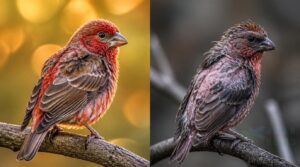
Not every molt looks the same, and knowing the difference between what’s normal and what’s a warning sign can make all the difference for a bird’s health. Some variation is expected — what you want to watch for are the patterns that consistently fall outside the normal range. Here’s what healthy molt looks like, and where things can go wrong.
Healthy Pin Feather Growth
A healthy pin feather is fundamentally a feather wrapped in a living tube — blood-supplied, keratin-sheathed, and highly sensitive during active feather regeneration.
Supporting ideal growth environments means:
- Delivering essential keratin nutrients — protein, zinc, biotin
- Keeping disturbance low to reduce pin feather stress
- Ensuring warmth aids supporting sheath retraction
- Mineral intake benefits pigment and shaft integrity
- Clean, stable housing protects emerging plumage replacement
Symmetrical Feather Loss
Once pin feathers are tracking well, the next thing to assess is whether feather loss follows a mirrored shedding pattern — the hallmark of normal molt.
| Pattern Type | What You See | What It Means |
|---|---|---|
| Symmetrical | Matched gaps both wings | Normal molt cycle |
| Asymmetrical | One-sided loss | Injury or disease |
| Nutrient-driven regrowth | Even wave head to tail | Systemic health indicators strong |
Uneven or Stalled Regrowth
When symmetry breaks down, that’s your first real signal something’s off.
Patchy regrowth timing and stalled feathers beyond six to eight weeks point to underlying problems:
- Nutritional protein gaps slow follicle recovery unevenly across tracts
- Follicle scarring impacts can permanently alter feather structure in damaged areas
- Localized skin irritation creates asymmetrical wing loading that visibly affects flight
Parasites and Skin Disease
Localized irritation often has a culprit — and it’s frequently something living on the bird.
| Parasite | Key Sign | Feather Impact |
|---|---|---|
| Mites | Mite irritation signs: excessive preening | Dull, rough plumage |
| Lice | Patchy thinning, dandruff | Feather brittleness |
| Ticks | Tick bite inflammation, lesions | Broken shafts near site |
| Migratory exposure | Migration parasite transfer at roosts | Widespread feather quality decline |
| All types | Parasite itching behaviors | Disrupted molt-related disease detection |
When to Contact Veterinarians
Parasites are manageable — but some signs mean you can’t wait and watch.
Contact an avian veterinarian immediately if you observe breathing distress signs, seizure emergency response situations, toxin exposure symptoms, or bleeding wound care needs. Urinary blockage risks and sudden collapse also demand urgent attention.
For molt specifically, stalled regrowth beyond eight weeks or abnormal feather molt patterns warrant a prompt avian health checkup.
Frequently Asked Questions (FAQs)
Can birds molt during winter?
Yes, some birds do molt in winter, particularly long-distance migrants on overwintering grounds where food and mild conditions support thermoregulation through plumage renewal. Cold weather stressors can stall progress, but partial body molt often continues to rebuild insulation before spring.
Can molt affect a birds singing ability?
Molt does affect singing. Feather growth demands significant energy, so vocal output drops during peak molt as birds redirect resources. Once new feathers mature, post-molt vocal recovery is noticeable — songs return fuller and more frequent.
Do captive birds molt differently than wild ones?
Think of a captive bird like a clock kept indoors — it still ticks, but artificial light can shift the rhythm. Without natural daylength cues, molt timing drifts, and a lower-quality diet compounds the disruption further.
How does molt impact a birds immune system?
Feather growth is expensive — the body prioritizes protein synthesis for keratin, quietly pulling resources away from immune defenses. That temporary tradeoff raises pathogen susceptibility during peak molt, but immunity rebounds reliably once feather replacement wraps up.
Can birds control which feathers they shed first?
Nature doesn’t leave this to chance. Birds follow a hardwired feather replacement sequence — primaries shed innermost-first, and shedding is always symmetrical across both wings to protect aerodynamic balance, keeping flight functional even mid-molt.
Does feather color change permanently after repeated molts?
Each molt fundamentally hits the reset button on color. New feathers carry fresh pigment deposition, so permanent fading doesn’t accumulate — though aging birds may show subtler plumage coloration shifts as pigment output gradually changes with age.
Conclusion
What separates a casual birdwatcher from someone who truly reads a bird?
Knowing that a patchy August warbler isn’t struggling — it’s rebuilding.
Seasonal bird molting patterns reveal the hidden architecture behind every plumage shift, every timing cue, every feather gap you spot in the field.
Once you understand what’s driving the molt, you don’t just see birds differently — you see them more completely, and that changes everything you observe.