This site is supported by our readers. We may earn a commission, at no cost to you, if you purchase through links.

Last summer, I sat three feet from my kitchen window, lens propped on a bean bag, waiting for a ruby-throated male to commit to one perch. He picked the same perch every time, like clockwork, and that predictability changed my whole approach to shooting hummingbirds at home.
Good nectar hummingbird feeders for wildlife photographers do more than feed birds; they direct traffic, control the angle, and give you a clean background without a single branch in the way.
The right feeder turns your window into a studio.
Below, you’ll find eight feeders that earned their spot through real field testing, plus the setup details that make your shots sharper and your birds happier.
Table Of Contents
- Key Takeaways
- Top 8 Nectar Hummingbird Feeders
- 1. Aspects HummZinger Red Hummingbird Feeder
- 2. Aspects HummZinger Excel Hanging Hummingbird Feeder Ant Moat
- 3. First Nature Red Hummingbird Feeder
- 4. Aspects Jewel Box Window Feeder
- 5. Large Outdoor Leakproof Window Hummingbird Feeder
- 6. Nature’s Way Glass Hummingbird Feeder
- 7. Hand Blown Glass Hummingbird Feeder
- 8. Zummr Red Hummingbird Ring Feeder
- Best Feeder Designs for Photography
- Capacity, Ports, and Bird Activity
- Nectar Safety and Preparation
- Placement for Sharper Wildlife Photos
- Cleaning and Pest Protection
- Frequently Asked Questions (FAQs)
- Conclusion
Key Takeaways
- The right feeder placement — 5 to 6 feet high, in partial shade, near a clean window — does more for your shots than any camera upgrade.
- Feeder design actually controls your composition: window mounts put birds inches from your lens, high perches clean up the background, and clear‑bottom dishes let you spot spoiled nectar before it chases birds away.
- Fresh nectar is non‑negotiable — mix a simple 4:1 water‑to‑sugar ratio, skip the red dye, and swap it out every 2 to 3 days in summer heat or your birds won’t stick around.
- One feeder gets you portraits, but spacing out several feeders (out of each other’s line of sight) breaks up territorial squabbles and keeps multiple birds active at once — way more to shoot.
Top 8 Nectar Hummingbird Feeders
Not every feeder is worth your time as a photographer — some just don’t set up clean shots or hold enough nectar to keep birds coming back. These eight feeders stand out for a mix of design, capacity, and bird-friendly features that actually matter in the field. Here’s what made the cut.
For a closer look at how each one performs behind the lens, check out this breakdown of the best bird feeders for wildlife photography.
1. Aspects HummZinger Red Hummingbird Feeder
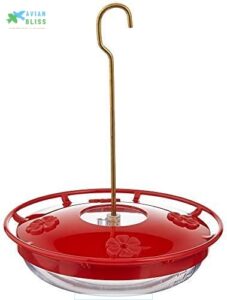
The Aspects HummZinger Red is a solid starting point for any photographer setting up a backyard hummingbird station.
It holds 12 oz of nectar across four evenly spaced ports, so you’ll often catch multiple birds in a single frame.
The clear polycarbonate bowl lets you monitor nectar levels at a glance, and the built-in ant moat keeps crawling insects out.
It’s dishwasher safe too, which makes weekly cleanups quick between shoots.
| Best For | Backyard bird enthusiasts and wildlife photographers who want a low-maintenance feeder that attracts multiple hummingbirds at once. |
|---|---|
| Material | Polycarbonate |
| Primary Color | Red |
| Capacity | Not specified |
| Pest Deterrent | Built-in ant moat |
| Cleaning Method | Dishwasher safe |
| Mounting Style | Integrated hook |
| Additional Features |
|
- Four feeding ports mean you can watch several birds at the same time without any squabbling over space
- The built-in ant moat keeps insects out of the nectar, so you’re not constantly shooing away unwanted visitors
- Dishwasher safe design makes cleaning genuinely easy — just toss it in and you’re done
- The integrated hook can make the feeder lean to one side, which isn’t ideal for a clean setup
- Birds landing on the perch can cause it to sway or tip, which gets annoying fast
- As nectar levels drop, birds may struggle to reach it — so you’ll need to refill more often than you’d expect
2. Aspects HummZinger Excel Hanging Hummingbird Feeder Ant Moat
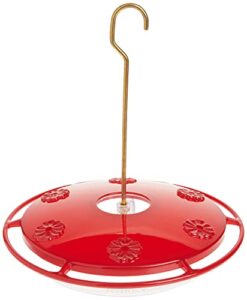
If the 12 oz Red got you hooked, the HummZinger Excel takes things a step further. This 16 oz model fits six feeding ports, so you’re more likely to catch multiple birds in one shot.
The built-in ant moat sits around the nectar bowl like a quiet bodyguard — ants can’t cross it. Raised flower ports also deflect rain, keeping your nectar cleaner longer.
It disassembles easily for weekly scrubbing, which matters more than most people expect.
| Best For | Anyone who wants to attract multiple hummingbirds at once and prefers a low-maintenance feeder that keeps bugs and rain out of the nectar. |
|---|---|
| Material | Polycarbonate |
| Primary Color | Beige |
| Capacity | 16 oz |
| Pest Deterrent | Built-in ant moat |
| Cleaning Method | Disassembles for cleaning |
| Mounting Style | Hanging hook |
| Additional Features |
|
- Six feeding ports mean more birds, more action — great if you love watching a crowd gather
- The built-in ant moat and raised flower ports do a solid job keeping pests and rain away from the nectar
- Easy to take apart and clean, which helps prevent mold and keeps the birds coming back
- The ant moat only works if you remember to keep it filled with water — let it dry out and ants will find their way in
- Bigger birds like woodpeckers can still sneak in and drain the nectar faster than you’d like
- Nectar spoils quickly in warm weather, so you’ll need to swap it out pretty often
3. First Nature Red Hummingbird Feeder
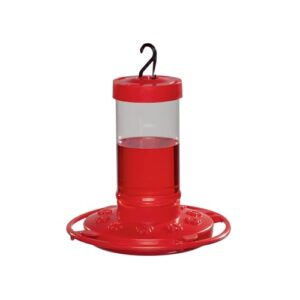
The First Nature Red Hummingbird Feeder is a solid step toward a busier, more active setup. It holds 16 oz with 10 feeding ports — that’s more birds feeding at once, which means more action in your frame.
The wide-mouth jar makes filling fast, and the two-part base pulls apart for easy cleaning. One heads‑up: it doesn’t have a built‑in ant moat, so you may need to add one separately.
| Best For | Hummingbird lovers who want a high-capacity feeder that’s easy to fill and clean, and don’t mind dealing with the occasional ant or bee. |
|---|---|
| Material | Plastic |
| Primary Color | Red |
| Capacity | 16 oz |
| Pest Deterrent | None included |
| Cleaning Method | Two-part base design |
| Mounting Style | S-hook or limb |
| Additional Features |
|
- Wide-mouth jar makes refilling quick and mess-free
- Two-part base pulls apart easily for thorough cleaning
- Tough enough to hold up against raccoons and other backyard wildlife
- No built-in ant moat, so ants can find their way to the nectar
- Narrow feeding ports may keep orioles from feeding
- Open design can let bees sneak in along with the hummingbirds.
4. Aspects Jewel Box Window Feeder
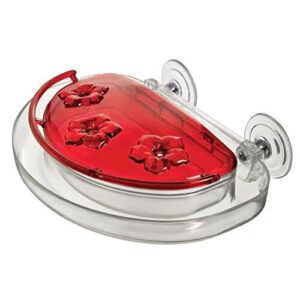
If you want birds right outside your window instead of across the yard, the JewelBox is your pick.
It holds 8 oz across three ports, with a HighView perch so birds rest while you shoot.
The detachable ant moat keeps crawlers out, and the hinged lid makes refills quick.
Suction cups mount it straight to the glass, putting your subject just inches from the lens.
| Best For | Window birdwatchers who want hummingbirds up close without leaving the house. |
|---|---|
| Material | Plastic |
| Primary Color | Red |
| Capacity | 16 oz |
| Pest Deterrent | None included |
| Cleaning Method | Two-part base design |
| Mounting Style | Hooks or limbs |
| Additional Features |
|
- HighView perch lets birds settle in instead of darting off, so you get longer looks (and better photos).
- Red cover and tinted glass cut down on bee and wasp visits compared to yellow feeders.
- Lift-out reservoir makes cleaning and refilling simple, no fumbling with screws or tight spots.
- 8 ounces empties fast if you’ve got a busy feeder, so plan on refilling often.
- Ant moat needs regular water top-offs or it stops doing its job.
- Suction cups only hold tight on a clean window, so dust or grime can mean a wobbly mount.
5. Large Outdoor Leakproof Window Hummingbird Feeder
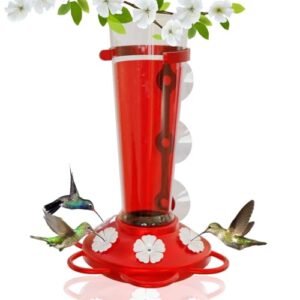
When you need bigger capacity without sacrificing a window view, this one delivers. It holds 16 to 25 ounces, so you’re not refilling every other day during peak season.
Pair that bigger reservoir with a feeder in the right hue, since understanding why hummingbirds are drawn to red feeders helps you choose a design they’ll actually visit.
The silicone gasket seal stops drips on your glass, and internal air vents keep nectar from leaking if the feeder shifts in the wind.
Three to four ports mean multiple birds, multiple angles, one shot.
Suction cups grip tightly, but clean your window first, or adhesion suffers fast.
| Best For | Hummingbird lovers who get heavy bird traffic and want a big-capacity feeder that still gives them a clear, up-close window view. |
|---|---|
| Material | Plastic |
| Primary Color | Red |
| Capacity | 32 oz |
| Pest Deterrent | None included |
| Cleaning Method | Hand wash only |
| Mounting Style | Hanging or surface |
| Additional Features |
|
- Holds 16 to 25 ounces, so you skip the daily refill chore during busy season.
- Three to four ports let several hummingbirds feed at once without crowding.
- Wide-mouth jar makes refilling and scrubbing out old nectar simple.
- Suction cups only hold strong if your window is spotless, so expect extra cleaning prep.
- Plastic perches can turn brittle and crack once summer heat really kicks in.
- Nectar needs swapping out often to stop it from spoiling or pulling in bees.
6. Nature’s Way Glass Hummingbird Feeder
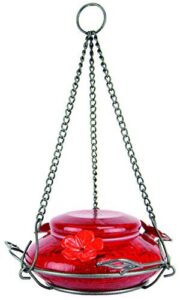
This feeder turns your yard into a tiny stage. The hand-blown glass comes in crackle and swirl patterns, so no two feeders look exactly alike, and that UV-stable coating keeps colors vivid for years instead of fading by July.
Six ports circle one continuous perch ring, so several birds feed side by side. That means more action in a single frame, and a two-part base pops apart fast when cleaning day rolls around.
| Best For | Bird lovers and backyard decorators who want a feeder that looks as good as it performs—especially those who enjoy watching hummingbirds up close and want something that’ll hold up season after season. |
|---|---|
| Material | Polycarbonate |
| Primary Color | Tinted Red |
| Capacity | 8 oz |
| Pest Deterrent | Optional ant moat |
| Cleaning Method | Removable reservoir |
| Mounting Style | Window suction cup |
| Additional Features |
|
- The hand-blown glass is genuinely beautiful—crackle and swirl patterns mean yours won’t look like everyone else’s, and the colors stay vibrant instead of fading fast.
- Cleaning is easy: the two-part base pops apart quickly, the wide opening fits your hand, and everything’s dishwasher safe.
- The perch ring lets multiple birds feed at once, so you get more activity and better views without the usual pushing and fighting.
- Glass breaks—a strong gust or a knocked pole and you’re sweeping up pieces, so placement really matters.
- Some early units have lid and gasket fit issues that can cause leaking right out of the box until you sort out the seal.
- It costs more than a basic plastic feeder, and the small flower ports won’t attract larger species like orioles.
7. Hand Blown Glass Hummingbird Feeder
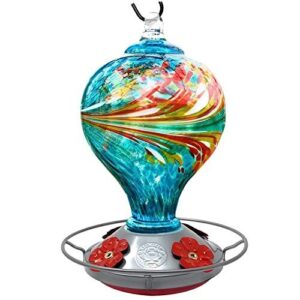
Each one rolls out of the glassblower’s hands a little differently — that’s the charm.
This feeder holds 36 fl oz of nectar and features four flower-shaped ports with a circular perch, so birds can settle in and actually pose for you.
The unscrewable base and wide mouth make refilling and cleaning straightforward, and the included ant moat keeps pests out of the equation.
Just handle it carefully; glass and concrete don’t mix well.
| Best For | Bird lovers and garden enthusiasts who want a beautiful, functional feeder that doubles as outdoor décor. |
|---|---|
| Material | Metal and plastic |
| Primary Color | Red and Crystal |
| Capacity | Not specified |
| Pest Deterrent | Bee-deterrent flower colors |
| Cleaning Method | Wide-mouth jar design |
| Mounting Style | Triple suction cups |
| Additional Features |
|
- Hand-blown glass gives each feeder a unique look, and the two-layer color infusion keeps it vibrant over time
- The unscrewable base and wide mouth make cleaning and refilling quick and painless
- Comes ready to hang with an S-hook, ant moat, and cleaning brush — no extra trips to the store
- Glass breaks if dropped, so you’ll want to be careful during setup and cleaning
- The narrow neck can make scrubbing the inside tricky, even with the included brush
- Metal and plastic components may show wear or rust after extended outdoor use
8. Zummr Red Hummingbird Ring Feeder
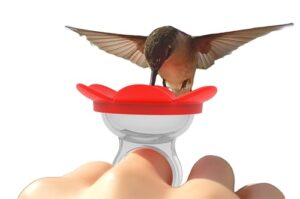
This little ring slips onto your finger and turns you into the feeder. Hand-held ring design lets hummingbirds perch and sip right off your fingertip — which sounds wild until it actually works.
It’s BPA-free, dishwasher-safe, and weighs almost nothing (about 4.5 g). Fill it with plain 4:1 sugar water, no red dye needed. Just stay patient and still. That’s the whole technique.
For close-up portraits, nothing beats the distance you’ll get here.
| Best For | Backyard bird lovers, patient photographers, and kids who want a genuinely cool hands-on experience with hummingbirds. |
|---|---|
| Material | Glass and aluminum |
| Primary Color | Red |
| Capacity | 16 oz |
| Pest Deterrent | Bee-resistant aluminum ports |
| Cleaning Method | Dishwasher safe |
| Mounting Style | Hanging basket |
| Additional Features |
|
- Hummingbirds land right on your finger — it’s as close as it sounds
- Tiny, light, and easy to clean (toss it in the dishwasher)
- BPA-free and recyclable, so it’s a low-waste option
- The top cap can be fiddly to get on and off when refilling
- The suction cup doesn’t stick well on every surface
- Only works if hummingbirds are already visiting your yard — and nectar needs swapping every few days
Best Feeder Designs for Photography
Not every feeder is built with photographers in mind, but a few designs make a real difference when you’re trying to nail that perfect shot. The shape, perch placement, and viewing angles all affect what you can capture and how cleanly you can frame it. Here are the designs worth knowing about.
High Perch Viewing Angles
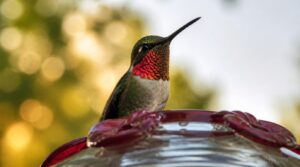
A high perch advantage changes everything about hummingbird photography. When birds rest above your eye level, you naturally shoot upward or straight across — and that angle does a lot of work.
- Downward portrait angles emphasize beak shape and head feathers
- Iridescent color capture improves with oblique light grazing the throat
- Elevated perches create clean backgrounds for silhouette shooting techniques
- Feather detail emphasis improves when ground clutter disappears from frame
Clear-bottom Observation Benefits
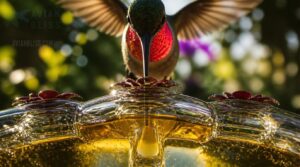
Ever wonder what’s happening just below the surface?
A clear bottom gives you instant nectar level monitoring, so refills never catch you off guard. It also helps with contamination detection, spotting mold before it ruins a shoot.
You’ll notice feeding cue visibility too, like beak dips and neck stretches, while a low‑angle composition reveals side profiles that most feeders hide completely.
Window-mounted Close-up Shots
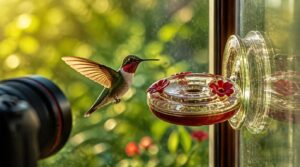
Glass changes everything. A windowmounted feeder gets you eye-level portraits without hiding in bushes.
- shaky hands ruining the moment
- blinding glare washing out the shot
- birds gone before focus locks
Stabilize against the sill, manage glass reflections, and grab a macro lens for sharp eyes. A close‑up lens can boost detail, as close-up lenses enhance detail. Window hummingbird feeders boost birdwatching visibility; a 1080p camera adds remote video streaming, cutting wing blur nicely.
Dish Versus Bottle Styles
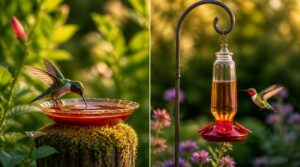
Once you’ve got the window angle down, the next call is dish or bottle.
A dish-style hummingbird feeder spreads nectar shallow and wide, great for soft reflections, but wind spills it fast. Bottle-style feeders seal nectar, slowing evaporation and steadying reservoir temperature.
Dishes clean more easily; bottles need more disassembly.
For nectar capacity and lighting control, bottles often win outdoors.
Decorative Feeder Photo Appeal
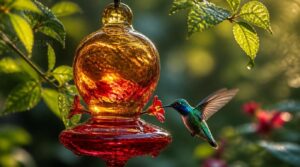
Decorative feeders pull double duty — they look good in the garden and in the frame.
A handblown glass hummingbird feeder catches golden hour light with genuine depth and warm reflectivity that plastic simply can’t match.
Textured surfaces create sharp silhouettes against greenery, and contrasting color panels naturally separate your subject from the background, doing half the composition work for you.
Capacity, Ports, and Bird Activity
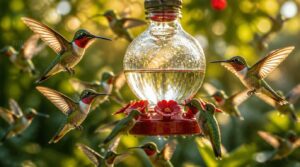
Feeder capacity and port count shape the kind of bird activity you’ll actually capture on camera. A small feeder pulls in one or two birds for tight portraits, while a larger one with six or more ports turns into a whole scene. Here’s how different setups stack up for photographers.
Small Feeders for Portraits
Small feeders are your secret weapon for tight portrait shots.
A feeder with three ports or fewer keeps crowding low, so one bird settles in and stays.
Clear acrylic bodies give you unobstructed visibility, and the narrow profile disappears nicely in a garden frame.
Less bulk, cleaner compositions — that’s the trade‑off worth making.
Large Feeders for Activity
When the action picks up, big feeders earn their keep. Holding 32 to 64 ounces, large capacity beats frequent refilling and lets several hummingbirds feed at once, cutting nectar waste from spilled angles.
Heavy-duty housing shrugs off weather for weeks. Add a smart wildlife monitoring camera with motion detection alerts and high-speed video capture, and you’ll catch every feeding burst.
Multi-port Feeding Scenes
Multi-port feeding turns one feeder into a full scene.
Feeders like the Birdfy Hum Feeder Duo let two or more hummingbirds feed simultaneously, giving you layered compositions with varied beak orientations and perch angles.
Anti-siphon nectar flow keeps ports steady during busy bursts, and the dual 1080p cameras handle high-speed video capture so you don’t miss a thing.
Reducing Territorial Disputes
Hummingbirds are notoriously territorial — one dominant bird can bully others away for minutes at a time. Spaced feeding zones break that cycle.
Place multiple feeders around your yard, out of each other’s line of sight. That separation reduces bird competition and keeps several hummingbirds active at once, giving your smart bird feeder with camera more subjects to capture.
Seasonal Nectar Demand
Nectar supply isn’t constant — it peaks in May and July, then dips hard in June. That June Gap means fewer natural flowers, so hummingbirds lean heavily on your feeder.
Stock a larger-capacity model during those lean weeks.
Your smart bird feeder with camera will still catch visits, but expect less traffic than peak months.
Nectar Safety and Preparation
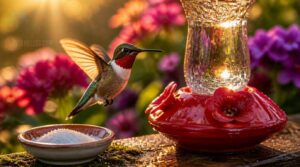
What you put in your feeder matters just as much as the feeder itself. Bad nectar drives hummingbirds away — and ruins your chances of getting that perfect shot. Here’s what you need to know to keep things fresh, safe, and photo-ready.
Four-to-one Sugar Ratio
Get the ratio wrong, and you’re not feeding hummingbirds—you’re starving them. Mix one part sugar with four parts hot water; that’s the 4:1 water-to-sugar ratio, matching natural sucrose levels in wildflowers.
This 20% concentration fuels fast wingbeats efficiently and slows fermentation in summer heat.
Stick with this nectar recipe in your hummingbird nectar feeder, and birdwatching sessions stay active and rewarding.
Dye-free Nectar Formula
Skip the red dye—your hummingbird nectar feeder doesn’t need it. Pure cane sugar, above 99% purity, fuels fast sucrose metabolism without fillers or preservatives.
Avoiding artificial additives means less chemical exposure and better bird health. Clear sugar water also makes nectar viscosity easy to check, a quick freshness cue.
Simple nectar recipe, healthier visitors, fewer worries at your feeder.
Refrigerating Leftover Nectar
Once you’ve mixed a fresh batch, don’t let leftovers go to waste. Pour them into a glass or BPA-free container, seal it tight, and slide it toward the back of your fridge — that’s where temps stay most stable, ideally 34 to 40°F.
- Label the container with today’s date
- Use within seven to ten days
- Swirl gently before refilling to recombine settled sugar crystals
- Toss anything cloudy, sour-smelling, or showing bubbles
Avoiding Spoiled Nectar
Refrigerating leftover nectar buys you time, but what’s already in the feeder? That’s where spoilage sneaks up on you.
Nectar turns cloudy within 24 hours in warm weather — a clear sign to dump it. Sour smell, slimy film, or fuzzy growth means it’s gone. Replace nectar every 2–3 days in summer heat.
BPA-free Nectar Containers
What you store nectar in matters just as much as what goes inside it. BPA-free containers made from PET or Tritan plastic keep bisphenol A away from your nectar — and away from the birds visiting your hummingbird feeder. Here’s what makes a solid nectar container worth grabbing:
- UV-resistant plastics slow nectar breakdown in direct sun
- Airtight caps reduce fermentation between refills
- Temperature durability prevents cracking from freezing nights to hot afternoons
- Dishwasher-safe construction makes cleaning fast and thorough
Placement for Sharper Wildlife Photos
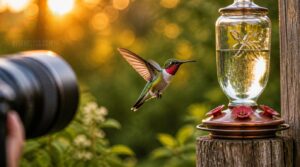
A great feeder is only half the battle, where you hang it matters just as much. The right spot can mean the difference between a blurry blob and a crisp, magazine-worthy shot. Here’s what to think about before you pick a spot.
Ideal Feeder Hanging Height
There’s a sweet spot for hanging your hummingbird feeder, and it’s 5 to 6 feet off the ground. That height keeps cats and curious pets out of reach, gives you eye-level shots without a ladder, and still lets you refill fast.
| Height | Result |
|---|---|
| Below 5 ft | Predator risk, spills |
| 5–6 ft | Safe, photo-ready |
| Above 6 ft | Birds avoid it |
| Windy spot | Pick low end |
Window Collision Prevention
Right next to a window, your camera’s at risk too, since birds can’t see glass, only sky and trees reflected back.
Window-mounted feeders need exterior patterns spaced 2 to 4 inches apart, plus UV film, to prevent hummingbird window collisions.
Migration peaks raise the danger most. These visual cues boost window visibility feeding without ruining your shot.
Partial Shade Positioning
Since nectar heats fast in full sun, partial shade gives your hummingbird feeder steady sunlight exposure and keeps your camera-enabled feeder lens glare-free for birdwatching.
Morning sun benefits early sugar flow, while afternoon shade ensures nectar temperature stability.
- Pick east-facing garden placement
- Use tree canopy for shade
- Track seasonal shade shifts
- Reduce glare on red ports
- Capture soft shadow photography
Multiple Feeder Photo Zones
One feeder is fine. Five feeders are a whole studio.
One feeder makes a snapshot, but five feeders turn your backyard into a full photography studio
Set three in a triangle for crossing flight paths, stagger heights for portraits and hover shots, then line a few up for layered landscape depth.
Add a window feeder for indoor-outdoor perspectives.
Try color-coded ports, or run a Birdfy Hum Feeder Duo for hands-free, high-speed video capture.
Cleaning and Pest Protection
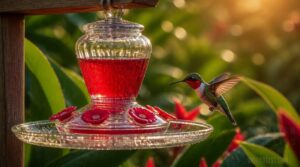
A dirty feeder or an ant-covered one will ruin your shots faster than bad light ever could. The good news is, a little upkeep keeps both bugs and grime away from your perfect frame. Here’s what actually matters regarding keeping your feeder clean and pest-free.
Ant Moat Importance
Ants are the silent feeder-wreckers nobody warns you about. One trail finds your nectar, and suddenly you’ve got contamination and mold instead of hummingbirds.
That’s why an ant moat matters so much — it’s a tiny water barrier ants simply can’t cross.
Keep it filled, and you get insect‑free feeding, less spoilage, and way less maintenance. Less scrubbing, more shooting.
Bee Guard Effectiveness
Bees love sweet nectar just as much as hummingbirds do, so a good bee guard earns its spot on the feeder. The tapered port design lets a hummingbird’s bill slide through while keeping bees out — simple insect entry prevention, no chemicals needed.
Some feeders add a bee-proof ring for extra bee exclusion.
Look for tough guard material durability; cheap plastic cracks fast under summer heat.
Rain-guard Feeder Ports
Rain hits hard out there, and a soaked feeder just means watered-down nectar nobody wants.
- Angled overhangs block moisture ingress
- Drainage holes stop puddling fast
- Tight seals limit nectar dilution risks
- Weatherproof material durability resists cracking
- Hinges support seal integrity checks
A solid rain-guard feeding port design keeps nectar fresh, even with your 1080p camera rolling through a drizzle.
Port Brush Cleaning
Keeping ports clear matters as much as keeping rain out. A good nectar port brush uses soft, non-metallic bristles, so you clean without scratching glass or plastic surfaces.
Telescoping arms help you reach tight ports without straining your wrist.
Scrub weekly with warm water and mild soap, rinse well, then let everything air-dry before refilling for proper feeder sanitation.
Hot-weather Maintenance Schedule
Summer heat changes your whole maintenance game. That brush habit you just built? Use it more often, because nectar fermentation prevention depends on speed now.
Refill every 3-4 days once it’s above 90°F, check seals weekly for heat wear, and toss cloudy batches fast. Daily hydration checks and quick ant deterrent refreshers keep your feeder—and your photo subjects—happy all season.
Frequently Asked Questions (FAQs)
Are smart camera feeders useful for wildlife photographers?
Yes — a Smart Camera Hummingbird Feeder with AI species recognition, motion-triggered capture, and a high‑definition 1080p camera gives you remote monitoring benefits, solar-powered longevity, and high-speed video capture for catching split-second wing flutters you’d otherwise miss.
What lighting setup works best for feeder portraits?
Two off-camera flashes at 45° angles do most of the heavy lifting. Add a rim backlight one stop brighter to separate the bird, and shoot at 5200K to keep colors true.
Are glass feeders more durable than plastic feeders?
Both have strengths. Glass resists scratching and heat warping, staying clearer over time. Plastic survives drops better and flexes in cold snaps. Long-term, tempered glass usually outlasts budget plastic outdoors.
Conclusion
The shot that stops your scroll doesn’t just happen by accident — it happens because everything quietly lined up before you ever raised your camera.
The best nectar hummingbird feeders for wildlife photographers do that invisible work for you, controlling your angles, directing the birds, and clearing out your messy background.
Nail your placement, keep the nectar fresh, stay patient — and one perfectly ordinary morning, that ruby‑throated flash will finally land exactly where you need him.
- https://www.birdsandblooms.com/birding/bird-photography/hummingbird-photography-tips
- https://www.audubon.org/news/how-take-exquisite-hummingbird-photos
- https://www.brandywine.org/conservancy/blog/attracting-hummingbirds
- https://smallsensorphotography.com/photographing-hummingbirds-near-feeders
- https://www.wired.com/story/best-smart-bird-feeders