This site is supported by our readers. We may earn a commission, at no cost to you, if you purchase through links.
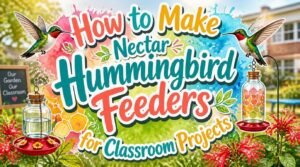
A hummingbird beats its wings up to 80 times per second—fast enough to hover in place, sip nectar, and vanish before most kids even register what they saw. That split‑second encounter is exactly what makes hummingbirds such powerful classroom visitors.
When students build their own nectar hummingbird feeders for classroom nature projects, something shifts.
Suddenly, science isn’t a worksheet. It’s a tiny ruby‑throated bird choosing its feeder over every other spot in the schoolyard.
This guide walks you through safe construction, the right nectar recipe, and simple observation activities that turn your window or outdoor space into a living science lab.
Table Of Contents
Key Takeaways
- Mix one part plain white sugar with four parts water for safe nectar, and refresh it every 2–3 days (sooner in hot weather) to keep hummingbirds healthy.
- Red colors on your feeder aren’t just decorative—hummingbirds hunt by sight, so red ports and ribbons are what actually bring them to your window.
- Cleaning matters as much as building: a weekly vinegar soak and full air-dry between fills prevent mold that can harm the birds.
- Turning each visit into a data point—logging times, weather, and bird behavior—transforms a real science investigation kids own.
Classroom Hummingbird Feeder Safety

Before your class builds their feeders, it’s worth taking a few minutes to go over some simple safety guidelines. These steps help make sure every student has a smooth, enjoyable experience from start to finish. Here’s what to keep in mind before you get started.
Ages and Supervision
Before your class dives into building feeders, knowing who does what makes all the difference. Kids under 6 need constant adult support. Ages 6–8 work best with step-by-step guidance. By age 9, students can handle simple tasks with check-ins. Ages 12 and up can mostly self-manage with an adult nearby.
Having the right supplies ready ahead of time — including knowing how to clean bird feeders safely — helps adults stay focused on guiding kids rather than scrambling for materials mid-project.
Keep your supervision ratio at 1:4–6 during hands-on work.
- Under 6: adult oversees all parts and liquids
- Ages 6–8: close adult guidance every step
- Ages 9–11: intermittent adult check-ins
- Ages 12+: independent with safety access
- All ages: complete a pre-activity safety checklist
Choking Hazard Reminders
Every kit in this project comes with a WARNING: Choking Hazard label — and for good reason.
Small parts must stay away from children under 3, and any loose components should go straight into labeled, sealed containers.
Before students touch anything, do a quick inspection. If a piece fits in a small mouth, it doesn’t belong within reach.
Safe Tool Handling
Now that small parts are sorted and secured, it’s time to talk about tools.
When your students work on this DIY hummingbird feeder, safe habits matter as much as the craft itself. Keep these basics in mind:
- Grip tool grips firmly, wrists straight
- Inspect before every use — no cracks, no frayed edges
- Carry pointy tools tip down, away from the body
Cleaning Before Use
Before you pour a single drop of nectar, clean the feeder first.
Disassemble all parts, rinse with warm water to loosen sugar residue, then use a dedicated bottle brush to scrub every corner. Soak parts in a water-and-vinegar solution for five to ten minutes, rinse well, and air dry completely before reassembly — moisture invites mold fast.
Supplies for Nectar Feeder Projects
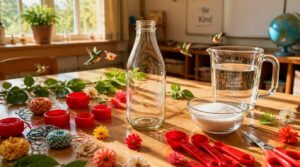
Before you start building, it helps to know exactly what you’ll need. Most of these supplies are things you might already have at home or can find at a local dollar store. Here’s what to gather before your class gets started:
Recycled Feeder Containers
You probably already have the perfect feeder reservoir sitting in your recycling bin. Recycled plastic bottles — soda bottles, juice containers, or glass jars — make excellent nectar reservoirs for your DIY hummingbird feeder. They’re a wonderful example of circular economy principles in action, keeping materials in use longer.
Fill your upcycled bottle with a simple mix of water and plain white sugar for safe hummingbird nectar — no dyes or additives needed.
Great upcycled container choices include:
- Clear soda bottles made from PET plastic, which resist cracking outdoors
- HDPE containers that are lightweight, impact-resistant, and safe for students to handle
- Glass jars that stay non-porous and won’t leach chemicals into nectar
- Juice bottles with standard-mouth openings that make filling easy without spills
Before choosing your container, inspect it carefully. Remove any non-food-grade labels or adhesive residue that could contaminate your nectar. Transparent containers are especially useful — students can monitor nectar levels at a glance, which builds real observation skills. When you upcycle household items this way, you’re also teaching students something powerful: materials have a life cycle, and choosing reuse over landfill truly creates a meaningful impact.
Upcycling clear containers teaches students that choosing reuse over landfill creates meaningful impact
Feeding Ports and Hooks
Once your container is ready, the right feeding ports and hooks bring your DIY hummingbird feeder to life. Ports are the small openings where hummingbirds sip nectar. Standard port diameter runs between 3/8 and 1/2 inch — just right for a hummingbird’s bill without letting nectar spill freely.
| Feature | What to Look For | Why It Matters |
|---|---|---|
| Port material | BPA-free plastic or acrylic | Safe, durable, classroom-friendly |
| Silicone gasket | Flexible, snug-fitting seal | Prevents leaks, replace each season |
| Feeding tube | Clear stem, 1.25-inch mounting hole | Easy nectar flow observation |
| Hanging hook | Copper wire loop or metal hook | Holds feeder securely outdoors |
Silicone gasket replacement each season keeps your seal tight and your nectar clean. Clear ports are especially useful — students can watch nectar move through the feeding tube in real time, turning a simple nectarcatcher into a live science tool. For hooks, a sturdy copper wire loop threaded through the jar lid works beautifully and holds up outdoors. Secure mounting ensures your feeder stays stable, even on breezy days.
Red Flower Decorations
Red flowers are your feeder’s silent invitation to hummingbirds. Since hummingbirds are instinctively drawn to red and orange hues, adding flower decorations isn’t just pretty — it’s science in action.
For ideal growth, choose varieties that prefer well‑drained soil for red chrysanthemums.
Here are three great options:
- Red silk flowers — durable and reusable
- Custom die-cut foam flowers — perfect for classroom crafting
- Colorfast red ribbon petals — easy and budget-friendly
Crayola Clay Accents
Want your feeder to really stand out? Crayola Clay Accents let students sculpt custom flower decorations right onto the feeder’s surface.
This air‑dry clay is buttery-soft, non-toxic, and perfect for this classroom project idea.
Press in textures, blend colors on the surface, and store unused clay in an airtight container between sessions.
Ant Moat Materials
Ants are sneaky little visitors, you don’t want near your feeder.
A plastic or stainless steel ant moat hangs above the feeder and creates a water barrier that ants simply can’t cross. Fill it with water or mineral oil — both are safe around students.
Clear plastic makes it easy to monitor the level and know when it needs a refill.
Make The Nectar Correctly
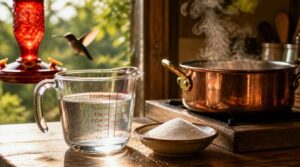
Getting the nectar right is just as important as building the feeder itself. Hummingbirds are surprisingly particular about what they drink, and the wrong mix can actually harm them. Here’s exactly what you need to know before you pour a single drop.
Sugar Water Ratio
The secret to happy hummingbirds starts with one simple recipe: one part sugar to four parts water.
Mix one cup of white granulated sugar into four cups of warm filtered water, stirring until it’s completely clear. That’s solution clarity — your sign that the sugar is fully dissolved.
This 1:4 hummingbird nectar closely mimics real flower nectar without becoming too thick or syrupy.
Ingredients to Avoid
Now that you’ve got the right ratio, let’s talk about what never belongs in it.
Skip honey, brown sugar, and artificial sweeteners — they can cause mold growth or harm tiny hummingbird kidneys. Red food coloring isn’t needed and may trigger sensitivities.
Stick to plain white granulated sugar. Simple is always safer here.
Cooling and Storage
Once the sugar water solution has cooled completely, pour it into a sealed, labeled container and refrigerate it between 4°C and 8°C.
- Log the temperature at the start and end of each class
- Keep storage away from sunlight and heat sources
- Maintain 50–60% humidity to prevent surface drying
- Use insulated cooler bags when transporting nectar
Refill Timing
Now that your nectar recipe is safely stored, knowing when to refill matters just as much. Plan to top off your feeder every 2–3 days. If temperatures climb above 80°F, don’t wait—nectar spoils faster in heat.
Watch for cloudiness or odd smells; those mean discard it and start fresh immediately. A quick daily check keeps hummingbirds happy and healthy.
Vinegar Deep Cleaning
Once a week, give your feeder a deep vinegar clean. Mix 1 part white vinegar to 4 parts water, and let it soak for 15–30 minutes—this breaks down mineral deposits and kills mold hiding in corners.
Rinse thoroughly, then clean with soap and hot water to remove any vinegar residue before refilling with fresh nectar.
Build and Decorate Feeders
Now comes the fun part — putting your feeder together! Each step builds on the last, and before you know it, you’ll have something real hummingbirds will visit. Here’s how to go from supplies to a finished, ready-to-hang feeder.
Prepare The Reservoir
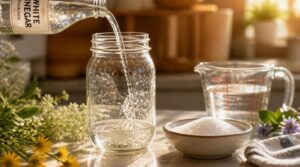
Your reservoir is the heart of the whole feeder. Grab a clean mason jar or any food-grade container—glass works great because it won’t leach chemicals into your nectar.
Before adding anything, rinse it thoroughly with warm water and white vinegar. This removes hidden residue and keeps your sugar water ratio safe and fresh for hummingbirds.
Attach Feeding Ports
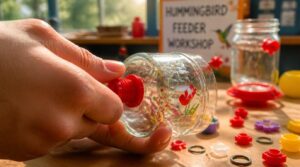
Slide the feeding port into place and give it a firm twist—port threading standards guarantee a secure seal that won’t drip. Here’s what makes a great DIY hummingbird feeder port setup:
- Impact-resistant materials handle classroom wear
- Port spacing lets multiple birds feed without crowding
- Removable ports give easy cleaning access
- A curved lip reduces residue in your nectarcatcher
- Feeding tube alignment follows a circular pattern
Add Red Attractants
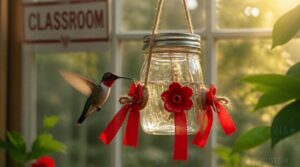
Now that your ports are in place, it’s time to make your DIY hummingbird feeder impossible to miss. Hummingbirds can’t smell nectar — they hunt by sight — so red visual lures do all the inviting.
Tie red fabric ribbons near each port or attach red silicone charms within 2–6 inches of openings for maximum color attraction. Red and orange hues trigger their natural foraging behavior instantly.
Create Hanging Loops
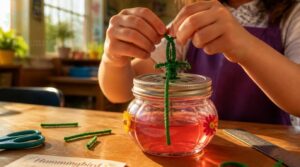
Your feeder needs a strong, centered loop to hang safely. Use nylon or polyester cord — it resists fraying outdoors better than cotton.
Choose cord with at least 50 lb tensile strength, then tie a secure double square knot at the lid’s center. Practice the knot with scrap cord first so students build confidence before handling the real feeder.
Test for Leaks
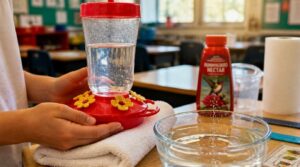
Before you fill your feeder with nectar, give it a quick leak test. Fill it with plain water, then hold it over a towel for 30 seconds. Watch for drips near the cap, ports, or hanging loop.
You can also dip it in a bowl of water and look for continuous rising bubbles — those reveal hidden gaps instantly.
Turn Feeding Into Science
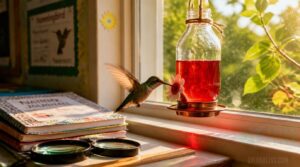
Once the feeder is hanging and the nectar is fresh, the real learning begins. Your students can turn every hummingbird visit into a genuine science investigation with just a few simple tools and some curious eyes. Here are five ways to make feeding time count.
Observe Hummingbird Visits
Once your hummingbird feeder is hanging outside, the real classroom project begins — watching what actually happens. Peak activity hits in early morning and late afternoon, so plan your observation windows around those times. You’ll notice birds arrive fast, hover briefly at the port, then dart away.
- Record the time of each visit
- Count how many distinct birds appear
- Note how long each bird hovers at the port
- Watch for territorial flight displays — one bird chasing others away
- Write down the weather conditions each day
Weather matters more than you’d think. On cooler, cloudy days, you may see more activity. If your nectar is too watery or too sweet, birds might cut visits short — that’s a great clue about nectar concentration effects. This birdwatching activity builds real pollinator awareness naturally.
Compare Feeder Colors
Once you’ve logged your visit times, shake things up a little — literally change the color. Red feeders consistently attract the fastest first visits, especially from ruby-throated hummingbirds. Try swapping in a blue or green feeder and compare weekly totals.
| Feeder Color | Observed Visitation Rate |
|---|---|
| Red | Highest |
| Blue | Moderate |
| Yellow | Lowest |
Track Pollinator Behavior
Watching closely is where the real science begins. Notice that daily visitation peaks happen between 9 and 11 a.m. — have students record exactly when birds arrive.
You’ll also spot spatial clustering patterns, as birds return to the same feeder repeatedly, showing strong site fidelity. That loyalty tells you your classroom project is working!
Journal Bird Facts
Once birds start visiting, it’s time to open your Hummingbird Nature Journal. Sketch plumage patterns and habitat features like nearby shrubs or water sources.
Record flight path directions and any vocalizations you hear. Add a biodiversity reflection note — what does each visit tell you about your local ecosystem?
These details turn simple sightings into real scientific data.
Present Student Findings
All that careful journaling pays off when it’s time to share what you found. Each student presents two to three observations backed by real data — like daily visit counts or port usage patterns. Use simple line charts and bar graphs to make your numbers pop.
- Track morning visit averages
- Compare red versus plain feeder results
- Note nectar refusal patterns by temperature
Keep presentations under three minutes — clear and confident.
Frequently Asked Questions (FAQs)
How to make a bird feeder for school project with paper?
Paper really does work! Try an egg carton feeder, a cardboard tube coated with glue and sand, or fold an origami pocket. Each design holds seeds and hangs easily in your classroom.
How do hummingbirds survive cold winter nights?
Each night, hummingbirds enter nighttime torpor — slowing their heart rate and metabolism by up to 95%. They tuck into sheltered roosts, burning fat reserves to survive, then warm up at dawn.
Can hummingbirds recognize individual humans over time?
Yes — and it might surprise you. Hummingbirds recognize individual humans over time, responding more calmly to familiar helpers. Consistent clothing, routines, and slow movements help them remember you as a safe, trusted presence.
How far do hummingbirds migrate each year?
Hummingbirds travel thousands of miles each year. Ruby-throated hummingbirds migrate up to 4,800 miles between North America and Central America — an astonishing journey for a bird smaller than your fist!
Do hummingbirds communicate with each other while feeding?
With chirps, wing-buzzes, and bold chase flights, hummingbirds signal territory and dominance at feeders. Younger birds even learn feeding strategies by watching others.
Conclusion
Patient, persistent, and purposeful—that’s what your students become when they build nectar hummingbird feeders for classroom nature projects. Every feeder they craft turns a windowsill into a science station.
Every visit from a hummingbird answers a question they didn’t know they’d have. The sugar-water ratio, the red flower ports, the observation journals—none of it feels like a lesson.
It feels like discovery. And that’s exactly the kind of science that sticks long after the school year ends.
- https://www.plt.org/educator-tips/bird-feeder-projects-natural-recycled-materials
- https://www.pbs.org/parents/crafts-and-experiments/craft-a-colorful-hummingbird-feeder
- https://slimpickinskitchen.com/hummingbird-nectar-recipe
- https://prettyhandygirl.com/diy-hummingbird-feeder
- https://biblebeltbalabusta.com/2012/06/12/feed-the-birds-easy-little-kid-plan-for-home-or-school