This site is supported by our readers. We may earn a commission, at no cost to you, if you purchase through links.

Woodpeckers don’t visit yards by accident. They follow fat, protein, and bark texture—and when you give them the right suet cake, they’ll treat your yard like a reliable food source rather than a flyover stop.
Most backyard setups miss the mark because generic suet blends don’t match what woodpeckers actually need. A Downy Woodpecker foraging in winter burns through calories fast to hold its body temperature. A Pileated drumming through dead timber in spring needs dense protein to fuel breeding. The cake in your feeder either meets those demands or it doesn’t.
Suet cakes for attracting woodpeckers work best when the ingredients, feeder style, and placement all line up with how these birds naturally feed. Get that right, and the hammering starts.
Table Of Contents
Key Takeaways
- Woodpeckers need suet with a high-fat base, real nut or insect protein, and no-melt formulas for summer — generic blends simply won’t keep them coming back.
- Mount your feeder five to six feet high, near natural cover within 15–25 meters, and use a trunk-mounted style to match how woodpeckers naturally cling and feed.
- Rotate your suet seasonally — dense fat cakes in winter below 20°F, protein-rich insect blends in spring, and small no-melt portions in summer heat above 85°F.
- Hot pepper suet paired with a dome baffle blocks squirrels while leaving woodpeckers completely unbothered, and replacing spoiled suet every one to two weeks keeps the feeder safe and productive.
Choosing Woodpecker-Friendly Suet Cakes

Not every suet cake is worth a woodpecker’s time. The right one comes down to a handful of key ingredients that match what these birds actually need. Here’s what to look for before you buy.
Understanding bird suet cake ingredients and what they provide nutritionally helps you choose a product that genuinely fuels the birds visiting your yard.
High-fat Suet Base
Woodpeckers burn through energy fast, especially in cold snaps. That’s why high-fat suet is the foundation of any good cake — beef kidney suet and tallow deliver dense calories from triglycerides and long-chain fatty acids.
Their lipid melting point sits between 60–90°F, so blocks hold shape when it counts. Antioxidants like tocopherols slow rancidity, keeping your high-fat content fresh longer. This versatile animal fat is often sourced from grass-fed cattle to guarantee high quality.
Nut and Insect Protein
Fat alone won’t cut it. Woodpeckers need nut and insect protein to support muscle, feather growth, and organ function. Roasted peanuts, almonds, and pecans deliver dense protein alongside healthy fats. Dried mealworms bring essential amino acids — leucine, lysine, and valine — with digestibility comparable to meat-based sources.
- Mealworms attract Downy Woodpeckers reliably
- Peanuts add high-protein bird snacks appeal
- Walnuts and pecans boost caloric density
- Insect amino acids support tissue repair
Sunflower and Grain Energy
Protein gets woodpeckers through the day, but sunflower seeds and grain keep the engine running. Sunflower kernels pack roughly 50–60% fat by weight, with linoleic acid supporting cell membranes and cold-weather insulation.
Grain starch burns fast, delivering quick glucose between foraging bursts. Together in high-energy suet cakes, they balance rapid fuel with sustained output — exactly what a bird drilling bark all morning needs.
Vitamin-mineral Support
Sunflower and grain fuel the body, but vitamins and minerals keep the system running cleanly. Zinc sharpens digestive enzyme activity, helping birds absorb more from every bite. Vitamin D pulls calcium into bones, while vitamin K activates the proteins that lock minerals in place.
Fortified suet cakes deliver immune system defense and antioxidant cell protection — things a wild bird can’t easily source alone.
No-melt Warm-weather Formulas
Summer heat is suet’s biggest enemy. When temperatures climb past 85°F, standard cakes turn soft, rancid, and messy fast.
No-melt formulas solve this using heat-stable fats — blends of hardened animal fat and palm kernel oil — reinforced with natural wax additives like beeswax. These ingredients prevent fat oxidation and minimize water activity, keeping your melt-resistant suet cakes for woodpeckers firm and fresh through the hottest afternoons.
Top 5 Suet Cakes for Woodpeckers
Not all suet cakes are created equal, and woodpeckers can tell the difference. The five options below stand out for their ingredients, consistency, and ability to bring birds back again and again. Here’s what’s worth putting in your feeder.
1. Blue Seal Woodpecker Suet Treat Bars
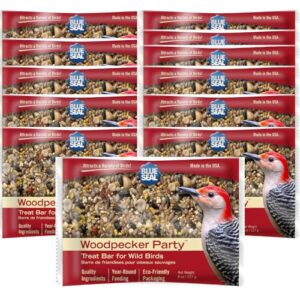
Blue Seal’s 8-ounce treat bars pack everything a woodpecker needs into one compact, easy-to-hang block. The high-fat beef suet base gives birds the dense energy they burn through fast, especially in cold months. Roasted peanuts and dried mealworms round it out with protein that Downy Woodpeckers actively seek.
For a closer look at which species flock to suet feeders each winter, birds that eat suet in winter breaks down the regulars — from Downies to nuthatches — and why fat-rich blends keep them coming back.
The bars fit standard cage feeders without trimming or fuss. They’re made in the USA, and the melt-resistant formula holds up well past 85°F, so you won’t find a greasy mess by noon.
| Best For | Backyard bird enthusiasts who want to attract woodpeckers, cardinals, and other clinging birds year-round without the mess of traditional suet. |
|---|---|
| Origin | Made in USA |
| Suet Form | Cake/Seed block |
| Year-Round Use | Yes |
| Woodpecker Attraction | Yes |
| Melt Resistance | Yes |
| Eco Packaging | 80% less material, 100% recyclable |
| Additional Features |
|
- Melt-resistant formula holds up in warm weather, so it stays clean and intact even on hot summer days
- Fits all standard suet feeders right out of the wrapper — no cutting or adjusting needed
- Eco-friendly packaging uses 80% less material and is fully recyclable, making it a low-waste choice
- Pricier than basic suet options, which can add up if you’re refilling frequently
- Starlings tend to mob suet feeders and can burn through a cake fast, leaving little for the birds you actually want to attract
- Which species show up depends a lot on where you live and how your feeder is positioned
2. Blue Seal Woodpecker Suet Cake
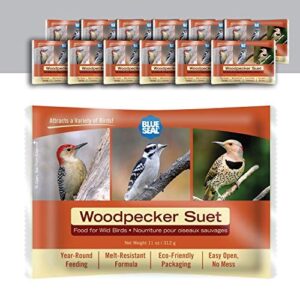
Step up from the treat bar and you get the 12-ounce suet cake — more surface area, more visits, less refilling. The same melt-resistant formula holds its shape past 85°F, so it won’t turn your feeder into a grease trap on a warm afternoon.
Cracked corn, peanut pieces, and insect-berry flavors pull in Downy and Hairy Woodpeckers, plus Nuthatches and Chickadees. The 100% recyclable wrapper opens clean, and the cake fits any standard cage feeder without adjustment.
| Best For | Backyard bird enthusiasts who want to attract a wide variety of woodpeckers, nuthatches, and chickadees year-round with minimal mess and feeder maintenance. |
|---|---|
| Origin | Made in USA |
| Suet Form | Suet cake |
| Year-Round Use | Yes |
| Woodpecker Attraction | Yes |
| Melt Resistance | Yes, but may soften in 70s°F |
| Eco Packaging | 80% less material, 100% recyclable |
| Additional Features |
|
- Melt-resistant formula holds up in warm weather, keeping your feeder clean and grease-free
- 100% recyclable, low-waste wrapper opens easily and fits any standard suet cage feeder
- Cracked corn, peanut pieces, and insect-berry flavors draw in a solid mix of clinging and cavity-nesting birds
- Cakes can be on the thin side and may crack or break during handling or installation
- May soften in direct sunlight or temperatures in the low 70s, despite the melt-resistant claim
- Contains millet, which some birders view as a filler that attracts less desirable species
3. Blue Seal Hot Pepper Bird Suet Cakes
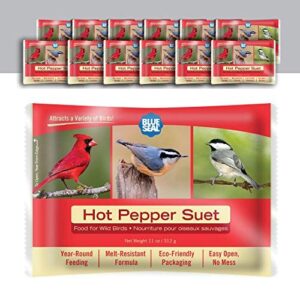
Squirrels think they’ve won — until they meet this cake. Blue Seal’s Hot Pepper Suet packs cracked corn, millet, and black oil sunflower seeds into an 11-ounce, melt-resistant formula that holds firm near 100°F.
Birds don’t feel the heat. Woodpeckers, Chickadees, and Nuthatches feed freely while squirrels and raccoons back off fast. The eco-friendly wrapper uses 80% less material than standard trays and opens without a greasy mess.
You get 12 cakes per pack — steady supply, less hassle.
| Best For | Bird lovers who want to feed a variety of wild birds year-round without constantly battling squirrels and raccoons at the feeder. |
|---|---|
| Origin | Made in USA |
| Suet Form | Seed-based suet cake |
| Year-Round Use | Yes |
| Woodpecker Attraction | Yes |
| Melt Resistance | Yes |
| Eco Packaging | 80% less material, recyclable |
| Additional Features |
|
- Hot pepper deters squirrels and raccoons while birds feed completely unbothered
- Melt-resistant formula holds up in warm weather, making it genuinely usable year-round
- Eco-friendly, easy-open wrappers cut down on packaging waste and messy handling
- Heat deterrent isn’t guaranteed — some persistent local wildlife may not be fazed by it
- Suet can leave greasy residue on feeders and hands during installation
- Birds switching from regular suet may need time to warm up to the new formula
4. Wildlife Sciences High Energy Suet
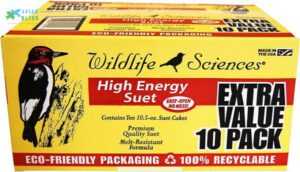
Wildlife Sciences packs a lot into each 10.5-ounce cake. Rendered beef suet forms the fat base, blended with cracked corn, black oil sunflower, and grain by-products for steady calorie delivery across cold mornings.
Each pack comes with 10 cakes, weighing 7 pounds total. The melt-resistant formula holds up during warm spells, so you don’t lose nutrition to summer heat. Woodpeckers, cardinals, and chickadees all respond well — and the 80% lighter packaging keeps waste low without cutting corners on freshness.
| Best For | Backyard bird enthusiasts who want a high-energy, low-waste suet option that holds up year-round and attracts a wide variety of species. |
|---|---|
| Origin | Made in USA |
| Suet Form | Suet cake |
| Year-Round Use | Yes |
| Woodpecker Attraction | Yes |
| Melt Resistance | Yes |
| Eco Packaging | 80% less material, 100% recyclable |
| Additional Features |
|
- Melt-resistant formula stays intact through warmer weather, making it reliable across all seasons
- Attracts a strong mix of species — woodpeckers, cardinals, chickadees, and blue jays all find it appealing
- 80% less packaging by weight than standard trays, making it one of the more eco-friendly options on the market
- Cakes can feel oily or waxy when handling, which some users find off-putting
- Higher price point compared to competing suet brands
- Bird response can vary depending on local species preferences, so results aren’t guaranteed everywhere
5. C&S Woodpecker Suet Bird Food
 View On Amazon
C&S keeps it simple and effective. Each 11-ounce suet cake blends rendered beef suet with roasted peanuts, almonds, pecans, walnuts, corn, and oats — a dense, nut-heavy recipe that woodpeckers actively seek out.
The 8-pack format suits households running multiple feeders, and the cakes fit standard wire suet holders without fuss. You can also find them in large 8-pound nugget boxes for extended feeding seasons. Refrigerate after opening to keep texture firm and freshness intact between refills.
| Best For | Backyard birders who want to attract a wide variety of woodpecker species year-round with a nutritious, high-energy suet option. |
|---|---|
| Origin | Made in USA |
| Suet Form | Suet cake |
| Year-Round Use | Yes |
| Woodpecker Attraction | Yes |
| Melt Resistance | No, softens in heat |
| Eco Packaging | Not specified |
| Additional Features |
|
- Packed with real nuts — roasted peanuts, almonds, pecans, and walnuts — giving woodpeckers the fat and protein they crave
- Fits standard wire suet feeders right out of the box, no special equipment needed
- Made in the USA by a brand with decades of experience, so quality is consistent
- Can get soft, mushy, or messy in warm weather, which may deter birds or create cleanup hassle
- Needs refrigeration after opening to maintain texture and prevent spoilage
- Bird attraction can vary depending on your location and the local woodpecker population
Feeder Placement That Attracts Woodpeckers
Where you hang your suet feeder matters just as much as what’s inside it. Woodpeckers are creatures of habit, and they’ll pass up a great cake if the setup feels wrong to them. Here are five placement strategies that make your yard an easy yes for these birds.
Mount Five to Six Feet
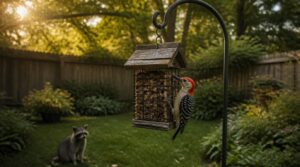
Five to six feet is the sweet spot for suet feeder placement. At this height, ground predators like raccoons can’t easily reach the suet cakes, and most woodpeckers still feel comfortable landing.
It also keeps your bird feeders at a comfortable arm’s reach for refilling and cleaning, making backyard bird feeding less of a chore.
Use Trunk-mounted Feeders
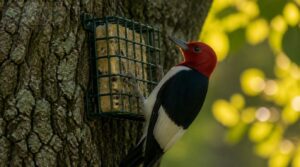
Woodpeckers are vertical feeders by nature — they cling, climb, and probe bark at trunk level. A trunk-mounted feeder mirrors that instinct, making birds feel right at home.
Look for models with adjustable clamps fitting 8–20 inch trunks and non-metallic hardware that cuts wind noise. A stable mount prevents swaying, protects bark, and keeps your suet cakes exactly where woodpeckers expect them.
Add Tail-prop Support
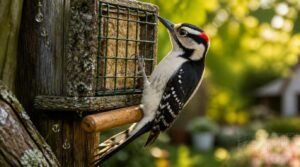
A trunk mount gets birds close, but tail-prop support keeps them steady once they arrive. Woodpeckers brace their stiff tail feathers against surfaces while feeding — a feeder without this support causes shifting and drift.
- Anti-vibration bushings reduce transmitted shocks
- Built-in bird safety guards protect talons from the propeller
- Weekly alignment checks maintain consistent suet exposure
- Food-grade grease keeps the tail bearing smooth
Place Near Natural Cover

Steady perches matter, but so does where you actually hang the feeder. Birds won’t linger near open ground for long.
Place your suet feeder within 15–25 meters of dense deciduous trees. This gives woodpeckers safe escape routes and shaded suet. Brushy understory within 10 meters adds another layer of protection, making backyard birdwatching far more rewarding during winter feeding seasons.
| Cover Feature | Key Benefit | Ideal Distance |
|---|---|---|
| Dense deciduous trees | Shade, staging perch | 15–25 meters |
| Brushy understory | Predator escape routes | Under 10 meters |
| Natural water source | Reduces feeding stress | Within 20 meters |
| Rough bark nearby | Foraging staging area | Adjacent |
| Evergreen understory | Year-round shelter | Within feeder zone |
Try Bark Crevice Feeding
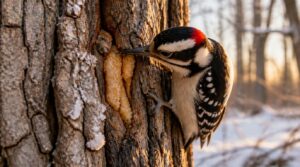
Smearing high-energy suet cakes directly into bark fissures mimics how woodpeckers naturally extract larvae from mature trees. Their chisel-like beaks are built for this — prying into tight gaps, twisting to reach concealed prey.
Press suet into rough crevices near your feeder. This bark crevice feeding technique keeps attracting woodpeckers longer, especially during winter when natural foraging sites grow scarce.
Seasonal Care and Pest Control
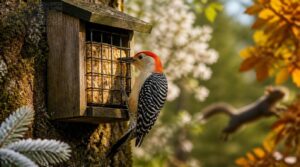
Suet doesn’t work the same way year-round, and neither do the pests that want to steal it. Each season brings its own demands, and a few smart habits keep your feeder productive and your woodpeckers coming back. Here’s what to do through every stretch of the calendar.
Winter High-fat Feeding
Cold nights below 20°F drain birds fast. High-fat suet cakes give woodpeckers roughly 2.25 times more energy per gram than carbohydrates can, without forcing them to eat excessive bulk.
High-fat suet cakes deliver woodpeckers 2.25 times more energy per gram than carbohydrates on brutal sub-20°F nights
Introduce nutrient-dense suet cakes gradually over five to seven days. Sudden fat spikes can suppress intake. Consistent high-energy suet helps maintain body temperature, cold stress strength, and winter bird survival through even the harshest spells.
Spring Protein Needs
Spring shifts everything for woodpeckers. Breeding and nesting demand far more protein than winter survival does — nutrient-dense suet cakes with mealworms, peanuts, or insect additives fill that gap directly.
High-protein bird snacks support muscle repair, amino acid profiles, and rapid feather regrowth during seasonal growth spurts. Swap in insect-enriched suet once temperatures climb consistently above freezing.
Summer No-melt Portions
Summer heat is suet’s biggest enemy. Above 85°F, standard blocks soften, drip, and turn rancid fast. No-melt formulas use low-moisture binders and extra rendered fat to hold their shape and stay safe for woodpeckers to eat.
Offer small portions your birds can finish within 48 hours, and always place feeders in shade.
Replace Spoiled Suet Regularly
Rancid suet can do more harm than good. Watch for sour odors, visible mold, or a texture that’s gone greasy or rock-hard — those are clear signs it’s time to swap.
Replace suet every one to two weeks in cooler months, weekly in summer. Double-bag and discard spoiled cakes, then scrub the feeder with hot soapy water before refilling. Clean gear equals consistent feeding success.
Use Baffles and Pepper
Squirrels don’t give up easily — so don’t let them win. Hot pepper suet cakes use capsaicin to deter mammals while woodpeckers feed without issue. Pair that with a dome-shaped baffle mounted 6–7 feet high for a solid defense.
- Use UV-resistant or powder-coated metal baffles
- Mount baffles above and below the feeder
- Choose pepper-infused suet with food-grade capsaicin
- Store pepper suet sealed and cool
- Inspect baffles after storms for cracks
Frequently Asked Questions (FAQs)
When to put suet out for woodpeckers?
Beat the cold to the punch — put suet out when nights drop below 20°F for several days. Place it early morning to match peak foraging hours and keep woodpeckers fueled with high-calorie bird food.
Why aren’t woodpeckers coming to my suet feeder?
Woodpeckers may skip your suet feeder if fresher, easier food sits nearby. A tube feeder loaded with sunflower seeds often wins. Stale suet loses scent. Morning visits drop when predator visibility is poor near the feeder.
How long does suet cake last once opened?
Think of opened suet like fresh meat — time and heat work against you. At room temperature, it lasts 5 to 7 days. Refrigerated, you’ll get 2 to 3 weeks before spoilage sets in.
Are homemade suet cakes as effective as store-bought?
Homemade suet cakes can match store-bought quality when you balance fat-to-protein ratios and skip fillers. Fresh ingredients, proper storage, and freezing extend shelf life to rival most commercial options.
Do woodpeckers prefer suet over other bird foods?
Yes, woodpeckers lean heavily toward high-energy suet over seeds. Their bodies demand dense dietary fat, and wild bird suet delivers far more calories per gram than standard seed mixes.
Conclusion
Like Thoreau learning which berries drew the thrushes, you now know what pulls woodpeckers in—and keeps them coming back. Suet cakes for attracting woodpeckers work when fat content, protein, and placement align with how these birds actually live.
Mount the feeder right. Match the season. Replace suet before it spoils. Do those three things consistently, and your yard stops being a flyover. It becomes a destination.
- https://birdsconnectsea.org/2024/03/19/bird-feeding-101-suet-earthcare-northwest
- https://bwdmagazine.com/backyard-birding-time/bird-feeding/top-four-foods-to-attract-and-feed-woodpeckers
- https://www.wildbirdsuets.com/resources/blogs/wild-bird-suets-a-guide-to-getting-started
- https://birdseedandbinoculars.com/wordpress/where-to-hang-a-suet-feeder
- https://www.pennington.com/all-products/wild-bird/resources/the-best-types-of-suet-and-feeders-for-wild-birds