This site is supported by our readers. We may earn a commission, at no cost to you, if you purchase through links.

A small bird clinging to a frozen branch in January burns through fat reserves at a pace most people don’t expect. On the coldest nights, species like chickadees can lose up to 10% of their body weight just staying warm until sunrise. That’s a survival problem, and suet feeders solve it elegantly.
Suet is rendered animal fat—dense, calorie-rich, and exactly what insect-eating birds lose access to when the ground freezes hard. A single gram delivers nine calories, which is why woodpeckers, nuthatches, and their kin seek it out with such urgency. The feeder itself isn’t just a holder; the mesh, design, and placement all shape which birds come, how safely they feed, and whether the food stays fresh long enough to matter.
Understanding how suet feeders work turns a simple backyard setup into something genuinely effective.
Table Of Contents
- Key Takeaways
- Suet Feeders Deliver High-Energy Fat
- Birds Peck Through Feeder Openings
- Feeder Designs Suit Different Birds
- Suet Attracts Clinging Wild Birds
- Placement Keeps Suet Safe
- Frequently Asked Questions (FAQs)
- When should you stop putting suet out for birds?
- How do I get birds to come to my suet feeder?
- What is the 5 7 9 rule for bird feeders?
- Do squirrels bother suet feeders?
- Can multiple suet feeders coexist in one yard?
- Does capsaicin in suet harm visiting birds?
- Which seasons benefit most from suet feeding?
- How do weather domes affect bird feeding behavior?
- Are homemade suet recipes safe for wild birds?
- Conclusion
Key Takeaways
- Suet’s calorie density — about nine kilocalories per gram — makes it one of the most effective winter foods you can offer, since small birds like chickadees (Poecile spp.) can lose up to 10% of their body weight on a single cold night just staying warm.
- Feeder design isn’t just cosmetic — tail prop feeders support woodpeckers (Picidae), upside-down feeders favor nuthatches (Sitta spp.), and wire mesh size directly controls how cleanly birds access food without wasting it.
- Placement is a safety decision as much as a convenience one — hanging suet 5 to 6 feet high, 5 to 10 meters from shrubs, and in partial shade protects birds from predators while keeping the suet fresh and firm.
- Capsaicin-infused suet deters squirrels and mammals effectively because birds lack the receptor that registers heat, making it a safe, practical way to protect your feeder without harming the wildlife you’re trying to help.
Suet Feeders Deliver High-Energy Fat
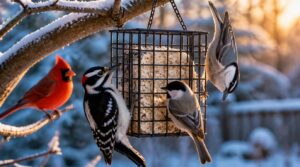
Suet is basically rendered animal fat — beef or sheep — packed with about nine calories per gram, which makes it one of the richest natural fuels you can offer wild birds.
That calorie density is exactly why suet is so effective at drawing in a variety of species, as explored in this guide to how suet feeders attract backyard birds.
During winter, birds burn through energy fast just to stay warm, so a reliable fat source at your feeder can make a real difference. Here’s a look at the key forms suet comes in and what each one brings to the birds in your backyard.
Rendered Fat Basics
Suet starts with rendered animal fat — usually beef or sheep tallow — heated until pure fat separates from tissue. Beef tallow firms up nicely at room temperature due to its high stearic acid content, making it easy to press into cakes.
Each gram delivers about nine kilocalories, packing more energy than carbohydrates or protein ever could. You can use various rendered fats such as lard or schmaltz for different nutritional needs.
Winter Energy Needs
That energy density matters most when temperatures drop. Birds boost their daily caloric intake by 20 to 40 percent in freezing weather just to stay warm — a process called thermoregulation (keeping body heat stable). Wind chill pushes those needs even higher.
In freezing weather, birds must consume up to 40 percent more calories just to stay alive
Nights are especially hard. Without food stored as fat, small birds can lose dangerous amounts of weight by dawn. Suet feeders give them exactly the high-calorie fuel they need.
Protein and Insect Mixes
Fat keeps birds warm, but protein rebuilds muscle after cold nights. Insect-based suet cakes packed with mealworms turn a simple feeder into a protein-rich meal station.
Look for these nutritious ingredients in quality mixes:
- Mealworms rich in essential amino acids
- Insects with balanced insect lipid profiles
- Sustainable protein blends from multiple sources
- Formulas with good insect protein solubility
- Labels noting shellfish allergen risks
Fruit and Nut Blends
Protein does a lot for birds, but sometimes they need quick fuel — that’s where fruit and nut blends shine. Dried blueberries and raisins deliver natural sugar boosts that kick in fast during cold mornings. Walnuts and pecans add the healthy fats and minerals that keep feathers strong.
Birds with smaller beaks prefer finer textures, so texture variety in suet cakes matters.
No-Melt Suet Options
When summer heat arrives, regular suet turns greasy fast. No-melt suet cakes solve this by using higher ratios of cornmeal, oats, or flour to bind the fat firmly — resisting temperatures up to 100°F (38°C).
That denser texture also helps birds grip and peck without the cake crumbling. It’s high-calorie bird food you can offer year-round, even on warm afternoons.
Birds Peck Through Feeder Openings
The way a bird actually gets to its meal comes down to feeder design, and it’s more thoughtful than you might expect. Each opening, gap, and grid is shaped to match how different birds naturally peck, cling, and feed. Here’s a closer look at how those design choices play out in practice.
Log-style suet feeders, for instance, are built to mimic natural tree cavities — a design detail that makes all the difference for woodpeckers and other clinging birds drawn to different types of bird seeds.
Wire Cage Access
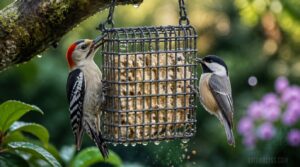
The metal suet cage works like a tiny fortress — open enough for birds, closed enough to keep trouble out.
Mesh opening sizes are usually ½ to ¾ inch, giving small beaks just enough clearance to peck without pulling out whole chunks. Metal durability matters here, since galvanized or powder-coated steel holds up through rain and repeated pecking without warping.
Suet Cake Placement
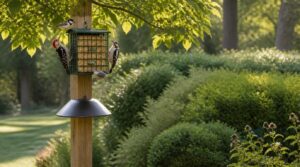
Where you hang a suet cake changes everything for the birds relying on it.
- Mount 4–5 feet high to block ground predators
- Install a squirrel baffle on the pole below
- Choose partial shade to slow melting and spoilage
- Position 10–12 feet from shrubs so birds have clear escape routes
Shift placement seasonally — shade protects suet in warmer months, while a more open spot helps birds locate the feeder during winter.
Crumb Control Design
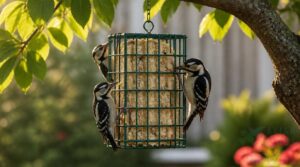
Wire mesh size makes a real difference here. A ½-inch by 1-inch plastic-coated wire lets birds peck cleanly through the cage without pulling off large chunks.
That’s why efficient feeding openings keep crumbs contained — birds get what they need, and less falls to the ground. Good bird feeder maintenance starts with a design that limits mess before it starts.
Beak-Friendly Feeding
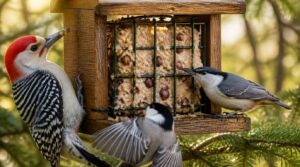
Suet is naturally gentle on beaks. Its soft, pliable texture requires almost no biting force, unlike hard seeds.
Birds benefit most when feeders offer:
- Crushed nuts blended into suet for easy grasping
- Smooth inner cage surfaces to prevent abrasion
- Wide access slots that allow comfortable angles
- Firm no-melt suet that reduces forceful pecking
- Texture variety so no single beak spot wears down
Avian nutrition works best when eating doesn’t hurt.
Perching Versus Clinging
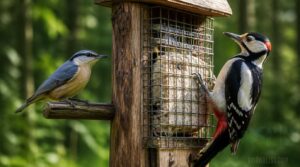
Not every bird lands the same way. Perching birds wrap three toes forward and one back, locking onto flat surfaces. Clinging birds extend their limbs further, hooking curved claws into mesh or bark.
That’s why suet bird feeders benefit from varied perch widths — narrow bars encourage clinging, while wider ones support perching stability, welcoming more species to feed comfortably.
Feeder Designs Suit Different Birds
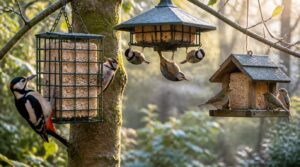
Not every bird feeds the same way, and the right feeder design can make all the difference in who shows up at your yard. Some birds cling upside down, others brace with their tails, and a few prefer sheltered spots that keep the weather out. Here are the feeder styles built to match those habits.
Tail Prop Feeders
A tail prop feeder gives woodpeckers exactly what they need — a flat paddle behind the suet cage where their stiff tail feathers can brace for balance. That support lets them peck with real force instead of awkwardly gripping.
Most models use weather-resistant poly lumber, so they hold up through rain and cold. Larger versions accommodate bigger species like Pileated Woodpeckers (Dryocopus pileatus) comfortably.
Upside-Down Feeders
Where tail prop feeders cater to woodpeckers, upside-down feeders flip the script entirely. Birds like nuthatches (Sitta spp.) and chickadees (Poecile spp.) cling beneath the mesh feeding ports, accessing suet while starlings awkwardly struggle and give up.
A weatherproof roof keeps cakes dry longer. Most models hold multiple standard suet cakes and resist cracking through seasons of hard use.
Shelter Suet Feeders
Shelter suet feeders take weather protection a step further than most designs. A built-in roof or weather guard shields cakes from rain and direct sun, keeping suet firm longer.
Many models feature four to six separate cages, so you can offer different suet blends without flavors mixing. Transparent side panels let you check cake levels at a glance, and most fill from the top with minimal mess.
Log Suet Feeders
Log feeders swap flat cakes for cylindrical suet logs, giving clinging birds like woodpeckers a natural grip surface on all sides.
Most use powder-coated metal cages paired with cedar frames, and hang from a pole or ceiling hook. Key features to look for:
- Weather-resistant roof to slow melting
- Easy-open front panel for refilling
- Anti-chew cage wiring
- Partial-shade placement to extend log life
Replace logs once they soften.
Large Woodpecker Feeders
Pileated woodpeckers are large, striking birds that need feeders built to match. Cedar construction holds up outdoors and feels natural to clinging birds. A tail prop platform braces their stiff tail feathers, keeping them balanced while they peck.
| Feature | Benefit | Best For |
|---|---|---|
| Tail prop | Helps with balance | Pileated woodpecker |
| Textured grip | Secure clinging | All woodpeckers |
| Squirrel latch | Protects suet | Every feeder |
Suet Attracts Clinging Wild Birds
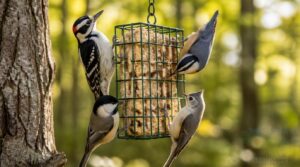
Suet doesn’t just feed birds — it draws in a very specific crowd. The species that love it most are natural clingers, built to grip vertical surfaces and hang on while they eat. Here are the wild birds you’re most likely to spot at your suet feeder.
Woodpeckers
Woodpeckers are built for clinging. Their zygodactyl feet — two toes forward, two back — grip vertical surfaces like a natural vice. Pair that with shock-absorbing skulls and a barbed tongue that probes deep into crevices, and you have a bird designed for work.
That’s why tail prop feeders are worth having. They let woodpeckers brace comfortably, turning your suet bird feeder into a proper feeding station for these high-calorie bird food lovers.
Nuthatches
Nuthatches defy gravity. These woodland wild birds creep headfirst down bark, wedging seeds into crevices — a habit called bark caching — before darting to your suet feeder for a quick fat boost.
An upside-down feeder suits them perfectly, mirroring their natural posture:
- Headfirst foraging feels instinctive to them
- Strong toes grip wire cage mesh securely
- High-calorie bird food fuels cold nights
- Territorial calls signal ownership at feeders
- Tail prop feeders go largely ignored
Chickadees
Few birds match a chickadee’s restless energy. These small visitors — black-capped, Carolina, or mountain depending on your region — dart to suet feeders for quick fat boosts during winter, then vanish to cache seeds across their territory.
That high-calorie bird food fuels cold nights when insects disappear. Watch for their signature dee-dee-dee alarm call signaling nearby danger.
Jays
Jays are cunning guests at suet bird feeders — drawn especially to fruit-infused cakes.
Watch for these signs they’ve found your setup:
- Loud, bold arrival announcing themselves
- Caching suet pieces in nearby bark
- Mimicking other birds to clear the feeder
- Returning in family groups
- Preferring feeders near oak or conifer cover
Their high-calorie bird food visits rarely go unnoticed.
Starlings
Starlings arrive like uninvited guests who somehow know exactly where you’ve set the table. Their iridescent plumage — shifting green and purple in winter light — makes them easy to spot.
They’re bold, loud, and quick to displace smaller birds from suet feeders. Adding capsaicin to your high-calorie bird food can help, since birds don’t feel the heat but mammals do.
Placement Keeps Suet Safe
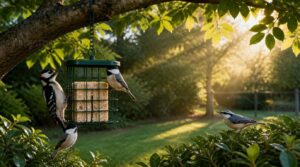
Where you hang your suet feeder matters just as much as what’s inside it. The right placement protects the suet from melting, keeps pests away, and gives birds a safe spot to feed. Here’s what to keep in mind when deciding where to set things up.
Height From Predators
Mounting your suet feeder 5 to 6 feet above ground is one of the simplest ways to protect visiting birds. At that height, ground predators like cats and raccoons struggle to reach the food.
Pair this with smooth pole baffles for squirrel-proofing, and you’ve built real predator protection into your setup without much effort at all.
Distance From Cover
Height gets you halfway there. Where you hang the feeder matters just as much as how high.
Position your suet feeder 5 to 10 meters from shrubs or trees. That gap gives birds a clear flight path in and a quick escape route out. Too close, and a cat crouched beneath the branches becomes a real ambush risk.
Shade to Prevent Melting
Direct sun turns suet into a greasy puddle fast. Once it melts, spoilage and mold growth follow quickly, and rancid fat can harm birds rather than help them.
Hang your feeder in dappled or partial shade, or use a shade screen above the cage. On hot days, that simple block can drop surface temperatures by up to 25°F — enough to keep no-melt suet firm and fresh.
Baffles Against Squirrels
Shade helps, but squirrels are a whole different problem. A steel or galvanized baffle mounted below your feeder creates a smooth, ungrippable wall that stops most climbers cold.
Dome and stovepipe designs work best — squirrels can’t find a foothold. Place the baffle at least four feet high, and you’ll keep the suet where it belongs: for the birds.
Cleaning and Replacement
Keeping your feeder clean is as important as filling it. Spoilage and mold growth sneak up fast, especially in summer heat.
- Wash with mild soap and warm water weekly
- Dry all parts completely before reloading
- Replace worn cages or cracked trays each year
Use separate tools for your bird supplies to avoid cross-contamination, and swap suet cakes weekly in warm weather.
Frequently Asked Questions (FAQs)
When should you stop putting suet out for birds?
It’s time to call it a wrap when bird visits drop for 1–2 weeks and natural insects return. In most regions, that’s late March to April — earlier in the south, later up north.
How do I get birds to come to my suet feeder?
Place your suet feeder 5 to 10 feet high, near shrubs or trees birds already visit. Use plain rendered suet first, then add peanut butter or mealworms to draw in more species.
What is the 5 7 9 rule for bird feeders?
The 5 7 9 rule places your feeder 5 feet high, at least 7 feet from structures, and 9 feet from overhead branches — keeping suet safely out of reach of squirrels and ground predators.
Do squirrels bother suet feeders?
Yes, squirrels bother suet feeders quite a bit. They’re drawn to the high-energy fat and will raid cakes repeatedly. Upside-down feeders and capsaicin-infused suet help deter them without harming birds.
Can multiple suet feeders coexist in one yard?
Multiple suet feeders work well together in one yard. Space stations 10 to 15 feet apart to reduce bird competition. Different feeder styles attract different species, so your yard becomes a shared, peaceful feeding ground.
Does capsaicin in suet harm visiting birds?
Here’s the paradox to open with: a spice that burns your mouth doesn’t even register to a bird.
Birds lack the receptor that makes capsaicin feel hot, so suet blends treated with it are safe at normal feeder concentrations.
Which seasons benefit most from suet feeding?
Winter survival is the peak season for suet feeding, but early autumn and spring nesting both create real energy gaps too. Birds benefit from high-calorie bird food across nearly every seasonal change.
How do weather domes affect bird feeding behavior?
A weather dome shields suet from rain and wind, keeping it dry and fresh longer. Birds like chickadees visit more often under domes because calmer conditions reduce stress and support steady winter survival.
Are homemade suet recipes safe for wild birds?
Homemade suet is safe when you use unsalted, unprocessed fats and avoid artificial sweeteners or seasoned meats. Stick to simple ingredients, and your birds get clean, high-calorie bird food without hidden risks.
Conclusion
A single suet feeder can support dozens of birds weekly through the harshest stretch of winter—that’s a meaningful difference when food is genuinely scarce. Understanding how suet feeders work for wild birds turns a simple wire cage into a reliable lifeline.
Choose the right design, place it thoughtfully, and keep it clean. The chickadee clinging to frozen bark at dawn isn’t just surviving on luck. Your feeder matters.
- https://www.wbu.com/products/suet-feeders/ecotough-tail-prop-suet-feeder
- https://www.jcswildlife.com/blogs/bird-food/suet-feeder-tips-for-backyard-birding
- https://www.wildbirdchalet.com/products/suet-cage-with-tail-prop
- https://georgiawildlife.com/out-my-backdoor-buyers-guide-suet-bird-puddings
- https://www.allaboutbirds.org/news/how-to-choose-the-right-kind-of-bird-feeder