This site is supported by our readers. We may earn a commission, at no cost to you, if you purchase through links.

A single suet cake can attract more than a dozen bird species to your yard—woodpeckers, chickadees, nuthatches, wrens—birds that rarely visit seed feeders. That’s not a coincidence. Suet delivers over 3,000 calories per cup, the kind of dense fuel these birds burn just staying warm on a cold January morning.
Most backyard birders know suet works. Fewer know why, or how small adjustments—what’s in the cake, where you hang it, how fresh it stays—can turn an occasional visitor into a loyal regular.
Suet cakes for backyard bird watching reward a little know-how. Get the details right and your feeders become the most active spot in the neighborhood.
Table Of Contents
Key Takeaways
- Suet delivers over 3,000 calories per cup, making it one of the most efficient energy sources you can offer backyard birds, especially in winter.
- What you put in your suet cake matters — beef tallow, unsalted peanut butter, and dried mealworms attract more species, while salt, chocolate, and mold can seriously harm birds.
- Where you hang your feeder is just as important as what’s in it — five to six feet high, near shrubs, and away from squirrel-jumping distances makes your yard a go-to stop.
- Fresh suet kept below 40°F, replaced every three to seven days, and served in a clean feeder is the simplest way to turn occasional visitors into loyal backyard regulars.
Why Backyard Birds Love Suet Cakes
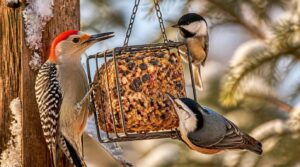
Birds don’t eat suet just because it’s there — they eat it because their bodies genuinely need it. From surviving bitter winters to fueling long migrations, suet cakes deliver exactly what backyard birds are looking for. Here’s a closer look at why suet works so well for so many species.
Understanding bird suet cake ingredients and their nutritional benefits helps you choose blends that genuinely support the birds visiting your yard.
High-Calorie Energy Boost
Think of suet cakes as a power-packed meal for tiny, tireless wings. Birds burn through calories fast, and a single cup of suet delivers over 3,000 calories — far more than seeds alone.
That calorie density makes fat-based bird food one of the most efficient energy sources you can offer, fueling their rapid metabolic needs throughout the day. This high concentration is due to the fact that fat provides 9 calories per gram.
Winter Warmth Support
When temperatures drop, birds face a real fight to stay warm. Fat stored from energy-dense fats becomes their built-in heater, helping regulate body temperature through the night.
Suet steps in as a critical winter food source when snow buries seeds and insects vanish. That steady supply of high-calorie treats keeps their metabolism burning strong through the coldest winter months.
Migration Fuel
Some birds nearly double their body weight before takeoff. That extra fat isn’t bulk — it’s metabolic fuel, packed on intentionally before crossing deserts or open seas.
Suet cakes help speed up fat deposition rates at backyard stopover sites. A quick stop at your feeder gives migrating birds the high-calorie treats they need to keep moving.
Feather and Muscle Health
Fat fuels the journey — but protein builds the bird.
Fat powers every wingbeat, but protein is what builds the bird that flies
Feathers are made of keratin, a protein that depends on sulfur amino acids like methionine and cystine. Without enough, feathers grow in poorly.
Suet cakes with mealworms or nuts deliver:
- Methionine for keratin formation
- Amino acids for strong feather regrowth
- Calories to keep muscles working through cold nights
Birds That Eat Suet
Dozens of wild birds visit suet feeders, but a few show up most often. Woodpeckers, nuthatches, and chickadees are the most loyal guests — clinging, hammering, and pecking with ease.
Bluebirds and wrens stop by too, even though they skip seed feeders entirely. Hang a cake, and you’ll quickly see just how many bird species your yard can hold.
Choose Safe Suet Cake Ingredients
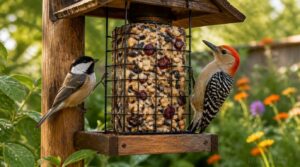
What goes into your suet cake matters more than you might think. The right ingredients keep birds healthy and coming back to your yard. Here’s what to use — and what to leave out.
Best Animal Fats
Beef tallow and pork lard are your two strongest choices. Tallow burns clean and holds shape well. Lard stays smooth and creamy.
Both fats work beautifully in suet cakes, making them ideal for feeders that attract woodpeckers and other Ohio backyard birds looking for a high-energy winter meal.
- Beef suet — dense, long-lasting energy base
- Bacon drippings — flavorful and easy to save
- Pork lard — mild, blends well with seeds
- Duck fat — rich in healthy monounsaturated fats
Schmaltz works too, though its lighter flavor suits delicate blends best.
Seeds and Grains
Black oil sunflower seeds top nearly every birdseed mix for good reason — their thin shells and rich fat content make them easy for small birds to crack open.
| Seed/Grain | Benefit |
|---|---|
| Black oil sunflower | High fat, easy to crack |
| Millet | Digestible carbohydrate source |
| Oats | Texture and slow energy |
| Cracked corn | Affordable filler grain |
Whole grains add lasting carbohydrate energy birds burn steadily through cold nights.
Nuts and Peanut Butter
Peanut butter might be the easiest protein boost you can add to homemade suet.
- Use natural peanut butter only
- Pick unsalted peanuts for safety
- Avoid added sugars in brands
- Stir into suet for high-calorie treats
- Refrigerate after opening to stay fresh
Each tablespoon delivers about 95 calories, making it the perfect quick fuel for your DIY bird treats this winter.
Fruits and Mealworms
Dried fruits and mealworms bring birds flocking to your feeder.
- Add dried raisins or cranberries for natural sweetness
- Sprinkle dried mealworms for a protein punch
- Mealworms offer dietary fatty acids birds need
- Skip fresh fruit — it spoils fast in suet
- These high-calorie treats attract bluebirds and kinglets too
Small additions, big results for your backyard visitors.
Ingredients to Avoid
Some things can hurt birds fast. Skip these in your suet mix:
- No salt — it causes dehydration in small birds
- No chocolate, caffeine, or sugar — toxic to birds
- No artificial preservatives like BHT or BHA
- Avoid salted nuts — use unsalted peanuts only
- Toss moldy suet immediately — mold makes birds sick
Keep it clean and simple.
Make Homemade Suet Cakes
Making your own suet cakes is easier than you might think, and you don’t need much to get started. A few basic tools and the right mold can make all the difference. Here’s what you’ll need before you begin mixing:
Essential Tools and Molds

Just a few tools make the whole process simple. Food-grade silicone molds are your best bet — they flex easily and release suet cakes cleanly. Look for molds rated between 20 and 60 durometer for the right balance of detail and flexibility.
Keep heat-resistant gloves nearby when melting fat. A digital scale ensures consistent results every time.
Classic Suet Cake Recipe

Now that your molds are ready, it’s time to make your first batch of bird suet cakes.
Melt two cups of beef tallow or lard on low heat. Stir in three cups of mixed birdseed — sunflower, millet, and oats work great. Add a tablespoon of flour to bind it. Press firmly into lightly oiled molds. Refrigerate for two hours until firm.
Peanut Butter Suet Recipe
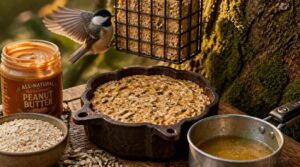
Peanut butter takes these bird suet cakes up a notch. Mix equal parts peanut butter and rendered fat until smooth. Stir in oats as a texture enhancing agent.
- Use unsalted nut selection only
- Add cornmeal for binding
- Mix in sunflower seeds
- Chill until firm
Press into molds and freeze. Your high-calorie treats are ready.
Fruit and Nut Blend
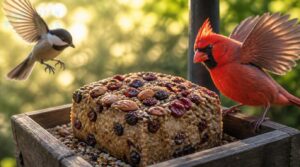
Ready to switch things up? Try adding dried fruits and unsalted nuts to your base fat mixture.
- Stir in raisins, cranberries, or chopped almonds
- Add birdseed for texture variety
- Mix in dried mealworms for extra protein
Natural sugars from dried fruits attract more species. Keep everything unsalted and fresh. Press into molds, then freeze until firm.
No-Melt Summer Suet
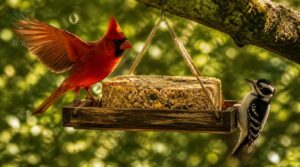
Hot summer days don’t have to mean empty feeders. No-melt summer suet uses high-melting point fats like rendered beef tallow, blended with binding agents to stay solid up to 130°F.
- Add seeds, nuts, or dried mealworms for structure
- Place cakes in shaded feeder spots to slow softening
- Replace every 1–2 weeks to prevent spoilage
Place Suet Feeders Strategically

Where you hang your suet feeder matters more than most people realize. The right spot keeps birds safe, comfortable, and coming back. Here’s what to keep in mind when placing your feeder.
Best Feeder Height
Hang your suet feeders five to six feet high. That’s the sweet spot for feeding station safety and predator baffle placement.
- Use squirrelproof feeders with a metal baffle
- Adjust for seasonal height shifts during snowy winter months
- Match species access needs — woodpeckers love mid-height
- Stay at maintenance reachability — no ladder is required
- Use window feeder safety for low bird feeders
Trees and Shrub Cover
Where you place your feeder matters as much as what’s inside it. Trees and shrubs nearby give birds a safe place to wait, watch, and retreat.
Dense shrub clusters block wind and hide birds from hawks. Vertical layers — from low bushes to tall branches — let different species feed comfortably at their preferred height throughout every season.
Cage and Log Feeders
The right feeder makes all the difference. Wire cage feeders hold suet cakes inside a mesh enclosure — usually with ½-inch by 1-inch openings — so only clinging birds like woodpeckers and nuthatches can reach inside.
A hinged front panel lets you refill quickly. Look for powder-coated or galvanized steel frames that resist rust and hold up through rain, wind, and determined squirrels.
Quiet Viewing Locations
Where you sit matters as much as where you hang the feeder. Deciduous shade nooks keep you cool and hidden, while shoreline alcove advantages give you calm water reflections that make birds linger. Stay at least 6 meters back.
Secluded garden corridors between hedges muffle your movements. Mulch paths beat gravel — every crunch sends birds flying. Your backyard bird sanctuary grows quieter when you do.
Attracting Woodpeckers and Chickadees
Two birds, two very different needs — and your suet feeder can serve both.
Woodpeckers want high-fat suet cakes loaded with peanut bits or mealworms. Mount feeders 6 to 12 feet high on a sturdy cage near a snag or dead tree.
Chickadees prefer unsalted, fresh suet with crushed seeds on top. Keep dense shrubs close — they need fast escape routes.
Store and Maintain Suet Safely
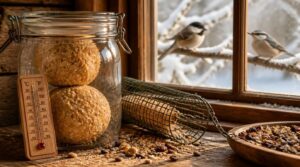
Good suet doesn’t stop being useful just because it’s sitting on your shelf. How you store and care for it makes a real difference in keeping birds healthy and coming back. Here’s what you need to know to do it right.
Refrigeration and Freezing
Once your suet cakes are set, keep them in the fridge for up to two weeks. Use airtight containers to lock out moisture and odors.
For longer storage, wrap each cake tightly and freeze for up to six months. Cold temperatures slow fat from turning rancid, keeping every batch fresh and safe for your birds.
Preventing Spoilage
Good storage habits go beyond just refrigeration. Keep suet at or below 40°F to slow bacteria from growing.
- Wrap each cake in parchment before sealing
- Use airtight, BPA-free containers
- Avoid storing near raw meat or strong odors
- Label batches with the date made
- Check for rancid smells or slimy texture before use
Discard any cake that smells off or looks wrong.
Cleaning Suet Feeders
A clean feeder keeps birds healthy. Once you’ve handled storage, turn your attention to the feeder itself.
Rinse it with warm soapy water every two weeks. For a natural sanitizer, mix one part white vinegar with nine parts water. Scrub every crevice with a soft brush. Rinse fully, then air dry completely before refilling — a damp feeder invites mold fast.
Mold Warning Signs
Even a spotless routine can miss early warning signs. Watch for fuzzy or slimy patches on the suet — black, green, or white growth means toss it immediately.
A musty smell is another red flag, even when nothing looks wrong. If birds inside your home seem sneezy or lethargic near the feeder, mold may already be spreading. Don’t wait — discard it.
Squirrel Deterrent Tips
Squirrels can empty a feeder fast. The good news? A few smart moves keep them out for good.
Hot pepper mixed into suet works well — birds can’t taste capsaicin, but squirrels hate it. For physical barrier methods, hang feeders at least 10 feet from trees and add a dome baffle above.
A motion-activated sprinkler nearby takes care of the persistent ones.
Frequently Asked Questions (FAQs)
How often should suet cakes be replaced in feeders?
Replace suet cakes every 3–7 days, depending on the season. Hot summers demand changes every 2–4 days. Cold winters extend that to 3–4 days. Always swap immediately if you spot mold or a sour smell.
Which birds avoid suet and prefer other foods?
Not every bird is drawn to suet. Robins, orioles, and cedar waxwings prefer fruit and berries. Sparrows and juncos forage the ground for seeds. In spring, even woodpeckers chase insects over fat.
Can you buy pre-made suet cakes at stores?
Yes, pre-made suet cakes are widely available. Pet stores, wild bird shops, and many grocery stores carry them.
Brands like Pine Tree Farms offer peanut butter, berry, and insect blends — often sold in bulk packs.
Conclusion
A birdwatcher once said her yard went from quiet to crowded the week she started rotating fresh suet and moving her feeder three feet closer to a shrub. Small shifts, dramatic results.
Suet cakes for backyard bird watching reward exactly that kind of attention—not obsession, just care. Fresh ingredients, smart placement, and a clean feeder do most of the work. Stay consistent, and the birds will find you. That’s the whole secret.
- https://deckers-nursery.com/garden-learning-center/guide-to-suet-cakes-for-backyard-wild-birds
- https://barnowlgarden.com/post/6-common-questions-about-feeding-suet-to-birds
- https://www.kaytee.com/learn-care/wild-bird/wild-bird-suet
- https://foxpineshomestead.com/how-to-make-perfect-homemade-bird-suet-cakes
- https://realgardensgrownatives.com?p=2407