This site is supported by our readers. We may earn a commission, at no cost to you, if you purchase through links.

A three-story walkup with no yard doesn’t sound like prime real estate for wildlife, yet chickadees, wrens, and bluebirds keep proving city dwellers wrong. Balconies, fire escapes, and rooftop gardens all hold potential, once you know how to read the wind, the sun angle, and the load limits of your railing. Building bird houses for urban environments means trading sprawling backyards for smarter, more compact solutions that still meet a bird’s basic needs.
Cedar boxes, clamp-on mounts, and planter-integrated designs let you nest conservation into tight corners without sacrificing safety or style. Grab your tools, because your ledge, railing, or rooftop is about to become someone’s new address.
Table Of Contents
- Key Takeaways
- Choose Your Urban Birdhouse Location
- Build Space-Saving Birdhouse Designs
- Pick Durable City-Safe Materials
- Top 10 Urban Birdhouse Items
- 1. Cedar Bluebird Nesting Box
- 2. Irwin Quick Grip Mini Bar Clamp
- 3. DECOHS Window Bird Feeder Hook
- 4. Stainless Steel Stage Light Safety Cable
- 5. Minwax Fast Drying Satin Polyurethane
- 6. ZenxyHoC Metal Nesting Box
- 7. Coferset Silk Sunflower Heads
- 8. Galvanized Oval Raised Garden Bed
- 9. Galvanized Garden Landscape Staples
- 10. Carpathen Drip Irrigation Kit
- Maintain Birdhouses for Healthy Nesting
- Frequently Asked Questions (FAQs)
- Conclusion
Key Takeaways
- Urban spaces like balconies, window ledges, rooftops, and fire escapes can all support safe, code-compliant birdhouses when you check wind, sun angle, and load limits before mounting.
- Space-saving designs like vertically stacked compartments, modular nesting systems, and planter-integrated boxes let city dwellers house birds without sacrificing limited square footage.
- Durable materials such as cedar, redwood, recycled plastic lumber, and galvanized hardware, sealed with non-toxic finishes, help birdhouses withstand urban weather and pollution for years.
- Ongoing maintenance, including proper ventilation, predator guard placement, seasonal cleaning, native plant support, and window collision prevention, is essential to keep nesting birds healthy and safe long-term.
Choose Your Urban Birdhouse Location
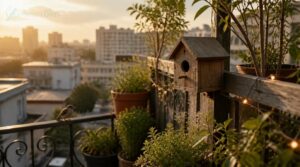
Every city space, from a narrow balcony to a shared rooftop garden, holds real potential for a bird to call home.
With just a few feeders and some patience, you’ll start noticing patterns explained in why some spots naturally attract more birds than others.
From a narrow balcony to a shared rooftop garden, every city space holds real potential for a bird to call home
Before you pick up a hammer, it helps to know which spots actually work and which ones just look promising. Let’s walk through the five location types worth checking around your place.
Balcony Railing Placement
Since most residential railings stand at least 36 inches tall, mount your birdhouse below the top rail using removable clamps that won’t pierce waterproofing membranes. Choose corrosion-resistant fasteners rated for wind load stability, and keep spacing within 4-inch infill limits.
Adjustable clamps make hanging birdhouses simple, safe, and code-compliant—perfect for optimizing tight urban patio space.
Window Ledge Setup
Window ledges work great when railings aren’t an option. Check your ledge strength 5 kg per linear meter, then mount with corrosion-resistant lag screws into masonry, sealed with weatherproof caulk.
- Slope 5-8 degrees for rainwater shedding
- Add non-slip texture for footing
- Extend 40-60mm overhang
- Try suction cup brackets for renters
Compact window ledge birdhouses turn any window into a front-row birdwatching seat.
Rooftop Garden Zones
If your building has a rooftop garden, you’ve hit the jackpot for habitat creation. Sunlit, shaded, and wind-protected pockets each support different plantings—group tomatoes or trellised vines as natural windbreaks.
Space nesting boxes 6 feet apart and let per-zone drainage keep water from pooling. This kind of microclimate planning turns a plain rooftop into a genuine biodiversity hotspot for city birds.
Fire Escape Safety
Not every apartment has a rooftop, but plenty have fire escapes—and that’s fair game too, provided you respect building code compliance.
Use removable mounting systems with lightweight hardware, never blocking emergency egress paths or panic hardware. Keep exit signage visible.
- Balance fire safety and wildlife
- Skip permanent clamps
- Check drill frequency
- Inspect fire door maintenance
Fire Escape Platform Birdhouses use rubber-padded C-clamps, satisfying inspectors and birds alike.
Wind and Shade Checks
Since city blocks funnel gusts into fierce street canyon winds, check your spot at actual mounting height before drilling anything.
Favor wind-facing orientation away from entrances, and watch afternoon sun exposure—north or east spots keep chicks cooler.
Nearby foliage or shadows support microclimate temperature stability through seasonal shade shifts, making your setup a genuinely climate-adapted nesting site.
Build Space-Saving Birdhouse Designs
Once you’ve picked your spot, the next challenge is making a birdhouse that actually fits it. Small balconies and narrow ledges call for smart, compact designs rather than the sprawling backyard boxes you might picture.
Here are five space-saving styles that pack in comfort for birds without crowding your own square footage.
Vertical Stacked Compartments
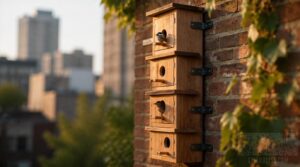
Think of your wall as an apartment building for birds: stack it up instead of spreading out. Vertical space optimization puts 3–4 nesting compartments along a single axis, each with independent compartment access so cleaning one door won’t disturb another family.
Interchangeable cell sizing and modular divider adjustment let you fit wrens or chickadees, while sturdy facade mounting stability keeps stacked designs secure on brick or siding.
Compact Balcony Boxes
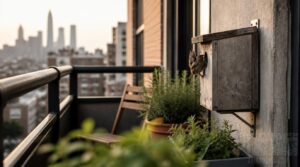
If your balcony feels more like a shoebox than a garden, a compact design still fits. Keep boxes within three to four inches of the railing for stability, on the least-shaded side to avoid overheating.
- Cozy homes for tiny wrens
- Splashes of life on gray balconies
- Safe havens above busy streets
- Pollution-fighting pest control
- A personal DIY birdhouse win
Use corrosion-resistant hardware and check building codes before mounting.
Modular Nesting Systems
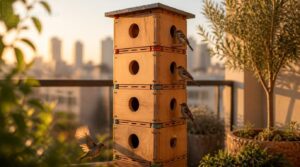
Modular nesting systems turn small spaces into expandable habitats. Each 12×12 inch unit connects through snap fit and threaded fasteners, stacking up to five levels without full disassembly.
Tool-free assembly and color coded connectors make setup simple, while customizable depths (6, 8, or 10 inches) suit different species. Interlocking units with aligned airflow channels keep every compartment breathing easy, and simplified cleaning protocols mean less hassle for you.
Planter-integrated Birdhouses
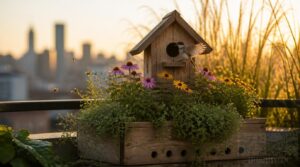
Why settle for just a birdhouse when you can grow a whole urban microhabitat? Planter-integrated designs pair compact planter dimensions (8–10 inches deep) with built-in plant holders, so nesting cavities sit alongside native blooms.
This combo boosts urban insect attraction, feeding hungry fledglings naturally. Integrated drainage solutions keep roots and nests dry, while windbreak plant selection shields tiny tenants from gusty rooftop air.
Consider using a handcrafted outdoor planter to combine planting space with a birdhouse for your urban microhabitat.
Clamp-on Temporary Mounts
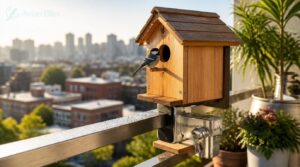
Renting means no drilling — so let your birdhouse hang on removable mounting systems instead.
Adjustable clamps grip rails or poles up to 90mm, with rubberized pads for surface protection and zero scratches.
Check weight capacity (1-5kg) before hanging.
Quick release levers mean fast removal, while sturdy alloy construction ensures clamp durability and mounting stability for lasting urban bird habitat support — perfect compact habitat solutions for window ledge birdhouses.
Pick Durable City-Safe Materials

Once you’ve settled on a design, the material you build it from matters just as much, especially when city weather and pollution are working against you. A good birdhouse needs to shrug off rain, heat, and grime without breaking down after one season. Here are five materials that hold up beautifully in urban conditions.
Cedar and Redwood
Two classic choices anchor most DIY birdhouse projects: cedar and redwood.
Cedar’s honey-toned grain carries natural oils that fend off decay and insects, cuts cleanly, and costs less per board foot—great for budget-conscious builds.
Redwood weathers into a deeper burgundy, resists moisture in coastal climates, and holds screws securely, though regional availability often pushes its price higher for sustainable, city-safe nesting boxes.
Recycled Plastic Lumber
Wood isn’t your only option, though. Recycled plastic lumber turns old plastic containers into sturdy nesting boxes that shrug off rain, resist splitting, and hold color for decades, diverting waste while sparing forests.
- Weathered decking planks reborn as nest walls
- Milk jugs melted into rot-proof panels
- Sun-faded boards that never crack or warp
- Snap-together joints replacing glue and nails
- UV-stabilized surfaces holding their tint season after season
Sealed Pallet Wood
Salvaged shipping pallets make excellent birdhouse material once properly sealed, giving sustainable building materials new purpose. Water-based polyurethane or penetrating oils cut moisture absorption by 40-60%, guarding against urban pollutants like exhaust residue.
Apply thin coats, sanding between layers, and choose non-toxic finishes for bird safety. Reseal every 1-3 years outdoors—cheap, creative reuse that keeps nesting boxes sturdy for city wildlife.
Galvanized Hardware
Once your pallet wood is sealed, the screws holding it together deserve equal attention. Galvanized hardware resists urban pollution through zinc coating that bonds to steel, offering sacrificial protection even when scratched.
It stands up to storm‑responsive bird structures, lightweight mounting hardware, safety cables, and stabilizing guy‑wires alike—cutting down on maintenance while your birdhouse weathers city life for years.
Non-toxic Finishes
Since your birds will spend hours pressed against every surface, what goes on the wood matters as much as the wood itself.
Choose low VOC finishes, ideally GREENGUARD Gold certified, releasing 0-50 grams per liter. Plant-based options like tung or walnut oil cure naturally, resisting weather without toxic runoff.
Water-based sealants dry fast, resist yellowing, and keep nesting birds safe from pollution-resistant, eco-friendly buildup.
Top 10 Urban Birdhouse Items
Now that you know which materials hold up best in the city, it’s time to gather the actual gear that turns good intentions into a finished birdhouse. You don’t need a workshop full of tools or a giant budget, just a handful of smart, purpose-built items that make the job easier and the results sturdier.
Here are the ten picks worth adding to your cart before you start building.
1. Cedar Bluebird Nesting Box
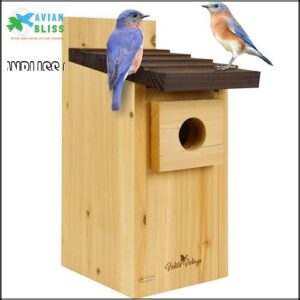
Cedar Bluebird Nesting Box brings old-fashioned craftsmanship to your city perch. Weighing just 2.07 pounds with a compact 3.2 x 2.17 x 4.72-inch footprint, it fits balconies without hogging space.
The 1.5-inch entrance welcomes bluebirds and tree swallows while keeping starlings out. Air vents and a clean-out door make maintenance painless.
Watch the latch, though—it’s the one weak spot, so consider reinforcing it. You’ll also need your own mounting hardware, since none comes included.
| Best For | City dwellers with balconies or small yards who want to attract bluebirds and tree swallows to a compact, natural nesting spot. |
|---|---|
| Material | Cedar Wood |
| Weight | 2.07 lb |
| Color | Natural Cedar |
| Package Quantity | 1 |
| Outdoor Use | Yes |
| Weather Resistance | High |
| Additional Features |
|
- Durable cedar construction offers natural weather resistance and insulation
- Clean-out door makes it easy to maintain between broods
- Predator guard helps protect young birds at the entrance
- Latch may be weak and could need extra reinforcement
- Hanging hardware isn’t included, so you’ll need your own mounting solution
- Only suited for small cavity-nesting birds, not larger species
2. Irwin Quick Grip Mini Bar Clamp
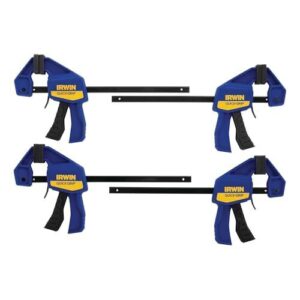
Every good birdhouse project needs a reliable assembly partner, and that’s where this little clamp earns its keep. With a one-handed quick-release trigger and up to 150 lb of clamping pressure, it holds cedar panels steady while you drill entrance holes or attach roof overhangs.
Non-marring pads protect delicate wood surfaces from dents, and the reinforced resin body with hardened steel bars keeps things rigid. At 6 inches long, it’s perfect for tight, detailed nest-box work.
| Best For | Hobbyists and DIYers building small wood projects like birdhouses who need a fast, one-handed clamp for tight, detailed work. |
|---|---|
| Material | Reinforced Resin & Steel |
| Weight | 454 g |
| Color | Blue |
| Package Quantity | 4 |
| Outdoor Use | No |
| Weather Resistance | Low |
| Additional Features |
|
- One-handed quick-release trigger makes clamping and repositioning fast and easy
- Non-marring pads protect delicate wood surfaces from dents and scratches
- Reinforced resin body with hardened steel bars provides solid rigidity for its size
- Not built for high-precision or high-tolerance applications
- 150 lb clamping force may fall short for heavier-duty jobs
- Resin construction may struggle under extreme temperatures or chemical exposure
3. DECOHS Window Bird Feeder Hook
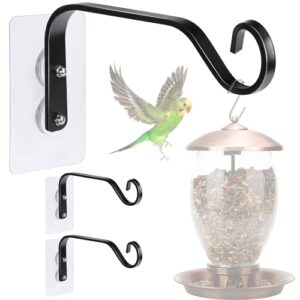
Glass and suction cups aren’t usually friends, but DECOHS makes it work. Its suction-cup mounting system projects feeders 6–8 inches from your window, keeping droppings and collisions to a minimum while giving you an up-close viewing seat.
Galvanized steel components resist rust, and the UV-resistant powder coating shrugs off sun damage year-round. Each cup holds 4–5 pounds, no tools required. Just note it needs smooth, non-porous glass to seal properly.
| Best For | Bird lovers and home decorators who want to hang feeders, wind chimes, or plants on windows without drilling holes or damaging glass and tile. |
|---|---|
| Material | Rust-Proof Iron |
| Weight | N/A |
| Color | Black |
| Package Quantity | 3 |
| Outdoor Use | Yes |
| Weather Resistance | Moderate |
| Additional Features |
|
- Residue-free adhesive pads that won’t damage glass, tile, or mirrors
- Rust-proof iron construction with durable coating for long-lasting use
- Simple three-step installation and repositionable pads for flexible placement
- Adhesive takes up to 24 hours to reach full strength after installation
- Only works on smooth, non-porous surfaces—won’t hold on textured areas
- 3 kg max load per hook may not support larger or heavier feeders
4. Stainless Steel Stage Light Safety Cable
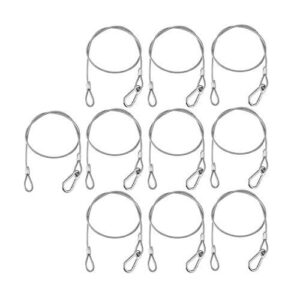
Borrowed from the concert stage, this 31.5-inch braided cable rated for 110 pounds gives your hanging birdhouse a backup line the wind can’t argue with. Loop it through your mounting bracket and the fixture point, and you’ve got insurance against sudden gusts or a loosened screw.
Its clear protective coating resists corrosion, so balcony humidity won’t compromise the lock over time. Just don’t exceed that weight limit, and give it a quick visual check each season for kinks or wear.
| Best For | Anyone hanging a birdhouse, planter, or similar lightweight fixture off a balcony, porch, or ledge who wants a reliable backup line in case the primary mount fails. |
|---|---|
| Material | Stainless Steel |
| Weight | N/A |
| Color | Silver |
| Package Quantity | 10 |
| Outdoor Use | No |
| Weather Resistance | N/A |
| Additional Features |
|
- Rated for up to 110 lb, offering plenty of margin for typical hanging birdhouse setups
- Clear protective coating resists corrosion, so it holds up well against outdoor humidity
- Simple loop-and-lock design makes it quick to attach or remove without special tools
- Not designed specifically for birdhouses, so it may look out of place in a garden setting
- Requires seasonal inspection for kinks or wear to stay safe
- Pack of 10 may be more cable than needed for a single birdhouse
5. Minwax Fast Drying Satin Polyurethane
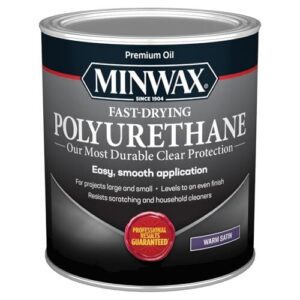
Once you’ve built your birdhouse, you’ll want to seal in that craftsmanship, and this oil-based topcoat locks in a warm satin glow while standing up to years of scratches, spills, and everyday wear.
At one quart, you’ll get plenty of coverage for multiple boxes, with recoats ready in 4-6 hours. That fast turnaround means less waiting around between coats.
Just remember: this one’s strictly for interior wood, so keep it off any exterior-facing surfaces, and let it cure a full 24 hours before handling.
| Best For | DIYers and woodworkers finishing interior furniture, cabinets, doors, or floors who want a durable, warm satin sheen with fast turnaround between coats. |
|---|---|
| Material | Oil-Based Coating |
| Weight | 16 oz |
| Color | Amber Clear |
| Package Quantity | 1 |
| Outdoor Use | No |
| Weather Resistance | Interior Only |
| Additional Features |
|
- Delivers long-lasting resistance to scratches, spills, and everyday wear
- Recoats in just 4–6 hours, speeding up project completion
- Enhances the wood’s natural grain with a warm, modern satin finish
- Oil-based formula requires mineral spirits for cleanup, not water-friendly
- Strong odor and need for good ventilation during application
- Full cure takes at least 24 hours, so patience is required before use
6. ZenxyHoC Metal Nesting Box
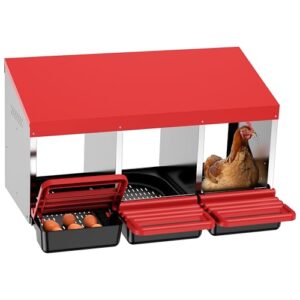
Multiple hens, one tidy system — that’s the promise behind the ZenxyHoC. Its galvanized steel frame shrugs off weather, while individual entry holes per compartment keep nesting disturbance to a minimum.
The sloped roof discourages roosting and channels rain away from the nest itself. Side vents and rear drainage holes work together, keeping bedding dry and odor low.
Best part? The rollout tray slides free for weekly cleaning, no full teardown required.
| Best For | backyard chicken keepers who want a compact, wall-mounted nesting solution that keeps eggs clean and coop floor space free. |
|---|---|
| Material | Galvanized Steel |
| Weight | 21.5 lb |
| Color | Red |
| Package Quantity | 1 |
| Outdoor Use | Yes |
| Weather Resistance | High |
| Additional Features |
|
- Slanted floor and detachable rollout tray collect eggs cleanly, reducing breakage and pecking damage
- Fold-over swing perch doubles as a night-time gate, cutting down on droppings and unwanted roosting
- Wall-mount design with pre-drilled holes saves valuable floor space in indoor coops
- Galvanized steel can heat up quickly in direct sunlight, which may make hens uncomfortable
- Requires a sturdy wall for installation, limiting placement options
- Rollout tray may need extra padding to prevent eggs from cracking during collection
7. Coferset Silk Sunflower Heads

Not every upgrade to your birdhouse setup needs feathers or fledglings. These silk sunflower heads bring warm color to balcony rails and windowsills without attracting pests or requiring water.
Each 4-inch bloom holds three layers of yellow petals around a black center, mounted on a sturdy plastic base that resists wobbling. String them along your nesting boxes for a cheerful backdrop, or weave them into garlands framing your rooftop setup — pure decoration, zero maintenance.
| Best For | Bird and garden enthusiasts who want to add cheerful, low-maintenance color to birdhouses, balconies, or windowsills without worrying about water or pests. |
|---|---|
| Material | Silk & Plastic |
| Weight | N/A |
| Color | Yellow |
| Package Quantity | 40 |
| Outdoor Use | No |
| Weather Resistance | None |
| Additional Features |
|
- Realistic 4-inch blooms with layered yellow petals and a sturdy base that resists wobbling
- Zero maintenance required — no water, sunlight, or care needed to stay vibrant
- Versatile for crafting garlands, headbands, cake toppers, and seasonal décor
- Stems ship separately, so heads must be manually attached before use
- Petals may arrive compressed and need gentle fluffing to look their best
- Limited to one color (yellow) and not suited for heavy use or wet environments
8. Galvanized Oval Raised Garden Bed
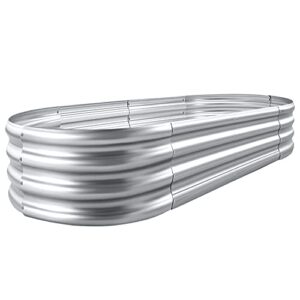
Once your decorative touches are set, think about what surrounds your nesting boxes. This oval raised bed pairs double-layer Q195 galvanized steel with reinforced joints, holding up under pressure while its open base keeps roots draining naturally.
At 4×2×1 ft with 7.14 ft³ of space, it assembles in about five minutes, no tools required. Fill it with native plants near your birdhouses, and you’re feeding pollinators while giving nesting birds a richer, more sheltered urban habitat.
| Best For | gardeners who want a durable, quick-to-assemble raised bed for growing vegetables, herbs, or flowers, especially in rainy climates where drainage matters. |
|---|---|
| Material | Galvanized Steel |
| Weight | N/A |
| Color | N/A |
| Package Quantity | 1 |
| Outdoor Use | Yes |
| Weather Resistance | High |
| Additional Features |
|
- Double-layer Q195 galvanized steel with reinforced joints holds up well under pressure and resists corrosion
- Open base design promotes natural drainage and helps prevent root rot
- Tool-free assembly takes about five minutes, making it easy to set up for seasonal projects
- Limited footprint may not suit large-root crops or bigger planting plans
- Metal surface can heat up in direct sun, which may stress sensitive plants
- No built-in drainage holes, so it depends on soil and base design to manage water flow
9. Galvanized Garden Landscape Staples
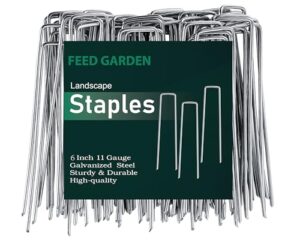
That new bed needs anchoring, and that’s where these staples earn their keep. Hot-dip galvanized, 11-gauge steel, with sharp points that bite into sod fast around fabric edges or grow bags.
The adjustable 1 to 1.5 inch width grips landscape fabric without tearing it, keeping weed barriers snug near your nesting zones. At six inches long, fifty per pack, they’re reusable season after season—just watch for scratches, since exposed steel can rust if left damp too long.
| Best For | Gardeners and homeowners who need a reliable way to secure landscape fabric, weed barriers, or grow bags in place for the season. |
|---|---|
| Material | Galvanized Steel |
| Weight | N/A |
| Color | Silver |
| Package Quantity | 50 |
| Outdoor Use | Yes |
| Weather Resistance | Moderate |
| Additional Features |
|
- Hot-dip galvanized 11-gauge steel resists rust and holds up to reuse
- Sharp, pointed ends make quick work of pinning into sod or soil
- Adjustable 1 to 1.5 inch width grips fabric snugly without tearing it
- Limited holding depth, so it’s not the best choice for rocky or very deep soil
- The 1 inch top width isn’t built for anchoring heavier objects
- Scratched coating can lead to rust if the steel is exposed to moisture over time
10. Carpathen Drip Irrigation Kit
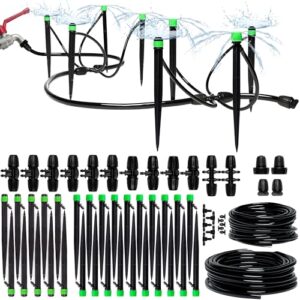
Those native plants attracting insects near your birdhouses need water, and this kit delivers it efficiently. The Carpathen Drip Irrigation Kit pairs 100 feet of 5/16 inch mainline with 30 adjustable emitters, cutting water use by up to 70% compared to sprinklers.
Running at 20-45 psi, it suits raised beds and pots surrounding your nesting boxes. Direct root watering keeps supporting vegetation thriving without wasteful spray, which matters when you’re courting cavity-nesters into a shared, sustainable corner of the city.
| Best For | gardeners with raised beds, potted plants, or small lawn sections who want an efficient, low-waste way to keep root zones watered. |
|---|---|
| Material | UV-Resistant Plastic |
| Weight | 1.86 kg |
| Color | N/A |
| Package Quantity | 1 Kit |
| Outdoor Use | Yes |
| Weather Resistance | High |
| Additional Features |
|
- Cuts water usage by up to 70% compared to traditional sprinkler systems
- Includes 30 adjustable emitters plus a full set of fittings, tubing, and connectors for easy setup
- Adjustable flow per emitter allows precise watering tailored to different plant types
- Only compatible with standard 3/4 in garden hoses running at 20-45 psi, so higher-pressure systems won’t work
- Maximum of 30 emitters supported, meaning larger gardens will need extra parts sold separately
- Plastic tubing can degrade over time with extended UV exposure, so periodic checks are needed
Maintain Birdhouses for Healthy Nesting
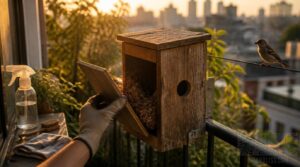
Building your birdhouse is only half the job, since keeping it safe and welcoming takes ongoing care. A little upkeep goes a long way toward protecting the birds you’ve worked so hard to attract. Here’s what to focus on to keep your urban nesting spot healthy year-round.
Ventilation and Drainage
Ever notice how a stuffy birdhouse turns into a sauna by July? Ideal airflow calculation means giving each bird 2-3 sq cm of vent space per inch of tunnel height.
- Vent screens (1.5mm mesh) block pests
- Sloped floors drain toward removable cups
- Roof overhangs shield vents from rain
- Light interiors reflect heat naturally
- Quick-release panels ease seasonal cleaning
Efficient drainage design paired with smart vent placement strategy keeps nests dry, cool, and genuinely rainproof.
Predator Guard Placement
Because raccoons can climb almost anything, guard placement makes or breaks your predator protection efforts. Mount guards 4 to 6 feet above ground, clearing pulleys or winch boxes below.
| Guard Type | Shape | Best For |
|---|---|---|
| Conical | Smooth cone | Raccoons |
| Cylindrical | Tube-shaped | Snakes |
| Wire "no-el" | Extended mesh | Squirrels |
Choose corrosion-resistant hardware, and inspect guards seasonally for rust or loosening—storms shift everything.
Seasonal Cleaning Steps
Think of your birdhouse maintenance like a calendar you keep with the seasons, not against them.
Spring calls for full sanitization—empty debris, scrub with bird‑safe solution, dry completely.
Summer means pest removal around entrances.
Autumn brings weatherproofing seams and tightening hardware.
Winter checks focus on insulation and dry interiors, skipping deep cleans below freezing to protect overwintering birds.
Native Plant Support
A birdhouse without a buffet nearby is just an empty apartment. Surround your setup with native plant species offering nectar, seeds, and insect larvae—food fledglings need.
- Coneflowers and asters (seasonal bloom variety)
- Native grasses (soil health, cover)
- Milkweed (pollinator nectar source)
- Serviceberry shrubs (fruit, nesting cover)
This builds real habitat connectivity, linking your patch to the broader urban biodiversity corridor.
Window Collision Prevention
Glass can undo all your good nesting work in an instant, so pair every birdhouse with bird-safe design basics.
| Solution | Effectiveness | Placement |
|---|---|---|
| UV reflective decals | High | Exterior |
| Patterned glass markers | Significant | Exterior, 2" spacing |
| Exterior film | Up to 90% | Full window |
Skip interior blinds alone; exterior treatments genuinely prevent glass collisions near your new home.
Frequently Asked Questions (FAQs)
What time of year do birds use birdhouses?
Timing is everything, for real estate and roosting alike: early scouting starts in January’s chill, spring brings the nesting peak from March through May, and winter roosting offers cozy shelter when temperatures dip citywide.
What entrance hole size keeps out starlings?
A 1¼-inch entrance hole keeps starlings out while welcoming chickadees and wrens, since starlings need 1½ inches to squeeze through. Measuring hole diameter carefully and adding entrance reducer plates ensures your target species selection stays on point.
How high should purple martin houses be mounted?
Higher for safety, lower for access—that’s the balance purple martins need. Aim for 15 to 20 feet, minimizing predator risks while keeping maintenance manageable, ensuring clear flight paths, and supporting healthy urban wildlife you can enjoy watching right from your balcony.
What floor size do northern flicker boxes need?
Give these gentle giants a roomy 7-by-7-inch floor, paired with drainage holes, smooth surfaces for nestling movement, and 15–16 inches of bedding depth—generous flicker floor dimensions that keep entrance hole traffic manageable in your compact urban birdhouse.
How much space do fledglings need inside?
Fledglings need room to grow like teenagers outgrowing a bedroom overnight. Provide 5 to 5 inches of vertical clearance and a 4-by-4-inch floor area, giving them wing flapping room and headroom for safe, healthy nesting behavior before their first flight.
How much do birds reduce local pest populations?
Avian pest suppression packs a real punch: nesting birds can cut urban garden pests by 20-40%, with orchard and cabbageworm pests dropping 30-50%, proving bird-mediated control delivers genuine environmental services alongside crop yield protection.
Conclusion
Small spaces spark surprising sanctuaries once you commit to the craft. Every clamp-on box, every cedar panel, every drop of drainage you drill adds up to genuine bird houses for urban environments that outlast a passing trend.
Your balcony becomes a flyway waypoint, your ledge a nursery, your rooftop a small patch of wild reclaimed from concrete.
Maintain what you’ve built, watch who moves in, and trust that your effort matters.
The skyline was always meant to sing.