This site is supported by our readers. We may earn a commission, at no cost to you, if you purchase through links.

South Dakota hosts over 400 bird species, and a surprising number of them will visit your yard without any convincing.
Step outside on a May morning in the Missouri River valley and you’ll hear the American Robin’s rolling melody before you spot its brick-red breast moving across the lawn. By the feeder, a Black-capped Chickadee works through sunflower seeds with the focused efficiency of someone who knows exactly what they want.
The backyard birds of South Dakota shift with every season—some stay year-round, others pass through briefly, and a few only appear when northern winters push them south. Knowing who’s likely to show up, and when, changes the whole experience.
Table Of Contents
- Key Takeaways
- Common Backyard Birds in South Dakota
- Seasonal Birds to Watch For
- How to Identify Backyard Birds
- Attracting Birds to South Dakota Yards
- Backyard Habitats Across South Dakota
- Frequently Asked Questions (FAQs)
- What is the most common bird in South Dakota?
- Are blackbirds common in North and South Dakota?
- How many bird species are there in South Dakota?
- What bird flies in South Dakota?
- When are birds most commonly spotted in South Dakota?
- What hummingbirds live in South Dakota?
- How do I identify birds in my backyard?
- What is South Dakota’s state bird?
- What happened to my backyard birds?
- What birds are in the Black Hills of South Dakota?
- Conclusion
Key Takeaways
- South Dakota’s backyard birds shift with every season, so knowing who shows up when — spring migrants, summer nesters, winter feeders, and irruptive northern visitors — turns casual watching into a real skill.
- Five species you’ll spot most reliably are the American Robin, Black-capped Chickadee, Blue Jay, Northern Cardinal, and Downy Woodpecker, each identifiable by a distinct mix of size, color, bill shape, and call.
- Black oil sunflower seeds, suet, a clean bird bath with 1–2 inches of water, and feeders mounted 5–6 feet high are the four practical anchors of any yard setup that actually draws birds.
- Where you live in South Dakota — urban lot, rural farmyard, wooded yard, wetland edge, or open prairie — determines which species visit, since each habitat draws a distinctly different mix.
Common Backyard Birds in South Dakota
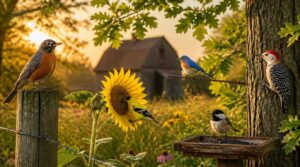
South Dakota yards host a surprisingly rich mix of birds throughout the year. Some show up daily, others drift in with the seasons, but a handful of species you’ll spot reliably no matter when you step outside. These are the five you’re most likely to see first.
If you’re just getting started, this guide to common backyard birds of North Dakota makes identification surprisingly easy for beginners.
American Robin
Few birds announce spring in South Dakota as clearly as the American Robin. At 8 to 11 inches long with that unmistakable brick-red breast, it’s one of the easiest backyard birds to identify. Males show a deeper black head and brighter chest than females. This species is a thrush in Turdidae.
Here’s what makes robins worth watching closely:
- Their cheerful dawn song — a rolling cheerily, cheer up — is often the first sound of morning in April yards.
- Robin nesting habits are surprisingly bold; females build mud-lined cup nests on porch ledges or low branches just 3 to 25 feet up.
- Diet shifts seasonally — earthworms dominate spring meals, while berries take over in fall and winter.
- Robin migration timing varies; some birds overwinter in South Dakota, while others return from the south as early as March.
You’ll usually spot them hopping across lawns, tilting their heads to listen for worms beneath the surface. They don’t rely heavily on feeders, so planting native fruiting shrubs and keeping a patch of open lawn is your best invitation. Log your sightings on eBird to track when they arrive in your neighborhood each year.
Black-capped Chickadee
If the American Robin is South Dakota’s spring herald, the Black-capped Chickadee is its year-round anchor. Measuring just 4.7 to 5.5 inches, this backyard bird in South Dakota wears a bold black cap, black bib, white cheeks, and soft gray wings. That fluffy, round silhouette makes bird identification simple even for beginners.
Listen for its crisp chick-a-dee-dee call at your bird feeders, where it reliably favors black oil sunflower seeds.
Blue Jay
From the quiet, flitty Chickadee, the Blue Jay makes quite an entrance. This bold backyard bird is hard to miss — 9 to 12 inches long, with vivid blue upperparts, a white belly, and a bright blue crest that rises when it’s alert and flattens when calm.
Blue Jays are year-round residents in eastern South Dakota, common in wooded yards and parks.
Northern Cardinal
If the Blue Jay is bold, the Northern Cardinal is unforgettable. The male’s bright red plumage stops you mid-glance — a vivid splash against winter snow or summer green. Females wear warm brown with red accents on the wings, tail, and crest.
Both have stout conical beaks built for cracking seeds, and safflower seed is a reliable way to bring them to your feeders.
Downy Woodpecker
The Downy Woodpecker is the smallest woodpecker you’ll spot clinging to your backyard trees. It measures just 6 to 7 inches long, with bold black-and-white field marks and a short chisel bill. Males carry a small red patch on the nape.
Hang suet at your feeder in winter, and you’ll hear its sharp "pik" call before you see it.
Seasonal Birds to Watch For
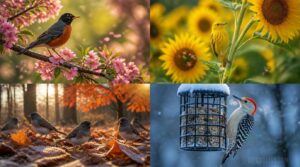
South Dakota’s backyard changes with every season, and so do the birds showing up at your feeders and trees. Some stay year-round, while others are just passing through or escaping harsher winters up north. Here’s what to watch for as the seasons turn.
Learning to recognize their calls makes it even easier—songbird call recognition by season can help you tell apart the year-rounders from the winter visitors before you even spot them.
Spring Migrants
Spring brings a wave of movement across South Dakota. By late April to early May, migrants push north along river valleys and wetland edges, following rising insect activity and fresh vegetation.
Watch for Yellow Warblers in riparian corridors, Tree Swallows sweeping over ponds, and American Robins multiplying in your yard. Males arrive first, singing loudly to claim territory.
Summer Nesting Birds
By June, most backyard birds in South Dakota are deep into nesting and breeding season. American Robins hatch 4–5 eggs after just 12–14 days. Chickadees raise broods of 5–8 young. Cardinals fledge nestlings within 9–16 days.
Three things to watch for:
- Parents making frequent food trips
- Fledglings hiding in dense shrubs
- Alarm calls near active nest sites
Fall Migration Visitors
Fall migration in South Dakota hits its peak movement in late September, when clear nights and light southerly winds push large flocks southward. Migration counts can double daily feeder totals during these weeks as birds pause to refuel.
Watch for American Goldfinches, Cedar Waxwings, and White-crowned Sparrows stopping through scrub hedgerows and river edges.
Winter Feeder Birds
Winter transforms South Dakota feeders into busy hubs. Black oil sunflower seeds draw chickadees, Blue Jays, and cardinals daily. Suet feeders keep Downy Woodpeckers and nuthatches fueled through freezing temps.
Keep mixed seed in multiple stations to cut competition. Clean feeders every two weeks, place them 5–6 feet high, and offer unfrozen water — birds need it just as much as birdseed.
Irruptive Northern Species
Some winters, your feeders go quiet — then suddenly, a wave of strangers arrives from the north. Irruptive northern species like Pine Siskins, Common Redpolls, and Red and White-winged Crossbills push into South Dakota when boreal cone crops fail up north.
Watch for them November through March, especially after harsh early winters.
How to Identify Backyard Birds
Spotting a bird is one thing — knowing what you’re looking at is another. The good news is that you don’t need a biology degree to tell a Blue Jay from a Nuthatch. A few simple clues will get you there every time.
Size and Shape
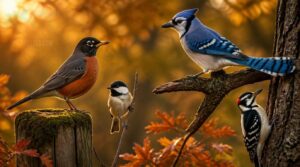
Size and shape are your first clues when identifying a bird species in the field.
- American Robin — 9 to 11 inches, round body, long tail, horizontal silhouette
- Black-capped Chickadee — 4.5 to 5.5 inches, compact with a large head relative to its size
- Blue Jay — 9 to 12 inches, long tail, pronounced crest, strong bill morphology
- Downy Woodpecker — 4 to 5.5 inches, short neck, chisel-like bill, compact body proportions
Color Patterns
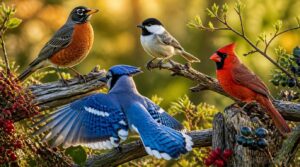
Once you’ve got size down, color patterns can sharpen your ID fast. Look for facial markings, wing patch colors, and plumage gradient shifts — they’re the clearest field marks.
| Bird | Key Color Pattern |
|---|---|
| American Robin | Reddish-orange breast, gray-brown back |
| Black-capped Chickadee | Black cap, pale cheeks, gray back |
| Blue Jay | Bright blue wings, white bars |
| Northern Cardinal | Vivid scarlet, black face mask |
Bill and Tail Shape
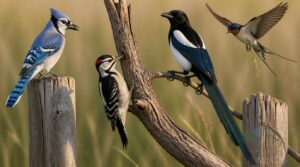
Color gets you close, but bill and tail shape seal the deal. A Blue Jay’s stout, conical bill cracks seeds easily, while a Downy Woodpecker’s straight, pointed bill drills into bark.
Black-billed Magpie tails make up half their body length. Forked tails on Barn Swallows cut drag mid-flight.
These two features alone can confirm your South Dakota backyard bird ID.
Songs and Calls
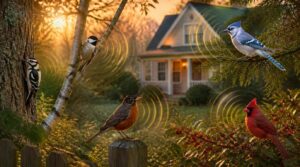
Bill shape tells you what a bird eats. But its voice tells you who it is.
A bird’s bill reveals what it eats, but its voice reveals who it is
Bird songs and calls are often your fastest ID tool in a yard full of leaves:
- American Robins sing a rolling, cheerful melody at dawn
- Black-capped Chickadees say their own name clearly
- Blue Jays blast sharp alarm calls when hawks approach
- Downy Woodpeckers give soft, high-pitched whinnies
- Northern Cardinals whistle loud, repeated phrases
Every sound has a purpose. Songbird identification by ear takes practice, but it’s worth it.
Feeding Behavior
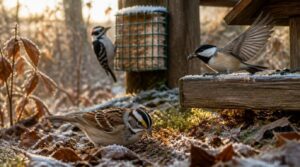
Watch how a bird eats — it tells you almost as much as its feathers.
Ground foragers like White-throated Sparrows scratch through leaf litter for seeds. Chickadees grab a black sunflower seed, dart off, and cache it in bark. Downy Woodpeckers cling sideways to suet feeders, chipping away for fat and protein through winter’s coldest days.
Attracting Birds to South Dakota Yards
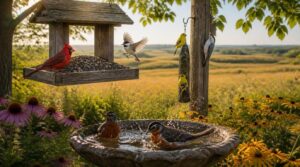
Getting birds into your yard comes down to a few simple things done right. South Dakota has plenty of species ready to visit once you give them a reason to stop. Here’s what actually works.
Best Bird Feeders
The right feeder makes all the difference. Hopper feeders hold 3 to 10 pounds of birdseed and suit mixed seed blends well — fewer refills, more birds.
For squirrel proofing, weight-activated designs close off access automatically.
Mount feeders 5 to 6 feet high, 10 to 15 feet from shrubs. Clean every two weeks to keep birds healthy.
Black Oil Sunflower Seeds
Black oil sunflower seeds are the closest thing to a universal birdseed. They pull in chickadees, cardinals, Blue Jays, and sparrows — practically the full roster of backyard birds in South Dakota.
Their thin hulls make cracking easy, even for smaller songbirds. With 40 to 50 percent oil content, they pack serious calories — exactly what birds need during harsh South Dakota winters.
Suet for Winter Birds
Suet is pure fuel — rendered fat that burns hot in a bird’s metabolism when temperatures drop hard across South Dakota.
Here’s what to offer and how:
- No-melt suet cakes hold their shape in freezing temperatures and resist dripping during warmer spells.
- Peanut butter suet draws Downy Woodpeckers, Blue Jays, and chickadees reliably.
- Suet with added mealworms or nuts boosts protein and broadens your visitor list.
- Clean feeders every two weeks to prevent mold and bacterial buildup.
Position suet feeders 4 to 6 feet high, away from wind.
Bird Baths and Water
A bird bath can be just as magnetic as your feeders — sometimes more so.
Keep water depth between 1 and 2 inches for small songbirds like chickadees and Downy Woodpeckers. A gentle slope lets different species wade comfortably.
| Feature | Recommendation |
|---|---|
| Water depth | 1–2 inches for small birds |
| Cleaning frequency | Every 1–2 weeks |
| Placement distance | 10 feet from dense cover |
| Winter solution | Heated bath to prevent icing |
Moving water attracts more birds and stops mosquito larvae. A solar-powered fountain works well. In South Dakota winters, a heated bird bath keeps water accessible when temperatures drop below freezing.
Native Plants for Birds
Think of your yard as a living pantry. Native plants for birds do what feeders can’t — they supply food, shelter, and insects all at once.
Serviceberry shrubs offer berries into fall, while native oaks support hundreds of caterpillar species that feed nestlings. Even seed-producing grasses like little bluestem feed songbirds through winter.
Backyard Habitats Across South Dakota
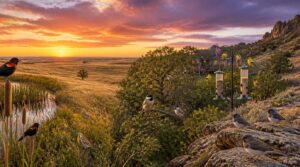
South Dakota’s birds don’t all show up in the same backyard — where you live shapes who visits. A yard near a wetland draws different birds than one sitting on open prairie or tucked into a wooded lot. Here’s a look at five backyard habitat types and the birds you’re most likely to see in each.
Urban Backyard Birds
Most South Dakota towns offer more birding than you’d expect. Your yard’s mixed deciduous trees provide natural shelter and foraging zones that attract Black-capped Chickadees, Blue Jays, and American Robins year-round. A shallow bird bath draws multiple species during warm months.
Place bird feeders 5 to 6 feet high, and keep cats indoors to protect ground foragers.
Rural Farmyard Birds
Move a mile outside town, and the birdlife shifts noticeably.
Rural farmyards across South Dakota attract species built for open space — American Robins probe moist soil for earthworms, Red-winged Blackbirds patrol field edges, and Mourning Doves forage quietly on spilled grain near outbuildings. Western Meadowlarks arrive by late March, filling grassland borders with song.
Wooded Yard Species
Add a wooded yard to the picture, and the species list grows richer fast. Mature canopy trees — oaks, maples, elms — pull in Black-capped Chickadees and Downy Woodpeckers, both hunting bark and snags for insects.
House Wrens tuck nests into shrub layers, while Dark-eyed Juncos scratch through leaf litter below.
Eastern Kingbirds work the canopy edges, snatching flying insects mid-air.
Wetland Edge Birds
Swap the canopy for cattails, and your bird list shifts completely. Wetland edge habitat draws Mallards, Blue-winged Teals, and American Coots into the shallows, where they probe muddy shorelines at dawn and dusk activity peaks.
Reed beds and emergent vegetation offer nesting cover for marsh species you won’t spot in a wooded yard.
Prairie Grassland Birds
Step onto any open prairie in South Dakota and you’re in a different world. Western Meadowlarks and Grasshopper Sparrows rely on native mixed-grass cover for ground nesting sites and predator avoidance. Restoration projects are rebuilding these habitats statewide.
- Plant native prairie grasses for nesting cover
- Add shallow water features for foraging insects
- Leave dead grass patches as microhabitats
Frequently Asked Questions (FAQs)
What is the most common bird in South Dakota?
The American Robin is the most common bird in South Dakota, appearing in 36% of all checklists. You’ll spot it easily by its reddish-orange breast and cheerful dawn song.
Are blackbirds common in North and South Dakota?
Yes, blackbirds are common in both states. Red-winged Blackbirds breed in marshes, while Common Grackles favor open fields. Most migrate south in winter, though some linger near towns.
How many bird species are there in South Dakota?
South Dakota is home to around 440 bird species, according to regional checklists and breeding atlas surveys. That number shifts with the seasons as migrants pass through, adding notable avian biodiversity across the state year-round.
What bird flies in South Dakota?
Over 352 species call South Dakota home, from year-round residents to seasonal migrants. Robins, chickadees, and jays share the sky with traveling warblers riding prairie wind corridors each spring and fall.
When are birds most commonly spotted in South Dakota?
Birds are most active March through October, with spring migration peaking May and summer breeding peaking June. Winter feeder visits surge December through February, while year-round residents stay active daily at dawn.
What hummingbirds live in South Dakota?
Surprisingly, only one hummingbird truly calls South Dakota home. The Ruby-throated Hummingbird visits eastern counties each summer, while western areas rarely see one. Rufous and Black-chinned are occasional rare guests.
How do I identify birds in my backyard?
Start with size and shape. Is it sparrow-small or jay-large? Then check color and field marks, listen for its call, and note what it’s eating. Those four clues crack most IDs fast.
What is South Dakota’s state bird?
South Dakota made the Ring-necked Pheasant its official state bird on February 13, 1943 — a species introduced from Asia that became inseparable from the state’s prairie identity, hunting culture, and conservation legacy.
What happened to my backyard birds?
If your yard feels quieter lately, you’re not imagining it. Bird populations have dropped markedly since 1970, and habitat loss, window collisions, and seasonal shifts all play a role.
What birds are in the Black Hills of South Dakota?
The Black Hills of South Dakota shelter chickadees, nuthatches, woodpeckers, and warblers year-round. During harsh winters, irruptive species like crossbills and pine siskins move through when northern food sources run out.
Conclusion
Like a telegraph wire strung between seasons, your yard carries signals all year long—if you know how to read them. The backyard birds of South Dakota don’t ask for much: the right seed, a clean water source, and a patch of native plants.
Watch who arrives in May, who lingers through January, and who passes through without a trace. Each visit sharpens your eye.
The birds were always there. You’re just finally paying attention.
- https://www.audubon.org/news/birding-south-dakota
- https://southern-wings.fishwildlife.org/online-guide/south-dakota
- https://gfp.sd.gov/breeding-bird-atlas
- https://www.manomet.org/publication/get-to-know-your-backyard-birds
- https://www.kaytee.com/learn-care/ask-the-wild-bird-experts/backyard-birds-favorite-bird-seed