This site is supported by our readers. We may earn a commission, at no cost to you, if you purchase through links.
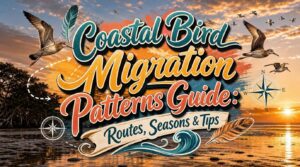
Every May, Red Knots (Calidris canutus) arrive at Delaware Bay after flying roughly 9,000 miles from Tierra del Fuego—timing their arrival to coincide with horseshoe crab spawning season. Miss that window by a week, and their survival odds drop sharply. Coastal bird migration operates with precision, governed by photoperiod, cold fronts, and evolved instinct.
North America’s four major flyways funnel billions of birds through specific estuaries, barrier islands, and tidal mudflats each spring and fall. These routes, timing, and critical stopover habitats are key to understanding migration patterns.
This knowledge transforms casual beachwalking into one of the most rewarding wildlife experiences on the continent.
Table Of Contents
Key Takeaways
- Red Knots (Calidris canutus) and other long-distance migrants time their stopovers with almost clockwork precision, and missing a critical refueling window—like Delaware Bay’s horseshoe crab spawning—can cost them their lives.
- North America’s four flyways (Atlantic, Pacific, Mississippi, and Central) act like nature’s highway system, funneling billions of birds through specific coastal habitats where geography, tides, and weather do the directing.
- Cold fronts, jet stream tailwinds, and photoperiod cues run the migration calendar—roughly 50% of September’s bird movements are triggered by cold fronts alone, so watching the weather is just as important as watching the sky.
- Protecting stopover habitats like estuaries, salt marshes, and barrier islands isn’t optional—it’s the foundation that keeps migration routes functioning, and your eBird checklists and ethical field behavior directly contribute to that effort.
Coastal Migration Routes and Flyways
Every year, millions of birds move along well-established aerial highways that stretch the length of North America’s coastlines.
These routes follow four distinct corridors—Pacific, Central, Mississippi, and Atlantic—each mapped in detail across North America’s major bird migration flyways.
Understanding how these routes work gives you a real edge in knowing where to look and when. Here’s what shapes coastal migration and the key corridors you should know.
Atlantic, Pacific, Mississippi, and Central Flyways

North America’s four major flyways — the Atlantic, Pacific, Mississippi, and Central — function like nature’s highway system, each channeling distinct flyway species assemblages across thousands of miles. These flyway habitat mosaics range from Arctic tundra to tropical coastlines, supporting migration routes shaped by geography, food availability, and seasonal winds.
Flyway policy coordination and flyway funding mechanisms help protect these corridors, while cross-flyway disease dynamics remind us how deeply connected these systems truly are.
Over half of waterfowl use the Central Flyway during migration.
Major Coastal Migration Corridors

Within those flyways, birds travel more specific routes — and coastal geography shapes everything. Shelf-edge pathways, kelp-forest corridors, and offshore upwelling lanes guide seabirds along the Pacific. These features demonstrate how tightly birds adhere to geographic cues, a principle coastal birdwatchers quickly internalize.
River-mouth funnels and island-steppingstone chains concentrate Atlantic Flyway migration corridor traffic near key landforms. Mapping these coastal routes underscores how precisely birds follow geography — a truth any serious coastal bird watching enthusiast learns to appreciate.
Shorebird, Seabird, Raptor, and Songbird Routes

Shorebirds follow tidal energy corridors between mudflats, hitting shorebird stopover sites to refuel fast. Seabirds use island stepping-stones across open water. Raptors ride thermal uplift routes along ridgelines and headlands — classic raptor migration spectacles worth planning a trip around. Songbirds ride tailwind highways overnight, using diurnal coastal lanes to rest and feed by day.
Migration Bottlenecks Along Coastlines

Think of a migration bottleneck as a funnel — birds get squeezed through narrow coastal gaps where estuary mouths, inlets, and barrier islands converge. Wind funnel effects concentrate flocks dramatically here. Habitat narrowing from artificial structures like seawalls and jetties makes these pinch points riskier, increasing predator concentration and lighting interference at night.
- Tidal inlets funnel shorebirds into predictable daily peaks
- Artificial structures compress open passage corridors greatly
- Lighting interference disrupts nocturnal movement at coastal bottlenecks
Smart coastal bird watching means knowing exactly where these bottlenecks fall along migration routes.
Long-Distance Coastal Migrants to Know

Some coastal migrants are true endurance athletes. The Arctic Tern logs up to 44,000 miles annually, while the Bar-tailed Godwit flies nonstop across oceans. These species showcase remarkable migratory stamina, pushing physiological limits during transcontinental journeys.
Some coastal migrants are true endurance athletes, with the Arctic Tern logging 44,000 miles annually and the Bar-tailed Godwit flying nonstop across oceans
Red Knots and Piping Plovers depend critically on shorebird stopover sites along the Atlantic Flyway migration corridor, timing arrivals to match seasonal migration patterns and food availability. These habitats provide essential refueling points, enabling survival during grueling treks.
| Species | Notable Trait |
|---|---|
| Sooty Shearwater | Transoceanic shelf-edge traveler |
| Red Knot | Doubles weight at stopovers |
| Bar-tailed Godwit | Longest nonstop flight recorded |
Coastal bird watching along these corridors rewards patience, offering glimpses into the extraordinary lives of these avian athletes.
Seasonal Coastal Migration Patterns

Coastal bird migration isn’t random — it runs on a surprisingly reliable schedule shaped by season, weather, and geography. Once you understand the timing, you’ll start to see the patterns that experienced birders use to predict exactly when and where the action happens.
Here’s a closer look at what drives those rhythms along the coast.
Spring Migration Timing
Spring migration timing isn’t random — birds rely on photoperiod cues, reading daylight length to trigger departure. Green-up synchrony matters, too: arrival must match peak insect emergence at breeding grounds. Migration phenology shifts have pushed many Atlantic Flyway species 3–5 days earlier over recent decades.
Watch for these spring patterns:
- Departure latitude shapes timing, with southern routes activating first
- Early arrival risks include cold snaps and scarce food
- Seasonal migration timing peaks March through May along the Eastern Seaboard
- Mapping coastal bird migration routes helps you predict where flocks appear next
Fall Migration Timing
Fall migration kicks off quietly in late July, when Arctic-breeding shorebirds like Calidris canutus (Red Knot) begin heading south — well before summer feels finished. Day length cues trigger departure, but prey abundance and timing and temperature thresholds shape exactly when each species moves. Use migration forecasts and the eBird Migration Dashboard to track species-specific schedules and plan your coastal birdwatching around peak stopover habitat importance.
To reduce your impact on birds passing through, migratory bird conservation strategies cover practical steps like treating windows and dimming lights during peak movement nights.
| Species Group | Peak Fall Movement | Key Coastal Stopover |
|---|---|---|
| Shorebirds | August–September | Delaware Bay, Gulf Coast mudflats |
| Warblers & Thrushes | September–October | Atlantic barrier islands |
| Raptors | September–November | Cape May, Padre Island |
| Waterfowl | October–November | Mississippi & Central Flyway marshes |
| Seabirds | August–November | Pacific & Atlantic offshore corridors |
Staging duration varies widely — some species linger days, others just hours.
Peak Migration Months by Region
Every coastal region runs on its own schedule — and knowing those windows makes all the difference.
- Atlantic spring peaks April–May; nocturnal migrants flood barrier islands.
- Gulf September brings massive songbird and shorebird fallouts.
- Mississippi April concentrations rival any global migration spectacle.
- Pacific fall surges August–October along estuaries.
- Great Lakes peak hits September for waterfowl and gulls.
Weather Triggers and Wind Patterns
Weather doesn’t just influence migration — it runs the whole show. Cold fronts push roughly 50% of all North American bird movements in September alone, triggering mass departures overnight.
Jet stream tailwinds enable raptors like Swainson’s Hawk to cover 480 km daily, while sea breeze onset concentrates shorebirds near convergence zones by late morning.
Trade wind assistance funnels birds predictably along continental shelves.
| Weather Force | Effect on Birds | Coastal Relevance |
|---|---|---|
| Jet stream tailwinds | Reduce energy costs dramatically | Atlantic and Pacific flyways |
| Sea breeze onset | Concentrates shorebirds near shore | Barrier islands, tidal flats |
| Trade wind assistance | Creates consistent offshore corridors | Tropical coastal zones |
| Coastal front lift | Convective bands aid crossing | Spring migration peaks |
| Barrier island gusts | Challenges smaller passerines | Dune sheltering zones |
Night Migration Along Coastal Areas
Most coastal migrants migrate after dark, using a star compass and magnetoreception to stay on course along migration routes. Ocean sound cues help birds orient toward shore, while moonlit altitude shifts let them fly higher on clear nights.
Light pollution disrupts these cues, lowering foraging success. Fog navigation challenges increase misnavigation risk, compounding orientation difficulties.
Offshore turbine collisions claim nocturnal migrants during peak seasonal migration timing, exacerbating mortality risks.
Fallout Events on Barrier Islands
Headwinds during fall migration can ground exhausted birds fast — and barrier islands take the hit first. When overwash habitat reshapes the beach after storms, inlet formation and sediment redistribution create chaotic but bird-rich scenes overnight.
- Warbler fallouts pack dune shrubs with dozens of species
- Breach prediction helps time your coastal bird-watching visits
- Predator access increases through newly opened low-lying areas
- Overwash fans attract terns and plovers
- Bird-watching tips: arrive at dawn after a front passes
Critical Coastal Stopover Habitats

Not every stretch of coastline is created equal regarding migration. Birds are remarkably selective about where they stop, rest, and refuel — and the right habitat can make or break a successful journey.
Here’s a look at the key coastal environments that keep migrating birds on the move.
Estuaries and Tidal Mudflats
Estuaries and tidal flats are the premier shorebird diner — open twice daily, fully stocked. These intertidal zones thrive on Mudflat Sediment Dynamics, where fine particles trap Organic Carbon Storage-rich detritus.
This process fuels a Microbial Food Web that nurtures worms, bivalves, and crustaceans.
Their Nutrient Filtering Capacity cleans coastal water, while the Erosion-Accretion Balance maintains stability in these critical shorebird stopover sites along seasonal migration patterns and routes.
Salt Marshes and Great Marsh Systems
Salt marshes pick up right where mudflats leave off. These coastal wetlands layer plant zonation from low-marsh Spartina alterniflora into high-marsh halophytes, creating distinct feeding zones for birds on migration routes.
Sediment accretion keeps pace with rising seas, while carbon sequestration locks nutrients into rich soils.
That marsh hydrology drives a thriving invertebrate food web — exactly what fuels birds through seasonal migration patterns at stopovers like New England’s Great Marsh.
Beaches, Dunes, and Barrier Islands
Beyond the marsh edge, barrier islands offer their own kind of magic for bird migration. Dune stabilization from coastal grasses creates sheltered pockets where warblers and sparrows rest overnight. Sediment transport and inlet dynamics constantly reshape back-barrier habitats, keeping stopovers productive season after season.
Beach nesting species like Charadrius melodus depend on these shifting coastal regions, making seasonal migration patterns on the Eastern Seaboard inseparable from barrier island health.
Horseshoe Crab Eggs and Shorebird Feeding
Few spectacles in coastal bird watching rival Delaware Bay in May, where egg abundance cycles draw hundreds of thousands of shorebirds onto Atlantic Coast beaches in a concentrated foraging pulse. Red knots (Calidris canutus) and ruddy turnstones exploit this nutrient transfer directly, building egg energy budgets that power their next flight north.
Crab harvest limits protect this seasonal migration pattern, preserving coastal wetlands as critical hubs for Eastern Seaboard migrants.
How Birds Refuel During Stopovers
Think of stopovers as pit stops where birds race against the clock.
Here’s how refueling actually works:
- Fuel intake bursts peaks in the first 1–3 days
- Lipid conversion transforms insects into fat reserves fast
- Corticosterone control regulates feeding intensity
- Social foraging helps flocks locate food patches quickly
- Nocturnal fueling lets birds eat while avoiding daytime predators
Coastal wetland bird conservation depends on protecting these rest stops.
Habitat Diversity and Bird Observation Success
Where you set up matters as much as when. Mixed vegetation layers—from low-marsh grass to shrub edge to open mudflat—create microhabitat diversity that draws different feeding guilds into one view. Substrate variation across estuaries concentrates shorebirds predictably, while low disturbance zones boost detection rates noticeably.
Plant structural complexity, in short, directly shapes your coastal birdwatching success during peak migration windows.
Tracking Coastal Bird Migration

Knowing where birds go is one thing—how scientists actually follow them is another.
Today’s tracking tools have transformed migration research, giving researchers and birders alike an unmatched window into coastal movements.
Here’s a look at the key technologies and platforms making it all possible.
GPS Loggers and Satellite Tags
GPS tracking and satellite telemetry have genuinely transformed how scientists follow coastal migrants. Modern GPS loggers — some weighing under 5 g — use multi-sensor integration, pairing location fixes with accelerometers and pressure sensors for richer data. These advancements provide a remarkably precise picture of the birds’ actual travel routes.
Battery management and smart attachment techniques ensure tags remain functional for months, even in challenging coastal environments. Researchers also monitor data quality metrics like HDOP to verify accuracy, further enhancing the reliability of migration studies.
Motus Wildlife Tracking Stations
The Motus Wildlife Tracking System works like a vast coastal listening network — over 1,500 automated stations tuned to detect tiny nanotags carried by birds as small as warblers.
Each station runs on solar power, stays aligned through regular antenna alignment checks, and transmits detections wirelessly to a central database. Community partnerships keep stations running in remote areas, and data licensing opens records to researchers worldwide.
Here’s what makes Motus essential for coastal bird watching:
- Stations detect tagged birds within a 15 km radius, mapping migration routes with exceptional precision.
- Tags emit signals multiple times per minute, capturing fine-scale seasonal migration patterns.
- Tag calibration data helps researchers interpret signal strength and estimate exact locations.
- Open data access facilitates cross-border conservation along critical flyways.
- Coastal station placement targets key stopover sites, directly informing birdwatching tips and habitat protection.
Weather Radar and BirdCast Forecasts
Weather radar does more than track storms — BirdCast turns that same network into a window on nocturnal coastal bird watching. Through Radar Clutter Removal, algorithms strip away weather noise and isolate bird signals, enabling Migration Intensity Mapping and Altitude Profiling across hundreds of stations.
Forecast Probability Overlays, updated nightly, help anticipate seasonal migration patterns. These tools provide critical insights into avian movement dynamics.
Nightlight Mitigation alerts encourage dimming lights during peak migration forecasts, reducing hazards for birds in transit. This dual focus on science and conservation transforms radar data into actionable strategies for protecting migratory species.
EBird Migration Dashboard
Radar shows you when birds are moving — the eBird platform tells you what’s moving and where. Its Migration Dashboard pulls citizen science observations into bird migration maps with Heatmap Visuals, letting you apply Custom Filters by species, county, or season.
Historical Comparisons and Trend Alerts reveal shifts in seasonal migration timing, making coastal bird-watching far more intentional. The Data Refresh Cycle ensures updates keep everything current, maintaining accuracy for users.
Movebank Migration Data
While eBird maps what birders see, Movebank captures what researchers tag. This global platform stores GPS telemetry and satellite tracking records across thousands of species, including coastal migrations moving through Atlantic and Pacific regions.
It follows FAIR Principles, ensuring migration data remains findable and reusable. The platform adheres to Metadata Standards and integrates sensor data for depth and temperature readings, while offering stable Public Data Packages to guarantee reliability and reproducibility in every study.
How to Read Migration Charts
Once you’ve pulled up bird migration charts, knowing what you are looking at makes all the difference.
Flow width interpretation indicates volume—thicker lines signify greater bird movement between locations.
Color legend decoding distinguishes species groups or geographic regions.
Monitor net gain indicators on outer axes and assess temporal axes scaling to identify seasonal peaks.
Error shading analysis clarifies data variability, revealing uncertainty in migration patterns.
Tracking Specific Coastal Species
Once you understand what migration charts are telling you, watching individual species move becomes the real reward. Tracking birds through technology reveals each species’ unique migration timing fingerprint — for example, Piping Plovers (Charadrius melodus) show distinct coastal species signatures on habitat-use heatmaps associated with barrier island stopovers.
Tag selection criteria, interannual variation in migration routes, and seasonal patterns in coastal avian migration collectively refine observational skills. These insights sharpen your coastal bird-watching instincts, transforming abstract data into actionable knowledge for predicting species movements.
Conservation and Birdwatching Planning

Watching coastal birds is rewarding, but it comes with real responsibility. Every choice you make—where you walk, when you visit, what you report—can affect the birds you’ve traveled to see.
Here’s what you need to know about protecting these migrations and planning your time wisely.
Habitat Loss and Estuary Protection
Coastal wetlands don’t just look beautiful — they’re the fuel stops that keep migration routes functioning. Urban encroachment, diking fragmentation, nutrient runoff, and invasive species are quietly shrinking these habitats. When estuaries disappear, shorebirds lose critical refueling sites along seasonal migration timing windows. Restoration financing through living shorelines and tidal reconnection projects helps reverse wetland protection losses before entire coastal flyways feel the impact.
Climate Change Impacts on Migration Timing
Climate change is quietly reshuffling the calendar for coastal migrants. Earlier arrivals, driven by warmer springs, trigger phenology mismatch when insects haven’t peaked yet.
Altered wind assistance and extended stopover duration at coastal habitats are reshaping migration routes entirely.
The impact of climate change on migration timing is real—seasonal migration timing now shifts 1–3 weeks, and expanded breeding windows signal deeper ecological stress ahead.
Collision Risks From Buildings and Power Lines
Every spring and fall, reflective glass and night lighting on coastal buildings become serious hazards along migration routes. Urban wind shear near shorelines disrupts normal flight paths, pushing exhausted birds toward walls and towers.
Flight diverters and power line markers genuinely reduce fatalities when placed strategically.
Supporting habitat protection for stopover sites and broader conservation strategies for migratory bird species keeps these journeys possible.
Citizen Science and Coastal Bird Counts
Your eyes in the field matter more than you might think. Citizen science programs rely on volunteer training and standardized protocols to transform everyday observations into reliable migration monitoring programs.
Through data submission portals like eBird, your counts join hundreds of thousands of submissions worldwide. Photo verification confirms tricky IDs, ensuring accuracy in species identification.
Community stewardship plays a vital role in covering under-sampled beaches, turning coastal birdwatching into a genuine conservation act.
Planning Trips During Peak Migration
Timing is everything when planning coastal birdwatching trips during peak migration. Spring migration spans March through May, while fall migration extends from August to November. To maximize your experience, book lodging logistics three to six months ahead near established hotspots.
Prepare meticulously by building your gear checklist early, confirming transportation access, and securing any required local permits. These steps ensure seamless logistics, allowing you to focus on the birds.
Before each outing, check tide schedules to align your visits with optimal viewing conditions. Aligning with bird migration timing transforms a good trip into an unforgettable one.
Ethical Birdwatching at Stopover Sites
Being a responsible observer means the birds come first. Maintain a minimum observation distance of 30 meters from shorebirds, and 50 meters near nesting areas. Trail adherence protects fragile dune vegetation, while noise minimization prevents flock dispersal during critical feeding windows.
Drone prohibition is strictly enforced near stopover sites. This ensures undisturbed habitats for migratory species.
Volunteer stewardship through habitat restoration sustains these coastal corridors, supporting millions of migrants each season.
How Birdwatchers Support Conservation Awareness
Beyond ethical observation, your presence in the field carries real weight. Birdwatchers fuel citizen science contributions through eBird checklists, volunteer habitat patrols, and community involvement in migration monitoring programs. These efforts directly support practical conservation strategies for migratory species.
Educational and outreach initiatives amplify this impact. School curriculum integration, birding festival partnerships, social media campaigns, and community workshops spread awareness of birdwatching’s benefits for conservation. By fostering broader engagement, these activities turn coastal birdwatching into a powerful tool for protecting migratory birds.
Ultimately, this collective action transforms coastal birdwatching into one of the most practical conservation strategies available today.
Frequently Asked Questions (FAQs)
Which coastal birds migrate at the highest altitudes?
Bar-tailed godwits reach nearly 6,000 meters, while bar-headed geese peak at 7,200 meters crossing the Himalayas. Raptors and songbirds also use wind-assisted soaring and altitudinal migration during long-distance coastal migration patterns.
How do juvenile birds navigate without experienced adults?
Juvenile birds navigate using natal odor memory, magnetic compass sensing via cryptochromes, and visual reference points memory.
Wind drift correction and stopover learning sharpen avian navigation skills, making coastal stopover habitats essential classrooms for first-time migrants.
Do migratory birds return to the same stopover sites?
Yes, many migratory birds return to the same stopover sites year after year.
Individual fidelity patterns are well-documented, with longitudinal tag studies confirming that shorebirds and waterfowl rely on site memory mechanisms to revisit familiar, nutrient-rich coastal habitats.
How do predators affect shorebird behavior during stopovers?
Predators force shorebirds into constant vigilance tradeoffs, leading to shorter foraging bouts, tighter flock cohesion, and increased escape flight distance. These behaviors replace efficient refueling, disrupting critical stopover site dynamics.
Such pressures make microhabitat avoidance and habitat protection for stopover sites essential for species like the Piping Plover and other Atlantic Coast shorebirds near Osprey territories.
Conclusion
Coastal bird migration patterns guide every step of this journey—from timing your visit to Delaware Bay to reading a cold front’s promise on radar. When you learn to read the flyways, watch the tides, and recognize a Calidris canutus fattening up on horseshoe crab eggs, you stop being a spectator.
Birds don’t stumble into these routes; millions of years of evolution carved them into instinct. The precision of their paths, shaped by survival and adaptation, transforms abstract maps into living narratives.
You become part of something ancient and alive, no longer an observer but a witness to the enduring rhythm of nature.
- https://www.birdersofstjames.com/post/the-atlantic-flyway-exploring-the-east-coast-bird-migration-and-north-carolina-s-vital-coastal-habi
- https://www.curlewcall.org/bird-migration-map-2025-track-live-routes-flyways-usa/
- http://web.stanford.edu/group/stanfordbirds/text/essays/Shorebird_Migration.html
- https://www.audubon.org/news/monumental-effort-understand-migrating-shorebirds
- https://www.sciencealert.com/migrating-birds-follow-the-whims-of-the-wind-when-flying-non-stop-across-the-sea