This site is supported by our readers. We may earn a commission, at no cost to you, if you purchase through links.
Seed bowls look generous—until you realize what’s missing. A diet built almost entirely on millet and sunflower seeds leaves gaping holes in the nutritional profile of most tropical species, quietly eroding immunity, feather integrity, and reproductive capacity long before any visible symptoms surface.
Macaws, Amazons, and eclectus parrots evolved in ecosystems dense with varied fruits, leaves, and insects; captivity compresses that diversity into a ceramic dish.
Avian vitamins for tropical species don’t compensate for poor husbandry, but they do bridge the gap between what you’re feeding and what your bird’s metabolism actually demands—and the difference, clinically speaking, is often profound.
Table Of Contents
Key Takeaways
- Seed-based diets create dangerous nutritional gaps in tropical birds — vitamins A, D3, E, and B-complex aren’t optional extras. They’re metabolic essentials that seeds simply can’t deliver.
- Fat-soluble vitamins (A, D3, E, K) accumulate in tissue and can cause toxicity with repeated overdosing, so matching dose to your bird’s species, age, and body weight isn’t just good practice — it’s harm prevention.
- Deficiency signs like dull feathers, cloudy eyes, tremors, and thin eggshells rarely appear all at once, meaning early detection through routine vet exams and bloodwork is the only reliable safety net.
- No supplement works in isolation — pairing quality vitamins with whole foods, proper UVB exposure, and species-specific formulas is what actually moves the needle on long-term health outcomes.
7 Best Avian Vitamins for Tropical Birds
Finding the right vitamin supplement for your tropical bird doesn’t have to feel like wading through a pet store maze. Each product below was selected with species-specific needs, safety, and real-world usability in mind.
Your bird’s species and diet play a big role in what actually works, so browsing bird health supplement guides for backyard and exotic keepers can help you narrow things down before buying.
Here are seven worth knowing about.
1. Nekton S Bird Multi Vitamin
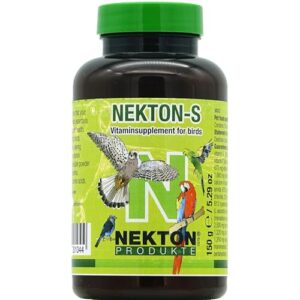
Nekton S has earned its reputation over decades, trusted in zoos, breeding programs, and private collections for over 35 years.
This powdered multivitamin provides 13 vitamins, 18 free-form amino acids, and essential trace minerals, including zinc, copper, and iodine.
Simply dissolve 1 g per 250 ml of drinking water daily. Its unflavored and odor-free formula ensures even finicky parakeets and African greys rarely reject it.
During molt or illness, doubling the dose for up to a week offers enhanced metabolic support.
| Best For | Bird owners feeding seed-based diets who want an easy, daily way to fill nutritional gaps for parakeets, canaries, finches, parrots, and African greys. |
|---|---|
| Form | Powder |
| Administration | Water or food |
| Target Species | All caged birds |
| Net Weight | 150 g |
| Feather Support | Yes |
| Dietary Supplement | Yes |
| Additional Features |
|
- Covers the basics well — 13 vitamins, 18 amino acids, and key trace minerals in one simple powder
- Unflavored and odor-free, so even picky birds tend to accept it without fuss
- Flexible use — mixes into water or food, and the dose can be bumped up during molt or illness
- The scoop is tiny, which makes measuring accurately a bit fiddly without the right tools
- Getting the concentration wrong can change the water’s color or taste, which may put some birds off
- It supports general health, but it’s not a replacement for a vet if something’s actually wrong
2. Lafeber AviEra Bird Vitamin Powder
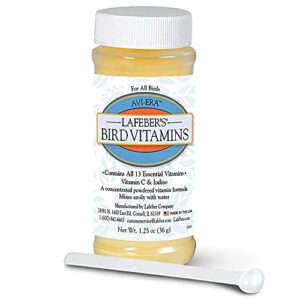
If Nekton S is the veteran of the lineup, Lafeber’s Avi-Era is the approachable everyday option. Developed by avian veterinarians and nutritionists, this powder covers all 13 essential vitamins—including A, D3, and E—plus iodine, making it particularly useful for birds stuck on seed-heavy diets.
Mix two scoops into an ounce of drinking water daily, or halve the dose and stir it into moist food. No artificial colors, no flavors. Just clean, straightforward nutrition your bird will actually consume.
| Best For | Bird owners whose pets rely heavily on seeds and need a simple, vet-developed vitamin boost without the fuss. |
|---|---|
| Form | Powder |
| Administration | Water or food |
| Target Species | All bird ages |
| Net Weight | 35 g |
| Feather Support | Yes |
| Dietary Supplement | Yes |
| Additional Features |
|
- Covers all 13 essential vitamins plus iodine and vitamin C — solid coverage for seed-heavy diets
- Easy to use: just mix into water or moist food, no force-feeding required
- Clean formula with no artificial colors or flavors
- Powder can be slow to dissolve and may need extra stirring
- The measuring scoop is sometimes missing from the package
- Not a diet replacement — you’ll still need regular vet check-ins to keep nutrition on track
3. United Pet Group Wild Harvest Bird Vitamin Drops
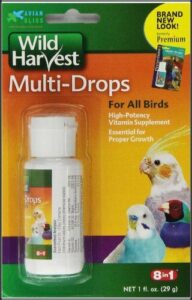
Where Avi-Era leans powdered and precise, Wild Harvest Multi-Drops take a different approach: liquid convenience straight into the water bowl.
A few drops daily—one per bird per ounce of water—delivers vitamin A palmitate, D3 (cholecalciferol), and a full B-complex lineup including thiamine, riboflavin, niacinamide, and pyridoxine.
Birds often drink more of the lightly flavored water, which is a quiet win for hydration.
Just keep dosing exact; this one’s high-potency, and guesswork isn’t your friend here.
| Best For | Bird owners who want a simple, no-fuss way to add vitamins to their flock’s daily routine—especially those keeping canaries, finches, or budgies. |
|---|---|
| Form | Liquid |
| Administration | Drinking water |
| Target Species | All bird species |
| Net Weight | 1 oz |
| Feather Support | Yes |
| Dietary Supplement | Yes |
| Additional Features |
|
- Easy to use—just a few drops straight into the water bowl, no mixing powders or measuring spoons
- Birds tend to drink more of the flavored water, so you get a hydration bonus without any extra effort
- Covers a solid range of vitamins including A, D3, and a full B-complex to support feathers, energy, and overall health
- The drops turn water yellow, which can stain feeders and means more cleanup over time
- It’s high-potency, so you really can’t eyeball the dose—too much can cause problems
- Some budgie owners have noticed color fading in their birds’ plumage with long-term use
4. UnRuffledRx Bird Calcium Magnesium D3
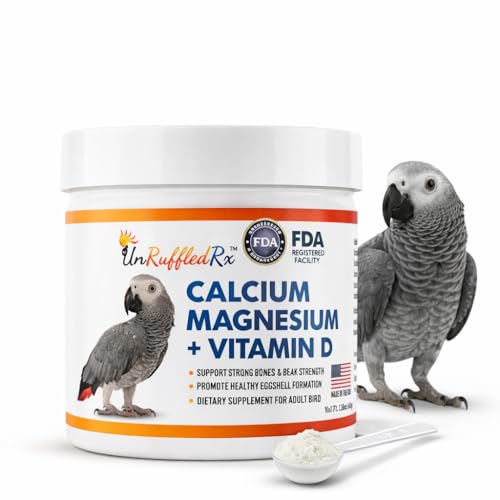
UnRuffledRx Bird Calcium Magnesium D3 offers a flavorless powder that dissolves completely clear—ensuring your bird won’t detect it. Ideal for setups where liquid drops are impractical, this supplement provides essential nutrients without altering taste or appearance.
Each measured scoop delivers calcium lactate, magnesium, vitamin D3 (cholecalciferol), and key B-vitamins in a bioavailable blend that supports bone density, eggshell integrity, and muscle function. These nutrients are critical for laying females and indoor birds lacking adequate UVB exposure.
Administering three servings per week is sufficient for optimal results. One jar provides approximately 14 weeks’ worth of use, offering practical, long-term support for your bird’s health.
| Best For | Bird owners with picky or finicky drinkers who need a no-fuss way to sneak essential minerals into their pet’s routine without any taste or smell tipping them off. |
|---|---|
| Form | Powder |
| Administration | Drinking water |
| Target Species | Parrots and companion birds |
| Net Weight | 45 g |
| Feather Support | Yes |
| Dietary Supplement | Yes |
| Additional Features |
|
- Dissolves completely clear and tasteless, so even the pickiest birds won’t notice it in their water
- Packed with calcium, magnesium, D3, and B-vitamins in a bioavailable blend that covers bone health, egg-laying support, and feather quality all at once
- One jar lasts about 14 weeks at three servings a week, making it a solid long-term option for under $24
- The jar is only about a fifth full, which catches a lot of buyers off guard and feels like poor value for the price
- Dosing depends entirely on how much your bird actually drinks, so low drinkers might not get enough of the supplement
- Contains dextrose, which may not be ideal for birds that need to keep sugar intake low
5. Vital Planet Flora Bird Probiotic Powder
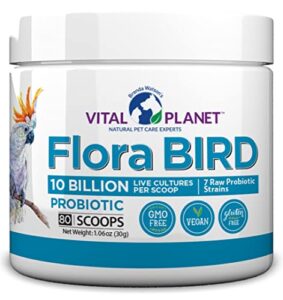
Essential Planet Flora Bird Probiotic Powder takes a different angle on avian wellness — one that starts in the gut. Each serving delivers 10 billion live cultures from seven avian-specific strains, including Lactobacillus acidophilus, Bifidobacterium animalis, and Pediococcus acidilacti, alongside prebiotic fibers that help those cultures actually thrive.
Since gut health needs vary by species and age, pairing this formula with guidance on parrot-specific avian health supplements helps you tailor probiotic support to your bird’s unique biology.
The unflavored powder mixes seamlessly into food or water, ensuring birds consume it without detecting any changes. This practical formulation accommodates diverse species sizes through weight-based dosing — for instance, birds under 100 g require just 1/8 scoop daily.
| Best For | Bird owners who want a simple, daily gut-health boost for their feathered companions, especially during stressful periods like illness or environmental changes. |
|---|---|
| Form | Powder |
| Administration | Food or water |
| Target Species | All bird species |
| Net Weight | 31 g |
| Feather Support | No |
| Dietary Supplement | Yes |
| Additional Features |
|
- Packs 10 billion live cultures from seven avian-specific strains, so you’re not just using a generic probiotic repurposed for birds
- The unflavored powder blends right into food or water — most birds won’t notice it’s there
- Non-GMO, soy-free, grain-free, and third-party tested, which takes a lot of the guesswork out of trust
- The scoop is tiny and has no measurement markings, making accurate dosing a real challenge for small birds under 100g
- Sprinkling it on food or water can lead to uneven consumption, so your bird might get too much one day and too little the next
- A few users have flagged concerns about expiration dates and how the product holds up outside of refrigeration long-term
6. Missing Link Avian Color Shine Powder
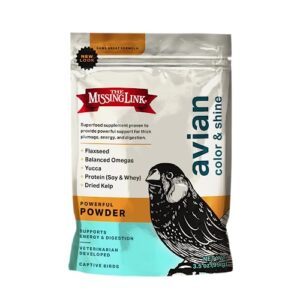
The Missing Link Avian Color & Shine Powder earns its name through a carefully considered formula built around fresh-ground flaxseed, dried kelp, yucca schidigera extract, and a full B-complex — including B1, B2, B3, B6, B12, and folic acid.
This combination directly promotes feather pigmentation, plumage thickness, and overall metabolic regulation. You simply sprinkle it over seeds, pellets, or fresh vegetables daily.
At 3.5 oz, it’s compact, but its cold-process manufacturing ensures the nutrients retain their potency.
| Best For | Bird owners who want to support feather health, plumage color, and overall wellness in pet birds like parakeets, cockatiels, and parrots. |
|---|---|
| Form | Powder |
| Administration | Food or water |
| Target Species | Pet birds |
| Net Weight | 100 g |
| Feather Support | Yes |
| Dietary Supplement | Yes |
| Additional Features |
|
- Fresh-ground flaxseed plus a full B-complex supports feather pigmentation and shine during molting and everyday growth
- Cold-process manufacturing keeps nutrients intact, so you’re actually getting what’s on the label
- Easy to mix into seeds, pellets, or even water — works well even for picky eaters
- Some birds may reject the powder texture outright, which can make it tricky to introduce
- Contains soy, whey, and beef — not ideal if your bird has known food sensitivities
- The 3.5 oz size runs out fast in multi-bird homes, so expect to reorder pretty regularly
7. Wild Harvest Molting Supplement for Birds
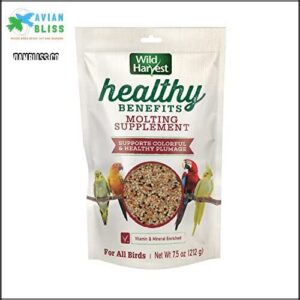
When molting season hits, your bird’s nutritional demands spike — and the Wild Harvest Molting Supplement targets that window directly.
Built on millet, oat groats, and canary grass seed, it’s fortified with vitamin A palmitate, D3, a full B-complex (including thiamine, riboflavin, and B12), plus DL-alpha-tocopherol acetate for vitamin E support.
At $2.74 for 7.37 oz, it’s budget-friendly and easy to mix into regular feed.
Just note: it’s a supplement, not a complete diet replacement.
| Best For | Bird owners looking to give their small birds extra nutritional support during molting season without breaking the bank. |
|---|---|
| Form | Seed Mix |
| Administration | Mixed into feed |
| Target Species | All bird species |
| Net Weight | 210 g |
| Feather Support | Yes |
| Dietary Supplement | Yes |
| Additional Features |
|
- Affordable at $2.74 for a decent-sized bag — easy to try without much commitment
- Fortified with vitamins A, D3, E, and a full B-complex to meet the extra demands of feather regrowth
- Mixes right into regular feed, so birds get the boost without any fuss
- Strictly a supplement — it won’t cover all your bird’s nutritional bases on its own
- The resealable packaging is hit or miss; the zip-lock can misalign and the inner seal is easy to accidentally tear
- Not a great fit for larger birds, and some bags arrive with more dust than seeds
Essential Vitamins Tropical Birds Need

Tropical birds have surprisingly specific nutritional needs, and getting the balance right makes a real difference in how they look, move, and thrive. Each vitamin plays a distinct role, from keeping feathers vibrant to supporting bone density and reproductive health.
Here’s what your bird actually needs and why it matters.
Vitamin a for Vision, Skin, and Immunity
Vitamin A serves as the backbone of your tropical bird’s visual system, driving Night Vision through rhodopsin synthesis and maintaining Corneal Health at the eye’s surface.
Beyond vision, Vitamin A regulates Epithelial Turnover, reinforces Mucosal Defense against pathogens, and shapes Immune Cell Maturation. Without adequate Vitamin A, your bird’s immune system falters fast.
Carrots, kale, and sweet potatoes deliver bioavailable betacarotene — the safest natural sources of Vitamin A available. Exceeding the adult upper intake level can lead to toxicity, so it is important to stay within recommended amounts.
Vitamin D3 for Calcium Absorption and Bones
Think of D3 as your bird’s calcium gatekeeper — without it, the intestinal calcium transport system simply stalls. Bone remodeling support depends entirely on this chain.
Through the D3 activation pathway, 1,25-dihydroxyvitamin D3 binds the vitamin D receptor, triggering the gene expression that drives avian calcium metabolism.
Indoor birds miss seasonal sunlight, so supplemental vitamin D3 becomes non-negotiable for calcium absorption and long-term bone health.
Vitamin E for Antioxidant and Reproductive Support
Few nutrients pull double duty quite like vitamin E — acting as your birds’ primary lipid-soluble antioxidant while quietly supporting reproductive health at every level. Alpha-tocopherol shields cell membranes from oxidative damage, maintaining ovarian oxidative balance and enabling healthy egg yolk transfer to developing embryos. Embryo lipid defense depends on it.
Paired with selenium, feather antioxidant synergy strengthens immunity, while semen membrane protection directly improves breeding outcomes across species.
B-complex for Energy, Nerves, and Feather Growth
B-complex vitamins are the engine room behind your bird’s daily vitality. Thiamine Energy Aid converts carbohydrates into fuel, while Ribofravin Metabolic Support keeps cellular energy pathways running cleanly.
Pyridoxine Nerve Health drives neurotransmitter production, and Cobalamin Nerve Repair maintains the protective structures around nerve fibers.
Biotin Feather Strength reinforces keratin during molts — making B Complex Vitamins non-negotiable for species-specific needs and safe supplementation practices.
Vitamin C for Stress and Immune Support
Unlike fat-soluble vitamins that accumulate, vitamin C burns through quickly — especially under stress.
Your bird’s immune cells depend on steady ascorbate reserves for Immune Cell Energy, Antioxidant Shield protection, and Barrier Integrity against pathogens.
Stress Depletion can drain these stores fast, weakening Antiviral Interferon production and overall stress resilience.
Daily replenishment isn’t optional; it’s how immune system support through vitamins and minerals actually holds.
Calcium, Phosphorus, and Vitamin Interactions
Calcium doesn’t work alone — it needs phosphorus and vitamin D₃ to activate calcitirol activation that drives intestinal transport proteins. Your bird’s calcium-to-phosphorus ratio should stay between 2:1 and 2.5:1, or skeletal mineral balance breaks down quickly.
The PTH hormone loop kicks in when levels drop but cannot compensate indefinitely, leading to:
- Thin eggshells signaling calcium and phosphorus imbalance for bone health
- Fractures resulting from mismatched calcium and vitamin D for bone development
- Metabolic bone disease developing silently before visible symptoms appear
Deficiency Signs in Tropical Species
Vitamin deficiencies in tropical birds rarely announce themselves all at once — they tend to sneak up quietly, showing up as subtle changes you might easily brush off at first.
Catching these signs early can be the difference between a quick dietary fix and a serious health crisis.
Here’s what to watch for.
Dull Feathers and Poor Plumage Quality

Dull, lackluster feathers are often the first sign something’s off nutritionally. A carotenoid deficiency quietly strips vibrancy from plumage, while a protein shortfall disrupts feather structure during every molt cycle.
Oxidative damage compounds the problem when Vitamin E and Selenium levels drop. Vitamin A, mineral imbalance, and inadequate omega-3 fatty acids further drag down feather quality.
These interconnected deficiencies make consistent vitamin supplementation guidelines non-negotiable.
Cloudy Eyes and Respiratory Discharge

Vitamin A deficiency often causes cloudy, dull-looking eyes in tropical birds. When corneal infections take hold, they can progress rapidly—sometimes developing into ulcers with thick discharge.
Sinus drainage issues and dacryocystitis inflammation frequently compound these problems, triggering both respiratory and allergic eye discharge.
Diagnostic eye exams, paired with species-specific nutrition, vitamin D3, and safe supplementation practices, help catch and address these issues before they escalate.
Weak Bones, Fractures, and Thin Eggshells

When mineral balance breaks down, the skeleton pays the price first. Poor calcium and phosphorus balance for egg health and bone health can quietly set the stage for metabolic bone disease long before a fracture happens.
- Collagen support keeps bones resilient, not just hard
- Calcium and Vitamin D3 for bone development in birds must work together
- Eggshell monitoring catches thinning before eggs crack
- Gentle handling is fracture prevention in practice
Tremors, Ataxia, and Neurological Symptoms

Watch your bird closely when it moves — action tremor and kinetic tremor that worsens during flight or climbing often signal B-complex deficiency disrupting nerve conduction. Cerebellar ataxia, nystagmus, and vestibular imbalance can follow when vitamin deficiency goes unaddressed.
Hypervitaminosis A or imbalances in Vitamin E and Selenium can also trigger neurological symptoms, proving that vitamin toxicity carries risks equal to those of deficiency.
Low Fertility and Poor Muscle Condition

Poor reproductive health and muscle wasting rarely appear alone — they travel together, rooted in the same nutritional failures.
Leptin deficiency tied to negative energy balance disrupts hormone signaling, quietly shutting down ovulation and reducing sperm quality.
Electrolyte imbalance compounds the problem, weakening contractions at the cellular level.
Vitamin D3, Vitamin E, and B Complex Vitamins all support muscle development and fertility; without them, immune stress accelerates protein catabolism, leaving little reserve for either.
Risk Factors in Seed-based Diets
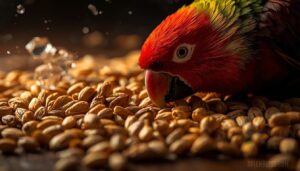
A seed-based diet looks complete on paper, but it’s quietly setting your exotic birds up for failure.
Phytic acid inhibition blocks calcium, zinc, and iron from ever reaching the bloodstream. Rancid seed oxidation from poor seed storage degradation strips fat-soluble vitamins before your birds swallow a single bite.
Fiber-induced constipation and mineral binding issues compound these nutrient deficiencies — making oversupplementation tempting, but rarely the fix.
Choosing The Right Bird Supplement
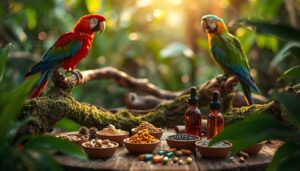
Not every supplement works the same way for every bird, and the difference between a good choice and a poor one often comes down to a few key factors. Your bird’s species, diet, and living conditions all play a role in determining what their body actually needs.
Here’s what to keep in mind before you reach for a supplement.
Matching Formulas to Parrots, Parakeets, and Cockatiels
Not every bird vitamin label claiming it’s "for parrots" actually accounts for metabolic rate differences between species like cockatiels and African greys. Formulation tailoring is crucial here — psittacine-specific formulas outperform generic blends because dose scaling and absorption efficiency shift considerably across species.
Ingredient compatibility also varies, so selecting appropriate vitamin supplements for pet birds requires matching species-specific formulas to your exotic bird’s actual dietary baseline.
Species Size and Age Considerations
Body mass scaling matters more than most bird owners realize. A cockatiel and an African grey aren’t just different sizes — they metabolize supplements at fundamentally different rates, which makes age-adjusted dosing non-negotiable.
- Juveniles need growth phase needs met with higher nutrient density per calorie
- Small bird hypervitaminosis risk rises sharply when dosing ignores body weight
- Nutrient spikes occur during feather and skeletal development phases
- Species-specific dietary requirements shift again during molt and reproductive cycles
- Senior birds absorb fat-soluble vitamins less efficiently, increasing toxicity risk
Always match supplement dosing accuracy to your bird’s species, age, and current diet.
Indoor Housing and UVB Exposure Needs
Your bird’s vitamin D3 status depends heavily on whether UVB lighting actually reaches it — not just whether a bulb exists. Glass blocks UVB entirely, so sunlight through windows is ineffective.
Focus on lamp placement, perch zones near the source, and bulb lifespan (replace per the manufacturer’s guidance). Prioritize monitoring intensity and ensuring consistent exposure time of 10–12 hours daily to genuinely support calcium absorption indoors.
Pellets Versus Seed Diets and Supplement Gaps
Diet foundation matters more than most owners realize. A pellet diet offers nutrient consistency—vitamins are baked in, batch after batch. Seed diets, by contrast, create seed selection gaps, as exotic birds pick favorites and discard fortified coatings.
This feeding behavior bias quietly triggers nutritional deficiencies over weeks. Dietary supplementation then becomes non-negotiable, making the cost-effectiveness comparison straightforward: supplements plus seeds often exceed the cost of pellets alone.
Water-soluble Versus Fat-soluble Vitamins
Not all vitamins behave the same inside your bird’s body — and that distinction shapes everything about safe supplementation. Fat-soluble vitamins (A, D3, E, K) accumulate in the liver and fatty tissues, making toxicity risks real with repeated overdosing. Water-soluble vitamins, including C and the B-complex, are flushed out regularly, requiring consistent daily intake.
Fat-soluble vitamins accumulate and can poison; water-soluble ones vanish daily and must be replenished
- Absorption Mechanisms: Fat-soluble vitamins need dietary fat; water-soluble vitamins are absorbed directly into the bloodstream
- Storage Differences: Fat-soluble vitamins build up over time; water-soluble vitamins don’t linger
- Dietary Pairing: Offer fat-soluble supplements alongside fatty foods for exotic birds
- Supplement Stability: Water-soluble formulas degrade faster — fresh daily dosing matters
When to Ask an Avian Veterinarian
Sudden lethargy, abnormal droppings, respiratory distress, feather plucking, or neurological signs all call for prompt veterinary guidance for avian nutrition—not more supplements. Even small shifts in a bird’s routine can signal serious underlying issues, making professional evaluation essential.
Regular vet checks, including bloodwork, are your most effective tool for identifying and preventing vitamin deficiencies in exotic birds. These visits ensure safe supplementation practices and dosing guidelines remain on track, safeguarding your bird’s long-term health.
Safe Dosing and Daily Use
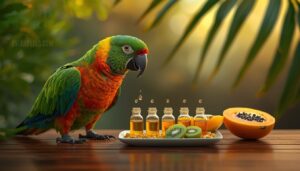
Getting the dose right matters just as much as choosing the right vitamin. Too little won’t move the needle, and too much can quietly do real harm.
Here’s what you need to know about giving supplements safely, every single day.
Powders, Drops, and Food-based Delivery Methods
How delivery matters just as much as choice. Powder clumping occurs quickly if moisture is introduced before feeding, so always sprinkle onto moist food for better surface absorption. Liquid drops may separate in the bottle — shake thoroughly before use. Prioritize small portions when selecting food vehicles.
To ensure effective application:
- Dust powder over soft fruits or cooked grains
- Shake liquid drops before every dose
- Apply drops directly to food, avoiding bowl walls
- Store sealed, away from heat and light to maintain temperature stability
Measuring Doses Without Guesswork
Guesswork is the enemy of safe supplementation — and your bird pays the price when doses drift. Label unit dosing removes that uncertainty instantly. Use calibrated droppers or syringe accuracy for liquids, and practice powder leveling with a flat edge for powders. Dose logging each administration keeps your routine consistent and reveals patterns over time.
For precise liquid dosing, tools like calibrated droppers or graduated syringes ensure exact volumes or weight-based measurements, preventing unsafe overdoses. Powders require careful handling: leveled measuring scoops eliminate inconsistent heaps, while digital kitchen scales confirm dense powders match labeled masses.
| Tool | Best For | Accuracy Benefit |
|---|---|---|
| Calibrated dropper | Liquid vitamins | Delivers exact milliliter volumes |
| Graduated syringe | Weight-based dosing | Prevents drift above safe thresholds |
| Leveled measuring scoop | Powder supplements | Eliminates inconsistent heap dosing |
| Digital kitchen scale | Dense powder doses | Confirms mass matches label unit |
| Dosing log | All supplement types | Tracks frequency and total intake |
Avoiding Hypervitaminosis and Toxicity
Fat‑soluble overload is where well-meaning care quietly turns harmful. Managing vitamin intake to avoid oversupplementation means watching for hidden ingredient overlap across every product you use — supplement stacking pitfalls catch many owners off guard.
- Check labels for duplicate A, D3, and E
- Recognize early toxicity detection signs: weakness, posture changes, appetite loss
- Apply label unit vigilance — IU versus mcg matters
- Match species-specific nutritional requirements to actual dose needs
Storing Vitamins to Preserve Potency
Think of your vitamin cabinet as a small laboratory — conditions matter more than you’d think. Light-proof containers and airtight sealing guard against the two biggest threats: oxidation and photodegradation.
Fat-soluble vitamins tolerate room temperature reasonably well, but storage and stability of water-soluble vitamins demand cooler, drier conditions below 60% humidity.
Form-specific handling and cool temperature storage aren’t optional extras — they’re what keeps your supplements delivering actual nutrition.
Combining Natural Foods With Supplements
Supplements and whole foods aren’t rivals — they’re partners. Fat-soluble pairing means offering vitamins A, D3, and E alongside foods with natural fats, like nuts or egg yolks, so absorption actually happens. Moist B-vitamin delivery works best stirred into soft foods rather than dry seeds. Here’s how to balance things practically:
- Time calcium sources away from high-phosphorus seeds to protect calcium-phosphorus balance and prevent mineral interference.
- Support probiotic timing by offering probiotic powders in fresh, room-temperature, moist food — never hot, never sitting out.
- Replace fruits and vegetables frequently, since food freshness impacts actual vitamin intake significantly in humid climates.
- Prioritize balancing natural diet and supplementation for birds by letting pellets carry the nutritional baseline while whole foods fill sensory and behavioral gaps.
- Avoid stacking fortified pellets with a full multivitamin — species-specific nutritional requirements in birds mean overlap risks vary, and more isn’t always better.
Monitoring Results Through Exams and Bloodwork
Once you’ve dialed in your supplement and food routine, regular vet checks close the loop. Exam-Blood Correlation means your avian vet pairs physical findings—such as dehydration signs, weak grip, or respiratory discharge—with blood tests to catch subclinical deficiencies before they escalate.
Serial Sampling tracks Trend Analysis across visits, flagging Organ Stress Markers early. This proactive approach ensures nutrient deficiencies don’t quietly compound between appointments, enabling timely interventions.
Frequently Asked Questions (FAQs)
What is the best multivitamin for birds?
Nekton S MultiVitamin for Birds tops nearly every veterinarian’s list — its ingredient transparency, proven bioavailability, and shelf-life stability make it the definitive standard among multivitamin blends for daily, safe supplementation.
Can vitamin deficiencies affect a birds lifespan?
Yes, absolutely. Chronic vitamin deficiencies shorten life expectancy in birds by weakening immunity, impairing organ function, and accelerating age-related decline.
This makes the importance of vitamin supplementation for captive birds impossible to overstate.
Which vitamins support feather regrowth after molting?
Molting demands a lot from your bird. Vitamin A, B Complex Vitamins, Vitamin E and Selenium, and D3 form the core of feather follicle nutrition, driving antioxidant regeneration, metabolic energy support, and immune stress balance throughout regrowth.
How does stress impact vitamin absorption in birds?
Stress acts like a drain on your bird’s nutritional reserves — corticosterone floods the system, heat‑induced villi shrink absorptive surfaces, microbiome shifts disrupt uptake.
reduced feed intake compounds oxidative vitamin demand fast.
Are organic vitamin sources safer than synthetic supplements?
Bioavailability differences exist between natural vs synthetic vitamin sources for pet birds, but vitamin toxicity in birds depends on dose, not origin.
Contaminant risk, label accuracy, and stability concerns matter far more than the "organic" label.
Conclusion
Your bird’s health isn’t something you can wing. Avian vitamins for tropical species aren’t a luxury add-on—they’re the metabolic scaffolding that holds immunity, plumage, and reproductive function together when diet falls short.
A macaw fed exclusively seeds isn’t thriving; it’s declining on a delayed timeline.
Pair quality supplementation with whole foods, routine exams, and species-specific dosing. And you’ll stop guessing what your bird needs—and start seeing the answer in every feather.
- https://birdsupplies.com/blogs/news/fat-is-not-the-f-word-it-s-the-secret-to-healthy-bird-food
- https://newtechology.mkgtu.ru/jour/article/view/843
- https://www.tropical-bird-shop-cologne.com/Nekton-S----35-gr-.html?language=en
- https://birdagents.pk/products/nekton-s
- https://www.trendyol.com/en/nekton/s-multi-vitamin-for-birds-150gm-p-932897911