This site is supported by our readers. We may earn a commission, at no cost to you, if you purchase through links.
That green film coating your bird bath isn’t just ugly—it’s a bacteria breeding ground that can make visiting birds sick. Algae, mineral crusts, and dried droppings build up fast, especially once summer heat kicks in.
Grabbing bleach or dish soap seems like the quick fix, but residue left behind can strip natural oils from feathers and irritate sensitive skin. Birds groom constantly, so anything toxic in that water ends up in their systems.
The good news? You can scrub a bird bath without chemicals using stuff already sitting in your pantry. Vinegar, baking soda, and a little elbow grease handle grime just as well—minus the risk.
Table Of Contents
- Key Takeaways
- Why Clean Bird Baths Naturally?
- Prepare Your Bird Bath for Scrubbing
- Scrub Bird Baths Without Chemicals
- Remove Algae, Stains, and Scale Naturally
- Keep Bird Bath Water Cleaner
- Top 7 Chemical-Free Bird Bath Supplies
- Frequently Asked Questions (FAQs)
- How to clean a bird bath without chemicals?
- What should I scrub my bird bath with?
- What is a non toxic cleaner for a bird bath?
- Do copper pennies keep bird baths clean?
- Can copper pennies actually harm birds over time?
- How often should the basin material be inspected?
- What water depth do songbirds prefer most?
- How quickly should birds return after cleaning?
- Conclusion
Key Takeaways
- Skip soap and bleach entirely—vinegar, baking soda, and hot water clean bird baths just as well without stripping feather oils or irritating birds’ skin.
- Soak algae and grime in a 1:1 vinegar-water mix for 20-60 minutes, then scrub with a soft-bristle brush and rinse thoroughly to avoid leaving any slippery residue behind.
- Change the water every two days, skim debris each morning, and place the bath in partial shade with gentle circulation to stop algae before it starts.
- Keep water at 1-2 inches deep for songbirds, and expect visitors to return within 24-48 hours once the basin is clean and fresh water is out.
Why Clean Bird Baths Naturally?
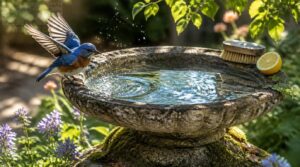
Your bird bath does more than look pretty in the yard. Left dirty, it can turn into a hangout spot for bacteria and algae that put your feathered visitors at risk. Here’s why skipping the chemicals matters, and how to spot trouble before it starts.
Choosing an easy-to-clean bird bath design from the start makes it far simpler to keep up with the regular scrubbing your bird bath needs.
Dirty Water and Bird Disease
A backyard water bowl can turn into a bacteria buffet fast. Stagnant water grows Salmonella and E. coli, risking real pathogen transmission to bathing birds.
Algae blooms strip oxygen and irritate eyes and lungs. Combined with weakened bird immune response in young or stressed birds, dirty basins quietly threaten bird health every single day. Poor maintenance increases the risk of disease transmission through water.
Problems With Soap Residue
Reaching for dish soap seems harmless, but it creates its own mess. Soap scum formation happens when soap mixes with minerals, leaving a cloudy film that irritates birds’ eyes and invites bacteria. Skip it entirely—stick to nontoxic cleaning methods instead.
- Soap residue causes eye irritation
- Mineral film buildup traps bacteria
- Water quality declines fast
- Removal becomes genuinely difficult
- Birds avoid contaminated water
Signs Deep Cleaning is Due
Skip soap, but don’t skip watching for trouble. A Cloudy Water Warning means it’s time to act. Add a green tint (Algae Growth Alert) or tacky walls (Slimy Surface Signal), and a full bird bath deep clean can’t wait.
Catch a whiff of a Musty Odor Sign or notice a Turbid Water Indicator? That’s bacteria and mineral scale talking—listen up.
Daily Versus Weekly Cleaning
Think of it as two jobs, not one. Daily Routine Balance means a quick five-minute skim; Weekly Scrub Frequency controls the deep grime.
- Daily: skim debris, check water clarity
- Weekly: full scrub, rinse, refill
- Seasonal Schedule Adjustments: more often in summer heat
This Time Savings Comparison pays off fast—daily upkeep with a chemical-free natural cleaning solution cuts your weekly scrubbing time way down.
Prepare Your Bird Bath for Scrubbing
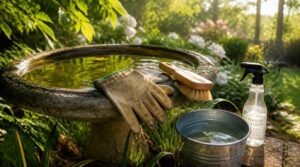
Grab your gloves before you touch a single drop of that water. A little prep now saves you scrubbing headaches later. Here’s exactly how to set the stage for a spotless bird bath.
Drain and Dispose of Water
Where does that dirty water actually go? Proper drainage direction matters more than you’d think.
Pour it away from garden beds and edible soil zones to avoid soil contamination. Use the gradual soak method on bare ground for eco-friendly disposal.
| Do | Don’t |
|---|---|
| Soak into soil slowly | Splash onto decks |
| Check local rules | Ignore regulations |
| Dump and scrub weekly | Skip water changes |
Remove Leaves and Loose Debris
Grab a bird bath net and scoop out floating leaves before they sink and turn slimy. Work outer edges toward center with a rake edge sweep.
- Use a soft-bristle brush or old toothbrush for tight corners
- Do a wind debris check after gusty days
- Try a mesh net cover between cleanings
- Keep the surrounding area free of leaves and droppings
Choose The Right Scrubbing Tool
Not every brush belongs on a bird bath. Soft-bristle brushes or natural scrubbers protect delicate finishes, while an old toothbrush grips tight corners. Match bristle stiffness to grime level for the right abrasiveness balance.
For tighter spaces, a long-handled nylon brush makes cleaning easier without cramping your hands, a detail worth considering in this guide to choosing bird baths for small yards.
Pick a bird bath brush with a comfy grip for ergonomics, and rinse tools after each use to keep bird bath scrubbing tools mildew-free.
Check The Basin Material
Not all basins take scrubbing the same way. Ceramic and stainless steel handle vinegar and hot water fine when the glaze or finish is intact — that’s Material Compatibility in action.
Stone or concrete basins are porous and can absorb residue, so run a quick Porosity Assessment first.
For concrete birdbaths, skip abrasive pads; a softbristle brush protects the surface finish and keeps bird bath safety intact.
Protect Nearby Plants and Soil
Splash zones matter more than you’d think. Rinse water and old debris shouldn’t drain straight into flower beds — that’s how soil pH gets thrown off.
- Keep a buffer plant distance of at least 1 meter from roots
- Add mulch for erosion control around the base
- Rinse cleaners away from beds, not toward them
- Compost leftover rinse water instead of dumping it
Scrub Bird Baths Without Chemicals
Now that your bird bath is prepped, it’s time for the real scrubbing work. No harsh chemicals here—just hot water, elbow grease, and five simple steps. Follow them in order for a basin that’s spotless and safe for every bird that visits.
Step 1: Rinse Loose Debris
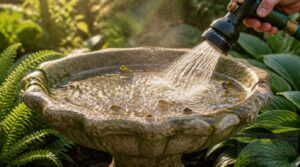
Before scrubbing, rinse the basin first. Use a gentle spray technique with lukewarm water to lift leaves, seeds, and pollen without splashing nearby plants or soil.
Focus on rim corners where debris hides. This simple morning rinse routine reveals stains you’d otherwise miss, and warm water benefits loosen grime fast—setting up real bird bath hygiene before deeper cleaning begins.
Step 2: Apply Hot Water
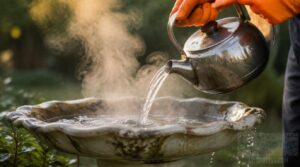
Now grab your gloves, because this step does the heavy lifting. Heat water to 120–140°F for metal or ceramic, or 100–120°F for plastic—never boiling.
- Test a hidden spot first for fading
- Pour slowly to avoid cracking
- Keep splashes off nearby leaves
- Wear heat-resistant gloves always
Let it sit 30–60 seconds on grime before scrubbing.
Step 3: Scrub Every Surface
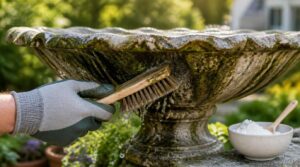
With the grime softened, work a stiff-bristled brush from the rim down to the basin in one steady pass. Tilt the basin if you can, reaching under lips and corners where algae hides.
Keep a rhythm going—scrub, rinse brush, repeat—and check surfaces by hand. Slick spots mean stubborn residue; a quick baking soda paste finishes what plain scrubbing missed.
Step 4: Rinse Thoroughly
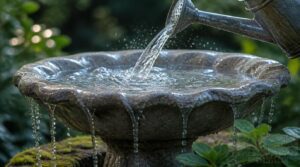
Now flush every trace of paste and vinegar. Use a gentle spray technique with lukewarm water, angling top-down for full corner rinse coverage. A high-pressure nozzle helps on stubborn spots.
Rinse multiple times until no slippery film remains—that’s your surface residue check. Good water temperature management protects delicate basins. This step keeps your bird-safe cleaning routine truly chemical-free.
Step 5: Dry and Refill
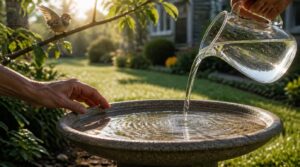
Patience pays off here. Give the basin a full air dry duration of 30–60 minutes, ideally in direct sunlight, then run a surface moisture check by hand.
Once dry, refill early morning with room-temperature water to the fill line—verify depth at 1–2 inches. Watch for returning visitors to confirm success.
Remove Algae, Stains, and Scale Naturally
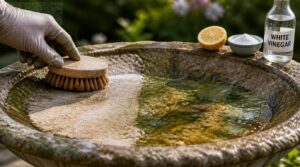
A basic scrub gets rid of grime, but algae, stains, and mineral scale need their own game plan. Good news: your kitchen already has everything you need to fight back. Here are five natural fixes worth keeping in your back pocket.
Vinegar Soak for Algae
Algae doesn’t stand a chance against acetic acid. It breaks down cell membranes on contact, dissolving slime fast.
Mix a 1:1 vinegar and water solution for light growth, or use undiluted white vinegar on stubborn patches. Soak 20–60 minutes for large basins, or 15–30 for small parts.
Rinse thoroughly afterward — that’s the chemical-free bird bath method that actually works.
Baking Soda Paste for Crusts
Crusty white spots need more than a splash — they need baking soda paste. Mix three parts baking soda, one part water, until it’s pea-sized and clingy, not runny.
Test a small spot first for safe material testing. Apply thickly, wait 10 minutes, then scrub circles with a soft brush.
Rinse well and dry completely — that’s chemical-free bird bath residue removal done right.
Lemon and Salt for Stains
When water spots turn stubborn, reach for citrus. Citric acid power in lemon juice breaks down mineral buildup, while salt gives gentle abrasion for scrubbing.
- Mix juice with coarse salt into a paste
- Rub stained spots for 1–2 minutes
- Rinse thoroughly to prevent residue
Check surface compatibility first—stone etches easily. This nontoxic solution grips hard water stains without harming visiting birds.
Hot Water for Slime
Nothing beats plain heat for cutting through slippery gunk. Aim for a Temperature Range of 140–158°F, poured in small batches over the basin.
The Steam Effect softens dried slime fast, loosening its grip without scrubbing hard. Follow with light scrubbing using a stiff brush for full Slime Removal—then a Quick Rinse keeps this chemicalfree routine safe and effective.
Rinse Away Every Residue
Skipping the final rinse is how good scrubbing gets undone. Use warm Rinse Water Temperature and let it run top to bottom until you get a Clear Rinse Flow—no cloudiness, no suds.
Tilt the basin to hit every crevice, leaving a truly Residue-Free Basin. Finish with Post Rinse Drying in the sun. That’s safe rinse practices in action, and real birdsafe cleaning methods at work.
Keep Bird Bath Water Cleaner
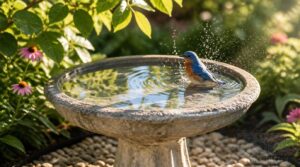
Scrubbing gets the gunk off, but keeping the water clean day to day is what really protects your backyard visitors. A few small habits make a big difference between a bath birds love and one they avoid. Here’s what to focus on to keep that water fresh between cleanings.
Replace Water Every Two Days
Think of your bird bath like a water bowl: would you let your dog drink from the same bowl for a week? A Two Day Schedule curbs bacteria, dilutes droppings, and stops algae before it blooms. Benefits stack up fast:
Would you let your dog drink from the same water for a week? Your bird bath deserves fresh water every two days too
- Cooler, fresher water birds actually prefer
- Lower nitrate and ammonia buildup
- Fewer weekly deep-clean headaches
Remove Debris Each Morning
Fresh water only stays fresh if you keep junk out of it. Grab a leaf net each morning for quick debris removal before birds show up. A small skimmer catches fine bits your net misses.
This two-minute habit stops soggy leaves from rotting and souring the water—cheap insurance against a stinky, bird-repelling bath.
Choose Partial Shade Placement
Where you put the bath matters as much as how you clean it.
Aim for a semishaded area getting 3–6 hours of sun—morning light with afternoon shade works great. Full sun cooks algae blooms fast; full shade breeds slime.
Sunlight mapping over a few days reveals your yard’s true pattern, informing smarter bird bath placement.
Keep Water Moving Gently
Good placement means nothing if the water sits dead still. Gentle circulation stops algae before it starts.
A small solar fountain or bubbler creates soft ripples birds actually prefer. Add a water wiggler for playful surface motion that also grips debris flow and steadies temperature swings on hot afternoons—no cords, no fuss, just clean, ecofriendly bird bath cleaning that works while you sleep.
Adjust Care by Season
That fountain hums along nicely, but your bird bath maintenance schedule still needs seasonal tweaks.
Spring calls for daily algae checks as pollen fuels growth. Summer? Use cooler rinse water, 90-100°F, to avoid shocking visitors. Autumn means clearing leaves before they clog things up. Winter demands a heated water system near 120-140°F, keeping things liquid without scalding your feathered regulars.
Top 7 Chemical-Free Bird Bath Supplies
Good scrubbing starts with the right gear in hand. You don’t need a cabinet full of chemicals, just a few smart tools that get the job done. Here are seven picks worth adding to your bird bath toolkit.
1. Amazer Heavy Duty Scrub Brush
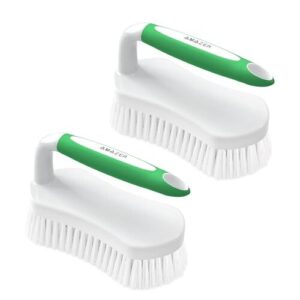
Stubborn algae ring won’t budge? This is the brush that muscles it off. The Amazer Heavy Duty Scrub Brush packs stiff polypropylene bristles that scour mineral scale without gouging your basin’s surface.
The rubber-groove handle keeps your grip steady, even scrubbing wet stone at odd angles. Two brushes come per pack, so keep one for the bath and one for patio grime. Bristles hold their shape scrub after scrub, no fraying or flopping over.
| Best For | Anyone battling tough soap scum, mineral buildup, or outdoor grime who needs a durable, heavy-duty brush for tubs, tiles, sinks, and patios. |
|---|---|
| Material | Polypropylene |
| Primary Use | Surface scrubbing |
| Unit Count | 2 |
| Dimensions | 5.8×2.5×3.8 in |
| Weight | N/A |
| Target Setting | Bathroom/Kitchen |
| Additional Features |
|
- Extra-tough polypropylene bristles power through stubborn scale and grime without gouging surfaces
- Ergonomic rubber-groove handle gives you a steady, comfortable grip even at odd angles
- Bristles keep their shape wash after wash, with no fraying or flopping
- Too stiff for delicate surfaces or fine grout lines
- Not suitable for soft materials that could scratch
- Pack of two may be more than needed if you only want a single brush
2. Compact Stainless Steel Toilet Brush
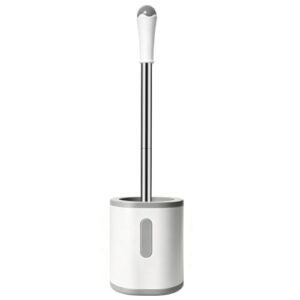
Skip the bristle brush for tight spots and grab a toilet brush instead. That curved head sneaks under basin rims and into narrow drain gaps other tools can’t reach.
The stainless steel handle resists rust in wet conditions, and nylon bristles scrub without scratching. Just don’t dunk it in toilet cleaner first—cross-contamination risk for your birds. Rinse thoroughly before each use near the bath.
| Best For | Anyone with a small bathroom who wants their toilet brush stored discreetly while still getting a solid, deep clean under the rim and into the pipe. |
|---|---|
| Material | Stainless steel/Nylon |
| Primary Use | Toilet cleaning |
| Unit Count | 1 |
| Dimensions | 4.1×3.3×5.1 in |
| Weight | N/A |
| Target Setting | Bathroom |
| Additional Features |
|
- Compact, space-saving holder design that tucks neatly into small bathrooms
- Hidden brush cover keeps the bristle head out of sight for a cleaner look
- Sturdy stainless steel handle with nylon bristles for effective deep cleaning
- Handle can’t be soaked in toilet cleaner, so extra care is needed to avoid corrosion
- Requires simple screw-together assembly before first use
- Firm bristles may be too rough for more delicate surfaces
3. OXO Dish Scrub Brush
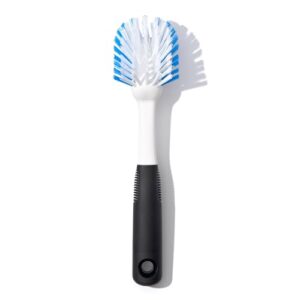
Grab this one for everyday scrubbing duty. The flared head and angled nylon bristles reach into corners without scratching, and the built-in scraper lifts stuck-on grime with zero metal tools.
Its non-slip handle stays secure even soaking wet, so cold mornings won’t leave you fumbling. Best part? It’s dishwasher safe, meaning you can sanitize it between deep cleans without extra scrubbing. At 11 inches long, it fits most basins with ease. If you’re rinsing this brush off outdoors near the yard, it’s worth checking this bird house height guide by species to keep your feathered neighbors safe while you clean.
| Best For | Home cooks who want an everyday scrub brush that tackles baked-on food and grease without scratching non-stick pots and pans. |
|---|---|
| Material | Nylon/Plastic |
| Primary Use | Dish cleaning |
| Unit Count | 1 |
| Dimensions | 11×2.63×0.75 in |
| Weight | N/A |
| Target Setting | Kitchen |
| Additional Features |
|
- Angled bristles and built-in scraper make quick work of stuck-on grime in corners of pots, pans, jars, and bottles
- Non-slip handle stays secure even when wet, keeping cleanup comfortable
- Dishwasher safe, so sanitizing between uses is effortless
- Bristles can lose their shape over time with heavy, frequent use
- Not tough enough for severely burnt-on residue that needs a metal scrubber
- Shorter handle and bristle design struggle with very deep containers or narrow-necked bottles
4. Full Pound Wheat Pennies

Old pennies do double duty as history lesson and algae fighter. Drop three or four pre-1982 copper pennies into the basin after cleaning, since older coins are mostly copper and release ions that slow algae growth.
This one-pound bag holds about 148 unsearched wheat pennies spanning 1909 to 1958, so you’ll need to sort out the copper ones first. Steel cents won’t work the same magic, but hunting through the bag is half the fun anyway.
| Best For | Hobbyists and families who enjoy the thrill of sorting through a bulk lot of unsearched wheat pennies to hunt for interesting dates and mint marks. |
|---|---|
| Material | Steel |
| Primary Use | Coin collecting |
| Unit Count | 148 coins |
| Dimensions | N/A (1 lb) |
| Weight | 1 lb |
| Target Setting | Home collection |
| Additional Features |
|
- Affordable, bulk way to start or grow a wheat penny collection
- Fun, hands-on discovery experience for both kids and adults
- Occasional chance to find rarer dates mixed in with common ones
- Mostly filled with common 1940s–1950s pennies, with few early dates
- No guarantee against duplicates or finding specific dates you want
- "Unsearched" claim can’t be independently verified, so some coins may have already been picked through
5. Solar Powered Garden Fountain Pump
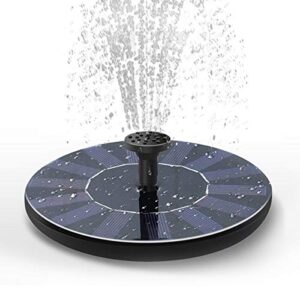
Still water invites algae, and that’s exactly what a solar fountain pump solves. Running on nothing but sunlight, this little device (about 6.3" x 6.3", weighing half a pound) keeps water moving all day long, no batteries or outlets needed.
Movement matters because it oxygenates the basin and makes it far less inviting to mosquitoes. Interchangeable nozzles let you switch between a gentle bubble or a light spray, so birds get water that’s fresh, lively, and mosquito-free.
| Best For | Anyone with a birdbath, small pond, fish tank, or garden pool who wants to keep water moving and fresh without dealing with cords or batteries. |
|---|---|
| Material | Plastic/Solar panel |
| Primary Use | Water circulation |
| Unit Count | 1 |
| Dimensions | 6.3×6.3×2.3 in |
| Weight | 0.5 lb |
| Target Setting | Outdoor garden |
| Additional Features |
|
- Runs entirely on sunlight, so there’s no battery to replace or outlet needed
- Interchangeable nozzles let you customize the spray pattern to suit birds, fish, or décor
- Compact and lightweight (6.3" x 6.3", half a pound), making setup and placement simple
- Stops working on cloudy, rainy, or shaded days since it relies fully on sunlight
- No control over spray height, so output changes depending on how strong the sun is
- Needs regular cleaning to avoid clogging and keep performance steady
6. Dolphin Water Wiggler Sensory Toy
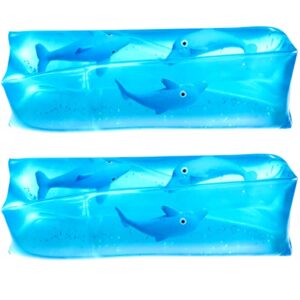
This one’s a curveball for your supply list, and honestly, it doesn’t belong there at all.
A dolphin water wiggler is a kids’ fidget toy, not a bird bath tool. It’s a vinyl tube filled with water, glitter, and floating dolphins, meant for sensory play, not basin scrubbing.
Save it for the toy box. Your birds need a brush, vinegar, and hot water, not a squeeze toy built for tiny hands.
| Best For | Kids ages 3 and up who enjoy hands-on sensory play, plus parents, teachers, or party planners looking for an easy party favor, classroom reward, or goodie bag filler. |
|---|---|
| Material | Vinyl |
| Primary Use | Sensory play |
| Unit Count | 2 |
| Dimensions | 4.75 in length |
| Weight | N/A |
| Target Setting | Home/Party |
| Additional Features |
|
- Provides soothing, tactile sensory stimulation that can help with focus during homework or quiet time
- Made from non-toxic vinyl and individually wrapped for safety
- Comes in a pack of two, making it great value for parties, classrooms, or carnival prizes
- Thin vinyl material can puncture or leak if squeezed too hard or handled roughly
- Small, compact size may be tricky for some kids to grip firmly
- Not suitable for children under 3 due to a potential choking hazard if the toy is opened
7. Thermostatic Aluminum Bird Bath Heater
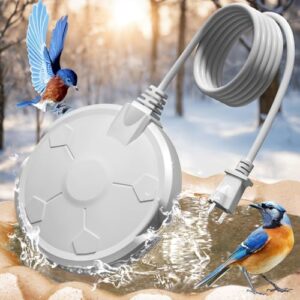
Now for the actual useful gadget on this list.
A thermostatic aluminum heater switches on near 32°F and shuts off around 95°F, so it only runs when needed. Submerge it fully in the basin center for even heat and to trigger the built-in overheat protector.
Made from cast aluminum, it resists rust and cleans with a quick wipe. Most units draw under an amp, and cord lengths run 1.5 to 3 meters—plug into a GFCI outlet for safety.
| Best For | Anyone who keeps a birdbath, pond, or outdoor water dish and wants a simple, plug-in way to stop it from freezing over in winter. |
|---|---|
| Material | Aluminum |
| Primary Use | Water deicing |
| Unit Count | 1 |
| Dimensions | 2x1x2 in |
| Weight | 1.17 lb |
| Target Setting | Outdoor birdbath |
| Additional Features |
|
- Thermostatic control means it only runs when temperatures actually call for it, saving energy
- Durable aluminum shell with waterproof coating holds up well outdoors and wipes clean easily
- Easy plug-and-play setup that works with metal, plastic, stone, or glass basins
- Short power cord can limit where you place it, especially since extension cords aren’t recommended
- Water still evaporates faster in freezing conditions, so you’ll need to refill more often
- A few users have reported units failing early, particularly during extended subzero stretches
Frequently Asked Questions (FAQs)
How to clean a bird bath without chemicals?
Drain the basin, then scrub with a vinegar-and-hot-water mix (equal parts). Rinse thoroughly, tackle stains with baking soda paste, and finish with a lemon-salt rub for extra shine—no harsh chemicals needed.
What should I scrub my bird bath with?
Grab a brush tough enough to wrestle a swamp monster—okay, just algae. Use a synthetic-bristle or nylon brush, never metal.
Skip soap entirely; a vinegar-and-water soak plus scrubbing experiences grime without leaving residue birds might ingest.
What is a non toxic cleaner for a bird bath?
Your best bet is white vinegar and water, mixed one-to-one for regular cleaning. Baking soda paste experiences crusty spots, while diluted hydrogen peroxide takes care of deeper germs. Skip soap entirely—it strips protective oils from feathers.
Do copper pennies keep bird baths clean?
Yes, a bit. Pre-1982 pennies release copper ions that slow algae growth, especially in still, sunny water. Use just a handful, not a pile, and keep it a supplement, never a substitute for regular scrubbing.
Can copper pennies actually harm birds over time?
Pennies aren’t poison, but they’re not harmless charms either. Modern coins are mostly zinc under copper plating, and corroding zinc can cause gastrointestinal distress in birds over repeated exposure and refills.
How often should the basin material be inspected?
Check the basin twice a year, once in spring after snowmelt and again in autumn once leaves drop, looking for cracks, chips, or discoloration signaling wear before small issues turn into leaks.
What water depth do songbirds prefer most?
Deeper isn’t better here. Songbirds stick to shallow water, usually 1 to 2 inches deep, so their feet stay grounded while bathing. Small species like chickadees prefer closer to half an inch, avoiding anything that feels like a swim.
How quickly should birds return after cleaning?
Most songbirds show up within 24 to 48 hours once fresh water sits out. Shaded, easy-access spots speed things along, while leftover odors or nearby predators can push that return closer to three or four days.
Conclusion
A robin once skipped three visits to a scummy basin, then returned the day after a scrub, splashing like it owned the yard. That’s the payoff.
Learning to scrub a bird bath without chemicals isn’t complicated—vinegar, baking soda, and hot water handle the grime every time. Stick to the schedule, rinse thoroughly, and keep the water fresh. Your yard becomes a trusted rest stop. Clean water, healthy wings, simple as that.